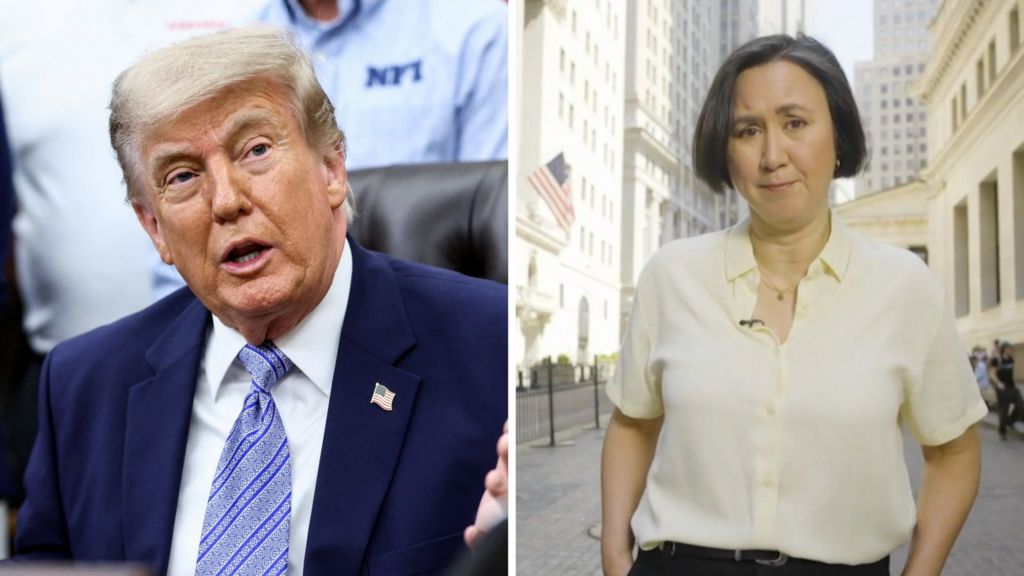
A growing wave of scrutiny has descended on thousands of stock market transactions tied to Donald Trump, prompting questions about financial disclosure compliance and potential conflicts of interest that have captured the attention of political observers and financial regulators alike. The controversy, first explored in depth by BBC business correspondent Michelle Fleury, centers on the public disclosures of trading activity submitted by the former president, which have left analysts and ethics watchdogs raising red flags over unusual patterns and potential gaps in transparency. For years, the financial dealings of sitting and former U.S. presidents have been a flashpoint for public debate over ethical governance, with critics arguing that any failure to fully disclose market activities opens the door to accusations of improper influence or use of non-public information for personal financial gain. What makes this current development unusual is the sheer volume of trades that have come under review, far outpacing the typical level of financial activity reported by past presidents and leading ethicists to question how Trump’s business interests intersect with his political position. As the scrutiny intensifies, Washington watchdogs are calling for a full review of the transactions to determine whether any violations of federal ethics rules or disclosure requirements have occurred, while legal analysts note that the controversy adds another layer of complexity to the already fraught political and legal landscape surrounding the former president. Financial markets experts also point out that even if no rules were broken, the perception of improper activity tied to a major political figure can erode public trust in both the political system and the fairness of the stock market, highlighting the need for strict transparency standards for senior government officials.
标签: North America
北美洲
-
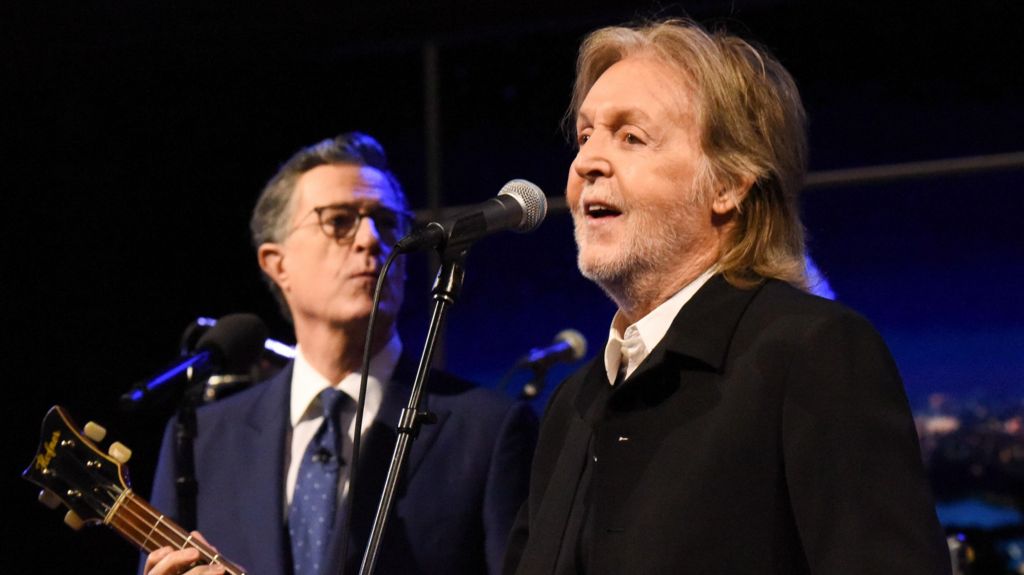
Stephen Colbert joined by Sir Paul McCartney for The Late Show finale
After three decades on air, Stephen Colbert hosted the final episode of CBS’s iconic *The Late Show* on Thursday night, closing out the program’s legendary run with a surprise, star-studded farewell headlined by former Beatle Sir Paul McCartney. First launched in 1993 with David Letterman at the helm, the late-night comedy franchise passed to Colbert in 2015, who went on to helm 11 seasons of sharp satire, celebrity interviews, and viral comedy segments before CBS announced its unexpected cancellation in July of the previous year.
Staying true to his signature dry wit, Colbert opened the finale with his trademark opening monologue, telling the packed audience at New York’s Ed Sullivan Theater that the episode would stick to its regular format rather than leaning into an over-the-top special tribute. For much of the hour, the identity of Colbert’s final guest remained a closely guarded secret, with A-list celebrities including Bryan Cranston, Paul Rudd, and Ryan Reynolds making playful cameos to jokingly campaign for the honor, only to be turned away by Colbert in a pre-planned comedic bit.
In one of the night’s most memorable gags, Colbert — a devout Catholic who had previously stated he dreamed of interviewing Pope Leo XIV for his final episode — introduced his guest as a visitor from the Vatican, only for a staffer to interrupt and reveal the pope had refused to leave his dressing room over unmet snack requests. The bit ended with a single arm emerging from behind the door marked “Pope Leo XIV” to toss out a hot dog, leaving Colbert feigning panic over his missing headliner.
That set up the night’s big reveal: Sir Paul McCartney, who joked he just “happened to be in the area”, stepped in as the final guest. The pair wandered through decades of history tied to the Ed Sullivan Theater, reminiscing about The Beatles’ groundbreaking 1960s appearances on the landmark *Ed Sullivan Show* and the band’s first U.S. tour. McCartney reflected on what America meant to the early Beatles, noting “the U.S. was where all the music we loved came from — all the rock ‘n’ roll, the blues, the whole thing. America was just the land of the free, the greatest democracy. Yes, that was what it was. That’s what it still is, hopefully.”
To close the show, Colbert and McCartney led the entire *Late Show* crew and staff onto the stage for a rousing performance of The Beatles’ classic “Hello, Goodbye”, before the pair headed backstage to turn off the theater lights for the final time.
The finale capped off weeks of tributes from across the entertainment industry. In the lead-up to the final taping, A-listers including Steven Spielberg, Tom Hanks, and Bruce Springsteen dropped by to honor Colbert’s 11-year tenure, while fellow late-night hosts Jon Stewart, Jimmy Fallon, Jimmy Kimmel, Seth Meyers, and John Oliver all came together to pay their respects. Out of respect for Colbert, both Fallon and Kimmel chose not to air new episodes of their own shows on the night of the finale.
Original host David Letterman, who has openly criticized CBS’s cancellation decision, returned as a guest the week prior, where the pair revived one of Letterman’s most beloved classic segments: throwing furniture and watermelons off the theater roof onto a giant CBS logo painted on the ground below.
Outside the Ed Sullivan Theater, hundreds of dedicated fans gathered one last time under the show’s glowing marquee, holding handwritten signs reading “Thank You Stephen” and “Colbert for President” to share their grief over the end of the show. Sarah Thompson, one fan in attendance, told the BBC that Colbert’s departure would leave “a big hole in America” because “you need to laugh at the end of the day.” Another superfan, Wendy Sloan, booked an eight-hour transatlantic flight from Amsterdam to New York, skipping sleep entirely just to make it to the finale, saying “I would have really done anything to be here today.”
CBS’s decision to cancel the long-running franchise sparked widespread speculation when it was announced, particularly because Colbert emerged as one of former U.S. President Donald Trump’s sharpest and most consistent critics on late-night television. Many political commentators suggested the cancellation could have been driven by political pressure, but CBS pushed back on these claims immediately, stating last year that the move was “purely a financial decision against a challenging backdrop in late night [television]” and “is not related in any way to the show’s performance, content or other matters.”
-

Alberta to hold referendum on whether to remain in Canada
Canada’s national unity faces its most significant test in nearly 30 years after Alberta Premier Danielle Smith announced plans for an October referendum on the province’s future within the Canadian federation, capping months of growing public pressure from separatist activists and long-simmering regional grievances against the federal government in Ottawa.
The vote, scheduled for October 19, will ask Albertans a straightforward, constitutionally framed question: whether the province should remain part of Canada, or whether the provincial government should launch the formal legal process required under Canada’s constitution to hold a subsequent binding referendum on full separation. The announcement comes after two competing citizen-led petitions gathered massive grassroots support earlier this year: a pro-separation petition collected more than 300,000 signatures, while a counter-petition advocating for Alberta to stay in Canada drew more than 400,000 signatures.
The independence movement in Alberta, Canada’s oil-rich western province, has gained steady traction over the past decade rooted in a widespread, long-held belief among many residents that the province’s economic interests and political priorities are consistently sidelined by federal policymakers in Ottawa. Grievances center on federal climate policies that many Albertans argue have obstructed growth of the province’s critical oil and gas sector, as well as a persistent perception that Alberta contributes more to national federal revenue than it receives in public spending and infrastructure investments.
In a surprising twist, Premier Smith confirmed in her nationally televised announcement that she personally will vote to keep Alberta within Canada, a position shared by her governing United Conservative Party caucus and provincial cabinet. “That is how I would vote on separation in a provincial referendum,” Smith said. “It is also the position of my government and my caucus.”
Smith justified the referendum by pointing to a recent court ruling that threw the citizen petition process into legal limbo. After Indigenous First Nations groups argued they had not been properly consulted on the pro-separation petition — a failure that they said infringed on their constitutionally protected rights — an Alberta judge dismissed the petition, halting signature verification and leaving the initiative dead in the water. Smith argued that allowing that ruling to stand would silence the voices of hundreds of thousands of engaged Albertans, a move incompatible with Canadian democratic values.
“As Premier, I will not have a legal mistake by a single judge silence the voices of hundreds of thousands of Albertans,” Smith said Thursday. “Alberta’s future will be decided by Albertans, not the courts. Kicking the can down the road only prolongs a very emotional and important debate, and muzzling the voices of hundreds of thousands of Albertans wanting to be heard is unjustifiable in a free and democratic society.”
The premier has faced intense pressure from separatist leaders for months, with Jeffrey Rath, a separatist lawyer, warning earlier this week that Smith’s choice on the referendum would amount to an existential decision for her premiership. Despite the growing momentum behind the separation movement, recent public opinion polling consistently shows a majority of Albertans oppose splitting from Canada.
This referendum marks the most serious challenge to Canadian unity since two independence referendums in Quebec, the last of which in 1995 ended with a razor-thin 50.58% to 49.42% majority voting to remain in Canada. In the wake of that near-miss, the federal government passed the Clarity Act, a law that sets binding ground rules for any future provincial separation efforts. Prime Minister Mark Carney reaffirmed earlier this month that any Alberta separation process would have to comply with the law, which requires a clear referendum question approved by the federal House of Commons and a “clear majority” of voter support before federal government would enter separation negotiations.
Even if the pro-independence side prevails in the planned final binding referendum, the path to full separation would be long, fraught with uncertainty, and marked by tense negotiations with the federal government over issues including national debt division, resource rights, border arrangements, and Indigenous land claims.
Smith also used Thursday’s announcement to echo widespread regional frustration with federal overreach, arguing that the Liberal government in Ottawa has pushed to centralize power at the expense of provincial jurisdiction, echoing a core grievance shared by many Alberta politicians regardless of their stance on separation. “I categorically reject Ottawa’s attempts to move towards a more centralised American-style system and infringe on provincial jurisdiction,” Smith said. “I call on all provincial leaders and MPs to undo the extensive damage that centralisation of power in Ottawa has done to our country economically and with respect to national unity.”
Federal political leaders across party lines have pushed back in favor of preserving national unity. Dominic Leblanc, Canada’s Minister of Internal Trade and a senior Liberal cabinet member, said in a social media statement that the government “strongly believes that the interests of Albertans and all Canadians are best served when we work together.”
“As we take note of Premier Smith’s address this evening, we remain focused on building a stronger Canada for all, in full partnership with Alberta and to the benefit of all Albertans and all Canadians,” he added. Pierre Poilievre, leader of the federal Conservative Party and an Alberta native, confirmed Thursday that he supports a united Canada and will campaign across the country to unify Canadians around a shared vision of hope.
-
‘We are resilient’: As San Diego’s Muslim community reels from mosque shooting, it refuses to be intimidated
On a Monday morning in mid-May 2026, a quiet residential neighborhood in San Diego’s Clairemont area was shattered by an act of ideological violence that would ripple across the entire United States. Two teenage gunmen opened fire at the Islamic Center of San Diego – a sprawling community hub that houses the region’s second-largest mosque and a thriving primary school – leaving three people dead and sending shockwaves of grief through California’s Muslim community.
The attack unfolded just before noon local time, when parents across the area received urgent WhatsApp alerts notifying them of an active shooter on campus. For Nawal Al-Nouri, whose seven-year-old daughter was in class at the center’s school, the news felt impossible to process. “It completely didn’t hit me that it was an active shooter the way they had described it. I was definitely in a state of shock, and pretty frozen at home,” she recalled to the BBC. Her husband Omar, a vascular surgeon based in nearby La Jolla, raced to the center after getting the same alert, where he was met by a massive, coordinated law enforcement response that left him both overwhelmed and reassured.
When police closed in on the suspects’ vehicle in the residential neighborhood, the violence reached its horrific conclusion: one teen shot his accomplice before turning the gun on himself. The three victims were identified as Amin Abdullah, the center’s security guard; Nadir Awad, a beloved local shopkeeper who called 911 during the attack; and Mansour Kaziha, husband of a teacher at the on-site school. Investigators later confirmed the attack was premeditated, driven by what officials describe as “broad hatred” that radicalized the 17- and 18-year-old suspects online. A manifesto recovered from the pair contained virulently Islamophobic, anti-semitic and misogynistic rhetoric, and law enforcement seized 30 guns and a crossbow from three local residences linked to the teens. San Diego Mayor Todd Gloria confirmed the attack is being formally investigated as a white-supremacist hate crime.
Against the devastating loss, a wave of solidarity emerged from across the state and nation. Just four days after the shooting, thousands of people of all faiths and backgrounds traveled to San Diego to attend a public funeral prayer, gathering to stand in solidarity with the Muslim community and honor the lives of the three slain men. Separate burial services were held on May 21 at La Vista Memorial Park in National City, following a community vigil the night before that drew hundreds of mourners to a nearby neighborhood park.
For many parents who survived the attack, the trauma remains raw. Omar Al-Nouri, who was reunited with his daughter Maya five hours after the shooting, says he cannot shake the terrifying image of what could have happened. “I just had a vision in my mind of the shooters going into the school and encountering my child or another child, I just can’t get that vision out of my head,” he said. Dr. Muhammad Rahman, a local resident whose two children were on the playground during the shooting, called the moment devastating but credited God’s mercy with sparing the school’s students. Emergency protocols, trained staff and coordinated first responder response are credited with saving the 140 children and staff on campus during the attack.
Abdullah, the center’s security guard, has already been hailed as a hero by community members: he confronted the gunmen and initiated lockdown procedures that many believe prevented far greater loss of life. His daughter Hawaa Abdullah, speaking to reporters surrounded by her seven siblings, said her father would want the community to remain united. “He wants all of us to be better, regardless of who we are, what we identify as,” she said. “He wants us to be better, and that’s exactly what I, my family, and I hope every single other person here strives to do every single day – make this world a better place.”
Community leaders say while they are horrified by the attack, they cannot claim it came as a complete surprise. Abdullah Tahiri, president of the Muslim Leadership Council of San Diego, blamed the attack on a years-long pattern of normalized anti-Muslim rhetoric in mainstream American politics. “When figures in the highest halls of the government dehumanise Muslims, paint our institutions as threats, and treat our community with suspicion, they lay the groundwork for real-world violence we witnessed,” he told reporters. Imam Taha Hassane, director of the Islamic Center of San Diego, added that while the center had long received low-level hate messages and harassment from passersby, the scale of violence was still unimaginable. “I know what’s going on in the world. I have seen shootings taking place in houses of worship, schools, malls. But happening here? It never came through my mind,” he said.
Despite the trauma, community members across San Diego say they will not be intimidated by the hate attack. The mosque reopened for daily prayers just two days after the shooting, and leaders emphasize the center will continue its work serving people of all backgrounds across the region. “We will mourn, we will heal, and we will continue to stand strong, rooted in justice, dignity and an unwavering support and faith in our religious traditions,” Tahiri said. Dr. Saad Eldegewi, another imam at the center, added: “Hate speech leads to hate crimes. Hate speech leads to terrorism, extremism and we are here to fight all that in all legal ways. In all peaceful ways.”
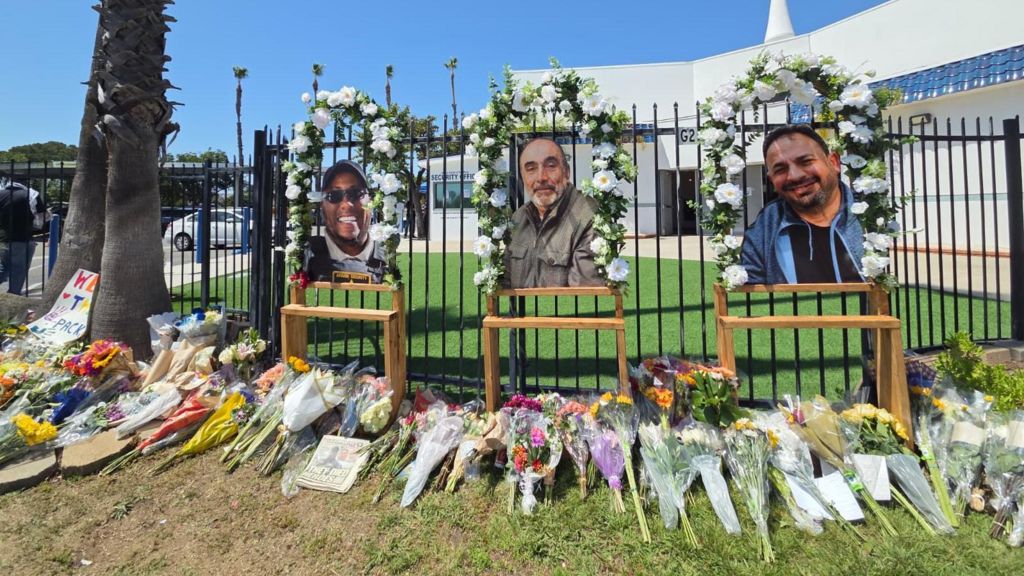
Today, the center’s school semester – which was nearly complete when the attack happened – has ended early, and the administration building, playgrounds and other sections of the complex remain closed to the public as investigations continue. A makeshift memorial lined with flowers from local neighbors lines the sidewalk outside the center’s gates, and uniformed police continue to patrol the surrounding neighborhood. As the community mourns its three lost members, many are calling for national change to address the root causes of gun violence and hate-fueled extremism, clinging to solidarity as a source of strength in the wake of unthinkable tragedy.
-
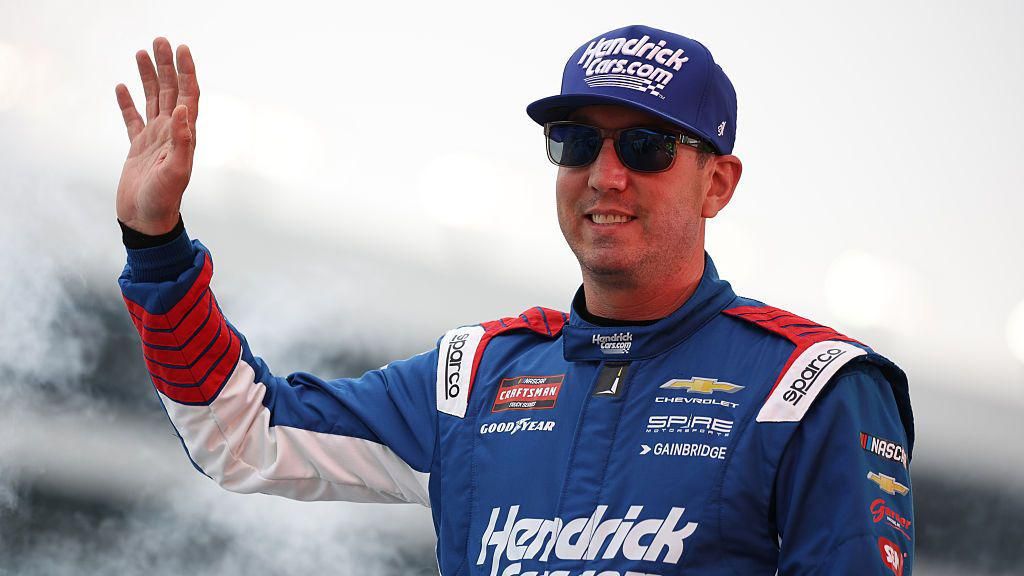
Nascar champion Kyle Busch dies aged 41
The world of NASCAR is in mourning Thursday after the sudden passing of legendary two-time Cup Series champion Kyle Busch, who died at 41 following an unexpected severe illness. The iconic driver, who holds the record for more career victories than any other competitor in NASCAR history, had his death confirmed in a joint official statement released by his immediate family, his racing team Richard Childress Racing, and the NASCAR organization.
No cause of death has been made public to date. Earlier the same day, representatives for Busch confirmed that he had been admitted to a local hospital for treatment of a serious, unspecified illness, and that he would withdraw from all scheduled racing activities planned for the upcoming Memorial Day holiday weekend. He was originally set to compete in the Coca-Cola 600, one of the sport’s most high-profile annual events, at Charlotte Motor Speedway. Just hours after the initial announcement of his hospitalization, the joint statement confirmed his passing.
Widely regarded as a once-in-a-generation racing talent and a lock for future induction into the NASCAR Hall of Fame, Busch leaves behind a decades-long legacy that reshaped the sport. At the time of his death, he was competing in his 22nd full-time season in NASCAR’s top racing division, where he accumulated two Cup Series championships and 63 total race victories. Beyond his success behind the wheel, Busch also made an indelible mark as a team owner in the NASCAR Truck Series, where he mentored and supported emerging young drivers looking to build their own careers in professional racing.
The joint statement paid rich tribute to Busch’s singular impact on the sport, writing, “He was fierce, he was passionate, he was immensely skilled and he cared deeply about the sport and fans. … NASCAR lost a giant of the sport today, far too soon.” Known for his sharp, unapologetic wit and relentless competitive drive, Busch built an intensely loyal global fanbase that affectionately called themselves “Rowdy Nation,” a community that connected with his authentic persona across generations of racing fans.
Busch is survived by his parents, his wife, and his two young children. The broader NASCAR community has already begun sharing tributes to the legendary driver, with fans and fellow competitors alike expressing shock and grief over the loss of one of the sport’s biggest icons taken far too early.
-

Tennessee execution called off after failed lethal injection
A planned execution in Tennessee has been thrown into chaos and ultimately called off after medical staff failed to meet state protocol requirements for lethal injection, prompting the governor to issue a last-minute one-year reprieve for the death row inmate at the center of a growing national justice debate.
Tony Carruthers, sentenced to death for the 1994 kidnapping and brutal murders of three people in Memphis, was scheduled to receive a lethal injection Thursday. But according to an official statement from the Tennessee Department of Correction, while the execution medical team successfully placed a primary intravenous line for the lethal drugs, they were unable to locate a second usable vein to serve as a required backup, a mandatory step under the state’s execution protocols. The team followed the established contingency plan and attempted to insert a central venous line, but that procedure also failed, forcing officials to call off the execution entirely.
Within hours of the procedural failure, Governor Bill Lee issued the temporary 1-year reprieve halting the execution. The case has already drawn widespread national scrutiny from justice reform advocates who have spent weeks pushing to stop Carruthers’ execution, citing a litany of alleged flaws in his 1996 conviction.
Carruthers was found guilty of killing Marcellos Anderson, his mother Delois Anderson, and Frederick Tucker, who were beaten, shot, and buried alive in a local Memphis cemetery. But for decades, Carruthers has maintained he had no involvement in the crimes. Leading civil rights organization the American Civil Liberties Union (ACLU) has emerged as one of the most prominent voices opposing the execution, arguing that Carruthers’ trial was fundamentally unfair: he was forced to represent himself without adequate legal counsel, no physical evidence linking him to the crime was ever presented, and all witness testimony from the trial came from informants who have since recanted their statements or been proven unreliable.
In the weeks leading up to the scheduled execution, advocacy groups collected more than 130,000 signatures on a petition demanding that untested fingerprint and DNA evidence from the crime scene be analyzed before any execution proceeds. The petition was formally delivered to Governor Lee’s office at the Tennessee State Capitol earlier this week, but Lee rejected the request the following day and confirmed the execution would move forward as planned. High-profile celebrity Kim Kardashian also joined the effort last week, sharing the campaign with her millions of social media followers and urging them to contact the governor’s office to demand DNA testing before the sentence was carried out.
Just one day before the scheduled execution, Carruthers’ legal team filed a formal clemency petition arguing that the inmate is ineligible for execution due to severe mental impairment. The petition states that Carruthers lives with schizoaffective disorder, bipolar disorder, and permanent brain damage, which leave him trapped in persistent, complex delusions that prevent him from rationally understanding why he is scheduled to be executed.
In response to Thursday’s temporary reprieve, ACLU Capital Punishment Project Senior Counsel Maria DeLiberato reaffirmed the organization’s commitment to continuing the fight for Carruthers. “Tennessee cannot continue torturing a man while refusing to answer serious questions about his innocence,” DeLiberato said.
The botched execution attempt adds Tennessee to a growing list of U.S. states that have faced procedural challenges carrying out lethal injections in recent years, as supply chain issues, medical staff shortages, and evolving legal standards have disrupted long-standing execution protocols.
-
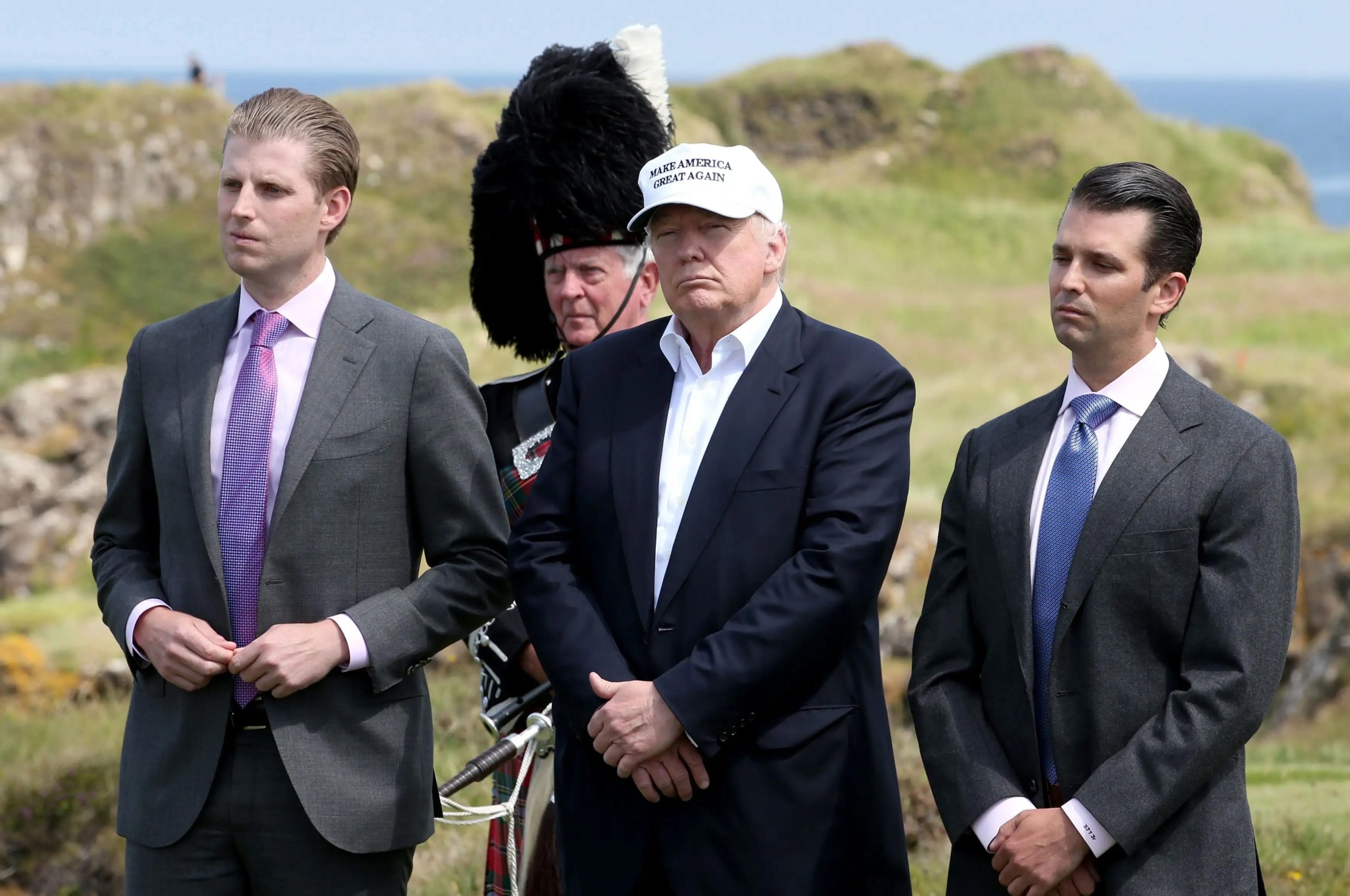
Top Democrats decry Trump ‘taxpayer shakedown’ and ‘super-pardon’
Leading Democratic lawmakers on two key U.S. House of Representatives committees have launched a new push to force senior leaders from the Department of Justice and Treasury Department to explain the controversial settlement of President Donald Trump’s $10 billion civil suit against the Internal Revenue Service, a deal Democrats deride as an orchestrated “sham” designed for political self-dealing.
In a formal letter sent Wednesday to acting Attorney General Todd Blanche, Treasury Secretary Scott Bessent, and IRS CEO Frank Bisignano, the top Democratic members of the House Judiciary Committee and Ways and Means Committee—Jamie Raskin of Maryland and Richard Neal of Massachusetts, respectively—leveled harsh condemnation against the agreement, calling it “one of the most brazen acts of public corruption and self-dealing in American history.”
The lawmakers argue that the current leadership at the DOJ and IRS chose to capitulate rather than protect public funds from what they call a clear grab for private political gain. Central to their criticism is the establishment of a $1.776 billion “Anti-Weaponization Fund” created as part of the settlement, which Raskin and Neal label a taxpayer shakedown meant to direct public money to the president’s political allies—including the pro-Trump rioters who stormed the U.S. Capitol on January 6, 2021.
The pair added that the massive, unaccountable fund will be overseen by a handpicked commission made up entirely of Trump’s political cronies, and the terms of the original settlement block both Congress and the general public from ever learning which individuals receive payments from the pool of public money. According to prior reporting from CNN, the first known claim to the fund was already filed this week by Michael Caputo, a long-time Trump advisor and former White House official. Caputo describes his family as “survivors of the illegal Russiagate investigations” and is seeking $2.7 million in compensation from the fund.
House Democrats emphasized that the U.S. Constitution grants Congress alone the power of the purse through its appropriations clause, and congressional leaders never approved or allocated taxpayer funds for the $1.776 billion political fund. “This settlement is a transparent attempt to circumvent the separation of powers and use the judgment fund for a scam Congress never contemplated: rewarding the president’s political allies at the expense of American taxpayers,” the letter reads.
Beyond the creation of the controversial fund, the settlement permanently bars the IRS from pursuing any further legal or administrative action against Trump and his immediate family members. Lawmakers say the deal effectively grants a sweeping, unofficial “super-pardon” to the president, his family, and all connected business entities. This immunity releases them from any potential accountability for unpaid taxes, as well as from other ongoing federal civil and criminal probes into allegations including insider trading, antitrust violations, false statements, and sexual harassment.
Raskin and Neal have ordered the federal agencies to preserve all records tied to the settlement and fund creation, including both physical documents and electronically stored information—covering communications sent via private emails, text messages, encrypted apps like Signal, and all other non-official communication channels. They have also given agency leaders a deadline of next week to turn over the IRS internal memorandum on the settlement, all related supporting records, and formal responses to a list of probing questions. The deadline comes ahead of Bessent’s scheduled public appearance before the Ways and Means Committee.
The controversy has already drawn scrutiny on Capitol Hill from both chambers. Blanche appeared before the Senate on Tuesday to testify on the DOJ’s annual budget request, where he faced a wave of questions from Democratic lawmakers pushing back on the deal. He attempted to push back against the framing put forward by Senate Appropriations Committee Vice Chair Patty Murray of Washington, who has argued the fund amounts to Trump using tax dollars to enrich his own political circle. Democratic Sen. Chris Coons of Delaware questioned Blanche about requirements for public disclosure of payouts and safeguards to prevent Trump family members from accessing the fund, while Sen. Chris Van Hollen of Maryland raised questions about whether January 6 rioters—including those who attacked Capitol police and even those convicted of child sex crimes—would qualify for payments.
Hours after the House Democrats released their letter on Wednesday morning, two Capitol Police officers who defended the building during the 2021 attack filed a separate federal lawsuit seeking to dissolve the fund entirely. Their legal argument argues that no federal statute authorizes the fund’s creation, the underlying settlement is a corrupt sham, and the fund’s design violates both the U.S. Constitution and federal law.
Separately, Raskin introduced new standalone legislation Wednesday, the No Taxpayer-Funded Settlement Slush Funds Act of 2026, designed to explicitly block Trump’s fund from operating. He also submitted a motion to issue formal subpoenas for Blanche, Bisignano, Bessent, and two other officials directly involved in the deal: Associate Attorney General Stanley Woodward and Treasury Department General Counsel Brian Morrissey. Morrissey notably resigned from his post as the deal was publicly announced.
“Mr. Blanche orchestrated this outrageous slush fund as part of the settlement with Donald Trump, which was also signed by Mr. Woodward, and Mr. Bessent will oversee the payout of these funds,” Raskin said in a public statement. “Mr. Bisignano signed off on this settlement for the IRS, and Brian Morrissey remarkably resigned as this deal was being announced. These individuals all possess critical insights into Trump’s self-dealing scheme with his own agencies to create this fund and reward his supporters and friends.”
The Republican-controlled House Judiciary Committee voted to reject the proposed subpoenas along a strict party-line vote, ending the immediate push for congressional testimony from the involved officials.
-
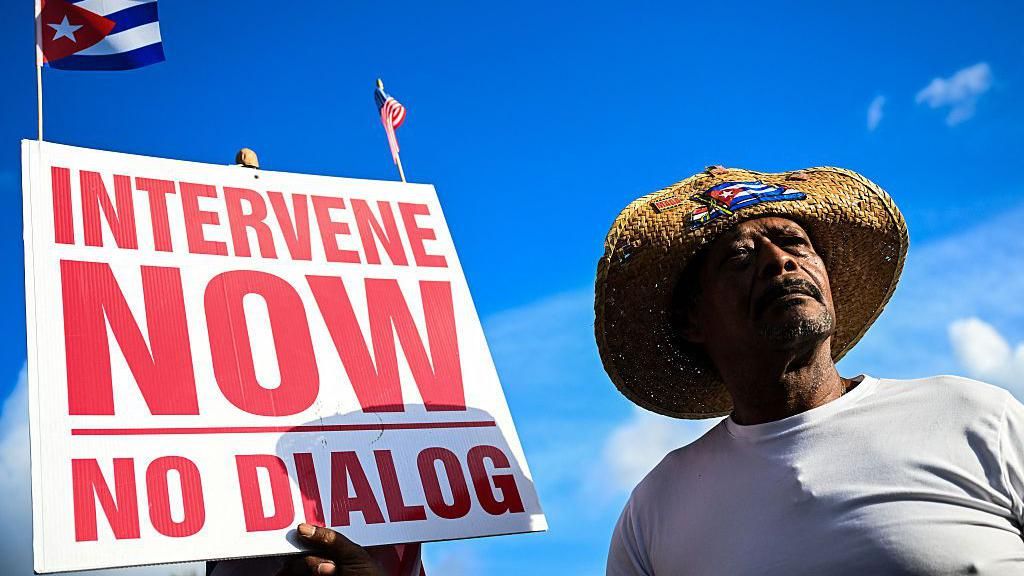
Three ways Cuba crisis could play out after US indictment of Raúl Castro
The long-strained relationship between the United States and Cuba has entered a new, highly unpredictable phase after US authorities brought murder charges against 94-year-old former Cuban president Raúl Castro. This unprecedented legal action has ignited widespread global speculation that the Caribbean island could be the next target of Washington’s regime change agenda, coming on the heels of a years-long US maximum pressure campaign that has pushed Cuba into its worst fuel and energy crisis in decades. For 66 years, Cuba has been governed by a Communist system, and a growing bloc of US officials have publicly pushed for that government to be removed from power.
While sitting US President Donald Trump has stated publicly that he does not believe any military escalation will be needed to achieve US goals, the White House has simultaneously doubled down on its vow to not tolerate what it labels a “rogue state” located just 90 miles (144 kilometers) off the US coast. Analysts and policymakers are now examining three distinct scenarios that could unfold as tensions escalate.
The first, and most immediately dramatic pathway, is a US military operation to capture Castro to stand trial in an American courtroom. The charges against Castro stem from the 1996 downing of two civilian aircraft by Cuban fighter jets, and the indictment has stoked fears of a repeat of previous US capture missions. This kind of operation is not without precedent: earlier this year, US special operations forces carried out a rapid raid in Venezuela to capture then-President Nicolás Maduro, a long-time close ally of Cuba, to face US drug and weapons charges in New York. Going back further, the 1989 Operation Just Cause saw 20,000 US troops invade Panama to overthrow and detain then-leader Manuel Noriega.
While Trump has declined to confirm or deny whether a similar mission is being planned for Cuba, a number of sitting US lawmakers have openly called for exactly that approach. “We shouldn’t take anything off the table,” Florida Senator Rick Scott told reporters, adding that “the same thing that happened to Maduro should happen to Raúl Castro.”
Regional security experts note that from a purely military perspective, a capture mission is logistically feasible, but it carries significant risks and unforeseen complications. One key factor is Castro’s advanced age, and analysts also anticipate fierce resistance from Cuban security forces. Adam Isacson, a regional specialist at the Washington Office on Latin America, a non-governmental organization, explained that while Castro’s age might simplify extraction, his iconic status means he is under extremely heavy security protection. “It’s certainly possible,” Isacson noted, but added that removing Castro would likely do little to shift Cuba’s existing power structure. Castro stepped down from the presidency in 2018, and has since functioned primarily as an influential symbolic figurehead rather than holding direct day-to-day governing power. “He’s 94. I don’t think it would affect the power structure in Cuba very much anymore,” Isacson said. “The Castro dynasty retains influence, but it is no longer central to the system the revolution built.” Still, he acknowledged that a capture would carry major domestic political benefits for the Trump administration, which has long courted the anti-Castro Cuban exile community in Florida. “They’d love to humiliate the Castros and lock up one of the original 1959 revolutionaries,” Isacson said. “But the strategic value of that move is really questionable.”
The second scenario being pushed by senior Trump administration officials is a negotiated transition to a new, US-aligned leadership structure that leaves most of Cuba’s existing governing institutions intact. This approach, experts point out, would mirror the recent transition in Venezuela that saw Nicolás Maduro replaced by Delcy Rodriguez, who has since governed the country while working directly with the Trump administration. Trump has repeatedly stated that his administration is already in contact with dissident figures inside Cuba who are seeking US support amid the island’s deepening economic crisis. “Cuba is asking for help, and we are going to talk,” Trump wrote on his social platform Truth Social on May 12.
Just days after that post, CIA Director John Ratcliffe held a closed-door meeting with multiple senior Cuban officials, including Castro’s grandson Raúl Guillermo Rodríguez Castro and Interior Minister Lázaro Álvarez Casas. Secretary of State Marco Rubio told reporters during a Florida appearance that “We’ll engage with the Cubans… at the end of the day they need to make a decision. Their system just doesn’t work.” Rubio added that the administration’s top preference is reaching “a negotiated agreement” that would leave core government structures in place. The changes Washington is demanding include commitments to liberalize Cuba’s state-controlled economy, open the country to increased foreign investment, grant greater political power to US-based Cuban exile groups, and expel all Russian and Chinese intelligence operations from the island.
Georgetown University Latin American studies professor Michael Shifter, former president of the Washington-based think tank Inter-American Dialogue, explained that this approach aligns with US strategic goals: “Just like they wanted to avoid instability in Venezuela, they want to avoid instability in Cuba. Forcing a full regime collapse would be too risky for that.” The biggest challenge to this plan, multiple experts note, is that there is no clear, pre-vetted alternative leader waiting in the wings inside Cuba, unlike the situation in Venezuela. “I don’t think there’s an obvious Delcy Rodriguez in Cuba, and power works differently in Cuba than it does in Venezuela,” Shifter said. “It’s hard for them to find the kind of figure they’re looking for, but that doesn’t mean they aren’t actively searching for a cooperative governing structure.”
The third and most passive scenario is that Cuba’s government will eventually collapse entirely under the weight of ongoing US economic pressure, which has already left most Cuban residents coping with hours-long daily blackouts and widespread shortages of basic food and consumer goods. President Trump has argued that this outcome is already well underway, saying “There will be no escalation. I don’t think it’s necessary. The place is falling apart. It’s a disaster, and they have lost control to some extent.”
But experts warn that this narrative overlooks key strengths of the Cuban state, noting that even amid a catastrophic economic downturn, government and security institutions still maintain firm control over daily life across the island. “You have to distinguish between the Cuban economy and the Cuban state and government,” Shifter explained. “The Cuban economy can collapse, and is collapsing… but the state still functions, especially on the security side.”
A full state collapse would also create major new problems for the Trump administration, as it would likely trigger a massive wave of Cuban migration, primarily toward the US southern border. The Trump administration has already imposed harsh new immigration restrictions that have blocked most recent Cuban arrivals from accessing political asylum and other legal pathways to resettlement. “If there’s a collapse, you’re going to see a big portion of the Cuban population do everything they can to get away, the same way they have from Haiti over the years,” Isacson said. He added that while Florida would be the primary destination for most migrants, many would also likely travel through Mexico to reach the US. Isacson noted that he has been surprised a mass exodus has not already begun, given the extreme conditions many Cubans are facing: “People are probably subsisting on 1,000 or 1,500 calories a day, and are not able to get basic healthcare. You’d think that people would already be building their boats.”
For the hundreds of thousands of Cuban exiles living in the US, many of whom have spent decades advocating for the overthrow of the Havana government, the current moment brings long-awaited hopes that their goal may finally be within reach. But for Cuban residents on the island, the uncertainty of what comes next brings new hardship and anxiety after decades of economic isolation and political tension.
-
Walmart warns US shoppers are cutting spending as higher gas prices bite
The ripple effects of the ongoing Iran conflict are now creating tangible financial strain for American households, and one of the nation’s largest retail giants is sounding the alarm over shifting consumer spending habits. Walmart, the biggest private employer in the United States and a bellwether for national consumer trends, has confirmed that skyrocketing gasoline prices are prompting shoppers to pull back on discretionary purchases across other categories of its business.
The Middle Eastern conflict has triggered a sharp jump in global wholesale oil prices, which has directly translated to higher pump costs for drivers across the U.S. Fresh data from the American Automobile Association (AAA) underscores just how dramatic the increase has been: since the war began, the national average price for a gallon of regular gasoline has surged from $3 per gallon to $4.56.
In comments made to CNBC, Walmart Chief Financial Officer John David Rainey explained that earlier this year, the financial pressure of rising living costs was partially buffered by larger-than-usual tax refunds stemming from the One Big Beautiful Bill Act (OBBBA), the tax cut legislation signed under former President Donald Trump. But that temporary relief is now fading, and Rainey warned that consumers will begin to feel the full weight of elevated fuel costs in the current April-to-July financial quarter.
“ Higher tax returns muted some of the pressure related to higher fuel prices, and as we’re in a period of time right now where those tax refunds are largely not coming in, I think consumers are going to feel more of that pressure from higher fuel prices,” Rainey told CNBC. The CFO added that Walmart is monitoring pump prices closely, and current projections indicate that elevated costs will persist through the coming months.
Beyond non-essential spending, Rainey also flagged a more serious risk to grocery prices during a call with investors. If the ongoing closure of the Strait of Hormuz continues, key agricultural inputs including fertilizer, nitrogen and phosphates could face supply chain disruptions and shortages, which would force Walmart to raise prices on food staples for consumers.
Despite the grim forward guidance, Walmart’s first quarter financial results (covering February through April) tell a different story. The retailer reported a net profit of $5.3 billion for the quarter, representing an 18.8% year-over-year increase, while total quarterly sales climbed 7.3% to hit $177.8 billion. That strong growth trajectory is not expected to hold, however: Walmart projects that sales growth will slow to a range of 4% to 5% between May and July, as broad inflation and rising fuel costs cut into household purchasing power.
Investors reacted quickly to the downbeat forecast, pulling Walmart’s share price down by 7% in Thursday morning trading. As a key indicator of broader consumer health, the retailer’s warning has also raised new concerns across the U.S. retail sector about the impact of geopolitical conflict on domestic economic stability.
-
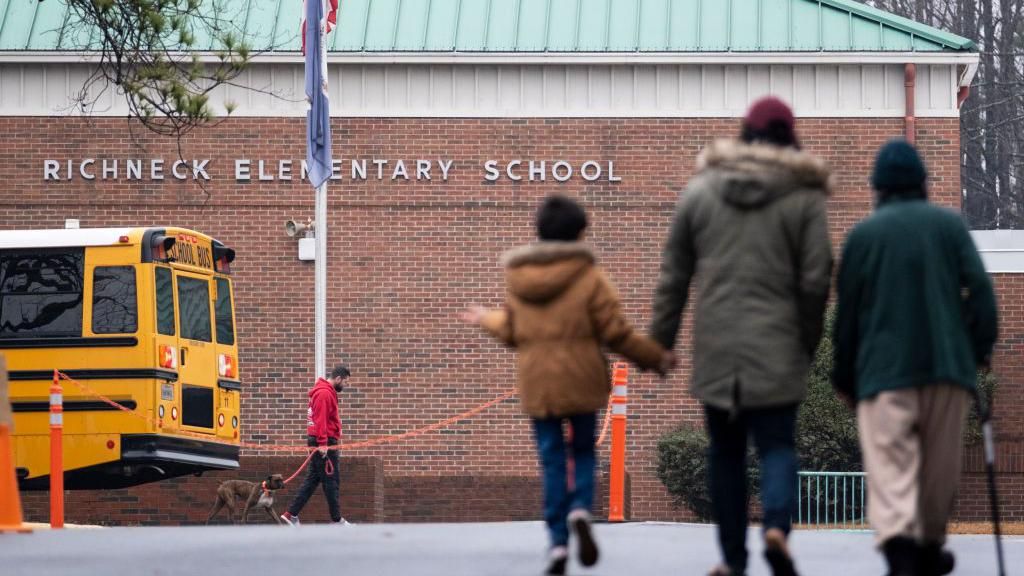
Charges dismissed against official at school where 6-year-old shot teacher
A high-profile legal case tied to one of the most shocking juvenile shooting incidents in recent U.S. history has come to a dramatic conclusion, as a Virginia circuit court judge has thrown out all criminal charges against a former school administrator. The case stems from a January 2023 shooting at Richneck Elementary School in Newport News, where a 6-year-old first-grade student opened fire on his teacher, Abigail Zwerner, during regular class hours.
The defendant in the case, Ebony Parker, the former assistant principal of the school, had faced eight felony counts including child abuse and disregard for human life. Prosecutors had argued that Parker failed to act on multiple explicit warnings that the young student had brought a gun onto campus, a lapse they claimed directly enabled the shooting.
Parker’s defense team pushed back aggressively against the allegations, arguing that the commonwealth of Virginia had failed to meet its burden of proof to secure a conviction. On Thursday, Circuit Court Judge Rebecca Robinson sided with the defense, ruling that the prosecution had not established a viable case against Parker and dismissing every count on the indictment.
Court footage captured an emotional reaction from Parker, who rested her head on the defense table and broke down in tears as the ruling was read aloud. In her remarks from the bench, Judge Robinson acknowledged the gravity of the incident that sparked the case, saying, “What happened that day was awful.”
The shooting itself left Zwerner with severe, life-altering injuries: the single bullet fired by the student passed through her hand before lodging in her chest, requiring emergency surgery and extensive long-term medical care. The child, who was too young to be charged with criminal offenses under Virginia law, has since been removed from the public school system and placed into ongoing intervention services.
Separately, the child’s mother, 26-year-old Deja Taylor, has already served a jail sentence connected to the attack. She pleaded guilty to a federal firearm charge and a state drug charge, after authorities confirmed the gun used by her son was owned by Taylor and stored unsecured in her home.