Nestled along the sun-dappled South Shore of Long Island, just a 60-minute train ride from the hustle of midtown Manhattan, Massapequa carries a well-earned nickname: it is widely known as New York’s ‘cop town.’ This tight-knit, working-class community boasts one of the highest concentrations of law enforcement officers on Long Island – home to generations of multi-generational NYPD detective families, officers from Nassau and Suffolk County police departments, and personnel from dozens of other federal and local law enforcement agencies. It is also the place where, for more than a decade, one of America’s most haunting unsolved serial murder cases lived literally in the neighborhood.
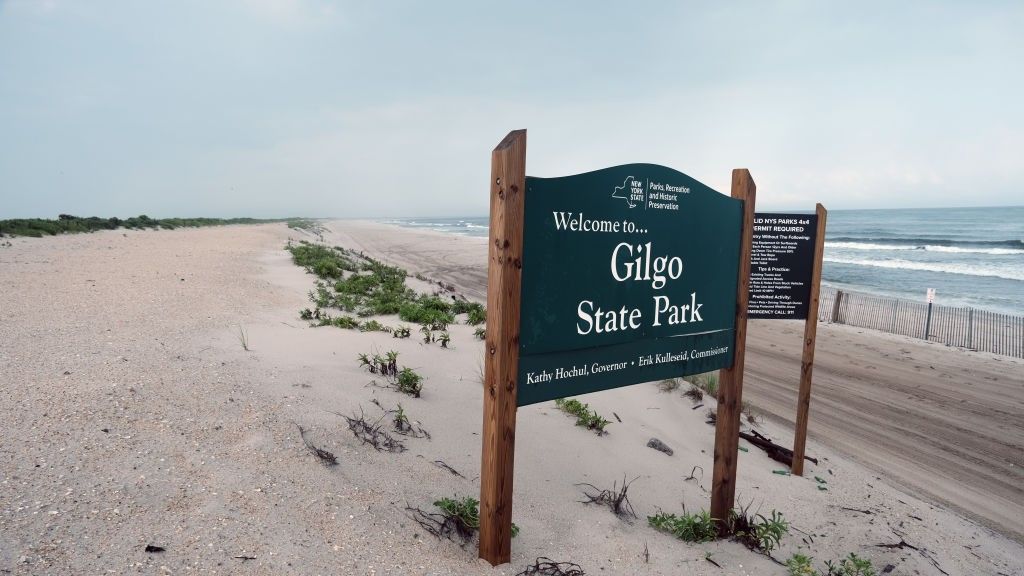
The first crack in Massapequa’s quiet idyll came in 2010, when human remains began washing up along Gilgo Beach, a popular local summertime spot just miles from town, where teen lifeguards patrol the shore and families gather for picnics and barbecues. As investigators confirmed a serial killer had been operating undetected in the region for years, panic spread, and rampant speculation took hold. Could the killer be local? Was he still preying on victims? Most troubling of all, given the town’s deep ties to law enforcement, could the unidentified murderer actually be a badge-carrying officer?
For 13 years, those questions lingered, compounded by scandal that only fueled conspiracy theories. In 2013, Jimmy Burke, then the Suffolk County Police Chief leading the Gilgo Beach investigation, was arrested on charges of assault, coercion, and evidence tampering, stemming from an incident where he beat a suspect who had stolen a bag of sex toys and pornography from his official police vehicle. Burke pleaded guilty to reduced charges in 2016 and was sentenced to 46 months in prison. The scandal didn’t end there: former Suffolk County District Attorney Thomas J. Spota and Christopher McPartland, the DA’s former chief of investigations and head of the government corruption bureau, were also convicted on related corruption charges and sentenced to five years in prison. Compounding the outrage among local law enforcement, Burke had cut off cooperation with the FBI on the Gilgo Beach case, turning a high-profile investigation into a breeding ground for misinformation and conspiracy theories that claimed the killer had ties to local police.
“There was a lot of disgust,” said Bob Livoti, president of the Association of Retired Police Officers. “When I was reading about it, I said, I can’t believe the stuff that this guy got away with. Unbelievable. There were so many red flags, and nobody did anything.”
All that speculation ended in July 2023, when authorities arrested 62-year-old Rex Heuermann, a married Massapequa Park architect and father of two. Investigators tracked Heuermann down using DNA recovered from a discarded pizza slice he left outside his midtown Manhattan office, tying him directly to the murders. This week, Heuermann made headlines again when he formally admitted in court to killing eight women, closing a chapter that has haunted the Long Island community for nearly 15 years.
For Massapequa’s large law enforcement community, the confession brings a long-awaited sense of vindication. For years, unsubstantiated rumors had suggested the killer could be one of their own, a cloud of suspicion that hung over the entire close-knit cop community. “It’s a great relief,” said Craig Garland, a retired NYPD detective, lifelong Massapequa resident, and local Little League organizer. “There were people out there trying to pin this on a cop and … it brings great closure to the law enforcement community at large [that] this wasn’t a cop that was a serial killer.”
The proximity of the killer still shocks many local residents. Heuermann commuted daily from his Massapequa Park home, just blocks from the local train station, past Johnny McGorey’s, a popular neighborhood pub that for years hosted homicide investigators who gathered on Friday nights to discuss the ongoing hunt for the Gilgo Beach killer. “As bodies started being discovered, members of the homicide unit were our Friday night regular guys,” said Joanne Fountain, the pub’s owner. “They would come in, and we would be like, ‘What the hell is going on down at the beach, at Ocean Parkway?’ Then it was all day, every day, on the news.” Neither Fountain nor her regulars had any clue the killer passed through their neighborhood every single day.
Garland, for his part, only learned after the arrest that Heuermann’s children had participated in the Little League programs he runs. “Whoever thought this guy was living next door to anyone?” Livoti said. “I think everybody was in shock.”
Even as the community reels from the revelation that a serial killer lived in their midst, Massapequa’s long-standing communal ethos has emerged as a source of strength. At St Rose of Lima Roman Catholic Church, where a large share of parishioners are cops and first responders, the community even extended support to Heuermann’s own family after the arrest. “People reached out, saying: What are we doing for [Heuermann’s] family? Can we do anything?” said Rev. Gerard Gentleman, the church’s pastor. “And we did. We had some offerings to them and … one of our staff members did actually go and sit with his wife for a little while.”
Gentleman added that while there is widespread relief the case is finally closed, there is also deep sadness over the violence that unfolded in their quiet town. “People do look at Massapequa as a close-knit community, and this was very disruptive and shattering,” he said. “It’s a middle-class, working community – lots of cops and firemen – and that’s the ethos of the community: when tragedy hits, they draw strength from each other.”
For many in law enforcement, Heuermann’s guilty pleas bring a long-sought end to a case that plagued the region for decades. “It brings great closure to everybody that this individual is behind bars,” Garland said. “It’s the right guy, and it’s nothing that anybody has to be concerned with moving forward.”
Even so, retired Nassau County homicide head John Azzata noted that justice cannot erase the pain left in the killer’s wake. While police feel vindicated and local residents feel safer, Azzata said, closure remains out of reach for the families of Heuermann’s victims. “People say they get closure; there’s no closure,” he said. “You may get justice, but victims’ families never get closure.”