标签: North America

北美洲

  • China Southern Airlines celebrates Lantern Festival at San Francisco International Airport

    China Southern Airlines celebrates Lantern Festival at San Francisco International Airport

    San Francisco International Airport witnessed a vibrant celebration of Chinese cultural heritage as China Southern Airlines hosted a special Lantern Festival event on Tuesday. The airline transformed its check-in area into a festive showcase of traditional Chinese decorations, creating an immersive cultural experience for international travelers.

    The terminal came alive with hanging red lanterns and intricate paper-cut artworks adorning the counters. Passengers received complimentary traditional paper-cuts featuring auspicious symbols including the character ‘fu’ representing good fortune, zodiac motifs, and creative designs blending aircraft elements with the airline’s distinctive kapok flower emblem.

    The event attracted significant attention from travelers, including an elderly American couple who are frequent visitors to China. ‘We genuinely appreciate Guangzhou for its exceptional cuisine,’ they remarked, explaining how the city has become a regular destination during their China travels. Several passengers originally from Guangzhou expressed that seeing the familiar kapok emblem and festival decorations evoked feelings of warmth and nostalgia during their journey.

    Wang Wenhui, Cultural Counselor at the Chinese Consulate General in San Francisco, emphasized the importance of such initiatives: ‘These activities provide meaningful platforms for cultural exchange while potentially attracting more international travelers to explore China.’

    Wang Jiawei, General Manager of China Southern Airlines’ San Francisco office, stated: ‘This celebration demonstrates our commitment to cultural diplomacy at one of the world’s busiest international gateways.’ The airline currently serves three U.S. destinations—Los Angeles, San Francisco, and New York—operating ten weekly flights that provide convenient connections through its Guangzhou hub to destinations throughout China and beyond.

    The Lantern Festival, observed on the 15th day of the first lunar month, traditionally marks the conclusion of Spring Festival celebrations, typically occurring in February or early March. By integrating traditional festival elements into aviation services, China Southern continues to foster people-to-people connections between China and the United States while strengthening aerial links between the two nations.

  • Romantasy author Sarah J Maas announces two new novels in bestselling series

    Romantasy author Sarah J Maas announces two new novels in bestselling series

    Bestselling fantasy romance author Sarah J Maas has unveiled ambitious plans for her acclaimed A Court of Thorns and Roses series, announcing two new installments that will significantly expand the beloved literary universe. The 40-year-old literary phenomenon, whose works have achieved staggering global sales exceeding 75 million copies, made the surprise revelation during her appearance on the popular Call Her Daddy podcast hosted by Alex Cooper.

    Maas described the creative process behind the new publications as an organic outpouring, noting that the emerging narrative demanded a substantially expanded format. ‘The story that was finally ready to come out of me was big – really, really big,’ the author confessed to her enthusiastic fanbase. The forthcoming publications will follow an unconventional release schedule, with the first novel arriving in October 2024 and its successor scheduled for January 2027.

    The author’s innovative approach to storytelling will see the narrative unfold across what she describes as ‘four parts being told across three books,’ including ACOTAR 6, ACOTAR 7, and a fourth, previously unannounced volume. Maas emphasized that this structural departure from traditional trilogies represents a conscious creative decision, explaining that the narrative ‘is meant to be read ideally as one massive, massive story’ rather than as self-contained installments.

    Maas’s unique blend of romantic and fantasy elements has positioned her as a pioneering force in the rapidly growing ‘romantasy’ genre. Her works, translated into 40 languages worldwide, have gained tremendous momentum through their prominent discussion on #BookTok, TikTok’s literary community that has become a significant driver of publishing trends. The upcoming releases mark Maas’s return to the ACOTAR series after a three-year hiatus since her last contribution in 2021.

    Beyond the ACOTAR universe, Maas maintains two additional successful series: the eight-volume Throne of Glass collection and the three-book Crescent City saga. The author’s career trajectory shows remarkable growth, with her initial publication in 2015 followed by substantially increased readership engagement during the pandemic period, cementing her status as a dominant force in contemporary fantasy literature.

  • Venezuela and US to work together on mining developments, Rodríguez says

    Venezuela and US to work together on mining developments, Rodríguez says

    In a significant diplomatic development, Venezuela’s interim President Delcy Rodríguez and U.S. Interior Secretary Doug Burgum have announced a collaborative framework to revitalize Venezuela’s mining sector. The high-level meeting at Caracas’ presidential palace marks the second visit by a U.S. cabinet official since the January military operation that resulted in the capture of former leader Nicolás Maduro.

    The Rodríguez administration, following recent reforms to attract foreign investment in Venezuela’s oil industry, is now preparing similar legislative changes for mineral extraction. Although specific details remain undisclosed, Congressional leader Jorge Rodríguez (the interim president’s brother) confirmed the reforms would permit major international corporations to exploit Venezuela’s substantial deposits of gold, diamonds, and critical rare earth elements essential for electronic manufacturing.

    This cooperation emerges against a complex backdrop of environmental concerns and criminal allegations. Illegal mining operations have proliferated across Venezuela, drawing condemnation from environmental groups for causing widespread deforestation and pollution. These illicit activities have frequently been linked to criminal organizations and corruption within the previous administration.

    The United States has formally accused Maduro—currently awaiting trial in the U.S. scheduled for later this month—and his associates of operating a criminal network involved in illegal mining and drug trafficking. Maduro has consistently denied these allegations.

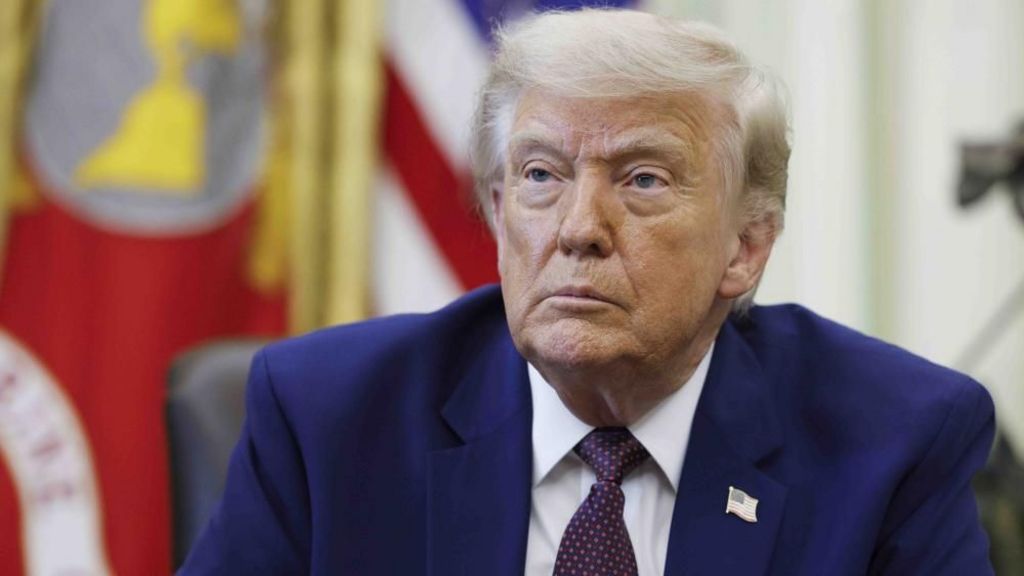
    President Trump praised the interim government’s performance, stating Rodríguez is doing a “great job” and maintaining productive relations with U.S. officials. He characterized the bilateral relationship as “wonderful” and highlighted American benefits from accessing “hundreds of millions of barrels of oil” while promising to “make life wonderful for the people of Venezuela.”

    Despite the political transition, the presidential palace remains adorned with portraits of Maduro, including new posters featuring him and his wife with the hashtag “We want them back.”

    In a joint press conference following the meetings, Rodríguez urged Venezuelan legislators to support the impending reforms to enable foreign investment. She notably claimed Venezuela was receiving “top marks… 20 out of 20” in its cooperation with international partners.

    The delegation included representatives from more than two dozen American mining companies, described by Burgum as “some of the biggest, strongest, best mining and minerals companies in the world.” He emphasized that these corporations represent “billions of dollars” in potential investment and the creation of thousands of high-paying jobs for Venezuelans.

  • Trade court orders tariff refunds in setback for Trump administration

    Trade court orders tariff refunds in setback for Trump administration

    In a significant legal development, the US Court of International Trade has mandated Customs and Border Protection to process refunds for tariffs previously imposed under the International Emergency Economic Powers Act (IEEPA). The ruling comes weeks after the Supreme Court invalidated these levies, creating substantial financial implications for thousands of American businesses.

    Judge Richard Eaton’s decision establishes that all importers of record subjected to IEEPA duties are entitled to reimbursement. The case originated from a legal challenge by Atmus Filtration, a Tennessee-based filtration company, though the ruling applies broadly to affected importers nationwide.

    The court’s directive represents a notable setback for the Trump administration, which had implemented an estimated $130 billion in tariffs through IEEPA authorities. Major corporations including FedEx have pursued litigation seeking full refunds, while small business coalitions like ‘We Pay the Tariffs’ have welcomed the decision as a landmark victory.

    Concurrently, Treasury Secretary Scott Bessent indicated the United States would likely implement a new 15% global tariff this week, replacing the invalidated IEEPA measures. This development follows conflicting statements from President Trump regarding the new rate structure, which originally ranged from 10% to 50% depending on the country of origin.

    The initial tariffs, announced last April as ‘Liberation Day’ measures, triggered extensive trade negotiations as nations sought lower rates through investment commitments and policy changes. The Supreme Court’s rejection of these tariffs last month extended to additional duties imposed on goods from Mexico, Canada, and China.

    Significant procedural questions remain regarding the refund mechanism and the administration’s future trade policy direction. The White House has not yet commented on the court’s ruling.

  • Legendary Notre Dame college football coach Lou Holtz dies at 89

    Legendary Notre Dame college football coach Lou Holtz dies at 89

    Lou Holtz, the iconic American football coach who led the University of Notre Dame to a national championship during his transformative tenure, has passed away at age 89. His family confirmed he died peacefully while surrounded by loved ones in Orlando, Florida.

    Holtz’s coaching legacy spans five remarkable decades, most notably his 11-season leadership of Notre Dame’s Fighting Irish from 1986 to 1996. His crowning achievement came in 1988 when he guided the team to an undefeated season and national championship victory. Throughout his 33-season coaching career across multiple universities, Holtz accumulated 249 total victories, including 100 wins with Notre Dame alone.

    Beyond his athletic accomplishments, Holtz was recognized for his profound impact on players’ lives and his commitment to team values. He implemented enduring traditions including the famous ‘Play Like A Champion’ locker room sign and removed individual names from jerseys to emphasize collective effort over personal recognition.

    His influence extended into the political arena where the longtime Republican endorsed Donald Trump at the 2020 party convention and received the Presidential Medal of Freedom that same year. Post-coaching, Holtz transitioned to broadcasting roles with ESPN and CBS, where his inspirational pre-game speeches gained renewed popularity among new generations of fans.

    The Holtz Charitable Foundation continues his legacy of service, reflecting what his family described as ‘enduring values of faith, family, service, and an unwavering belief in the potential of others.’ Tributes from Notre Dame and the broader sports community highlight his dual legacy as both a championship coach and transformative mentor who shaped countless lives beyond the football field.

  • US sub sinks Iranian warship in intl waters near Sri Lanka

    US sub sinks Iranian warship in intl waters near Sri Lanka

    In a significant naval escalation, a United States submarine has sunk an Iranian warship during a military operation in the Indian Ocean. The incident occurred in international waters off the southern coast of Sri Lanka, marking the first torpedo sinking of an enemy vessel by U.S. forces since World War II.

    U.S. Defense Secretary Pete Hegseth confirmed the engagement during a Pentagon briefing on Wednesday, stating, “An American submarine sunk an Iranian warship that thought it was safe in international waters. Instead, it was sunk by a torpedo.”

    The targeted vessel was identified as the IRIS Dena, a Soleimani-class frigate of the Iranian navy. According to Sri Lankan officials, the attack resulted in substantial casualties. Sri Lanka’s Deputy Minister of Foreign Affairs Arun Hemachandra reported that at least 80 crew members aboard the Iranian frigate were killed in the sinking.

    The incident represents a dramatic escalation in ongoing military operations between the United States and Iran. U.S. Central Command (CENTCOM) disclosed that American forces have now struck or sunk more than 20 Iranian vessels since joint U.S.-Israel military operations against Iran commenced on Saturday morning.

    Notably, the IRIS Dena had recently participated in multinational naval exercises held in the Bay of Bengal from February 18-25, according to official exercise documentation. The sinking has raised concerns about further regional instability and potential impacts on crucial shipping lanes in the Indian Ocean.

    Recovery operations are underway, with photographs showing bodies of Iranian sailors being transported to the mortuary at Karapitiya Hospital in Galle, Sri Lanka, highlighting the human cost of the confrontation.

  • Tech firms pledge to pay for AI data centre power costs. But will they?

    Tech firms pledge to pay for AI data centre power costs. But will they?

    In a significant move addressing America’s growing energy challenges, seven leading technology corporations—Google, Meta, Microsoft, Oracle, xAI, OpenAI, and Amazon—have formally committed to financing new power generation capacity for their artificial intelligence data centers. The commitment came during a White House meeting where executives signed what President Donald Trump termed the “ratepayer protection pledge,” an initiative unveiled last month to prevent AI expansion from driving up household electricity bills.

    The pledge emerges as data center proliferation creates substantial strain on national power grids, with utility costs becoming a pivotal voter concern ahead of November’s midterm elections. Under the agreement, companies will directly fund new power infrastructure upgrades, negotiate state-level rate structures with utility providers, and prioritize local hiring for data center construction projects.

    President Trump praised the commitment, stating it would “help keep down utility bills very substantially,” though he acknowledged results would require time. Energy Secretary Chris Wright reinforced the administration’s dual commitment to AI leadership and stable electricity pricing.

    However, policy experts express skepticism regarding enforcement mechanisms. John Quigley of the University of Pennsylvania’s Kleinman Center for Energy Policy noted the complexity of power project regulation across multiple government layers, suggesting the administration bears the “burden of proof” to demonstrate the pledge transcends political theater.

    Compounding these challenges are external factors including supply chain disruptions from the U.S.-Israel conflict with Iran, which have triggered spikes in global oil and natural gas prices. Additionally, increased natural gas exports—driven by lucrative international demand—are contributing to domestic price pressures. These developments occur alongside a 6% average increase in residential electricity prices during 2025, despite campaign promises to slash energy costs.

  • A Canadian town says it’s the ‘birthplace’ of ice hockey. Some historians aren’t so sure

    A Canadian town says it’s the ‘birthplace’ of ice hockey. Some historians aren’t so sure

    A legislative proposal in Nova Scotia has ignited a fiery historical debate among scholars regarding the true origins of modern ice hockey. The controversial bill, introduced by lawmaker Melissa Sheehy-Richard in late February, seeks to officially designate the town of Windsor as hockey’s “birthplace” based on documented accounts of “hurley on the ice” being played there as early as 1810.

    The proposed legislation traces hockey’s evolution from these early ice adaptations of hurling—an ancient Irish field sport—to British soldiers playing organized games in Halifax by the mid-1850s, before the sport gained widespread popularity in Montreal where the first Stanley Cup was awarded in 1893.

    However, prominent historians have challenged this narrative. Jean-Patrice Martel, co-author of “On the Origin of Hockey,” presented evidence suggesting the sport was played earlier in Manhattan, though his research ultimately points to 1607 Scotland during The Great Frost as the earliest documented instance of shinty played on ice.

    Indigenous communities have also voiced strong objections. Mi’kmaw historian Cheryl Maloney testified that her ancestors were playing ice games with tree roots in Tufts Cove, Dartmouth, as early as 1749—decades before the Windsor documentation. Local historian David Jones supported this claim, emphasizing the Mi’kmaq’s significant role in hockey’s evolution and suggesting the bill should be scrapped entirely.

    Sheehy-Richard has responded to critics, stating the bill was “not intended to be exclusionary” and that she remains open to amendments. The controversy mirrors other Canadian historical disputes, including the origins of poutine and butter tarts, highlighting the complex nature of tracing cultural heritage.

  • Musk tells jury ‘people read too much’ into his posts

    Musk tells jury ‘people read too much’ into his posts

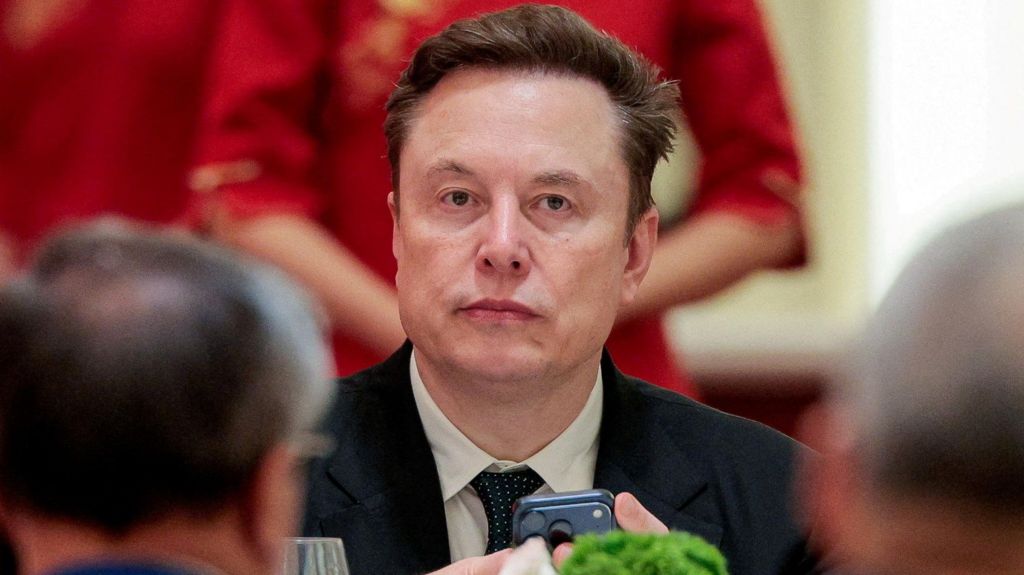
    SAN FRANCISCO – Billionaire entrepreneur Elon Musk testified before a California jury on Wednesday, asserting that financial markets overanalyze his social media communications. The testimony forms part of Musk’s defense against allegations that he deliberately manipulated markets through misleading tweets preceding his 2022 acquisition of Twitter.

    Musk characterized his posts following the initial acquisition agreement as “extremely literal” statements rather than tactical maneuvers to renegotiate the purchase price. “I was simply speaking my mind,” Musk stated when questioned about his awareness of the market impact caused by his declaration that the takeover was “on hold.”

    The litigation represents the first courtroom battle stemming from Musk’s $44 billion Twitter acquisition. While Musk has previously defeated legal challenges regarding his social media communications involving Tesla investors and defamation claims, this class action lawsuit initiated by individual investors seeks unspecified monetary damages for alleged financial losses.

    Lead plaintiff Brian Belgrave testified Monday that he sold thousands of Twitter shares in July 2022 based on his interpretation that Musk was abandoning the acquisition. Belgrave liquidated his position below both his original purchase price and the eventual $54.20 per share that Musk paid after Twitter successfully sued to enforce the merger agreement. “I got screwed. I got cheated,” Belgrave told the court.

    Plaintiffs’ attorney Aaron Arnzen presented a theory that Musk employed strategic negotiation tactics comparable to boxing’s “rope-a-dope” technique – intentionally allowing Twitter to exhaust itself to gain bargaining leverage. When questioned about this approach, Musk conceded he “may have” utilized such strategies.

    Throughout Wednesday’s proceedings, Musk initially provided terse responses limited to “yes,” “no,” or “I don’t recall” before later accusing Arnzen of “trying to mislead the jury” through his questioning methodology. Presiding Judge Charles Breyer briefly paused testimony to address the witness before allowing proceedings to continue.

    The trial, expected to span three weeks, also featured testimony from Jared Birchall, head of Musk’s family office, who repeatedly responded to questions about Twitter acquisition discussions with “I don’t recall” – including questions about whether Jack Dorsey served as Twitter’s CEO prior to Musk’s takeover bid. Dorsey had led the company for seven years before stepping down just months before Musk’s acquisition attempt.

  • Congress votes to summon Attorney General Bondi in Epstein case

    Congress votes to summon Attorney General Bondi in Epstein case

    In a significant bipartisan move, a congressional oversight committee has authorized a subpoena compelling U.S. Attorney General Pam Bondi to testify regarding the Justice Department’s handling of the Jeffrey Epstein investigation documents. The motion, introduced by Republican Representative Nancy Mace, gained support from both sides of the political aisle amid growing concerns about transparency and document management.

    The committee action follows mounting pressure on the Trump administration to release all materials connected to the Epstein probe, with lawmakers accusing the Justice Department of inadequate redaction practices that allegedly exposed victims’ identities while protecting non-victims. Representative Mace, despite her general support for the president, has been particularly vocal in her criticism, describing the Epstein case as “one of the greatest cover-ups in American history” on social media platforms.

    The bipartisan nature of the vote saw five Republican representatives, including Mace, Lauren Boebert, Tim Burchett, Michael Cloud, and Scott Perry, joining Democratic colleagues in approving the legal summons. This development occurs against the backdrop of ongoing document releases, with millions of files already public but millions more reportedly remaining undisclosed.

    Democratic oversight committee member Robert Garcia has further intensified scrutiny by alleging that the Justice Department is withholding files containing sexual abuse allegations against former President Donald Trump. Garcia claims to have personally reviewed such documents that have not been made publicly available.

    The Justice Department has maintained that no relevant documents have been deleted, stating that materials are only withheld if they constitute duplicates, contain privileged information, or relate to ongoing federal investigations. This testimony demand follows recent committee appearances by former President Bill Clinton and former Secretary of State Hillary Clinton, though neither has been accused of wrongdoing by Epstein’s victims.