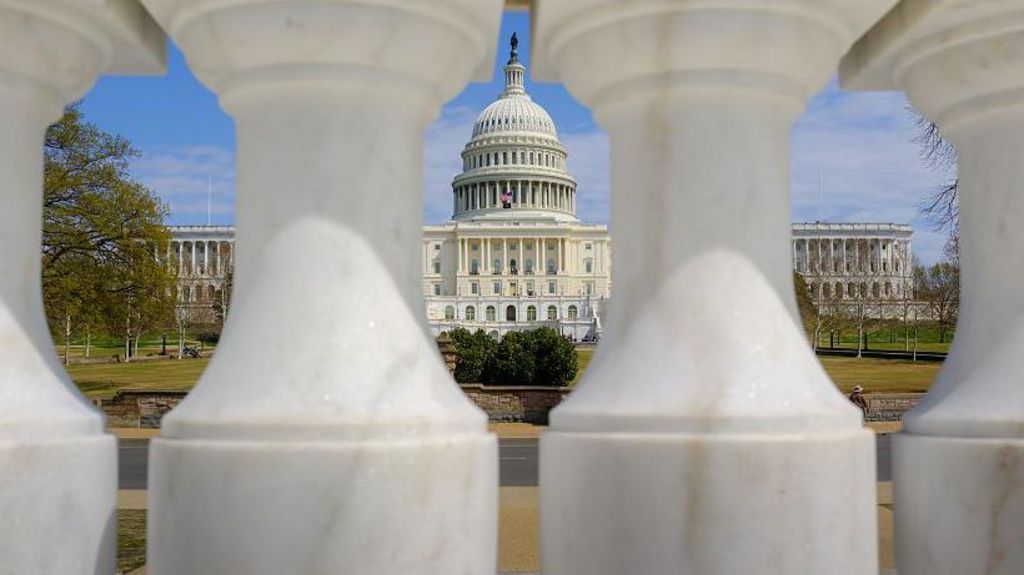
A months-long partial shutdown of the U.S. Department of Homeland Security moved one step closer to resolution early Thursday, after Senate Republicans pushed through a procedural vote to advance funding for two of the department’s core immigration enforcement agencies without Democratic support. The late-night session stretched until roughly 3:30 a.m. local time, dragged out by a series of Democratic amendments in a tactic commonly referred to as “vote-a-rama,” and ultimately passed by a narrow 50-48 margin.
Republicans opted to use a special legislative rule that allowed the spending measure to pass with a simple majority, after weeks of negotiations with Democrats collapsed over Democratic demands for agency reforms. Two Senate Republicans who have frequently broken with former President Donald Trump’s policy positions joined all voting Democrats in opposing the measure, while one Democrat and one Republican abstained from the vote entirely.
The approved measure would allocate funding for U.S. Immigration and Customs Enforcement (ICE) and U.S. Customs and Border Protection (CBP) through the end of Donald Trump’s presidential term. A separate bipartisan bill that would fund the remainder of DHS, the parent department of both agencies, previously passed the Senate, but both pieces of legislation now need approval from the U.S. House of Representatives before they can be sent to the president’s desk for signature. It remains unclear when House lawmakers will bring either measure up for a vote, as House Republicans have often diverged from their Senate counterparts on immigration and spending policy in recent months.
Senate Majority Whip John Thune, the chamber’s top Republican, praised the outcome of Thursday’s vote but acknowledged that the legislative process is far from over. “We still have a multi-step process ahead of us,” Thune told reporters Thursday morning.
The partial government shutdown, which has left DHS without formal appropriations since February 14, is the longest partial shutdown in U.S. history. The current impasse grew out of a Democratic refusal to approve new funding for ICE and CBP until the agencies adopt major reforms, a response to two fatal shootings of Minneapolis residents Alex Pretti and Renee Good by agency operatives during a January immigration raid in Minnesota.
As the standoff stretched into March, the funding gap began to directly impact everyday Americans: widespread staff shortages among DHS airport security officers led to travel chaos across the country, with security queues stretching from terminal checkpoints all the way to airport parking lots. Hundreds of officers resigned or skipped shifts after going weeks without pay amid the shutdown. Trump temporarily alleviated the crisis by signing an executive order that redirected existing departmental funds to pay security personnel, easing immediate pressure on congressional negotiators. But that pressure has rapidly built back up in recent weeks.
Homeland Security Secretary Mark Mullin warned this week in an interview with Fox News that the department will exhaust all available emergency funding to cover employee salaries by the first week of May. “I’ve got one payroll left and there is no more emergency funds, so the president can’t do another executive order because there’s no more money there,” Mullin said. Trump has set a firm deadline of June 1 for a full budget package to reach his desk for signature, leaving congressional negotiators with a narrow window to resolve the months-long standoff.