标签: North America

北美洲

  • A Canadian town says it’s the ‘birthplace’ of ice hockey. Some historians aren’t so sure

    A Canadian town says it’s the ‘birthplace’ of ice hockey. Some historians aren’t so sure

    A legislative proposal in Nova Scotia has ignited a fiery historical debate among scholars regarding the true origins of modern ice hockey. The controversial bill, introduced by lawmaker Melissa Sheehy-Richard in late February, seeks to officially designate the town of Windsor as hockey’s “birthplace” based on documented accounts of “hurley on the ice” being played there as early as 1810.

    The proposed legislation traces hockey’s evolution from these early ice adaptations of hurling—an ancient Irish field sport—to British soldiers playing organized games in Halifax by the mid-1850s, before the sport gained widespread popularity in Montreal where the first Stanley Cup was awarded in 1893.

    However, prominent historians have challenged this narrative. Jean-Patrice Martel, co-author of “On the Origin of Hockey,” presented evidence suggesting the sport was played earlier in Manhattan, though his research ultimately points to 1607 Scotland during The Great Frost as the earliest documented instance of shinty played on ice.

    Indigenous communities have also voiced strong objections. Mi’kmaw historian Cheryl Maloney testified that her ancestors were playing ice games with tree roots in Tufts Cove, Dartmouth, as early as 1749—decades before the Windsor documentation. Local historian David Jones supported this claim, emphasizing the Mi’kmaq’s significant role in hockey’s evolution and suggesting the bill should be scrapped entirely.

    Sheehy-Richard has responded to critics, stating the bill was “not intended to be exclusionary” and that she remains open to amendments. The controversy mirrors other Canadian historical disputes, including the origins of poutine and butter tarts, highlighting the complex nature of tracing cultural heritage.

  • Musk tells jury ‘people read too much’ into his posts

    Musk tells jury ‘people read too much’ into his posts

    SAN FRANCISCO – Billionaire entrepreneur Elon Musk testified before a California jury on Wednesday, asserting that financial markets overanalyze his social media communications. The testimony forms part of Musk’s defense against allegations that he deliberately manipulated markets through misleading tweets preceding his 2022 acquisition of Twitter.

    Musk characterized his posts following the initial acquisition agreement as “extremely literal” statements rather than tactical maneuvers to renegotiate the purchase price. “I was simply speaking my mind,” Musk stated when questioned about his awareness of the market impact caused by his declaration that the takeover was “on hold.”

    The litigation represents the first courtroom battle stemming from Musk’s $44 billion Twitter acquisition. While Musk has previously defeated legal challenges regarding his social media communications involving Tesla investors and defamation claims, this class action lawsuit initiated by individual investors seeks unspecified monetary damages for alleged financial losses.

    Lead plaintiff Brian Belgrave testified Monday that he sold thousands of Twitter shares in July 2022 based on his interpretation that Musk was abandoning the acquisition. Belgrave liquidated his position below both his original purchase price and the eventual $54.20 per share that Musk paid after Twitter successfully sued to enforce the merger agreement. “I got screwed. I got cheated,” Belgrave told the court.

    Plaintiffs’ attorney Aaron Arnzen presented a theory that Musk employed strategic negotiation tactics comparable to boxing’s “rope-a-dope” technique – intentionally allowing Twitter to exhaust itself to gain bargaining leverage. When questioned about this approach, Musk conceded he “may have” utilized such strategies.

    Throughout Wednesday’s proceedings, Musk initially provided terse responses limited to “yes,” “no,” or “I don’t recall” before later accusing Arnzen of “trying to mislead the jury” through his questioning methodology. Presiding Judge Charles Breyer briefly paused testimony to address the witness before allowing proceedings to continue.

    The trial, expected to span three weeks, also featured testimony from Jared Birchall, head of Musk’s family office, who repeatedly responded to questions about Twitter acquisition discussions with “I don’t recall” – including questions about whether Jack Dorsey served as Twitter’s CEO prior to Musk’s takeover bid. Dorsey had led the company for seven years before stepping down just months before Musk’s acquisition attempt.

  • Congress votes to summon Attorney General Bondi in Epstein case

    Congress votes to summon Attorney General Bondi in Epstein case

    In a significant bipartisan move, a congressional oversight committee has authorized a subpoena compelling U.S. Attorney General Pam Bondi to testify regarding the Justice Department’s handling of the Jeffrey Epstein investigation documents. The motion, introduced by Republican Representative Nancy Mace, gained support from both sides of the political aisle amid growing concerns about transparency and document management.

    The committee action follows mounting pressure on the Trump administration to release all materials connected to the Epstein probe, with lawmakers accusing the Justice Department of inadequate redaction practices that allegedly exposed victims’ identities while protecting non-victims. Representative Mace, despite her general support for the president, has been particularly vocal in her criticism, describing the Epstein case as “one of the greatest cover-ups in American history” on social media platforms.

    The bipartisan nature of the vote saw five Republican representatives, including Mace, Lauren Boebert, Tim Burchett, Michael Cloud, and Scott Perry, joining Democratic colleagues in approving the legal summons. This development occurs against the backdrop of ongoing document releases, with millions of files already public but millions more reportedly remaining undisclosed.

    Democratic oversight committee member Robert Garcia has further intensified scrutiny by alleging that the Justice Department is withholding files containing sexual abuse allegations against former President Donald Trump. Garcia claims to have personally reviewed such documents that have not been made publicly available.

    The Justice Department has maintained that no relevant documents have been deleted, stating that materials are only withheld if they constitute duplicates, contain privileged information, or relate to ongoing federal investigations. This testimony demand follows recent committee appearances by former President Bill Clinton and former Secretary of State Hillary Clinton, though neither has been accused of wrongdoing by Epstein’s victims.

  • Protesters rally in San Francisco against OpenAI deal with Pentagon

    Protesters rally in San Francisco against OpenAI deal with Pentagon

    San Francisco became the epicenter of a growing technological ethics debate this week as demonstrators gathered to vocally oppose OpenAI’s newly revealed collaboration with the U.S. Department of Defense. The protest movement, gaining momentum through digital activism and street demonstrations, reflects deepening concerns about the militarization of artificial intelligence technology.

    The controversy emerged following disclosures that the maker of ChatGPT had entered into a strategic partnership with Pentagon officials, though specific project details remain classified. This development has triggered what industry observers are calling a ‘significant user exodus’ from OpenAI’s flagship platform, with uninstallation rates reportedly surging across multiple metrics since the announcement.

    Protest organizers, representing a coalition of digital rights activists, ethical AI researchers, and concerned citizens, argue that military applications fundamentally violate OpenAI’s original charter principles emphasizing beneficial AI development. ‘We founded this movement to ensure artificial intelligence would serve humanity, not warfare,’ stated one demonstrator holding a sign reading ‘ETHICS NOT ARMS’ outside OpenAI’s headquarters.

    The backlash illustrates the challenging balance AI companies face between commercial opportunities, government contracts, and maintaining public trust. While defense officials characterize the collaboration as focusing on ‘cybersecurity enhancements and veteran support services,’ skeptics remain unconvinced, fearing eventual weaponization pathways.

    Industry analysts note this represents a pivotal moment for the AI sector, where ethical considerations increasingly collide with expansion ambitions. The user backlash demonstrates how quickly public sentiment can shift when perceived ethical boundaries are crossed, potentially establishing precedent for how AI firms approach governmental partnerships moving forward.

  • US Senate to vote on Trump’s war powers as Iran conflict continues

    US Senate to vote on Trump’s war powers as Iran conflict continues

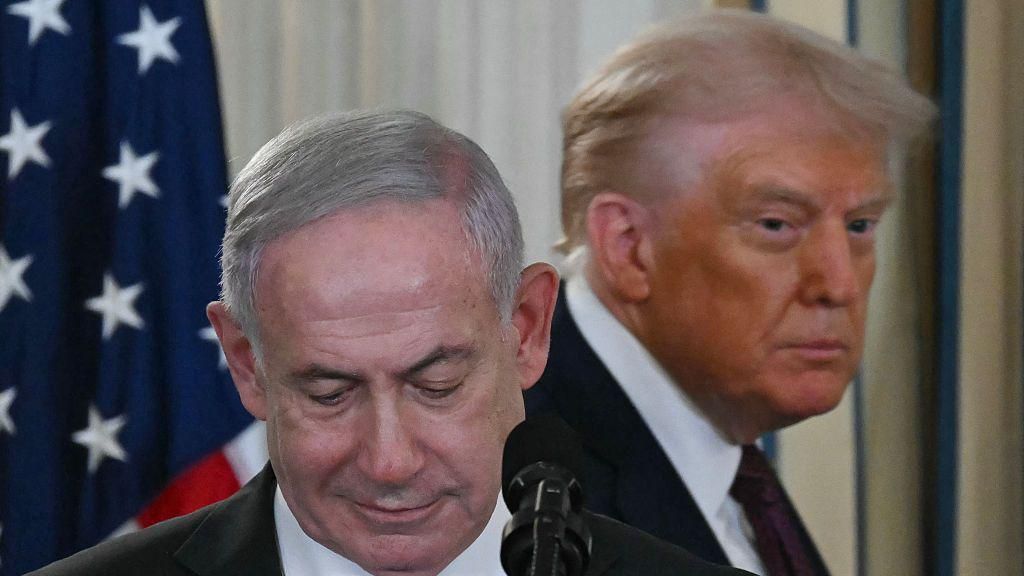
    The United States Senate is poised for a critical vote on a war powers resolution that would significantly curtail President Donald Trump’s authority to conduct military operations against Iran without explicit congressional approval. The legislative measure, if enacted, would mandate the withdrawal of American forces from hostilities unless Congress formally authorizes continued military engagement.

    This constitutional confrontation emerges just five days after the initiation of joint U.S.-Israel strikes against Iranian targets, which triggered retaliatory attacks by Iran against Israel and American allies throughout the Gulf region. The resolution represents the most substantial legislative challenge to presidential war-making authority since hostilities began.

    Democratic Senator Tim Kaine of Virginia, the primary sponsor of the legislation, framed the vote as a historic moment of accountability. “Every senator will have to go on the record to declare whether it is in our best interest to send our sons and daughters into conflict against Iran,” Kaine stated, emphasizing the human cost already incurred with six service members lost and others injured in the ongoing conflict.

    The political dynamics reveal a deeply divided Congress. While a majority of Democratic senators are expected to support the measure, Republican support remains uncertain. The resolution requires a simple majority for passage, after which it would proceed to the House of Representatives for consideration later this week.

    Even if both chambers approve the measure, it would face an almost certain presidential veto. Overriding such a veto would necessitate a two-thirds majority in both the Senate and House—a formidable political hurdle given current divisions.

    The constitutional debate centers on the War Powers Resolution of 1973, enacted to constrain presidential authority following the Vietnam War. The legislation requires presidential notification of Congress within 48 hours of military engagement and congressional authorization within 60 days for operations to continue.

    Secretary of State Marco Rubio has maintained that the administration has complied with notification requirements, though he echoed previous administrations in questioning the constitutionality of the War Powers Act itself. The current administration, like its predecessors, has relied on post-9/11 authorizations for military force to justify operations in the Middle East, despite multiple unsuccessful attempts to repeal those authorities.

    This legislative action occurs against the backdrop of expanding military operations, with the administration having previously conducted strikes against Iranian nuclear facilities and other military actions without congressional approval, establishing a pattern of executive action that has increasingly concerned legislators from both parties.

  • Higher tariffs likely this week, says US Treasury

    Higher tariffs likely this week, says US Treasury

    The United States is poised to implement a 15% global tariff this week, according to Treasury Secretary Scott Bessent, following a period of conflicting statements from the Trump administration regarding the precise rate. This new tariff structure is designed to replace the sweeping “Liberation Day” import taxes imposed last year, which were recently invalidated by the Supreme Court.

    The policy confusion originated when the White House, responding to the court’s ruling, initially enacted a 10% levy. This move directly contradicted President Donald Trump’s social media announcement of a 15% rate, creating significant uncertainty among global business leaders and international trading partners. White House officials have since been working to align official documentation with the President’s stated 15% target, while simultaneously downplaying the legal impact of the Supreme Court’s decision.

    To implement the temporary tariff, the administration employed Section 122, an unconventional trade authority that permits the president to declare tariffs of up to 15% without congressional approval for 150 days under specific conditions. The administration has indicated it will pursue more permanent tariff measures using established legal instruments such as Section 301 and Section 232, which target unfair trade practices and national security threats respectively.

    Secretary Bessent expressed confidence that the tariff rates would return to their previous levels within five months. The original “Liberation Day” tariffs, announced in April last year, featured rates starting at 10% and escalating to 50% for certain countries, triggering extensive trade negotiations as nations sought preferential rates through investment commitments and policy concessions.

    The transition to a uniform 10% tariff with some product exemptions eliminated the competitive advantages previously secured by countries like the United Kingdom through bilateral agreements. Business communities have indicated a preference for the structured procedures associated with Section 301 and 232 implementations, which include investigation periods and opportunities for comment, providing more predictability than the administration’s abrupt policy announcements.

    The ongoing tariff uncertainty continues to raise fundamental questions about the future of U.S. trade policy and its impact on global economic relationships.

  • Watch: BBC asks Hegseth about reports of strike on Iranian girls’ school

    Watch: BBC asks Hegseth about reports of strike on Iranian girls’ school

    During a televised interview with the BBC, U.S. Secretary of Defense Pete Hegseth addressed emerging reports concerning a military strike on a girls’ school located in Iran. When pressed for details and confirmation of U.S. involvement, Secretary Hegseth maintained a measured diplomatic stance, stating unequivocally that the incident was under active investigation by American authorities. He refrained from confirming any operational details or attributing immediate responsibility, emphasizing the procedural necessity of gathering and verifying facts before drawing conclusions. The exchange highlights the sensitive and often opaque nature of international military operations and the standard protocol of official inquiries in the immediate aftermath of such reports. The Secretary’s comments reflect the administration’s cautious approach to navigating complex geopolitical allegations, prioritizing verified intelligence over speculative claims.

  • Trump’s war on Iran: Shifting stories and unanswered questions

    Trump’s war on Iran: Shifting stories and unanswered questions

    The Trump administration’s conflicting communications regarding military engagements with Iran have drawn intense scrutiny from analysts examining the precision of governmental messaging during international crises. BBC Analysis editor Ros Atkins has dissected the divergent statements emerging from various officials within the administration, creating a mosaic of contradictory narratives that has complicated the understanding of U.S. actions and intentions toward Iran.

    This examination reveals a pattern of shifting justifications and evolving explanations that have left both allies and adversaries struggling to interpret American foreign policy objectives. The administration’s initial characterization of operations as ‘imminent threat’ responses subsequently faced modifications and qualifications from different government spokespersons, creating confusion about the factual basis for military decisions.

    This phenomenon represents a case study in how modern governments communicate during tense geopolitical situations, where traditional diplomatic clarity appears to have been supplanted by competing narratives from different power centers within the same administration. The resulting information vacuum has been filled with speculation and uncertainty about the true nature of events and the strategic thinking behind American actions in the volatile Middle East region.

    The analysis further explores how such mixed messaging affects international relations, alliance structures, and global perceptions of American leadership, raising fundamental questions about accountability and transparency in governmental communications during times of potential conflict.

  • West Coast ports brace for uncertainty after US tariff ruling

    West Coast ports brace for uncertainty after US tariff ruling

    The critical Southern California port complex, America’s primary gateway for trans-Pacific commerce, faces renewed supply chain instability following a landmark Supreme Court decision on tariff authority. The 6-3 ruling determined that the previous administration overstepped its legal powers by imposing extensive tariffs under emergency provisions not intended for such trade measures.

    Port executives at both Los Angeles and Long Beach—which collectively process nearly one-third of US containerized imports—report immediate operational uncertainties despite potential long-term benefits from the judicial intervention. The decision affects approximately two-thirds of tariffs collected under the International Emergency Economic Powers Act, totaling roughly $130 billion in duties already paid by importers.

    Chief Executive Noel Hacegaba of the Port of Long Beach acknowledged the paradoxical situation: ‘I hope the ruling brings greater certainty to the supply chain. For now, the only certainty is more uncertainty.’ His port handled 9.9 million twenty-foot equivalent units (TEUs) last year and anticipates moving at least 9 million containers in 2026, though these projections now require recalibration.

    Gene Seroka, Executive Director of the Port of Los Angeles, highlighted the supply chain’s hypersensitivity to policy changes: ‘Each time there’s a policy statement or adjustment out of Washington, we see immediate stops and starts across the supply chain.’ The nation’s largest container port recorded 10.2 million TEUs last year but began 2026 with a 13 percent year-over-year import decline in January.

    The ruling creates two immediate challenges: unclear refund procedures for previously paid duties and the administration’s announcement of a new 10 percent global tariff without implementation details. Importers of Chinese-connected goods—from electronics components to furniture, toys, and apparel—must now make rapid decisions about shipment timing to potentially avoid tariffs before new measures take effect.

    This development compounds existing trade weaknesses, particularly in exports. The Port of Los Angeles moved only 104,000 export TEUs in January—an 8 percent annual decrease representing its lowest export volume in nearly three years. US containerized exports to China plummeted 26 percent last year, with soybean shipments declining 80 percent at Los Angeles and 90 percent nationwide as Chinese buyers shifted to South American suppliers.

    Despite these challenges, Seroka emphasized China’s enduring importance: ‘China still represents approximately 40 percent of our business, more than two and a half times our next largest trading partner. There is no faster way to get cargo from China to the US than through LA.’ The port executive reaffirmed commitment to longstanding trade partnerships that have defined West Coast maritime operations for decades.

  • Runners to be given prize money after being led off course

    Runners to be given prize money after being led off course

    Three elite athletes who were mistakenly directed off course while leading the US Half Marathon Championships in Atlanta will receive financial compensation following a dramatic navigational error that cost them podium positions. Event organizers confirmed Tuesday that police officers assigned to route marking had to abruptly respond to an emergency call, creating confusion that ultimately altered the race outcome.

    Jess McClain, who had established a commanding lead in the women’s race, along with her closest competitors Ednah Kurgat and Emma Hurley, were incorrectly redirected by the lead vehicle during the critical final stages. The navigational deviation occurred when race-assigned police personnel responded to an ‘officer down’ emergency call. Replacement officers, unfamiliar with the course’s unusual route that included a footbridge not normally accessible to vehicles, inadvertently created confusion for the lead vehicle driver.

    The Atlanta Track Club announced it will award first-place prize money to McClain, while Hurley and Kurgat will split the combined winnings for second and third place. Race organizers stated the compensation decision reflects their commitment to competitive integrity, acknowledging the athletes’ performances warranted top-three recognition despite their official finishing positions of ninth, twelfth, and thirteenth respectively.

    The race ultimately concluded with Molly Born claiming victory after trailing the leaders by more than a minute prior to the incident. USA Track & Field (USATF) had previously denied a formal appeal despite acknowledging inadequate course markings. The championship served as a qualifier for the World Road Running Championships in September, with USATF confirming selection remains open following the unprecedented circumstances.