标签: North America

北美洲

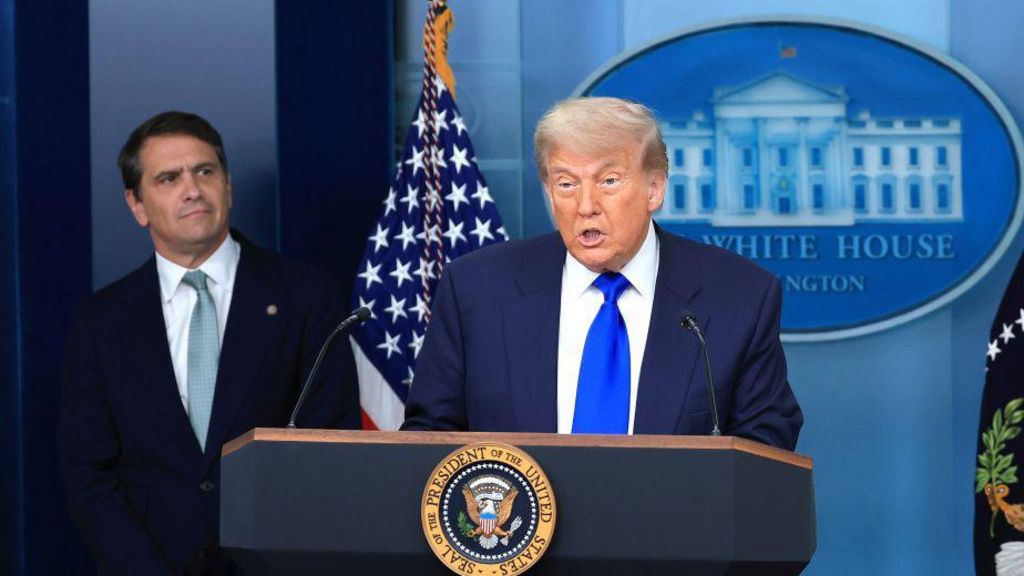
  • The end of Trump’s ‘weaponisation’ fund is another sign Republicans are fighting back

    The end of Trump’s ‘weaponisation’ fund is another sign Republicans are fighting back

    Just two weeks after it was first unveiled, a controversial $1.8 billion taxpayer-funded plan backed by former and current President Donald Trump to compensate his political allies has been formally scrapped by the U.S. Department of Justice, collapsing under overwhelming bipartisan pushback that included open revolt from members of Trump’s own Republican Party.

    The proposal, labeled the “anti-weaponisation” fund, emerged from a legal settlement that ended a lawsuit Trump had brought against the Internal Revenue Service. The initiative framed its payouts as compensation for Americans the Trump administration deemed wrongfully targeted by the prior Biden administration, and included a controversial provision that permanently blocked new tax audits of Trump, his family members, and his business entities. While the White House maintained the fund was open to applicants from all political parties, administration officials repeatedly refused to rule out extending payouts to rioters who participated in the January 6, 2021 attack on the U.S. Capitol, triggering immediate outrage from lawmakers on both sides of the aisle.

    The swift rejection of the plan from congressional Republicans marked one of the most high-profile examples of growing intraparty pushback against Trump in his second term, showing that the president does not hold unchallenged control over his own party even after returning to the White House. Lawmakers across the GOP warned that the proposal represented an unforced political error at a moment when Trump and the party were already grappling with major headwinds: an unpopular ongoing military conflict in Iran, soaring domestic gasoline prices, and Trump’s persistently low approval ratings that threaten to undermine Republican prospects in the upcoming midterm elections.

    “This was a total self-inflicted wound and completely unnecessary,” a senior anonymous former Trump adviser told reporters, adding that the controversy highlighted “the president’s myopic view sometimes — he’s going to do what he wants to do regardless of whether it hurts Republicans.”

    Intra-GOP criticism boiled over days after the plan was announced, during a tense closed-door May 21 meeting between Senate Republicans and Acting Attorney General Todd Blanche, who has served as the public face of the fund initiative. Texas Republican Senator Ted Cruz described the meeting on his podcast, noting “multiple senators yelling at the attorney general, saying this feels like self-dealing.”

    To escalate their pressure, congressional Republicans halted progress on a critical, long-delayed immigration spending bill that would fund U.S. Immigration and Customs Enforcement and Customs and Border Protection, two agencies central to Trump’s immigration policy agenda. Bipartisan opposition further mounted as Senate Majority Leader John Thune publicly urged the White House to abandon the plan, and Democrats pledged to block the immigration bill indefinitely until the fund was scrapped. Multiple advocacy groups also filed federal lawsuits to block the initiative, and a federal judge issued an order last Friday forcing the DOJ to suspend the fund pending legal review.

    On Monday, the Department of Justice announced a temporary suspension of the program, citing the court order. But critics including many Republicans demanded a full, permanent cancellation. On Tuesday, Blanche formally confirmed to House lawmakers that “we’re not moving forward with the fund,” bringing the short-lived initiative to a close. Even so, the controversy is far from over: Blanche declined to commit to a formal written end to the plan, leading many critics to argue the door remains open for the Trump administration to revive the proposal at a later date. Legal challenges from advocacy groups will also move forward, even after the administration’s announcement.

    “Litigation provides a safeguard to make sure” Trump cannot resurrect the scheme, explained Norm Eisen, co-founder of the Democracy Defenders Fund, which is one of the plaintiffs in the ongoing legal action against the administration. Senate Democrats have already announced plans to pass a permanent legislative ban on the program, framing the fund as a corrupt “MAGA slush fund” that enables tax fraud by the president and his allies. Senate Minority Leader Chuck Schumer argued that the administration’s verbal commitment to end the plan is not enough, saying “Blanche and Trump’s words are worthless. The only way to stop Trump’s nearly $2 billion MAGA slush fund and his blank check to commit tax fraud is to abolish it by law – permanently.” The issue is already set to become a central campaign talking point for Democrats ahead of the fall midterm elections, as the party looks to flip control of Congress from Republican hands.

    This latest controversy follows a string of recent breaks between Trump and congressional Republicans in his second term. Last month, multiple Senate Republicans joined Democrats to pass a war powers resolution aimed at limiting the duration of the Iran conflict. Last year, Republicans also joined Democrats to force the DOJ to release sealed documents related to the late convicted sex offender Jeffrey Epstein, after months of pressure that ultimately forced Trump to concede to the release.


  • She watched a wildfire destroy her town, so she’s building fire-proof bunkers

    She watched a wildfire destroy her town, so she’s building fire-proof bunkers

    The 2017 Atlas Wildfire that tore through Napa, California, left a trail of irreversible destruction: more than 51,000 acres of scorched land, 783 structures reduced to ash, and six lives lost. For aerospace engineer and northern California resident Linda Cantey, the disaster left an indelible emotional mark. She and her husband escaped by mere minutes after waking to frantic calls, but an elderly couple on their street perished when a power outage trapped them behind a stuck garage door.

    That traumatic experience pushed Cantey to turn grief into action. Beyond joining local wildfire safety advisory boards, she partnered with a mining firm that specialized in underground emergency refuge chambers, challenging the team to adapt their life-saving expertise for above-ground wildfire protection. The result, launched just last month, is Fort: a compact, shed-like backyard bunker designed to shelter up to eight people. Fitted with fire-resistant materials and a 4-hour supply of breathable air, the structure can withstand temperatures as high as 2,000 degrees Fahrenheit for three full hours.

    “If it wasn’t for Linda, we wouldn’t have built this, I don’t think,” said Josh Behling, president of Wildfire Safety Systems and one of Fort’s co-developers. To prove the bunker’s reliability, Cantey and Fort’s CEO even volunteered to remain inside during a real-world fire test, with first responders on standby.

    Fort is far from the only innovative response to the growing wildfire crisis. NASA data confirms that extreme wildfire activity has doubled globally over the past 20 years, and major blazes continue to devastate U.S. western states: just this month, the Sandy Fire north-west of Los Angeles triggered mass evacuations after burning more than 2,000 acres. As risk rises, survivors and entrepreneurs have developed a wide range of solutions, from high-tech hydraulic homes to low-cost natural vegetation management.

    Just one night before Fort’s launch in April, another team of innovators pitched their concept on the popular U.S. reality show *Shark Tank*. HiberTec Homes, developed by former real estate developer Holden Forrest after the 2018 Woolsey Fire destroyed 1,200 homes near his Malibu residence, is designed to retract completely underground in minutes when a wildfire approaches. Forrest sketched the original idea on the back of his 9-year-old daughter’s homework, never expecting an architect to take the concept seriously. What followed was years of collaboration with engineers to refine the patented technology. A 1,000-square-foot HiberTec home is priced at approximately $1.2 million, and the first model is expected to hit the market by 2030. For Forrest, the project is more than a business: it’s a life mission, prompting him to sell his own home and all his possessions to advance the technology.

    Not all solutions carry a six- or seven-figure price tag. Goat grazing, a low-tech approach to clearing flammable underbrush that fuels wildfire spread, has seen a dramatic surge in demand across fire-prone states. In Colorado, Kimberly Jones has grown her business Goat Mowers LLC from a herd of 25 goats to 250 over the past seven years, as homeowners increasingly turn to natural vegetation management. She reports a sharp uptick in new requests this year amid record dry conditions, and already has proof of the method’s effectiveness: last year, a wildfire stopped just 100 yards short of a home her goats had cleared 17 days prior.

    In California, Blue Tent Farms’ fire mitigation division Western Grazers has expanded its goat herd from 10 to 5,000 to meet growing demand from clients ranging from the U.S. Forest Service to utility giant Pacific Gas & Electric, as well as individual homeowners. “The minute the grass begins to turn, I get requests, probably 10 a week, from homeowners,” said managing partner Tim Arrowsmith.

    These new solutions, while promising, are not yet available at scale. Fort currently only has two demonstration units, with initial projections calling for roughly 150 orders per year, manufactured in Utah and shipped five weeks after purchase. The bunker is marketed as a last-resort option for those unable to evacuate, not a replacement for timely evacuation orders.

    For Cantey, the work has also been a form of healing. “It’s therapy for all of us, because what we’ve witnessed, and what we’ve experienced, we wouldn’t want anybody else to go through. But it’s going to keep happening,” she explained. As wildfire risk continues to climb, these innovators remain committed to filling gaps in safety protection, turning personal trauma into life-saving tools for communities across the West.

  • US announces new tariffs over forced labour concerns

    US announces new tariffs over forced labour concerns

    In a renewed push for hardline trade policy after a major judicial setback earlier this year, the Trump administration has rolled out a new round of import tariffs ranging from 10% to 12.5% on dozens of U.S. trading partners, framing the move as a response to alleged failures by these nations to crack down on forced labor in global supply chains.

    This announcement marks the second major tariff action from the White House since the U.S. Supreme Court struck down a large portion of Trump’s previous import duties in February. In that earlier ruling, the court invalidated the controversial “Liberation Day” tariffs that Trump imposed on a wide swath of countries across the globe in April 2025. Trump publicly denounced the ruling at the time, calling it “terrible” and labeling the justices who rejected his trade policy “fools”. Immediately following the Supreme Court decision, the administration implemented a temporary 10% global tariff, after floating a potential 15% rate that never took effect. That temporary measure is set to expire in July unless Congress votes to extend it.

    The 60 trading partners targeted in the new tariffs read like a who’s who of major global economies, including the United Kingdom, the European Union, Canada, and Japan. Combined, these nations account for a staggering 99.4% of all goods imported into the United States, meaning the new duties will touch nearly every segment of U.S. cross-border trade. The new tariffs stem from a broad investigation the U.S. Trade Department launched back in March, which examined the forced labor enforcement frameworks of all 60 trading partners. After concluding the probe, the agency announced Tuesday that every nation under review had “failed both to impose a legal prohibition on the importation of goods produced wholly or in part with forced labor (forced labor goods) and to effectively enforce such a prohibition”.

    U.S. Trade Representative Jamieson Greer defended the policy, arguing that allowing unregulated trade with nations that do not police forced labor creates an unfair system for American workers. “It creates a dynamic where American workers are forced to compete globally on an unlevel playing field”, Greer said. The U.S. government’s formal position holds that engaging in trade with countries that permit goods made with forced labor constitutes unfair competition for the United States. Still, the policy has drawn sharp criticism from trade analysts and political opponents, who warn that Trump’s broad-based tariff strategy has already driven up consumer prices in the United States and caused economic disruptions in global markets, with new duties set to exacerbate these upward pressures on costs.

  • Los Angeles Mayor Karen Bass advances to run-off in race to run California’s biggest city

    Los Angeles Mayor Karen Bass advances to run-off in race to run California’s biggest city

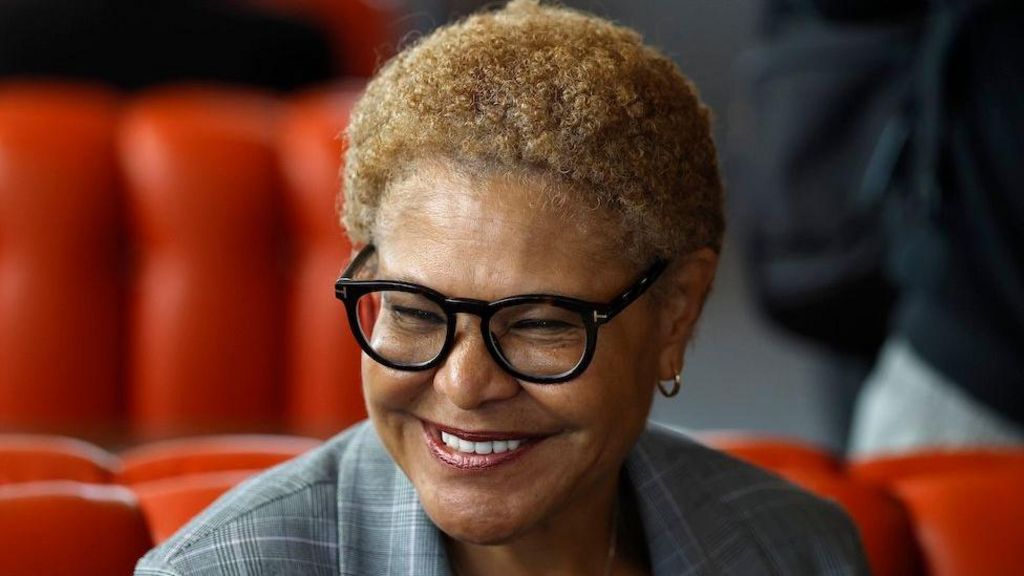
    One day after Super Tuesday primary voting across multiple U.S. states, political observers are still waiting for final results in two high-profile California contests, with Democratic incumbent Karen Bass the first to lock in her spot on the November general election ballot for Los Angeles mayor. According to projections from CBS News, the BBC’s U.S. election partner, Bass has advanced out of California’s nonpartisan “jungle primary” system, which advances the top two vote-getters regardless of party affiliation. Her November opponent remains undecided as counting continues, with two candidates locked in a tight race for the second spot. Currently holding second place is Republican political newcomer Spencer Pratt, a reality television star who entered the race in January 2026 on the one-year anniversary of the devastating 2025 Palisades Fire that destroyed his home. Tailing Pratt by roughly 8 percentage points with nearly half of all ballots counted is left-wing Democratic city councilmember Nithya Raman. The eventual winner of November’s general election will lead the United States’ second-largest city for the next four years, and will oversee the city’s final preparations for the 2028 Summer Olympic Games while tackling long-running crises of unhoused populations and a lack of affordable housing. If Bass wins in November, it will mark her second and final four-year term as mayor, capping a decades-long career in Los Angeles politics and community organizing. Before her first mayoral term, Bass represented Los Angeles in the U.S. House of Representatives for six terms, chaired the Congressional Black Caucus, and served as a prominent member of the House Foreign Affairs Committee. She was even widely discussed as a potential vice presidential running mate for Joe Biden during his 2020 presidential campaign. Bass’s first term has been defined largely by her efforts to address LA’s homelessness crisis and respond to federal immigration enforcement actions, but her tenure faced significant backlash following the January 2025 Palisades Fire. The blaze killed 12 people, destroyed thousands of homes across Southern California, and stands as one of the most destructive wildfires in state history – and Bass’s administration drew widespread criticism for its slow emergency response. That criticism has become the core of Pratt’s underdog campaign. The 42-year-old political outsider, who holds a degree in political science but has never held public office, first rose to fame in 2007 as a cast member on MTV’s hit reality series *The Hills*, where he became known for his dramatic, abrasive on-screen persona. Today, he campaigns on a platform of “fixing broken Los Angeles,” framing the city as unsafe and unkempt, and pushing for mandatory drug treatment programs as a solution to homelessness. For Raman, her entry into the mayoral race came as a surprise to many political observers: the 44-year-old urban planner and first-term city councilmember endorsed Bass shortly before reversing course and entering the race just ahead of the candidate filing deadline. A member of the Democratic Socialists of America, Raman has drawn comparisons to New York City Mayor Zohran Mamdani for her progressive politics. Her campaign centers on expanding access to affordable housing, accelerating progress on reducing homelessness, and revitalizing job growth in Hollywood’s entertainment sector, arguing that Bass has failed to deliver meaningful change on the city’s most pressing issues. Bass has already secured enough support to move on to November under LA’s primary rules: a candidate wins the contest outright only if they earn more than 50% of the primary vote, a threshold no candidate is on track to hit this cycle, meaning the top two will advance to the general election. Tuesday’s LA mayoral primary was just one of dozens of contests held across California, Iowa, New Jersey, and New Mexico that day, all part of the 2026 national midterm election cycle that will determine control of Congress and dozens of state and local offices across the country. In the other high-profile California contest, the race for governor, vote counting is also ongoing, with the contest already making history as the most expensive gubernatorial race in U.S. history. No clear front-runner has emerged through the primary, with three leading candidates locked in a tight race to advance to November. California has been led by Democratic governors since 2011, but the state’s high cost of living and ongoing homelessness crisis have created a competitive 2026 cycle. The leading contenders include Steve Hilton, a British-American conservative commentator and former policy adviser to ex-British Prime Minister David Cameron who played a key role in shaping Conservative strategy during the Brexit process. Endorsed by former President Donald Trump, Hilton campaigns on a platform of “disrupting the status quo” in Sacramento, promising to address the homelessness crisis, roll back California’s decades-long sanctuary state immigration policies, and increase cooperation with federal immigration enforcement. He is also known for his casual California-inspired style, often appearing barefoot and without a tie at campaign events. Close behind Hilton is Xavier Becerra, a longtime California politician and former U.S. Secretary of Health and Human Services during the Biden administration. Becerra has centered his campaign on his decades of governing experience at both the state and federal level, promising to push back against any policy changes pushed by Trump and his allies, and to freeze rising insurance and utility rates for cash-strapped California residents. The third leading contender is billionaire progressive activist Tom Steyer, who is campaigning on a platform of sweeping progressive policy change, including implementing a single-payer universal healthcare system in California and closing tax loopholes to force the state’s highest earners to pay a greater share of taxes. The race comes as California holds the highest cost of living in the United States, leaving many low- and middle-income residents struggling to cover basic housing, food, and utility costs, a reality that has shaped policy debates across all 2026 contests in the state.

  • Peabo Bryson, R&B singer behind Beauty and the Beast, dies aged 75

    Peabo Bryson, R&B singer behind Beauty and the Beast, dies aged 75

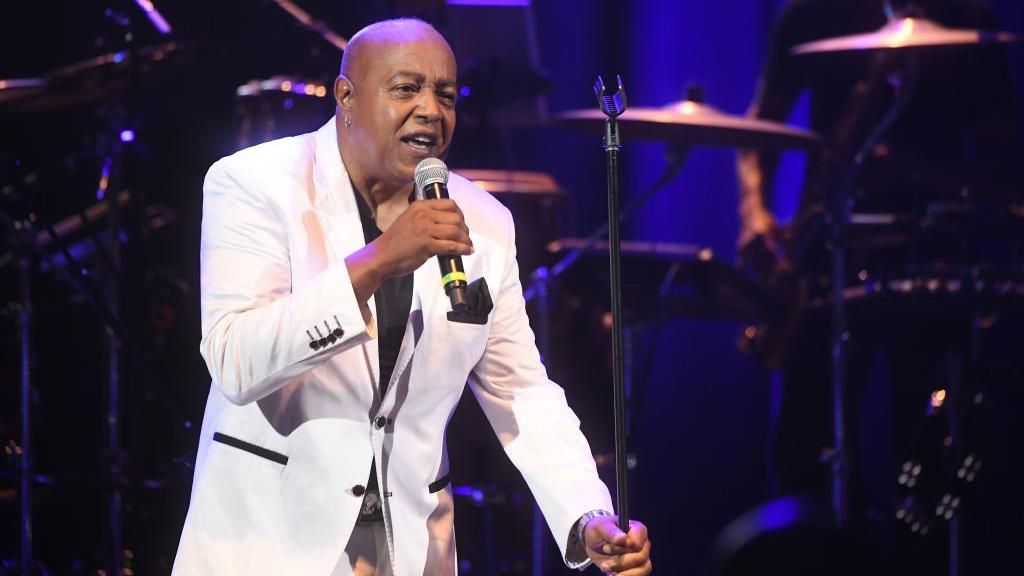
    The world of music and film is mourning the loss of iconic R&B singer Peabo Bryson, whose smooth, powerful vocals defined some of the most beloved Disney soundtracks in modern cinematic history. Bryson, best known for recording the Grammy-winning classics *Beauty and the Beast* and *A Whole New World*, passed away at the age of 75 on Tuesday evening.

    In a formal statement released to the public, Bryson’s family confirmed that he died peacefully while surrounded by close family and loved ones at his side. While no official cause of death has been made public, the singer suffered a major stroke over the weekend prior to his passing and had been receiving ongoing medical care following the health event.

    Bryson’s career spanned an extraordinary five decades in the entertainment industry, launching his first charting hits in the 1970s and continuing to produce beloved work well into the 2010s. Beyond his globally recognized Disney collaborations, he built a robust solo catalog of fan-favorite tracks that include *Feel the Fire*, *Reaching for the Sky*, *I’m So Into You*, *If Ever You’re In My Arms Again*, and *Can You Stop the Rain*. For generations of listeners, his work became the backdrop to life’s most meaningful moments, from romantic milestones to quiet moments of comfort.

    “For more than five decades, Peabo’s extraordinary voice served as the soundtrack to some of life’s most cherished moments,” his family shared in the statement. “His music carried generations through joyful celebrations, great love stories and enduring moments of comfort and inspiration, creating a legacy that will forever live in the hearts of those who loved him and the countless lives he touched through song.”

    Bryson’s most decorated professional achievements came from his iconic Disney collaborations, which earned him two Grammy Awards across 1992 and 1993. His 1992 duet of *Beauty and the Beast* with Celine Dion, recorded for the animated classic of the same name, took home the award for Best Pop Performance by a Group or Duo With Vocals. The following year, his duet *A Whole New World* with Regina Belle, created for Disney’s *Aladdin*, won the same Grammy category, along with the award for Song of the Year. Both tracks remain cultural touchstones that define the golden age of Disney animation for millions of fans worldwide.

    “While our hearts are broken, we find comfort in knowing how deeply Peabo was loved and how many lives were touched by his voice and his generous spirit,” the family added. “His legacy and music will live on for generations to come.”

    Just weeks before his passing, Bryson remained active in his career. In mid-May, he took the stage for a joint concert with fellow R&B star Jeffrey Osborne in Georgia, United States. He had also planned a series of performances later this year as part of his *Golden Touch Tour*, a celebration marking his 50 years working in the music industry. As recently as April, Bryson celebrated his 75th birthday with friends and family, sharing photos from the joyous gathering with his followers on social media.

  • Watch: Men seen entering NYC sewer manhole in surveillance footage

    Watch: Men seen entering NYC sewer manhole in surveillance footage

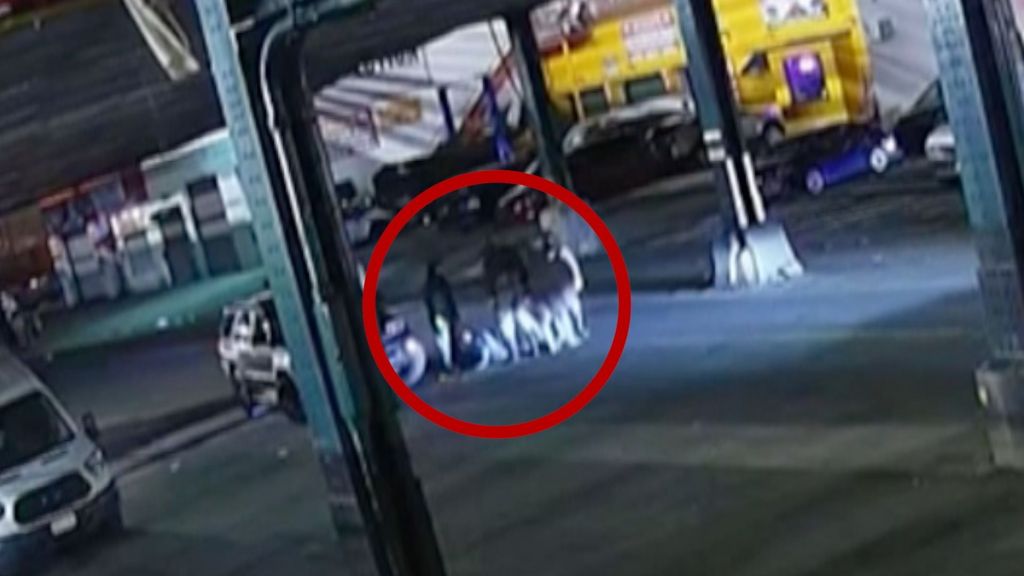
    Newly released surveillance footage from New York City has captured a striking, unusual scene: two unidentified men climbing down through an open sewer manhole into the sprawling underground network that lies beneath the city’s busy streets. The New York City Police Department has launched an investigation into the incident, which has sparked curiosity across local communities.

    According to initial law enforcement assessments, authorities believe the two men are likely amateur treasure hunters or passionate urban explorers. For decades, urban exploration has drawn adventure-seekers to the hidden, off-limits infrastructure of major cities, including unused tunnels, abandoned subway stations, and even active sewer systems, with many participants chasing the thrill of accessing spaces closed off to the general public. In some cases, explorers have also held long-running rumors that forgotten valuables or historic artifacts could be hidden within New York City’s more than 6,000 miles of sewer lines, a myth that has driven occasional unauthorized entries into the system.

    Entering the city’s sewer system without official authorization is illegal and extremely dangerous. NYPD officials have warned that underground sewer environments pose severe hazards including toxic gas buildup, sudden flooding from rain or wastewater surges, unmarked drops, and structural instability. First responders also face major challenges when called to rescue people who get trapped underground, due to the complex, maze-like layout of the network.

    As of the latest update, the two men have not been identified, and police have not reported any arrests or injuries connected to the incident. Authorities are asking members of the public who recognize the individuals from the surveillance footage to come forward with information to assist the ongoing investigation.

  • US says it fired missile at Iran-bound oil tanker

    US says it fired missile at Iran-bound oil tanker

    In the latest escalation of Washington’s naval restrictions around the Strait of Hormuz, U.S. military forces have attacked and disabled an empty oil tanker bound for Iranian waters, U.S. Central Command (Centcom) confirmed this week.

    The targeted vessel, the Botswana-flagged M/T Lexie, was struck by a Hellfire missile fired from a U.S. military aircraft after its crew disregarded repeated calls to halt and alter course, according to Centcom’s official statement. The command also published newly released surveillance footage that it says captures the moment the missile impacted the tanker’s engine compartment on Tuesday.

    As of this reporting, Iranian officials have not issued any public response to the incident, and representatives from Botswana’s government have not yet commented— The BBC has reached out to Botswana’s administration to request a statement on the attack.

    The U.S. blockade of all commercial traffic moving into and out of Iranian ports first went into effect on April 13 this year, creating heightened tensions in one of the world’s busiest and most strategically critical oil shipping chokepoints. Centcom’s latest update puts the cumulative impact of the blockade at six commercial vessels disabled through military action, with an additional 122 ships forced to change their planned routes since the restrictions were implemented. The attack marks the most recent publicly acknowledged action under the controversial blockade, which has already raised global concerns over disruption to global energy supplies and heightened conflict risk in the Persian Gulf region.

  • Microsoft testing wearable AI gadget aimed at office workers

    Microsoft testing wearable AI gadget aimed at office workers

    In a revealing showcase at its annual developer conference, Microsoft has pulled back the curtain on two experimental AI-integrated hardware concepts designed to reimagine how professional workers interact with artificial intelligence tools on a daily basis. Unveiled by Microsoft executive Steven Bathiche, the two prototypes represent the tech giant’s latest bet on new device form factors, a direction spearheaded by CEO Satya Nadella under the broader Project Solara initiative.

    The first concept is a compact, desktop-friendly cube device built with both touch and voice-activated controls, tailored to keep AI assistance accessible at a user’s workstation. The second, far more unconventional design, is a wearable AI-enabled access badge that can be strung on a neck lanyard or clipped to a belt loop, delivering on-the-go access to AI-powered work support. Currently, only a few hundred Microsoft employees are testing the prototype devices internally; the company has not confirmed a commercial release date, noting that these early trials will shape how future AI hardware iterations are developed.

    This project marks Microsoft’s latest return to the consumer and enterprise wearable hardware space, following the high-profile HoloLens mixed reality headset line. First launched nearly a decade ago, HoloLens gained major traction when the company secured a multi-billion dollar contract to supply the headsets to the U.S. Army. However, persistent technical issues encountered during military testing led Microsoft to discontinue production of the device line in 2024. Microsoft is far from alone in revisiting the wearable category: Google, which saw its first Google Glass smart glasses launch flop over a decade ago, recently announced it would make a second attempt at AI-powered smart glasses.

    In demonstration footage released by the company, office-based workers were shown interacting with both devices to connect with AI agents – semi-autonomous AI bots that handle a range of work tasks, from drafting to software development assistance – without needing to open a laptop or desktop interface. The lightweight wearable badge, for example, is designed specifically for quick agent interactions when a user is away from their desk. Nadella himself even appeared in footage wearing the badge on a neck lanyard, identical in form factor to the standard employee ID badges worn in most corporate offices.

    The wearable badge also includes an integrated small camera, a feature that has already raised familiar privacy questions. During his conference presentation, Bathiche demonstrated the camera by activating the device via fingerprint sensor, pointing it at the conference audience to capture photos, and directing the AI agent to send the images to his personal device for review. In a public blog post, Bathiche explained that the built-in camera is intended to help AI agents interpret the user’s surrounding environment and take contextually relevant actions. However, camera-equipped AI wearables have faced intense public and regulatory scrutiny in recent years; Meta’s AI-powered smart glasses, for example, have drawn widespread criticism over a lack of transparency around when and how user footage is recorded, stored, and used. This latest prototype from Microsoft is likely to face similar scrutiny as it moves through internal testing.

    As AI agent technology becomes increasingly central to the workflows of software developers and other knowledge workers, major tech leaders have framed AI automation as a core driver of recent corporate layoffs that have displaced tens of thousands of workers. These new concepts from Microsoft signal the company’s broader push to embed AI agent functionality into every layer of daily work, beyond traditional computing devices.

  • New York police investigate videos of men emerging from city’s sewer system

    New York police investigate videos of men emerging from city’s sewer system

    Over the past few weeks, New York law enforcement has launched an active investigation after a string of surveillance and user-shared videos captured groups of unidentified individuals accessing the city’s extensive sewer network through open manholes. According to police sources cited by major U.S. media outlets, the intrusions have been documented across residential neighborhoods in both Brooklyn and Queens, with the people involved widely suspected of searching for discarded or lost valuables hidden beneath city streets.

    Details from the released footage show one clear incident where multiple working-age men worked together to lift a heavy manhole cover before climbing down into the underground system, only reemerging several hours later to leave the area. Investigators have not yet confirmed whether all reported incidents are connected to the same group, or if multiple separate parties have been undertaking the unauthorized activity.

    Officials from New York City’s Department of Environmental Protection (DEP) have issued a stark public warning about the risks and legal ramifications of this behavior, stressing that unpermitted entry to municipal sewer infrastructure is a criminal offense as well as a potentially fatal activity. A DEP spokesperson explained to the BBC that sewers carry a wide range of life-threatening hazards: toxic and combustible noxious gases that can overcome humans in seconds, uneven and unstable walking surfaces that can lead to catastrophic falls, sudden unexpected flood surges from storm runoff or wastewater flows, and the extreme confinement of underground pipes that makes rescue nearly impossible for anyone trapped. For all these critical safety reasons, the department urged members of the public to never attempt to access any part of the city’s drainage system, including pipes, drains, catch basins, manholes, or ocean outfalls.

    Last week, the NYPD received formal public reports of several people removing manhole covers and descending into the sewers in one Queens neighborhood. Following the incident, the individuals departed the area in an unidentifiable vehicle to an unknown destination, NYPD representatives confirmed to the BBC. No injuries were reported in connection with the incident, no suspects have been taken into custody as of the latest update, and the inquiry remains open and active.

    Police sources told CBS News, the BBC’s domestic U.S. partner, that the people captured on camera climbing out of sewer manholes are likely a mix of amateur “treasure hunters” and urban exploration enthusiasts who believe valuable items may be hidden or washed into the underground system. If apprehended and convicted, the intruders could face felony burglary charges under New York state law.

  • Video shows elaborate drug-smuggling tunnel between US and Mexico

    Video shows elaborate drug-smuggling tunnel between US and Mexico

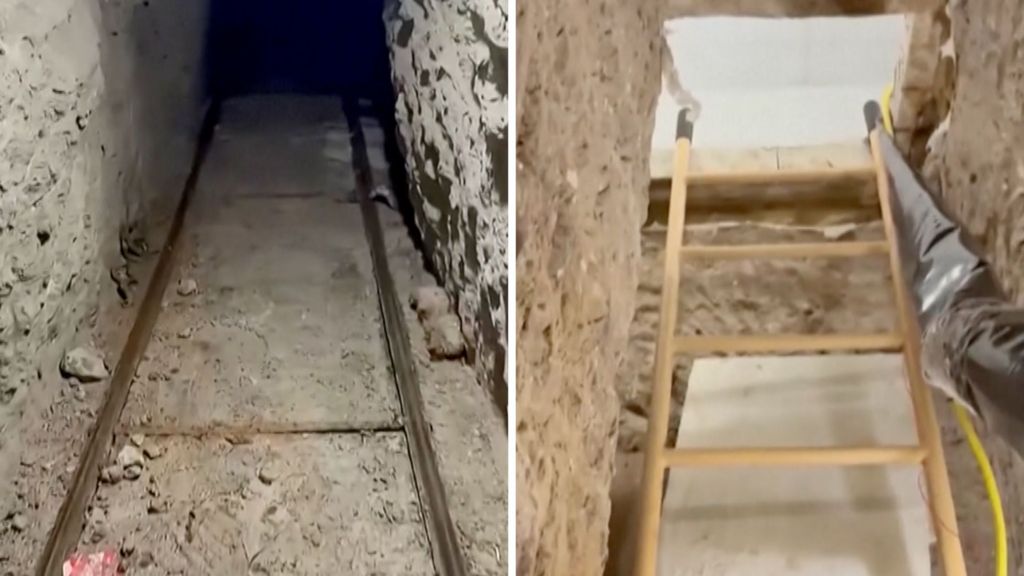
    A newly revealed surveillance video has exposed the intricate design of a sophisticated drug-smuggling tunnel constructed beneath the border between the United States and Mexico, in a case that has once again drawn sharp attention to long-standing challenges of cross-border contraband trafficking. According to updates from United States federal law enforcement officials, four individuals connected to the discovered underground passage have been taken into custody and formally charged with conspiring to traffic cocaine valued at more than $45 million. The tunnel, which was built with intentional, elaborate engineering to avoid detection for an extended period, highlights the persistent ingenuity of criminal smuggling networks that operate across the shared U.S.-Mexico boundary, a region that has remained a focal point for federal anti-narcotics enforcement efforts for decades. Investigators confirmed that the seizure of the tunnel and the subsequent arrests mark a major breakthrough in disrupting a large-scale drug trafficking operation that was moving massive quantities of cocaine into the U.S. for distribution. Federal authorities have not yet released full details of the tunnel’s exact location or construction timeline, but the released video footage offers a clear look at the carefully built underground passage that the criminal network relied on to move contraband undetected. This case underscores the ongoing cat-and-mouse game between law enforcement agencies and transnational criminal organizations that profit from the illegal drug trade in North America.