
Following a tightly contested match against Switzerland that ended in defeat for the Canadian men’s national team, players and fans across the country have embraced a measured, philosophical attitude toward the result, with the widespread refrain “It is what it is” summing up the collective mood. While the final score did not go Canada’s way, the outcome carries far more positive long-term context for the nation’s soccer program: even in defeat, Canada has secured a spot in the knockout round of the FIFA World Cup for the first time in the country’s 100-plus year history of international soccer participation. This milestone alone marks a massive breakthrough for Canadian soccer, which has spent decades working to build a competitive program capable of competing with the top nations in the world. Many supporters and analysts have pointed out that the defeat does not overshadow the historic achievement, noting that the team had already done enough in previous group stage matches to lock in their progression regardless of the final result against Switzerland. Players, while disappointed to not close out the group stage with a win, have also expressed gratitude for the opportunity to compete on the world’s biggest soccer stage and excitement for the knockout round matchup that lies ahead. Fans across Canada have taken to social media to echo the measured reaction, celebrating the team’s historic run while acknowledging the tough result against a consistently strong Swiss side. Many have emphasized that this World Cup run is already a win for Canadian soccer, laying the groundwork for future generations of players to build on the progress made in this tournament.
标签: North America
北美洲
-

Trump holds housing cost relief hostage to noncitizen voting act
In a sudden Wednesday announcement that upended weeks of bipartisan legislative progress, former and current U.S. President Donald Trump scrapped a planned public signing ceremony for a broadly popular housing affordability overhaul, demanding Congress first advance his controversial election security proposal before he puts pen to paper on the housing measure.
The bipartisan housing bill had already cleared major congressional hurdles with overwhelming bipartisan support: the Senate passed the legislation 85-5 on Monday, followed by a 358-32 House vote just one day later. The White House had previously confirmed Trump backed the bill, and a public signing event was scheduled to take place in the U.S. Capitol’s Statuary Hall, a venue set up to mark the legislative win. But hours before the event was set to begin, Trump took to his Truth Social platform to call off the ceremony and reject the bill for the time being.
In his post, Trump labeled the housing overhaul, which is designed to bring down soaring U.S. housing costs, as a “minor” measure. He added, “Today’s Housing News Conference and Signing is hereby cancelled until such time as we pass the desperately needed SAVE AMERICA ACT, which I consider to be a National Emergency.”
The SAVE America Act, a top legislative priority for Trump, targets noncitizen voting, an extremely rare occurrence in U.S. elections. Despite Trump’s push for the bill, Republican Senate leaders have already privately warned the president that the legislation lacks enough votes to pass the upper chamber.
The housing overhaul, spearheaded by Senate Banking Committee Chairman Tim Scott, a South Carolina Republican, and the committee’s ranking Democratic member Elizabeth Warren of Massachusetts, includes a set of provisions aimed at easing the nation’s persistent housing affordability crisis. The bill would cut red tape that drives up construction costs, expand eligible uses for federal housing grants, and implement a ban on institutional investors purchasing large blocks of single-family homes—practices widely blamed for pushing up home prices for everyday buyers. Scott had praised the legislation earlier this week as a rare example of nonpartisan lawmaking that addresses a widespread, cross-partisan economic need.
For Republican congressional leaders, the housing bill was crafted to tackle affordability, a top policy issue expected to dominate the upcoming November midterm elections amid ongoing stubborn inflation across the U.S. economy. Most congressional opposition to the bill came from a small bloc of hardline House conservatives led by Florida Representative Anna Paulina Luna, who has pledged to block all legislation coming from the Senate, and even some House rules resolutions, until the upper chamber advances Trump’s election security measure.
Speaking at a Wednesday morning press briefing, House Speaker Mike Johnson, a Louisiana Republican, confirmed that he had spoken with Trump earlier that day. Johnson clarified that Trump is only delaying signing the housing bill to pressure Congress to pass an election security grant program through the budget reconciliation process— the same fast-track legislative procedure that Republicans used to pass their major earlier policy bill and allocate $70 billion for immigration enforcement.
Johnson explained the Republican proposal: “You have to put it on a reconciliation bill. We believe that if you create a grant program that ties it to reconciling the budget and you allow blue states, if they come to their senses and they want to avail themselves of election integrity proposals and ideas and policies, they can draw down from a federal fund and use those funds. We’re willing to invest heavily in that.”
The Speaker told reporters he had assured Trump that congressional Republicans can pass the election security measure if the caucus unites behind the effort. “As you know he has a window of time before he has to sign a bill and he’s going to use a bit more of that window of time. And we’re going to go through this together,” Johnson said, adding that he expects Trump will ultimately sign the housing bill within the 10-day window allotted for presidential approval.
-
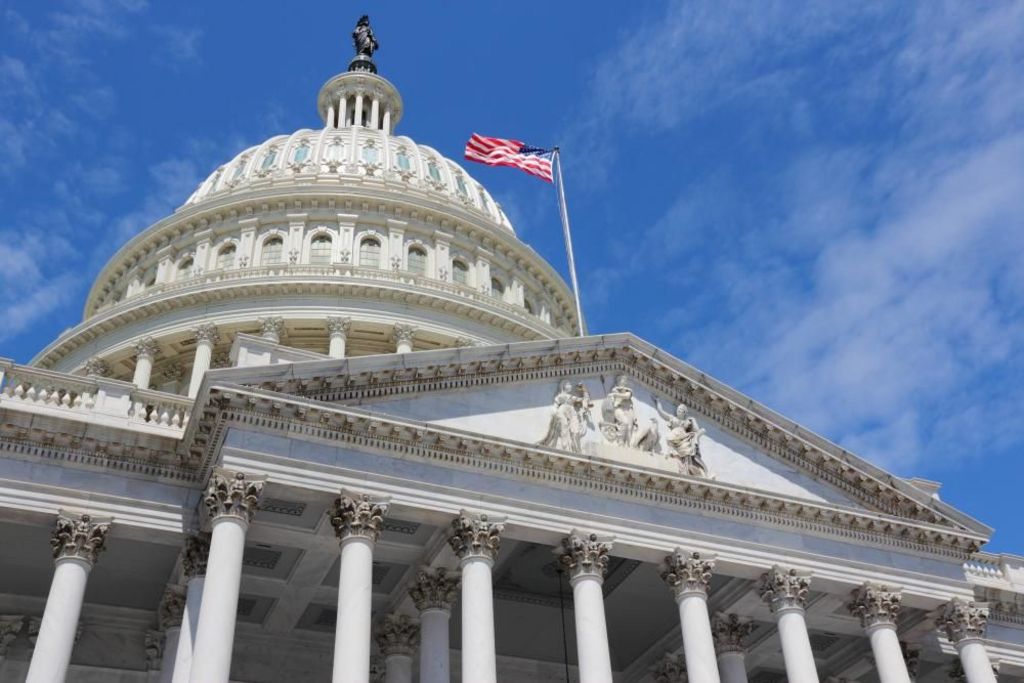
Trump asks Congress for $87bn, mostly for ‘urgent’ Iran war costs
In a historic rebuke of executive military authority unseen in half a century, the U.S. Congress has passed a bipartisan resolution ordering former President Donald Trump to end ongoing military action against Iran – a move that carries profound implications for the balance of power between Washington’s legislative and executive branches. Just one day after this landmark congressional vote, the White House submitted a formal $87.6 billion emergency funding request to Capitol Hill, the vast majority of which is earmarked for so-called ‘urgent war-related needs’ tied to the U.S. conflict with Iran.
According to details released by the White House Office of Management and Budget, which delivered the official funding request to House Speaker Mike Johnson on Wednesday, $67 billion of the total package would go directly to the U.S. Department of Defense. That defense allocation breaks down into $21 billion for replenishing munitions stockpiles, $17.3 billion for frontline operational expenses, and $12.1 billion for classified defense programs. The remaining portion of the request is allocated to unrelated policy priorities: $11 billion in relief for American agricultural producers and $1.4 billion to support international response efforts against the ongoing Ebola outbreak in Central Africa.
Despite the White House’s framing of the request as an emergency, the proposal faces steep, well-documented obstacles to passage. Public opposition to the Iran conflict remains high among American voters, and critical midterm congressional elections are scheduled for this coming November, leaving lawmakers wary of backing a unpopular military engagement. Currently, a fragile ceasefire holds between U.S. forces and Iranian military positions, but months of open conflict have severely depleted the Pentagon’s weapons and equipment stockpiles, creating the urgent logistical need the White House is attempting to address.
Congressional Republicans, who hold majority control of both chambers, have openly voiced skepticism over the preliminary peace deal Trump reached with Iranian officials last week. On the same day the funding request was submitted, Trump held a tense, closed-door meeting with Senate Republicans at a Capitol Hill luncheon, after he unexpectedly scrapped a planned signing ceremony for a bipartisan housing bill with no public explanation. Multiple sources familiar with the meeting confirmed to CBS News, the BBC’s U.S. partner, that Trump lashed out at lawmakers over the previous day’s war powers resolution vote.
The resolution itself, though largely symbolic in its immediate impact, marks the first time since the 1973 War Powers Resolution became law that Congress has successfully passed a measure compelling a sitting president to halt an ongoing military operation. The vote underscores growing cross-partisan pushback against unilateral executive military action, even within the president’s own party, and sets a potential precedent for future checks on presidential war-making authority.
-
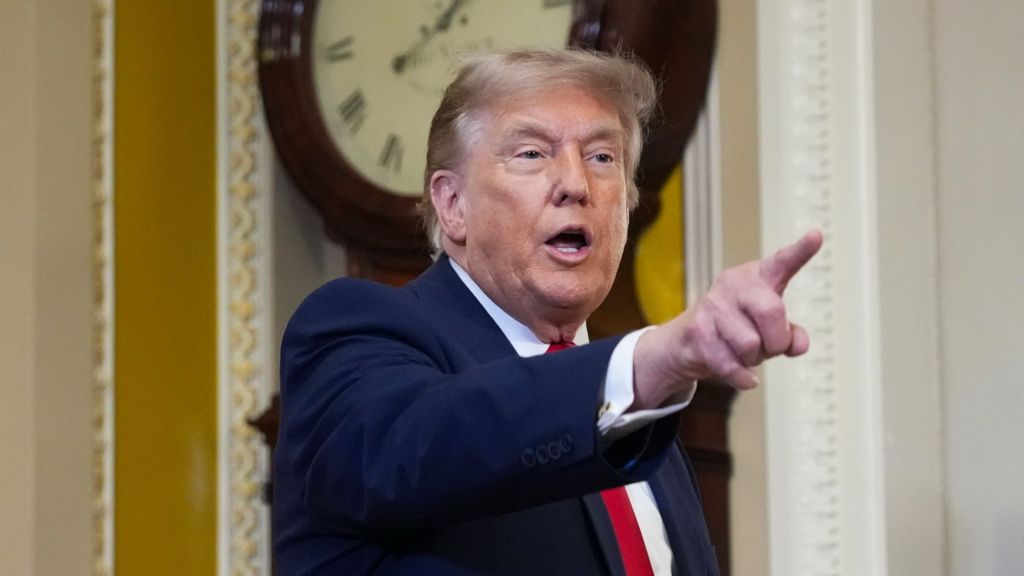
Congress has told Trump to stop the Iran war, will it matter?
A high-stakes constitutional clash has erupted in Washington D.C. after the United States Congress passed a war powers resolution aimed at forcing former President Donald Trump to halt any unauthorized military action against Iran that could escalate into a full-scale conflict. The move marked a rare moment of bipartisan pushback against executive authority on military matters, as lawmakers from both major parties raised alarms over rising tensions in the Persian Gulf that threatened to draw the U.S. into another costly Middle Eastern war.
BBC senior White House correspondent Gary O’Donoghue has broken down why this specific congressional resolution triggered such a sharp reaction from the then-sitting president. At its core, the resolution represented a direct challenge to Trump’s claims of broad executive power to launch military operations without formal congressional approval, a long-running point of contention between the legislative and executive branches that predates his administration.
For Trump, the rebuke from Capitol Hill was not just a policy disagreement—it was a public insult to his authority as commander-in-chief, undermining his leverage in ongoing diplomatic and military posturing against the Iranian government. Even as many political analysts question whether the resolution will have any tangible practical impact, given its limited enforcement mechanisms and the president’s willingness to push back against congressional constraints, its symbolic significance cannot be overstated. It exposed growing unease among lawmakers across the political spectrum about the risk of an open-ended war in Iran, and set a precedent for future congressional efforts to rein in unilateral military action by future presidents.
-

Meet the fans being paid $50,000 to watch every single World Cup match
The 2026 FIFA World Cup group stage is in full swing, with six matches packed into every single matchday, turning following the tournament into a full-time commitment for even the most dedicated football fans. For two American men, that commitment is not just a passion project—it is a paid job that comes with a $50,000 salary.
Kevin Akoto, a line cook from Florida, and Austin Franklin, a Philadelphia-based influencer, beat out thousands of applicants to land the unique role of Fox One “Chief World Cup Watchers”. Their core task: watch every single one of the tournament’s 104 matches live, while creating social content for global football fans. Over a week into their assignment, the BBC caught up with the pair to hear about their once-in-a-lifetime experience in one of the busiest public spaces on Earth.
Perched directly in the center of New York City’s iconic Times Square, the duo’s workspace is a purpose-built, fully transparent glass cubicle that passersby can peer into at any time. Far from a sparse, uncomfortable viewing space, the cubicle is decked out to be a football fan’s dream: plush recliners, a matching brown leather sofa, two large 4K televisions for simultaneous match viewing, a foosball table for downtime between games, stacks of official team merchandise, and an endless supply of game-day snacks. “It’s exactly what any 20-year-old football fan would build if they could design their perfect viewing space,” Akoto told the BBC.
With the tournament stretching on for several more weeks, the pair have had to carefully pace themselves to avoid burnout. Both have already spoken openly about the mental and physical fatigue that comes with hours of continuous viewing. “I’ve gotten worn down, Austin’s gotten a bit worn down, so we’re just learning how to keep up with everything that’s going on,” Akoto explained. Franklin compared the experience to a weeks-long summer camp, where days start to blur together after the first week. “This is a total marathon. It’s an easy job on paper—I’m just sitting on a couch watching football—but it’s still incredibly tiring. I make sure to get a full eight hours of sleep whenever I can,” he added. Fortunately, the job does not require the pair to sleep in the glass cubicle; they wrap up their shifts each day, head to private accommodation to recharge, and return refreshed the next morning.
Alongside the long hours, the role comes with a string of exciting perks. The pair have already witnessed multiple historic tournament moments from their front-row seats: they watched Lionel Messi break the all-time World Cup scoring record while enjoying a catered meal of traditional Argentinian barbecue, a part of the role’s unique catering program that serves native cuisine from each competing nation throughout the tournament.
Between matches, the pair get frequent opportunities to interact with the thousands of World Cup fans that flood Times Square daily, from large groups of Brazilian supporters celebrating wins to Norwegian fans who brought their viral Viking rowing celebration to the iconic tourist hub. Franklin says these interactions are his favorite part of the job. “Getting to meet fans from all over the world, talk about football, culture, and their experience visiting the U.S.—that’s what makes this special,” he said. “The craziest part is how often I forget I’m right in the middle of Times Square with people watching me. I’ll get sucked into a match for 10 or 15 minutes, and when I look up, I’m suddenly reminded hundreds of people are walking past watching right back.”
When it comes to picking a tournament winner, the pair have differing predictions. Akoto is backing Spain to lift the World Cup trophy, though he says he will be cheering on the U.S. and Ghana throughout the rest of the tournament, due to his personal roots. Franklin, meanwhile, wears a Norway national team jersey and is backing the Scandinavian side to pull off an upset win. “Everyone is picking Spain or France as the easy favorite, but Norway is right on the cusp of greatness. If things fall their way, I fully believe they can bring the trophy home,” he explained.
Both Akoto and Franklin say they have zero regrets about taking the role, but public opinion on the unique job is split among the spectators who stop by the cubicle. Norwegian fan Eimund Liland, 52, who visited Times Square with his 15-year-old daughter Camille, called watching all 104 matches with no privacy “a total overdose” of football. Eighteen-year-old Matthew Mendez told the BBC he would rather experience the World Cup watching matches with friends and family than sit alone in a public cubicle for weeks. But for 20-year-old Miguel Sanchez, the opportunity is a dream come true. “What? This is even better than going to the World Cup in person—getting paid $50,000 just to watch football? That’s crazy, that’s really crazy,” he said.
-
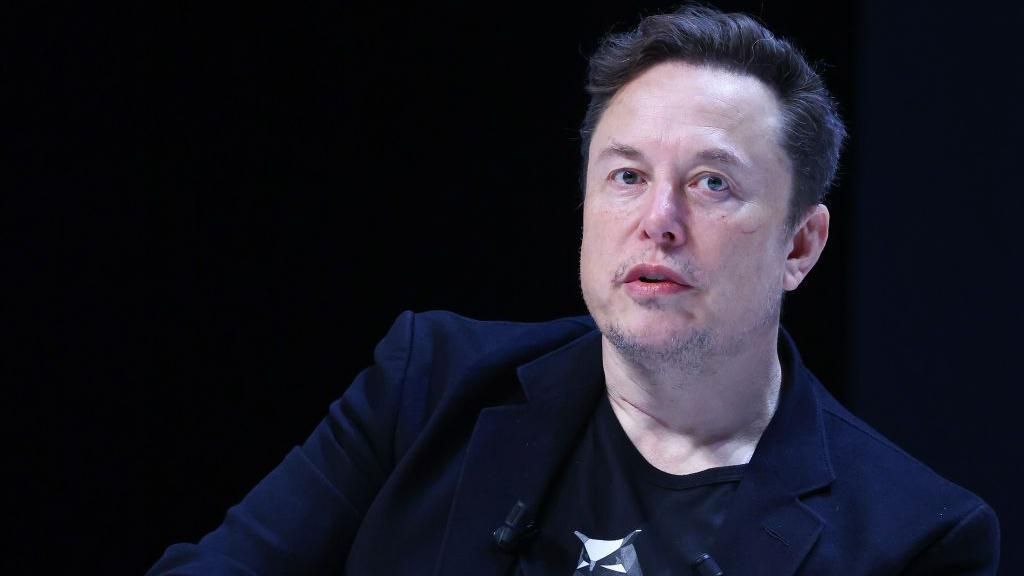
Elon Musk loses trillionaire status as global tech rout hits SpaceX
Just 12 days after making history as the world’s first person to hit a $1 trillion net worth following SpaceX’s blockbuster public debut, tech tycoon Elon Musk has fallen short of the trillion-dollar mark, new data from Bloomberg shows. The Bloomberg Billionaires Index, which refreshes daily at 5:30 p.m. New York time, pegged Musk’s total fortune at $957 billion as of Tuesday — a sharp pullback from the $1.11 trillion valuation recorded less than two weeks prior. The sudden drop comes on the heels of steep declines in shares of both SpaceX and Tesla, driven by a broader rout across the technology sector fueled by growing investor skepticism over the long-term profitability of artificial intelligence projects. Even with the major correction, Musk retains his title as the planet’s wealthiest individual, with a total net worth that still far outpaces that of his closest competitors.
Musk first crossed the trillion-dollar threshold on June 12, when his aerospace and satellite company SpaceX made its long-awaited initial public offering (IPO) on the Nasdaq stock exchange. The high-profile offering was priced at $135 per share and opened trading at $150, valuing the industry-disrupting firm at more than $1.77 trillion at debut. With Musk holding roughly a 42% stake in the company, the public listing immediately pushed his paper wealth over the $1 trillion mark. By June 16, rampant investor enthusiasm pushed SpaceX shares to a peak of $225.64, lifting Musk’s total net worth to an all-time high of $1.32 trillion. That momentum would not hold, however, as market headwinds quickly shifted the narrative.
Widespread concerns over heavy capital spending projections, soaring AI infrastructure costs, and persistent elevated interest rates sparked a broad sell-off across the tech sector, hitting high-growth giants including Nvidia, Intel, and AMD particularly hard. But SpaceX shares absorbed the worst of the market correction, plummeting more than 30% from its mid-June peak to trade around the $156 mark. On June 22, a turbulent single trading session saw SpaceX shares drop 16% in one day, erasing an estimated $240 billion from Musk’s personal net worth. The downturn compounded just one day later, when shares of Musk’s electric vehicle manufacturer Tesla slid nearly 6%, adding to his accumulated losses. Musk holds approximately 12% of Tesla’s outstanding public shares.
What makes Musk’s trillion-dollar status uniquely fragile is the extreme concentration of his wealth. Unlike many veteran billionaires who hold diversified investment portfolios, nearly 100% of Musk’s total net worth is tied to equity in just two companies: SpaceX, which accounts for roughly 80% of his total fortune, and Tesla. Market analysts point out that post-IPO price volatility is a completely normal occurrence for high-value growth companies, but the size of the recent swing reflects a deeper conflict between market hype and fundamental business reality. “For a stock like SpaceX, a lot of early investment decisions have likely been driven by emotion and excitement over the potential of massive advances in space exploration and commercial use,” explained Danni Hewson, head of financial analysis at UK-based investment firm AJ Bell. “But investing, even when we’re talking about these unprecedented numbers, needs to be approached with clear expectations and patience.”
Looking ahead, additional market pressure may build as lock-up restrictions are set to lift in late July, allowing company insiders to begin selling their SpaceX shares in staged increments. Even so, the barrier to reclaiming the trillionaire title is relatively low: a modest 6% rebound in SpaceX’s share price would push Musk back over the $1 trillion mark, potentially making him the world’s first person to hold and lose the trillionaire title multiple times.
-
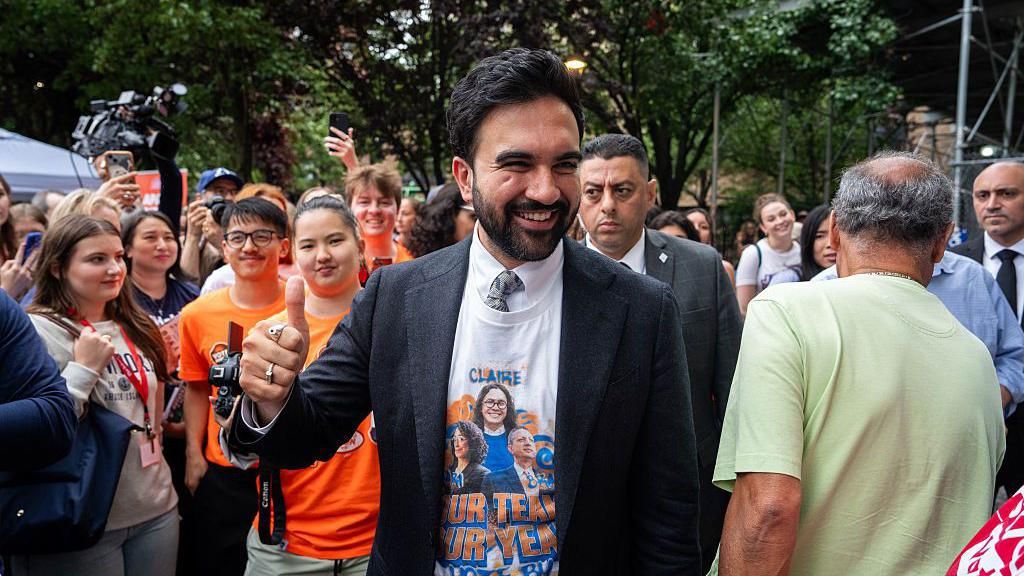
New York’s Democratic primaries show Mamdani’s win was no fluke
On a consequential primary election day Tuesday, a political earthquake rippled through New York City’s Democratic Party, reshaping the future of progressive politics and exposing deep ideological rifts that threaten to roil the party ahead of November’s midterm elections.
Just seven months ago, Zohran Mamdani stunned the political establishment by defeating former Governor Andrew Cuomo to become New York City’s youngest mayor in 100 years. That historic upset was dismissed by many centrist Democrats as a one-off fluke. On Tuesday, Mamdani proved his movement is here to stay, as every left-wing congressional candidate he endorsed pulled off shocking primary victories against incumbent and establishment-backed opponents.
Two of the three candidates ousted sitting Democratic House members. The first, New York City Comptroller Brad Lander, defeated Dan Goldman – a high-profile Democrat who gained national fame as lead counsel for Donald Trump’s first impeachment, and who enjoyed massive financial backing from the American Israel Public Affairs Committee (AIPAC), the powerful pro-Israel lobbying group. The second, community activist Darializa Avila Chevalier, unseated five-term incumbent Adriano Espaillat, who led the Congressional Hispanic Caucus. In the third race, state assemblywoman Claire Valdez defeated an opponent supported by most of New York’s Democratic Party leadership.
At post-election victory celebrations, all three candidates highlighted Mamdani’s influence, crediting his grassroots coalition for their wins. Valdez called the sweep a proof of progressive movement’s staying power, saying: “Tonight we have not just won an election, but we have proved that this movement is durable.”
With New York City’s heavily Democratic voter base making the three nominees all but guaranteed to win their House seats in November, Mamdani’s populist socialist movement – which pushes for government-funded universal healthcare, higher taxes on the top earners, and expanded affordable housing – is no longer confined to city hall. It is now set to reshape national partisan politics in Washington.
If Democrats retake the House majority in November, the party’s caucus will include a larger, more vocal progressive bloc that presents a major challenge to party leader Hopen Jeffries, the New York Congressman who is expected to seek the House speaker’s position if Democrats take control. Notably, neither Chevalier nor Valdez have committed to supporting Jeffries for speaker, adding to intra-party tension.
Political analysts have already drawn comparisons between Tuesday’s anti-incumbent, anti-establishment progressive wave and the right-wing Tea Party movement that rose in 2010, ousting dozens of long-serving Republican incumbents and creating an uncompromising conservative bloc in Congress. Lander pushed back on that comparison in a Wednesday television interview, arguing the progressive movement’s goal is constructive, not disruptive. “We’re joyful about what it looks like to deliver,” he said. “That is very different energy than what the Tea Party brought. We want to build something, not just break something.”
Even so, the results have already sparked fierce pushback from across the political spectrum. Congressional Republicans have seized on the wins to argue the entire Democratic Party is shifting sharply left, with former President Trump leading the attack. In a series of late-night social media posts, Trump falsely labeled the three candidates “Communists,” writing that “America the beautiful will never be [a] communist country.” He also complained that mainstream media outlets fail to acknowledge his own endorsement record.
Republicans have also amplified controversial past comments by Chevalier, a 32-year-old community organizer who previously called for open borders, the elimination of prisons and police, used an expletive to criticize former Vice President Kamala Harris, and falsely accused former President Joe Biden of rape. Chevalier has since disavowed those remarks, which were made between 2018 and 2022, saying she has grown and changed as a person.
The criticism isn’t limited to Republicans. Some top centrist Democrats have also publicly pushed back against Chevalier’s victory. Former Democratic National Committee chair Jaime Harrison wrote on social media platform Bluesky: “If you hate the Democratic Party, then please don’t run for our nomination. Don’t use our resources. Don’t rely on our volunteers. Don’t use our infrastructure. Don’t ask Democrats to invest their time, money, and energy in your campaign.”
Chevalier’s win is not an isolated incident. Just two weeks prior, Democratic voters in Maine nominated Graham Platner for Senate, despite his history of inflammatory social media posts, a Nazi-linked tattoo, and allegations of abusive behavior toward former partners. That said, Tuesday’s primary results across the country were mixed: centrist, establishment-aligned Democrats claimed victory in multiple key races. In Utah, Democrats backed former Congressman Ben McAdams, a moderate, over more progressive challengers for a newly drawn Democratic-leaning House seat. In a Maryland district outside Washington, D.C., Democratic voters chose a moderate candidate who supports continued U.S. military aid to Israel – a stark contrast to the pro-Palestinian positions held by New York’s victorious progressive candidates.
The mixed results underscore a core challenge for Democrats ahead of November: to win a House majority, the party needs to carry competitive battleground seats across the country, many of which are in suburban areas far less liberal than New York City, where moderate candidates are far more likely to win general elections. The ideological gap between these battleground candidates and the new progressive bloc from New York will force the party to grapple with its core identity and political direction heading into November, and ahead of the 2028 presidential election – a race Mamdani has already signaled he intends to influence.
Speaking to supporters Tuesday night as he moved between victory parties, Mamdani framed the wins as a rejection of old-line politics that led to the country’s current crises. “The old politics that got us into this crisis is not the politics that’s going to get us out of this crisis,” he said. For one election night, at least, the Democratic Party’s old guard in Washington was left scrambling to respond to a progressive movement that is quickly gaining national power.
-

Two men make $50k to watch the World Cup, with nowhere to hide
In a bold, eye-catching marketing stunt that blends sports fandom with public spectacle, two lucky individuals have landed a once-in-a-lifetime opportunity: they will earn a combined $50,000 (£44,000) to watch every match of the FIFA World Cup, all while confined to a transparent glass living room installed right in the heart of New York City’s iconic Times Square.
Unlike typical World Cup viewing parties that unfold in private homes, crowded sports bars or public fan zones, this gig offers zero privacy for the two participants. Surrounded by thousands of passing tourists and locals every day, their every reaction—from last-minute goal celebrations to tense penalty shootout nerves—will be on full display for anyone wandering through the busy crossroads of Manhattan. The glass enclosure is fully set up as a comfortable living space, with all the amenities needed to accommodate the pair through the entire tournament, but their lack of seclusion is the defining quirk of the unusual role.
The stunt, designed to draw massive public attention to a brand aligned with the World Cup, taps into the global frenzy surrounding soccer’s biggest international tournament. Times Square, already one of the most visited and photographed locations in the United States, provides the perfect stage to amplify the experience, turning two ordinary fans’ World Cup journey into a public attraction all its own. For the two men, the gig combines three of life’s great pleasures—watching world-class soccer, being in the middle of one of the world’s most famous cities, and walking away with a generous paycheck that most people would need months to earn—all in one unusual package.
-

Trump cancels signing of landmark bipartisan bill aimed at lowering housing costs
In a stunning last-minute disruption to a rare display of bipartisan cooperation, former U.S. President Donald Trump has announced the cancellation of a planned signing ceremony for what experts call the most sweeping federal housing policy reform in the 21st century, tying his approval of the cost-cutting bill to the passage of a strict new voter ID law he has prioritized.
The legislation, formally titled the 21st Century ROAD to Housing Act, earned approval from both chambers of Congress after weeks of cross-party negotiations, a rare outcome in an era of deeply polarized Washington politics. The overwhelming bipartisan support underscores just how urgent the nation’s ongoing housing affordability crisis has become for voters across every ideological spectrum.
In a social media post made public just hours before he was set to sign the bill into law, Trump stated: “Today’s Housing News Conference and Signing is hereby cancelled until such time as we pass the desperately needed SAVE AMERICA ACT, which I consider to be a National Emergency.” Under longstanding U.S. legislative rules, the bill will automatically become law within 10 days if Trump does not issue a formal veto and Congress remains in session.
The bipartisan bill is crafted to address two root causes of America’s housing crisis: skyrocketing housing costs and a persistent national shortage of available units, packing more than 40 distinct provisions that target everything from bureaucratic bottlenecks to institutional investor buying sprees that have squeezed supply. Policy analysts and housing advocates have widely framed the package as the most comprehensive congressional action on housing in decades.
Polling from the Bipartisan Policy Center, conducted earlier this spring, confirms that housing affordability is a top voter priority: 89% of respondents across all political affiliations want Congress to take immediate action to bring down housing costs. David Gonzalez Rice, a policy advisor at the National Low Income Housing Coalition (NLIHC), praised congressional negotiators for their work, noting “Legislators and their staff really did their homework here to try to put together a package that was going to try to address a lot of concerns at once.”
Core provisions of the bill include streamlined regulatory processes to speed up new home construction and new federal limits on how many single-family homes large institutional investors can purchase nationwide. Industry estimates from Realtor.com put the current national housing shortage at more than 4 million units, a gap that has been the primary driver of rising home and rental prices for years. “Everyone can understand the idea that the more supply you build, the more it’s going to exert downward pressure on prices in your community,” explained Jared Grigas, Legislative Director at the National Association of Counties (NACO). Grigas added that the bill empowers local governments to expand supply rather than imposing top-down mandates, cutting through bureaucratic red tape to speed up projects.
With November’s midterm elections rapidly approaching, lawmakers from both major parties have already attempted to claim credit for the rare bipartisan policy win. Francis Torres, housing and infrastructure director at the Bipartisan Policy Center, called the bill’s passage a landmark in itself. “It’s an achievement in terms of bipartisan policymaking in Washington, which is itself a recognition of how important this issue of housing affordability has become for the American public,” Torres said. He added that there is now broad consensus across the political divide that a chronic undersupply of housing is the core driver of affordability challenges across the country.
Data from the Federal Reserve Bank of St Louis underscores the severity of the crisis: the median U.S. home price has climbed to roughly $403,000, up from just $223,000 in 2010. Analysis from real estate firm Redfin finds that a household needs an annual income of approximately $117,000 to afford a median-priced U.S. home — a figure that is nearly $30,000 higher than the median U.S. household income, per U.S. Census Bureau data. Compounding the strain, high inflation and elevated mortgage interest rates have pushed homeownership entirely out of reach for millions of working- and middle-class Americans.
Congressional Republicans, many of whom are locked in competitive re-election battles as they fight to retain control of both chambers, have centered their messaging on the bill’s provisions to speed up home construction and lower costs, framing the bill as a step forward for the “American dream of homeownership.” South Carolina Senator Tim Scott, a co-sponsor of the legislation, explained the bill’s incentive framework on the Senate floor: “If you don’t build more housing, you should lose those incentives, and they should go to the places where you’re building more housing.” Under the bill, local governments that approve more new housing units gain access to additional federal funding.
For their part, Democratic co-sponsors including Massachusetts Senator Elizabeth Warren have highlighted the bill’s restrictions on institutional investor purchases of single-family homes, a practice that has driven up prices and reduced supply for individual buyers. “Rent’s too high, homes are too expensive and for too long the federal government (has been) totally asleep at the switch, and we changed that today,” Warren said after the Senate approved the bill.
Beyond the high-profile provisions that have drawn the most attention, experts note that smaller measures included in the bill will deliver tangible support to often-overlooked communities. One provision expedites funding for housing reconstruction in areas hit by natural disasters, while another preserves access to affordable housing in rural parts of the country.
Torres of the Bipartisan Policy Center emphasized that the bill represents a meaningful, incremental step toward solving the nation’s decades-long housing crisis, rather than an immediate fix. “It’s an accumulation of ideas, each of which moves the needle a little bit, but together they make up something meaningful,” he said. “This bill is not going to be the thing that will change your rent cost in the summer of 2026 necessarily, but it is a crucial first step at the federal level to facilitate some important actions to add housing supply.”
-
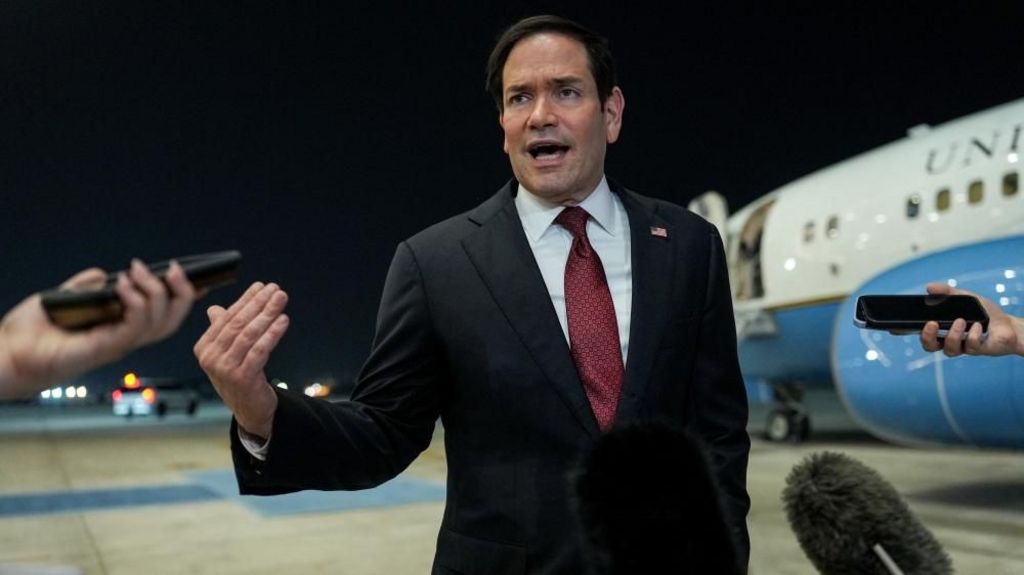
Here’s how Rubio’s Mideast trip could affect the Iran deal
As the Biden administration pushes forward with a new diplomatic agreement designed to end years of open conflict with Iran, Secretary of State Marco Rubio has embarked on a high-stakes regional tour of Gulf Arab allies, with the BBC’s senior state department correspondent Daniel Bush embedded with the traveling delegation. Longstanding partners in the Gulf Cooperation Council have emerged as some of the most vocal skeptics of a U.S.-brokered peace deal with Iran, raising urgent concerns about provisions that could ease economic sanctions on Tehran and allow it to resume limited nuclear enrichment activities. These allies fear the deal would strengthen Iran’s regional influence, enable its support for proxy armed groups across the Middle East, and leave them at a strategic disadvantage against a resurgent Iranian state. The core goal of Rubio’s trip is to address these fears head-on, offering security guarantees and diplomatic concessions to shore up confidence among U.S. partners, while making the case that ending the long-running standoff with Iran serves the long-term interests of the entire region. Many diplomatic analysts are closely watching the outcome of the tour, as Rubio’s ability to unify U.S. allies around the proposed deal will play a critical role in determining whether the agreement can be finalized and implemented successfully. The tour comes at a moment of heightened regional tension, with recent exchanges of fire between Iranian proxies and Israeli forces adding new urgency to diplomatic efforts to de-escalate the broader conflict.