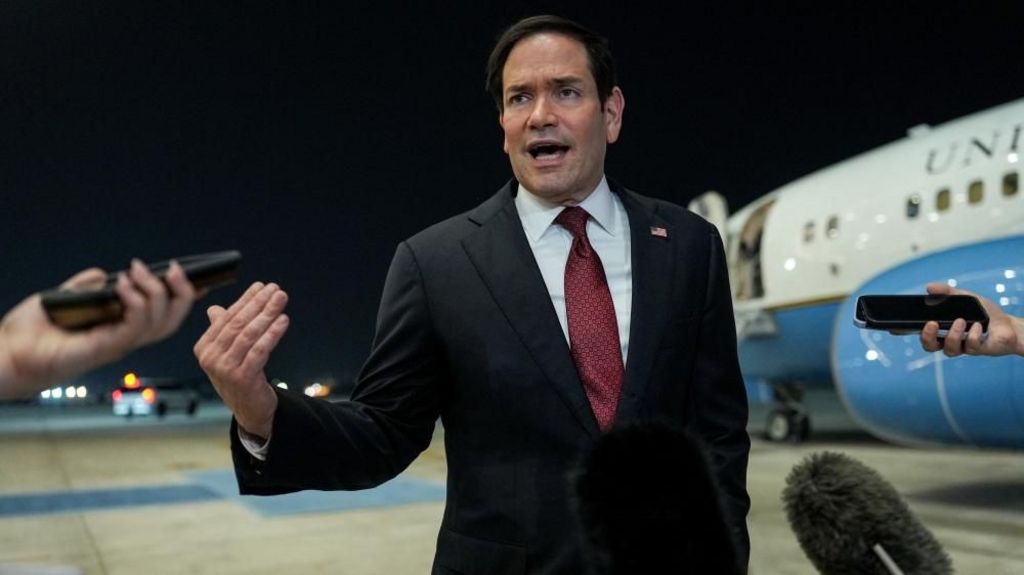
As the Biden administration pushes forward with a new diplomatic agreement designed to end years of open conflict with Iran, Secretary of State Marco Rubio has embarked on a high-stakes regional tour of Gulf Arab allies, with the BBC’s senior state department correspondent Daniel Bush embedded with the traveling delegation. Longstanding partners in the Gulf Cooperation Council have emerged as some of the most vocal skeptics of a U.S.-brokered peace deal with Iran, raising urgent concerns about provisions that could ease economic sanctions on Tehran and allow it to resume limited nuclear enrichment activities. These allies fear the deal would strengthen Iran’s regional influence, enable its support for proxy armed groups across the Middle East, and leave them at a strategic disadvantage against a resurgent Iranian state. The core goal of Rubio’s trip is to address these fears head-on, offering security guarantees and diplomatic concessions to shore up confidence among U.S. partners, while making the case that ending the long-running standoff with Iran serves the long-term interests of the entire region. Many diplomatic analysts are closely watching the outcome of the tour, as Rubio’s ability to unify U.S. allies around the proposed deal will play a critical role in determining whether the agreement can be finalized and implemented successfully. The tour comes at a moment of heightened regional tension, with recent exchanges of fire between Iranian proxies and Israeli forces adding new urgency to diplomatic efforts to de-escalate the broader conflict.
标签: North America
北美洲
-
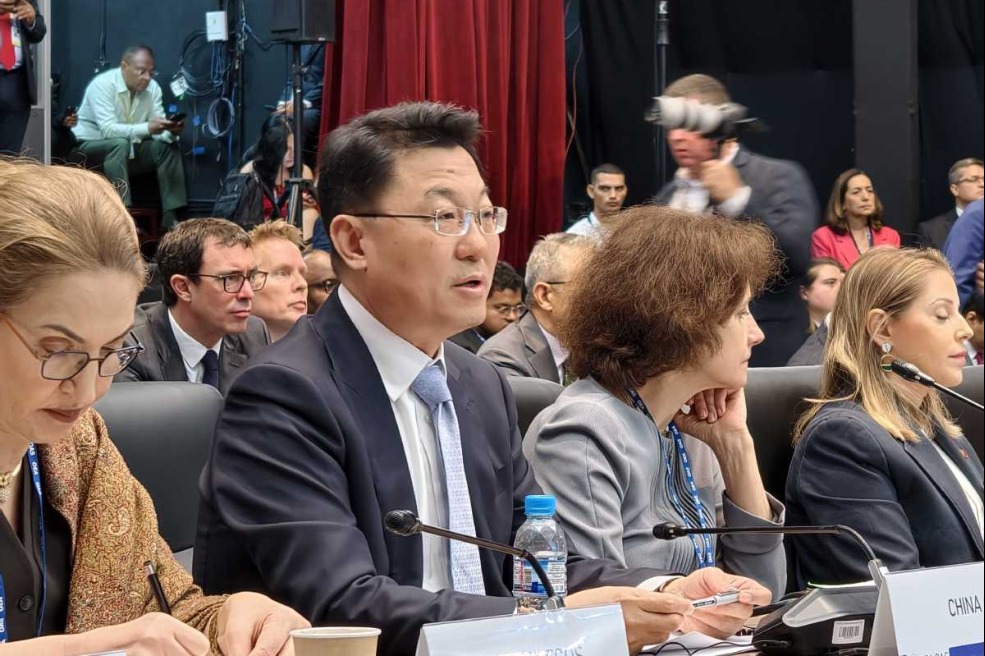
Chinese ambassador refutes Panama accusations
In a high-stakes address at the Organization of American States Dialogue with Permanent Observers held in Panama on Tuesday, China’s Ambassador and permanent OAS observer Xie Feng has pushed back against recent unsubstantiated accusations from Panama over increased port inspections of Panama-flagged vessels calling at Chinese ports.
According to an official statement released by the Chinese Embassy, Xie clarified the context behind the inspection measures, noting that since the beginning of 2026, multiple collisions involving Panama-flagged commercial and fishing vessels have occurred in Chinese territorial waters, leaving several people dead or unaccounted for. Out of a commitment to upholding global maritime safety standards, Xie emphasized that China’s port state control inspections are carried out strictly in line with domestic maritime laws and binding international conventions, not arbitrary political action as Panama has claimed.
Panama’s recent complaints centered on claims that the uptick in inspections and vessel detentions was retaliation for a bitter dispute over port operations at the Panama Canal. The decades-long smooth cooperation between the two countries on the canal hit a breaking point in January, when Panama’s Supreme Court issued a controversial ruling that deemed Chinese control of the two canal end ports unconstitutional, and invalidated the operating license held by Hong Kong-based conglomerate CK Hutchison. The court immediately transferred interim management of the strategic ports to two global shipping giants, Denmark’s A.P. Moller-Maersk and Switzerland-based Mediterranean Shipping Co.
CK Hutchison has publicly rejected the court’s ruling, stating it “strongly disagrees with the determination” and has already initiated international arbitration proceedings to defend its legal rights.
Xie told the OAS dialogue that the political motivation behind the ruling is obvious to any impartial observer. “If contracts could be disregarded, market principles ignored, assets taken over and operators forced out at any time, who would have the confidence to invest and seek cooperation?” Xie asked, per the embassy statement.
The Panama Canal stands as one of the world’s most critical maritime chokepoints, carrying roughly 5% of total global maritime trade and 40% of all U.S. container traffic. Long-standing U.S. political pressure over Chinese involvement in the canal preceded the recent court ruling: last year, under explicit threats from the U.S. government that Washington would seize control of the canal if CK Hutchison retained its operations, the company agreed to sell its non-port assets in the region to a BlackRock-led consortium for $2.3 billion.
Scott Kennedy, senior advisor at the U.S.-based Center for Strategic and International Studies, told CNBC the unfolding dispute is a clear power play for regional influence. “It appears to be a simple contest for dominance in Latin America, with the US trying to push against Chinese trade interests,” Kennedy explained. He added that the most probable outcome is a prolonged legal battle spanning multiple international jurisdictions, paired with sustained political and economic pressure from both Beijing and Washington.
In closing his remarks, Xie called on Panamanian authorities to reverse their unconstitutional decision, uphold the rule of law in international commerce, and protect the lawful rights and interests of Chinese enterprises operating in the country.
-

GTA 6 will cost $80 – and physical edition will not contain a disc
One of the gaming industry’s most anticipated releases in history, Grand Theft Auto 6 from developer Rockstar Games, has finally seen its pricing, pre-order schedule, and distribution details confirmed, drawing mixed reactions from fans and industry experts alike.
The studio announced this week that the standard edition of the hotly awaited title will carry a price tag of $79.99, while the premium-tier Ultimate Edition will retail for $99.99. Regional pricing for markets including the UK has not yet been released, and the BBC has requested full regional pricing details from Rockstar. Scheduled for a November 19 launch exclusively on PlayStation 5 and Xbox Series X/S consoles, pre-orders for the game will open at local midnight on June 25. The blockbuster title is widely tipped by industry analysts to be the most expensive video game ever produced.
A controversial detail that has dominated early fan discussion is Rockstar’s distribution model for physical copies: all boxed retail versions will include only a digital download code, rather than a game disc inside the packaging. Pre-loading for both digital pre-orders and physical version buyers will go live on November 12, allowing users to have the game ready to play immediately at launch. The higher-priced Ultimate Edition will come with exclusive in-game bonuses including additional vehicles, weapons, and character outfits.
Reactions to the announcement have split across two key points: pricing and the disc-free physical model. Fan reaction to the $10 increase from the standard $70 price point for most modern AAA blockbusters has been relatively muted, with many players noting that the incremental jump is not a prohibitive burden. That said, some have expressed concern that this price point could set a new industry-wide standard that pushes game costs higher across the board. When GTA 5 launched in 2013, its standard edition retailed for $59.99, highlighting the gradual upward shift in game pricing over the past 13 years.
The decision to omit physical discs from boxed copies has drawn sharper criticism, particularly from game collectors. Freelance gaming journalist Vic Hood notes that the change is likely to frustrate enthusiasts who build physical game libraries, but added that the choice is a logical one for Rockstar. By requiring a unique download code tied to a user’s account, the studio cuts down on secondary market resales and reduces the risk of early game content leaks ahead of launch. Fans have raised questions about whether the disc-free physical copies can be resold or shared like traditional disc-based games, with no official answer from Rockstar yet.
Industry analysts frame the pricing model as a shrewd business move for Rockstar and its parent company Take-Two Interactive. Joost van Dreunen, a professor of gaming business at NYU Stern, explained that the two-tier pricing structure allows the publisher to serve a broad general audience with the standard edition while offering premium content to dedicated franchise fans willing to pay extra. Hood added that if GTA 6 succeeds at the $80 price point, it is likely to trigger a wave of similar price increases from other major AAA studios, as production costs for large-scale games continue to climb.
The road to GTA 6’s launch has been anything but smooth for Rockstar. Following the record-breaking success of GTA 5, which has sold nearly 230 million copies and generated billions in revenue since 2013, fans waited nearly a decade for confirmation of a sequel. Rockstar officially announced development on GTA 6 in February 2022, after the COVID-19 pandemic disrupted early production timelines. The project suffered a major setback in 2022 when a high-profile hack leaked thousands of in-development assets online, forcing the studio to push back its initial release window. The launch was delayed a second time in late 2025, with the current November 2026 release date confirmed earlier this year. Beyond production challenges, Rockstar has also faced internal controversy in recent years, with workers at its Rockstar North headquarters in Edinburgh claiming the studio illegally fired staff to prevent union organizing efforts.
When GTA 6 finally launches, it will bring a historic first for the long-running Grand Theft Auto franchise: it will feature Lucia, the franchise’s first playable female protagonist in a 3D open-world setting, who partners with co-lead character Jason for the game’s crime-focused narrative.
-
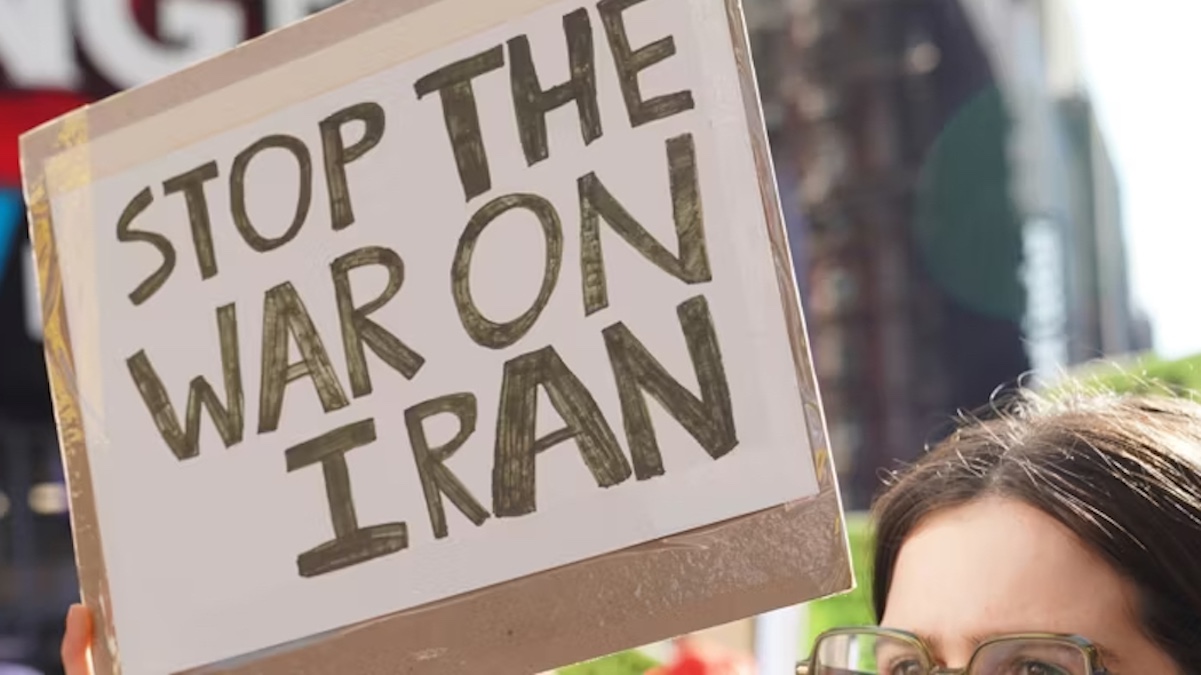
US Senate passes War Powers Resolution rebuking Trump’s Iran war
In a historic bipartisan rebuke of former President Donald Trump’s unauthorized military campaign against Iran, the United States Senate voted 50-48 on Tuesday to approve a war powers resolution ordering the immediate withdrawal of all American forces from hostilities against the Middle Eastern nation.
The outcome marked a rare moment of cross-party opposition to the administration’s foreign policy, with four Senate Republicans breaking ranks to side with the overwhelming majority of Democrats in backing the measure. The resolution had already secured approval from the U.S. House of Representatives earlier this month, clearing both chambers of Congress for the first time since the 1973 War Powers Resolution was enacted to check presidential war-making authority.
Democratic Representative Pramila Jayapal of Washington celebrated the vote in a social media post immediately after the results were finalized, writing, “The House and the Senate have both stood up. It’s time to stop this deadly and costly conflict.”
Breaking down the final vote count, the four Republicans who supported the resolution were Rand Paul of Kentucky, Susan Collins of Maine, Lisa Murkowski of Alaska, and Bill Cassidy of Louisiana. The only Democrat to break with his party was Pennsylvania Senator John Fetterman, who voted against the measure.
Attorney Aaron Parnas framed the outcome as a definitive rejection of the White House’s approach to the region, writing on social media: “This is a major bipartisan rebuke of Trump’s foreign policy chaos.”
Anti-war advocacy group CodePink echoed that sentiment, emphasizing broad public support for ending the conflict. “The will of the people is undeniable: It’s time to permanently end this war of aggression,” the organization wrote in a public statement confirming the vote results.
Senate Minority Leader Chuck Schumer noted that the successful vote marked 10 years of Democratic efforts to rein in Trump’s authority to wage undeclared war, which began when the president unilaterally drew the U.S. into a joint military attack on Iran alongside Israel on February 28. Schumer slammed the majority of Senate Republicans for repeatedly blocking prior attempts to limit the conflict, telling reporters the Iran campaign “will go down in the history books as one of the worst foreign policy forays America has ever made,” according to reporting from The Associated Press.
Maryland Democratic Senator Chris Van Hollen echoed that criticism in his own social media remarks, writing: “Congress finally passed a war powers resolution to stop Trump’s illegal war in Iran. It has been a disaster from the start. End it now.”
As The New York Times reported, the vote makes history as the first time since the 1973 War Powers Resolution was passed that both chambers of Congress have approved a concurrent resolution calling for a full end to an ongoing military conflict. While concurrent resolutions do not require presidential signature and rarely carry the full force of law, Democratic lawmakers and foreign policy experts argue that the Constitution’s grant of war-declaring authority to Congress means the resolution still carries binding weight to restrict the president’s military actions.
New York Democratic Representative Gregory Meeks, who sponsored the original House version of the resolution, reaffirmed that commitment to enforcing Congress’s will after the Senate vote. “With the Senate passage of my Iran War Powers Resolution, both chambers have now made clear that the president cannot continue this war of choice and must cease all hostilities against Iran,” Meeks said in a statement. “Regardless of what President Trump says, this measure is binding under the War Powers Resolution, and I will explore all legal avenues to ensure the executive complies with the will of Congress. Congress never authorized this failed war, and the president certainly has no authority to continue it indefinitely without our consent as the Constitution demands.”
The Senate vote comes roughly one week after U.S. and Iranian negotiators signed a memorandum of understanding outlining a path toward ending the conflict, which has killed at least 3,400 people in Iran and thousands more across the broader region. However, recent ceasefire efforts and ongoing negotiations have remained unstable, rocked by continued Israeli attacks on Lebanon and repeated threats from the Trump administration to escalate military operations.
-
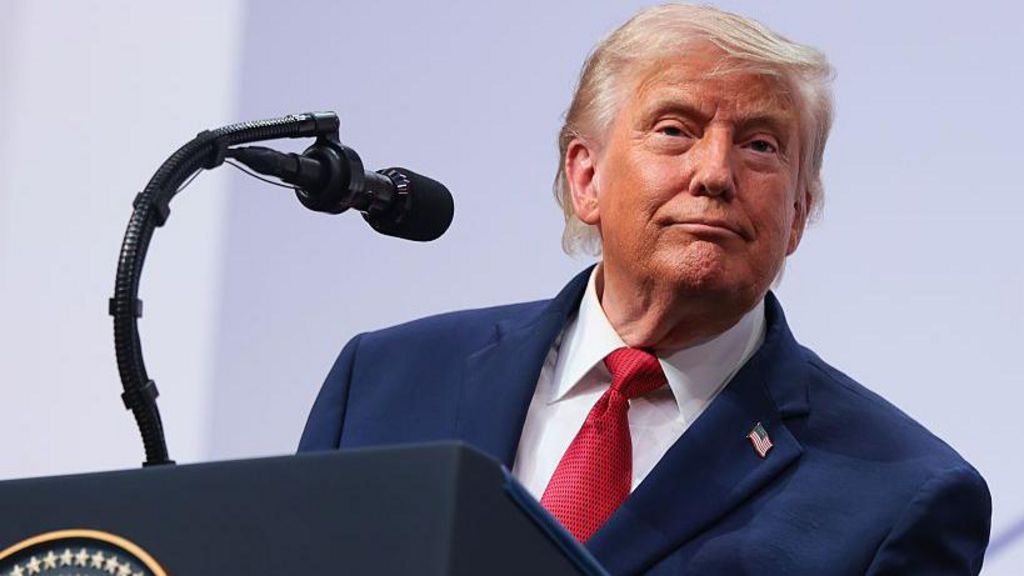
US to probe petrol price gouging claims, Trump says
Amid shifting global energy markets following months of heightened volatility tied to the Iran conflict, former U.S. President Donald Trump has publicly announced he has directed the Department of Justice to launch an immediate investigation into major domestic energy companies, accusing the firms of exploiting consumers by failing to pass falling crude oil costs onto drivers at the gas pump.
In a social media post that has drawn new attention to post-conflict energy pricing, Trump argued that gasoline prices have not declined nearly as quickly as he expected, even as global crude costs have pulled back sharply from their recent peaks. “The big Oil Companies are not dropping their price at the pump commensurate with the sharply lower prices they are paying for Oil,” Trump wrote in the post. “Those prices are dropping like a rock! In other words, customers are being ‘gouged.’”
Trump did not name any specific oil and gas companies in his announcement, and as of press time, neither the Department of Justice nor the White House has issued an official response to requests for comment from the BBC.
The current pricing tension traces back to late February, when a joint strike by the U.S. and Israel against Iran triggered widespread disruption to global energy supplies. In response to the attack, Tehran closed the Strait of Hormuz, the strategic chokepoint through which roughly a fifth of the world’s daily oil shipments pass. The closure sent global energy markets into chaos, pushing the international Brent crude benchmark to a near-$120 per barrel high in May, up from a pre-conflict level of around $70 per barrel.
In recent weeks, as diplomatic peace talks have made incremental progress, global crude prices have retreated significantly, falling to roughly $76 per barrel as of the latest reporting. While that marks a major drop from the May peak, the benchmark remains above pre-conflict levels. The same trend has played out for U.S. consumers: average regular gasoline prices have fallen from April’s peak above $4 per gallon to roughly $3.90 per gallon, but still remain far higher than they were before the Iran conflict began.
-
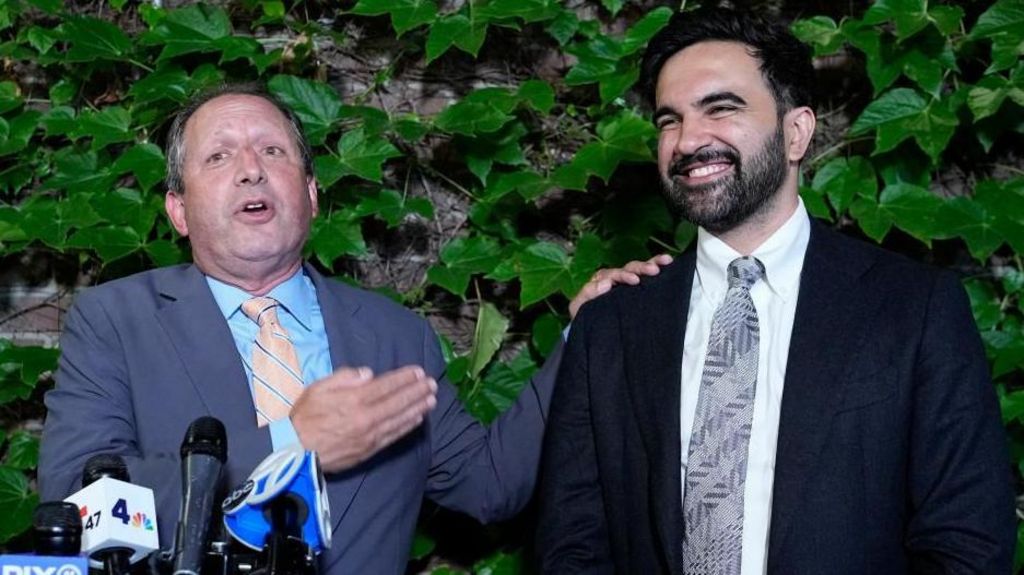
Clean sweep for Mamdani-backed candidates in New York’s Democratic primary
In a seismic political shift that has upended New York’s Democratic landscape, three progressive candidates endorsed by New York City’s Democratic Socialist Mayor Zohran Mamdani have secured a clean sweep in key congressional primary elections, ousting moderate incumbents and party establishment favorites in a result that underscores the growing influence of the party’s far-left wing ahead of November’s midterms.
The highest-profile upset came in New York’s 10th Congressional District, where left-wing challenger Brad Lander defeated two-term incumbent Dan Goldman, an heir to the Levi Strauss denim fortune who rose to national prominence leading the first impeachment inquiry into former President Donald Trump in 2019. With nearly all ballots counted, Lander won by a lopsided margin of 65.7% to 34.1%, drawing backing from high-profile progressive leaders including Vermont Senator Bernie Sanders. The race became a flashpoint for national intraparty tension over the Israel-Gaza war: Lander has openly accused Israel of genocide in Gaza, a claim Israel denies, while Goldman enjoyed robust support from national pro-Israel groups. Goldman’s vocal defense of Israeli policy sparked fierce backlash from progressive activists across New York, culminating in a widely circulated incident over the weekend where a Brooklyn coffee shop publicly banned the congressman, calling him a “genocide enabler” in a since-deleted social media post. Notably, both Lander and Goldman identify as Jewish.
Two other Mamdani-endorsed candidates also claimed primary victory on Tuesday. In the 7th District, Assemblywoman Claire Valdez unseated incumbent Brooklyn Borough President Antonio Reynoso. In the 13th District, Darializa Avila Chevalier, a doctoral student and prominent participant in pro-Palestinian protests at Columbia University, won her race to claim the Democratic nomination. All three winning progressive candidates have campaigned on two radical progressive pledges: abolishing U.S. Immigration and Customs Enforcement (ICE) and implementing higher taxes on wealthy Americans.
In another high-profile primary race, political newcomer Jack Schlossberg, grandson of former President John F. Kennedy and son of former U.S. Ambassador Caroline Kennedy, fell short in his bid for the 12th District seat being vacated by long-serving Congressman Jerry Nadler. The 33-year-old Harvard Law graduate and Vogue correspondent, who built a following for his quirky social media content, lost to Assemblymember Micah Lasher, a former aide to Nadler. Mamdani declined to endorse any candidate in that open race.
Speaking to supporters ahead of the final vote counts, Mamdani framed the progressive primary wins as part of a broader ideological project to reorient the Democratic Party around working-class interests. “It’s not just a question of electing more Democrats. It’s a question of electing better Democrats,” he said. “When I look at these candidacies, I see in them a willingness to also put working people back at the heart of our politics.”
The wave of progressive victories has sparked concern among establishment Democratic leaders in Washington, who warn that far-left candidates may struggle to win over critical swing voters in the general election this November. House Democratic Leader Hakeem Jeffries pushed back on the idea that the primary results signal a permanent ideological shift for the congressional caucus. “We have agreed to strongly disagree,” Jeffries said of Mamdani’s progressive project. “A handful of primaries that go in one direction or the other, in a given state or two, aren’t going to reshape who we are as House Democrats.”
-
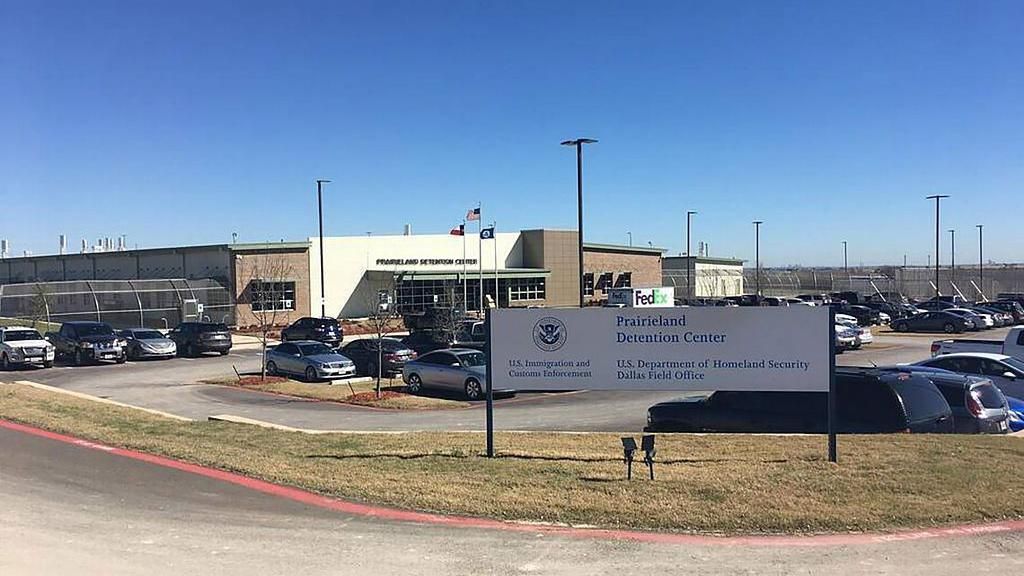
Eight people with alleged ties to Antifa collectively sentenced to 450 years in prison over ICE centre protest
On a Fourth of July holiday last summer, a chaotic demonstration outside a federal immigration detention facility in rural Prairieland, Texas — just south of Dallas — ended with a law enforcement officer shot in the neck, extensive property damage, and this week, historic lengthy prison sentences for eight people U.S. prosecutors have linked to the leftist anti-fascist movement Antifa. Collectively, the group has been sentenced to 450 years behind bars, in a case that has reignited fierce national debates over political protest, domestic terror labeling, and the scope of federal punishment for ideological activism.
The harshest sentence, 100 years in prison, went to Benjamin Hanil Song, the 38-year-old former U.S. Marine Corps reservist prosecutors identified as the cell’s leader. Song was convicted of attempted murder of a law enforcement officer, after the officer was wounded by gunfire during the unrest. Per U.S. Department of Justice (DOJ) records, Song faced a mandatory minimum sentence of just 20 years for the conviction, making the 100-year term a far harsher penalty than required by statute.
In a written statement released Tuesday through defense advocates and multiple media outlets, Song claimed he fired his weapon only because he believed the officer was about to open fire on an unarmed protester. His mother, Hope Song, has pushed back against all allegations that her son intended to harm anyone, telling the Associated Press that the narrative of the attack has been distorted to fit a broader political narrative. The other seven defendants received sentences ranging from 30 to 70 years: Maricela Rueda was handed 70 years, five co-defendants (Cameron Arnold, also known as Autumn Hill, Savanna Batten, Zachary Evetts, Bradford Morris, also known as Meagan Morris, and Elizabeth Soto) each received 50 years, and Daniel Rolando Sanchez-Estrada was sentenced to 30 years.
Acting U.S. Attorney General Todd Blanche issued a blunt statement following the sentencing, framing the penalties as a clear warning to ideologically motivated violent actors. “The sentences handed down today make clear that Antifa terrorists who attack law enforcement and federal facilities will face swift and uncompromising justice,” Blanche said, reiterating the DOJ’s commitment to cracking down on violent extremism that targets government institutions.
According to the DOJ’s official account of the incident, the eight operatives belonging to what the agency calls the North Texas Antifa Cell launched the attack by launching and throwing explosive fireworks at the Prairieland detention center, before vandalizing multiple government vehicles and an on-site guard kiosk. The officer shot in the neck ultimately survived the attack, but the incident prompted a wide-ranging federal investigation and eventual 12-day jury trial that concluded earlier this year, after opening arguments on February 23.
All eight defendants were convicted on a sweeping array of charges including felony rioting, illegal possession of weapons and explosives, providing material support to a terrorist organization, and obstruction of justice. But the case has been steeped in controversy from the start, with supporters and family members of the convicts arguing that the government has overstated the group’s ties to Antifa and imposed excessively harsh punishments for what was originally billed as a demonstration against U.S. Immigration and Customs Enforcement (ICE) detention policies.
All eight defendants have repeatedly denied any formal affiliation with Antifa, saying they only attended the July 4 gathering to advocate for detained immigrants, a cause that has drawn widespread, mostly peaceful protest across the country for years. Multiple attendees of the demonstration have stated that the event was initially planned as a peaceful “noise demonstration” and that the outbreak of violence was unplanned and unexpected. Before the 2025 protest, the Prairieland facility had not seen any major disruptive activity, unlike many other ICE detention centers that have seen regular protests and even official visits from Democratic members of Congress.
One additional defendant, Ines Soto, is scheduled to receive her sentence on July 1, and seven other people who pleaded guilty to one count of providing material support to terrorists ahead of trial will also be sentenced the same day.
The labeling of the defendants as Antifa-affiliated domestic terrorists ties back to a 2025 executive order signed by former President Donald Trump, who formally designated the loosely organized movement as a domestic terrorist organization last September. Trump has long targeted Antifa as a core ideological enemy, blaming the movement for widespread violent unrest during multiple national protest waves in recent years.
Critics of the designation and of the recent sentencing have pushed back on the DOJ’s framing, noting that Antifa is not a formal, centralized organization with fixed membership or leadership, but rather a loose ideological umbrella for groups and individuals that oppose far-right, fascist and racist politics. They also argue that holding individuals criminally liable for subscribing to a specific ideological belief violates fundamental First Amendment protections. The DOJ, however, has defended its framing, saying in a statement that the North Texas Antifa Cell is part of a larger militant network whose explicit ideological goal is the violent overthrow of the U.S. government, federal law enforcement, and the existing American legal system.
-

Google’s YouTube settles social media addiction case with teen
A growing legal reckoning over social media’s harmful impact on children’s mental health gained a new development this week, as Google-owned YouTube has reached an amicable settlement in a youth addiction lawsuit filed by a 15-year-old plaintiff from Florida. The case marks the latest in a string of legal defeats and settlements for major tech platforms facing hundreds of claims that they deliberately designed their services to hook underage users, exacerbating a widespread youth mental health crisis across the United States.
The minor, identified only by the initials R.K.C. in court filings to protect his privacy, brought allegations against YouTube and multiple other leading social media companies, claiming that their platform design choices intentionally fostered compulsive, addiction-like usage patterns. In a brief statement shared with the BBC, Google spokesperson José Castañeda confirmed that the dispute had been resolved without further litigation, noting that the company remains focused on developing age-appropriate products and robust parental control tools to meet its safety commitments to families.
YouTube’s settlement does not end R.K.C.’s legal campaign against big tech: the teen is still pursuing claims against Instagram parent Meta, ByteDance-owned TikTok, and Snap Inc. That combined trial is scheduled to open on July 27 in Los Angeles, overseen by Los Angeles Superior Court Judge Carolyn Kuhl. This proceeding is the second bellwether trial in a coordinated judicial effort to resolve more than 1,000 similar youth mental health and addiction claims consolidated in California courts.
The first bellwether trial concluded earlier this year, delivering a landmark ruling against major platforms. The plaintiff, 20-year-old K.G.M. from California, brought parallel claims that Meta and YouTube had deliberately designed their platforms to addict young users. Like the current case, both Snap and TikTok reached confidential out-of-court settlements with K.G.M. before the trial began. Ultimately, a jury delivered a historic verdict finding Meta and YouTube liable for the mental health harms the plaintiff experienced, awarding her $6 million in damages.
That same week, a separate jury in New Mexico ordered Meta to pay $375 million in damages for deceiving users about the safety of its platforms for minor users. According to court documents, R.K.C.’s allegations mirror the arguments that proved successful in the first bellwether trial. He specifically claims that algorithm-driven features such as infinite scroll and automatic content playback, which continuously serve new content to users without requiring active input, pushed him into compulsive usage that developed into addiction. The behavior caused lasting harms including chronic anxiety and severe sleep deprivation, among other health issues.
In a joint statement following YouTube’s settlement, R.K.C.’s legal team, led by attorneys John Morgan and Emily Jeffcott, doubled down on their core critique of big tech practices. “As jurors saw in the first bellwether trial, leadership at these social media companies have been strategizing for years to hook children early and maximize their usage,” the statement read.
Google has repeatedly pushed back against claims that it fails to prioritize youth safety, noting that the company has worked for more than a decade to build responsible YouTube experiences in partnership with families. In 2015, the company launched YouTube Kids, a standalone, curated version of the platform designed exclusively for minor users. Just last month, YouTube also reached a settlement in another impending trial, brought by a Kentucky school district that accused the major platforms of creating a youth mental health crisis among its student body. All four companies named in that suit — YouTube, Meta, Snap and TikTok — opted to settle rather than proceed to trial. The school district had sought two key outcomes: changes to the allegedly addictive platform design features, and compensation for the costs districts have incurred supporting students dealing with anxiety, depression, and even self-harm linked to compulsive social media use. That trial was set to open in mid-June at the U.S. District Court in Oakland, California, as part of a large multi-district litigation (MDL) encompassing thousands of similar claims across the country. The next scheduled trial in this federal MDL, brought by a coalition of U.S. states against Meta, is set to begin in the same Oakland court this coming August.
-
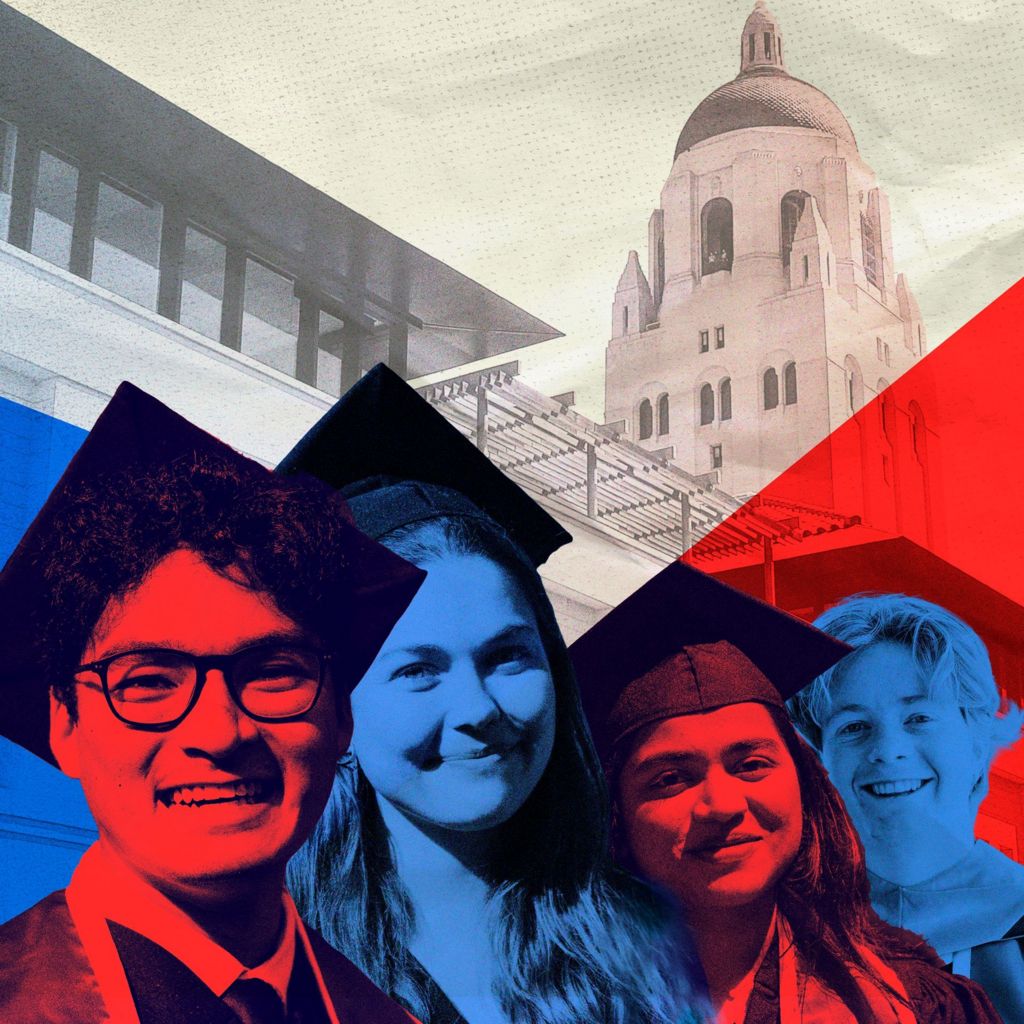
Stanford was their golden ticket – could AI help or hinder that?
Nestled in the heart of Silicon Valley, Stanford University has long stood as the global cradle of technological innovation, counting the co-founders of Google, dozens of AI industry pioneers, and countless breakthrough inventions among its storied legacy. This year, however, as the institution welcomed one of its most famous alumni—Google CEO Sundar Pichai—to deliver its 2026 commencement address, the campus became the backdrop for a raw, public reckoning with the technology that Stanford helped bring to life: artificial intelligence.
Across American college commencement ceremonies this year, a clear message has emerged from graduating cohorts: top speakers have been warned to avoid the topic of AI, and those who broach it have often been met with vocal pushback. Even former Google CEO Eric Schmidt faced boos from audiences when he referenced the technology at other graduation events. For Pichai, whose company is one of the world’s leading AI developers, the writing was on the wall before he took the stage. He opened his address with a lighthearted joke, noting that every person he spoke to had given him the same guidance: avoid AI. Even with that self-censorship, more than 200 students stood in unison, shouted chants for Palestinian liberation, and walked out of Stanford Stadium mid-speech.
The protests were not rooted solely in anxiety over AI’s societal impact. Many demonstrators carried signs calling out Google’s controversial Nimbus contract, which provides AI tools to the Israeli military, and decried the tech giant’s past partnerships with U.S. Immigration and Customs Enforcement (ICE), referencing the agency’s harsh, often deadly immigration enforcement actions under the Trump administration. After the walkout, the group relocated to an alternative campus commencement headlined by prominent pro-Palestinian activist Mahmoud Khalil, who gained global attention during 2024 Gaza war protests at Columbia University when ICE attempted to deport him despite his legal permanent resident status. Pichai, who earned his master’s degree from Stanford, declined to comment on the protest when approached by the BBC after the ceremony.
Stanford occupies a unique space in the global AI ecosystem. The term “artificial intelligence” itself was coined on campus by pioneering computer scientist John McCarthy in 1955, and the university has incubated generations of AI leaders, from OpenAI CEO Sam Altman to Fei-Fei Li, often called the “Godmother of AI” who currently serves as a Stanford professor. Today, the $400,000 price tag for a four-year undergraduate degree at Stanford remains widely seen as a golden ticket to top roles in the tech industry, and major firms headquartered within 15 miles of campus—including Google, Apple and Meta—still scout the institution for top talent annually, admitting less than 4% of tens of thousands of annual applicants. For this graduating cohort, who entered as undergraduates in 2021—just one year before OpenAI’s ChatGPT upended daily life and work around the world—AI is not an abstract future concept: it is an immediate, transformative force that is already reshaping their career prospects, education and worldview.
In interviews with the BBC shortly after Pichai’s address, graduating students expressed a wide spectrum of views on AI, from cautious optimism to deep dread, but nearly all agreed that the technology’s impact is already unavoidable. For Ifdita Hasan, a computer science and AI major, AI is a tool that unlocks unprecedented opportunity for scientific exploration and progress. “I feel optimistic about AI. I think AI gives us the opportunity to learn more about the universe. It’s a tool that people should try to use and try to adapt to,” she said. Hasan added that she is not surprised by the widespread backlash, noting that early societal anxiety is a common response to every transformative emerging technology—including the internet, which faced similar skepticism in its early days. “But I would encourage people to be optimistic about AI—to try to learn and explore more,” she said.
Other students are far less sanguine, particularly as they enter a job market already being upended by AI adoption. A 2025 Stanford study found that employment for early-career U.S. workers has dropped sharply in fields most vulnerable to AI disruption, including software development, and a recent analysis from the Federal Reserve Bank of New York confirmed that recent graduates across the country are already struggling to secure stable employment. Atash Heil, an Earth Systems major focused on environmental policy, says the speed of AI’s advancement over the past four years has been jarring. He described a recent visit to an AI art exhibit as a deeply unsettling experience, days before his own graduation. “I thought it was scary, especially on my graduation day, to see that. The future is… that? I want art to be made by humans. That’s what makes it art, right?” he said. Like many of his peers, Heil criticized the unregulated, ethics-free approach that many major AI companies have taken to rolling out new tools: “It has to be done ethically, and it’s not being done ethically these days.” Even so, Heil, who will soon start a role working on climate resilience in New Orleans, acknowledges that AI can be a force for good—including helping build more accurate climate prediction models to guide adaptation work.
Lucy Zimmerman, a computer science major who worked as a teaching assistant during her time at Stanford, has witnessed AI’s impact on education first-hand. She says she has noticed a clear gap between the polished take-home assignments students submit—many of which she suspects are completed with AI assistance—and their performance on in-person, proctored exams. In response, many departments have already reinstated in-person exam proctoring and oral assessments to curb AI-assisted cheating. Zimmerman also expressed concern about the rise of “cognitive offloading,” the growing practice of relying on AI to complete problem-solving and critical thinking tasks that build core cognitive skills. “I’m worried about future generations, and for my generation,” she said. Despite these concerns, Zimmerman will soon start a role as a software engineer at a San Francisco tech startup, putting her at the center of the ongoing AI boom.
Colbey Harlan, a psychology major, echoed this mixed outlook. He has used AI to help jumpstart creative writing projects, and found it particularly helpful for managing his ADHD. Even so, he worries about the hidden environmental cost of AI’s rapid expansion: data centers powering large language models consume massive amounts of energy and natural resources. “I’m not a fan of how it’s destroying the environment. Data centres are taking a lot of resources, a lot of energy,” he said. “I’m kind of at a point where it’s like – ‘Okay, AI is cool, but can we just stop progressing it?’ because if we continue, things are going to get out of control.”
For many graduates, the uncertainty of AI’s long-term impact is part of what makes this moment so charged. Management Science and Engineering graduate Harry Kaplan, who participated in Stanford’s annual Wacky Walk graduation tradition carrying an inflatable palm tree, described Stanford as the global center of tech innovation, and said the institution’s legacy of breakthroughs is a source of pride for the graduating class. Still, he said it is too early to know what AI’s long-term impact will be on his career and generation. “It’s an exciting place to be. It feels like we’re at the edge of something,” he said. For this cohort of Stanford graduates, standing at that edge means navigating both the unprecedented opportunities and existential risks of a technology that will define the rest of their lifetimes.
-
E-commerce giant Alibaba sues US government over defence blacklist
One of the world’s largest e-commerce and technology giants, Alibaba Group, has initiated a high-profile legal battle against the U.S. Department of Defense, moving to overturn its placement on a Pentagon blacklist that bars the firm from any U.S. government contracting work over unsubstantiated claims of military ties.
The DoD’s controversial designation rests on a single argument: because Alibaba adheres to China’s domestic technology regulatory requirements, it qualifies as an extension of the Chinese military, classifying the company as a contributor to “military-civil fusion” within China’s defense industrial base. The blacklisting came as part of a recent expansion of the DoD’s restricted entity list, which now also adds other major Chinese technology and manufacturing firms including Baidu, electric vehicle makers BYD and Nio, with restrictions set to take full effect on June 30.
In its formal complaint filed in the U.S. District Court for the Northern District of California, Alibaba forcefully rejects the Pentagon’s findings, arguing the designation has no foundation in either fact or federal law. The company emphasizes that none of its independent board members hold any affiliation with the Chinese military, pointing out that every multinational corporation operating in China—including major U.S.-headquartered firms—are required to comply with the same set of local regulatory rules. Alibaba also clarifies that its core business lines, spanning consumer e-commerce and cloud computing services, have no connection to weapons development or intelligence gathering activities.
While the blacklist does not impose immediate financial sanctions or asset freezes, the upcoming June 30 enforcement carries severe operational consequences for Alibaba. Starting next week, not only is the Pentagon barred directly from entering into any contracts with blacklisted firms, but the restriction also extends to any U.S. government contractor that shares a lobbying team or legal representation with a designated entity. In its complaint, Alibaba argues that this broad rule creates a de facto economic and political blockade: the company’s long-standing American advisors are being forced to cut ties to protect their own profitable defense contracts, stripping Alibaba of its legal and advocacy voice in Washington D.C. at the exact moment it requires representation to challenge the designation.
Alibaba also outlines that it attempted to resolve the issue through administrative channels before turning to the courts. The company says it previously requested a meeting with DoD officials to address the military affiliation concerns, even submitting detailed evidence of its significant economic contributions to the U.S. economy. Despite these submissions, Alibaba claims the DoD never raised specific concerns with the company, nor did it request additional supporting information. Instead, the agency designated Alibaba for the blacklist “without notice or a fair hearing,” according to the complaint.
When approached by the BBC for comment on the ongoing legal action, the Department of Defense declined to make any public statement, citing standard policy of not commenting on active litigation. Alibaba also has not yet issued a formal public response to the BBC’s request for comment on the suit.