标签: North America

北美洲

  • UAE eateries phase out prohibited items as single-use plastic ban comes into force

    UAE eateries phase out prohibited items as single-use plastic ban comes into force

    Food establishments across the United Arab Emirates have proactively embraced sustainable alternatives ahead of the January 1, 2026 implementation of the second phase of the nation’s single-use plastic ban. Numerous restaurants and cafeterias began phasing out prohibited items months in advance, demonstrating widespread compliance with environmental regulations.

    Multiple food service providers informed Khaleej Times about their strategic transition planning, with some ceasing orders for single-use plastic products as early as November 2025 after depleting existing inventories. Sooq Al Shay cafeteria management explained their forward-thinking approach: “Anticipating the regulatory change, we deliberately avoided restocking foam cups, plastic utensils, and straws to prevent inventory obsolescence.”

    The industry-wide shift has seen traditional plastic replaced with paper-based drinking vessels, wooden cutlery, and reusable serving options for dine-in patrons. Takeaway services have adopted compliant food-grade containers, while plastic carrier bags have been substituted with sturdier, regulation-compliant alternatives.

    Al Faizeen cafeteria representative Sharique Khan acknowledged initial cost adjustments but noted positive customer reception: “Patrons have not only accepted but appreciated our early elimination of plastic usage.” The extended transition period allowed establishments to thoroughly adapt operations, train staff, and evaluate alternative suppliers without operational pressure.

    Desi Biryani in Sharjah exemplifies this transformation, having eliminated plastic from daily operations. Their delivery service now utilizes approved packaging solutions, with a restaurant representative noting: “We proactively transitioned to box-based packaging and eliminated plastic bags well ahead of the deadline.”

    Market dynamics have facilitated this shift, with suppliers increasingly offering sustainable alternatives as plastic demand declined. Customer adaptation has progressed remarkably, with Sharjah resident Syed Aamer observing: “The absence of plastic cutlery and bags has become normalized. Non-plastic packaging no longer feels unusual.”

    This comprehensive ban stems from 2022’s Ministerial Decision No. 380, designed to reduce pollution from disposable products while promoting sustainability and circular economic principles. The policy framework was further reinforced through an executive council resolution endorsed by Sheikh Hamdan bin Mohammed bin Rashid Al Maktoum, regulating single-use products throughout the emirate.
  • Tech crucial factor shaping China-US ties

    Tech crucial factor shaping China-US ties

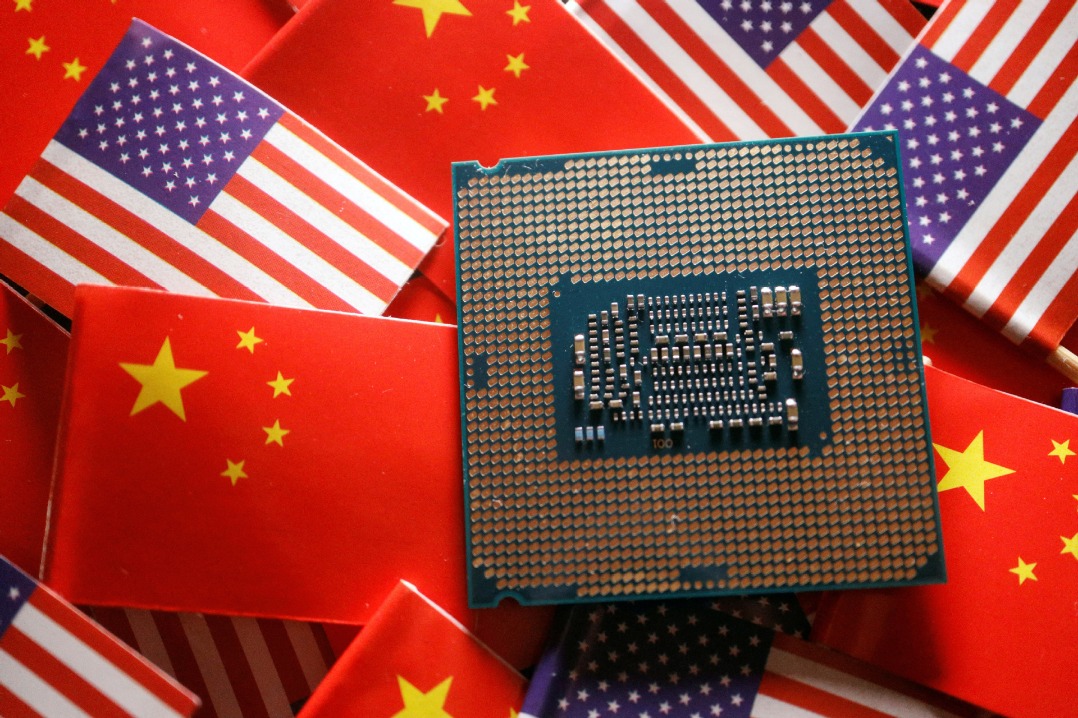
    The technological competition between the United States and China dominated bilateral relations throughout 2025, with semiconductor and artificial intelligence sectors emerging as primary battlegrounds in this strategic rivalry. Washington significantly expanded export control measures targeting Chinese technology companies while simultaneously pursuing international alliances to counter China’s growing technological influence.

    Throughout the year, the US Department of Commerce’s Bureau of Industry and Security implemented stringent restrictions, adding over 80 Chinese entities involved in advanced integrated circuits, quantum computing, and AI to its Entity List. The introduction of the controversial Affiliates Rule in September further extended these controls to foreign companies with significant ownership ties to listed entities, though implementation was temporarily suspended during trade negotiations.

    Concurrently, the US Treasury Department enacted outbound investment screening mechanisms effective January 2025, limiting American capital flow into Chinese semiconductor, quantum computing, and AI enterprises. The diplomatic offensive culminated in December with the ‘Pax Silica’ Declaration, through which Washington sought to establish a coalition of allied nations dedicated to creating alternative supply chains for critical minerals and technology components.

    Despite these comprehensive constraints, Chinese technology firms demonstrated remarkable resilience and innovation capacity. AI startup DeepSeek emerged as a particularly striking example, developing large language models that rivaled established US products while utilizing significantly reduced computational resources. Through sophisticated software optimization and hardware efficiency improvements, the company achieved performance levels comparable to OpenAI’s GPT-5 and Google’s Gemini 3.0 Pro.

    Similarly, Huawei and Semiconductor Manufacturing International Corporation (SMIC), both subject to Entity List restrictions, made substantial advances in domestic chip production technology. Huawei’s November release of the Kirin 9030 processor, manufactured using SMIC’s enhanced fabrication processes, represented China’s most sophisticated semiconductor achievement to date according to industry analysts.

    Technology policy experts increasingly question the long-term effectiveness of US export controls, noting that restrictions appear to be accelerating Chinese technological independence rather than stifling it. The International Center for Law and Economics and Information Technology and Innovation Foundation both published analyses suggesting that American measures have inadvertently stimulated innovation within China’s technology sector.

    The two nations presented contrasting visions for global AI governance, with the US emphasizing competitive leadership through its AI Action Plan while China promoted multilateral cooperation and inclusion of developing nations through its Global AI Governance Initiative. Despite these divergent approaches, experts identified potential areas for collaboration including apolitical technical standards, public health datasets, and energy infrastructure development for data centers.

    As trade negotiations continue into 2026, technology remains deeply intertwined with broader economic discussions, with semiconductor and AI policy expected to remain central factors shaping the complex relationship between the world’s two largest economies.

  • Trump promise to intervene over Iran protests ‘reckless’ says foreign minister

    Trump promise to intervene over Iran protests ‘reckless’ says foreign minister

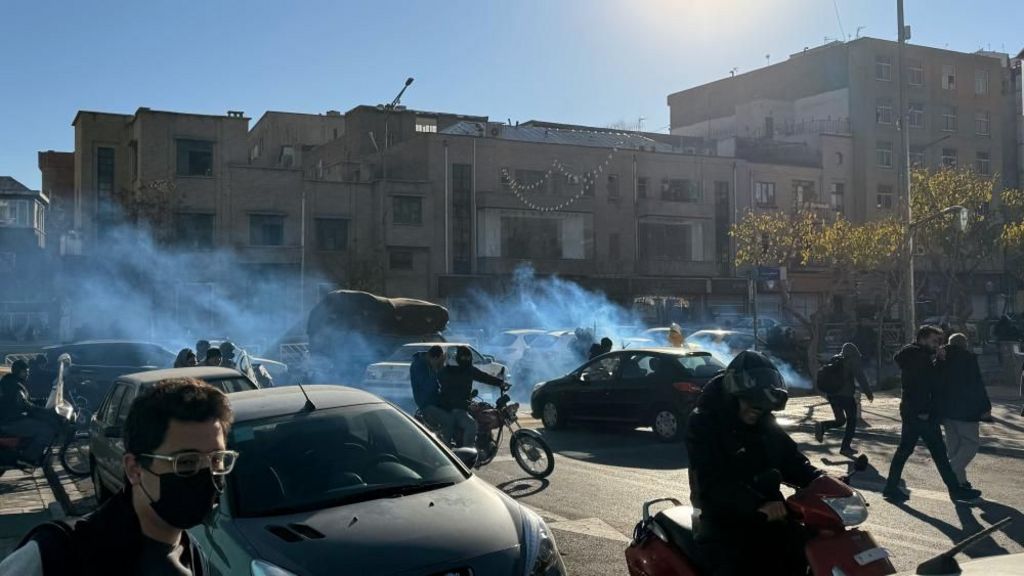
    Iranian officials have issued a stern rebuke of former US President Donald Trump’s offer to intervene in ongoing domestic protests, labeling his statements as dangerously irresponsible. The diplomatic clash emerged after Trump posted on social media that US forces were “locked and loaded and ready to go” should Iranian authorities move against peaceful demonstrators.

    Iran’s Foreign Affairs Minister Abbas Araghchi responded via social media platform X, asserting that “Iran will forcefully reject any interference in their internal affairs.” Drawing parallels to US domestic policy, Araghchi noted that Trump should understand from his own deployment of National Guard troops that attacks on public property cannot be tolerated.

    The exchange occurs against a backdrop of significant civil unrest that has spread across multiple Iranian cities. According to various reports, at least eight fatalities have occurred during week-long demonstrations that began with shopkeepers protesting the Iranian currency’s sharp devaluation against the US dollar. The protests have since expanded to include university students and citizens chanting against the country’s clerical leadership.

    Iranian police spokesman General Saeed Montazerolmahdi stated that security forces would prevent “enemies” from transforming “unrest into chaos,” while President Masoud Pezeshkian acknowledged he would listen to “legitimate demands” of protesters. Simultaneously, Prosecutor-General Mohammad Movahedi-Azad warned that instability attempts would meet a “decisive response.”

    In a significant diplomatic move, Iran’s UN Ambassador Amir-Saeid Iravani formally requested the UN Security Council condemn Trump’s statements, warning that the US would bear “full responsibility for any consequences arising from these unlawful threats.” The current protests represent the most widespread demonstrations since the 2022 uprising sparked by Mahsa Amini’s death in custody, though on a smaller scale.

  • Watch: Over 100 firefighters on the scene of Denver blaze

    Watch: Over 100 firefighters on the scene of Denver blaze

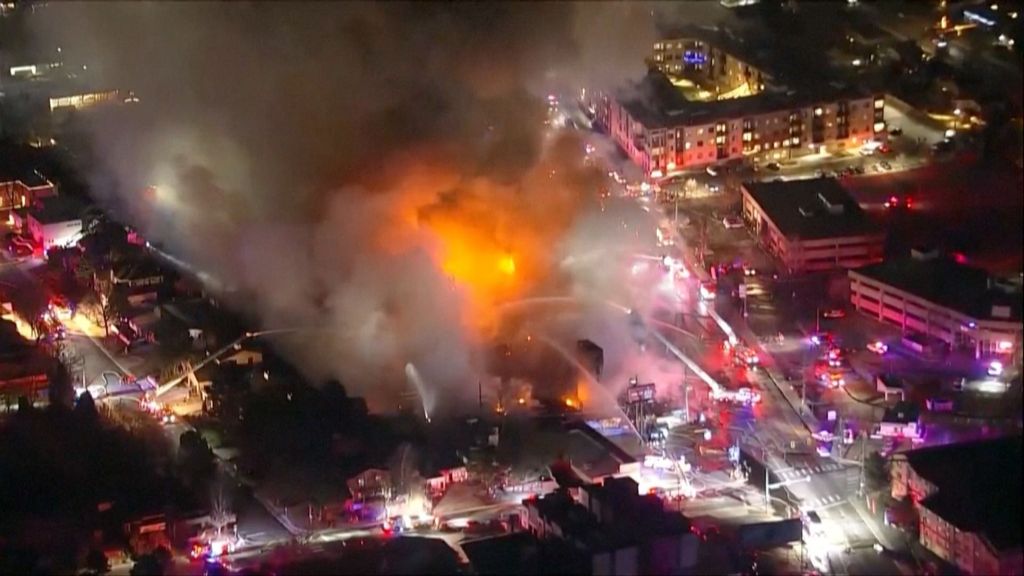
    A significant fire response unfolded in Denver as more than 100 firefighters mobilized to combat a major structural blaze. Emergency crews demonstrated coordinated efforts at the scene, successfully preventing any civilian or first responder casualties despite the scale of the incident.

    Authorities have confirmed that while the fire’s intensity required substantial resources, their operational protocols ensured complete safety for all individuals involved. The precise location and specific property type affected have not been formally disclosed pending ongoing assessment.

    Investigative teams are now working diligently to determine the origin and cause of the fire, which remains officially undetermined at this time. Standard procedure for such incidents involves thorough examination of the site, evidence collection, and witness interviews before concluding the investigation.

    The Denver Fire Department emphasized that such large-scale responses reflect their preparedness for major emergencies, with personnel and equipment deployment meeting all safety standards. Further updates regarding property damage estimates and investigation findings are expected to follow in coming days.

  • Four challenges facing New York City Mayor Mamdani

    Four challenges facing New York City Mayor Mamdani

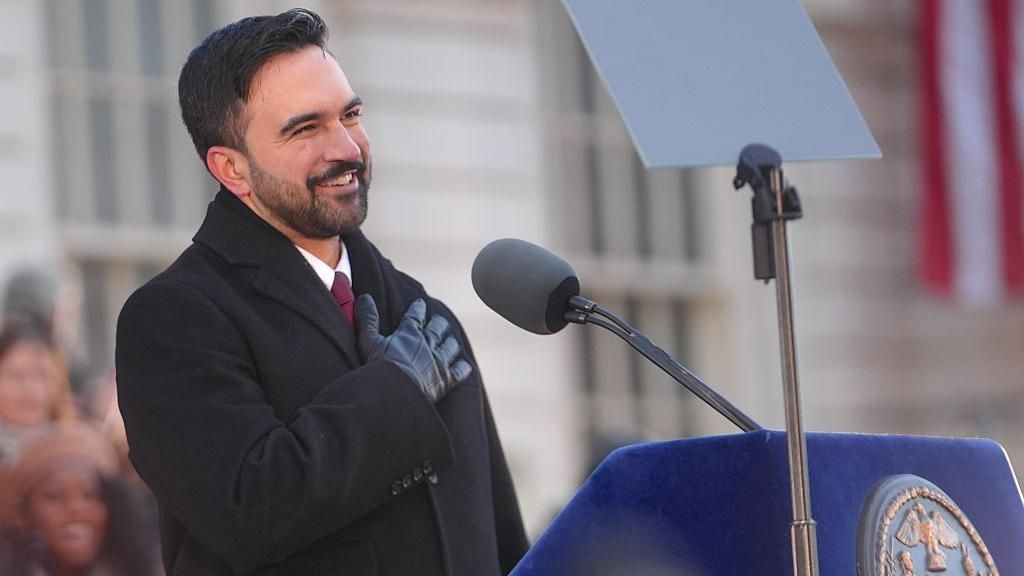
    On a frigid January morning in 2026, Zohran Mamdani assumed leadership of America’s largest city amidst thousands of cheering supporters, pledging to fundamentally reshape New York’s governance. The 34-year-old democratic socialist, whose unexpected electoral victory stunned political establishments, promised to deliver an unprecedented agenda centered on safety, affordability, and governmental representation that mirrors the city’s diverse population.

    Mamdani’s progressive platform includes revolutionary proposals: universal childcare, completely free public bus transportation, and municipally-operated grocery stores. His administration immediately faces the complex reality of implementing these ambitious policies within New York’s intricate political ecosystem. According to political analysts, while some objectives like rent freezes for subsidized housing can be achieved through strategic appointments to city boards, the more financially demanding promises encounter significant obstacles.

    Professor Robert Shapiro of Columbia University notes the fundamental challenge: ‘Initiatives like free bus service and universal childcare require substantial funding. The primary constraints will be New York State’s financial capacity and Governor Hochul’s political willingness to support Mamdani’s proposed tax increases.’ The mayor’s plan to raise corporate taxes from 7.25% to 11.5% and generate $9 billion through wealth taxes requires state legislative approval—a potential stumbling block given Hochul’s moderate stance and her own reelection considerations.

    The new administration must also navigate relationships with federal authorities and business leaders. Despite President Trump’s pre-election characterization of Mamdani as a ‘communist’ threat and warnings about withholding federal funds, their initial November meeting surprisingly yielded mutual praise. However, immigration policy remains a potential flashpoint between the progressive mayor and conservative president.

    Wall Street’s initial apprehension toward Mamdani has gradually evolved into cautious engagement. After his primary victory sparked concerns among business leaders—some threatening relocation, others funding opposition campaigns—the mayor has actively sought dialogue with influential figures including JPMorgan Chase CEO Jamie Dimon and real estate developer Jeffrey Gural. While describing Mamdani as ‘personable’ and ‘smart,’ business leaders continue expressing concerns about his limited executive experience and potential tax policies driving corporations from the city.

    Public safety presents another critical challenge. Despite homicide and shooting rates reaching near-record lows in 2025, maintaining security remains paramount. Mamdani proposes establishing a Department of Community Safety focusing on mental health programs, crisis response, and subway outreach workers—building upon but aiming to improve similar initiatives from the Adams administration that critics found inadequate.

    Political analyst Patrick Egan observes that reduced crime rates provide ‘wiggle room to think creatively’ about public safety, though Democratic strategist Howard Wolfson emphasizes that policing effectiveness and quality-of-life crime management will ultimately define the administration’s perceived success or failure. Mamdani’s decision to retain Police Commissioner Jessica Tisch from the previous administration has been widely interpreted as a pragmatic move signaling continuity in public safety approaches.

  • ‘Somewhere to put worker bees’: Why Canada’s micro-condos are losing their appeal

    ‘Somewhere to put worker bees’: Why Canada’s micro-condos are losing their appeal

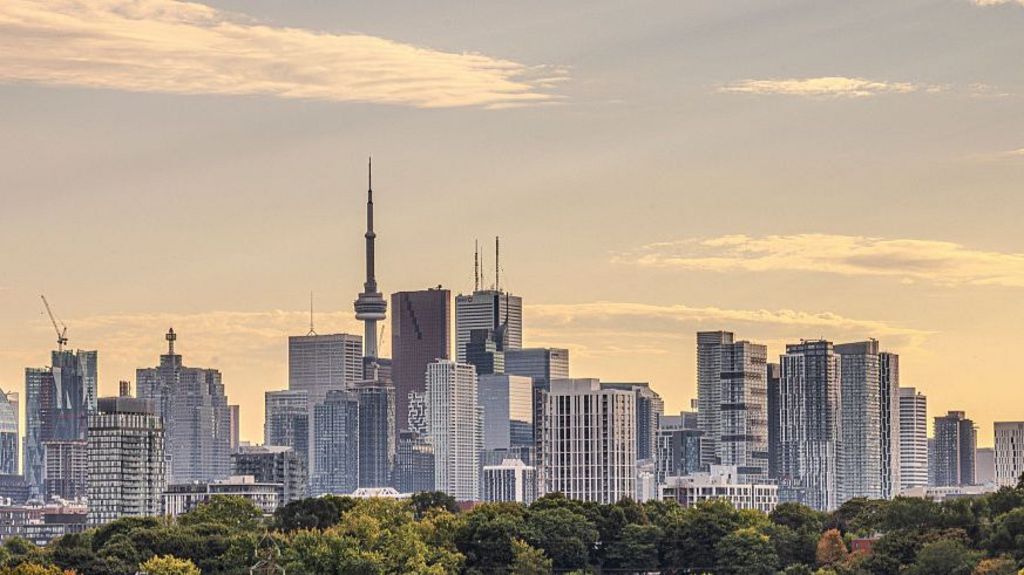
    Canada’s once-booming micro-condo market is experiencing its most severe downturn in decades, with values collapsing faster than any other housing segment amid unprecedented market pressures. The phenomenon, particularly pronounced in Toronto and Vancouver, represents a dramatic reversal for ultra-compact units that became ubiquitous over the past decade.

    The current crisis stems from a perfect storm of market forces: an oversupply of units constructed during a period of rapid population growth, shifting immigration policies that reduced demand, and rising interest rates that cooled investor enthusiasm. Urbanation President Shaun Hildebrand notes that developers ‘got way too ahead of themselves,’ creating thousands of units for a demand that abruptly vanished.

    Statistics reveal the scale of this market miscalculation. Micro-units under 600 square feet now constitute 38% of Toronto’s condo inventory, skyrocketing from just 7.7% before 2016. Investors own the majority of these compact units, which were specifically designed to maximize profitability in high-land-value urban centers.

    The correction has been severe. Properties that commanded half-million-dollar price tags just years ago are now reselling for C$300,000 or less—previously unthinkable pricing for downtown Toronto real estate. This represents what industry experts characterize as ‘a race to the bottom’ as investors struggle to offload properties purchased during the market peak.

    The downturn has prompted serious reevaluation within the development community. Many acknowledge having over-prioritized investor interests by creating units primarily designed for rental income or quick resale rather than long-term habitation. This approach has proven unsustainable as market conditions shifted.

    Paradoxically, renters are emerging as temporary beneficiaries of the crisis. Former micro-condo resident Maggie Hildebrand exemplifies this trend, having upgraded from her 300-square-foot unit to a 700-square-foot apartment for only C$200 more monthly. The increased supply has created slightly better rental deals and more options for urban dwellers.

    Looking forward, experts warn that the current price slump may be short-lived. With thousands of planned units now cancelled or postponed, Canada faces a potential supply shortage that could exacerbate the nation’s ongoing housing crisis by the decade’s end. The market correction, while painful for investors, may ultimately reshape development priorities toward more sustainable housing solutions that better balance investor interests with resident needs.

  • Jessie Buckley ‘overwhelmed’ to be starring in Oscar-tipped Hamnet

    Jessie Buckley ‘overwhelmed’ to be starring in Oscar-tipped Hamnet

    Agata Grzybowska/Focus Features
    Jessie Buckley has emerged as a strong Oscar contender for her transformative portrayal in the historical drama ‘Hamnet,’ directed by Academy Award winner Chloé Zhao. The film, adapted from Maggie O’Farrell’s acclaimed 2020 novel, explores the tragic love story between a young William Shakespeare (Paul Mescal) and his wife Agnes (Buckley), historically known as Anne Hathaway.

    Rather than presenting Agnes merely as the playwright’s spouse, the film positions her as the emotional core of the narrative, exploring her profound grief following family tragedy and her influence on Shakespeare’s seminal work ‘Hamlet.’ Buckley describes the role as ‘one of the biggest privileges of my life,’ emphasizing her character’s multidimensional nature as mother, lover, and independent woman existing alongside literary greatness.

    The production marks another career milestone for Buckley, who rose to prominence through BBC’s ‘I’d Do Anything’ talent show in 2008 before earning BAFTA and Oscar nominations for ‘Wild Rose’ and ‘The Lost Daughter.’ Her latest performance required navigating unfamiliar emotional territory, particularly in depicting maternal love and loss without personal experience of motherhood.

    Critical reception has been predominantly positive, with The Telegraph’s Robbie Collin awarding five stars and declaring the adaptation ‘couldn’t have been done any better.’ The Times’ Kevin Maher praised Buckley’s ‘performance for the ages,’ while The Wrap’s Carla Renata described her as ‘nothing less than magical.’ Some critics, including Time’s Stephanie Zacharek, found the emotional cues overly explicit, and LA Times’ Amy Nicholson questioned the dramatic intensity compared to Shakespeare’s works.

    The film’s climactic Globe Theatre sequence, showing Agnes witnessing Hamlet’s first performance, proved particularly challenging for Buckley. She recalls feeling ‘terrified’ and ‘completely lost’ during the emotionally draining ten-day shoot, ultimately recognizing that this vulnerability authentically mirrored her character’s journey.

    As awards season approaches, Buckley remains focused on the film’s artistic achievement rather than Oscar speculation. She expresses pride in the project and gratitude for audience responses, viewing potential award ceremonies as opportunities to celebrate with the close-knit production team. ‘Hamnet’ premieres in UK cinemas on January 9th, offering audiences a fresh perspective on Shakespeare’s personal tragedy and the woman who inspired his timeless art.

  • Watch: Residents kayak and wade through flood waters in California Bay Area

    Watch: Residents kayak and wade through flood waters in California Bay Area

    The California Bay Area is confronting severe coastal flooding conditions, with meteorological experts forecasting water levels to surge by as much as 2.5 feet (0.76 meters) throughout the weekend. This phenomenon is attributed to a confluence of substantial rainfall and the annual peak of king tides, which are the highest predicted astronomical tides of the year.

    Visual documentation from affected neighborhoods reveals the immediate impact on daily life, with local residents resorting to kayaking and wading through inundated streets. These images underscore the challenges posed by the floodwaters, transforming ordinary commutes into complex navigations.

    Authorities have issued advisories urging residents in low-lying and coastal communities to implement precautionary measures. These include relocating vehicles to elevated ground, deploying sandbags to protect property, and exercising extreme caution while traveling. The combination of saturated ground from precipitation and the exceptionally high tidal cycles creates a heightened risk of property damage and poses potential dangers to public safety.

    Emergency management teams are actively monitoring the situation, prepared to respond to incidents as conditions evolve. This event highlights the region’s vulnerability to compound weather events and serves as a critical reminder of the escalating challenges coastal communities face, particularly during the winter season when such environmental factors frequently align.

  • Earthquake of magnitude 6.3 jolts southern Mexico; no serious damage reported

    Earthquake of magnitude 6.3 jolts southern Mexico; no serious damage reported

    A significant seismic event measuring 6.3 on the Richter scale struck the southern Mexican region of Guerrero on Friday, according to data from the German Research Center for Geosciences (GFZ). The earthquake originated at a shallow depth of approximately 10 kilometers (6.21 miles), potentially amplifying ground shaking across affected areas.

    The tectonic disturbance created a dramatic moment during Mexican President Claudia Sheinbaum’s morning press briefing, triggering earthquake warning systems and prompting an orderly evacuation of the presidential conference. Demonstrating remarkable composure, President Sheinbaum calmly exited the premises alongside attending journalists as established safety protocols were activated.

    Initial assessments from governmental authorities indicate no substantial structural damage or casualties resulting from the seismic activity. President Sheinbaum confirmed via social media platform X that communication with Guerrero’s state governor revealed no serious infrastructure impact within the region. Further updates from the capital confirmed Mexico City similarly escaped significant damage despite experiencing noticeable tremors.

    The incident highlights Mexico’s advanced earthquake preparedness systems, including early warning alarms that provide critical seconds for protective actions. The nation’s seismic monitoring infrastructure, refined through previous earthquake experiences, continues to demonstrate effectiveness in mitigating potential disaster scenarios.

  • Watch: Two girls get lost in Dubai on NYE, reunited with father in touching moment

    Watch: Two girls get lost in Dubai on NYE, reunited with father in touching moment

    Dubai’s renowned New Year’s Eve celebrations at Burj Khalifa, which attract millions of spectators annually, presented familiar challenges of crowd management during the 2026 festivities. In a demonstration of exceptional civic preparedness, Dubai authorities successfully reunited an Omani father with his two daughters after they became separated near Dubai Mall amid the massive celebrations.

    The emotional reunion, captured on video, shows the distraught father sprinting toward his daughter before embracing her with visible relief. Overwhelmed by emotion, he covers his face while being reassured by security personnel that he was ‘in the House of Zayed.’ The father’s simple response—’Thank God’—epitomized the profound relief of the moment, while the girls’ brother broke into tears of joy upon seeing his siblings safe.

    This successful reunion was made possible by extensive pre-event planning from Dubai’s Event Security Committee, which established 37 comprehensive support tents across celebration sites. These facilities provided integrated services including police assistance, first aid, visitor guidance, lost property recovery, and specialized care for separated children.

    The incident underscores Dubai’s commitment to maintaining its status as one of the world’s safest cities, even during events of unprecedented scale. The systematic approach to crowd management and child protection protocols demonstrated how advanced planning and compassionate response mechanisms can transform potentially traumatic situations into stories of successful resolution.