标签: North America

北美洲

  • Fireworks fade, first cries ring: UAE welcomes New Year 2026 with babies born at midnight

    Fireworks fade, first cries ring: UAE welcomes New Year 2026 with babies born at midnight

    As fireworks illuminated the skies marking the transition into 2026, hospital delivery rooms across the United Arab Emirates witnessed a more intimate form of celebration—the first cries of newborns arriving precisely as the new year dawned. These symbolic births, occurring from midnight onward on January 1st, represented both personal milestones and national hope across the federation.

    In Abu Dhabi, Burjeel Medical City recorded the nation’s first documented birth at exactly 12:00 AM—baby Saeed Saif Al Rumaithi, weighing 3.302kg, born to Emirati first-time parents. The name Saeed, meaning ‘happy’, was deliberately chosen to honor paternal lineage while embodying the joy of a new beginning. Mere minutes later, Burjeel Hospital welcomed Hamdan (2.470kg) to the Alhosani family, whose father described the timing as ‘auspicious’ for global new beginnings.

    NMC Specialty Hospital witnessed another significant arrival at 12:11 AM when Indian expatriates Rakhi and Mayur Patil welcomed their third child—a son following two daughters. The aircraft maintenance engineer and homemaker expressed particular thrill at completing their family with a New Year’s birth overseen by Dr. Kiran Mehndiratta.

    Dubai’s International Modern Hospital hosted perhaps the most emotionally charged delivery at 12:14 AM. Baby Umama Sufyan (2.35kg) arrived after a high-risk pregnancy complicated by hypertension and growth restrictions, ending parents Sufyan Ali and Saima Naz’s painful journey through three previous miscarriages. Dr. Komila Singhal Verma acknowledged the ‘precious’ successful delivery after numerous complications.

    The celebrations extended across emirates: Aster Hospital in Dubai welcomed a boy to Abdul Shereef’s family at 7:42 AM; Zulekha Hospital Sharjah recorded a 2:24 AM delivery; Fujairah’s Thumbay Hospital celebrated Nigerian baby Kafayat Uyomide (3.27kg) at 2:41 AM alongside an Indian baby born exactly at midnight; while Ras Al Khaimah’s first newborn—Emirati baby Shamma (3.4kg)—arrived at 6:28 AM at RAK Hospital, described by her father as a ‘blessing’ and memorable start to 2026.

    Medical professionals universally highlighted the honor of facilitating these symbolic births, with Dr. Srividya Venugopal of Burjeel Medical City capturing the sentiment: ‘Helping a family welcome their child at the dawn of a brand-new year is a heartwarming experience.’ These simultaneous arrivals across the UAE represented not just expanded families but a nation embracing future generations with renewed optimism.

  • Donald Trump joins criticism of George Clooney’s French passport

    Donald Trump joins criticism of George Clooney’s French passport

    Former US President Donald Trump has amplified criticism surrounding France’s decision to grant citizenship to Hollywood actor George Clooney and his family, injecting himself into a contentious debate over immigration standards. The controversy emerged following an official decree confirming the naturalization of Clooney, his human rights attorney wife Amal, and their two children through ministerial approval rather than standard administrative channels.

    The diplomatic gesture coincides with France’s implementation of stricter language requirements for citizenship applicants effective January 1, 2026, creating perceptions of preferential treatment. Trump utilized his Truth Social platform to mock the development, stating: ‘Good News! George and Amal Clooney, two of the worst political prognosticators of all time, have officially become citizens of France which is, sadly, in the midst of a major crime problem because of their absolutely horrendous handling of immigration.’

    Internal government divisions surfaced when Marie-Pierre Vedrenne, a junior interior minister, acknowledged ‘double standards’ in the case, noting Clooney’s limited French proficiency despite his claims of 400 lessons. This contrasted with defending statements from Interior Minister Laurent Nunez and the Foreign Ministry, which emphasized the family’s compliance with legal procedures including security vetting, interviews, and tax payments.

    The ministry justification highlighted the Clooneys’ ‘distinguished service to France’s influence’ through George’s film industry contributions and Amal’s collaborations with French academic institutions. Statistics reveal approximately 48,800 individuals acquired French nationality by decree in 2024, though most undergo the newly strengthened language and civic knowledge requirements that exclude the Clooneys due to their pre-2026 application timing.

    The actor maintains a property in Provence’s Brignoles region, describing France as where his family feels ‘happiest’ due to privacy protections. Meanwhile, Hollywood director Jim Jarmusch has similarly sought French citizenship, reflecting broader patterns of cultural figures seeking European alternatives amid American political tensions.

  • From battleships to buildings: Trump’s name is everywhere

    From battleships to buildings: Trump’s name is everywhere

    In an unprecedented fusion of personal branding with national governance, former President Donald Trump has embarked on a comprehensive campaign to affix his name to federal institutions and programs throughout his second term. This strategic initiative represents a remarkable convergence of commercial marketing tactics with presidential authority, creating a new paradigm in American political legacy-building.

    The scope of this naming blitz encompasses diverse sectors of government operations. Washington’s premier cultural venue has been redesignated as the Donald J. Trump and John F. Kennedy Memorial Centre for the Performing Arts, while a government-funded conflict resolution think tank now operates as the Donald J. Trump Institute of Peace. The administration has further extended this branding to include a proposed class of Navy warships designated as ‘Trump-class’ battleships, children’s savings accounts labeled ‘Trump Accounts’ on official IRS documentation, and specialized visa programs branded as the ‘Trump Gold Card’.

    This systematic rebranding has generated significant controversy among historians, political analysts, and civil society organizations. Critics argue that these actions create the perception that government services originate from Trump personally rather than representing institutional state functions. The Kennedy Centre renaming particularly ignited public backlash, resulting in several performing artists canceling scheduled appearances in protest.

    Presidential historian Julian Zelizer of Princeton University notes that while previous administrations have taken credit for policy achievements, the current scale of personal branding represents a qualitative departure from traditional practice. ‘This approach prioritizes immediate symbolic recognition over substantive legislative accomplishment,’ Zelizer observed. ‘The relative ease of attaching names to buildings and programs contrasts sharply with the challenging process of creating enduring policy frameworks.’

    The administration defends these initiatives as natural extensions of Trump’s leadership philosophy. White House spokeswoman Elizabeth Huston characterized the branding as incidental to substantive achievements, stating that ‘historic initiatives including drug pricing agreements, national landmark upgrades, peace agreements, and wealth-creation accounts for children would not have been possible without President Trump’s bold leadership.’

    Historical precedent suggests that such naming conventions may prove temporary, particularly if subsequent administrations choose to reverse them. The durability of these designations remains uncertain, as many require congressional approval for modification. This naming campaign exemplifies the distinctive intersection of personal branding and governmental authority that has characterized Trump’s unconventional approach to presidential legacy construction.

  • Look: Last sunset of 2025 in UAE leaves residents in awe

    Look: Last sunset of 2025 in UAE leaves residents in awe

    The United Arab Emirates witnessed a spectacular atmospheric farewell to 2025 as residents nationwide paused to observe the year’s final sunset on December 31st. From 5:15 PM onward, a remarkable celestial display unfolded across the emirates, with warm golden light gradually infiltrating blue skies until the sun completed its descent at 5:40 PM.

    At Dubai’s Global Village, the mesmerizing twilight created magical moments as children reached skyward with beaming smiles, capturing final joys before the year’s conclusion. Meanwhile, at Abu Dhabi’s Sheikh Zayed Festival, the sun radiated through cumulus formations resembling cotton balls, creating brilliant yellow streaks across the evening canvas.

    Urban landscapes transformed under the celestial spectacle. In Dubai Silicon Oasis, the sunset peeked modestly behind residential towers, offering residents glimpses of glorious orange remnants filtering through clouds and high-rises. Nad Al Sheba’s desert landscape presented a contrasting scene where the sun blazed dramatically against brown sands before disappearing, making the typically golden dunes appear subdued beside the sky’s ethereal hues.

    Sheikh Zayed Road’s iconic towers mirrored the horizon’s fiery amber palette, creating a seamless fusion of architecture and atmosphere. Workers across Dubai paused their New Year’s Eve preparations to witness ochre-stroked skies with floating clouds. Ras Al Khaimah offered a more contemplative vision with a somber yellow kissing the horizon against bright blue skies, while Sharjah residents witnessed bright solar rays penetrating thick cloud layers as they traveled toward Dubai’s celebrations.

    In Abu Dhabi’s Ghadeer community, located on the emirate border with Dubai, the sun gently illuminated clouds with a soft radiance. Some residents chose intimate indoor gatherings, experiencing their own light shows as 2025 concluded. As darkness settled, Global Village’s illumination ceremony symbolically ushered in the year’s final night, providing a fitting transition from the spectacular sunset into New Year’s Eve festivities.

  • Israel PM Netanyahu among partygoers at Trump’s New Year’s Eve fete

    Israel PM Netanyahu among partygoers at Trump’s New Year’s Eve fete

    Israeli Prime Minister Benjamin Netanyahu made a notable appearance at former U.S. President Donald Trump’s exclusive New Year’s Eve celebration at the Mar-a-Lago estate in Palm Beach, Florida. The social gathering followed substantive diplomatic discussions between the two leaders regarding Middle Eastern geopolitical stability and the fragile ceasefire in Gaza.

    The presence of Netanyahu at the glittering event was captured in social media posts by conservative influencer Michael Solakiewicz, showing both leaders in formal evening attire. This occurrence materialized after Trump’s lighthearted suggestion during their Monday meetings that the Israeli statesman might join the festivities.

    Trump’s inner circle formed the core of the guest list, featuring former New York Mayor Rudy Giuliani, the former president’s sons Eric and Don Jr., alongside key administration figures such as Department of Homeland Security Secretary Kristi Noem and White House deputy chief of staff Dan Scavino.

    The diplomatic context surrounding this social interaction remains significant. The October Gaza ceasefire represents a cornerstone achievement during Trump’s renewed presidential term, though some administration officials have expressed concerns about perceived delays in implementation from the Israeli side.

    Addressing reports of diplomatic friction, Trump publicly defended Netanyahu’s approach to the ceasefire process, stating Israel had fulfilled its commitments and emphasizing that responsibility now rests with Hamas. The former president explicitly noted he had no concerns regarding Israel’s actions in the matter.

    This week’s discussions marked the fifth high-level meeting between the two leaders since Trump’s return to executive power earlier this year, underscoring the continued close coordination between the United States and Israel on regional security matters.

  • Esha Deol welcomes New Year in Dubai with emotional tribute to father Dharmendra

    Esha Deol welcomes New Year in Dubai with emotional tribute to father Dharmendra

    Indian actress Esha Deol commenced the New Year in Dubai with a poignant social media tribute to her late father, legendary Bollywood icon Dharmendra. Against the backdrop of Dubai’s illuminated skyline featuring the Burj Khalifa, Deol shared photographs from her celebrations that resonated deeply with fans and family members alike.

    One particularly emotional image captured the actress pointing toward the sky with a caption expressing ‘Love you, papa.’ This heartfelt gesture occurred just weeks after the passing of the veteran actor, who died on November 24 at age 89 after an illustrious career spanning decades in Hindi cinema.

    The tribute garnered significant engagement on social media platforms, including a red heart emoji response from her brother, actor Bobby Deol. The Deol family’s New Year carries additional emotional weight as Dharmendra’s final film ‘Ikkis’ premiered in UAE cinemas on Wednesday, adding a layer of professional legacy to the personal remembrance.

    Dharmendra, survived by his wives Prakash Kaur and Hema Malini along with children Sunny Deol, Bobby Deol, and Esha Deol, remains celebrated as one of Indian cinema’s most enduring and beloved figures. The family’s public and private grieving process continues to unfold against the backdrop of their ongoing professional commitments in the entertainment industry.

  • Americans brace to start New Year without healthcare

    Americans brace to start New Year without healthcare

    Millions of Americans are entering 2026 without health insurance coverage following the expiration of critical Affordable Care Act subsidies, creating a nationwide healthcare affordability crisis. The termination of these financial supports has triggered premium increases exceeding 100% for many families, forcing impossible choices between essential medical care and financial stability.

    Adrienne Martin, a 47-year-old Texas mother, exemplifies this devastating predicament. Her family’s healthcare premium skyrocketed from a manageable $630 monthly to an unaffordable $2,400, effectively equaling two mortgage payments. With her husband requiring a $70,000 monthly IV medication for a blood-clotting disorder, the Martins faced rationing their stockpiled medication to survive the initial months of 2026 without coverage.

    This crisis stems from the congressional failure to extend enhanced subsidies initially implemented during the COVID-19 pandemic. The subsidies, originally established through former President Barack Obama’s signature healthcare legislation in 2014, became the centerpiece of the longest government shutdown in U.S. history earlier this year. Democrats sought a three-year extension costing $35 billion annually, while Republicans demanded corresponding spending cuts, resulting in political gridlock.

    According to health research non-profit KFF, average monthly healthcare costs could surge by 114% without these subsidies. Approximately 24 million Americans who purchase insurance through ACA marketplaces are affected, with the majority previously relying on tax credits to maintain affordable coverage.

    The human impact is devastating and widespread. California resident Maddie Bannister, now with a newborn child, faces a premium jump from $124 to $908 monthly for her family of three. This increase forces postponement of homeownership dreams as healthcare costs consume savings. Meanwhile, Illinois resident Stephanie Petersen must revert to Medicaid coverage after her ACA premium escalated from $75 to $580 monthly, despite recently achieving the milestone of transitioning from government assistance.

    A critical vote on a three-year subsidy extension is scheduled for the week of January 5th when Congress reconvenes. Until then, over 27 million Americans are projected to be uninsured in 2026, with experts warning this number will grow as healthcare costs continue outpacing income growth. The situation has created widespread frustration among affected families who feel betrayed despite following conventional paths of hard work and financial responsibility.

  • Social media fuelled Mamdani’s rise. Can he keep the momentum as New York mayor?

    Social media fuelled Mamdani’s rise. Can he keep the momentum as New York mayor?

    Zohran Mamdani has officially been inaugurated as New York City’s 110th mayor, marking a historic moment as the first Muslim to hold the office. The 34-year-old democratic socialist achieved an unexpected electoral victory through an unconventional social media strategy that resonated powerfully with younger demographics.

    His campaign captivated voters through viral content demonstrating unorthodox engagement tactics—from plunging into Coney Island’s winter waters to illustrate his “rent freezing” policies to examining food truck permitting processes causing “Halalflation.” These carefully crafted moments presented Mamdani as an accessible, authentic figure contrasting with traditional political candidates.

    According to Associated Press data, approximately 75% of voters under age 30 supported Mamdani. American University communications professor Jane Hall noted this success stemmed from presenting “an image of a political candidate that young people—frustrated with older, more established candidates—craved.” Rutgers University’s Professor Jack Bratich observed Mamdani’s unique ability to “combine lightheartedness with serious conversations.”

    The new mayor faces immediate challenges in transitioning from viral campaigning to effective governance. Columbia University’s Ioana Literat warned that without honestly addressing governmental constraints, “the same young people who made him go viral can just as quickly turn that energy into disillusionment.”

    Mamdani’s relationship with the Trump administration remains particularly consequential. Despite an unexpectedly cordial November meeting where they discussed shared concerns about New York’s affordability crisis, President Trump had previously labeled Mamdani an extremist “lunatic” and threatened to withhold federal funding. Their dynamic will significantly impact Mamdani’s ability to implement his progressive agenda.

    NYU’s Jonathan Nagler noted the difficulty in maintaining engagement: “It’s easy to mobilize people to oppose Trump. What’s much harder is to go on social media and say: ‘Hey, the New York City Council is in my way.’”

    The incoming administration seeks to sustain momentum through Our Time for an Affordable NYC, an independent advocacy group founded by former volunteers that aims to advance Mamdani’s affordability agenda through grassroots organizing. This structure hopes to transform his 100,000+ volunteer network into enduring political capital.

    Mamdani took his oath of office in the abandoned City Hall subway station—a symbolic location connecting New York’s historical infrastructure with his forward-looking vision. “This is truly the honor and the privilege of a lifetime,” he declared, ready to confront the complexities of governing America’s largest city.

  • Zohran Mamdani becomes first New York mayor to use Holy Quran at swearing in ceremony

    Zohran Mamdani becomes first New York mayor to use Holy Quran at swearing in ceremony

    In an unprecedented inauguration ceremony marking the start of 2026, Zohran Mamdani assumed leadership of America’s largest city as New York’s first Muslim mayor. The 34-year-old Democrat chose a symbolically significant venue for his midnight oath-taking—an abandoned subway station beneath City Hall—to underscore his commitment to addressing urban inequality and soaring living costs.

    The historic ceremony, administered by New York Attorney General Letitia James, featured another groundbreaking element: Mamdani became the first mayor to use the Quran during the official swearing-in. According to The New York Times, multiple Qurans were employed, including family copies and one previously owned by Puerto Rico-born Black writer Arturo Schomburg.

    Mamdani’s ascent to power represents a remarkable political trajectory for a figure virtually unknown just one year prior. Born in Uganda to Indian-origin parents, he moved to New York at age seven and enjoyed an elite upbringing before entering politics through the New York State Assembly.

    The new mayor’s ambitious progressive agenda includes rent freezes, universal childcare, and free public bus services—platforms that resonated with working-class voters but alarmed some business leaders. Despite earlier predictions of wealthy resident exodus, real estate representatives have since dismissed such concerns.

    All eyes now turn to Mamdani’s relationship with President Donald Trump, who previously labeled the mayor a ‘communist lunatic’ and threatened funding cuts to New York. Though the two held surprisingly cordial White House talks in November, potential flashpoints loom, particularly regarding immigration enforcement and federal-local jurisdiction conflicts.

    Mamdani faces immediate challenges in balancing his progressive ideals with pragmatic governance. He must reassure Jewish communities about his inclusive leadership amid concerns over his Palestinian rights advocacy, while simultaneously implementing policies addressing the affordability crisis that propelled his campaign.

    The mayor has compensated for his political inexperience by recruiting seasoned aides from previous mayoral administrations and the Biden White House. A larger ceremonial inauguration featuring Senator Bernie Sanders and Congresswoman Alexandria Ocasio-Cortez was scheduled for later Thursday, expected to draw thousands of attendees to City Hall and surrounding block parties.

  • Gold prices in Dubai: Residents, investors get richer by Dh200 per gram in 2025

    Gold prices in Dubai: Residents, investors get richer by Dh200 per gram in 2025

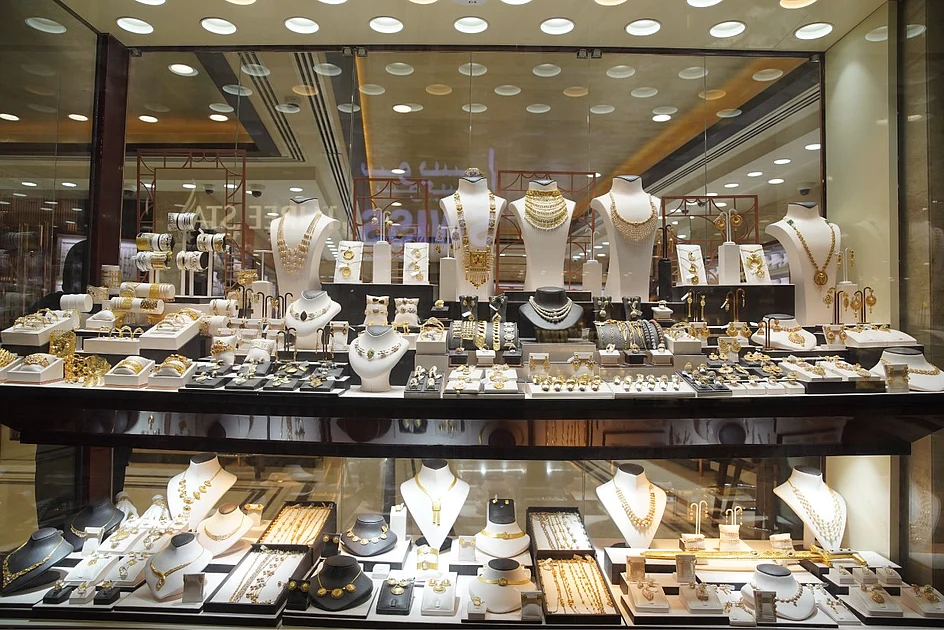
    Dubai’s gold market experienced an extraordinary bull run throughout 2025, delivering substantial wealth gains for residents and investors who entered the market at the year’s commencement. The precious metal’s remarkable performance has established 2025 as a landmark period for commodity investments in the United Arab Emirates.

    Market data reveals that 24-karat gold, the purest form available to consumers, opened the trading year at Dh318 per gram on January 1, 2025, and concluded at Dh520 per gram on December 31, 2025. This represents a staggering increase of Dh202 per gram, translating to a 63.5 percent annual appreciation—one of the most significant yearly gains in recent history.

    The price surge extended across all gold variants traded in the Dubai market. 22-karat gold demonstrated parallel growth, climbing from Dh294.5 to Dh481.5 per gram, while 21-karat gold advanced from Dh285 to Dh461.75 per gram. Even the newly introduced 14-karat variant, launched in late November, recorded a 2.3 percent increase to Dh308.75 per gram despite its limited trading period.

    Financial experts attribute this unprecedented rally to multiple converging factors. Aggressive central bank acquisitions of gold reserves, substantial interest rate reductions by the U.S. Federal Reserve, and escalating geopolitical tensions across the Middle East and other global regions created perfect conditions for gold’s ascent.

    Vijay Valecha, Chief Investment Officer at Century Financial, characterized 2025 as “a landmark period for precious metals,” noting that gold and silver significantly outperformed broader financial markets. The metal demonstrated remarkable consistency throughout the year, posting gains in eleven of twelve months. September emerged as the strongest month with an 11.94 percent surge, followed by substantial advances in January (6.60 percent) and March (9.31 percent). July represented the only negative month with a marginal 0.40 percent decline.

    The investment community responded enthusiastically to gold’s performance, with gold-backed exchange-traded funds (ETFs) recording net inflows of 15.6 million ounces. This substantial institutional and retail investor participation, combined with sustained central bank purchasing, created sustained upward momentum throughout the trading year.