标签: North America

北美洲

  • Trump drops $10bn lawsuit against IRS in exchange for a settlement fund

    Trump drops $10bn lawsuit against IRS in exchange for a settlement fund

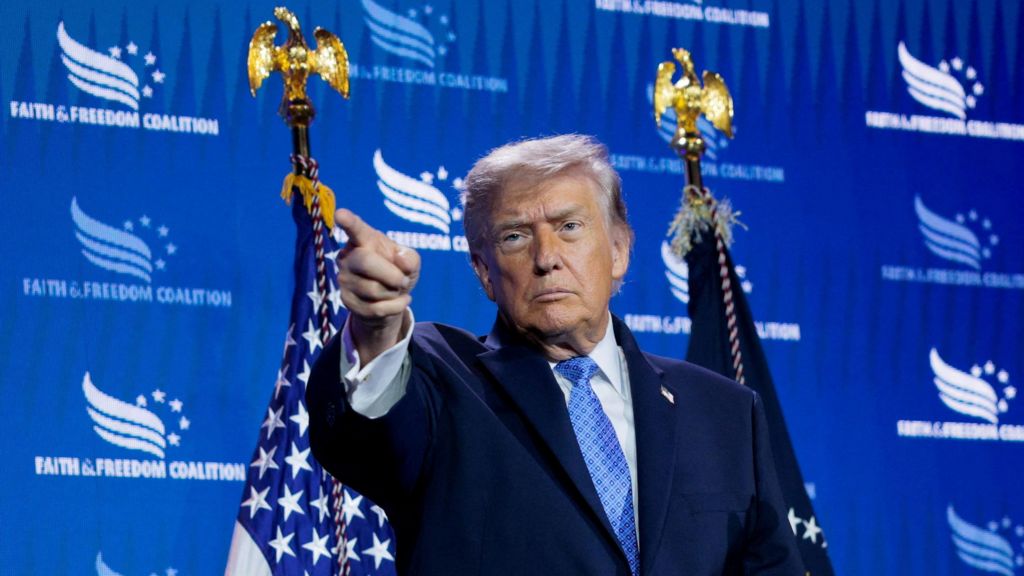
    In a surprising legal development that has ignited fierce partisan controversy across Washington, former president and current U.S. President Donald Trump has agreed to dismiss his $10 billion lawsuit against the Internal Revenue Service over the 2020 leak of his personal tax returns. The settlement paves the way for the creation of a $1.776 billion federal fund to compensate individuals who claim they were improperly targeted by government law enforcement actions.

    Trump first launched the legal action in January, arguing that the IRS failed to intervene to stop a former agency contractor, Charles “Chaz” Littlejohn, from leaking years of confidential tax documents to national media outlets during his first term in office. The dismissal came just 48 hours before a critical May 20 court deadline, where both sides were scheduled to argue over whether a valid legal standing for the case even existed — a question raised given Trump now leads the executive branch that oversees the IRS.

    Almost immediately after Trump’s legal team filed the motion to dismiss, the U.S. Department of Justice announced the terms of the broader settlement agreement. Under the deal, a new “anti-weaponisation fund” will be established to create a formal process for reviewing and resolving claims from people who say they were harmed when government law enforcement was improperly politicized. Trump, his sons, and the Trump Organization, all named plaintiffs in the original suit, will receive a formal apology from the department but no financial compensation, officials confirmed.

    The fund will be managed by a five-member commission, four of which will be appointed directly by the U.S. Attorney General, and is allocated nearly $1.8 billion in taxpayer funding to resolve eligible claims. Quarterly public reports on all disbursements from the fund will be submitted to the Attorney General, per the agreement. “The machinery of government should never be weaponised against any American, and it is this Department’s intention to make right the wrongs that were previously done while ensuring this never happens again,” Acting Attorney General Todd Blanche said in a statement announcing the deal.

    A spokesperson for Trump’s legal team framed the president’s decision to settle as a move driven by public interest, saying “the president is entering into this settlement squarely for the benefit of the American people. He will continue his fight to hold those who wrong America and Americans accountable,” the spokesperson added.

    However, congressional Democrats have decried the agreement as an unconstitutional abuse of power, labeling the new fund an unaccountable “slush fund” that will be used to reward Trump’s political allies. More than 90 House Democrats have already filed a legislative motion to block the settlement from taking effect. Maryland Representative Jamie Raskin issued a blistering statement calling the deal a corrupt racket, arguing it would divert $1.7 billion in public funds to pay allies of Trump, including people convicted for their role in the January 6, 2021 Capitol riot and supporters of Trump’s efforts to overturn the 2020 presidential election.

    Legal experts consulted by the judge overseeing the original suit last week had already described Trump’s legal action as historically unusual. “This case is unprecedented: A sitting president seeks monetary damages for alleged harm to his personal interests from an executive agency that he controls,” the experts wrote in their analysis, noting that Trump has publicly acknowledged he exercises control over both the IRS and the Department of Justice attorneys handling the litigation.

    The controversy traces back to the 2020 leak of Trump’s tax records, which formed the basis of a landmark New York Times investigation published weeks before that year’s presidential election. The investigation confirmed that Trump paid just $750 in federal income taxes in 2016, the year he won the presidency, and paid no federal income tax at all in 10 of the 15 years prior to that election. Trump voluntarily released his tax records publicly in 2022, two years after the leak. Littlejohn, the contractor responsible for the leak, pleaded guilty in 2023 to stealing confidential tax data from Trump and thousands of other high-income Americans, and was sentenced to five years in federal prison in 2024.

  • Judge rules gun and writings are admissible in Luigi Mangione’s New York murder trial

    Judge rules gun and writings are admissible in Luigi Mangione’s New York murder trial

    In a landmark pre-trial ruling released Monday, New York State Supreme Court Judge Gregory Carro has carved out a narrow middle ground in the high-profile murder case against Luigi Mangione, the man accused of killing UnitedHealthcare CEO Brian Thompson in late 2024. The judge approved the admission of a handgun and handwritten writings found in Mangione’s backpack during a post-arrest search at a Pennsylvania police station, but barred prosecutors from using multiple other pieces of evidence collected during an initial warrantless search at a local Altoona McDonald’s, citing constitutional violations.

    The 26-year-old suspect stands accused of fatally shooting Thompson on a busy Manhattan street in December 2024, just days before law enforcement tracked him to the western Pennsylvania McDonald’s following a multi-state nationwide manhunt. When officers responded to a tip from a member of the public who recognized Mangione from publicly released suspect photos, they approached the suspect to question his identity. Roughly 48 minutes after the initial interaction began, officers read Mangione his Miranda rights, the standard U.S. criminal procedure warning that informs suspects of their right to remain silent and avoid self-incrimination.

    During the pre-Miranda interaction at the restaurant, an officer conducted an unwarranted search of Mangione’s backpack, uncovering a loaded gun magazine, a passport, a cellphone, a wallet, a computer chip, and a Faraday bag designed to shield electronic devices from external signal monitoring. After Mangione was taken into custody, law enforcement conducted a second, more comprehensive inventory search of his belongings at the Altoona police station, where they found the handgun that prosecutors intend to present as the murder weapon, along with a red journal containing Mangione’s writings.

    Mangione’s defense team launched an aggressive pre-trial motion to suppress all evidence collected from the McDonald’s encounter, as well as all statements Mangione made to officers during the initial questioning. They argued that the warrantless search of the defendant’s personal property violated his Fourth Amendment right against unreasonable searches and seizures, and that the pre-Miranda questioning violated his due process rights. Prosecutors countered that all police actions followed lawful protocol and that the evidence should be admissible at trial.

    After hearing several days of pre-trial arguments in late 2024, Judge Carro ruled in favor of the defense on multiple key points. All evidence recovered during the initial McDonald’s search—including the loaded magazine, cellphone, passport, wallet, and computer chip—must be suppressed, he ruled, because the search was deemed improper and conducted without a valid warrant. In addition, all statements Mangione made to officers before he was read his Miranda rights, including answers to questions about lying about his identity and whether he carried fake identification, are also excluded from the state trial.

    However, the ruling handed prosecutors a critical victory by clearing the way for them to present the handgun and red journal found during the police station inventory search—two of the most high-stakes pieces of evidence in the case. While the suppression of multiple pieces of evidence marks a significant win for the defense, the ability to introduce the murder weapon and the defendant’s own writings leaves prosecutors with core evidence to present to the jury.

    Mangione has pleaded not guilty to all state charges, which include second-degree murder, multiple firearms offenses, and stalking. He also faces separate federal charges in connection with Thompson’s killing, and has entered a not guilty plea in that case as well. During Monday’s brief hearing, Mangione appeared in court dressed in a navy blue suit, whispering to one member of his legal team as lead defense attorneys Karen Friedman Agnifilo and Marc Agnifilo conferred with the judge and prosecution at the front of the courtroom. The back of the courtroom was filled with multiple rows of spectators and supporters of Mangione, several of whom wore printed shirts calling for his exoneration.

    The state murder trial is scheduled to begin in September 2025, and the ruling has now cleared up the major pre-trial evidence dispute that had dominated procedural proceedings in the case for months.

  • Rush-hour chaos sweeps New York after busiest rail system shutdown

    Rush-hour chaos sweeps New York after busiest rail system shutdown

    Monday’s morning rush hour devolved into widespread travel disruption for tens of thousands of New York area commuters after a work stoppage by Long Island Rail Road (LIRR) personnel ground the nation’s busiest commuter rail route to a complete halt, even as both sides in the dispute returned to the bargaining table to resolve the standoff.

    At Penn Station, the central transit hub that typically sees more than 600,000 passengers pass through its concourses on an average weekday, the usually bustling space was unnervingly quiet on Monday. Stranded commuters scattered across the city, scrambling to cobble together alternate travel plans to reach work, appointments and critical commitments.

    Among those caught off guard was Mekan Esenov, a Brooklyn resident attempting to travel to a Long Island airport to catch a scheduled flight. “There are no trains,” Esenov explained to reporters. Rideshare options like Uber were priced out of reach for most travelers, he added, with quotes reaching as high as $250 for the single trip.

    To mitigate the disruption, the Metropolitan Transportation Authority (MTA), which oversees the LIRR, has deployed free shuttle buses to cover several high-demand routes in the city. Even with the added service, MTA officials have warned commuters to expect severe overcrowding and lengthy delays across all alternate transit options.

    The work stoppage, which marks the first major strike on the LIRR in more than three decades, was launched Saturday by unions representing roughly 3,500 rail workers after talks between labor representatives and LIRR management collapsed over disagreements on pay and work rule reforms. Union leaders say their members have gone years without wage adjustments, and are pushing for improved compensation and safer working conditions ahead of a new contract set to take effect in June. The unions have formally requested a 5% annual wage increase for the upcoming contract term.

    After New York Governor Kathy Hochul publicly called on both parties to restart negotiations, talks with MTA leadership resumed Sunday, with a federal labor mediation agency stepping in to facilitate productive bargaining on the same day. On Monday, LIRR union members held peaceful protests across the city, including a large gathering in Midtown Manhattan where workers marched in a circle chanting for fair contracts, living wages and workplace dignity.

    Speaking to reporters on the picket line at the LIRR’s Jamaica Station in Queens, Olivier Desinor, a representative for the Brotherhood of Railroad Signalmen, said the vast majority of striking workers would prefer to be on the job rather than walking the picket line. “We’re hardworking men and women,” Desinor said. “It’s not one of the best positions we want to be in, but, thankfully, we’re together in solidarity, and we’re gonna get through this.”

    As of Monday, the MTA’s latest contract offer included a base 3% annual raise, with potential performance adjustments that could lift the total increase to 4.5%, according to CBS News, the U.S. partner of the BBC. Governor Hochul, who has called for a swift resolution that balances worker demands with fiscal responsibility, defended the MTA’s position on Sunday, noting that New York is a “pro-labour state.”

    “We believe in working men and women receiving a fair wage and benefits, but the MTA cannot agree to a contract that would raise fares as much as 8% and risk hiking taxes for Long Islanders,” she said in a statement.

    The strike is projected to impact approximately 250,000 weekly LIRR riders, including commuters traveling to New York City from eastern suburbs and summer travelers heading to Long Island’s popular Atlantic coast beaches, which run from the city’s outer boroughs through the Hamptons to Montauk.

  • Former Google CEO Eric Schmidt booed by graduates at mention of AI

    Former Google CEO Eric Schmidt booed by graduates at mention of AI

    When former Google chief executive officer Eric Schmidt stepped to the podium at the University of Arizona’s 2026 commencement ceremony to address the fast-growing ascent of artificial intelligence, he was met not with polite applause, but with resounding boos from hundreds of graduating students. The public rebuke has thrown a bright spotlight on the simmering anxiety spreading across U.S. college campuses over AI’s looming impact on the future of work and higher education.

    As jeers echoed through the graduation venue, Schmidt acknowledged the crowd’s frustration directly, telling students: “I know what many of you are feeling about that. I can hear you.” During his remarks, the former tech executive drew a parallel between today’s generative AI boom and the mass adoption of personal computing four decades ago, a shift that upended entire industries and redefined the global workforce. Schmidt conceded that students’ widespread fears about AI are not unfounded, calling those concerns “rational” even as he urged the soon-to-be graduates to embrace adaptation. “AI will shape the world,” he told the crowd, adding that the onus is now on the younger generation to steer the technology’s development: “The future is not yet finished. It is now your turn to shape it.”

    Schmidt is far from the only public speaker to face student backlash over AI in recent commencement cycles. Earlier this month, real estate industry executive Gloria Caulfield drew a similar hostile reception when she referenced AI’s growth during her address at the University of Central Florida. After she described AI as “the next industrial revolution,” boos erupted across the crowd. At Middle Tennessee State University’s commencement, Big Machine Records CEO Scott Borchetta also faced jeers when he brought up AI during his speech. His blunt response to the crowd: “Deal with it, like I said, it’s a tool.”

    These repeated confrontations are not isolated incidents, but rather a reflection of a deep-seated unease that has taken root among young Americans preparing to enter an AI-transformed workforce. Data from the 2026 Lumina Foundation-Gallup State of Higher Education Study confirms that widespread anxiety over AI-driven automation is already shifting career and academic choices for large numbers of undergrads and new graduates. Fearing their skills will be made obsolete by AI automation, many students are abandoning degree paths focused on entry-level technology roles and statistical analysis, instead redirecting their studies toward fields that prioritize uniquely human skills: critical thinking, interpersonal communication, and human-centric service work.

    This generational anxiety aligns with broader public sentiment across the United States. A recent Pew Research Center survey found that half of all U.S. adults (50%) report feeling “more concerned than excited” about the growing integration of AI into daily life, while only 10 percent say they are more excited than concerned about the technology’s spread. Industry analysts note that fears are most acute in sectors where AI can easily replicate existing white-collar information technology work, a shift that is already reshaping talent demand and long-term career outlooks for millions of workers across the country.

  • Negotiators reach a deal to end strike on North America’s busiest commuter rail system

    Negotiators reach a deal to end strike on North America’s busiest commuter rail system

    After three days of disruptive work stoppage that upended daily commutes for hundreds of thousands of travelers, negotiators announced a tentative deal on Monday to end the strike against the Long Island Rail Road (LIRR), North America’s busiest commuter rail network. Full service is scheduled to resume by Tuesday noon, bringing relief to commuters who had scrambled to find alternate travel routes since the strike began early Saturday.\n\nNew York Governor Kathy Hochul confirmed the breakthrough in a post on X, framing the agreement as a balanced compromise that delivers meaningful wage increases for LIRR workers while avoiding unfair cost burdens for riders and taxpayers. The deal caps off years of stalled contract talks between the railroad’s operator, the Metropolitan Transportation Authority (MTA), and five labor unions representing roughly half of the LIRR’s total workforce.\n\nThe unions launched their strike at 12:01 a.m. Saturday after months of failed negotiations over salary adjustments and healthcare premium contributions. Contract discussions first began in 2023, but talks deadlocked over the unions’ core demand: pay hikes large enough to help working employees keep pace with soaring inflation and rising living costs across the New York metropolitan region. The MTA had repeatedly warned that the unions’ initial wage demands would force the agency to raise ticket fares for regular commuters.\n\nA 2024 intervention by the Trump administration temporarily averted a work stoppage back in September, after the unions requested the appointment of a federal expert mediation panel. But even with federal involvement, the two sides failed to bridge their differences over succeeding months, leading unions to ultimately walk off the job earlier this week. It marked the first LIRR strike in 30 years, with the last major work stoppage taking place in 1994.\n\nMore than 250,000 daily weekday commuters rely on the LIRR to travel between New York City’s five boroughs and the eastern Long Island suburbs, a 118-mile route that serves nearly 3 million residents across Nassau and Suffolk counties, and also carries leisure travelers to popular summer destinations like the Hamptons. The shutdown immediately rippled across regional transportation and public events: over the weekend, baseball fans attending the highly anticipated New York Yankees-New York Mets crosstown matchup at Queens’ Citi Field were forced to find alternate travel, and officials warned that a prolonged strike would have disrupted travel for New York Knicks playoff fans heading to Manhattan’s Madison Square Garden, which sits directly above the LIRR’s central Penn Station hub.\n\nOver the weekend, hundreds of LIRR workers including locomotive engineers, machinists, and signal maintenance staff picketed at stations across the route. To ease disruptions, the MTA launched limited free shuttle bus service between key Long Island locations and New York City subway stations starting Monday, and Governor Hochul urged all able LIRR riders to work from home if possible to avoid transportation gridlock. Commute data from Monday morning showed far lower ridership on the shuttle service than officials projected: only around 2,000 riders used the service, compared to the MTA’s pre-planned capacity for 13,000, reflecting widespread compliance with work-from-home guidance.\n\nThe breakthrough in talks came after intensive negotiations that stretched from Sunday afternoon into the early hours of Monday, with prodding from the National Mediation Board, the independent federal agency that oversees labor relations for U.S. railroad and airline industries. With the deal now finalized, commuters can expect a full return to regular scheduled service by midday Tuesday, ending one of the most disruptive regional transportation shutdowns in recent New York history.\n\nThis reporting includes contributions from Associated Press correspondents based in New York and Concord, New Hampshire, and corrects an earlier typo confirming the LIRR’s governing body is the Metropolitan Transportation Authority.

  • Watch: Strike grinds America’s busiest commuter rail line to a halt

    Watch: Strike grinds America’s busiest commuter rail line to a halt

    A work stoppage by employees of the Long Island Rail Road has thrown New York City’s regional transportation network into disarray, bringing the nation’s busiest commuter rail service to a complete standstill. The industrial action, which marks the first strike the LIRR has faced in more than three decades, has left hundreds of thousands of daily commuters scrambling to find alternative ways to reach their workplaces, schools, and daily appointments.

    As the primary rail provider connecting Long Island’s suburban communities to Manhattan and other parts of New York City, the LIRR carries hundreds of thousands of riders on a typical weekday. The sudden shutdown of service has created cascading disruptions across alternate transit routes, with overcrowded buses and subway lines seeing far higher demand than usual. Many commuters have faced hour-long delays to their trips, while others have been forced to work from home entirely after being unable to secure viable transportation into the city.

    The strike ends a 31-year period of uninterrupted service for the rail line, a stretch that had many New Yorkers unprepared for the widespread chaos that has followed. Transportation officials have urged commuters to avoid non-essential travel into the city and to plan for extended travel times if movement is necessary, as negotiations between union leadership and rail management continue to resolve the dispute behind the scenes.

  • At least six Americans exposed to Ebola in DR Congo, US media report

    At least six Americans exposed to Ebola in DR Congo, US media report

    A growing Ebola outbreak in the eastern Democratic Republic of the Congo has been designated a Public Health Emergency of International Concern by the World Health Organization, triggering global alerts as health authorities race to contain the spread of a strain with no approved countermeasures. Multiple sources close to the situation have confirmed to CBS News, the United States partner of the BBC, that at least six American citizens have been exposed to the virus within DRC borders.

    Of the six exposed individuals, one has already begun showing characteristic Ebola symptoms, while three others are classified as having had high-risk exposure. Health officials have not yet confirmed whether any of the group have developed active infections. The U.S. Centers for Disease Control and Prevention has announced it is facilitating the safe evacuation of a small cohort of directly affected American nationals, but has declined to confirm the exact number of people being moved.

    According to the latest official data collected by WHO, the outbreak, centered in DRC’s Ituri province, has already been linked to 336 suspected cases and 88 confirmed deaths. The current outbreak is driven by the Bundibugyo strain of Ebola, a variant for which no licensed vaccines or targeted antiviral treatments have been approved for widespread use. Beyond DRC’s borders, the CDC has confirmed two cases and one fatality in neighboring Uganda, marking the first cross-border spread of the current outbreak.

    U.S. officials are working to arrange transportation for the exposed American group to a secure quarantine facility, senior sources told health news outlet STAT. The outlet further reports that unconfirmed plans under consideration would move the group to a U.S. military base in Germany for monitoring, though no final decision has been announced. During a press briefing held Sunday, CDC officials declined to respond to direct questions about the affected U.S. citizens, but emphasized that the overall risk of widespread Ebola transmission within the United States remains low. In line with the escalating risk, the U.S. State Department has issued a Level Four travel advisory – its highest warning level – urging all U.S. citizens to avoid non-essential and essential travel to DRC entirely.

    While WHO has designated the outbreak a PHEIC, the agency confirmed the event does not yet meet the criteria to be classified as a pandemic. Still, WHO officials have issued stark warnings that the actual scope of the outbreak is likely far larger than current detected and reported case numbers, with substantial risk of further local and regional spread across central Africa.

    The 2014-2016 West African Ebola outbreak remains the deadliest recorded event since the virus was first discovered in 1976, with more than 28,600 confirmed infections and 11,325 deaths across multiple countries in West Africa and beyond, including the U.S., United Kingdom, and Italy.

    Jean Kaseya, Director General of the Africa Centres for Disease Control and Prevention, emphasized that without targeted vaccines or effective treatments, adherence to basic public health protocols is the most critical line of defense. He specifically highlighted the risk of transmission during traditional community funeral practices, which drove widespread transmission in the early stages of the 2014-2016 outbreak, when communities frequently handled the bodies of deceased loved ones during washing and burial rituals. “We don’t want people infected because of funerals,” Kaseya told BBC World Service’s *Newsday* program.

    WHO has issued formal guidance to DRC and Uganda, the two countries with confirmed cases, calling for reinforced cross-border health screenings to stop the virus from expanding into new territories. The agency has also urged all neighboring countries to immediately enhance outbreak preparedness and surveillance capacity, including expanded monitoring at health facilities and community-level tracking. In response, neighboring Rwanda has already announced it will tightening screening protocols along its shared border with DRC as a proactive precautionary measure.

    Ebola is a rare but extremely severe viral infection that carries a high mortality rate. Four known species of Ebola virus can cause human outbreaks, and the current strain is the Bundibugyo variant. Historically, Bundibugyo outbreaks have recorded an approximately 30% mortality rate among confirmed cases.

    Transmission occurs between humans through direct contact with infected bodily fluids, including blood, vomit, and other secretions. Symptoms develop between 2 and 21 days after exposure, beginning with flu-like signs such as fever, headache, and fatigue. As the infection progresses, patients develop vomiting, diarrhea, organ failure, and in some cases, internal and external bleeding. Outbreaks typically originate when an initial human patient contracts the virus from an infected wild animal host, most commonly fruit bats. While effective vaccines exist for the more common Zaire Ebola strain, no comparable products are approved for use against Bundibugyo.

  • Strike halts New York commuter rail line

    Strike halts New York commuter rail line

    On Saturday, the Long Island Rail Road (LIRR) — the busiest commuter rail system across North America — ground to a complete halt after unionized workers launched a work stoppage, the first major industrial action the line has seen in 30 years.

    Shortly after midnight, the entire rail network stopped operating. Five labor unions representing approximately half of the LIRR’s total workforce, totaling more than 3,500 employees ranging from locomotive engineers and signal technicians to ticket clerks, electricians, and machinists, walked off the job after months of stalled contract negotiations with the Metropolitan Transportation Authority (MTA), the public agency that oversees operations of the LIRR.

    Negotiations between the two sides have hit an impasse over two core issues: worker wage adjustments and healthcare premium contributions. As of Saturday, no new bargaining sessions have been scheduled, according to Kevin Sexton, national vice-president of the Brotherhood of Locomotive Engineers and Trainmen.

    By Saturday afternoon, the LIRR’s central hub, Manhattan’s Penn Station, bore little resemblance to its usual crowded weekend self. The bustling main concourse that normally teems with thousands of daily commuters hosted only a few dozen people, most of whom were transiting through the station to access unaffected Amtrak intercity services. Departure boards that once display upcoming LIRR trips by destination now carry unusual entries for “ghost trains” marked “No Passengers,” while hand-placed signs on locked customer service windows inform travelers of the strike-related shutdown. Barricades and roll-down gates block access to LIRR platforms, with MTA police officers posted to redirect displaced commuters to alternative travel options.

    While the shutdown was felt immediately on Saturday, transportation officials and commuters are bracing for far more severe disruption when the workweek begins on Monday. On an average weekday, the LIRR carries nearly 300,000 commuters traveling between New York City and Long Island’s eastern suburbs. Displaced riders will need to rely on limited alternative bus service, which can only accommodate roughly 13,000 passengers during both morning and evening rush hours, or opt to drive into the city, despite ongoing elevated gas prices that already strain household budgets.

    Speaking on the picket line outside Penn Station Saturday morning, union member Duane O’Connor acknowledged the widespread inconvenience the strike would impose on ordinary commuters and local communities, but emphasized that workers are only demanding fair compensation. “I feel terrible. Terrible. This is going to hurt. This is going to hurt the island, this is going to hurt the city … All we are asking for is fair wages,” O’Connor said.

    This work stoppage marks just the fourth strike in LIRR’s recorded history, and the first since 1994. Previous strikes between 1980 and 1994 lasted anywhere from two to 11 days, leaving uncertainty for commuters who rely on the line for daily travel, as no end to the current shutdown is in sight with no new talks scheduled.

  • Moment two fighter jets collide mid-air at US air show

    Moment two fighter jets collide mid-air at US air show

    A dramatic mid-air collision between two fighter jets unfolded at a United States air show over the weekend, leaving onlookers stunned but avoiding what could have been a catastrophic loss of life. The two aircraft involved in the incident belonged to the US Navy, and each carried two crew members aboard at the time of the crash.

    In what emergency officials are calling a remarkable turn of events, all four crew members successfully ejected from their damaged aircraft before the jets crashed. Immediately following the collision, local emergency response teams rushed to the scene to provide medical care and secure the crash site.

    As of the latest official update from military authorities, all four ejected personnel are receiving medical treatment, and their conditions are listed as stable. Investigations are already underway to determine the root cause of the collision, with officials set to review air show footage, interview witnesses, and examine the wreckage of the two jets to piece together exactly what led to the mid-air incident. No injuries to spectators on the ground have been reported so far.

  • Fighter jet crews parachute safely after collision at US air show

    Fighter jet crews parachute safely after collision at US air show

    A shocking mid-air collision between two U.S. Navy EA-18G Growler fighter jets has disrupted the final day of a popular Idaho air show, leaving military officials and event attendees shaken but relieved after all four crew members escaped before the crash. The incident unfolded Sunday afternoon approximately two miles northwest of Mountain Home Air Force Base, on the second and closing day of the biennial Gunfighter Skies air show.

    Military spokespersons confirmed that all crew members on board both jets safely ejected from their aircraft immediately following the collision. In an official social media statement posted Sunday, Mountain Home Air Force Base Gunfighters confirmed that all aircrew involved are currently in stable condition, with responding emergency personnel transporting the team for mandatory medical evaluations. U.S. Navy Commander Amelia Umayam told CBS News that the crew remains in the care of on-base medical staff for routine checks, adding that it has not yet been confirmed whether any crew sustained injuries during the ejection or collision.

    The collision sparked a post-crash fire at the crash site, prompting base officials to enact a brief lockdown as emergency response teams worked to secure the area. Following the incident, event organizers made the immediate decision to cancel all remaining activities for the 2026 Gunfighter Skies air show. In their statement, base officials thanked attendees for their cooperation during the emergency response, noting that public patience allowed first responders to work quickly and effectively to contain the situation.

    The two aircraft involved in the crash are assigned to an electronic attack squadron based out of Washington state. According to U.S. Navy data, each EA-18G Growler carries an approximate price tag of $67 million, meaning the collision resulted in an estimated $134 million in military aircraft losses. Kim Sykes, a representative for Silver Wings of Idaho—the local organization that co-organized the event—confirmed that no base personnel, event staff or attendees on the ground suffered any injuries in connection with the crash.

    This is not the first fatal accident linked to the Gunfighter Skies air show: the event was last held in 2018, when a glider pilot lost their life in a separate accident during demonstration activities. As of Monday, military officials have launched a formal investigation to determine the root cause of Sunday’s collision, with no further details on potential contributing factors released to the public. The BBC has reached out to both Mountain Home Air Force Base and event organizers for additional comment on the incident.