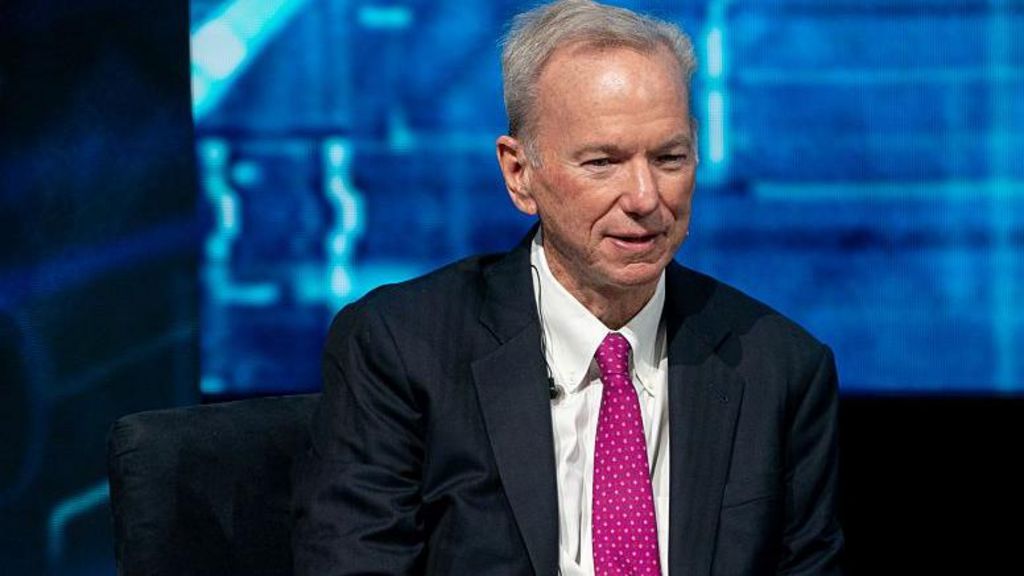
When former Google chief executive officer Eric Schmidt stepped to the podium at the University of Arizona’s 2026 commencement ceremony to address the fast-growing ascent of artificial intelligence, he was met not with polite applause, but with resounding boos from hundreds of graduating students. The public rebuke has thrown a bright spotlight on the simmering anxiety spreading across U.S. college campuses over AI’s looming impact on the future of work and higher education.
As jeers echoed through the graduation venue, Schmidt acknowledged the crowd’s frustration directly, telling students: “I know what many of you are feeling about that. I can hear you.” During his remarks, the former tech executive drew a parallel between today’s generative AI boom and the mass adoption of personal computing four decades ago, a shift that upended entire industries and redefined the global workforce. Schmidt conceded that students’ widespread fears about AI are not unfounded, calling those concerns “rational” even as he urged the soon-to-be graduates to embrace adaptation. “AI will shape the world,” he told the crowd, adding that the onus is now on the younger generation to steer the technology’s development: “The future is not yet finished. It is now your turn to shape it.”
Schmidt is far from the only public speaker to face student backlash over AI in recent commencement cycles. Earlier this month, real estate industry executive Gloria Caulfield drew a similar hostile reception when she referenced AI’s growth during her address at the University of Central Florida. After she described AI as “the next industrial revolution,” boos erupted across the crowd. At Middle Tennessee State University’s commencement, Big Machine Records CEO Scott Borchetta also faced jeers when he brought up AI during his speech. His blunt response to the crowd: “Deal with it, like I said, it’s a tool.”
These repeated confrontations are not isolated incidents, but rather a reflection of a deep-seated unease that has taken root among young Americans preparing to enter an AI-transformed workforce. Data from the 2026 Lumina Foundation-Gallup State of Higher Education Study confirms that widespread anxiety over AI-driven automation is already shifting career and academic choices for large numbers of undergrads and new graduates. Fearing their skills will be made obsolete by AI automation, many students are abandoning degree paths focused on entry-level technology roles and statistical analysis, instead redirecting their studies toward fields that prioritize uniquely human skills: critical thinking, interpersonal communication, and human-centric service work.
This generational anxiety aligns with broader public sentiment across the United States. A recent Pew Research Center survey found that half of all U.S. adults (50%) report feeling “more concerned than excited” about the growing integration of AI into daily life, while only 10 percent say they are more excited than concerned about the technology’s spread. Industry analysts note that fears are most acute in sectors where AI can easily replicate existing white-collar information technology work, a shift that is already reshaping talent demand and long-term career outlooks for millions of workers across the country.