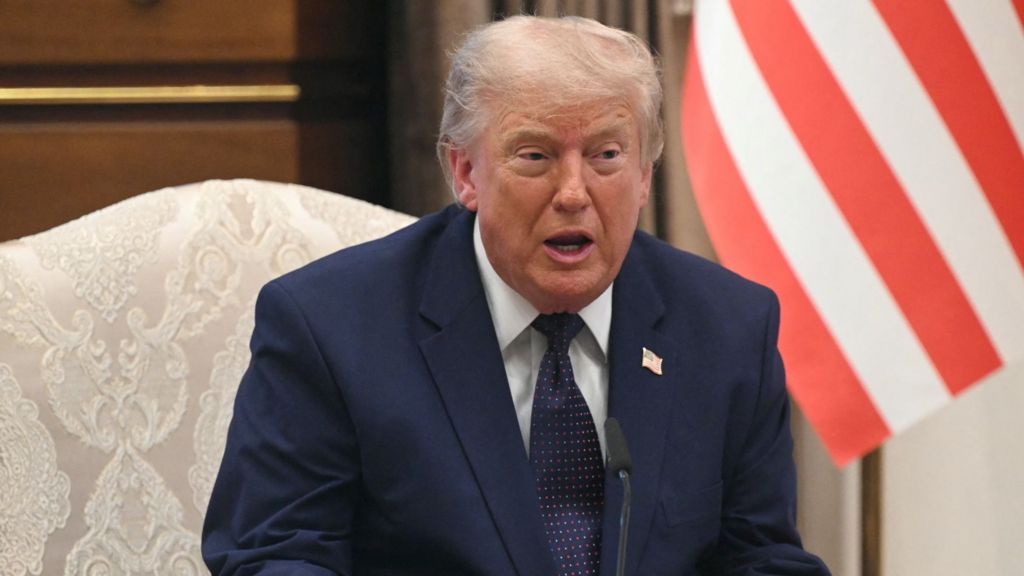
At a high-stakes summit gathering of the North Atlantic Treaty Organization, sitting U.S. President Donald Trump has once again doubled down on his long-standing skepticism of the transatlantic alliance, repeating scathing criticism that has left alliance partners reassessing Washington’s commitment to collective defense. In public comments made during the summit proceedings, Trump made clear that his dissatisfaction with the 75-year-old security pact has not softened, telling attendees and reporters that he has been consistently let down by the organization’s performance and burden-sharing dynamics. Central to his latest round of critique was a blunt assertion of American self-sufficiency: the president declared firmly that the United States “doesn’t need anybody’s help” to guarantee its own national security, a remark that breaks with decades of bipartisan U.S. commitment to NATO’s core principle of collective defense, where an attack on one member is considered an attack on all. Trump’s repeated broadsides against NATO have roiled alliance relations for years, with many European leaders pushing back against his claims that the U.S. carries an unfair share of the alliance’s defense cost burden, while other observers have warned that his persistent criticism erodes the deterrence power that has kept European security stable since the end of World War II. This latest public rebuke comes as the alliance gathers to address shifting global security challenges, from rising great power competition to regional instability, making the White House’s open dissatisfaction a major point of tension on the summit’s agenda.
标签: North America
北美洲
-
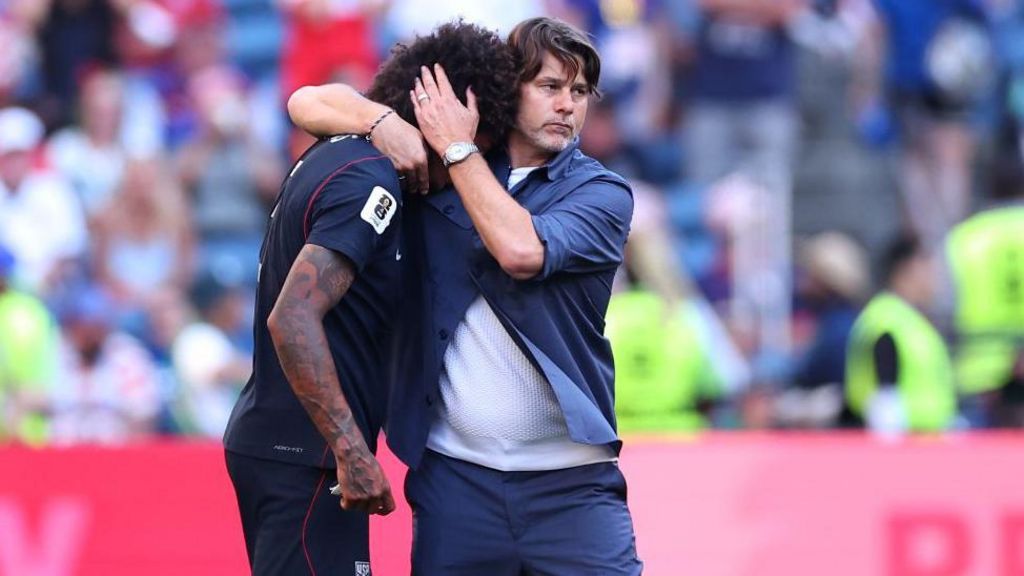
Did USA team fall short in World Cup? Here’s what pundits think
The 2026 FIFA World Cup hosted in part by the United States brought a rollercoaster of emotion for American soccer fans, as the men’s national team’s promising tournament run came to a underwhelming close on Monday with a 4-1 defeat to Belgium in the Round of 16. After a string of electric early victories that captured national attention and lifted soccer’s profile across the country, the USMNT never found its top form against a sharper Belgian side, leaving supporters and analysts reflecting on a missed breakthrough opportunity.
Heading into the knockout stage, expectations ran high for the American squad. The roster was stacked with talent plying their trade in Europe’s most competitive top leagues, and the team was led by Mauricio Pochettino, one of the most respected and high-profile coaches in global soccer. Many fans held out hope the side could match or surpass the US’s modern-era best run to the quarterfinals at the 2002 World Cup. But those hopes fell flat in Seattle, where Belgium dominated play from start to finish.
In his post-match remarks, Pochettino acknowledged his side never managed to compete at the level needed, confirming a full review and learning process would get underway to identify where the campaign went wrong. Star midfielder Tyler Adams echoed that sentiment, saying simply that the team had fallen well short of their own goals for the tournament. “We didn’t go as far as we’d like,” Adams said.
Controversy overshadowed the match even before kickoff, after US President Donald Trump intervened to ask FIFA to review a one-match red card suspension for starting striker Folarin Balogun, the team’s top goalscorer. The suspension was ultimately overturned, and Balogun featured in the match – a move that has drawn widespread criticism from soccer commentators. BBC Sport correspondent Tim Vickery argued Pochettino should have kept Balogun on the bench to defuse the off-field distraction entirely. USA Today sports columnist Nancy Armour noted that while the team’s early thrilling wins, record goal haul and unofficial anthem *Take Me Home, Country Roads* will be the first memories fans hold, Trump’s political interference will also be an inescapable part of the campaign’s legacy. “It’s too bad it ended in this trainwreck,” Armour wrote. “They deserved better.”
Analysts have pointed to a range of missteps that led to the lopsided loss. Andrew Greif of NBC News noted that the US entered the knockout round with unprecedented momentum, with a favorable draw that kept all of their early matches in Pacific time zone venues, giving them a unique home-field advantage. That momentum evaporated against Belgium, Greif observed, with the Belgian side boasting far sharper technical quality while the US undid itself with repeated unforced errors. “What will sting the US is that it may never have a better opportunity for its breakthrough,” Greif added, echoing a widespread sentiment that the 2026 co-hosted tournament represented a once-in-a-generation shot for the US to cement its status among the world’s elite soccer nations. Former USMNT player Herculez Gomez commented on ESPN that key stars turned in “terrible individual performances” at the worst possible moment, with a cascade of errors that sent the team into a psychological spiral they could not reverse. Ben Steiner of Sports Illustrated argued that all the hype and hope built over years ahead of the tournament ultimately felt wasted, as the US floundered in its first match against a top-10 ranked global side. “Instead of a glorious rendition of Country Roads with the Seattle faithful,” Steiner wrote, “the parting message of this World Cup for the USMNT is the controversy surrounding Balogun and an underwhelming performance against what many thought was a beatable Belgian team.”
Even amid the disappointment, not all reaction was negative. Many fans and analysts took a long-term view of US soccer’s growth, pointing to how far the program has come since the US last hosted the World Cup in 1994. California fan Mohammed told BBC Sport that back in 1994, the US only had a 10-team domestic league playing in half-empty rented NFL stadiums, with home national team matches that felt like away games. Today, he noted, the US boasts a thriving professional league, top talent competing in Europe, and world-class host venues like Seattle’s match stadium. “The future is bright,” Mohammed said.
Seattle-based supporters echoed that perspective, acknowledging their disappointment with the loss but emphasizing that the successful co-hosting of the tournament has already cemented the US’s status as a serious global soccer power. “It is an amazing event we have put on,” one fan told BBC reporter Gary Rose. “Everyone has been talking about the World Cup in this country.” Another fan told the New York Times that the high-quality tournament would benefit the USMNT long-term, arguing that American soccer requires patience: “It gains a little bit every year.”
Experts speaking to BBC echoed that long-term optimism, noting that the 2026 World Cup could still prove to be a pivotal moment for American soccer fandom. Record-breaking domestic television ratings and a continuing upward trend in youth soccer participation across the country set a strong foundation for future growth, even after an early exit that left a bitter taste for fans in the short term.
-
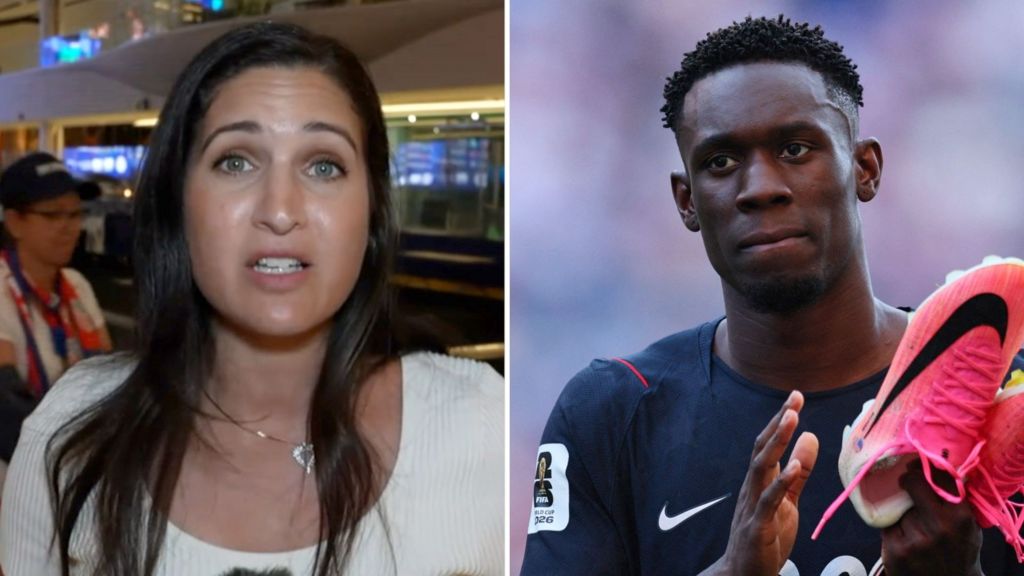
Fans react to US World Cup loss after red card drama
The 2026 FIFA World Cup co-hosts the United States have seen their tournament run cut short in a match marred by red card controversy, leaving soccer supporters across the nation processing an early and unexpected exit.
The United States men’s national team crashed out of the competition following a tense contest that turned on a pivotal red card decision. The call shifted the entire momentum of the match, leaving the Americans down a player for a critical stretch and ultimately unable to claw their way back into contention for advancement.
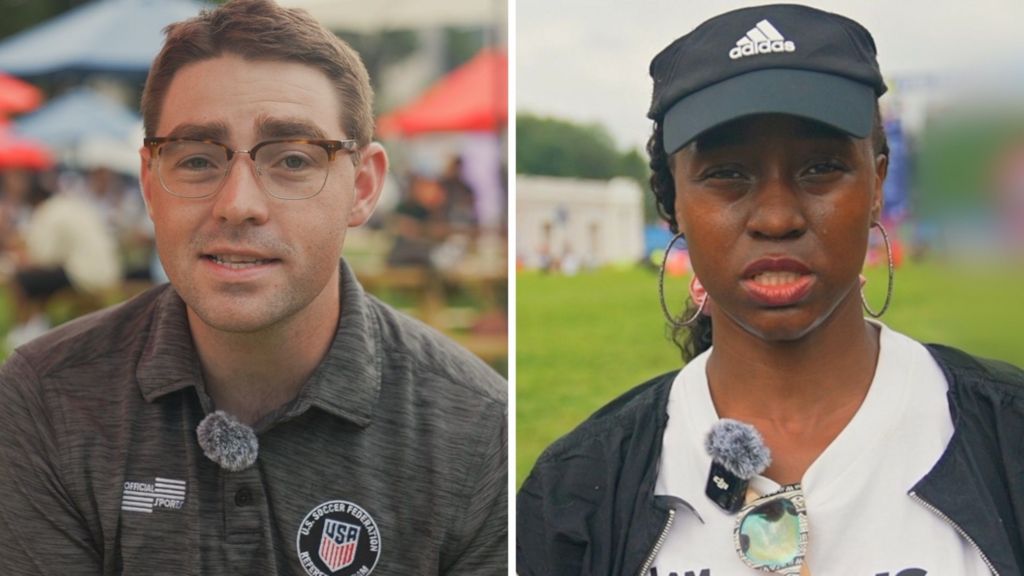
BBC correspondent Nada Tawfik hit the streets to speak directly with heartbroken, frustrated, and reflective US fans in the immediate aftermath of the elimination. Many supporters expressed raw disappointment, saying the team had built high hopes coming into the tournament as co-hosts, and an early exit was far from what they expected. Others questioned the controversial red card ruling, arguing it changed the entire trajectory of the match and unfairly derailed the US side’s chances.
Despite the widespread disappointment, some fans also offered measured reflections, pointing to young talent on the roster that they hope will develop for future tournaments. Even so, there is no masking the letdown across the US soccer community, which had poured energy into supporting the team ahead of what was supposed to be a historic home-region World Cup run.
-
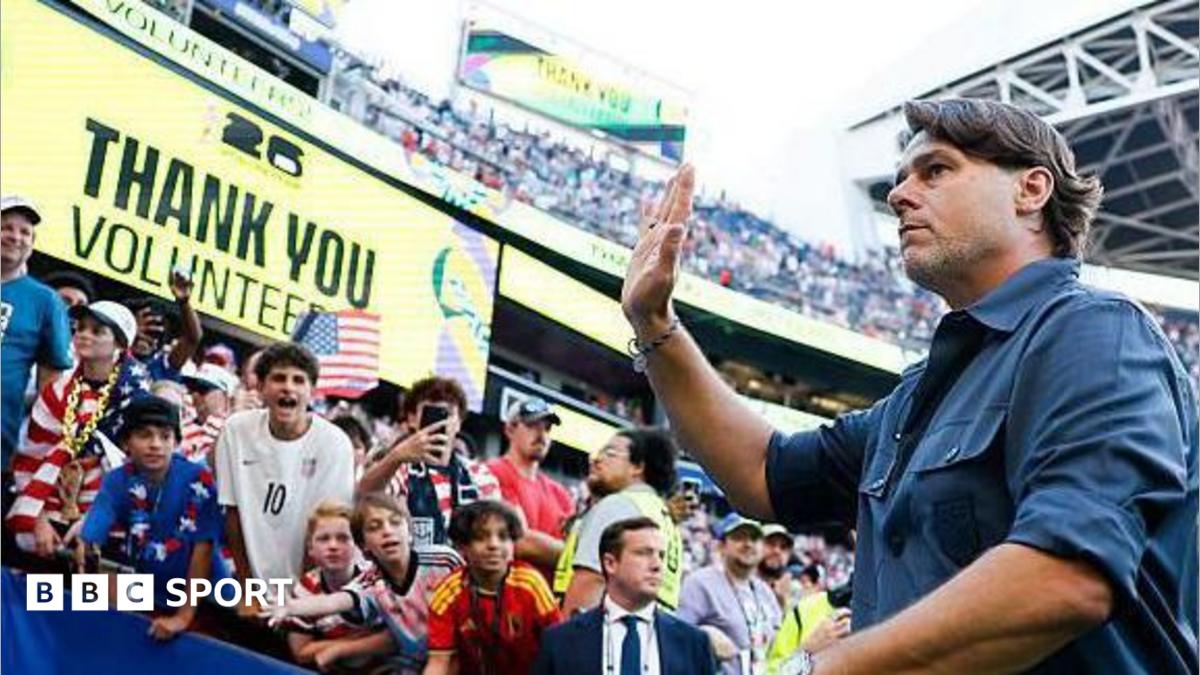
A shambolic end for the American dream – did Balogun saga play a part?
The 2026 FIFA World Cup co-host United States saw its fairytale first-ever title dream go up in smoke on Tuesday, falling to a lopsided 4-1 defeat to Belgium in the round of 16 that sent the European side through to a quarter-final clash against Spain. What was supposed to be a festive, history-making night at Seattle Stadium, kicked off with all the expected fanfare: a raucous, flag-waving American crowd, pre-match fireworks, billowing smoke flares, and a ceremonial military flyover that stoked patriotic fever. But by the final whistle, the stands were half-empty, and the momentum that had carried the US through to the knockout stage had dissolved into disappointment.
The 4-1 scoreline marks the Americans’ heaviest World Cup defeat since 1990, and the result was overshadowed by days of controversy surrounding US striker Folarin Balogun, who was cleared to start the match despite receiving a straight red card in the team’s previous round fixture against Bosnia-Herzegovina. FIFA’s shock decision to suspend Balogun’s automatic one-match ban sparked widespread outrage from football governing bodies and opposing coaches, including UEFA, Belgium’s camp, and England manager Thomas Tuchel. The controversy even spilled into US politics, with former President Donald Trump confirming he had personally asked FIFA to review the original red card ruling, arguing the challenge on Bosnian defender Tarik Muharemovic was not a foul.
Going into the match, Belgium defender Timothy Castagne openly acknowledged the controversy had shifted global public opinion in his side’s favor, saying, “It’s great to have the world on our side against the United States.” Balogun, who entered the match with three tournament goals to his name, offered little comment on the uproar: “I accepted the decision when I was given the red card, and then I also accepted the decision when I was told I could play. There’s not too much else I can really say on the matter.” Despite the off-field noise, Balogun failed to threaten the Belgian defense all night, leaving the US attack toothless for much of the match.
US manager Mauricio Pochettino, whose contract expires at the end of the tournament, dismissed claims that the controversy impacted his side’s performance. “It didn’t affect our performance. It’s not an excuse. It wasn’t our day,” he told reporters after the match. Pochettino did, however, hit out at critics who accused the US federation of manipulating the process, adding, “I feel disappointed with too many people. They put politics and manipulation, talk about ethics and integrity [first]. If we talk about the history of this game, I am disappointed in a personal way.” After the final whistle, Belgium manager Rudi Garcia revealed Balogun had approached him post-match, and he made clear he held the striker blameless: “It’s not his fault, he’s not the one to blame and that’s what I told him.”
While the Balogun saga dominated headlines in the build-up, poor defensive discipline and unforced errors, not off-field drama, were the root of the US collapse. Charles De Ketelaere scored two first-half goals for Belgium, first tapping in an opener after being left unmarked in the 18-yard box, then outjumping two American defenders to head home just minutes after the US had equalized the score. The most calamitous US mistake came for Belgium’s third goal, when hesitant goalkeeper Matt Freese strayed off his line to clear a loose ball, only to be dispossessed by De Ketelaere, leaving Hans Vanaken with an empty net to slot home from outside the penalty area. The 3-1 lead drained the life out of the home crowd, with fans streaming for the exits in the final 10 minutes before Romelu Lukaku put the final nail in the coffin with an injury-time fourth goal.
Pochettino conceded his side never found their rhythm from the first whistle. “Everyone saw from the beginning that we did not connect with the game,” he said. “We were never in the game, even when we scored the goal [to equalise], we conceded in the next action. It was really tough from the beginning.” Reactions from fans exiting the stadium reflected the disillusionment, with one telling BBC Sport, “There was no willingness to go for the ball. There was nothing there. There was no drive, football wasn’t alive today.” Another acknowledged Belgium’s clinical performance: “The US had unforced errors all over. They didn’t play their best game but Belgium played the way they needed to win that game. To silence the crowd like they did, they put themselves in a great spot to win.”
The exit makes the US the third North American co-host to exit the tournament at the last 16 stage, following earlier knockouts for Canada and Mexico. Despite the disappointing end to the campaign, many players and fans struck a measured tone about the long-term impact of hosting the World Cup on American soccer. After a slow pre-tournament build-up, public interest surged as the US advanced to the knockout stage, with fan zones and bars across the country packed for matches, and national team jerseys becoming ubiquitous. US midfielder Tyler Adams argued the campaign still achieved its core goals off the pitch: “You have good days and bad days and this was a bad day. We didn’t go as far as we’d like. But if we inspire a few kids on this journey then we have done something right.”
Many fans echoed that sentiment, noting that while the result was disappointing, hosting the tournament has already pushed soccer further into the American mainstream. “It is an amazing event we have put on and we are really excited for the future of soccer in the country,” one fan said. Another acknowledged the gap that remains for the US to compete with elite football nations: “Long term we have a lot of catching up to do. There’s a culture built around football and we’re just not there yet.”
The biggest lingering question following the exit surrounds Pochettino’s future. The former Tottenham Hotspur manager’s contract with the US Soccer Federation is set to expire after the tournament, and he offered no clarity on his next steps Tuesday. “Now it’s [time] to rest a little bit, to think, to have conversations and see what the decision is from the federation and from us,” he said. “I am so happy we built a very good relationship, but now is not the moment. In the next weeks we can start to talk, if the federation wants to talk.” For Belgium, however, the focus already turns to their quarter-final showdown with Spain, as they chase a deep run in the 2026 World Cup.
-
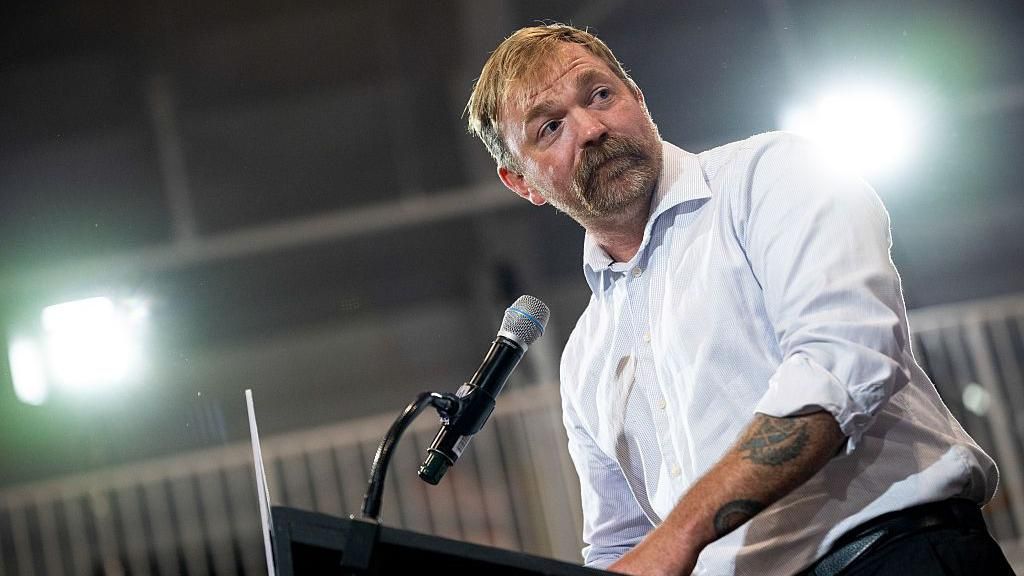
Maine senate candidate asked to drop out of race over sexual assault allegation
A high-stakes U.S. Senate race in Maine has been thrown into chaos following a new sexual assault allegation against Democratic nominee Graham Platner, prompting top party figures and national Democratic leaders to publicly demand he exit the contest ahead of November’s pivotal midterm elections. The accuser, 41-year-old Jenny Racicot, shared detailed allegations in a series of interviews with Politico published Monday, marking the most serious claim to emerge against Platner in a growing string of controversies that have roiled his campaign over recent weeks.
Racicot told Politico she had an on-again, off-again romantic relationship with Platner spanning more than two years before the alleged 202X incident. According to her account, Platner entered her Maine home uninvited while heavily intoxicated and assaulted her sexually. After she explicitly told him the encounter was non-consensual, Racicot said she cut off all contact with him permanently.
Racicot was originally among the women interviewed for an earlier New York Times report published ahead of Maine’s Democratic primary, where three former girlfriends accused Platner of patterns of erratic and aggressive behavior. She chose not to go public with her assault claim at that time, explaining she did not want to be publicly identified as a rape victim. But after widespread public controversy surrounding the Times’ initial reporting, Racicot said she felt compelled to share her full account publicly.
Platner, a former combat Marine and commercial oyster farmer who won the Democratic nomination to challenge four-decade incumbent Republican Senator Susan Collins, has forcefully denied the sexual assault allegation, calling it “categorically false.” Despite the denial, he acknowledged in a social media video statement released hours after Politico published the report that he is pausing to evaluate his political future. “Regardless of the inaccuracy of the reporting, but mindful the political reality it will inflict, we are taking the time to reflect on the best path forward for the state that I love, the people that I love, the movement I belong to and the goal of defeating Susan Collins,” he said. In the days following the report, Platner’s campaign has postponed all public events scheduled for this week, and the BBC confirmed it has reached out to his team for additional comment with no further response as of press time.
This latest allegation is far from the first controversy to upend Platner’s campaign. Earlier this year, reports emerged of a chest tattoo he received in 2007 while drinking with fellow Marines in Croatia that closely resembled the Totenkopf, or death’s head symbol used by Nazi SS forces during World War Two. Platner later said he had the tattoo removed after recognizing the problematic resemblance. Old Reddit posts from 14 years ago were also unearthed, in which Platner argued sexual assault victims should “take some responsibility for themselves” and avoid excessive intoxication. Platner later apologized for the comment, asking voters to judge him by his current character rather than a decade-old offhand remark. Most recently, reports that Platner exchanged sexually explicit messages with women outside his marriage were published, which Platner acknowledged were true, saying he had made mistakes early in his marriage that he and his wife had since worked through together.
In the wake of Monday’s new sexual assault allegations, prominent Democrats across the country have rapidly withdrawn their endorsements and called for Platner to drop out of the race immediately. Former Democratic National Committee chair Donna Brazile wrote on the social platform X that “It’s time for Mr. Platner to step aside and be replaced by July 13th. Platner needs time to heal, focus on his family and well-being. Enough. Enough.” U.S. Representatives Ruben Gallego and Ro Khanna, both fellow Democrats, also pulled their support, with Khanna saying “the report [is] serious and credible… Graham Platner should drop out from the race. I am withdrawing my endorsement.” Even the Maine Democratic Party, the official state organization that backed Platner’s nomination, issued a statement calling for his withdrawal. “Over the past several weeks, multiple women have made serious, credible allegations against Graham Platner. Today’s statements take those allegations even further,” the party’s leadership said. “Maine Democratic Party leadership is calling on Graham Platner to withdraw as the Democratic nominee for U.S. Senate.”
The Maine Senate race is widely viewed as one of the most critical pickup opportunities for Democrats as they mount an uphill longshot bid to flip control of the U.S. Senate from Republicans in the 2024 midterm elections. Collins, the Republican incumbent, has held her seat for nearly 30 years and repeatedly fended off Democratic challenges, even as Maine has not backed a Republican presidential candidate since 1988. A Platner withdrawal would force the Maine Democratic Party to nominate a replacement candidate in less than a week, per party deadlines, putting their bid to unseat Collins in serious jeopardy just months before voting begins.
-
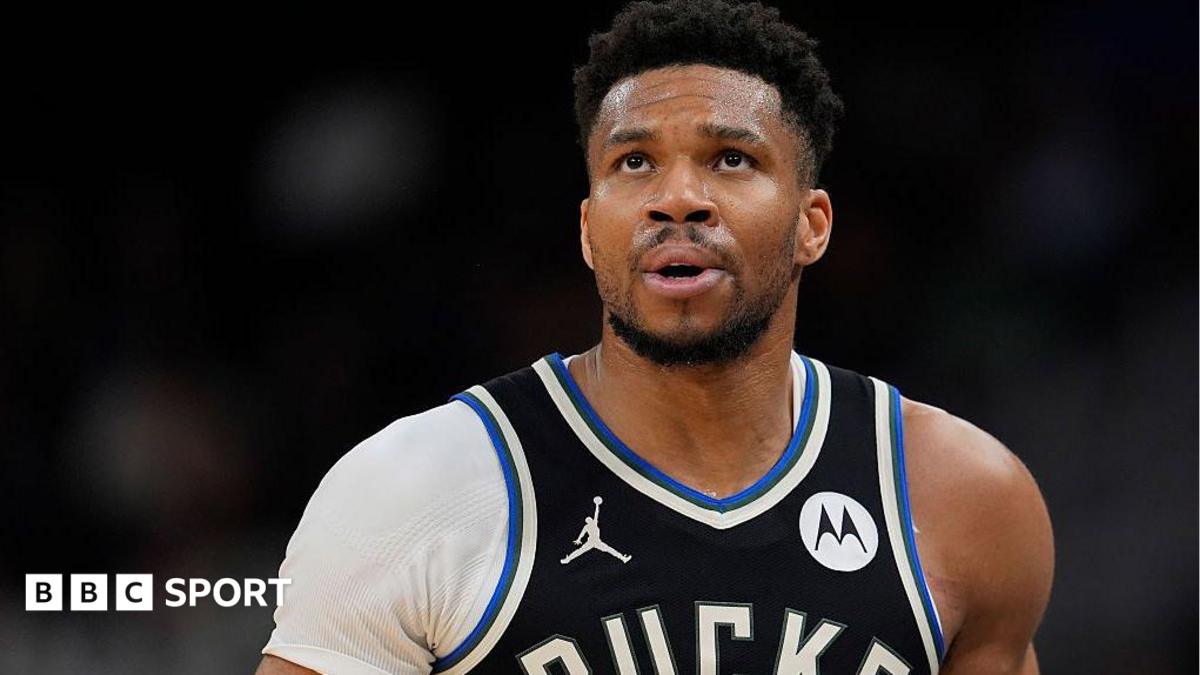
Miami Heat sign Antetokounmpo from Milwaukee Bucks
One of the NBA’s biggest superstars has shaken up the league’s Eastern Conference pecking order in a seismic offseason trade, as two-time league Most Valuable Player Giannis Antetokounmpo has finalized a move from the Milwaukee Bucks to the Miami Heat. The multi-player deal sends Antetokounmpo and Bucks forward Bobby Portis to South Florida, with promising Miami youngsters Tyler Herro, Kel’el Ware, Jaime Jaquez Jr. and prospect Kasparas Jakucionis moving north to join the Bucks in return.
Drafted as a relatively unknown 18-year-old prospect by the Bucks back in 2013, Antetokounmpo spent the entirety of his 13-year professional career in Milwaukee, transforming the small-market franchise from a perennial afterthought into a title contender. He led the team to its first NBA championship in 50 years during the 2021 bubble postseason, cementing his legacy as one of the greatest players in Bucks franchise history. The Greek superstar’s departure, however, comes after months of growing tension between the 31-year-old and the team’s front office.
Antetokounmpo publicly criticized the Bucks’ management last season over their decision to rule him out of action after he suffered a left knee hyperextension, saying that he was ready and able to return to play but was sidelined against his wishes. After the Bucks missed the playoffs entirely in the 2025-26 campaign, the star doubled down on his frustration in an April interview, noting: “I feel like sometimes people just don’t listen. They listen to the sources. The main source is me. It is what it is.”
As rumors of Antetokounmpo’s uncertain future in Milwaukee began swirling earlier this offseason, the Eastern Conference rival Boston Celtics emerged as another top suitor for the star, but the Heat ultimately closed the deal to bring the future Hall of Famer to Miami. For the three-time championship franchise, the acquisition is being framed as one of the most transformative moves in team history. Heat president Pat Riley called the trade “one of the great trades” in franchise history, adding that the team has built its culture around pursuing elite championship-caliber talent.
The Antetokounmpo blockbuster is just one of multiple high-profile moves shaking up the Eastern Conference this offseason. The Philadelphia 76ers have also announced two major additions, confirming they have acquired star wing Jaylen Brown from the Celtics in a multi-piece trade, while also signing unrestricted free agent guard Anfernee Simons. In exchange for Brown, the 76ers sent veteran forward Paul George to Boston, along with two future first-round draft picks and two additional second-round selections, reshaping the rosters of two of the conference’s top contenders for next season.
-
World Cup fans react to Balogun’s one-game ban suspension
A last-minute development has shaken up the United States men’s national team ahead of their critical World Cup matchup against Belgium, with star striker Folarin Balogun cleared to feature in today’s fixture after a dramatic intervention by former U.S. President Donald Trump.
The young forward had originally been handed a one-game suspension that would have forced him to sit on the sidelines for the high-stakes encounter, a ruling that left American soccer fans bracing for a major disadvantage against their European opponents. However, the situation took an unexpected turn when Trump personally contacted the International Federation of Association Football (Fifa), soccer’s global governing body, to request a formal review of the disciplinary decision.
Following that outreach, Fifa opted to suspend the ban, clearing the way for Balogun to take the pitch. News of the reversal quickly spread across social media and fan communities, sparking a wide range of reactions from supporters across the globe. American fans in particular have expressed widespread relief, with many taking to social platforms to celebrate the outcome ahead of kickoff, while others have raised questions about the influence of political figures on international sports governing bodies. The sudden shift has already reshaped pre-match expectations, with analysts reworking their projections for today’s game after the last-minute inclusion of one of the USA’s most potent attacking threats.
-
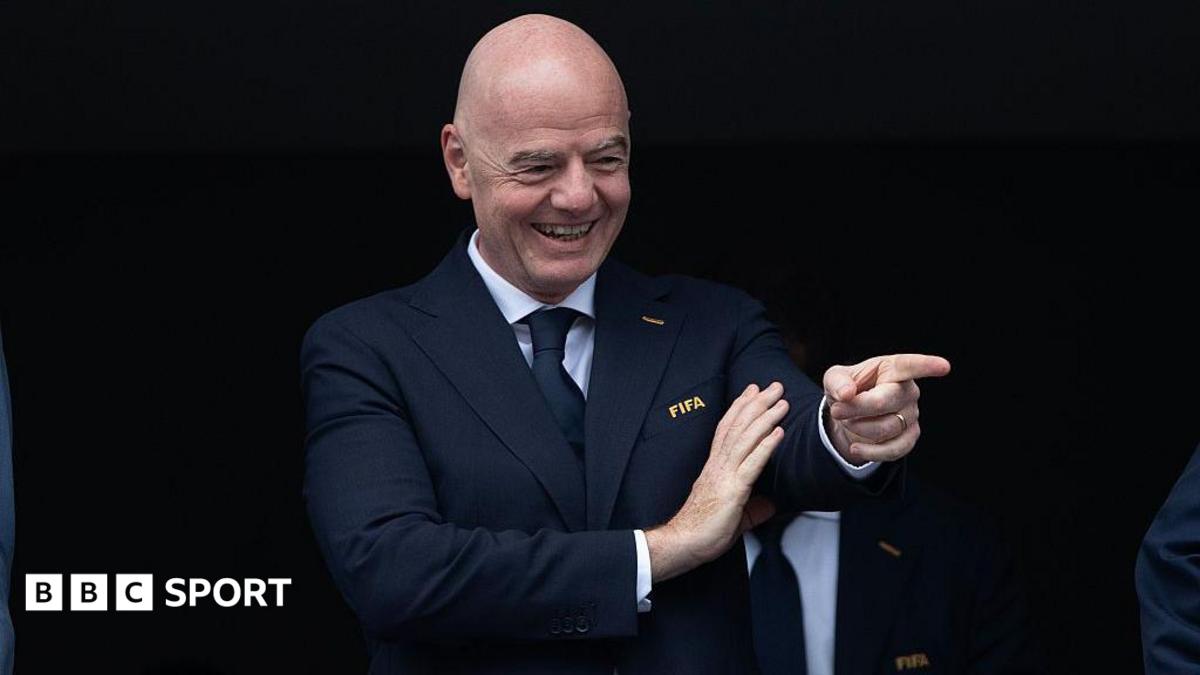
Why European backlash over Trump intervention won’t worry Infantino
The 2026 FIFA World Cup co-hosted by the United States has been overshadowed by an unprecedented disciplinary decision that has sparked allegations of political interference, reignited long-simmering criticism of Gianni Infantino’s 10-year tenure as FIFA president, and thrown the governing body’s commitment to its own rules into question.
The controversy centers on Folarin Balogun, the United States men’s national team star who has netted three goals to carry the co-hosts into the Round of 16 against Belgium. After receiving a red card in the team’s final group stage match against Bosnia-Herzegovina, standard FIFA tournament regulations explicitly prohibit appeals against straight red card suspensions, which would have ruled Balogun out of the decisive knockout tie. In a move never before seen in World Cup history, FIFA opted to overturn the suspension, clearing the star striker to play.
More than 24 hours after the decision was finalized, FIFA released an 871-word statement that offered no clear explanation for the extraordinary reversal. The missing context was quickly filled by one of the most powerful figures in global politics: U.S. President Donald Trump confirmed publicly that he personally intervened with Infantino to push for a review of the suspension. “I’m the one that got them to do it,” Trump stated, though he pushed back against claims he directly ordered Infantino to scrap the ban, saying he only requested a formal review.
The revelation of presidential intervention has sent shockwaves through the global football community. In the U.S., public debate has framed the ruling as a correction of an unfair outcome, arguing that Balogun’s ejection from the group stage match already served as sufficient punishment – a view Trump explicitly echoed. But across the sport, critics warn the decision sets a dangerous precedent that undermines the core integrity of football governance. Infantino has repeatedly rejected claims of political meddling, insisting FIFA’s independent disciplinary committee made the final call without outside pressure. Yet the appearance of favoritism is unavoidable: the ruling benefits the tournament co-host, led by a sitting president who has publicly described Infantino as a close personal friend. For many observers, the overturned suspension felt indistinguishable from a political pardon, not a neutral disciplinary ruling.
Former Liverpool manager Jurgen Klopp summed up the widespread anger: “If Donald Trump and Gianni Infantino really sorted this out between themselves, it is madness; it calls everything into question.” Sepp Blatter, Infantino’s disgraced predecessor who was forced to resign in 2016 amid a sweeping corruption scandal, even took the unusual step of condemning the move, writing on social media: “Football must never become a playground for political power.”
UEFA, European football’s governing body, has issued an official rebuke calling the decision “unprecedented, incomprehensible and unjustifiable” and accusing FIFA of having “crossed a red line” – the latest flashpoint in a growing rift between the two bodies. Friction between UEFA and Infantino dates back years: in May 2025, UEFA president Aleksander Ceferin led a walkout of European delegates at the FIFA Congress after Infantino arrived more than two hours late following a diplomatic tour of the Middle East alongside Trump. The European body has also openly criticized FIFA’s inflated World Cup ticket prices, contrasting them with the much lower pricing planned for Euro 2028, and recently highlighted its support for Somali referee Omar Artan – who was denied entry to the U.S. for the tournament by American immigration officials – by inviting him to officiate the 2026 UEFA Super Cup. When asked about Artan’s situation earlier this year, Infantino drew widespread condemnation for his dismissive response, telling reporters to “chill, relax.”
The Balogun controversy is far from an isolated incident during Infantino’s tenure, which has grown increasingly polarizing since he took office in 2016. Critics have pointed to a long string of contentious decisions: the creation of the FIFA Peace Prize, which was awarded to Trump during the World Cup draw, has sparked accusations that Infantino violated FIFA’s rules on political neutrality. Human rights campaign group FairSquare filed an ethics complaint over the award last December, and when no action was taken, 50 Members of the European Parliament submitted a second open letter demanding an investigation – a request that has also gone unanswered. FIFA has been criticized for the controversial 2030 and 2034 World Cup hosting allocation, which handed the 2034 tournament to Saudi Arabia without competitive bidding following a decision to split the 2030 edition across three continents, drawing criticism over the kingdom’s well-documented human rights concerns. Even the expanded Club World Cup, a flagship Infantino initiative, has been condemned by global player union FIFPRO as being created “without dialogue, sensitivity, and respect” for athlete welfare. The recent last-minute fiasco over a planned kick-off time change for the England-Mexico Round of 16 tie, which saw FIFA reverse course after five hours of confusion while pretending the initial change never happened, has further underscored claims of a lack of transparency and organizational competence within FIFA.
For many, the Balogun decision feels like the latest in a pattern of unaccountable decision-making that has eroded trust in FIFA’s leadership. With Infantino up for re-election next year, many have wondered if this latest controversy could finally threaten his grip on the presidency. But a closer look at the political math within FIFA makes an upset extremely unlikely.
Infantino’s support base stems from his signature FIFA Forward programme, which directs billions in funding to football development projects in smaller and lower-income member associations, and the expanded 48-team World Cup format that added 16 new qualification spots – 13 of which went to confederations outside of Europe’s wealthy football ecosystem. While the expanded format has drawn criticism, it has given long-underrepresented nations such as Cape Verde, Curacao, Jordan and Uzbekistan their first-ever shots at World Cup qualification, turning Infantino into a popular figure among the vast majority of FIFA’s 211 member associations, each of which holds one vote in presidential elections.
To win re-election, a candidate needs 106 votes. Already, the 10 member nations of CONMEBOL (South America) have pledged their full support. The 54 members of the Confederation of African Football (CAF) have followed with a unanimous endorsement, and the 47 members of the Asian Football Confederation (AFC) have also backed Infantino. Combined, those pledges add up to 111 votes – enough to secure re-election even before counting support from other confederations.
UEFA, which represents European football, may be openly opposed to Infantino’s leadership, but European football is financially self-sustaining, while most of the rest of the global game depends on the revenue FIFA generates from tournaments like the World Cup – revenue that funds the development projects that have cemented Infantino’s support. Even with the firestorm over the Balogun decision, Infantino’s path to a fourth term as FIFA president remains unobstructed, leaving critics to question what the controversy means for the future of football governance.
-
Canada makes largest defence procurement deal in its history, citing ‘dangerous and divided world’
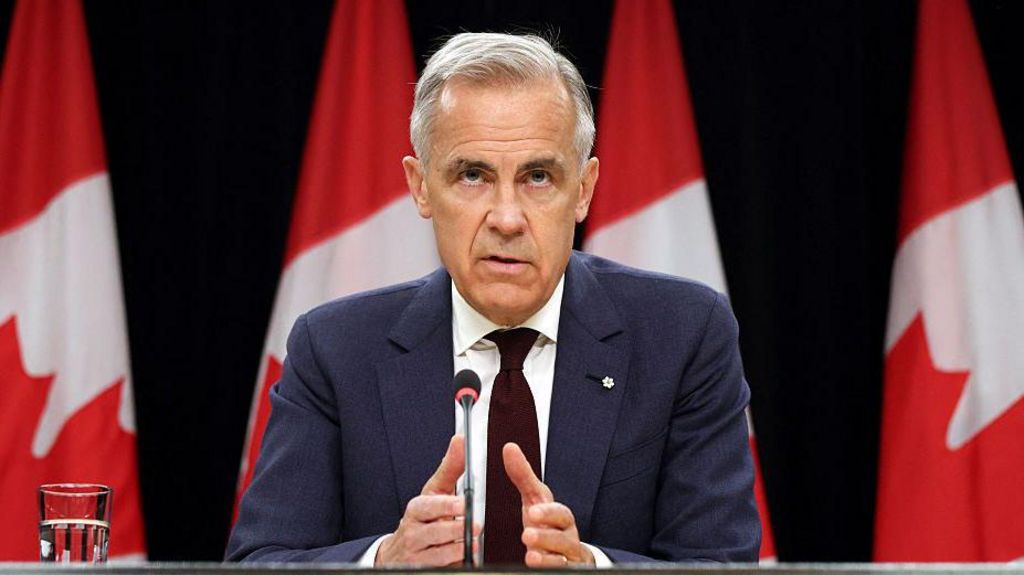
Just days ahead of a critical NATO summit in Turkey, Canadian Prime Minister Mark Carney has announced one of the most consequential defence investments in the nation’s modern history: a massive contract to build a new 12-vessel submarine fleet awarded to German defence firm Thyssenkrupp Marine Systems (TKMS), the world’s leading builder of non-nuclear submarines.
The deal marks the largest military procurement in Canadian history, and forms a core pillar of Carney’s sweeping pledge to ramp up national defence spending. Since taking office, Carney has already lifted Canada’s defence expenditure to 2% of national GDP, with a binding commitment to hit 5% by 2035 – a target that aligns with longstanding pressure from NATO, and more recently from former U.S. President Donald Trump, who has pushed all 32 alliance members to boost their military investment. The timing of the announcement, delivered on Monday in Halifax, Nova Scotia, puts Carney in a strong position to demonstrate Canada’s commitment to collective defence when he meets with other NATO leaders this week.
Canada’s need for a new submarine fleet has grown increasingly urgent in recent years. The country’s current aging Victoria-class vessels, purchased in 1998, are in a state of severe disrepair: official government data confirms only one out of the four existing submarines is currently seaworthy. For a nation that boasts the longest coastline on the planet, shifting geopolitical and environmental conditions have amplified security risks dramatically: rapid climate change is melting Arctic sea ice, opening new navigable waterways that create potential flashpoints for adversarial activity and threaten Canadian sovereignty over its northern territories.
TKMS beat out South Korea’s Hanwha Ocean in a competitive bidding process to secure the contract. The German bid is structured as a joint partnership with Norway, which TKMS says offers Canada a low-risk, NATO-aligned solution that includes shared provisions for maintenance, training, logistics, and operations. Unlike Canada’s current fleet, the new conventionally-powered submarines will be purpose-built with advanced under-ice operational capabilities, tailored to meet the unique security challenges of the Arctic.
While the federal government has not publicly released a full cost estimate for the project, officials confirmed negotiations to finalize the formal contract will now launch, a process expected to take several months. Beyond just military capability, Carney emphasized that the investment will drive long-term domestic economic growth, noting the project will build and expand sustainable Canadian industrial capacity in the defence and shipbuilding sectors.
The procurement project moves at an unprecedented pace for Canadian defence policy. Canada first launched the search for a contractor to replace its aging fleet in July 2024, with Carney pledging to select a winning bidder by June 2025 – a timeline that analysts describe as remarkably fast by Canadian standards. David Perry, president of the Canadian Global Affairs Institute, called the timely selection a major win for Carney’s government, saying the contract delivers significant credibility to the prime minister’s promise to accelerate and expand defence spending.
Perry noted that the decision to award the contract to a German firm also aligns with Carney’s broader geopolitical strategy. As Canada navigates growing trade tensions with its southern neighbor and longstanding ally the United States, Carney has actively prioritized strengthening economic and security partnerships with Europe. “This project will push our core defence modernization forward consequentially,” Perry explained, adding that the new fleet will transform Canada’s maritime operational capacity. Once completed, the fleet is expected to maintain three reliably operational submarines at any given time – a massive upgrade from the current status of just one occasionally operational vessel, which has been Canada’s reality for years.
In a statement ahead of the announcement, Carney framed the investment as a necessary response to an increasingly unstable global environment. “In a more dangerous and divided world, Canada must be prepared to defend our interests, protect our citizens, build our economy, and secure our future,” he said. “To that end, we are making the largest defence procurement in our nation’s history with speed, ambition, and discipline.” Canadian federal officials have reaffirmed that the new submarine fleet is an critical investment to protect the country’s maritime sovereignty and national security across its vast territorial waters, particularly in the fast-changing Arctic region.
-
China’s first batch of quake relief supplies arrives in Venezuela
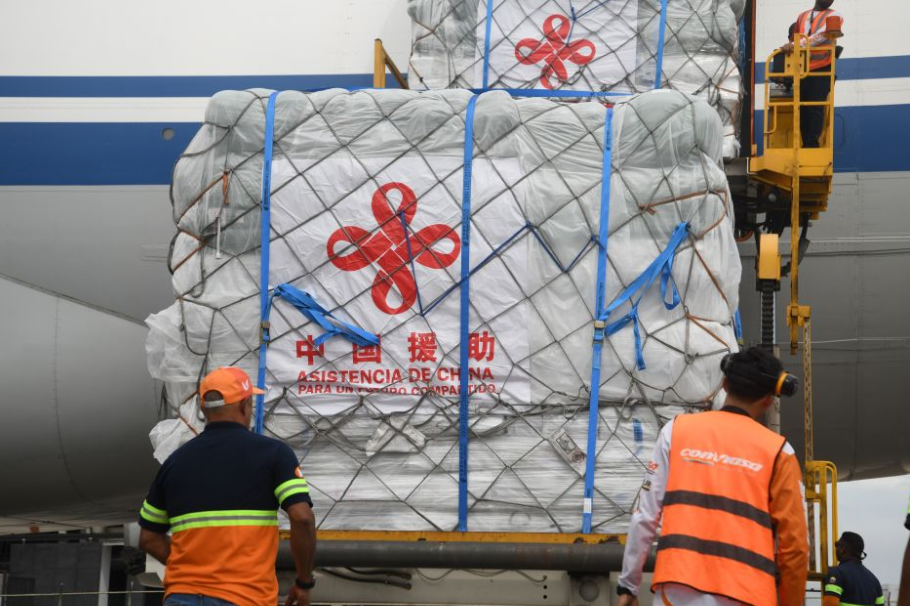
On July 6, 2026, the first batch of emergency humanitarian earthquake relief supplies donated by the Chinese government touched down at Simon Bolivar International Airport in Maiquetia, a city located just outside Venezuela’s capital Caracas. The delivery was formally received at the airport by Venezuelan Foreign Minister Yvan Gil and Lan Hu, China’s Ambassador to Venezuela.
This shipment comes after a devastating seismic event that struck Venezuela in late June. On the night of June 24, the country was hit by the most powerful earthquakes recorded in over 100 years: two major tremors measuring above magnitude 7 struck just 60 seconds apart. As of the latest update, the disaster has claimed the lives of 3,342 people and left 16,740 others injured, leaving thousands of residents homeless and in urgent need of basic emergency support.
In his remarks at the airport, Foreign Minister Gil extended sincere gratitude to the Chinese government and its leadership on behalf of the entire Venezuelan people. He noted that China has maintained continuous, close coordination with Venezuelan authorities from the immediate aftermath of the earthquakes, and the arrival of these supplies marks a concrete manifestation of this solidarity. The current shipment includes critical emergency provisions such as temporary shelter tents and power generators, assets that are desperately needed to support thousands of Venezuelans who lost their homes and access to basic infrastructure in the disaster.
Beyond the official government donation, Gil highlighted the rapid, grassroots response from the local Chinese community and Chinese-funded enterprises operating in Venezuela. He explained that these groups have been actively involved in rescue and relief operations since the earliest hours of the disaster, providing assistance to displaced residents and supporting frontline emergency teams. Gil described these on-the-ground acts of support as deeply moving, noting that the Venezuelan people have clearly seen the tangible solidarity extended by China, and that these shared efforts have further deepened the long-standing friendship between the two nations.
Gil also emphasized that the timely delivery of relief supplies underscores the enduring nature of the all-weather strategic partnership that binds China and Venezuela, demonstrating how the two countries stand together in times of crisis.