What was framed as a redress fund for people harmed by what the current U.S. Justice Department calls improper political weaponization of law enforcement has quickly erupted into a national political firestorm, as high-profile critics of former President Donald Trump have stepped forward to announce they will pursue claims against the fund — upending widespread assumptions that the pot of money was intended exclusively for Trump allies.
Acting Attorney General Todd Blanche first announced the $1.8 billion fund as part of a settlement agreement with Trump over the unauthorized leak of his personal tax returns to the press. From the outset, Blanche emphasized that the fund was built to compensate people harmed by unlawful government targeting. In a explanatory memo sent to skeptical Republican senators, Blanche justified the massive size of the fund by noting that “literally tens of millions of Americans were subjected to improper and unlawful government targeting,” adding that no partisan barrier would block claims: “there is no partisan restriction; Democrats can submit claims, too.”
But the broad wording of the fund’s eligibility rules has created an unexpected scenario: the first high-profile figures to publicly announce their intention to file claims are some of Trump’s most vocal political opponents, starting with Michael Cohen, Trump’s one-time personal fixer who turned on his former boss and testified against him in two separate high-profile criminal trials.
“After years of being smeared, surveilled, financially exposed, imprisoned, and silenced, I will file a claim asking whether America’s justice system became America’s political weapon,” Cohen wrote in a post on the social platform X.
Cohen has a long and fraught history with the legal system: he pleaded guilty to a slate of charges including lying to Congress, tax evasion, illegal campaign finance violations, and bank fraud in 2018. He was briefly released from prison early at the height of the COVID-19 pandemic in 2020, but was rearrested shortly after, before a federal judge ultimately ordered his release, finding the government had improperly retaliated against him for preparing to publish a tell-all book critical of Trump. Trump and his legal team, which includes Blanche during Trump’s ongoing Manhattan criminal trial, have repeatedly questioned Cohen’s credibility, pointing to his prior conviction for lying to federal investigators.
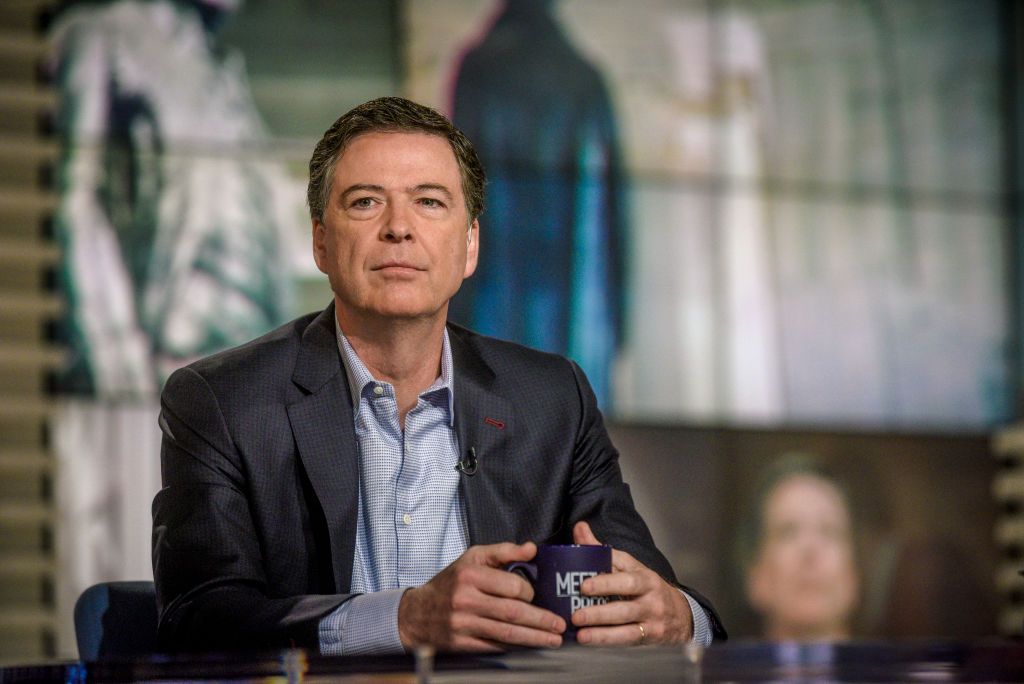
Cohen is far from alone. Former FBI Director James Comey, who was twice indicted by the current Justice Department over cases that multiple legal experts have described as legally questionable, confirmed to CNN that he also intends to join the line for compensation. Comey, who was fired by Trump in 2017 and has been a public critic of the former president ever since, noted that the fund was explicitly created to compensate people targeted for political, personal, or ideological reasons. “So I’m guessing, I’ll be in line,” Comey said, adding a pointed jab: “I hope I’ll be ahead of those who savagely beat police officers and sacked the Capitol.”
Comey’s first indictment was ultimately dismissed by a judge, who sided with his legal team’s argument that the prosecution was driven by improper retaliation. A second pending case accuses Comey of threatening the president via a social media post that showed seashells arranged to spell “86 47” — a reference to removing Trump from office, a reference that Comey’s team calls a harmless political joke. Blanche has defended the new charges, arguing that any threat against a sitting U.S. president must be treated as a serious matter.
Other prominent Trump critics have also joined the push for compensation. Allison Gill, the political commentator behind the popular “Mueller, She Wrote” podcast and X account, says she will file a claim for $8.647 million, alleging she lost her government job after the Trump administration retaliated against her for the content of her criticism-focused podcast.
To date, the Department of Justice has declined to respond to requests for comment or clarification on whether high-profile figures like Cohen, Comey, and Gill actually meet the fund’s eligibility requirements.
The opaque structure of the fund has already drawn widespread criticism from both sides of the aisle. Initial assumptions that the fund would primarily deliver payouts to hundreds of people convicted for their roles in the January 6, 2021 Capitol riot — a group Trump pardoned on his first day back in office — have proven partially correct: multiple people charged in connection with the attack have told U.S. media they hope to receive compensation, and several conservative Trump-aligned figures have already filed claims. Michael Caputo, a first-term Trump administration official who was targeted in the 2016 Russian interference investigation, has already publicly posted his claim for $2.7 million in damages.
Bipartisan groups of lawmakers, including many members of Congress who were forced to evacuate and hide during the January 6 riot, have demanded Blanche release clear details on who qualifies for payouts. The settlement agreement explicitly bars Trump and his immediate family from receiving any money from the fund, but that has done little to ease concerns.
A closed-door meeting between Blanche and Senate Republicans on Thursday turned tense, multiple media outlets reported, with many lawmakers voicing strong opposition to the fund. Pennsylvania Republican Representative Brian Fitzpatrick has already sent a formal letter to Blanche asking for clear answers on whether “individuals convicted of federal crimes associated of acts of violence” will be allowed to receive payouts. Fitzpatrick has also introduced bipartisan legislation with New York Democrat Tom Suozzi that would block any federal money from being used to pay out claims from the fund.
Blanche has pushed back against claims from Democratic lawmakers that the fund is nothing more than an unauthorized “slush fund” for Trump allies, working to reassure wavering Republican senators that their opposition would not derail other administration priorities. Senate Republican Majority Leader John Thune has publicly stated he is “not a big fan” of the fund, though some conservative Republicans have come out in support of the initiative. Alabama Senator Tommy Tuberville defended the fund on the Senate floor, arguing that “hundreds” of “innocent patriotic Americans sat behind bars for the past five years over this made-up witch hunt” connected to the January 6 investigations.
The fund will be overseen by a five-person board appointed entirely by the attorney general, with one seat to be filled in coordination with Congress, leaving many unanswered questions about how claims will be reviewed and vetted as applications begin to roll in from across the political spectrum.