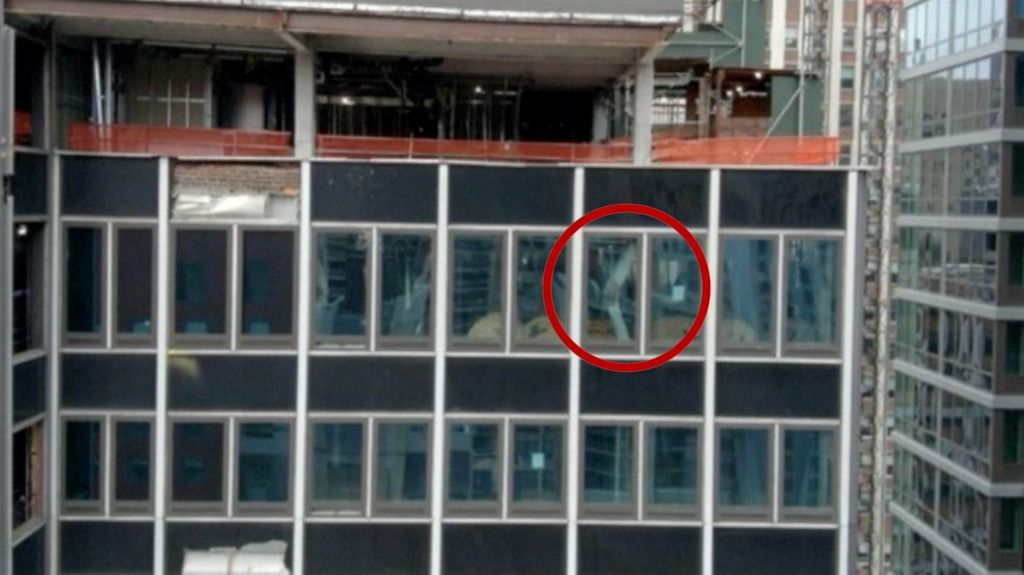
A major safety scare has disrupted construction work and upended daily routines in midtown Manhattan after structural inspectors identified severely buckled support beams inside a half-built skyscraper, prompting immediate evacuations of the work site and all adjacent properties. The incident unfolded Wednesday afternoon when construction workers on multiple lower floors noticed loose bricks dislodging from the building’s exterior facade and falling to the street below. Crew leaders immediately halted all work and contacted New York City’s Department of Buildings, which dispatched emergency structural engineers to assess the hazard within hours. On-site inspections confirmed the troubling issue: internal load-bearing support beams that form the core of the building’s structural framework had deformed and buckled under expected construction loads, raising urgent red flags about the integrity of the entire project. Following the confirmation of the dangerous structural flaw, city safety officials ordered the full evacuation of the construction site, as well as all residential and commercial buildings within a two-block radius of the high-rise to prevent any risk of injury or death should a partial or full collapse occur. Local transit agencies temporarily re-routed bus lines and closed adjacent pedestrian walkways while engineering teams continue to monitor the structure overnight. The Department of Buildings has already issued a full stop-work order that will remain in place until the developer and construction contractor submit a comprehensive structural audit and a detailed repair plan to address the buckled beams. No injuries have been reported so far, but city officials have stated that safety remains their top priority, and no personnel will be allowed to re-enter the site until the hazard is fully mitigated. Investigations are still ongoing to determine the root cause of the beam buckling, with potential factors including design errors, substandard construction materials, or incorrect installation processes under review.
标签: North America
北美洲
-
Victims of 23andMe data breach to get $47m payout, judge rules
One of the most high-profile consumer data breaches in recent biotech history has moved toward resolution, after a California bankruptcy court judge approved a $46.75 million compensation package for users affected by 23andMe’s 2023 genetic data hack.
The court’s Tuesday ruling orders Chrome Holding, the entity that acquired 23andMe following the company’s 2024 bankruptcy restructuring, to disburse the £35 million (approximately $46.75 million) settlement within five business days to Kroll Restructuring, the court-appointed firm representing breach victims. Kroll will then handle distribution of funds to eligible users affected by the incident. This structured compensation process is standard for bankruptcy-related legal settlements, where third-party administrators manage claims on behalf of harmed parties.
23andMe, the pioneering direct-to-consumer DNA testing firm that launched in 2006 and went public in 2021, built its business by creating detailed genetic profiles for millions of customers, holding deeply personal data ranging from disease predispositions to family ancestry connections. The 2023 breach began when hackers gained unauthorized access to roughly 14,000 direct user accounts. Because of 23andMe’s DNA matching service that connects users to biological relatives, hackers were able to expand their access to an estimated 6.9 million total user profiles, exposing the highly sensitive genetic information of millions of people who never had their own accounts directly compromised.
The incident sparked widespread criticism of 23andMe’s lax data security practices. Regulators on both sides of the Atlantic brought penalties: the UK’s Information Commissioner’s Office (ICO) issued a £2.31 million fine, finding the company had failed to implement basic adequate safeguards for sensitive user genetic data. In May 2024, California Attorney General Rob Bonta filed a lawsuit against the firm, concluding an investigation that found 23andMe not only neglected basic security protocols to protect user information, but also intentionally misled consumers about the full scope and severity of the 2023 breach.
The company’s financial struggles long predated the fallout from the hack. 23andMe never turned a profit over its nearly 20 years of operation, and at its peak reached a valuation of $6 billion. Last year, roughly 18 months after the breach was first disclosed, the company filed for Chapter 11 bankruptcy protection. Co-founder Anne Wojcicki acquired the company’s assets via a $305 million bankruptcy auction through her holding entity Chrome Holding, which operates under the trade name TTAM Research Institute. The company has continued normal operations following the restructuring, still selling DNA testing kits to consumers online.
As of this ruling, it remains unclear exactly how many of the 6.9 million affected users will qualify to receive compensation from the settlement fund. Representatives for Chrome Holding, 23andMe, and the victims’ legal team have been contacted for additional comment on the settlement timeline and claims process.
-
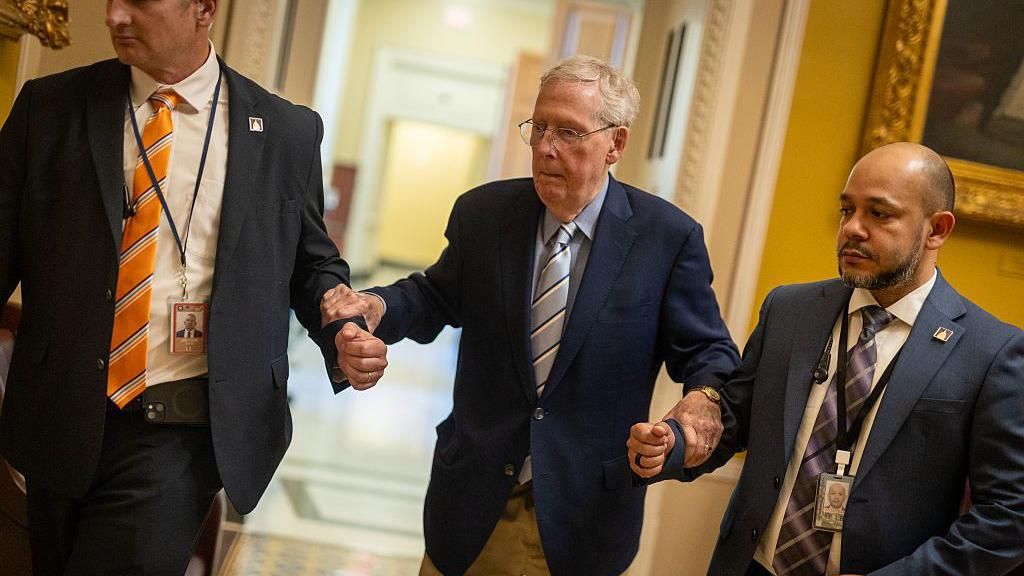
Questions swirl over top US Republican McConnell’s hospital stay – here’s what we know
Speculation and concern have intensified around the health status of 82-year-old Senate Republican leader Mitch McConnell, who has now spent more than three weeks hospitalized for an undisclosed medical issue. McConnell was first admitted to a medical facility for treatment on June 14, per confirmation from his official staff team, but his aides have declined to release any specific details regarding the cause of his admission or the specific treatments he is undergoing.
On July 2, McConnell’s team issued a brief update stating that the longest-serving Senate party leader in U.S. history was “receiving excellent care” and was “continuing to improve.” No further official updates on his condition have been shared with the public since that statement.
Unsubstantiated claims made last week by conservative influencer Laura Loomer, a close ally of former President Donald Trump, upended public discussion of McConnell’s health. Loomer alleged without any evidence that McConnell was in a “vegetative state,” later doubling down to claim he was “brain dead and kept alive by machines” and that a coordinated cover-up of his true condition was underway. She also launched criticism at McConnell’s wife, former U.S. Transportation Secretary Elaine Chao, for a pre-planned trip to China that is ongoing during his hospitalization.
Multiple senior Republican senators moved quickly to push back on Loomer’s claims, confirming that they had held substantive phone conversations with McConnell this week. Senate Majority Leader John Thune’s spokesman confirmed that Thune and McConnell held a “lengthy and substantive conversation that covered a variety of topics including national security.” Wyoming Senator John Barrasso’s spokeswoman added that the pair spoke for 20 minutes, noting that McConnell was “fully engaged and is eager to get back to the Senate.”
A spokesperson for Chao also responded to the criticism of her trip, confirming the travel itinerary had been arranged long before McConnell’s hospitalization and that the current state of the senator’s health did not require an immediate emergency return to the United States.
In his official statement on July 2, McConnell’s office noted that the senator appreciates the widespread public support he has received during his recovery, and that he continues to collaborate with his staff on both Kentucky constituent matters and Senate business while the chamber is in recess.
Multiple U.S. media outlets have previously reported details from 911 calls placed from McConnell’s residence that referenced an unconscious patient suffering cardiac arrest, who received cardiopulmonary resuscitation before transport to hospital. The 911 recording does not explicitly name McConnell as the patient.
This extended hospitalization is the latest in a series of public health scares for McConnell, who has served in the U.S. Senate for more than 40 years. As a child, he survived polio, a condition he later noted left him with persistent mobility challenges that make climbing stairs difficult. In 2023, he suffered a concussion after a fall at a Washington D.C. hotel that kept him away from Senate business for weeks, and later that year he stunned onlookers when he froze abruptly mid-speech during a public press conference. In 2024 he was injured in another fall outside a Senate lunch event, and earlier this year he was briefly hospitalized for treatment of the flu.
Over his decades-long tenure leading Senate Republicans, McConnell built a reputation as a shrewd political strategist known for using Senate procedure and partisan organizing to block Democratic policy priorities. One of his most consequential political actions came in 2016, when he blocked a vote on former President Barack Obama’s nomination to the U.S. Supreme Court, allowing the newly elected President Trump to appoint a conservative justice to the vacant seat the following year. While he aligned closely with Trump’s policy agenda during the former president’s first term, he has become an increasingly vocal critic of Trump in recent years.
McConnell previously announced that he will not run for re-election when his current Senate term expires in January 2027. Under Kentucky state law, if McConnell were to leave office early before his term ends, a special election would be held to select a temporary successor to fill his seat.
-
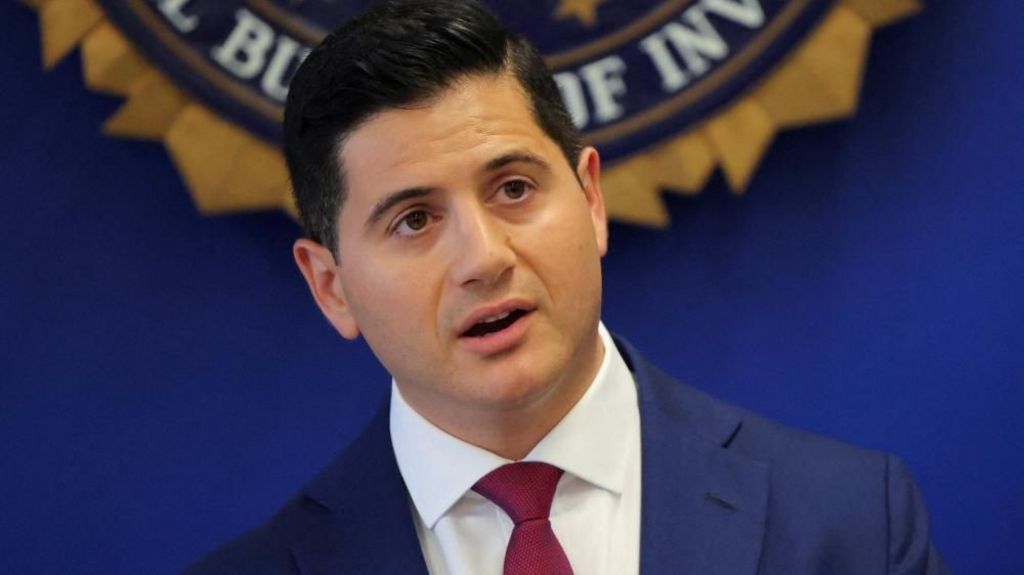
US prosecutors arrest 24 in major probe into India-based organised crime
In a major milestone for a multi-year international probe into transnational Indian organized crime networks, U.S. federal prosecutors have announced sweeping charges against 37 defendants linked to three India-based criminal syndicates, including the notorious Bishnoi gang. Among the most high-profile allegations is that the syndicate orchestrated the 2023 assassination of prominent Sikh separatist leader Hardeep Singh Nijjar in British Columbia, Canada.
Law enforcement agencies across three continents have already taken 24 suspects into custody so far, with arrests carried out across the United States, Canada, and Europe. The indictments, which were unsealed publicly on Tuesday, detail a sprawling pattern of criminal activity that stretches across the globe: targeted assassinations of political and religious figures, large-scale drug trafficking, and extortion rings targeting diaspora communities in North America.
Federal prosecutors based in Los Angeles leveled direct assassination charges against two key leaders of the syndicate: 33-year-old Lawrence Bishnoi and 32-year-old Satinderjeet “Goldy Brar” Singh, both natives of Punjab, India. Bishnoi has already been incarcerated in India since 2015, but prosecutors allege he continued to direct the gang’s violent criminal operations from behind bars. Brar remains at large as of Tuesday’s announcement.
Nijjar, a 45-year-old prominent advocate for an independent Sikh homeland called Khalistan, was gunned down by two masked attackers in June 2023 as he sat in his vehicle in the crowded parking lot of the Guru Nanak Sikh Gurdwara in Surrey, B.C. The city lies roughly 30 kilometers east of Vancouver. The killing already sparked a major diplomatic crisis between Canada and India in 2024, when four Indian nationals were arrested and charged in connection with the assassination. Those four defendants are currently awaiting trial. Canada officially designated the Bishnoi gang as a terrorist entity last year, granting authorities power to seize the group’s assets and freeze its financial holdings within the country.
Beyond the Nijjar assassination, Tuesday’s unsealed indictments lay out additional alleged criminal activity tied to the gang on U.S. soil. Prosecutors claim Bishnoi, Brar, and their co-conspirators ran an extortion racket targeting community members in California. In one case from late 2024 and early 2025, the gang demanded a $5 million ransom payment from a California victim, according to court documents.
As part of the ongoing investigation, law enforcement has already seized a large cache of contraband: approximately 1,000 kilograms of cocaine, 1 kilogram of heroin, $40,000 in untraceable cash, and 12 firearms.
First Assistant United States Attorney Bill Essayli reaffirmed the U.S. government’s commitment to dismantling the transnational networks in a public statement Tuesday. “Transnational criminal gangs who spread fear, drugs, and violence will face the full force of justice and the weight of the federal government,” Essayli said. “There is no safe harbor for these thugs.”
The multi-year investigation was a collaborative effort between the FBI, the Los Angeles Police Department, the Royal Canadian Mounted Police, and U.S. Customs and Border Protection, with cross-border coordination to target the syndicate’s operations across North America and Europe.
-

US launches strikes on Iran after tankers hit in Strait of Hormuz
Tensions have escalated sharply across the Middle East this week after the United States launched what it calls ‘powerful retaliatory strikes’ against Iran, a direct response to a string of attacks on three commercial tankers transiting the strategically critical Strait of Hormuz. U.S. Central Command (Centcom) confirmed the operation began Tuesday, framing the action as a necessary measure to hold accountable those responsible for endangering civilian crews navigating an international waterway.
According to updates from UK Maritime Trade Operations (UKMTO), the three tanker incidents unfolded within a 24-hour window between Monday and Tuesday. The first attack saw an unknown projectile strike a vessel’s engine room, sparking a fire. Two more incidents followed on Tuesday: one tanker suffered a direct hit but remained able to sail to its scheduled next port, while a second sustained only minor structural damage. No fatalities or injuries have been reported across all three events.
Iran has not issued any formal claim of responsibility for the vessel attacks. Even before Centcom’s official announcement of the U.S. strikes, a senior anonymous U.S. official condemned the attacks as ‘wholly unacceptable’ and warned Tehran would face tangible consequences. Alongside military action, the U.S. Treasury Department moved Tuesday to revoke a critical sanctions waiver that had temporarily lifted restrictions on Iranian oil and petroleum product sales.
That waiver was a core component of a 14-point memorandum of understanding signed by Washington and Tehran just one month ago, which extended a bilateral ceasefire across all fronts. Under the terms of that agreement, Iran committed to never pursuing a nuclear weapon, and established a $300 billion fund for national reconstruction and economic development, with no mandatory contribution from the U.S. The Treasury’s notice published Tuesday confirms a wind-down period for existing approved transactions, with the waiver fully expiring on July 17.
Both Qatar and Saudi Arabia have joined the U.S. in condemning the attacks, confirming that one tanker from each nation was targeted in the strikes. Qatari foreign ministry spokesperson Majed Al Ansari wrote in a post on X that Qatar holds Iran ‘fully responsible’ for the targeted attack on the Al-Rekayyat, which was transiting near the Strait. Qatar has called on Iran to immediately halt all activities that undermine regional stability, accusing Tehran of endangering global energy supplies and shared regional resources for narrow geopolitical gains.
For its part, Saudi Arabia’s foreign ministry confirmed in its own social media statement that the Saudi-flagged tanker Wadyan was targeted while crossing the Strait. The kingdom described the attacks as a direct threat to the safety of international navigation and the security of global energy markets.
To date, Iranian foreign ministry spokesman Esmail Baghaei has only responded publicly to Qatar’s accusations, dismissing them as a violation of good neighborly principles. In a statement posted to Telegram, Baghaei argued that commercial vessels that fail to coordinate their routes with Iranian authorities or tamper with their tracking systems face inherent collision risks, and said such actions disrupt Iran’s own efforts to facilitate safe transit through the Strait.
Despite the escalation of military action and the revocation of the oil sanctions waiver, the pre-announcement U.S. official stressed that American negotiators remain committed to working in good faith to reach a final long-term agreement with Iran. Centcom’s official statement, however, left no room for ambiguity over Washington’s position on recent actions, calling Iran’s demonstrated aggression ‘unwarranted, dangerous, and a clear violation of the ceasefire’ that both sides had agreed to uphold.
-
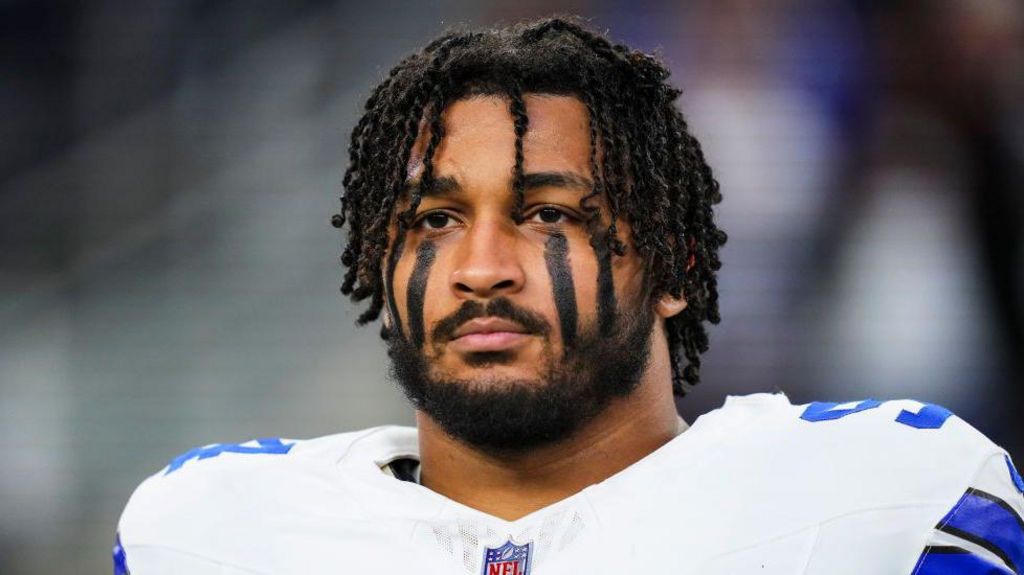
Dallas Cowboys player who died by suicide diagnosed with brain disease
The promising young career of Dallas Cowboys defensive lineman Marshawn Kneeland, who died by suicide at age 24 last November, has prompted urgent new discussions about brain health risks in professional contact sports after scientists confirmed he had developed stage 1 chronic traumatic encephalopathy (CTE) at the time of his death.
The diagnosis was completed by researchers at Boston University’s CTE Center, who conducted a full postmortem analysis of Kneeland’s brain tissue following his passing. Ann McKee, the center’s director, explained that the finding did not come as a surprise to her team. “We have found this progressive brain disease in nearly half of the athletes we’ve studied who have died before the age of 30,” McKee noted in a statement accompanying the research results.
CTE is a progressive neurodegenerative disease caused by repeated blows to the head that are common in contact sports such as football, rugby, and boxing. The condition develops in four stages, with stage 1 classified as the mildest form. Common early-stage symptoms include persistent headaches and difficulty with focus and concentration. As the disease progresses to its final stage, patients can experience severe cognitive impairment, profound memory loss, and dementia. Currently, CTE can only be definitively diagnosed through postmortem examination of brain tissue.
Decades of research have consistently shown that athletes who participate in high-impact contact sports face a dramatically higher risk of developing CTE over their lifetimes compared to the general public. Dozens of former National Football League (NFL) players have been diagnosed with the disease posthumously in previous studies.
In a public statement released after the diagnosis was confirmed, Kneeland’s family said that the finding provides important context for the personal challenges their son faced in the months before his death. “We share this information to help people understand what NFL and other high-contact sport athletes might be struggling with,” the family wrote, adding that they choose to remember Kneeland for who he was as a person, rather than defining him by the circumstances of his death.
The events leading up to Kneeland’s death unfolded in November 2025 in Texas, when state troopers attempted to pull him over for a traffic violation. The stop escalated into a car chase, which ended when Kneeland crashed his vehicle and fled on foot. He was later found dead from a self-inflicted gunshot wound in the early hours of the following morning.
Kneeland’s path to the NFL began when he started playing tackle football at just 7 years old. He went on to play collegiate football at Western Michigan University, where he drew the attention of NFL scouts. He was drafted by the Dallas Cowboys in the second round of the 2024 NFL Draft, and went on to play 18 games in his rookie season, including four starts as a defensive end.
Boston University’s CTE Center emphasized that the causes of suicide are multifaceted, and a posthumous CTE diagnosis is not currently established as a direct risk factor for suicide. Even so, leading CTE researchers say Kneeland’s case makes clear that current safety protocols have not done enough to reduce athletes’ risk of developing the disease.
Dr. Chris Nowinski, co-founder and CEO of the Concussion & CTE Foundation, pointed out that Kneeland competed during an era of modern NFL safety rules, including updated concussion protocols and improved helmet design, yet still developed CTE at a young age. “We have no reason to believe the current generation is at a lower risk of CTE than previous generations,” Nowinski said, echoing growing calls for more investment in prevention and treatment for the condition.
-
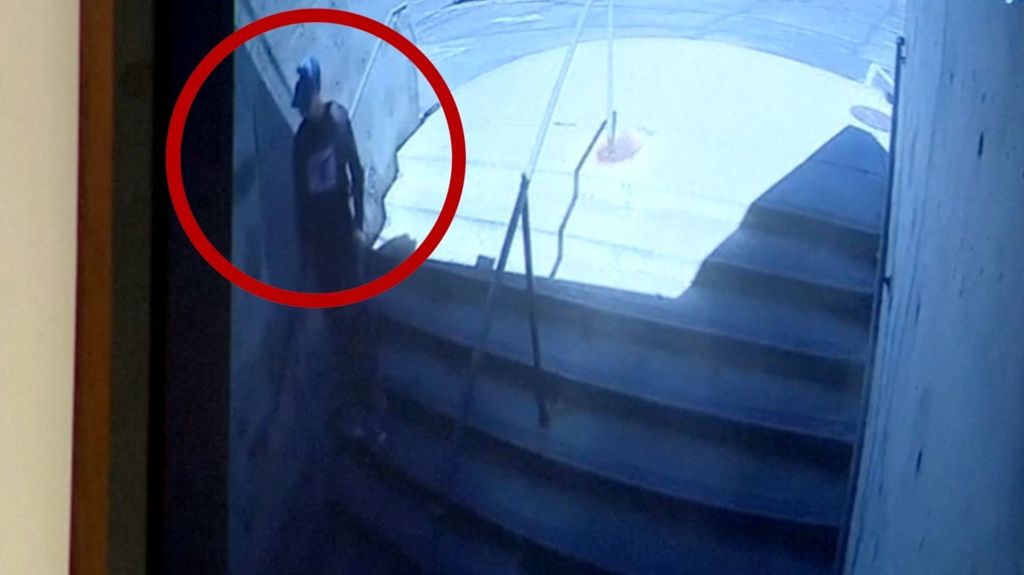
New video shows man believed to be Tyler Robinson before Charlie Kirk shooting
On the second day of preliminary court proceedings tied to the attempted shooting of conservative commentator Charlie Kirk, investigators have released never-before-seen surveillance footage that prosecutors identify as showing the prime suspect, Tyler Robinson, moving through a downtown parking structure before the alleged incident. The grainy but clear clip captures a figure matching Robinson’s description moving through multiple levels of the garage before climbing onto an adjacent rooftop and sprinting across its surface, according to law enforcement officials testifying during the hearing. This new visual evidence comes as prosecutors build their case against Robinson, who stands accused of plotting to assassinate Kirk during a public speaking event earlier this year. Legal analysts note that the footage provides critical context for establishing the suspect’s movements in the hours leading up to the alleged attack, helping investigators confirm timeline details that align with witness statements and other evidence collected at the scene. The preliminary hearing is ongoing, with more evidence expected to be presented in the coming days as the judge determines whether there is probable cause to move the case to a full trial. The alleged plot against Kirk, a high-profile conservative figure who frequently speaks on college campuses across the United States, sparked renewed debate around political violence and security for public commentators ahead of the 2024 election cycle.
-
New footage shown at Kirk hearing shows man on rooftop near shooting scene
On the second day of the high-profile preliminary hearing for 23-year-old Tyler Robinson, the man accused of murdering prominent conservative activist Charlie Kirk, Utah prosecutors presented never-before-seen surveillance video that they say tracks the suspect’s movements before and after the fatal September 2025 shooting on Utah Valley University’s campus. The hearing, which is set to run through the end of this week, will decide whether there is enough probable cause to order Robinson to stand a full trial on the charges he faces, including aggravated murder.
Leading the prosecution’s evidence presentation Tuesday was David Hull, the Utah State Bureau of Investigation’s lead detective on the case, who walked the court through every timestamped clip of the released footage. Hull told the court that the video recorded the man alleged to be Robinson at two separate checkpoints in a campus parking garage on the day of the killing. Earlier that morning, the man was captured wearing a maroon shirt and gray or olive-colored shorts; he returned to the garage just minutes before the shooting in a different outfit and appeared to be walking with a limp, Hull testified.
From the parking garage, the footage shows the man moving toward the campus Losee Building, climbing over a safety railing and onto the building’s rooftop. Minutes after the fatal shot was fired as Kirk addressed an audience of students and guests, the same man is seen sprinting across the rooftop surface, jumping down from the roof while clutching an unidentified object, and exiting university grounds. Hull also confirmed that in the early hours of September 11, as a massive manhunt for the killer was ongoing across the region, a patrol officer near the campus made contact with Robinson and documented his vehicle license plate. Both Charlie Kirk’s parents and his widow Erika, who came face-to-face with the accused killer for the first time on Monday, were present in the courtroom for Tuesday’s evidence presentation.
Robinson has not yet entered a formal plea to the charges, and prosecutors are formally seeking the death penalty if he is convicted. His defense team, headed by lead attorney Kathy Nester, has mounted a fierce challenge to the prosecution’s evidence, pushing to have most of the surveillance footage thrown out and to remove the possibility of the death penalty from the case. The defense also previously failed in their attempt to ban recording equipment from the courtroom, meaning the entire hearing is being live-streamed to the public. On Monday, some sensitive video segments, including graphic footage of the actual shooting, were only shown to the judge and legal teams, not to the public gallery or live stream.
Defense counsel has repeatedly objected to the prosecution’s video exhibits and witness testimony throughout the first two days of the hearing, raising objections that include claims of hearsay, altered video footage, and the absence of the original camera operators who recorded the clips to testify under oath. It is important to note that this preliminary hearing does not require Judge Graf to rule on Robinson’s guilt or innocence; rather, his sole responsibility is to assess whether the prosecution has presented sufficient evidence to justify moving the case forward to a full jury trial.
-

Former Bucknell University football coach charged in hazing death of player
A devastating tragedy that unfolded on a Pennsylvania college football practice field two years ago has led to criminal charges against a former Bucknell University strength and conditioning coach, shining a harsh new spotlight on the persistent dangers of hazing in collegiate athletics. Mark Kulbis, the former coach at the center of the case, faces felony charges of aggravated hazing alongside misdemeanor counts of involuntary manslaughter, according to announcements from the Pennsylvania Attorney General’s Office. The charges stem from the death of 18-year-old freshman player Calvin “CJ” Dickey Jr., who collapsed mid-practice in July 2024 and died two days later in a local hospital. Prosecutors lay out a damning narrative: Kulbis knowingly subjected Dickey to extreme, punishing hazing on the first day of freshman practice, even after being explicitly informed of the player’s pre-existing Sickle Cell trait, a genetic condition that puts carriers at severe risk of life-threatening complications during intense physical exertion. Per the investigation, Kulbis forced Dickey and other first-year players to complete 100 grueling “up-down” conditioning drills, followed by extended full-body planks—a regimen that prosecutors characterize as a deliberate hazing ritual, not a standard training practice. As the workout wore on, Dickey’s body began to fail under the strain. He lost consciousness on the practice field, and despite emergency medical intervention, he died on July 12. An official autopsy confirmed the cause of death was a combination of the extreme physical activity, Dickey’s Sickle Cell trait, and exertional rhabdomyolysis, a dangerous condition that causes rapid muscle breakdown when the body is pushed far past its safe limits. In their official statement, the attorney general’s office emphasized that this tragedy was entirely preventable. “The facts show this defendant received information about C.J.’s health condition, along with training about NCAA anti-hazing standards, and disregarded that information,” the office said. “This is an extraordinary tragedy, worsened by the fact that C.J.’s death was preventable.” Sickle Cell trait, a common genetic blood disorder, is widely documented to leave carriers vulnerable to life-threatening complications during strenuous exercise, a risk that collegiate athletic programs are trained to account for. The legal context of this case carries extra weight: Pennsylvania adopted its current felony-level anti-hazing law in 2017, following the death of 19-year-old Penn State University student Tim Piazza, who died after a brutal fraternity hazing incident. Kulbis’s defense team has pushed back vigorously against all charges. In a statement provided to the BBC, defense attorney Barbara Zemlock called Dickey’s death an unimaginable tragedy, but insisted her client bore no responsibility for the outcome. “The strength and conditioning program that was implemented was appropriate and in accordance with the training that Mr. Kulbis received, and with applicable standards,” Zemlock said. Long before criminal charges were filed, Dickey’s family launched a wrongful death civil lawsuit against Bucknell University and the entire coaching staff, including Kulbis. In their court filing, the family’s legal team reiterated what prosecutors now confirm: the 18-year-old’s death was entirely avoidable. “If Defendants had followed well-established, well-known practices to protect athletes who have sickle cell trait, CJ would still be alive today,” the family’s legal team wrote. The case has reignited national conversations about the enforcement of anti-hazing policies in college sports and the responsibility of coaching staff to prioritize athlete health over traditional, dangerous initiation rituals.
-
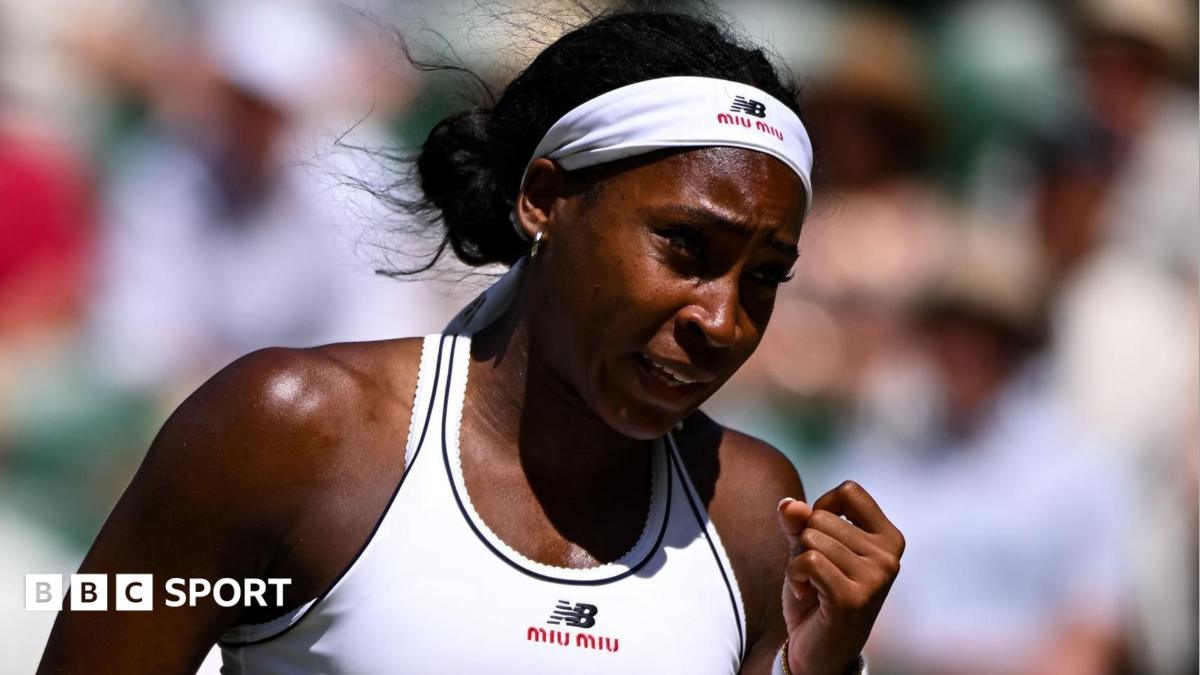
Gauff beats Pegula to reach first Wimbledon semi-final
One of tennis’s brightest rising stars has written a new chapter of her Grand Slam story at the All England Club, as 22-year-old Coco Gauff pulled off a thrilling comeback against world No. 4 Jessica Pegula to advance to her first ever Wimbledon semi-final on Tuesday.
A two-time Grand Slam singles champion already with the 2023 US Open and 2025 French Open titles to her name, Gauff arrived at SW19 with unfulfilled potential on grass. She had never advanced past the tournament’s fourth round, and suffered a disappointing first-round exit 12 months ago. Few expected her to go deep into the draw this year, a doubt Gauff herself acknowledged after her historic win.
Facing the highest-ranked player remaining in the women’s singles draw, Gauff got off to a shaky start. A rash of unforced errors and four double faults left her dropping the opening set 4-6, with Pegula looking on course to secure a straight-sets victory. But the young American dug deep, just as she had done throughout the entire tournament to reach this stage. Pegula had squandered three early break point chances in the second set, and Gauff seized the momentum shift, breaking Pegula to love in a pivotal game before holding firm from 0-30 down on her own serve to close out the second set 6-3 and level the match.
The final set stayed tightly contested, but it was Gauff who lifted her game when it mattered most. After Pegula broke back to level the set, Gauff responded immediately to reclaim the lead at 4-3, then closed out the win on Pegula’s serve at her first match point. The 6-3 final set score locks in Gauff’s place in the final four, capping an unprecedented run to this stage: she is now the first woman in 30 years to reach a Grand Slam semi-final with four consecutive three-set wins, and the youngest player to have made the semi-finals of all four majors since Maria Sharapova achieved the same milestone at the 2007 French Open.
Speaking to reporters after the match, Gauff joked about the low expectations surrounding her run, saying: “I think a lot of people had me going out in the first or second round this tournament. After seven years playing in this tournament, it is the first time I’ve walked onto Centre Court and not felt nervous. So I don’t know – am I becoming a veteran already?”
In the day’s other quarter-final clash, Czech 10th seed Karolina Muchova ended former world No. 1 Naomi Osaka’s impressive tournament run with a 7-6 (7-4), 6-4 victory on Court One. Muchova, who fell at the quarter-final stage in both 2019 and 2021, will also make her first ever Wimbledon semi-final appearance, where she will face Gauff for a spot in Saturday’s women’s singles final.
For Pegula, the defeat extends her long wait for a first ever Grand Slam singles title, with the result likely to leave her reflecting on the early opportunities she failed to convert against the in-form young champion.