Canada is facing its most significant test of national unity in decades after Alberta’s provincial government announced a non-binding referendum this October on the province’s place within the Canadian federation, capping years of growing separatist sentiment in the resource-rich western region. The announcement came one day after Prime Minister Mark Carney publicly reaffirmed Alberta’s irreplaceable role in the country, emphasizing that the province’s contributions have been foundational to Canada’s growth and that his government’s national reform efforts center on including all regions, including Alberta.
The separatist movement in Alberta has gained traction over the last several years, driven by widespread frustration among many residents who feel their province’s economic and political priorities are systematically ignored by federal policymakers based in Ottawa. Most polling to date shows a clear majority of Albertans oppose full independence, with roughly one quarter of respondents voicing support for separation. Earlier this year, a pro-unity petition collected more than 400,000 signatures from across the province, demonstrating the depth of support for remaining part of Canada.
Despite that majority, grassroots separatist pressure forced Premier Danielle Smith to address the demand for a public vote. A separatist petition crossed the 300,000 signature threshold required to trigger a binding independence referendum earlier this year, but a successful legal challenge by Alberta First Nations groups halted the signature verification process earlier this month, leaving the original plebiscite plan in legal limbo. A court ruled that the Alberta provincial government failed to fulfill its legal obligation to consult with Indigenous communities on the referendum plan before approving the petition process.
Smith has publicly rejected the court ruling, and while the decision blocks her from moving forward with a binding vote immediately, she has pushed forward with a new voting plan for October 19. On that date, Albertans will answer a two-part question: whether the province should remain part of Canada, or whether the provincial government should begin the formal legal process to hold a binding independence referendum at a future date.
“I will not have a legal mistake by a single judge silence the voices of hundreds of thousands of Albertans,” Smith said in her public announcement. “Alberta’s future will be decided by Albertans, not the courts.” The premier added that her government is appealing the original court ruling, a process that could stretch into a lengthy legal battle, and confirmed she will personally vote to keep Alberta within Canada. She also committed to campaigning for the pro-unity side through a series of summer town halls, arguing the province can no longer delay addressing the independence question. When asked if she risked repeating the legacy of former British Prime Minister David Cameron, who called the Brexit referendum that split the U.K. despite opposing the exit side, Smith said she has no fear of Albertans’ judgement. “You have to be prepared to have the debate, and you have to be prepared to defend your position,” she stated.
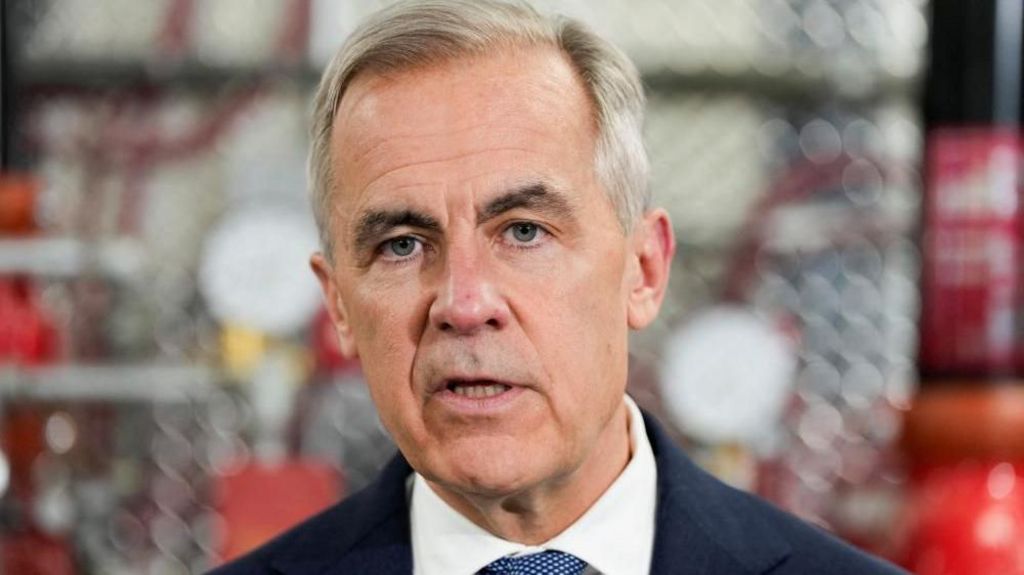
Prime Minister Carney, speaking during a tour of renovation work at Canada’s federal Parliament building on Friday, struck a unifying tone in his first public comments following Smith’s announcement. “We’re renovating the country as we go, and Alberta being at the centre of that is essential,” Carney said, praising the “huge contributions” the province has made to Canada’s national identity and economy, and noting his government is working to improve conditions for all Canadians, including those in Alberta.
Smith’s compromise plan has failed to win support from either side of the debate, drawing widespread criticism from pro-independence activists, Indigenous leaders and provincial opposition politicians. The Sturgeon Lake Cree Nation issued a harsh statement condemning Smith’s government as “undemocratic, authoritarian, and willing to bend to the whims of a loud, angry minority.” Naheed Nenshi, leader of Alberta’s official opposition New Democratic Party, dismissed the October vote as “needless,” accusing Smith of deliberately delaying action to shore up her own hold on political power. Even separatist leaders have expressed frustration with the plan: Mitch Sylvestre, a leading figure in the pro-independence movement, told the *Globe and Mail* that he “feel[s] duped” by the revised proposal. In response to the criticism, Smith defended her decision during a Friday press conference, saying the province cannot “kick the can down the road” for years by leaving the independence question unresolved.