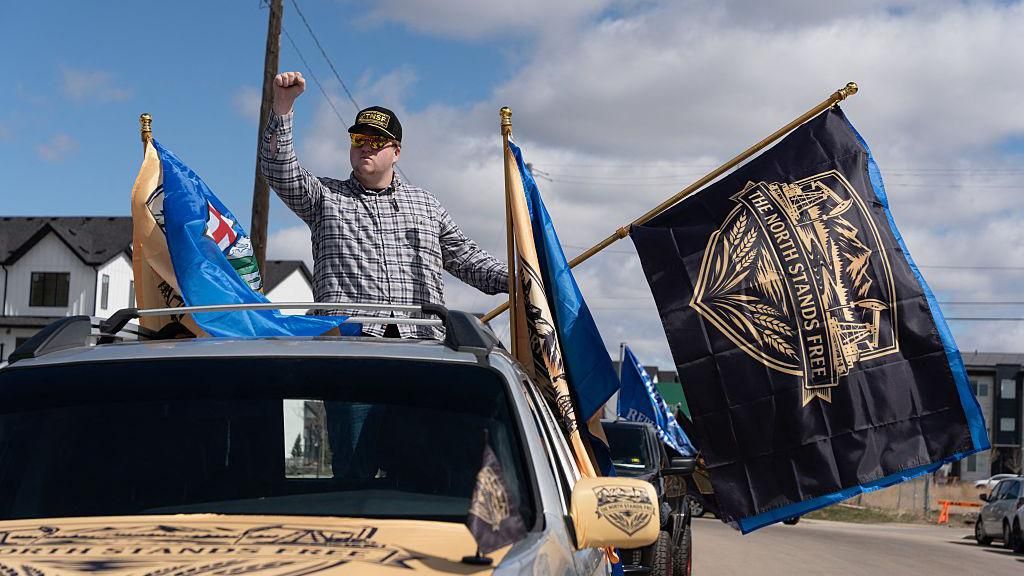
Canada’s territorial unity faces its most significant test in decades this fall, after the premier of the resource-rich western province of Alberta announced plans for a historic public vote on October 19 that will set the stage for a possible future binding referendum on provincial separation.
Premier Danielle Smith made the long-awaited announcement in a televised address to the province on May 21, confirming that while she personally supports maintaining Canadian unity, she is moving forward with the vote to address decades of growing separatist sentiment among a segment of the province’s population. The vote follows a years-long grassroots campaign that gathered more than 300,000 signatures from Albertans demanding a public vote on independence, a petition that was blocked earlier this month by an Alberta court on procedural grounds.
Unlike a direct vote on separation, the question Albertans will answer this October is structured to gauge public support for launching the formal legal process outlined in the Canadian Constitution to hold a binding separation referendum. Voters will choose between two clear options: Option A endorses Alberta remaining a province of Canada, while Option B calls on the provincial government to begin all required legal steps to arrange a final binding vote on separation. Smith’s office confirmed the binary choice to the BBC, clarifying the structure of the upcoming vote.
The push for a referendum originated with a grassroots separatist faction organized as the Alberta Prosperity Project, led by Bonnyville-based gun shop owner Mitch Sylvestre and Calgary-based lawyer Jeffrey Rath. Over 12 months, the group held public town halls across the province to build support, then launched the official citizen petition earlier this year that crossed the 300,000-signature threshold. The petition was authorized under Alberta’s existing citizen initiative law, but a judge struck it down earlier this month, ruling that the province failed to fulfill its legal obligation to consult Indigenous First Nations communities whose traditional lands would be directly affected by any declaration of independence.
Countering the separatist effort, a pro-union group led by former Alberta deputy premier Thomas Lukaszuk gathered signatures for its own anti-separation petition, *Forever Canadian*, which attracted more than 400,000 signatures from Albertans. The province’s total population is just over 4.6 million, meaning both petitions drew significant participation from across the political spectrum.
Rejecting the court’s ruling as an unfair silencing of public voice, Smith announced that her government has appealed the court decision, and is moving forward with the October vote in the interim. “Kicking the can down the road only prolongs a very emotional and important debate,” she said, noting that she has faced sustained pressure from separatist factions to move forward with a vote regardless of legal challenges. She has committed to accepting the final result of the October vote, and will actively campaign for Option A, keeping Alberta in Canada.
Separatist sentiment in Alberta is rooted in a decades-old concept known as “western alienation,” the widespread belief among many western Canadians that federal policymakers in Ottawa systematically overlook the region’s interests and underrepresent its priorities. Members of the Alberta Prosperity Project argue that decades of federal Liberal Party rule have held back the province’s economic growth, pointing particularly to federal environmental policies that they claim block pipeline construction and prevent the province from fully leveraging its vast oil reserves. The province has long leaned conservative politically, and many separatists also argue Alberta contributes far more to federal tax revenues than it receives in federal spending, while Ottawa exerts disproportionate control over the province’s internal affairs.
The separatist movement holds a range of goals, not all aligned on full immediate separation. At public town halls last year, some participants told the BBC they see the threat of independence only as a bargaining chip to force more concessions from Ottawa, while others advocate for a full split from Canada. A small subset of supporters has even floated the idea of Alberta joining the United States, a position echoed by Rath, who has argued the province shares more cultural common ground with neighboring U.S. states than with eastern Canada. Rath has made multiple trips to Washington, D.C. for what he calls “fact-finding” visits, where he and other separatist leaders met with officials from the former Trump administration to explore potential U.S. support, such as a line of credit, for an independent Alberta. He has not publicly named which officials the group met with.
The October vote will trigger a five-month official campaign period, with organizations on both the pro-union and pro-separation sides gearing up to mobilize voters. Top national political figures have already lined up behind the pro-unity effort. Prime Minister Mark Carney, who was raised in Alberta’s capital Edmonton and has made developing Canada’s energy sector a core policy priority, has emphasized that Alberta is central to his vision for Canada’s future. “We’re renovating the country as we go, and Alberta being at the centre of that is essential,” Carney said in May. Official Opposition Conservative leader Pierre Poilievre, who was raised in Calgary and draws strong support from the province, has also confirmed his party will campaign hard to keep Alberta in Canada.
Despite the widespread pro-unity positioning from mainstream political leaders, Smith faces pushback from both sides of the debate. Rath, the leading separatist voice, has condemned Smith’s proposed referendum question as a betrayal of the 300,000 signatories who demanded a direct vote on independence, and has threatened to organize a leadership challenge against Smith within her governing United Conservative Party, putting her political future at risk. “To hell with 301,620 Albertans who were promised a vote on their question,” Rath wrote on social media after Smith’s announcement. “Danielle Smith just lost her base!”
Indigenous First Nations communities in Alberta have also criticized Smith’s decision to move forward with the vote despite the court’s ruling, calling the move undemocratic and authoritarian. If a majority of voters select Option B this October, the vote will only kickstart the multi-step legal process required to hold a final binding separation referendum, with no immediate change to Alberta’s status within Canada.
Public polling consistently shows that a large majority of Albertans currently support remaining part of Canada. A January Ipsos poll found only 28% of respondents would vote in favor of full independence, with nearly 20% of that group describing their support as symbolic or conditional rather than firm. A March poll from Abacus Data recorded similar results, with 26% support for separation, and an April CBC poll found support for independence has remained unchanged over the past 12 months. The October vote will serve as a critical snapshot of public sentiment, and will shape the future of Canadian national unity for years to come.
What comes next as Alberta plans vote on separation