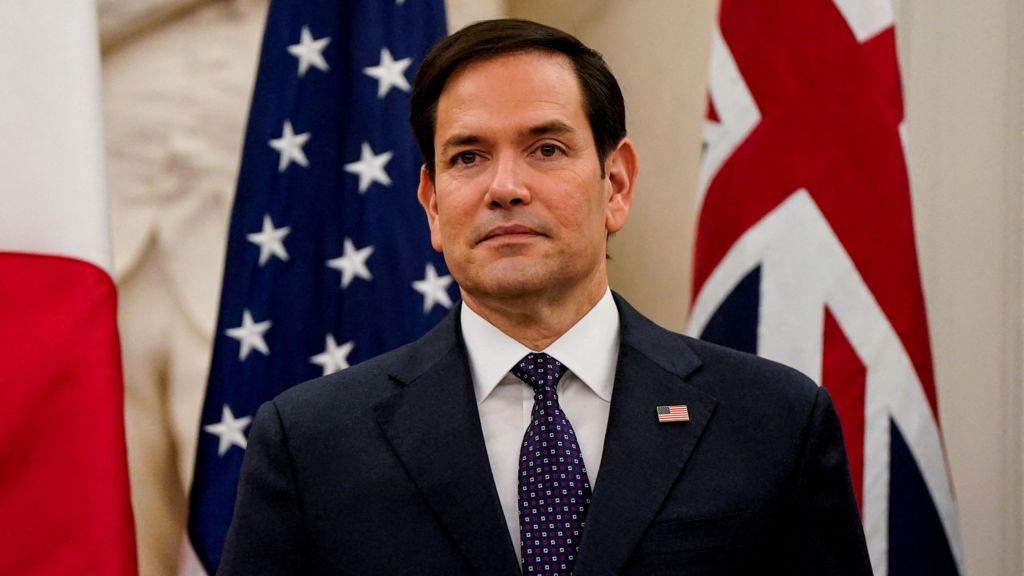
Against the backdrop of heightened geopolitical tension and a global energy crunch sparked by the ongoing Iran war, U.S. Secretary of State Marco Rubio touched down in India on Saturday, kicking off a four-day trip that will tackle a packed agenda spanning energy cooperation, trade negotiations, and regional security alignment. Rubio landed first in Kolkata, the bustling eastern Indian metropolis formerly known as Calcutta, in local morning hours, with subsequent stops scheduled for the national capital New Delhi, the northern cultural hub Jaipur, and the historic tourist landmark Agra. His highest-profile engagement will be a sit-down with Indian Prime Minister Narendra Modi, where energy security is widely expected to top the list of priority discussions.
The current energy crisis traces back to the confrontation that erupted after U.S. and Israeli military strikes on Iran in February, which turned the Strait of Hormuz — the world’s most critical chokepoint for global oil shipments — into a dangerous flashpoint. Commercial energy traffic through the strait has now effectively halted, with Iran leveraging the closure as a key bargaining chip during fragile ongoing peace talks with Washington. For India, which relies on imported energy to meet more than 80% of its total demand, the shutdown has hit particularly hard. With a population of over 1.4 billion depending on foreign supplies of everything from cooking gas to transportation fuel to power daily life, the supply gap has created urgent pressure on New Delhi to secure alternative import sources.
Rubio has openly acknowledged the severe challenges facing Asia’s third-largest economy, and has positioned the U.S. as a reliable alternative energy supplier. “We want to sell them [India] as much energy as they’ll buy. And obviously, you’ve seen, I think, we’re at historic levels of US production and US export,” he stated ahead of the visit. For Washington, expanded Indian energy imports would also address a longstanding irritant in bilateral relations: the expanding U.S. trade deficit with India, which swelled 27.1% year-over-year to hit $58.2 billion in 2025, a figure that has consistently drawn criticism from President Donald Trump.
Despite the mutual incentives, however, a rapid shift to U.S. energy supplies faces major practical hurdles. Shipping energy from the U.S. to India requires far longer, costlier trade routes than established supply chains from the Middle East, and analysts widely agree that U.S. shipments cannot logically close India’s current import shortfall in the near term. Beyond energy, trade relations between the two powers have seen tentative progress after months of stalemate, though major questions remain unresolved. Earlier this year, Trump cut reciprocal tariffs on Indian goods from 50% to 18% following a 10-month impasse, a move that was widely welcomed in New Delhi. After a U.S. Supreme Court ruling struck down parts of Trump’s original sweeping tariff scheme, levies were further reduced to 10%, easing pressure on Indian exporters. The tariff cuts came in exchange for India’s commitment under a February interim trade deal to purchase $500 billion worth of U.S. goods across energy, aircraft, technology, and agricultural sectors.
Negotiations are still ongoing to finalize a broader comprehensive bilateral trade agreement, but details of the final text remain sparse, and trade analysts have expressed skepticism about the ambitious $500 billion purchase target. India’s total annual trade with the U.S. currently amounts to only a small fraction of that figure, and New Delhi has yet to put forward concrete, verifiable investment commitments to back up the public pledge. Most notably, Indian billionaire Mukesh Ambani has remained publicly uncommitted to Trump’s announcement that Ambani’s firm Reliance Industries would back a $300 billion new oil refinery project in Brownsville, Texas — the first new major refinery built in the U.S. in half a century.
Even amid that uncertainty, Indian export data tells a cautiously positive story: Indian shipments to the U.S. held steady at $87.3 billion in the 12-month period ending March 2026, posting a 0.9% year-over-year increase even during the period of steep tariffs between May 2025 and February 2026. After tariffs were lowered, exports picked up further, hitting $8.5 billion in April 2026 alone. Indian research firm Crisil Research noted that this growth reflects the “continued positive impact of the lowered tariffs,” but added that lingering uncertainty over future tariff policy means export trajectory will require close monitoring. To hedge against ongoing trade risks with the U.S., New Delhi has accelerated efforts to liberalize its historically protectionist trade policy, concluding advanced free trade agreements with a range of partners including the United Kingdom, European Union, Australia, and Oman in recent months. HSBC economist Pranjul Bhandari noted that while Trump has demanded India eliminate all tariff and non-tariff barriers on U.S. goods, these new FTAs allow India to preserve protection for key sensitive sectors. Even after a final U.S.-India trade deal is signed, she added, sectors like domestic agriculture and dairy are almost certain to remain protected.
The visit also unfolds against a backdrop of lingering bilateral friction beyond trade. Tensions have persisted for months over conflicting narratives surrounding last year’s brief India-Pakistan border conflict: Trump has repeatedly claimed he brokered the ceasefire between the two nuclear-armed neighbors, a claim New Delhi has consistently rejected, citing its longstanding policy of opposing third-party mediation in bilateral disputes with Pakistan. Trump’s public praise for Pakistani Army Chief Asim Munir — whom the U.S. president has called his “favorite field marshal” — has also rankled Indian officials, and recent Pakistani mediation efforts between Washington and Tehran have drawn bilateral ties between the U.S. and Pakistan even closer. Indian analyst Vineet Prakash, an associate professor of U.S. studies at New Delhi’s Jawaharlal Nehru University, noted that Pakistan’s proximity to Iran makes its strategic value to Washington unsurprising, but added that any discussion of Pakistan during Rubio’s trip will almost certainly take place behind closed doors, with no public statements expected.
On energy security, Prakash noted that the Iran crisis is unlikely to be resolved quickly, so the issue will remain the core priority of Rubio’s visit. While the U.S. has already granted India a waiver to continue purchasing Russian oil, Prakash expects Indian officials will push for additional concessions during talks. Another longstanding point of contention that will be addressed is India’s reluctance to comply with Trump’s calls for nations to deploy military assets to the Strait of Hormuz to guarantee free navigation. New Delhi has made clear it will only participate in diplomatic efforts to resolve the standoff, so observers will be watching closely to see what public stance Rubio takes on India’s position during the visit.
The final key item on Rubio’s agenda is the upcoming Quad Foreign Ministers meeting, scheduled for May 26 in New Delhi. The Quad, a regional security grouping comprising the U.S., India, Australia, and Japan, was framed by Trump in his first term as a counterweight to growing Chinese influence in the Indo-Pacific. A planned Quad leaders summit was delayed last year due to a perceived lukewarm commitment from Trump, leading some analysts to question the grouping’s future viability. To date, there is still no confirmation that Trump will attend the rescheduled summit planned for later this year in New Delhi, or even that the summit will proceed as planned. Prakash argued that the uncertainty reflects a shift in Trump’s approach, as the administration has come to recognize that China cannot be easily pressured, leading to a reevaluation of the Quad’s purpose. For India, hosting a successful Quad leaders summit is a key priority to reinforce its growing status as a major geopolitical power, so New Delhi is eager to see the event go forward. Indian officials will wait to hear Rubio’s remarks on the grouping before committing to a public stance on the summit’s future.
The future of the Quad also intersects with another major Indian diplomatic event on the horizon: New Delhi is scheduled to host a BRICS summit in September, an expanded grouping that now includes China, Russia, Iran, and Saudi Arabia alongside Brazil and South Africa. The balance India strikes between its engagements with the Quad and BRICS will be closely watched by global observers, as it will signal New Delhi’s broader geopolitical alignment amid growing great power competition. With multiple high-stakes issues on the table, Rubio’s visit is set to shape the trajectory of U.S.-India relations and regional security in the Indo-Pacific for months to come.