标签: North America

北美洲

  • What it’s like to be on Florida’s Space Coast ahead of Artemis launch

    What it’s like to be on Florida’s Space Coast ahead of Artemis launch

    As the sun sets over Florida’s Space Coast this Wednesday, hundreds of thousands of space enthusiasts from across the United States are flooding into local causeways, public beaches, and motel balconies, all gathering to witness the long-awaited launch of NASA’s Artemis II mission — humanity’s first crewed trip around the Moon in more than 50 years.

    Among the excited crowd is 8-year-old Isiah, who summed up the collective mood simply: “People going up to the Moon is kind of cool.” Traveling more than 1,000 miles from her home in New Mexico to be at the launch site, Amanda Garcia echoed that enthusiasm. “I heard it’s gonna be a great show. A lot of people are going to be here,” she said, explaining why she made the cross-country trip to be part of the historic moment.

    Local authorities are describing the surge of visitors as a “historic influx”, with projections that the event will deliver an estimated $160 million boost to the regional economy. Months of preparation have gone into managing the crowds: traffic control plans are in place, local bars have rolled out moon-themed drink specials, and hotels have warned guests to expect lengthy travel delays between their accommodations and public viewing sites. Even highway streetlights will share the night sky with the glow of floodlit launch towers and the warm light of camper van barbecue grills scattered across viewing areas.

    Just a mile from the launch pad, Brenda Mulberry, owner of Space Shirts — a local NASA souvenir shop that has operated on Merritt Island for 40 years — says this event is unlike any launch she has ever hosted. “We’ve wanted to go back to the Moon since the ’70s. People are excited. People are beyond excited,” she explained, noting that she has stocked her small shop full of hand-illustrated T-shirts emblazoned with rockets, mission patches and lunar landscapes to meet unprecedented demand. When asked about her long-term vision, Mulberry laughed and joked, “I want to have the first T-shirt shop on the Moon. Because if you’ve been there, you get the T-shirt, right?”

    The Artemis II mission marks a critical turning point for NASA’s broader lunar exploration program, which aims to return humans to the lunar surface for the first time since Apollo 17 in 1972. Unlike the original Apollo missions, which focused on short surface visits, the long-term goal of the Artemis program is to construct a permanent lunar base camp, tap into the Moon’s untapped natural resources, and develop a sustainable starting point for the first human mission to Mars.

    Speaking ahead of the launch, Artemis II commander Reid Wiseman emphasized the program’s intergenerational mission. “In our lifetime, we’ve looked at the Moon knowing that people had been there. And now in the Artemis generation, kids will walk out and look at the Moon going, we are there. We are there now, and we are going further into our solar system,” he said.

    All eyes on launch night will be fixed on Launch Pad 39B, the same historic concrete launch site that supported the Apollo 11 mission that put the first humans on the Moon in 1969. Standing on the pad is NASA’s Space Launch System (SLS), a 321-foot-tall white and orange rocket that is the most powerful and heaviest launch vehicle the agency has ever built. Mounted atop the rocket is the Orion crew capsule, a vehicle roughly the size of a small van that will carry four astronauts on the 10-day unlanded test flight. This mission marks the first time Orion will be tested with a full human crew on board.

    The launch window opens between 18:24 and 20:24 local Florida time on Wednesday. The four-person crew — commander Reid Wiseman, pilot Victor Glover, mission specialist Christina Koch, and Canadian astronaut Jeremy Hansen, who will make his first trip to space on this mission — will board the capsule approximately four hours before liftoff.

    The mission follows a carefully planned 10-day timeline. After reaching Earth orbit, the crew will spend their first day testing manual flight controls and life support systems before setting a course for the Moon. On day two, a major engine burn will put Orion on a free-return trajectory that will naturally carry it around the Moon and back to Earth, with only small course corrections needed along the way. Each day of the flight is dedicated to new system tests and operational challenges, with the most anticipated milestone coming on day six, when Orion is scheduled to fly behind the far side of the Moon. For roughly 40 minutes, all radio contact between the capsule and ground control will be cut off, leaving flight controllers waiting for the spacecraft to emerge from behind the lunar disk. During this pass, Orion will travel between 4,000 and 6,000 miles above the lunar surface, and depending on its exact trajectory, it could surpass the 1970 Apollo 13 record for the farthest any human crew has ever traveled from Earth.

    The most high-stakes phase of the mission comes on re-entry day. Orion will plummet through Earth’s atmosphere at roughly 25,000 miles per hour, generating external temperatures hot enough to melt rock, which must be absorbed by the capsule’s reinforced heat shield. After the 2022 uncrewed Artemis I test flight, engineers discovered that chunks of the heat shield’s protective coating had cracked and broken away during the mission’s two-stage “skip” re-entry maneuver. The maneuver — designed to reduce heat stress, G-force loads, and improve splashdown accuracy — dips the capsule into the upper atmosphere before briefly climbing back up and making a final plunge. For Artemis II, engineers have retained the two-stage approach but adjusted the entry angle and timing to reduce the time Orion spends in the initial, gentle atmospheric dip. Modeling suggests this change will reduce the heat and structural stress that caused the earlier damage, but this mission will be the first real-world test of the adjusted design with a crew on board.

    If Artemis II completes its mission successfully, the next large-scale gathering on the Space Coast will come for the next step in the program: bringing humans back to walk the surface of the Moon, half a century after the last Apollo astronauts left their footprints in the lunar regolith. And as thousands of visitors carry home their custom mission T-shirts from Space Shirts, many will already be sharing Brenda Mulberry’s quiet, playful dream: that one day, her shop’s logo will not only be printed on Florida cotton, but featured in a photograph taken on the surface of the Moon.

  • Judge temporarily halts construction of Trump’s White House ballroom

    Judge temporarily halts construction of Trump’s White House ballroom

    A landmark federal court ruling has temporarily paused a high-profile construction project to build a new presidential ballroom at the White House, after judge Richard Leon found the Trump administration skipped legally required approval processes before breaking ground. The case was brought by the National Trust for Historic Preservation, a congressionally chartered non-profit dedicated to protecting America’s historic landmarks, which argued the White House violated multiple federal laws by launching the project without mandatory review.

    In a forceful 35-page ruling published Tuesday, Leon left little room for ambiguity about his decision: “Unless and until Congress blesses this project through statutory authorization, construction has to stop!” he wrote, emphasizing that while the U.S. president serves as a steward of the White House for future generations, he does not hold personal ownership of the iconic property. Leon concluded the preservation group was likely to prevail in the full trial, noting no existing federal statute grants the president the authority he claims to alter the White House grounds without congressional approval. The temporary halt will go into effect in 14 days, giving the administration time to file its planned appeal.

    The project, which was launched last October after the 1902-built East Wing was demolished, has grown substantially from its original plan: what was first proposed as a 500-person ballroom is now designed to hold 1,350 guests. The White House estimates the total cost will hit $400 million, all covered by private donations rather than taxpayer funds. Last week, Trump confirmed the project also includes a large underground military complex, saying the above-ground ballroom would effectively serve as a cover for the classified subterranean structure. Demolition and foundation work have already been completed, with above-ground construction scheduled to start next month.

    In its lawsuit, the National Trust laid out three core legal grievances: the White House failed to submit construction plans to the National Capital Planning Commission, skipped a required environmental impact assessment, and never obtained explicit congressional authorization for the project. The group also argued the project violates the U.S. Constitution, which reserves authority over federal property to the legislative branch. Following the ruling, National Trust president Carol Quillen called the decision a victory for all Americans. “This is a win for the American people on a project that forever impacts one of the most beloved and iconic places in our nation,” Quillen said in an official statement.

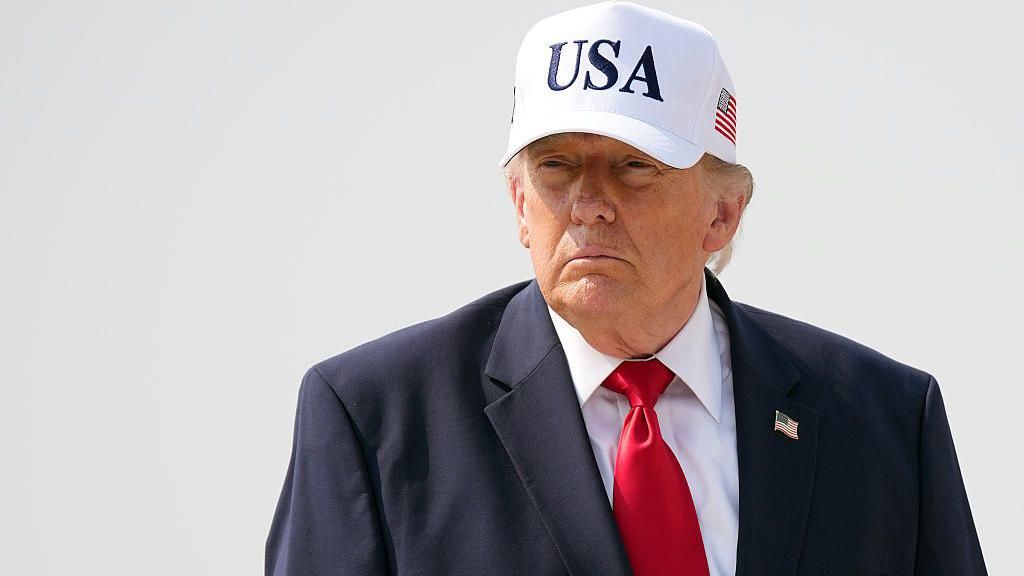
    Shortly after the ruling was released, former president (current U.S. president) Donald Trump pushed back aggressively against the decision on his Truth Social platform and in comments to reporters. Trump denied he needs congressional approval for the project, and vowed to appeal the ruling to a higher court. He defended the project as being under budget, ahead of schedule, and entirely funded by private donors, claiming it will become the finest event space of its kind in the world. He also argued the current temporary event space, a tented arrangement, is inadequate for upcoming high-profile events, including the upcoming state visit of Britain’s King Charles III next month. “We don’t want him to sit in a pool of water” if it rains, Trump told reporters, adding the existing facilities cannot properly host visiting world leaders.

    The Trump administration had previously attempted to justify rushing the project by claiming delays would threaten U.S. national security, a argument Leon rejected outright. Calling the claim “grasping at straws,” Leon wrote sarcastically, “The existence of a ‘large hole’ beside the White House is, of course, a problem of the President’s own making!” Trump also hit out at the National Trust for opposing a separate renovation project at the Kennedy Center, which he recently renamed to honor himself. He claimed the performing arts center had fallen into disrepair over decades, and his project is only meant to restore and improve the space. The ruling marks a major constitutional check on executive authority to alter the White House grounds, setting up a high-stakes legal battle over separation of powers as the project nears its next construction phase.

  • How English-only condolences undid one of Canada’s top CEOs

    How English-only condolences undid one of Canada’s top CEOs

    A fatal collision at New York’s LaGuardia Airport last month that claimed two Air Canada pilots’ lives has unexpectedly ignited a national firestorm over linguistic policy in Canada, culminating in the announcement that the airline’s long-serving CEO will step down earlier than planned. On March 22, an Air Canada flight originating from Montreal crashed into an emergency vehicle while attempting to land, killing the two pilots and injuring dozens of passengers. The incident marked Air Canada’s first fatal crash in more than 40 years, a devastating milestone that put the airline under immediate public scrutiny.

    The controversy did not stem from the crash itself, however. It erupted 24 hours after the collision, when Air Canada published a four-minute condolence video from CEO Michael Rousseau on its social media channels. While the video included dual-language subtitles, Rousseau delivered his entire address exclusively in English. The public backlash was swift and intense: Canada’s Office of the Commissioner of Official Languages received dozens of formal complaints within hours, and a parliamentary committee voted unanimously to summon Rousseau to testify and explain his choice to speak only English.

    Quebec, Canada’s majority French-speaking province, led the calls for Rousseau’s resignation. Provincial lawmakers passed a non-binding resolution calling for his departure, with politicians accusing the CEO of a “gross lack of respect” for the Quebecois family of one of the fallen pilots, Antoine Forest. Canadian Prime Minister Mark Carney joined the criticism, saying the unilingual video demonstrated a clear “lack of compassion” for grieving French-speaking communities. Prominent Canadian author Jack Jedwab wrote in French-language daily La Presse that Rousseau’s admitted weakness in French sends a harmful message to Air Canada staff that national bilingualism is “a constraint, not a value,” adding that Rousseau was unfit to serve as the national carrier’s public face.

    Three days after the original video sparked public outrage, Rousseau released a formal apology, acknowledging that his choice had diverted attention from the families mourning the victims and admitting that despite years of language classes, his French proficiency remains limited. Less than a week later, the 68-year-old CEO announced he would retire from his position by September this year.

    Air Canada has attempted to frame Rousseau’s departure as a natural transition: a company spokesperson told the Wall Street Journal that the CEO had reached standard retirement age and that his exit was unrelated to the language controversy. But the timing of the announcement, coming directly on the heels of the national backlash, has led many political observers and members of the public to question that official narrative.

    For international observers unfamiliar with Canada’s linguistic history, the intensity of the reaction to Rousseau’s unilingual address may seem surprising. The controversy is rooted in Canada’s unique cultural and legal framework for bilingualism, as well as Air Canada’s specific status as Canada’s iconic national carrier. Originally a federally owned and operated crown corporation, Air Canada has always been bound by Canada’s Official Languages Act, which guarantees all Canadians access to federal services in both English and French. Although Air Canada was privatized in 1988, the federal government passed special legislation requiring the airline to retain its full bilingual obligations, because it has long been viewed as a central symbol of Canadian national identity that represents the country across the globe. As François Larocque, research chair in language rights at the University of Ottawa, explained, this means bilingual communication is not optional for the airline’s top leadership.

    This is not the first time Air Canada has run afoul of its bilingual mandate, nor is it the first time Rousseau’s unilingualism has sparked controversy. In 2019, the airline was fined after a French-speaking couple complained that in-flight signage on a domestic route was only available in English. When Rousseau first took the CEO position in 2021, after decades of living and working in Montreal, his inability to answer a reporter’s question in French made national headlines. At the time, he attributed his lack of progress in French to the heavy demands of his work schedule; five years later, his failure to improve his language ability became the final straw for many critics.

    The controversy has also exposed deep divides across the country over the place of bilingualism in Canadian public life. While anger ran high in Quebec, many commentators and members of the public in other English-majority provinces have questioned the intensity of the backlash. Toronto-based National Post columnist Chris Selley argued that the expectations placed on Rousseau are unique to Canada’s political context, while others have accused Quebec politicians of manufacturing outrage to pander to French-speaking voters ahead of upcoming elections. “Two young men died. Be heartbroken, be respectful, but do not exploit this tragedy to advance political popularity,” Joanne O’Hara, a resident of Oakville, Ontario, wrote in a letter to the editor of the Globe and Mail.

    Scholars of Canadian politics note that bilingualism is far more than a cultural preference: it is a core foundation of Canadian national unity. As Larocque explained, as a country formed from both French and British colonial territories, bilingualism is “intimately tied to the history of Canada,” and there is very little chance Quebec would remain part of the Canadian federation if French were not recognized as an equal official language. This has created an unspoken rule that all senior national leaders, from the prime minister onward, must be proficient in both languages. Even current Prime Minister Mark Carney, an anglophone from western Canada, spent years improving his French before launching his leadership campaign, and his language ability was a key point of public scrutiny during the election.

    In the wake of Rousseau’s announcement, Air Canada confirmed it launched an external search for a new CEO back in January, well before the LaGuardia collision, and that proficiency in French will be a required qualification for the role.

  • ‘A million things could go wrong’ – why seizing Iran’s uranium would be so risky for the US

    ‘A million things could go wrong’ – why seizing Iran’s uranium would be so risky for the US

    A dramatic, high-stakes ground incursion to seize Iran’s cache of enriched uranium — material that could be refined into nuclear weapons — may seem like a plot pulled from a military thriller, but multiple sources confirm it is among the options under active consideration by the Trump administration as it pursues its core war aim: halting Iran’s nuclear weapons development program. Military analysts and former senior U.S. defense officials who spoke with the BBC warn that any such mission would be one of the most complex and dangerous special operations in modern history, requiring a large deployment of ground troops and potentially stretching on for days or even weeks to complete.

  • Woods to ‘step away and seek treatment’ after crash

    Woods to ‘step away and seek treatment’ after crash

    One of the most decorated figures in golf history, 50-year-old Tiger Woods, has announced he will pause his professional career to pursue inpatient health treatment and prioritize personal wellness, just days after a car crash in Florida led to his arrest on multiple charges including driving under the influence.

    The incident unfolded last Friday, when Woods clipped a parked truck before rolling his vehicle in Palm Beach County. Following the crash, law enforcement officials placed Woods under arrest, charging him not only with DUI but also with property damage stemming from the collision and refusal to complete a standardized sobriety test. A police report released earlier this week documented that officers found two hydrocodone pills, a prescription opioid commonly used to manage severe chronic pain, in Woods’ possession at the time of the crash. The report also noted that Woods displayed visible signs of impairment: he moved slowly, appeared lethargic, sweated heavily, and had extremely dilated pupils.

    Through his legal team, Woods entered a formal not guilty plea to all charges on Tuesday. The golf legend broke his public silence on the incident hours later, releasing a statement on the social platform X acknowledging the gravity of his situation.

    “I know and understand the seriousness of the situation I find myself in today,” Woods wrote. “I am stepping away for a period of time to seek treatment and focus on my health. This is necessary in order for me to prioritize my well-being and work toward lasting recovery. I’m committed to taking the time needed to return in a healthier, stronger and more focused place, both personally and professionally. I appreciate your understanding and support and ask for privacy for my family, loved ones and myself at this time.”

    Prior to last week’s crash, Woods had not ruled out competing in the upcoming Masters Tournament, scheduled to kick off next month. It is worth noting that the 15-time major champion has not played in a major championship since he missed the cut at the 2024 Open Championship, and he has only competed in a handful of events over the past several years as he recovered from a series of severe injuries.

    Just last week, Woods made his return to competitive golf after more than a year on the sidelines, competing in the newly launched TGL indoor golf league. The event marked his first competition following additional back surgery and treatment for an Achilles injury.

    In the wake of Woods’ announcement, the PGA Tour issued its first official public response, expressing unified support for the golf icon. “Tiger Woods is a legend of our sport whose impact extends far beyond his achievements on the course,” the organization said in a statement. “But above all else, Tiger is a person, and our focus is on his health and well-being. Tiger continues to have our full support as he takes this important step.”

    PGA Tour CEO Brian Rolapp expanded on the organization’s support in a personal comment, noting: “Tiger Woods is one of the most influential figures the sports world has ever known. Over the last year, I have come to deeply appreciate Tiger not only for his impact on the game, but for his friendship and the perspective he has shared with me as I joined the golf industry. My thoughts are with him and his family as he takes this step, for which he has my full respect and support.”

    Last week’s incident adds another chapter to a series of high-profile personal and physical challenges that have marked Woods’ public life over the past 15 years. In 2009, a single-car crash outside Woods’ Florida home opened the door to public allegations of multiple extramarital affairs, leading to the end of his marriage and the loss of dozens of lucrative brand sponsorship deals. In 2017, Woods pleaded guilty to reckless driving after police found him unconscious in his running car near his home; a toxicology report later revealed multiple prescription medications and the active compound of marijuana were in his system, resulting in a one-year probation sentence. In 2021, Woods survived a catastrophic single-car crash that left him with life-altering, extensive leg injuries, requiring multiple surgical procedures and forcing him to drastically cut back on his competitive schedule.

    Woods currently holds the second-most major championship wins in professional golf history, with 15 titles. Only Jack Nicklaus, who won 18 majors over his career, sits ahead of him on the all-time list.

  • FT: Hegseth broker tried to invest in weapons just before Iran war

    FT: Hegseth broker tried to invest in weapons just before Iran war

    Financial Times has revealed that a broker representing US Defense Secretary Pete Hegseth attempted to arrange a substantial multimillion-dollar investment in defense industry stocks just weeks before the United States and Israel initiated military operations against Iran. According to three anonymous sources, the broker from Morgan Stanley contacted BlackRock in February regarding the Defense Industrials Active ETF, which includes major contractors like RTX, Lockheed Martin, Boeing, and Northrop Grumman.

    The timing of the investment inquiry—weeks before the February 28 bombing campaign began—has raised significant ethical concerns, particularly given Hegseth’s role as the most prominent advocate for military action against Tehran within the Trump administration. The investment ultimately did not proceed because the fund was unavailable to Morgan Stanley clients at the time.

    The Pentagon has vehemently denied the allegations, with spokesperson Sean Parnell calling the report “entirely false and fabricated” and demanding an immediate retraction from the Financial Times. Despite these denials, the newspaper reported that BlackRock internally flagged the broker’s inquiry due to the high-profile nature of the potential client.

    Market analysts note the proposed investment would not have yielded immediate returns, as the defense ETF has declined over 12% in the past month. However, the allegation has sparked concerns about potential insider knowledge and market manipulation among administration officials seeking to profit from military conflicts.

    Richard Nephew, former anti-corruption coordinator at the State Department, commented that such behavior would have been considered a clear ‘no no’ in previous administrations that prioritized anti-corruption measures. Economist Justin Wolfers suggested that in a functional democracy, Hegseth would offer his resignation over the allegations.

    The controversy emerges as President Trump revealed that Hegseth was initially disappointed about the prospect of the conflict ending quickly, indicating the Defense Secretary’s hawkish stance on continuing military engagement with Iran.

  • ‘Something needs to be done’ – Americans struggle as petrol prices surge

    ‘Something needs to be done’ – Americans struggle as petrol prices surge

    For the first time since 2022, average retail gasoline prices across the United States have climbed above the $4 per gallon threshold, leaving millions of American households grappling with unexpected financial strain and fresh uncertainty. The sudden uptick in fuel costs is directly tied to escalating geopolitical tensions in the Middle East, particularly the ongoing conflict centered on Iran, which has disrupted global energy markets and tightened crude oil supplies. Industry analysts note that the conflict has raised widespread concerns over potential disruptions to key oil shipping lanes and production infrastructure in the region, sending global crude prices sharply higher in recent trading sessions. These cost increases have been passed directly to consumers at the pump, eroding household budgets that are already stretched thin by persistent inflation in other essential goods and services. Across the country, drivers are expressing growing frustration, with many reporting that they are forced to cut back on discretionary spending, carpool to work, or switch to cheaper transportation options to offset the rising fuel bills. “Something has to give,” many consumers say, echoing a growing demand for policy interventions to curb price hikes and bring relief to struggling households. Economists warn that sustained elevated gasoline prices could add further pressure to overall inflation, complicating efforts by the Federal Reserve to stabilize prices and potentially slowing broader economic growth in the coming months.

  • As Iran war continues, US farmers absorb rising costs

    As Iran war continues, US farmers absorb rising costs

    As military tensions and ongoing conflict in Iran continue to roil global markets, American agricultural producers across the country are confronting mounting financial strain that threatens their bottom lines and long-term operational stability. One of the most immediate and visible impacts of the geopolitical unrest has been a sharp upward swing in global energy prices, a development that hits farming operations particularly hard. Fuel for tractors, irrigation equipment and transport trucks, along with petroleum-based inputs like fertilizers and pesticides, have all jumped in cost in lockstep with rising crude oil prices tied to the Middle Eastern instability. \n\nDuring on-the-ground reporting from rural Alabama, BBC correspondent Gary O’Donoghue sat down with one local farmer to discuss how the conflict’s ripple effects are reshaping his day-to-day operations and financial outlook. Despite facing significant growing cost pressures that have eaten into his expected annual profits, the agricultural producer confirmed he remains a staunch supporter of former President Donald Trump’s foreign and domestic policy agenda, aligning himself with the administration’s approach to Middle Eastern relations even as it creates direct financial hardship for his operation. \n\nAgricultural economists note that U.S. farmers are already navigating a host of interconnected challenges, from volatile commodity prices to ongoing trade disputes and extreme weather events linked to climate change. The added cost shock from the continuing Iran conflict has created an extra layer of uncertainty for an industry already operating on thin profit margins, with many small-scale independent producers particularly vulnerable to sudden input price swings. While larger agribusiness operations may have more financial buffer to absorb the short-term costs, small family farms like the one interviewed in Alabama often lack the capital reserves to offset sustained price increases, raising concerns about potential long-term consolidation in the U.S. farming sector if the conflict in Iran drags on.

  • US journalist Shelly Kittleson kidnapped in Baghdad

    US journalist Shelly Kittleson kidnapped in Baghdad

    A seasoned American freelance conflict reporter has been abducted in central Baghdad, launching a joint search operation by Iraqi and U.S. security authorities that has already led to the arrest of one suspect linked to an Iran-aligned militia, according to senior officials from both nations.

    Veteran journalist Shelly Kittleson, who has reported from conflict zones across Afghanistan, Iraq and Syria for multiple international outlets and is based in Rome, Italy, was taken captive on the evening of Tuesday, confirmed Al-Monitor, a U.S.-based publication that has featured Kittleson’s work. Local reporting indicates the abduction took place near a hotel in the heart of the Iraqi capital, Al-Monitor added.

    Shortly after the kidnapping, Iraq’s Ministry of Interior announced that security forces launched an urgent manhunt for the abductors based on detailed intelligence. During the pursuit, one of the kidnappers’ vehicles overturned after the driver attempted to evade capture, and one suspect was taken into custody. Iraqi authorities did not immediately name the suspect in their public statement, referring only to the group as “unknown individuals”, but a senior U.S. State Department official confirmed the detained individual has ties to Kataib Hezbollah, an Iran-backed militia group designated as a terrorist organization by many Western governments.

    U.S. Department of State spokesperson Dylan Johnson, Assistant Secretary of State for Global Public Affairs, confirmed the abduction of an American journalist, though he did not publicly name Kittleson in his post to social platform X. Johnson noted that the State Department had previously fulfilled its obligation to warn the journalist of active threats against her, and that U.S. officials are continuing to coordinate closely with the Federal Bureau of Investigation (FBI) to secure her swift and safe release. Multiple U.S. sources confirmed that officials reached out to Kittleson multiple times to alert her to the dangers she faced, with the most recent warning coming as late as Monday night, just one day before her abduction.

    Alex Plitsas, a CNN national security analyst who serves as Kittleson’s emergency contact, told CBS News — the U.S. partner of the BBC — that U.S. authorities specifically warned Kittleson that Kataib Hezbollah was plotting to kidnap or kill female journalists, and that her name was included on a target list held by the militia. Plitsas added that Kittleson dismissed the warning, believing the threat information to be unsubstantiated. A second anonymous source familiar with the situation confirmed this account to CBS.

    In a statement provided to the BBC, a State Department representative said: “Due to privacy and other considerations, we have nothing further to share at this time.” Al-Monitor released an official statement saying it is “deeply alarmed” by Kittleson’s kidnapping, and issued an urgent call for her immediate and unharmed release.

    An anonymous senior Iraqi official confirmed to CBS that Iraqi security operations are being coordinated “at the highest level” of government to secure Kittleson’s freedom. The Iraqi Interior Ministry reiterated in its statement that ongoing operations are focused on tracking down the remaining at-large perpetrators, rescuing Kittleson, and bringing all involved in the “criminal act” to justice under Iraqi law.

    Multiple sources familiar with the ongoing response told CBS that senior security and intelligence agencies from both nations, including the FBI, the U.S. National Security Council, U.S. Army Delta Force, and the Iraqi Counter-Terrorism Service, are in constant communication to coordinate the search and rescue effort.

    Baghdad earned a reputation as one of the world’s most dangerous cities for abductions during the height of sectarian conflict following the 2003 U.S.-led invasion, but kidnapping rates have dropped sharply in recent years as overall security across Iraq has stabilized.

  • Trump has vowed to end birthright citizenship. Can he do it?

    Trump has vowed to end birthright citizenship. Can he do it?

    As one of the first policy moves of his second term as the 47th U.S. President, Donald Trump has followed through on a years-long campaign promise by signing an executive order to revoke automatic birthright citizenship for nearly all children born on U.S. soil to non-citizen parents. Now, after lower courts blocked the order from going into effect amid widespread legal pushback, the U.S. Supreme Court is set to hear oral arguments in the high-stakes constitutional case on April 1.

    Trump’s order targets children born to two groups of non-citizen residents: those residing in the U.S. without legal authorization, and those staying in the country on temporary visas. The policy’s roots stretch back to decades of anti-immigration rhetoric that frames birthright citizenship as a pull factor for unauthorized border crossings and the controversial practices of “anchor babies” and “birth tourism” – where foreign nationals travel to the U.S. specifically to secure citizenship for their newborn children before returning to their home countries.

    The future of the policy hinges on interpretation of the 14th Amendment, ratified in 1868 in the aftermath of the U.S. Civil War to codify citizenship for formerly enslaved Black people. The amendment’s opening clause explicitly states that “All persons born or naturalized in the United States, and subject to the jurisdiction thereof, are citizens of the United States and of the state wherein they reside.” Trump and his administration argue that the phrase “subject to the jurisdiction thereof” excludes children of unauthorized immigrants and temporary visa holders, a reading that has been uniformly rejected by lower courts and most constitutional legal scholars.

    This interpretation of the 14th Amendment is not new. The Supreme Court first cemented the broad application of birthright citizenship in the landmark 1898 case United States v. Wong Kim Ark. The case centered on a U.S.-born child of Chinese legal immigrants who was denied re-entry to the country after a trip abroad. The Supreme Court ruled in Wong’s favor, holding that a person’s birth on U.S. soil grants citizenship regardless of their parents’ immigration status, with only narrow exceptions for children of foreign diplomats and other sovereign agents. That ruling has stood unchallenged for more than 125 years.

    “Wong Kim Ark vs United States affirmed that regardless of race or the immigration status of one’s parents, all persons born in the United States were entitled to all of the rights that citizenship offered,” explained Erika Lee, director of the Immigration History Research Center at the University of Minnesota. “The court has not re-examined this issue since then.”

    Most legal experts agree that the president lacks the unilateral authority to rewrite a foundational constitutional principle via executive order, a power that would require a full constitutional amendment. Amending the Constitution, however, is a notoriously high bar: it requires a two-thirds majority vote in both chambers of Congress followed by ratification from three-quarters of U.S. states. Given the deeply polarized current state of U.S. politics, such an outcome is widely considered functionally impossible for this controversial proposal.

    Constitutional scholar Saikrishna Prakash, a professor at the University of Virginia Law School, noted that while Trump can direct federal agencies like Immigration and Customs Enforcement to apply a narrower interpretation of citizenship, any denial of citizenship will immediately trigger legal challenge. “He’s doing something that’s going to upset a lot of people, but ultimately this will be decided by the courts,” Prakash said. “This is not something he can decide on his own.”

    Past Supreme Court precedent also undermines the Trump administration’s position. In the 1982 case Plyler v. Doe, the high court rejected Texas’ argument that unauthorized immigrants were not covered by the 14th Amendment’s jurisdiction clause, ruling that all people physically present in the U.S. are subject to U.S. law and entitled to the constitution’s protections.

    The policy fight over birthright citizenship carries major demographic consequences. Pew Research Center data shows that in 2016, around 250,000 babies were born to unauthorized immigrant parents in the U.S., a 36% drop from the 2007 peak. By 2022, the most recent year for which data is available, there were 1.2 million U.S.-born citizens with unauthorized immigrant parents. Analysis from the nonpartisan Migration Policy Institute think tank projects that ending automatic birthright citizenship would create a growing underclass of non-citizens born in the U.S., pushing the total unauthorized population to 4.7 million by 2050 when accounting for second-generation descendants.

    Trump has repeatedly stated that he would deport entire families, including U.S.-born children, to avoid family separation, writing that the only way to avoid splitting families is to deport all members together. Lower courts across the country have already struck down Trump’s order, with district judges in Maryland, Massachusetts, and Washington issuing nationwide injunctions to block its implementation. Seattle-based Judge John Coughenour called the order “blatantly unconstitutional”.

    The Trump administration appealed these injunctions to the Supreme Court, arguing that lower court judges should have restricted authority to block federal policy. In a ruling last June, the conservative majority on the high court sided with the administration, limiting the power of district courts to issue nationwide injunctions against presidential orders. Trump called the decision a “big win” and a “monumental victory for the constitution, the separation of powers and the rule of law”, though the ruling only addressed judicial authority, not the core question of whether Trump’s executive order itself is constitutional. The three liberal justices on the court dissented, warning the ruling would have the effect of eroding individual civil rights.

    Around the globe, more than 30 countries practice unrestricted birthright citizenship, while other major nations including the United Kingdom and Australia only grant automatic citizenship if at least one parent is a citizen or permanent resident.