标签: North America

北美洲

  • When will the Iran war end? Tracing the Trump administration’s timelines

    When will the Iran war end? Tracing the Trump administration’s timelines

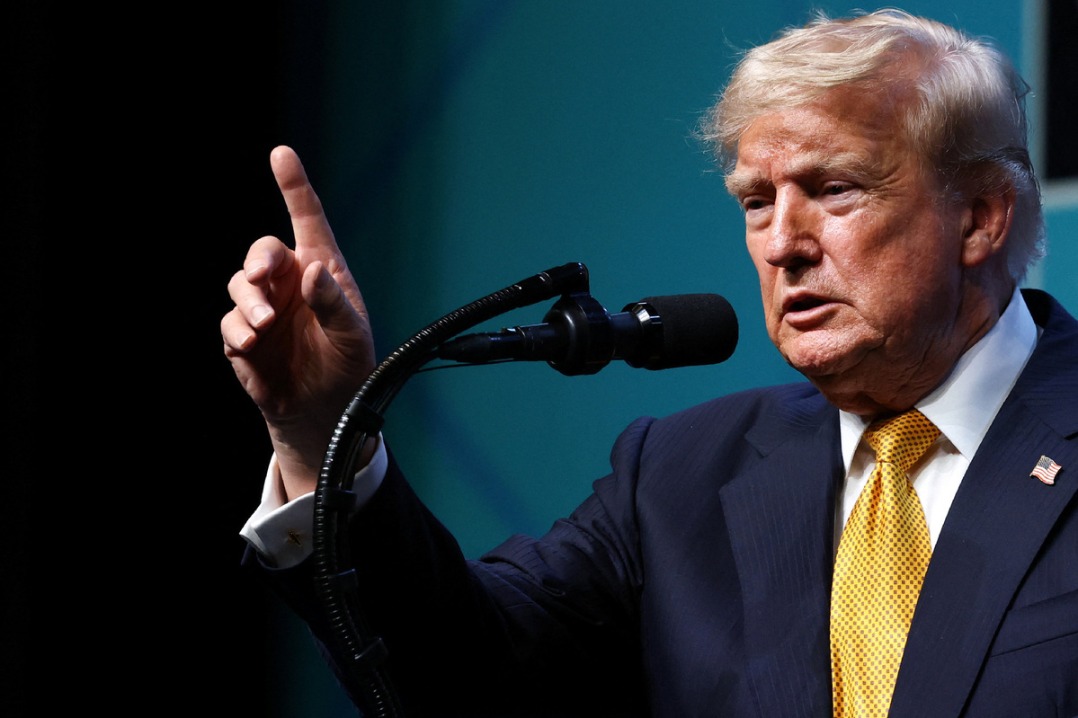
    Since U.S. President Donald Trump launched military operations against Iran in late February, conflicting and constantly shifting timelines for the conflict’s conclusion from the White House and senior administration officials have drawn widespread attention and scrutiny. In his first primetime national televised address dedicated to the war on Wednesday, Trump offered the latest update, claiming U.S. forces are on track to meet their stated military objectives “shortly, very shortly.”

    In the address, Trump sought to frame the ongoing conflict as relatively brief compared to protracted historical U.S. engagements like World War II and the Vietnam War, before laying out a new 2 to 3 week timeline for decisive action. “Over the next two to three weeks, we’re going to bring them back to the Stone Ages, where they belong,” he told the American public.

    This shifting forecast is far from an isolated incident. Since Trump first announced the start of operations on February 28, when he said the campaign would continue “as long as necessary to achieve our objective,” the president has repeatedly flipped between contradictory claims: that the U.S. has already secured victory, and that the campaign will drag on for somewhere between two and six weeks. The six-week mark since the operation launched will fall on April 11.

    Internal inconsistencies across the administration have only added to the confusion. Just over a month ago, Defense Secretary Pete Hegseth told CBS News’ *60 Minutes* that the military action taken up to that point was “only just the beginning,” a statement the Department of Defense echoed in a social media post less than 24 hours later. Yet that same day, Trump claimed during a Florida press conference that the U.S. had already made “major strides” toward its goals, adding that “some people could say they’re pretty well complete.”

    Secretary of State Marco Rubio has struck a middle ground between the two officials. A day before Trump’s Wednesday address, he told Fox News: “We can see the finish line. It’s not today, it’s not tomorrow, but it’s coming.”

    For his part, Hegseth has defended the fluid timelines, arguing that intentional ambiguity offers tactical benefits on the battlefield. “Don’t tell your enemy what you’re willing to do or not do, and don’t tell your enemy when you’re willing to stop,” he told reporters Wednesday. “It could be any particular number, but we would never reveal precisely what it is, because our goal is to finish those objectives, and we’re well on our way.”

    Foreign policy and historical experts interviewed by the BBC note that adjusting war timelines as a conflict evolves is not unprecedented, but the frequency and scope of contradictions in the Trump administration’s messaging stands out in modern U.S. history.

    “Presidents have often offered timelines to buy time with the public during wars, and almost all of them underestimate the time,” explained Thomas Patterson, a historian at the Harvard Kennedy School. Looking back at past examples, Lyndon B. Johnson’s famous 1967 “light at the end of the tunnel” rhetoric about Vietnam failed to mask an eight-year extension of the conflict that ultimately ended Johnson’s presidency. In 1999, Bill Clinton predicted a brief NATO bombing campaign against Yugoslavia, only for the strikes to stretch on for more than two months. George W. Bush’s infamous 2003 “Mission Accomplished” speech on an aircraft carrier early in the Iraq War was followed by eight more years of U.S. troop presence in the country.

    Eric Min, a professor of conflict resolution and diplomacy at the University of California, Los Angeles, pointed out that forecasting war duration is inherently uncertain, as conflicts regularly shift in unexpected ways. Even so, he noted, the level of inconsistency across the Trump administration is unique. “The inconsistency of positions throughout the administration is pretty unique. There’s not really a historical analogue that I can think of,” Min said.

    The White House has pushed back against these criticisms, with press secretary Karoline Leavitt claiming last month that “Trump and his entire team have consistently laid out clear objectives.”

    Wednesday’s highly anticipated primetime address had already sparked widespread speculation in Washington ahead of its delivery, with many political observers expecting Trump to announce a major policy shift — either an expansion of the conflict to include ground troops, or a drawdown of operations. Instead, the address delivered only another revised timeline for the war’s end, continuing the pattern of shifting forecasts that has defined the administration’s public messaging on the Iran conflict.

  • US car buyers warm up to Chinese EVs

    US car buyers warm up to Chinese EVs

    Despite steep trade barriers that currently block Chinese-made electric vehicles from the US market, a growing share of American consumers — particularly younger car shoppers — are increasingly open to purchasing these vehicles, new industry data and on-the-ground interviews reveal.

    For years, Chinese EVs have been effectively locked out of the United States: the Biden administration imposed a punishing tariff of more than 100 percent on Chinese-made passenger vehicles under the banner of protecting domestic jobs, while additional federal restrictions limit access to Chinese automotive technology on national security grounds. Even with these regulatory hurdles, shifting market conditions and viral social media coverage have sparked rising curiosity about what Chinese EVs have to offer.

    Much of this growing interest stems from three key factors: the attractive pricing, innovative design and advanced tech features of Chinese EVs, positive viral reviews across TikTok and YouTube, and sky-high prices for domestically available electric vehicles. Compounding this demand shift is the steady rise of US fuel costs tied to ongoing regional tensions between the US, Israel and Iran. Data from Kelley Blue Book shows the average new EV in the US carried a transaction price of $57,245 last year, putting many models out of reach for budget-conscious buyers.

    Industry analysts note that Chinese EVs hold clear competitive advantages that set them apart from Western and other Asian rivals. Bill Russo, founder and CEO of Shanghai-based automotive investment advisory firm Automobility Limited, explained that Chinese models stand out for their development speed, cost efficiency, and seamless integration of cutting-edge digital technologies. Leading Chinese brands have carved out distinct strengths in the global market: BYD leads in vertical integration and massive production scale, Geely (which owns the premium EV brand Zeekr) prioritizes global expansion, Xiaomi leverages its pre-existing digital consumer ecosystem, and NIO has built a loyal customer base through premium user experiences and after-sales services.

    “Technically, these vehicles would be fully competitive in the US market,” Russo noted. “However, geopolitical friction and regulatory barriers — from steep tariffs to national security concerns — make large-scale entry into the US a major challenge in the near term.”

    A new poll conducted by Cox Automotive between late December and early January confirms that openness to Chinese EVs breaks sharply along generational lines. The survey found that sentiment toward Chinese automotive brands is deeply divided: younger consumers already focused on EV adoption show significant willingness to buy Chinese models, while older buyers and shoppers loyal to domestic brands remain largely resistant.

    The generational gap is especially stark: 69 percent of Gen Z car shoppers (aged 14 to 29) surveyed by Cox said they would be more likely to consider purchasing a Chinese auto brand than competing options. This openness crosses age groups for some consumers, however. Sarano LaGrande, a 72-year-old New York resident, told China Daily he is eager to test a Chinese EV for its fuel savings and affordable pricing. “I’ve seen these cars all over social media, and I like the way they look,” LaGrande said. “Why shouldn’t Americans have access to them? They’re beautiful, reasonably priced, and much cheaper than most domestic models that start at $30,000 and go up from there.” Other older consumers, like 59-year-old Alabama resident Beau who drives a European-made gasoline-powered Porsche, remain skeptical and prefer to buy European or American-made vehicles.

    China’s EV industry has expanded rapidly over the past decades, backed by targeted investment and policy support, with more than 100 domestic manufacturers competing for customers at home. Today, China is the world’s largest auto producer and exporter, having already built a strong foothold for Chinese EVs in Europe and Latin America, and is now expanding into neighboring markets like Canada, which recently cut tariffs to 6.1 percent for an annual quota of 49,000 Chinese EVs. According to Reuters, Chinese automakers are also exploring factory acquisition opportunities in Mexico, which already allows imports of Chinese EVs.

    In the US, where Tesla dominates the domestic EV market, domestic auto trade groups sent a letter to the Trump administration in March urging it to maintain restrictions on Chinese automakers. Notably, BYD surpassed Tesla as the world’s top-selling EV manufacturer in 2025. Still, President Trump has signaled potential flexibility: in a January speech at the Detroit Economic Club, he hinted he would be open to allowing Chinese automakers to enter the US market within the next two years, provided they build vehicles using American factories and workers. “Let China come in,” Trump stated.

    Many American consumers share this view of open access. Tony Jackson, a 68-year-old New York resident originally from Missouri, said he would happily buy a well-made Chinese EV. “The most important thing for me is that the car is structurally safe in an accident, and has access to reliable charging infrastructure,” Jackson explained. “The US should let Chinese cars come in. If they offer good vehicles at fair prices, that’s a win for American consumers.”

    Among US car dealerships, only 15 percent currently support opening the market to Chinese auto brands, per Cox Automotive’s survey. Russo reiterated that near-term widespread availability of Chinese EVs at US dealerships remains unlikely due to existing policy constraints. “That said, if these barriers were lowered, Chinese EVs would almost certainly be well received by consumers based on their clear value proposition: high-end features at competitive price points,” he added.

  • Uncertainty shrouds World Cup security

    Uncertainty shrouds World Cup security

    With less than three months remaining until the kickoff of the 2026 FIFA World Cup — the first tournament in history to be jointly hosted by the United States, Canada, and Mexico — top U.S. officials are sounding the alarm over crippling funding delays that threaten to undermine nationwide security preparedness for the largest international sporting event held on North American soil in modern history.

    Expected to draw more than 3 million global visitors to matches spread across 11 U.S. host cities, the tournament is projected to create unprecedented strain on the nation’s transportation hubs, border control networks, and public safety infrastructure. Delivering a secure event requires seamless coordination between federal, state, and local law enforcement and regulatory agencies, a task led exclusively by the U.S. Department of Homeland Security (DHS), which oversees everything from airport passenger screening to cross-border protection and inter-agency security coordination.

    In comments reported by ABC News, Andrew Giuliani, executive director of the White House Task Force for the 2026 FIFA World Cup, emphasized that ongoing funding delays for DHS have created avoidable gaps in readiness that put the entire event at risk. “We’re here to make the case as loud as we can that, in order for us to do the best work possible, to ensure that this is going to be a safe and successful World Cup, we need to open the department and need to open it yesterday,” Giuliani stated.

    Giuliani explained that DHS’s core function is unifying security efforts across a web of specialized federal agencies, including the Transportation Security Administration (TSA), Customs and Border Protection, and the Cybersecurity and Infrastructure Security Agency. Cross-agency alignment, he noted, is non-negotiable for mitigating the unique risks that come with hosting a month-long global event watched by billions of viewers worldwide.

    Security preparations for the 2026 tournament cover two equally critical domains: physical public safety and digital network protection. Past World Cup tournaments have faced a sharp rise in cyberattacks targeting event infrastructure and fan data, and Giuliani confirmed officials are bracing for even more aggressive cyber threats during this year’s event. Funding shortfalls have also blocked progress on core operational priorities, including new staff training and full-scale joint emergency response exercises that are designed to test systems before the tournament begins. “Each day that we go without the whole department being funded, it creates more vulnerabilities,” he added.

    Independent media reviews have echoed these concerns, noting that funding constraints have already left key agencies including TSA, the Federal Emergency Management Agency, and the U.S. Coast Guard operating with limited resources during the critical planning phase. These delays risk creating unaddressed gaps in both planning and on-the-ground operational readiness as the tournament fast approaches.

    At the local level, the 11 U.S. host cities are continuing their preparations while grappling with mounting logistical and financial pressures. Municipal authorities bear responsibility for frontline security implementation — including local policing, crowd management, and emergency response — all conducted in close partnership with federal agencies. Kansas City Mayor Quinton Lucas, whose city will host multiple matches, confirmed that public safety is a top daily concern for local leaders. “I’m worried every day about public safety threats,” Lucas said.

    The unprecedented scale of the 2026 tournament is already expected to test the limits of U.S. national infrastructure, particularly airports, which are bracing for a passenger surge that could make this one of the busiest travel periods in U.S. history. Federal screening and border control operations will play a make-or-break role in balancing efficiency and security at the nation’s busiest transportation hubs.

    Beyond domestic coordination, security leaders from the three co-host nations are working to align protocols across borders, with measures including cross-border intelligence sharing, joint planning exercises, and standardized response procedures to ensure consistent security across every match venue.

    The root of the funding impasse, multiple reports confirm, is an ongoing partisan standoff in the U.S. Congress over DHS appropriations that has blocked the distribution of roughly $625 million in earmarked federal funds intended to help host cities cover their additional security costs.

    Compounding these domestic challenges, broader global instability has added a new layer of security risk. Ongoing geopolitical tensions, including the ongoing conflict in the Middle East, have increased concerns over potential threats to public safety during the high-profile tournament, officials and analysts confirm.

    This article includes contributions from multiple U.S. federal agencies.

  • New York City shows off new cars, concepts

    New York City shows off new cars, concepts

    The 2026 New York International Auto Show kicked off Wednesday at Manhattan’s Javits Center, bringing together automakers from every corner of the globe to unveil their latest cutting-edge vehicle models and concept designs, with electric vehicle innovation taking center stage. The 10-day event, open to the public through April 12, opens against a tense backdrop for the U.S. electric vehicle market: overall EV sales have slumped and consumer demand remains stagnant, following the federal government’s elimination of the popular $7,500 electric vehicle tax credit at the end of last year.

    Even as U.S. industry stakeholders work to navigate these ongoing headwinds, a growing consensus has emerged among show attendees: Chinese electric vehicle manufacturers have cemented their growing global influence and are reshaping the future of the international auto sector.

    Many industry leaders argued that opening the U.S. market to Chinese EV brands would foster healthy, productive competition that pushes all manufacturers to innovate. Jens Sverdrup, chairman and chief commercial officer of Denmark-based luxury hypercar maker Zenvo Automotive, shared his positive views of Chinese EV brands in an interview with China Daily on the show floor.

    “Competition is good. We see plenty of Chinese brands in Europe and they’re really, really good,” Sverdrup said. “A brand like BYD, every time I see one, I’m impressed by the build, quality, you know, they drive well — they definitely have a sort of a head start in terms of efficiency and production.”

    Sverdrup was at the show showcasing Zenvo’s latest offering: the $3 million Aurora, a light blue V12 hybrid hypercar crafted with the brand’s signature Danish design precision. For the small Danish manufacturer, overseas markets are the backbone of its business: at least 60 percent of all Zenvo vehicles are sold to customers in the U.S. (primarily in California), with the remainder going to buyers across Europe and Asia.

    While Sverdrup highlighted the unique appeal of Zenvo’s handcrafted luxury vehicles, he emphasized that Chinese-made EVs have earned their widespread global popularity through consistent quality and innovation. Instead of erecting trade barriers to block Chinese EVs, he argued, global markets should embrace competition to drive progress. “Instead of protecting ourselves, we should just not get in the way of progress, and we should actually embrace the Chinese, and just try to do as good or better, right? Competition is good. And they are great cars, you know, like there’s nothing wrong with any of them. I’m thoroughly impressed,” he added.

    The event also included a panel of U.S. auto industry experts, who called on federal policymakers in Washington to implement more consistent, stable regulatory and policy frameworks to support long-term growth of the domestic auto sector. Multiple attendees echoed a shared sentiment: the entire global automotive ecosystem benefits from open, inclusive participation from all major manufacturing nations.

    Trade policy for Chinese EVs remains in flux in the U.S. In 2024, former President Joe Biden implemented a sharp tariff hike, raising duties on imported Chinese electric vehicles to 100 percent in a move widely interpreted as a preemptive measure to block Chinese brands from expanding into the U.S. market. Even before the tariff increase, Chinese EVs held only a tiny share of the U.S. market, but the higher duties, paired with new federal restrictions on connected vehicle technology, have effectively eliminated any near-term path for major Chinese market entry.

    Current U.S. President Donald Trump has signaled a potential shift in policy, saying in a January speech at the Detroit Economic Club that he would allow Chinese automakers to access the U.S. market over the next two years, provided they build vehicles in U.S. factories using American labor.

    Alongside the discussion of global EV policy, major global automakers used the New York show to celebrate milestones and debut new offerings. U.S.-based Ford Motor Company marked three decades of its popular full-size Expedition SUV with a special 30th anniversary limited-edition 2027 model, featuring a unique tricolor iridescent paint originally developed for a Mustang performance variant. Since the Expedition first launched in 1996, Ford has sold nearly 3 million units of the full-size SUV globally. Mike Levine, Ford’s North America product communications director, noted that China remains a critical overseas market for the automaker, which operates Ford China with headquarters in Shanghai.

    South Korean automaker Hyundai, which is celebrating 40 years of operations in the U.S. market, used the show to unveil its new Boulder Concept, a rugged off-road SUV designed for outdoor enthusiasts. Jose Munoz, Hyundai’s president and CEO, emphasized that rebuilding consumer confidence remains the top priority for the brand as it navigates current market headwinds.

    Beyond industry displays, the show also drew celebrity car enthusiasts: Korean-American actor Sung Kang, best known for his role as Han Lue in the *Fast & Furious* film franchise, was on hand promoting his upcoming independent film *Drifter*, a car-focused project he wrote, directed, and stars in.

  • NASA launches Artemis II crewed moon mission

    NASA launches Artemis II crewed moon mission

    CAPE CANAVERAL, Fla. — NASA has made history on Wednesday, marking the first launch of a crewed mission around the moon since the final Apollo mission more than half a century ago, when its long-awaited Artemis II lifted off from Kennedy Space Center in Florida.

    Carrying four astronauts from two nations, the 322-foot Space Launch System heavy-lift rocket roared off Launchpad 39B at 6:35 p.m. Eastern Time, carrying the Orion deep-space crew capsule atop its frame to begin a landmark 10-day lunar flyby expedition. The international crew includes three NASA astronauts — commander Reid Wiseman, pilot Victor Glover, and mission specialist Christina Koch — alongside mission specialist Jeremy Hansen from the Canadian Space Agency, who walked to the astronaut transport van for their trip to the launchpad as crowds of aerospace officials and spectators watched.

    By all initial accounts, the opening phases of the mission unfolded largely according to NASA’s pre-planned timeline. Just eight minutes after liftoff, the rocket’s core main engines completed their burn and separated from the interim cryogenic propulsion stage and the Orion capsule. By 24 minutes post-launch, all four of Orion’s extended solar array wings had fully deployed and started generating the electrical power required for the spacecraft’s deep-space operations. In the coming days, the mission team will carry out key scheduled maneuvers: a perigee-raise burn to raise Orion’s closest approach to Earth, followed by an apogee-raise burn to position the capsule for its trans-lunar journey. When complete, the crew will travel roughly 7,400 kilometers beyond the moon’s far side before heading back for an Earth splashdown.

    However, the mission encountered an early technical anomaly. Speaking at a post-launch press briefing, NASA Administrator Jared Isaacman confirmed that 51 minutes into the flight, Orion suffered a temporary partial communications outage during a planned handover between tracking satellites. The agency has not yet identified the root cause of the disruption, and engineering teams are currently reviewing telemetry data to trace the issue.

    This mission marks the first crewed flight test of NASA’s $93 billion Artemis lunar exploration program, first unveiled in 2017 with an initial goal of landing the first woman and person of color on the moon by 2024. Artemis II is designed to test and validate a wide range of critical deep-space capabilities, most notably the Orion capsule’s life support systems that will sustain crew members during long-duration deep space missions, while allowing the four-person team to practice operational procedures that will be central to future lunar landing missions. The program’s first test flight, Artemis I, was an uncrewed lunar orbiting mission completed successfully in November 2022.

    The launch of Artemis II comes after years of repeated delays driven by persistent technical setbacks. Just two months prior, in early February, a countdown dress rehearsal was halted by dangerous hydrogen fuel leaks in the Space Launch System, forcing NASA to roll the rocket back to the vehicle assembly building for repairs and conduct a second full pre-launch test. After completing that retest later that month, teams discovered a second issue with helium flow to the rocket’s upper stage — a system critical to purging engine lines and maintaining fuel tank pressure — requiring additional corrective work before launch could be cleared.

    In February, NASA released an updated timeline for the Artemis program that pushed the first crewed lunar landing from 2027 to 2028, and added a new mission to the sequence to reduce technical risk ahead of the landing. Under the revised roadmap, Artemis III will now focus on testing core mission systems in low Earth orbit in 2027, while the Artemis IV mission will carry out the first crewed lunar landing near the moon’s south pole in 2028.

  • Trump imposes 100% tariff on certain pharmaceuticals imports

    Trump imposes 100% tariff on certain pharmaceuticals imports

    In a policy announcement that sent ripples through global pharmaceutical and trade circles, former U.S. President Donald Trump enacted a sweeping new executive order Thursday that imposes a full 100 percent ad valorem tariff on imports of specific patented pharmaceutical products and their associated active ingredients. The order frames the incoming imported medications as a potential threat to U.S. national security, a justification that echoes the Trump administration’s longstanding approach to trade policy centered on domestic industrial protection. The new tariffs are scheduled to go into effect starting at 1:01 a.m. Eastern Daylight Time on July 31, 2026, with a tiered structure that adjusts rates based on companies’ domestic manufacturing plans and existing U.S. trade relationships with partner nations.

    Under the terms of the order, pharmaceutical companies that secure U.S. Secretary of Commerce approval for plans to shift production of the targeted products to onshore U.S. facilities – or those expected to finalize such plans imminently – will face a reduced 20 percent tariff in the initial phase. However, that preferential rate is temporary: the order mandates that the tariff will rise to the full 100 percent for these firms starting April 2, 2030. The policy also carves out differential rates for U.S. trade allies that have existing bilateral or regional trade agreements with the U.S. in place. Partners including Japan, the European Union, the Republic of Korea, Switzerland, and Liechtenstein will face a 15 percent tariff on the targeted imports, while the United Kingdom will see a lower 10 percent rate, reflecting its separate trade arrangement with Washington.

    Notably, a range of critical pharmaceutical products have been granted full exemption from the new tariffs at this stage. Generic drugs, biosimilars, and their related manufacturing ingredients are excluded from the measure, alongside specialized niche treatments that include nuclear medicines, plasma-derived therapies, fertility treatments, and cutting-edge cell and gene therapies. This exemption carve-out suggests the policy is primarily targeted at branded patented products, rather than disrupting access to lower-cost generic or life-saving specialized care for U.S. patients. The announcement marks a significant shift in U.S. trade policy for the pharmaceutical sector, tying import access directly to domestic production commitments and leveraging national security framing to justify steep trade barriers.

  • Trump fires Attorney General Pam Bondi

    Trump fires Attorney General Pam Bondi

    In a Thursday shakeup of the U.S. president’s cabinet, former President Donald Trump has removed Pam Bondi from her post as Attorney General, ending a tenure marked by growing friction between the two over her handling of high-profile cases and perceived lack of aggression against Trump’s political rivals.

    Trump made the announcement official via a post on his Truth Social platform, confirming Bondi’s departure and noting she would transition to a new role in the private sector, which he framed as an “important new job.” Deputy Attorney General Todd Blanche will step into the role on an interim basis while the White House weighs candidates for a permanent appointment. Among the top contenders currently under discussion is Lee Zeldin, a staunch Trump loyalist who currently leads the Environmental Protection Agency.

    The ouster follows months of mounting public and private discontent from Trump over Bondi’s performance. Trump publicly raised complaints as early as September last year, arguing Bondi had failed to move aggressively enough to prosecute leading political opponents, including former FBI Director James Comey, U.S. Representative Adam Schiff, and New York Attorney General Letitia James. After Trump’s public rebuke, the Department of Justice did move forward with charges against Comey and James, but a federal judge ultimately dismissed both cases in November.

    A core point of contention that predated the complaints about political prosecutions was Bondi’s management of public disclosures related to the Jeffrey Epstein files. Dating back to last summer, Bondi has faced sustained criticism for the mishandling of the document release, with even close Trump ally Susie Wiles acknowledging that Bondi “completely whiffed” her response to the controversy, according to a prior Politico report. Congressional Democrats have gone further, accusing Bondi of leading a deliberate cover-up that protected powerful figures connected to the case—including Trump—while endangering Epstein survivors by exposing their identifying information during the redaction process.

    In an additional unconfirmed allegation from The Daily Mail, which cited an anonymous senior Trump administration source, Trump’s decision to remove Bondi was also fueled by a belief that she tipped off Congressman Eric Swalwell, a California Democrat and vocal Trump critic who is currently running for governor of his home state, to impending FBI document releases related to a decade-old investigation into Swalwell’s past connection to Christine Fang, an alleged Chinese spy. The source claimed Bondi intervened to block the document release due to a personal friendship with Swalwell, a development that left White House leadership deeply dissatisfied.

    Democratic lawmakers have already made clear that Bondi’s ouster will not end their oversight efforts. House Oversight Committee top Democrat Robert Garcia of California announced Thursday that Bondi remains legally compelled to testify under oath before the panel, in compliance with a subpoena the committee approved last month. Garcia reiterated Democratic accusations that Bondi weaponized the Department of Justice to shield Trump and harmed Epstein survivors, adding that investigations into Bondi and other Trump administration officials will continue regardless of their departure from cabinet roles.

    Other leading congressional Democrats echoed sharp criticism of Bondi’s tenure. Washington Representative Pramila Jayapal called out Bondi’s refusal to apologize to Epstein survivors for the exposure of their identities, noting Bondi had previously dismissed calls for an apology as “getting into the gutter,” and responded to the firing with “Good riddance.” Massachusetts Senator Elizabeth Warren similarly criticized Bondi’s leadership, accusing the former attorney general of doling out corporate merger approvals as political favors and writing on social media that “Under AG Pam Bondi, the DOJ became a cesspool of corruption. Good riddance.”

    Watchdog groups have also condemned Bondi’s time at the Department of Justice. Public Citizen co-president Lisa Gilbert argued Thursday that Bondi pulled the department in a lawless, unindependent direction that damaged the integrity of the U.S. justice system. “No one can be loyal enough. No one can punish Trump’s enemies fast enough,” Gilbert said, adding that Bondi had trivialized both the Department of Justice and the sanctity of the rule of law itself.

  • Trump fires Attorney General Pam Bondi

    Trump fires Attorney General Pam Bondi

    In a surprise shake-up to his cabinet, former and current U.S. President Donald Trump announced on his social media platform Truth Social on Thursday that he has removed Pam Bondi from her position as United States Attorney General. Bondi had held the role for just 14 months before the termination.

    Trump publicly acknowledged Bondi’s loyalty to his administration in the announcement, confirming that she will transition to a new role in the private sector. Deputy Attorney General Todd Blanche has been tapped to step into the role of acting attorney general on an interim basis, while the White House has not yet announced a nominee for a permanent replacement.

    The leadership change comes after weeks of growing frustration within the Trump White House over the Department of Justice’s management of two high-profile priorities: the processing of public records related to the Jeffrey Epstein case and delayed investigative proceedings into Trump’s political opponents, multiple sources familiar with internal discussions confirm.

    This dismissal marks the second high-profile cabinet shake-up from Trump in just over a month. In March, the president terminated his Homeland Security Secretary Kristi Noem, continuing a pattern of rapid turnover among senior leadership in his second administration.

  • Why isn’t Artemis II landing on the Moon?

    Why isn’t Artemis II landing on the Moon?

    NASA’s ambitious Artemis program has sparked widespread curiosity among space enthusiasts around the globe, particularly regarding the upcoming Artemis II mission. Many following the program’s progress have posed one pressing question: if the United States targets a human lunar landing by 2028, what is the core purpose of Artemis II, which will not touch down on the Moon’s surface at all?

    To answer this question, it is critical to contextualize the phased approach of the entire Artemis initiative. Unlike the Apollo program that raced to put the first humans on the Moon half a century ago, Artemis is built as a sequential, sustainable program designed to lay long-term groundwork for lunar exploration and eventual deep space missions to Mars. Artemis I, the first uncrewed test flight completed in 2022, successfully validated the Space Launch System rocket and Orion capsule’s deep space capabilities, proving the core hardware could operate as designed in the harsh environment of cislunar space.

    Artemis II, the program’s first crewed mission, represents the next critical milestone in this step-by-step framework. Scheduled for launch no earlier than September 2025, the four-person crew will embark on a roughly 10-day mission that will loop around the Moon before returning to Earth. This journey is not intended to end with a surface landing; instead, its primary goal is to comprehensively test all life support systems, communication networks, navigation tools, and abort capabilities with humans on board, gathering real-world data that no uncrewed test can provide.

    The mission will also allow crew members to evaluate how the human body responds to the radiation exposure and microgravity conditions of deep space travel beyond low-Earth orbit, filling critical gaps in medical data that has not been updated since the final Apollo missions in the 1970s. Engineers will monitor every system’s performance during the flight to identify and resolve any unforeseen issues before committing to a landing attempt with Artemis III, currently targeted for September 2026, later pushed back to 2028 due to development delays in the human landing system and spacesuits.

    This incremental approach prioritizes crew safety above all else, a core principle that has guided NASA human spaceflight for decades. By skipping the landing on Artemis II, mission planners can focus entirely on validating the foundational capabilities that any successful lunar landing and future sustained lunar operations depend on. The data collected from Artemis II will not only inform the Artemis III landing mission but also support the long-term goal of establishing a permanent lunar outpost called Gateway, which will serve as a testing ground for technologies needed for eventual human missions to Mars.

    In the broader scope of space exploration, Artemis II holds historic significance of its own, even without a landing. It will mark the first time humans have traveled beyond low-Earth orbit since Apollo 17 in 1972, and its crew will include the first woman, first person of color, and first non-US astronaut to journey to the lunar vicinity. While the final landing goal remains targeted for 2028, Artemis II itself is a landmark step that will open a new era of human deep space exploration.

  • US steps up security for World Cup 2026

    US steps up security for World Cup 2026

    With just months remaining until the 2026 FIFA World Cup kicks off across three North American nations, United States security officials are accelerating final preparations for the historic tournament — even as they warn that unresolved federal funding gaps threaten to undermine coordinated safety readiness across dozens of federal, state and local agencies.

    The 2026 tournament, the first expanded 48-team World Cup in history and the first jointly hosted by three countries (the United States, Canada and Mexico), will kick off in June, with 11 matches slated to be held across 11 American host cities from coast to coast. Organizers project that millions of international and domestic fans will travel to venues across the region, placing unprecedented strain on the nation’s transportation networks, border control systems and public safety infrastructure. Pulling off a secure event requires constant, synchronized collaboration between federal entities, state law enforcement and local municipal authorities.

    Top organizers have underscored that the U.S. Department of Homeland Security (DHS) serves as the central coordinating body for all national security efforts for the tournament. DHS oversees critical functions ranging from airport passenger screening and cross-border entry management to interagency alignment for large-scale event risk mitigation. Its portfolio includes supporting work from the Transportation Security Administration (TSA), Customs and Border Protection, and the Cybersecurity and Infrastructure Security Agency, all of which play core roles in safeguarding the tournament.

    However, Andrew Giuliani, executive director of the White House Task Force for the 2026 FIFA World Cup, has sounded an urgent alarm about funding delays that have hampered DHS’ preparation work. In comments obtained by ABC News, Giuliani emphasized that full, immediate funding for DHS is non-negotiable to deliver a safe, successful tournament. “We’re here to make the case as loud as we can that, in order for us to do the best work possible, to ensure that this is going to be a safe and successful World Cup, we need to open the department and need it open yesterday,” Giuliani stated.

    Security planning for the 2026 World Cup addresses two distinct, equally critical risk vectors: physical public safety and digital cybersecurity. Officials confirmed that past iterations of the global tournament have faced massive volumes of malicious cyber activity, and 2026 planning accounts for the likelihood of even more frequent and sophisticated attacks this year.

    Beyond digital defense, operational readiness also depends on robust staffing and regular joint training exercises. Giuliani warned that without full, consistent funding, DHS cannot adequately train new personnel or run the large-scale interagency drills required to test emergency response systems ahead of kickoff. “Each day that we go without the whole department being funded, it creates more vulnerabilities,” he added.

    Independent reporting from multiple outlets, including commentary cited by Fox News, has corroborated these concerns, noting that funding constraints have already slowed preparations across several key agencies. TSA, the Federal Emergency Management Agency and the U.S. Coast Guard have all been forced to operate with limited resources during the critical planning phase, creating potential gaps in security coverage and operational readiness that could grow as the tournament approaches.

    At the local level, the 11 U.S. host cities are pushing forward with on-the-ground preparations while navigating their own logistical and budget pressures. Municipal authorities bear direct responsibility for frontline security implementation, including neighborhood policing, crowd management at venues, and on-site emergency response, all coordinated closely with federal partners. Kansas City Mayor Quinton Lucas, whose city will host World Cup matches, echoed widespread concern, noting that public safety is a top priority amid the expected flood of visitors. “I’m worried every day about public safety threats,” Lucas said.

    The unprecedented scale of the 2026 tournament is set to put national infrastructure systems to the test. U.S. airports, in particular, are bracing for a historic surge in passenger traffic, which could make this one of the busiest travel periods in the nation’s history. Federal screening and border control operations will be critical to balancing efficient fan movement with rigorous security protocols at all major transportation hubs.

    In addition to domestic coordination, U.S. security officials are working closely with Canadian and Mexican counterparts to align security protocols across all three host nations. This cross-border collaboration includes real-time intelligence sharing, joint contingency planning, and standardized response procedures to ensure consistent, effective security across every match site in North America.

    Compounding the funding challenge, a prolonged partisan standoff over DHS appropriations in Congress has held up the distribution of approximately $625 million in earmarked federal funding that was intended to help host cities cover unplanned security costs. That delay has put additional financial strain on local governments already working to stretch their budgets to accommodate the tournament.

    Security officials have also noted that broader global geopolitical instability, including ongoing conflict in the Middle East, has added an extra layer of risk assessment to tournament planning, with analysts flagging the potential for heightened public safety threats connected to global tensions.

    Despite the cascade of challenges, U.S. federal officials maintain that preparations remain on track, with ongoing focus on strengthening interagency coordination and closing readiness gaps. The White House task force has prioritized breaking down bureaucratic barriers to improve unified cross-agency response. As agencies gear up to welcome millions of football fans from every corner of the globe, Giuliani reaffirmed that timely federal funding and sustained cross-stakeholder coordination will be the deciding factors in ensuring all security measures are fully in place before the first match kicks off in June.