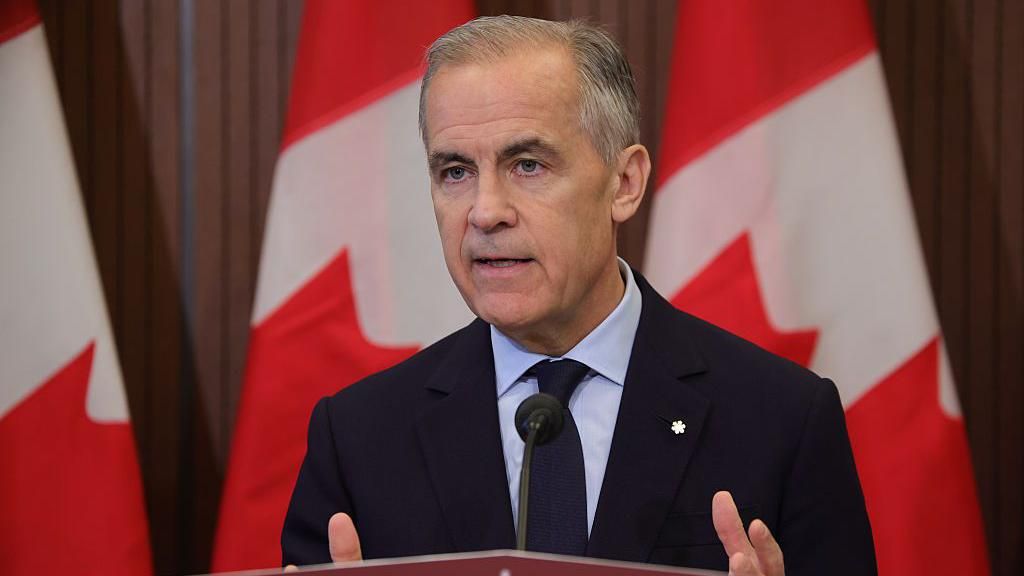
A decades-long simmering debate over Alberta’s place within Canadian confederation has erupted into a formal political battle, with Prime Minister Mark Carney drawing a stark parallel between the upcoming provincial separation referendum and the UK’s chaotic Brexit process as he pledges to lead a national campaign to preserve Canadian unity.
Carney, who served as Governor of the Bank of England throughout the 2016 Brexit upheaval, told reporters on Monday that the Alberta vote carries all the same risks of unplanned, irreversible harm that Brexit inflicted on the United Kingdom. A decade after the UK’s 2016 separation vote, Carney noted, British policymakers are still scrambling to fix damage that voters never anticipated when they cast their ballots. He warned against the common argument that backing a separation vote is just a tactic to strengthen Alberta’s bargaining hand with the federal government in Ottawa, stressing that such a gamble could trigger unintended consequences no one can roll back.
The referendum, scheduled for October 19, will ask Albertans whether they wish to remain part of Canada or move forward with a binding vote on full separation at a future date. The vote was triggered after a grassroots pro-independence movement collected more than 300,000 signatures on a separation petition earlier this year, enough to meet the formal threshold for a public vote under provincial rules. That result was thrown into question earlier, however, after Alberta’s First Nations groups successfully challenged the petition in court, arguing they had not been properly consulted on a measure that would fundamentally alter the future of their traditional lands.
Despite the court ruling quashing the original petition, Alberta Premier Danielle Smith has confirmed she will move forward with the plebiscite. Smith pointed to a counter-petition organized by pro-unity advocates that gathered more than 400,000 signatures from Albertans who support remaining in Canada, arguing that the public has a clear right to weigh in on the issue regardless of the court’s decision. Notably, Smith herself will campaign for Alberta to stay within Canada, saying that recent negotiations between the provincial government and Ottawa have produced meaningful improvements in the province’s relationship with the federal government.
Pro-independence supporters frame their push around the province’s vast natural resource wealth, arguing that Alberta’s oil and gas sector has long been sidelined by federal policymakers in Ottawa. They claim that national environmental policies have blocked critical pipeline projects and constrained the province’s ability to develop its natural resources to the benefit of its residents.
Latest public polling, however, suggests separation faces steep headwinds. A new Angus Reid poll released Monday found that nearly three out of five Albertans intend to vote to remain part of Canada. That aligns with the Brexit result, which produced a narrow 52% majority for exit, but unlike that 2016 vote, current polling shows a solid majority opposed to splitting from Canada. Looking ahead, Carney said he will dedicate significant time over the coming months to campaigning for unity, arguing that the strongest future for Alberta is as a core part of a united Canada.
“There is a very strong, positive case for Canada, a strong Alberta in a united Canada,” Carney said. “We have to be very careful about this.”