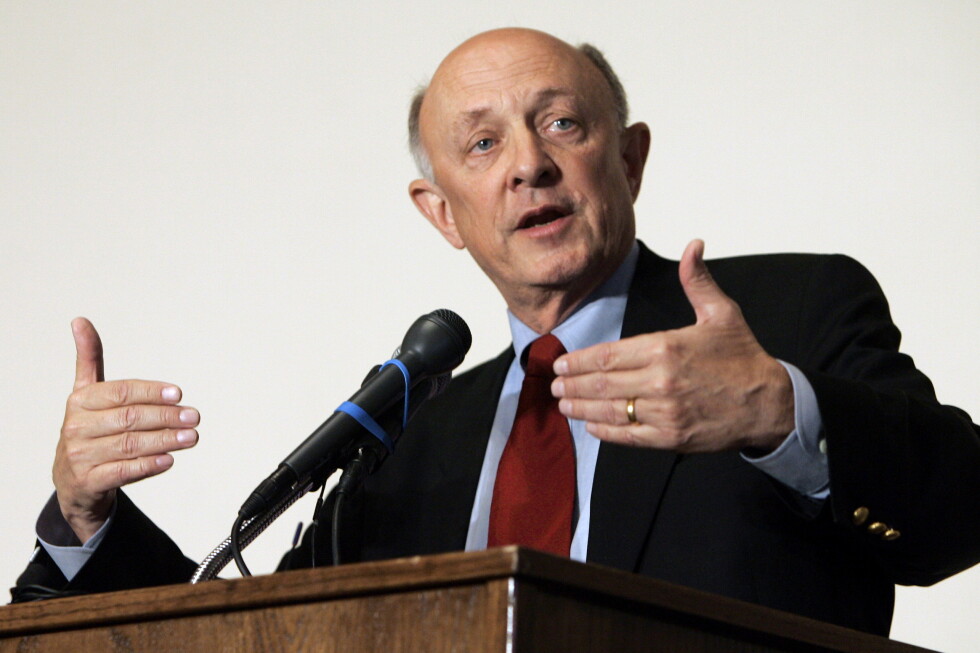
Veteran American national security strategist R. James Woolsey, who steered the Central Intelligence Agency through two years of profound upheaval after his appointment by President Bill Clinton, has passed away at the age of 84.
Multiple U.S. news outlets confirmed that Woolsey, who assumed the role of CIA director in the opening months of 1993, died Tuesday at his Washington, D.C., residence. His wife, Conchita Sarnoff Woolsey, confirmed the cause of death was a stroke, and told *The Washington Post* that his health had steadily deteriorated over recent years due to complications from Havana syndrome, the still-unexplained medical condition that has impacted dozens of U.S. diplomatic and government personnel stationed overseas.
First documented among U.S. officials posted in Havana, Cuba, in 2016, Havana syndrome is characterized by a range of persistent neurological symptoms including chronic headaches, impaired balance, cognitive difficulties, and chronic sleep disruption, which gave the condition its widely recognized name.
Woolsey’s two-year tenure at the head of the CIA ended in early 1995, a period marked by significant controversy following the exposure of longtime CIA officer Aldrich Ames, who confessed to spying for the Soviet Union and later Russia for nearly a decade. Ames, a career agency operative, admitted to accepting $2.5 million from Moscow in exchange for leaking classified U.S. intelligence that exposed scores of Western intelligence assets between 1985 and his 1994 arrest. Critics of Woolsey argued that agency leadership, including Woolsey himself, failed to impose sufficient accountability on senior supervisors who missed repeated red flags surrounding Ames’ espionage activity.
In response to the backlash, Woolsey acknowledged that no intelligence agency could ever guarantee full immunity from moles like Ames, and urged policymakers and agency leadership to avoid excessive overreaction to the security gaps Ames’ case exposed. He warned that rushed, overly harsh crackdowns on internal agency procedures carried its own risks, cautioning that overly restrictive security protocols could foster a culture of paranoia and unsubstantiated accusations that would further erode workforce morale at the agency.
Beyond the Ames scandal, Woolsey also navigated intense post-Cold War budget pressure from congressional leaders pushing for deep cuts to the CIA’s overall budget as the United States reoriented its national security priorities after the collapse of the Soviet Union.
Woolsey’s decades-long career in public service spanned multiple presidential administrations from both major U.S. political parties. Before taking the helm of the CIA, he served as Undersecretary of the Navy during Jimmy Carter’s presidency, and advised both Republican and Democratic White Houses on complex arms control negotiations. In 1989, President George H.W. Bush appointed Woolsey as a special negotiator for the stagnant conventional arms reduction talks between the NATO alliance and the Soviet-led Warsaw Pact. Just one year later, Bush and Soviet leader Mikhail Gorbachev signed the landmark Conventional Armed Forces in Europe Treaty, a landmark agreement that dramatically reduced conventional military deployments across the European continent.
Born in Tulsa, Oklahoma, on September 21, 1941, Woolsey built an impressive academic foundation for his public service career: he earned his undergraduate degree from Stanford University, went on to study as a Rhodes Scholar, and completed his legal education at Yale Law School. He launched his federal government career in 1970 as a staff member on the National Security Council, before moving to Capitol Hill to serve as general counsel for the Senate Armed Services Committee. Outside of his public service appointments, Woolsey worked as a private practice attorney at a Washington-based law firm between government stints.