标签: Europe

欧洲

  • Driver who drove into a tea party outside a London school charged over death of 2 girls

    Driver who drove into a tea party outside a London school charged over death of 2 girls

    LONDON – One year after a devastating vehicle collision that claimed the lives of two young girls outside a London primary school, UK law enforcement authorities have announced formal charges against the driver in connection with the deadly incident. The case, which shocked local communities when it unfolded in July 2023 during a end-of-term outdoor tea party, has taken a major procedural turn following a reopened investigation and the uncovering of previously unknown evidence.

    On July 6, 2023, 49-year-old Claire Freemantle was behind the wheel of a Land Rover when the vehicle veered off course, crashed through a perimeter fence, and plowed into the gathering of students and families outside Study Preparatory School, a private primary campus located in the Wimbledon district of south London. The crash killed Nuria Sajjad and Selena Lau, both 8 years old, and left multiple other attendees injured. More than a dozen people required on-site medical care for their injuries, and 10 individuals – including several current students at the school – were transported to local hospitals for further treatment.

    Following the initial investigation, Freemantle was not charged, after prosecutors concluded the crash was caused by an unexpected epileptic seizure. Freemantle herself has stated publicly that she retains no memory of the incident, but has shared that she feels “deepest sorrow” over the harm the crash caused. However, relatives of the two deceased girls pushed for further scrutiny of the case, raising questions about the original investigative process and prompting the Metropolitan Police to reopen the probe.

    After completing the reinvestigation uncovered new evidence, prosecutors confirmed on Friday that they have filed two counts of causing death by dangerous driving, plus seven additional counts of causing serious injury by dangerous driving, against Freemantle. Along with announcing the new charges, the Metropolitan Police issued a formal public apology for its handling of the initial investigation. The force has also referred its own officers to the UK’s independent police watchdog to investigate potential professional misconduct connected to the original probe.

    So far, details of the new evidence that led to the filing of charges have not been released to the public. Freemantle’s defense team has publicly questioned the decision to reverse the original declination of charges, and confirmed that their client will enter a plea of not guilty when she makes her first scheduled court appearance at Westminster Magistrates’ Court on June 16.

  • King Charles III wins praise for deft handling of Trump on his US state visit

    King Charles III wins praise for deft handling of Trump on his US state visit

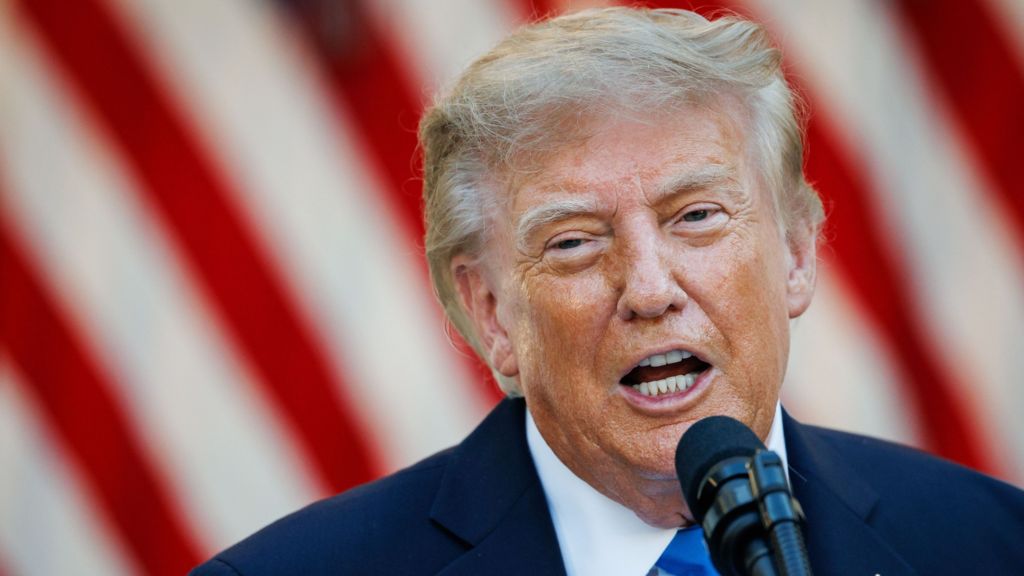
    LONDON — Following King Charles III’s high-stakes four-day state visit to the United States this week, former U.S. President Donald Trump has heaped praise on the British monarch, announcing a rollback of select tariffs on Scotch whisky as a goodwill gesture tied to the royal tour. The trip, which brought the King and Queen Camilla to Washington D.C., New York and Virginia, was crafted as a carefully calibrated diplomatic mission to patch growing rifts between the Trump administration and the U.K. government, timed to coincide with the 250th anniversary of U.S. independence.

    Against a backdrop of deep trans-Atlantic divisions over Washington’s push for military action against Iran — divisions that have left U.S. relations with Prime Minister Keir Starmer’s government severely strained — the King delivered a performance widely hailed as a masterclass in quiet diplomacy. He balanced warm overtures to his U.S. host with carefully measured, implicit criticism of Trump’s policy priorities, leaving experts debating whether the visit can deliver long-term improvement to an alliance already frayed by policy disagreements.

    Kristofer Allerfeldt, an American history professor at the University of Exeter, assessed that while the trip was unlikely to resolve long-running trans-Atlantic tensions in the long run, it had successfully reaffirmed the British monarchy’s standing at home. “He’s done us proud,” Allerfeldt noted, crediting the King’s confident performance for restoring much of the institution’s prestige.

    The mission unfolded against significant political friction even before the King arrived in the U.S. Trump has repeatedly lambasted Starmer, whom he once praised, for refusing to join U.S. military strikes on Iran, dismissing the British prime minister as unfit to bear the legacy of Winston Churchill — the World War II leader who coined the phrase “special relationship” to describe the U.K.-U.S. bond. This criticism is part of a broader rift between Trump and NATO allies, whom he has publicly labeled “cowards” and “useless” for declining to join the Iran campaign. That tension, however, has not eroded Trump’s long-standing admiration for the British monarchy, a sentiment he says was deepened during his unprecedented second state visit to the U.K. last September.

    Some British opposition lawmakers had even called for the reciprocal U.S. visit to be canceled entirely, warning that unpredictable statements or actions from Trump could leave the monarch in an awkward, embarrassing position. In the end, though, the four-day tour was marked by widespread warmth and very few awkward moments — with one notable exception: Trump broke with long-standing convention that private conversations with the monarch remain confidential, sharing unprompted remarks attributed to Charles during a white-tie state dinner at the White House.

    In those public remarks Tuesday, Trump claimed Charles “agrees with me, even more than I do” that Iran must never be permitted to acquire nuclear weapons, and added that “if that were up to him,” the King “would have followed the suggestions we made with respect to Ukraine.” Buckingham Palace responded calmly to the disclosure, noting only that “the king is naturally mindful of his government’s longstanding and well-known position on the prevention of nuclear proliferation.”

    Publicly, the King left no ambiguity about his policy priorities — and the differences between his position and that of the Trump administration. In the centerpiece address of his visit, a speech to a joint session of the U.S. Congress, Charles stressed the need for “unyielding resolve” in supporting Ukraine’s defense against Russian invasion, a sharp implicit rebuke of Trump’s “America First” agenda that has cast doubt on long-term U.S. support for Kyiv. The speech was packed with subtle, regal pushback on Trump administration priorities: the King reaffirmed the indispensable role of NATO, emphasized the critical value of checks on executive power, highlighted the urgent threat of climate change, and celebrated the strength of “vibrant, diverse and free societies.” He also referenced his own service in the Royal Navy, a branch of the British military that Trump has previously disparaged.

    Historian Anthony Seldon told *The Guardian* that the King could not have struck a better balance in his remarks. “It’s difficult to imagine he could have gone much further in what he said and what he didn’t say,” Seldon said. “He judged it incredibly well: very brave, very smart, very clever.”

    Allerfeldt pointed to the unusual cross-partisan reception the speech received, with multiple standing ovations from both Democratic and Republican lawmakers. “Apart from the section on the natural world and the environment, both Republicans and Democrats stood up and applauded,” he noted. In a lighter moment at the White House state dinner, the King even won laughs from the crowd with a self-deprecating joke about British troops burning down the White House during the 1812 war.

    Organizers judged the trip a notable success even with the lingering shadow of Prince Andrew, the King’s younger brother who has been stripped of his royal titles, exiled from public royal life, and is currently under investigation over his long-standing ties to disgraced convicted sex offender Jeffrey Epstein. Andrew has repeatedly denied any wrongdoing connected to Epstein’s crimes. Victims of Epstein had publicly called on the King to meet with them during the visit; while the King did not hold a formal meeting, he referenced their experience indirectly in his congressional speech, noting the need to “support victims of some of the ills that, so tragically, exist in both our societies today.” Andrew Lownie, author of the Andrew biography *Entitled*, called the address “the best defense of the monarchy in years.”

    Shortly after the royal couple departed the U.S. to return to the U.K., Trump made the surprise announcement that he would lift select tariffs on imported Scotch whisky, framing the move as a tribute “in honor of the King and Queen of the United Kingdom.” Buckingham Palace welcomed the decision, saying in a statement that the King “sends his sincere gratitude for a decision that will make an important difference to the British whisky industry and the livelihoods it supports.”

    Trump doubled down on his praise for the monarch in an interview with Sky News after the visit, calling Charles “a phenomenal representative” for the United Kingdom, before returning to his familiar criticism of Starmer. “Your prime minister has to learn to deal the way he deals, and he’ll do a lot better,” Trump told the outlet.

  • Ukraine says a strike hit Tuapse oil terminal, the fourth attack on the region in 2 weeks

    Ukraine says a strike hit Tuapse oil terminal, the fourth attack on the region in 2 weeks

    In a sharp escalation of cross-border military strikes amid the ongoing Russia-Ukraine conflict, Ukrainian forces have carried out a new attack on an oil terminal located in Tuapse, a Russian city on the Black Sea coast, Ukraine’s General Staff confirmed Friday. This strike marks the fourth assault on Russian oil infrastructure in the Black Sea region in just over two weeks.

    Ukraine’s top military body confirmed that explosions and a large fire broke out at the terminal site following the strike. Russian local authorities clarified that the blaze was triggered by an incoming Ukrainian drone, and noted that no fatalities or injuries have been reported from the incident.

    Records of repeated attacks show this same Tuapse oil facility was targeted three times earlier this month, on April 16, April 20, and April 28. In a coincidence that underscores the pace of strikes in the region, Veniamin Kondratyev, the governor of Russia’s Krasnodar Krai which administers Tuapse, announced just 24 hours before Friday’s strike that crews had fully extinguished a fire at the city’s oil refinery from a previous attack.

    The strike on Russian infrastructure came as Russian forces launched a wave of large-scale drone attacks across multiple regions of Ukraine Friday, causing civilian casualties and widespread damage to public infrastructure.

    Serhii Nadal, mayor of Ternopil, a major city in western Ukraine, reported that Russia launched more than 50 drones at the city. Strikes hit local industrial sites and key public infrastructure, leaving at least 10 people wounded and cutting power to multiple residential neighborhoods, Nadal said.

    In southern Ukraine’s Odesa region, overnight Russian drone strikes caused damage to two multi-story residential apartment buildings and local port infrastructure, local emergency management officials confirmed. Ukraine’s State Emergency Service reported that one apartment in a 16-story residential building was completely destroyed by the strike, and the building’s roof caught fire. In a second nearby high-rise, flames engulfed the entire 12th floor.

    Ukrainian President Volodymyr Zelenskyy wrote in a Telegram post Friday that the Odesa strikes left at least five people injured. He added that damage from overnight Russian attacks was also documented in two other Ukrainian regions: the central city of Kryvyi Rih, and the northeastern Kharkiv region, where Russian strikes hit critical railway infrastructure.

    In his statement, Zelenskyy emphasized the scale of Russia’s recent aerial campaign, noting that Russian forces had carried out 210 total drone strikes against Ukraine in recent days, with roughly 140 of those strikes conducted using Iranian-made Shahed attack drones, the most commonly used loitering munition in Russia’s cross-border strikes. “Russia continues to attack our energy infrastructure, critical infrastructure, and civilian objects,” Zelenskyy wrote.

  • Georg Baselitz, German artist known for provocation and upside-down paintings, dies at 88

    Georg Baselitz, German artist known for provocation and upside-down paintings, dies at 88

    Legendary German Neo-Expressionist master Georg Baselitz, whose provocative, boundary-pushing practice and iconic inverted paintings cemented his legacy as one of contemporary art’s most transformative figures, has passed away at the age of 88. His representative gallery, Thaddaeus Ropac Gallery, confirmed the artist’s peaceful death on Thursday in a statement released on behalf of his family, though no cause of death was disclosed.

    Born Hans-Georg Kern in January 1938 in the village of Deutschbaselitz, located in eastern Germany’s Saxony region, the artist adopted the professional name Georg Baselitz in tribute to his hometown. Raised amid the total collapse of German society and landscape following World War II, he fled rising political repression in East Germany for West Germany in 1957, a move that would shape the rebellious, questioning core of his artistic identity. In a pre-85th birthday interview with German news agency dpa, Baselitz reflected on his formative experience, saying, “I was born into a destroyed order, into a destroyed landscape, into a destroyed people, into a destroyed society.”

    Baselitz’s career was defined by provocation and innovation from its earliest days. His first solo exhibition in 1963 sparked public outrage when vice squad officers seized two of his works, labeling them pornographic. For this lifelong willingness to upend convention, he was often dubbed an “artist of rage,” and he adopted “contradiction” as his personal artistic motto. By the 1960s, he earned his first major critical acclaim for his “Golden Heroes” series, which drew inspiration from fictional characters in Russian Civil War novels. The series depicted war-ravaged, broken figures in ragged uniforms, distorted with oversized hands and undersized heads, and his 1966 work *Der Hirte (The Shepherd)* quickly became an internationally celebrated staple of the series.

    In 1969, Baselitz debuted his most recognizable artistic trademark: the inverted canvas. His first upside-down work, *Der Wald auf dem Kopf (The Forest on its Head)*, flipped the natural imagery of trees on its head, a technique he would revisit throughout his decades-long career to force audiences to abandon traditional modes of seeing and engage with paint and form first. German President Frank-Walter Steinmeier summed up the innovation of this signature approach in a tribute, noting, “Georg Baselitz did not just turn his paintings upside down; he also turned our thinking routines upside down. Having experienced the destruction and suffering of the Second World War as a child, the collapse of all order forced him to question everything around him.”

    Rejecting conventional naturalistic painting, Baselitz once mused on his practice in a recent video interview: “Typical painting has never appealed to me. I actually wanted to be more of a black-and-white painter, and above all, I didn’t want to work spatially, perspectively, with shadows and light and such things that arise with the imitation of nature. I must say that throughout my life, I was not aware that I was a painter of color, even though I am constantly told that I have such wonderful colors.” He explained that his core goal as an artist was to “construct my connection to the world, to myself and to my wife,” using the most “simple and ordinary” means possible. The interview was recorded at Venice’s Giorgio Cini Foundation, which is currently running an exhibition of his “Golden Heroes” series through September 27, 2024.

    Over his 60-plus year career, Baselitz built an extraordinary body of work spanning painting, sculpture, drawing, and printmaking. Thaddaeus Ropac Gallery honored him in its statement, calling him “a titan of contemporary painting, sculpture, drawing and printmaking” and “one of the most important artists of our time,” whose work reshaped practice for generations of later artists across the global art world. His works are held in the collections of the world’s most prestigious museums, and his pieces regularly sell for millions of dollars at auction. In 2017, German police made headlines when they recovered 15 stolen Baselitz works valued at approximately 2.5 million euros (US$2.9 million). In 2023, a major retrospective titled “Naked Masters” at Vienna’s Kunsthistorisches Museum examined five decades of his career, pairing his controversial nude works — many featuring the artist and his wife Elke — alongside canonical nude paintings by old masters to draw unexpected connections across art history.

    Baselitz is survived by his wife Elke and his two sons, Daniel Blau and Anton Kern.

  • Family of ‘senior lieutenant’ in Kinahan gang write letters to court

    Family of ‘senior lieutenant’ in Kinahan gang write letters to court

    Ahead of a high-profile sentencing hearing scheduled for June 8 at Dublin’s non-jury Special Criminal Court, family members of Sean McGovern, an alleged senior leader of the internationally sanctioned Kinahan organised crime gang, have submitted personal character testimonies to the presiding judges.

    McGovern has already entered guilty pleas to two serious criminal charges brought by the state. The first charge centres on his role directing criminal organisation activities between October 2016 and December 2016 linked to the murder of Noel Kirwan. The second charge covers his direction of organised criminal activity from October 2015 to April 2017, which involved surveilling James Gately, a member of the rival Hutch gang, as part of preparations for a major planned offense.

    Since McGovern chose to plead guilty rather than proceed to a full trial, the state has presented its full body of evidence during two pre-sentencing hearings held last Monday and Friday. Senior defence counsel Michael Bowman confirmed to the court that multiple personal testimonials from McGovern’s immediate and extended family have been officially entered into the court record.

    Testimonial letters were submitted by McGovern’s mother, his partner, his partner’s father, and his uncle. In her submission, McGovern’s mother highlighted his past involvement in youth soccer, reflected on the impact of his father’s death on his life, and described her son as a dedicated, committed father to his children. McGovern’s partner’s father, who is grandfather to the couple’s two children, similarly stated that McGovern has consistently presented himself as a caring and generous parent to his kids.

    McGovern’s partner outlined the history of their relationship and detailed the ongoing state of turmoil that his criminal charges have brought to their family life. His uncle acknowledged the poor choices and decisions that led McGovern to this point, but argued that these actions do not define the whole of his character. The uncle emphasized that rehabilitation is always possible, and expressed hope that McGovern will one day be able to rejoin the community to resume his roles as a father, partner, and son.

    The court has formally recognized Noel “Duck Egg” Kirwan’s family as the primary victims in this murder case. It was also confirmed during hearings that McGovern wishes to issue a formal apology for his criminal actions.

    Prior to his extradition back to Ireland, McGovern served a period of detention in a United Arab Emirates prison, and he is currently incarcerated at Ireland’s Portlaoise Prison. A behavioural report submitted by the prison’s governor noted that McGovern has not presented any disciplinary issues during his detention, and he is actively participating in available inmate support services.

    Bowman has requested that the judges deduct the time McGovern spent in Dubai custody from his final sentence, arguing that prison conditions in the UAE are far more onerous and difficult than those in Irish correctional facilities, and that this experience should be considered as a mitigating factor.

    During the evidence presentations, the court outlined the full extent of McGovern’s role in the plot against Kirwan: prosecutors confirmed that McGovern planned, oversaw, and directed the entire operation that led to Kirwan’s murder. Forensic evidence recovered from a Kinahan cartel safe house apartment found McGovern’s fingerprints on multiple items, including a bag of Cadbury’s Buttons chocolate, a laptop, and a document containing instructions for operating a tracking device. The court also confirmed that McGovern was responsible for passing on intelligence collected from a tracker that had been installed on Kirwan’s car. McGovern has been remanded in custody and will receive his final sentence on June 8.

  • Superdry cofounder James Holder convicted of rape after a night of drinking

    Superdry cofounder James Holder convicted of rape after a night of drinking

    In a landmark ruling delivered Friday at Gloucester Crown Court, 54-year-old James Holder, the married co-founder of renowned British fashion label Superdry and father of two, has been found guilty of one count of rape. The guilty verdict came after a weeks-long trial that laid out graphic details of the May 2022 incident, while the jury acquitted Holder on a second separate charge of assault by penetration.

    According to testimony presented during the trial, the encounter unfolded after the accuser and Holder both spent an evening drinking at a bar in the Gloucestershire town of Cheltenham. After the pair left the venue, Holder followed the woman into her taxi without invitation, then accompanied her back to her private residence. The complainant told the court that Holder took a short nap at her home, and launched a sexual assault against her immediately after waking.

    The accuser testified that she repeatedly begged Holder to stop his attack through the incident, breaking down in tears as he continued his assault despite her clear protests. Throughout the trial, Holder maintained his innocence, firmly arguing that all sexual activity between the two was entirely consensual.

    Following the jury’s guilty verdict, Judge Ian Lawrie QC remanded Holder into custody immediately. He is set to receive his formal sentencing at Bristol Crown Court on May 7, leaving the fashion industry and local community reeling from the conviction of one of Britain’s most high-profile fashion entrepreneurs.

  • Israeli authorities taking 2 activists from a Gaza-bound flotilla to Israel for questioning

    Israeli authorities taking 2 activists from a Gaza-bound flotilla to Israel for questioning

    In an overnight operation between Wednesday and Thursday hundreds of kilometers from Israel and Gaza, Israeli naval forces intercepted a large humanitarian aid flotilla organized by the Global Sumud Flotilla coalition in international Mediterranean waters off the coast of Crete. The interception, which involved 22 vessels and 175 participating activists, has sparked a sharp international dispute over territorial norms, humanitarian access to blockaded Gaza, and allegations of excessive force by Israeli troops.

    Among those detained after the interception are two senior members of the flotilla’s steering committee: Saif Abukeshek, a Spanish-Swedish citizen of Palestinian descent, and Thiago Ávila, a Brazilian national. According to Israeli officials, the pair are being transferred to Israel for formal interrogation. Israeli authorities have leveled unsubstantiated claims that Abukeshek is linked to a terrorist organization, while Ávila has been labeled a suspect in unspecified illegal activity, with no supporting evidence released to the public as of Friday.

    Flotilla organizers have issued a scathing account of the Israeli operation, accusing commandos of storming participating vessels, damaging ship engines, and committing widespread abuse against detainees. In an official statement released Friday, the coalition claimed Israeli forces denied detained activists access to food and clean water, and intentionally flooded the floors where detainees were forced to sleep. When a group of activists resisted the removal of Abukeshek and Ávila, organizers say Israeli forces responded with brutal violence: participants were punched, kicked, dragged across decks with their hands bound behind their backs, and suffered serious injuries including broken noses, fractured ribs, and severe bruising from beatings. Organizers also claim gunshots were fired during the clash. In total, 34 activists holding citizenship from countries including the United States, Australia, Colombia, Italy, and Ukraine required hospital treatment for their injuries after disembarking in Crete.

    Israeli officials have defended the interception, saying early action was necessary to stop the flotilla before it could reach Israeli territorial waters, given the large number of vessels participating. Israeli Foreign Minister Gideon Saar claimed Thursday that all activists removed from the vessels were taken into custody unharmed, and authorities have not issued any formal response to the specific allegations of abuse and mistreatment. Prior to this operation, 53 vessels were part of the flotilla’s deployment, which launched earlier this month from Barcelona, Spain. Organizers note that 31 of those vessels have now reached safe international waters, and will continue their stated mission to break what they call Israel’s illegal naval blockade of Gaza.

    Diplomatic reactions to the incident have split along familiar geopolitical lines. Spanish Foreign Minister José Manuel Albares issued an immediate audio statement Friday calling for Abukeshek’s immediate and unconditional release, adding that roughly 30 other Spanish citizens who disembarked in Crete have already received consular support from the Spanish embassy in Greece. Greek authorities have confirmed they requested Israel withdraw its naval vessels from the interception area, and offered to facilitate the disembarkation and repatriation of remaining activists through diplomatic good offices. Lara Souza, Ávila’s wife, told reporters the pair’s current location remains unclear, with Brazilian officials warning that securing their release will become far more complicated if they are transferred into Israeli territory. The Brazilian Foreign Ministry has not yet responded to requests for comment from the Associated Press.

    The United States has publicly aligned with Israel in condemning the flotilla, characterizing the mission as a “pro-Hamas political stunt.” In a statement posted to the social platform X, the U.S. State Department said it expects all U.S. allies, particularly those that have endorsed former President Donald Trump’s 20-point ceasefire plan for Gaza, to take decisive action against the initiative, including denying the flotilla’s vessels access to national ports. Solidarity protests in support of the flotilla and detained activists have already broken out in major capitals across the globe, including Rome, Athens, and Istanbul.

    This is not the first time Israeli authorities have blocked the Global Sumud Flotilla’s efforts to deliver aid to Gaza. Less than a year ago, Israel intercepted an earlier mission involving roughly 50 vessels and 500 activists, including high-profile participants such as climate activist Greta Thunberg, Mandla Mandela (grandson of anti-apartheid leader Nelson Mandela), and multiple sitting lawmakers. All participants were arrested, detained, and eventually deported, including Ávila, who previously accused Israeli authorities of abusing him during detention — claims that Israeli officials have repeatedly denied.

  • What to know about the Eurovision Song Contest as it turns 70 with a Vienna extravaganza

    What to know about the Eurovision Song Contest as it turns 70 with a Vienna extravaganza

    As the Eurovision Song Contest marks its 70th anniversary this year, the iconic, glitter-fueled global musical gathering is balancing its long-running celebration of cross-cultural connection with growing political tensions ahead of its 2026 installment in Vienna, Austria. Running from May 12 to 16, this year’s event will bring 35 competing acts from across Europe and beyond to the stage, but the gathering is overshadowed by a high-profile boycott led by five nations protesting Israel’s eligibility to compete amid the ongoing Israel-Hamas war in Gaza.

    Founded in 1956 in the aftermath of World War II, Eurovision was originally conceived to test emerging live broadcast technology and rebuild continental unity across a war-scarred Europe. What began as a small contest with just seven competing nations has expanded into a global cultural phenomenon, now welcoming dozens of entries from across Europe and even non-European participants including Israel and Australia.

    Widely described as the “Olympics of pop music,” the contest has cultivated a massive global fanbase by blending campy theatricality, unapologetic pop joy, and unfiltered national pride. Last year’s installment drew a global audience of 162 million viewers, and organizers confirm fans from 75 countries have already purchased tickets for this year’s live shows at Vienna’s Wiener Stadthalle. Over its seven-decade history, Eurovision has launched the careers of some of the world’s biggest music stars, from 1974 winners ABBA to Celine Dion, who claimed victory for Switzerland in 1988, to more recent standouts including 2014 winner Conchita Wurst, 2021 champions Måneskin and 2022 winners Kalush Orchestra. Even its most famously silly entries, such as early winners “La, La, La” and “Boom Bang-a-Bang,” have become beloved parts of the contest’s quirky legacy.

    Though the contest’s official motto remains “United by Music,” politics have repeatedly intruded on its celebration in recent years. In 2022, Russia was expelled from the competition following its full-scale invasion of Ukraine, and the 2024 contest in Malmö and 2025 event in Basel both saw widespread pro-Palestinian demonstrations calling for Israel’s removal from the contest over its military campaign in Gaza and allegations of voting manipulation.

    Tensions boiled over in December 2025, when five countries – Iceland, Ireland, the Netherlands, Slovenia and Spain – announced their withdrawals from the 2026 contest after the European Broadcasting Union (EBU), which runs Eurovision, reaffirmed Israel’s eligibility to compete. Slovenia’s national broadcaster even went so far as to announce it would not broadcast this year’s contest in solidarity with the boycott. While Bulgaria, Moldova and Romania have rejoined the competition after skipping recent installments for financial or artistic reasons, the total number of 2026 participants sits at 35, down from 37 in 2025. Multiple pro-Palestinian protests are already scheduled to take place across Vienna during contest week.

    For fans focused on the music, this year’s lineup features a diverse range of acts spanning pop-opera, folk-infused dance, high-energy rock, and soulful ballads. Oddsmakers currently peg Finland’s “Liekinheitin” (“Flamethrower”), a high-octane collaboration between violinist Linda Lampenius and pop singer Pete Parkkonen, as the frontrunner to take home the trophy. Other top contenders include 17-year-old French singer Monroe’s pop-operatic ballad “Regarde!”, Denmark’s sultry jazz-tinged entry “Før Vi Går Hjem” (“Before We Go Home”), and Greece’s fan-favorite party-rap track “Ferto” (“Bring It”). Australia, a long-time enthusiastic non-European participant, has sent acclaimed star Delta Goodrem with the polished mid-tempo ballad “Eclipse,” while Cyprus’ folk-influenced dance-pop entry “Jalla” by Antigoni has already gone viral on YouTube and earned a positive nod from Eurovision experts. Israeli crooner Noam Bettan will compete with his ballad “Michelle,” while tiny San Marino’s entry “Superstar” features a surprise guest appearance from 1980s pop icon Boy George.

    Eurovision expert Paul Jordan, known professionally as Dr. Eurovision, notes that the contest has long outgrown its old reputation for formulaic cheesy pop. “There’s not a lot of cheesy pop numbers this year,” he explained. “There’s such diversity that I don’t think there is such a thing as a ‘Eurovision sound’ anymore.”

    Following longstanding tradition, 2026’s contest is hosted by 2025’s winner, Austrian singer JJ, marking the third time Vienna has hosted the event. The competition kicks off with two semi-finals on May 12 and 14, which will narrow the field to 25 finalists who will compete in the grand final on May 16, hosted by Austrian singer and business heir Victoria Swarovski and actor Michael Ostrowski. The contest will broadcast on national public broadcasters across participating countries, stream on Peacock in the United States, and air via the official Eurovision YouTube channel in many other regions.

    Voting, which combines public votes and scores from national expert juries, has been updated this year to address repeated allegations of vote rigging. The EBU has cut the maximum number of votes per purchase in half to 10 and implemented new safeguards to block suspicious or coordinated voting activity. Viewers in participating countries can vote via phone or text during the live final (though they are prohibited from voting for their home country’s act), while fans in non-participating nations including the U.S. can cast votes online via the official Eurovision voting website. After all votes are tallied, the act with the highest combined score claims the win, with the slow, dramatic reveal of scores keeping global audiences on the edge of their seats.

    The 2026 boycott has sparked new questions about Eurovision’s future, particularly at a time when many European public broadcasters face crippling funding cuts and younger audiences increasingly turn to social media for entertainment. The withdrawal of two longstanding core participants – seven-time winner Ireland and Spain, one of the five largest funding contributors to the contest – is a significant blow to the event’s stability. Still, Eurovision leadership is looking to expand globally, with the first-ever Eurovision Song Contest Asia scheduled to launch in Bangkok this November.

    Jordan remains optimistic that the 70-year-old institution can weather this latest period of tension. “At 70, Eurovision is part of our European culture,” he said. “It still gets people talking. It still brings us all together. It still gets huge viewing figures, it’s still creating hits. At a time when broadcasting is changing, people still make a date with their television set on that Saturday night.”

  • Man charged with attempted murder after stabbings of Jewish men in London

    Man charged with attempted murder after stabbings of Jewish men in London

    LONDON – British law enforcement authorities have brought attempted murder charges against a 45-year-old London man accused of stabbing two Jewish residents in a largely Jewish neighborhood of north London, an attack that has amplified already mounting anxiety across Britain’s Jewish community following a recent wave of targeted assaults on Jewish sites across the capital.

    The defendant, Essa Suleiman, a Somalia-born British citizen residing in London, faces two counts of attempted murder connected to the stabbing attack in Golders Green — an area widely recognized as the demographic and cultural hub of Britain’s Jewish population. A third additional attempted murder charge was also filed against Suleiman, linked to a separate stabbing incident at another London location that occurred earlier on the same day as the Golders Green attack, which left a third victim with minor injuries.

    Authorities confirmed that Suleiman is scheduled to make his first formal court appearance before a London judge later the same day that charges were announced. The two stabbing victims in the Golders Green attack, aged 34 and 76 respectively, both suffered serious wounds in the assault. Officials have updated that one victim has since been released from hospital care, while the second remains in medical care in stable condition.

    The latest attack comes on the heels of a series of unsolved arson attacks targeting synagogues and other Jewish community spaces across London over the preceding weeks, events that had already stoked widespread concern over rising antisemitic violence in the United Kingdom. In response to the stabbings, Prime Minister Keir Starmer announced that his newly seated government would ramp up protective security measures for British Jewish communities and made a public pledge to root out antisemitic hatred across the country. “We will do everything in our power to stamp this hatred out,” Starmer said in a public statement following the attack.

    In the wake of the assault, UK officials have raised the country’s official national terror threat level from “substantial” to “severe.” The severe designation is the second-highest on the country’s five-tier threat ranking system, indicating that intelligence assessments judge a further terror attack to be highly likely over the next six months.

    Investigators also confirmed that Suleiman was first referred to the UK government’s controversial Prevent program in 2020, a counter-extremism initiative designed to intervene and divert at-risk individuals from embracing violent extremist ideology. Law enforcement officials confirmed that Suleiman’s case file with the program was closed before the end of 2020, but declined to release any details about the nature of the original referral or the reason for closing the file.

  • EU-Mercosur trade deal takes provisional effect, boosting hopes and concerns for millions

    EU-Mercosur trade deal takes provisional effect, boosting hopes and concerns for millions

    After 25 years of grueling negotiations, the landmark trade agreement between the European Union and South American trade bloc Mercosur has entered into provisional force, marking a historic step toward creating one of the world’s largest trans-Atlantic commercial blocs – though its long-term future remains uncertain due to ongoing legal challenges. The initiative will build a combined market valued at an estimated $22 trillion, serving more than 720 million consumers across two continents. Full implementation by 2038 is projected to lift total exports from participating nations by over 10% compared to current levels. The agreement was formally signed by member states in January this year during a Mercosur leadership summit, but the path to entry into force has been fraught with political friction. European Commission President Ursula von der Leyen’s decision to enact the deal on a provisional basis, bypassing the European Parliament for immediate implementation, has drawn fierce pushback from EU lawmakers, who have brought a challenge against the move to the European Court of Justice. If the court rules in favor of the challengers, the entire agreement will be halted immediately. Ahead of the provisional entry into force, von der Leyen defended the policy in a Thursday statement, framing it as a win for multiple stakeholders across the EU. “This is good news for EU businesses of all sizes, good news for our consumers and good news for our farmers, who will gain valuable new export opportunities, with full protection for sensitive sectors,” she said. On Friday, von der Leyen is scheduled to host a virtual celebration with the heads of government of Mercosur’s four full member states: Brazil, Argentina, Uruguay, and Paraguay. In Brazil, Mercosur’s largest and most influential economy by a wide margin, President Luiz Inácio Lula da Silva – one of the deal’s most prominent backers – signed a national decree earlier this week to formally validate the agreement within Brazilian law. Lula framed the agreement as a deliberate pushback against the unilateral trade tariffs imposed by former U.S. President Donald Trump in 2023, positioning the deal as a powerful reaffirmation of multilateral global cooperation. “Nothing better than believing in the exercise of democracy, in multilateralism, and in cordial relations between nations,” Lula remarked during a celebratory ceremony in Brasilia, marking the end of a quarter-century of on-again, off-again negotiations. Speaking to the Associated Press and other international news outlets last week, Brazilian Vice President Geraldo Alckmin, who has served as one of the lead negotiators for the bloc, warned that rejecting the deal would have condemned Mercosur to economic stagnation as competitor blocs around the world advanced their own preferential trade agreements. “Staying out of this agreement would have meant falling behind, as other nations locked in better access to key global markets,” Alckmin implied. With a projected 2025 GDP of more than $2.3 trillion, Brazil accounts for the vast majority of Mercosur’s total economic output. Lia Valls, an associate researcher at Rio de Janeiro-based leading think tank Fundacao Getulio Vargas, shares Lula’s view that the deal sends a critical signal in an era of rising global unilateralism. “The EU and Mercosur are showing that it is possible for big blocs to reach a deal in this world where that multilateral system is being very weakened and where the U.S. clearly operates to do that,” Valls told the Associated Press. “It is a very positive sign.” For years, the agreement has faced fierce opposition from European farming unions and environmental advocacy groups, which led to a delay in talks last December before the deal was referred to the EU’s top judicial body. Stakeholders on both sides have high hopes for expanded trade, but also harbor lingering concerns about increased competition. South American agribusiness sectors, including beef producers, fruit growers, and mining firms, expect significant export gains to the EU market, while European automakers, pharmaceutical manufacturers, and technology companies anticipate greater access to the fast-growing consumer markets of Mercosur. That said, concerns are widespread on both sides of the Atlantic: Mercosur-based technology and advanced manufacturing firms worry they will be unable to compete with more established, efficient European competitors, while European farmers have raised alarms about downward price pressure and imports produced under weaker environmental and labor regulations than those enforced in the EU. French President Emmanuel Macron, one of the most high-profile European critics of the deal, has long pushed for stricter safeguards to prevent widespread economic disruption to EU domestic sectors, tighter environmental regulations for Mercosur exports (including strict limits on pesticide use), and enhanced customs inspections for goods entering EU ports. To address these concerns, the agreement includes built-in protections: while it will gradually phase out most tariffs and trade barriers between the two blocs, it retains binding economic safeguard clauses that allow European nations to protect sensitive domestic sectors including poultry, beef, sugar, and fruit from excessive import competition.