标签: Europe

欧洲

  • Kyiv holds a funeral for 2 young sisters killed by a Russian missile strike

    Kyiv holds a funeral for 2 young sisters killed by a Russian missile strike

    In the shadow of St. Michael’s Golden-Domed Monastery, a sacred space long used by Kyiv residents to honor fallen soldiers and prominent lives lost to Russia’s ongoing full-scale invasion, an unusual and devastating scene unfolded Tuesday. Where coffins of grown military personnel usually lie, two small white caskets stood side by side, holding the bodies of 12-year-old Liubava Yakovlieva and 17-year-old Vira Yakovlieva. The sisters were among 24 civilians killed when a Russian missile slammed into their Kyiv apartment building on May 14, trapping them under collapsed concrete. Their mother Tetiana is now the only surviving member of her family: her husband Yevhen, a Ukrainian soldier, died in combat on the front line three years prior.

    Dozens of children, the two girls’ classmates from local schools, filed through the monastery dressed in all black, leaning on one another for support as they said their final goodbyes. Buckets placed at the foot of the coffins quickly overflowed with bouquets, with more floral tributes spread across the stone floor. Photos propped on the caskets showed the blond sisters, Liubava full of childlike energy and Vira wearing her signature glasses. Grown mourners and children alike wept openly through the service; standing among the crowd were several of Yevhen’s former brothers-in-arms, who came to pay their respects to the entire fallen family.

    Before Russia launched its full-scale invasion in February 2022, Yevhen was known across his community as a gifted home cook, an enthusiastic fisherman, and a handyman who could fix almost anything for neighbors and friends. When Russian forces crossed Ukraine’s border, he immediately enlisted in the Ukrainian military, and was killed in action near the village of Dibrova in the Luhansk region in April 2023. Now, the war that took his life has reached the rest of his family, leaving his wife with no surviving kin.

    Footage captured by Current Time, a project operated by Radio Liberty, shows Tetiana speaking to rescuers in the immediate aftermath of the May 14 strike, as workers sifted through the rubble of her home searching for any sign of her daughters. “I already lost their father, my husband, a defender of Ukraine,” she told reporters at the scene. “I don’t know if they are alive or if they have already gone to be with their father. To say this is very painful tells you nothing. You cannot understand the weight unless you have felt it yourself.”

    Dmytro Koval, who taught Vira painting and drawing at a Kyiv art college, remembered the teen as an exceptional student: strong-willed, unafraid to share her unique perspective, and deeply kind to her peers. When news of her death reached the campus, the entire community was left reeling from shock. “When death comes for people you saw and talked to just yesterday, it is always very hard, unspeakably hard,” Koval said at the funeral. “We must not live on illusions, on empty dreams, on hopes for some negotiations that will fix everything, because our neighbors are not oriented toward peace.”

    Family friend Tetiana Osipova, who served alongside Yevhen in the military and accompanied his body home after his death, said 12-year-old Liubava defied expectations: she appeared small and delicate on the outside, but carried an inner strength that matched her older sister’s. Osipova added that the two girls struggled for years to process the loss of their father, and that on the day of the strike, she stood by Tetiana’s side as rescuers searched the rubble.

    Today, Osipova said, Tetiana carries a grief no parent should ever know: she is no longer a wife, and no longer a mother. But despite the unthinkable loss, her friend remains determined to find the strength to honor the memories of her husband and daughters, and to carry on their legacy. “This is an unnatural order of things, when parents bury their children,” Efrem Khomiak, the priest leading the funeral service, told the gathered crowd of mourners. “This funeral, this grief, this tragedy, it is not only your family’s. It belongs to all of Ukraine. Because we are all bound together in this war.”

  • Police say dozens of people and organizations could be charged over deadly 2017 London fire

    Police say dozens of people and organizations could be charged over deadly 2017 London fire

    LONDON – Nearly 10 years after the deadliest residential fire in modern British history claimed 72 lives at London’s Grenfell Tower, Metropolitan Police announced Tuesday that investigators will submit cases against 57 individuals and 20 organizations to public prosecutors, to review potential criminal charges over the disaster.

    According to police, all compiled evidence files will be delivered to the Crown Prosecution Service by the end of September this year, with a final charging decision scheduled for June 14, 2027 – exactly 10 years after the 2017 blaze that ripped through the 24-storey west London public housing block. For bereaved families and survivors who have waited years for accountability, any additional delay to justice would be impossible to accept.

    The 2017 disaster began when a small fourth-floor apartment kitchen fire broke out in the early hours of June 14. Instead of being contained, the fire spread rapidly up the building’s exterior, fueled by highly combustible cladding panels that had been installed during a recent renovation. The blaze tore through the entire tower in just minutes, trapping residents inside and killing 72 people – among them 18 children and multiple elderly retirees. It remains the worst fire disaster the United Kingdom has experienced since World War II.

    A damning multi-year public inquiry released its final findings in 2024, concluding that all 72 deaths were entirely preventable. The report laid out a devastating chain of failure: private manufacturing and construction companies cut corners to use cheap, non-fire-resistant cladding materials and engaged in widespread, systematic dishonesty to hide safety risks. These corporate failures were compounded by incompetent industry regulators and systemic government negligence that failed to enforce basic building safety rules, allowing the lethal cladding to be wrapped around the 25-story building full of working-class residents.

    Grenfell United, the advocacy group representing many bereaved families and survivors, said frustration has mounted after years of waiting. “We have waited almost a decade for accountability,” the group said. “No family should have to wait over 10 years for justice for their loved ones, if it comes at all.”

    Investigators confirmed that potential criminal charges under consideration include corporate gross negligence manslaughter, fraud, and breaches of UK health and safety legislation. The probe into the disaster stands as the largest and most complex criminal investigation in the Metropolitan Police’s history: officers have collected more than 165 million electronic documents, and reviewed the potential roles of 15,000 individuals and 700 different organizations connected to the tower’s design, construction and renovation.

  • Slovenia set for a right-wing government and a comeback for former Prime Minister Jansa

    Slovenia set for a right-wing government and a comeback for former Prime Minister Jansa

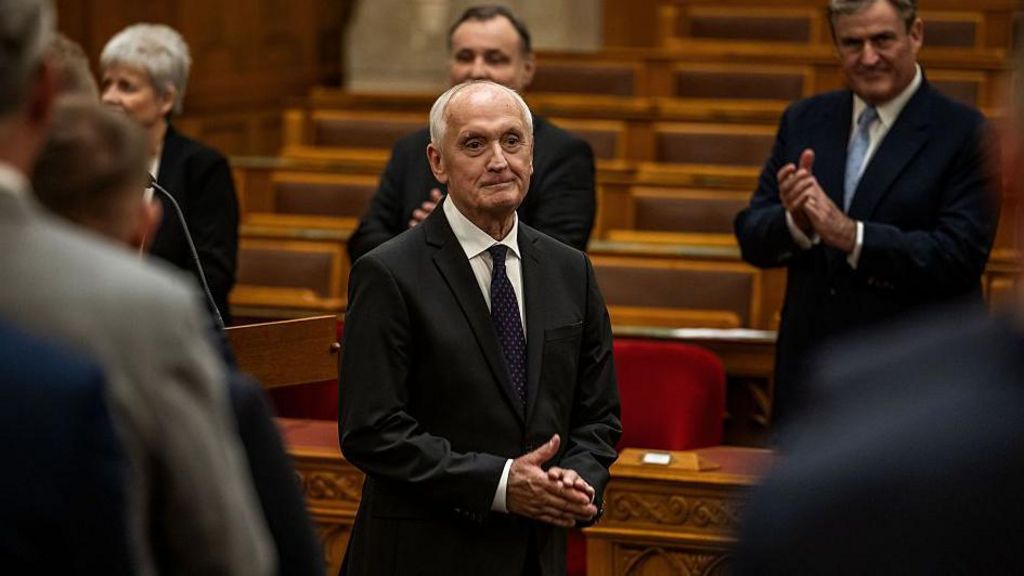
    Nearly two months after Slovenia held its closely contested parliamentary election, a path to a new government has finally emerged, with veteran right-wing politician Janez Jansa on track to retake the post of prime minister following his official nomination to the national parliament on Tuesday.

    A 67-year-old political figure who has already held the prime minister’s office three times previously, Jansa received his formal nomination from legislators of his own Slovenian Democratic Party (SDS). If confirmed by parliament, he will helm a new right-leaning coalition government that brings together multiple conservative-aligned groups, with extra backing provided by a first-term anti-establishment party that entered the legislature in the latest vote.

    As of Tuesday, parliamentary authorities had not yet announced a firm date for the final confirmation vote on Jansa’s premiership and his proposed cabinet. Slovenia’s public broadcaster RTV Slovenia has confirmed that Jansa already commands the support of 48 of the 90 total lawmakers in the country’s national assembly, putting him within reach of the backing needed to form a government.

    A successful confirmation would shift the small European Union member state sharply to the right politically, ending four years of liberal governance under outgoing Prime Minister Robert Golob. Jansa, a known admirer of former U.S. President Donald Trump and a long-time close ally of populist Hungarian Prime Minister Viktor Orbán, most recently held the prime ministership from 2020 to 2022. It was in that year’s election that Golob’s liberal Freedom Movement party unseated Jansa’s government.

    Jansa has emerged as one of the most vocal critics of Golob’s outgoing administration, taking particular aim at the liberal government’s 2024 decision to formally recognize Palestinian statehood.

    The April 22 parliamentary election left Slovenia’s two major political blocs deadlocked: Jansa’s SDS and Golob’s Freedom Movement finished with nearly identical seat shares in the assembly. After weeks of negotiations, Golob ultimately failed to cobble together a viable liberal-led coalition, clearing the way for Jansa to step in and build his own right-wing government.

    The latest electoral process has been mired in controversy from the start, with widespread allegations of foreign interference and corrupt campaign practices. The Alpine nation, which has a total voting population of just 1.7 million, remains deeply politically split between liberal and conservative factions, a divide that is expected to shape the new government’s term in office.

  • Son of Mango boss arrested over father’s fatal fall from cliff

    Son of Mango boss arrested over father’s fatal fall from cliff

    Catalan law enforcement officials have taken 43-year-old Jonathan Andic, son of deceased Mango founder Isak Andic, into custody as part of a reinvestigation into the 2024 death of the global fashion industry icon. The detainment, which took place at Andic’s residence shortly after 11 a.m. local time on Tuesday, marks a major new development in a case that was originally ruled an accidental death before being reopened amid inconsistencies in testimony.

    Isak Andic, a 71-year-old Turkish-born business magnate who built Mango into one of the world’s largest fast fashion chains, lost his life in December 2024 after falling into a ravine during a hiking trip in the Montserrat mountain range outside Barcelona. Conflicting public reports have emerged over the years about who was present during the outing, with initial accounts placing only Isak and Jonathan together on the trail, while other claims note additional family members were in the area.

    Shortly after the incident, Catalan investigators closed the case in early 2025, concluding their initial review found no evidence of criminal conduct connected to Isak’s death. But per reporting from Spanish daily newspaper La Vanguardia, authorities made the decision to reopen the probe later that year after identifying unresolved discrepancies in statements Jonathan Andic provided to investigators.

    Jonathan Andic, who joined the Mango executive team in 2005, went on to lead the brand’s popular Mango Men menswear line before ascending to the position of vice-chairman of the company’s board of directors following his father’s death. He has repeatedly maintained that he bears no responsibility for the tycoon’s death. A representative for the Andic family confirmed to Reuters that Jonathan was undergoing formal police questioning following his detainment, and emphasized the family holds unwavering confidence that he will be cleared of any wrongdoing. Following his questioning, local reports indicate Andic was scheduled to appear before a judge in a Catalan court later the same day.

    Isak Andic co-founded Mango in 1984 alongside his brother Nahman, launching the brand from its first Barcelona storefront into a global retail powerhouse. Today, the fashion chain operates nearly 3,000 retail locations across 120 countries around the world. At the time of his passing, Forbes calculated Isak Andic’s personal net worth at approximately $4.5 billion (equal to around £3.6 billion).

    Following Isak’s death in 2024, Mango Chief Executive Officer Toni Ruiz released a statement honoring the brand’s founder, noting that his passing would leave an enormous gap across the company. “All of us are, in some way, his legacy and the testimony of his achievements,” Ruiz said at the time. “It is up to us, and this is the best tribute we can make to Isak and which we will fulfil, to ensure that Mango continues to be the project that Isak aspired to and of which he would feel proud.”

  • Russia holds massive drills of its nuclear forces as Ukraine steps up its drone attacks

    Russia holds massive drills of its nuclear forces as Ukraine steps up its drone attacks

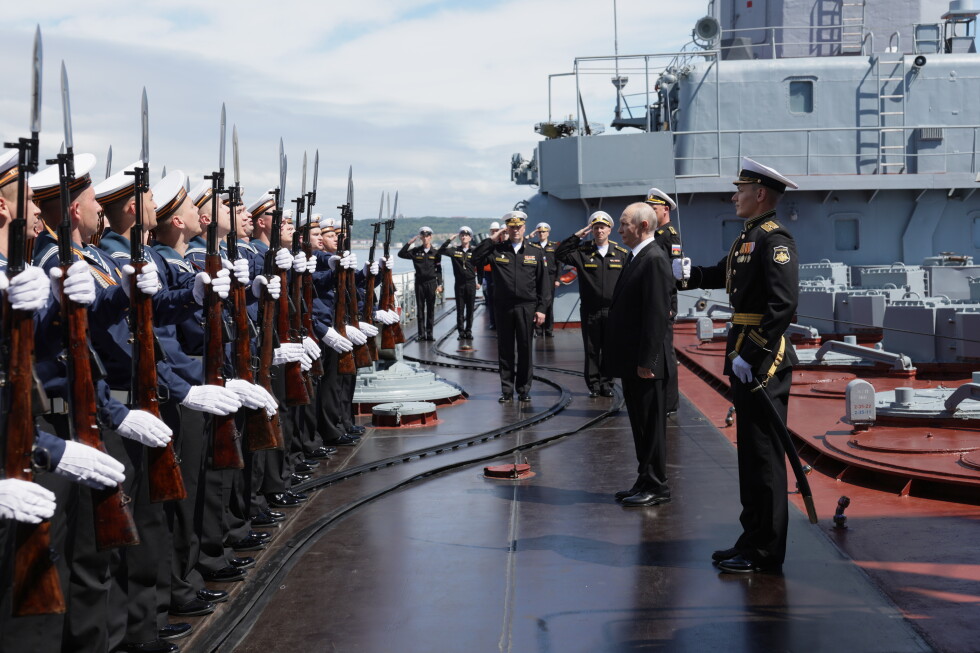
    On Tuesday, Russia initiated a sweeping, three-day set of exercises for its nuclear-capable military forces, a major show of strength that comes as Ukrainian drone attacks on Russian territory have grown dramatically in frequency and intensity in recent weeks.

    According to statements from the Russian Defense Ministry, the maneuvers are among the largest planned nuclear drills in recent years, involving a massive deployment of military hardware and personnel: 64,000 active troops, more than 200 missile launch systems, over 140 military aircraft, 73 surface warships, and 13 submarines. Eight of the participating submarines are armed with nuclear-tipped intercontinental ballistic missiles (ICBMs), putting the full scope of Russia’s sea-based nuclear deterrent on display. The drills will include live practice launches of both nuclear-capable ballistic missiles and cruise missiles, the ministry confirmed.

    The core focus of the exercises, Defense Ministry officials noted, is refining protocols for “the preparation and use of nuclear forces under the threat of aggression.” The drills also integrate joint training with Belarus, Russia’s closest western ally that already hosts Russian nuclear weapons on its territory, including the advanced new Oreshnik intermediate-range nuclear-capable missile system.

    The timing of the maneuvers is not accidental. They unfold against a backdrop of sharply escalating Ukrainian drone strikes deep inside Russian territory. Over the weekend, a large drone barrage targeted Moscow’s outlying suburbs, killing three civilians and damaging multiple residential and industrial buildings. These increasingly frequent and impactful strikes have created a growing challenge for the Kremlin, which has long attempted to frame the ongoing conflict in Ukraine as a distant operation that does not disrupt the daily lives of ordinary Russian citizens. The spread of attacks to major population centers close to the Russian capital has undermined that narrative.

    This nuclear saber-rattling aligns with a long-standing strategy Russian President Vladimir Putin has pursued since launching the full-scale invasion of Ukraine in February 2022: repeatedly drawing global attention to Russia’s massive nuclear arsenal to deter Western nations from expanding military support to Kyiv. Tuesday’s drills also kicked off on the same day that Putin began a high-profile two-day official visit to China, where he is set to reaffirm the deepening strategic partnership between Moscow and Beijing.

    Just one week before the drills, Putin publicly celebrated the successful test launch of the new Sarmat intercontinental ballistic missile, a system designed to replace aging Soviet-era ICBMs and bolster Russia’s long-range nuclear strike capacity. In 2024, Putin enacted a revised Russian nuclear doctrine that significantly lowered the threshold for a potential Russian nuclear response: the document states that any conventional attack on Russia backed by a nuclear-armed power will be treated as a combined attack on the Russian state. Analysts widely view this revision as a direct warning to the West aimed at blocking Ukraine from gaining access to longer-range Western weapons that can strike deeper into Russian territory.

    Hardline Russian commentators and military hawks have long pressured the Kremlin to take harsher retaliatory action against Ukrainian drone attacks, arguing that Russia should target production facilities in NATO member European countries that supply Ukraine with drone components. Last month, the Russian Defense Ministry took an unprecedented step, publishing a public list of European factories it says are involved in manufacturing drones and parts for the Ukrainian military. The ministry issued a clear warning that any Ukrainian drone attacks on Russian territory using European-built hardware carry the risk of “unpredictable consequences” for the countries hosting those facilities, a threat that has raised tensions between Russia and the Western alliance even further.

  • NATO jet shoots down what’s believed to be a Ukrainian drone over Estonia

    NATO jet shoots down what’s believed to be a Ukrainian drone over Estonia

    On Tuesday, a NATO air policing F-16 fighter jet operated by Romania intercepted and shot down an unidentified aerial object later confirmed to most likely be a Ukrainian drone over southern Estonia, according to Estonian national authorities, intensifying already simmering cross-border tensions tied to Ukraine’s expanding long-range drone campaign against Russia.

    Estonian Defense Minister Hanno Pevkur told the Associated Press that the decision to engage the drone was based on its observed flight path, adding that preliminary assessments indicate the unmanned aircraft was originally intended to strike a target inside Russian territory. This incident marks the latest in a growing series of accidental incursions into NATO territory by Ukrainian drones targeting Russia, a pattern Western officials broadly attribute to extensive Russian electronic jamming operations that alter the course of incoming unmanned weapons.

    In the wake of the incident, Ukraine issued a formal apology for the unintended incursion. Ukrainian Foreign Ministry spokesperson Heorhii Tykhyi announced via a post on X that Ukraine apologizes to Estonia and all Baltic allies for the accidental incident, adding that joint expert teams from Ukraine and Estonia are already developing new protocols to prevent similar events from occurring in the future. Pevkur confirmed that Estonian officials have repeatedly urged Ukraine to adjust flight trajectories for drone strikes on Russia to keep them as far from NATO territory as possible.

    Russia has seized on the incident to issue stark warnings of retaliation. The Russian Foreign Intelligence Service (SVR) claimed in a Tuesday statement that Ukraine is preparing to launch drone strikes against Russian targets from the territory of Baltic NATO member states, alleging that Ukrainian military personnel have already deployed to Latvia. The statement warned that NATO membership would not shield Baltic states from what it called “just retribution”, noting that modern intelligence systems can accurately pinpoint the origin of any drone launch.

    Latvian President Edgars Rinkēvičs immediately refuted Russia’s claims, posting on X that Moscow’s assertions about Latvia allowing third parties to use its territory or airspace for attacks on Russia are entirely false. Tensions around stray drone incursions have already had concrete political fallout in the region: just last week, the entire Latvian government collapsed after Prime Minister Krišjānis Kariņš resigned, triggered when the defense minister was forced to step down over his handling of multiple suspected Ukrainian drone incidents and his party pulled out of the ruling coalition.

    While Estonia reaffirmed its unwavering support for Ukraine’s right to defend itself against Russian invasion, it also moved quickly to clarify its position on cross-border operations. Estonian Foreign Minister Margus Tsahkna stated in an official release that Ukraine retains full legitimate right to target Russian military assets, but emphasized that Estonia has never granted permission for its airspace to be used for offensive strikes against Russia. Echoing the assessment of other Western officials, Tsahkna tied the accidental incursion directly to Russian electronic jamming efforts that divert Ukrainian drones off their intended courses.

    The downing comes amid a steady escalation of Ukraine’s long-range drone campaign against Russian infrastructure. As Ukraine’s domestic drone production capacity and technical sophistication have improved in recent months, Kyiv has ramped up strikes on key Russian energy facilities and military arms factories located hundreds of miles inside Russian territory. Just two days before the Estonia incident, Russian authorities reported that one of the largest Ukrainian drone strikes on Russian soil killed at least four people, three of them in areas surrounding Moscow, and wounded a dozen more.

    Long-range drone attacks have become a defining feature of the Russia-Ukraine war, now entering its fifth year since Russia launched its full-scale invasion of Ukraine in February 2022. For NATO member Baltic states, which have been among the most vocal supporters of Ukraine’s war effort, these accidental incursions have created a tricky diplomatic and security balancing act, stoking internal political tensions while drawing aggressive saber-rattling from Moscow.

  • Israeli forces intercept the remaining activist flotilla vessels headed for Gaza

    Israeli forces intercept the remaining activist flotilla vessels headed for Gaza

    In a major escalation of tensions over Israel’s two-decade blockade of the Gaza Strip, Israeli military forces completed the interception of all remaining vessels from the Global Sumud Flotilla, an international activist mission organized to challenge the long-running naval closure and draw attention to the catastrophic humanitarian crisis facing Gaza’s nearly 2 million residents. The interdiction, carried out in international waters hundreds of kilometers off Gaza’s Mediterranean coast, has triggered widespread international condemnation and sharp diplomatic divisions over the operation.

    The flotilla, which departed from Turkish ports last week, launched the multi-vessel mission to draw global attention to severe shortages of basic necessities in Gaza, including housing, food, and life-saving medical supplies. Israeli forces began halting flotilla vessels roughly 268 kilometers from Gaza’s coastline on Monday, when they intercepted and detained crews from approximately 41 boats off the coast of Cyprus. By Tuesday, all remaining vessels had been stopped.

    Live streaming footage broadcast on the Global Sumud Flotilla’s official website showed armed Israeli soldiers boarding detained vessels, with unarmed activists wearing life vests complying by raising their hands. Soldiers proceeded to disable and destroy cameras mounted on the boats to document the mission. Flotilla organizers allege that Israeli troops fired rubber bullets at five of the intercepted boats, causing material damage to the vessels. The incident prompted Italy’s Foreign Minister Antonio Tajani to call for an urgent investigation into Israel’s use of force during the operation.

    In the aftermath of the interceptions, the Global Sumud Flotilla confirmed that hundreds of activists from more than 40 countries are being forcibly transported by Israeli vessels to an undisclosed port. The detained cohort includes more than a dozen Irish citizens, among them the sister of Irish President Catherine Connolly. Irish Prime Minister Micheál Martin has publicly condemned the interception of civilian boats in international waters as “absolutely unacceptable.”

    The activist organization has issued urgent warnings about the well-being of detained crew members, pointing to testimonies from activists held during an earlier Israeli interception of a Gaza aid mission on April 30. Those accounts detailed repeated patterns of torture, severe physical abuse, and invasive sexual violence inflicted by Israeli forces during detention – allegations that Israeli officials have outright denied. The flotilla is demanding the immediate, unconditional release of all its detained participants, alongside the liberation of more than 9,000 Palestinian political prisoners held by Israel, and has called on global leaders to pressure Israel to meet these demands.

    International reaction to the interception has been deeply divided. Turkey and the Palestinian group Hamas have labeled the operation an act of open piracy in international waters. Italy, Spain, and Indonesia have all joined calls for Israel to immediately release all detained activists and guarantee their physical safety. In contrast, the U.S. Treasury Department has announced new sanctions against four European activists who were aboard the flotilla, with Treasury Secretary Scott Bessent characterizing the mission’s participants as “pro-terror.”

    Israeli officials have dismissed the entire flotilla initiative as “a provocation for the sake of provocation,” arguing that the vessels carried only a symbolic amount of aid and had no genuine intention of delivering humanitarian assistance to Gaza. The Israeli defense body that oversees humanitarian access to Gaza claims that sufficient aid is already entering the territory, noting that around 600 trucks of assistance cross into Gaza daily, a volume it says matches pre-war levels. However, this official account directly contradicts data published by the United Nations World Food Programme, which recorded a dramatic drop in humanitarian and commercial truck entries into Gaza during March, following the outbreak of conflict between Israel and Iran. The WFP data shows an average of only 112 trucks entered Gaza per day that month.

    One Italian activist, Daniele Gallina, avoided detention after he and six other crew members diverted their sailboat to a Cypriot port due to unplanned technical issues. In an interview with the Associated Press, Gallina emphasized that the mission’s purpose extended far beyond delivering aid. “What matters is not only the aid itself, important as it is, but the structural change it represents. It is also about challenging the collaboration of our own governments with these policies,” he said. Gallina rejected Israeli claims that the flotilla was a provocative act, noting that the entire mission was “entirely pacifist” and carried no weapons. He added that Israel’s response to the civilian mission underscores the open disregard for international law targeting peaceful humanitarian efforts. Despite the interception of the entire flotilla, Gallina said activists remain fully determined to continue their campaign “until Gaza is reached.”

    Background to the current confrontation dates back nearly 20 years. Israel imposed a naval blockade on Gaza after Hamas took control of the territory in 2007, and significantly tightened the restriction following the October 7, 2023, attacks led by Hamas on southern Israel that killed approximately 1,200 people and saw more than 250 people taken hostage. Israeli authorities justify the blockade as a necessary security measure to prevent weapons from reaching Hamas. Critics across the globe argue that the blockade amounts to unlawful collective punishment of Gaza’s entire civilian population. Egypt, which controls the only land border crossing into Gaza not administered by Israel, has also imposed severe restrictions on movement in and out of the territory.

    According to Gaza’s Ministry of Health, which is run by Hamas but staffed by medical professionals whose detailed casualty records are widely viewed as reliable by the international community, Israel’s retaliatory military offensive in Gaza has killed more than 72,700 people since the offensive began. The ministry does not publish a breakdown of casualties between civilians and combatants. The latest interception comes as global attention remains focused on efforts to secure a permanent ceasefire in Gaza, following months of devastating conflict.

    The report was filed from Nicosia, Cyprus, by correspondent Hadjicostis, with additional reporting contributions from Associated Press journalists Suzan Fraser in Ankara, Turkey, Derek Gatopoulos in Athens, Greece, Giada Zampano in Rome, and Fatima Hussein in Washington, D.C.

  • Irish leaders condemn Israel’s detention of president’s sister

    Irish leaders condemn Israel’s detention of president’s sister

    In a sharp rebuke of Israeli military action in international waters, Ireland’s top political leaders have decried the detention of 12 Irish citizens who were part of a humanitarian aid convoy bound for Gaza, calling the move illegal, unacceptable, and a violation of international law.

    The interception, carried out early Monday by Israeli forces, targeted the Global Sumud Flotilla, a 60-vessel collective organized to deliver critical aid to Palestinian civilians in Gaza amid a lingering humanitarian crisis. Flotilla organizers confirmed that Israeli commandos boarded and seized 10 of the convoy’s boats while the group was operating in international waters. Among the detained Irish citizens is Dr. Margaret Connolly, the sister of Irish President Catherine Connolly.

    Speaking publicly about the incident, Taoiseach Micheál Martin, Ireland’s head of government, emphasized that the aid mission was rooted in a legitimate effort to draw global attention to the catastrophic humanitarian situation unfolding in Gaza. “In the first instance, what happened is absolutely unacceptable and is wrong,” Martin stated, adding that participants had every right to engage in peaceful protest for the cause. The Irish government, he confirmed, will escalate the issue to the European Union to push for collective international action.

    Deputy Prime Minister Simon Harris went further, labeling Israel’s actions outright illegal. “My heart goes out to President Connolly and her family, and indeed all of the families of those detained,” Harris said, noting that the Irish government, opposition, and global observers have repeatedly condemned Israeli policy in Gaza, yet Israel has consistently ignored international condemnation. “That’s why I think it’s important that we look at the actions that can be taken,” he added.

    For her part, President Catherine Connolly — currently on a scheduled three-day official visit to the United Kingdom — described the news of her sister’s detention as “quite upsetting.” While she expressed deep pride in her sister’s commitment to the humanitarian cause, she made clear that she is consumed by worry for her safety.

    Israeli Prime Minister Benjamin Netanyahu defended the interception, framing the operation as a necessary measure to counter what he called a “malicious plan” to break the blockade Israel has imposed on Hamas, the governing group in Gaza. The Israeli foreign ministry also pushed back against the need for the flotilla, claiming that Gaza is already “flooded with aid,” asserting that more than 1.5 million tonnes of aid and thousands of tonnes of medical supplies have entered the enclave over the past seven months.

    That narrative directly contradicts recent assessments from the United Nations, which warned last week that the humanitarian situation in Gaza remains catastrophic despite an October 2024 ceasefire between Israel and Hamas. The UN report highlighted that more than 2.1 million Palestinians — the vast majority of Gaza’s total population — have been displaced from their homes, with most forced to shelter in overcrowded tents or badly damaged buildings with no access to safer alternatives. Basic services remain severely compromised: clean water access is inconsistent, waste management systems are non-functional, and public health risks linked to unsanitary conditions and pest infestations continue to grow.

    The current conflict traces its origins back to the October 7, 2023, attack led by Hamas on southern Israel, which killed approximately 1,200 people and took 251 hostages. Israel’s subsequent large-scale military campaign in Gaza has left more than 72,770 people dead in the enclave, according to Gaza’s Hamas-run Ministry of Health.

  • Channel 4 pulls episodes of ‘Married at First Sight UK’ after sexual misconduct claims

    Channel 4 pulls episodes of ‘Married at First Sight UK’ after sexual misconduct claims

    U.K. broadcaster Channel 4 has removed every episode of its popular reality dating series *Married at First Sight UK* from all its streaming and on-demand platforms, following explosive claims from three former contestants that they were sexually assaulted by their on-screen matched partners on the show.

    The allegations mark one of the most serious controversies to hit reality television in the U.K. in recent years, with both the broadcaster and national government weighing in on the gravity of the claims. A spokesperson for the British government stated Tuesday that any criminal activity or unethical behavior connected to the case must face appropriate consequences.

    First developed as a Danish original format, *Married at First Sight* has grown into a global reality franchise, with localized adaptations airing in more than a dozen countries including the United States, Australia and South Africa. The show’s core premise pairs complete strangers based on compatibility assessments from relationship experts, who then walk the participants down the aisle for a legally non-binding wedding ceremony, before requiring the new couples to immediately move in together and begin living as spouses.

    According to claims unearthed during an investigation by BBC’s flagship current affairs series *Panorama*, two female former contestants allege they were raped by their on-screen husbands, while a third contestant says she endured a non-consensual sexual act at the hands of her matched partner. The BBC has confirmed that none of the three accusers have formally filed reports with law enforcement, and all three men named in the allegations have publicly denied the claims.

    Caroline Dinenage, a Conservative lawmaker who chairs the House of Commons Culture, Media and Sport Committee, which oversees broadcasting standards in the U.K., told the BBC that the series’ premise inherently creates avoidable risk for participants. “It’s a TV show that almost expects and anticipates people that have only just met will have to become really quite intimate with each other,” Dinenage explained. “They’re expected to share a bed and a life together within minutes of meeting. It almost feels like an accident waiting to happen.”

    The British adaptation of the series is produced by independent production studio CPL, which has aired 10 full seasons on Channel 4 to date, with an 11th season already scheduled to premiere later in 2025. CPL had not issued a formal response to requests for comment on the allegations as of Tuesday.

    Channel 4 officials defended the network’s existing participant protection policies, noting that the series was produced under “some of the most comprehensive and robust welfare protocols in the industry.” These measures include mandatory criminal background checks for all contestants, a publicly shared code of conduct outlining clear behavioral standards, and daily check-ins with each participant carried out by a dedicated specialist welfare team. Even so, the network has launched a full independent review of all participant welfare standards and protocols connected to its unscripted programming.

    “I want to express my sympathy to contributors who have clearly been distressed after taking part in *Married at First Sight UK*,” said Priya Dogra, Chief Executive of Channel 4. “The well-being of our contributors is always of paramount importance.”

    The allegations are the latest in a long line of scandals that have fueled ongoing public debate across Britain about the ethical treatment of reality TV contestants and the excessive psychological and emotional pressure placed on participants. High-profile past controversies include the 2018 and 2019 suicides of two former *Love Island* contestants, followed by the 2020 death by suicide of *Love Island* host Caroline Flack, which prompted widespread calls for sweeping industry reform.

    Other major British broadcasters have also faced growing scrutiny over participant treatment in recent months. Just this year, the BBC introduced mandatory chaperones for all contestants and professional partners on its hit dance competition *Strictly Come Dancing*, following a wave of bullying and harassment allegations in 2024. In 2024, the network also fired long-time *MasterChef* hosts Gregg Wallace and John Torode after internal investigations into separate claims of inappropriate workplace behavior.

    This story includes discussion of sexual violence. If you or someone you know needs help, please call the National Sexual Assault Hotline at 1-800-656-4673 in the U.S.

  • Spanish fashion magnate’s son arrested on suspicion of involvement in his death

    Spanish fashion magnate’s son arrested on suspicion of involvement in his death

    In a major development in a high-profile case that has gripped Spanish business and legal circles, Catalan regional police have arrested Jonathan Andic, 45-year-old vice chairman of Spanish fast fashion giant Mango and eldest son of the brand’s billionaire founder Isak Andic, in connection with his father’s fatal cliff fall in late 2024.

    The incident first unfolded last December, when 71-year-old Isak Andic fell approximately 150 meters (nearly 500 feet) from a cliff while hiking in mountain terrain outside Barcelona. At the time, Jonathan Andic was the only person accompanying the retail tycoon and the sole witness to the accident. Law enforcement initially launched an inquiry into the death but closed the case within weeks, only to reopen the probe last March. By October, regional police confirmed they were re-examining the death as a suspected homicide, leading to this week’s arrest.

    A spokesperson for the Catalan regional police force Mossos d’Esquadra, who requested anonymity in line with department protocol, confirmed Tuesday that the suspect has been transferred to court facilities in Martorell, the eastern Spanish city where the investigation is currently based. The spokesperson also noted that a court-ordered nondisclosure order remains in effect for the case, barring the release of additional details about the ongoing probe.

    Beyond the legal investigation, the case casts an unexpected shadow over a landmark year for Mango, the retail empire built by Isak Andic over four decades. Born to a Turkish family, Andic relocated to Spain in his youth and opened the brand’s first boutique in Barcelona in 1984. Under his leadership, Mango expanded from a single local store to one of Europe’s most dominant fast fashion players, with a global footprint spanning 2,900 locations across 120 international markets. Most recently, the company announced a record-breaking 2025 fiscal performance, with total annual revenue climbing 11% year-over-year to nearly 3.8 billion euros (equivalent to 4.4 billion U.S. dollars).

    As heir to his father’s estate and a top executive at the firm, Jonathan Andic has held a key leadership role at Mango for years. The arrest marks an unprecedented twist in a case that has drawn widespread public attention across Spain, as the investigation proceeds under court-ordered secrecy.