标签: Europe

欧洲

  • Russia’s Putin vows retaliation after accusing Ukraine of hitting student dormitory

    Russia’s Putin vows retaliation after accusing Ukraine of hitting student dormitory

    A recent drone strike on the occupied Ukrainian town of Starobilsk has escalated cross-border tensions, with Russian authorities accusing Kyiv of targeting a civilian student dormitory and Ukrainian forces confirming the attack as a strike on an elite Russian military unit.

    According to Russian President Vladimir Putin, the overnight three-wave assault using 16 drones left six people dead, 39 wounded, and 15 others unaccounted for as of Friday. Putin emphatically rejected any suggestion that the damage to the building could have resulted from Russian air defense or electronic warfare countermeasures, claiming no military infrastructure was located near the collapsed structure in Luhansk Oblast. He has formally ordered Russia’s military leadership to draft immediate proposals for retaliation against Ukraine.

    Local officials installed by the Kremlin have released visual evidence showing the extent of the destruction, with emergency response teams combing through collapsed concrete rubble for survivors. Russian state media has also featured an interview with a 19-year-old identified as an injured student, Diana Shovkun, though no imagery has been released of the people Moscow says were killed in the incident.

    Kyiv’s account of the strike differs sharply from Moscow’s narrative. Ukraine’s military has openly acknowledged carrying out the attack, but says the target was the headquarters of Russia’s elite Rubicon drone unit. The Ukrainian statement adds that Rubicon forces have repeatedly launched attacks on Ukrainian civilian populations and infrastructure, and that Ukrainian military operations strictly follow international humanitarian law and the established customs of war.

    The Starobilsk strike follows just one day after Ukrainian President Volodymyr Zelensky announced another successful strike on Russian-occupied territory: a hit on a Federal Security Service (FSB) headquarters in Moscow-controlled southern Kherson Oblast. Zelensky claimed that the strike left roughly 100 Russian occupying personnel dead or injured. Russia’s military has not issued any official comment on the Kherson attack, though a pro-Kremlin Telegram channel has acknowledged unspecified casualties following what it described as a large-scale drone assault.

    Independent verification of either side’s claims has not been possible, as the BBC notes it cannot confirm details of the Starobilsk incident on the ground. This exchange of strikes comes amid a long-running war of words over civilian casualties that stretches back to the start of Russia’s 2022 full-scale invasion of Ukraine. Ukraine has repeatedly documented and condemned what it says are deliberate Russian strikes on civilian targets, a charge the Kremlin consistently denies. Just one week prior, Ukrainian officials reported that a Russian missile strike on a multi-story residential apartment building in Kyiv killed 24 people, including three young girls.

  • Senators from both parties push Hegseth for action on Ukraine aid

    Senators from both parties push Hegseth for action on Ukraine aid

    WASHINGTON — A cross-party coalition of U.S. senators is escalating pushback against the Department of Defense over unfulfilled congressional mandates to disburse $600 million in approved security assistance to Ukraine and three Baltic allies, delivering a formal demand letter Friday to Defense Secretary Pete Hegseth calling for the immediate release of the allocated funding. The standoff marks a deepening rift between Capitol Hill and the Trump administration, as lawmakers from both major political parties are demanding transparency and action on funding that was formally appropriated by Congress in the previous year: $400 million earmarked explicitly for Ukrainian defense capabilities, and an additional $200 million for regional defense programming in Estonia, Latvia, and Lithuania. Notably, even members of President Donald Trump’s own party have openly expressed frustration with the administration’s growing strategic disengagement from Ukraine and other Eastern European partner nations.

    In the joint letter led by top Democratic Sen. Dick Durbin and senior Republican Sen. Chuck Grassley, the lawmakers laid out the urgent case for unblocking the assistance: “Ukraine has persistently and bravely repelled a four-year Russian onslaught, but its military needs and deserves continued American support.” Four additional lawmakers — Republican Sens. Kevin Cramer and Thom Tillis, along with Democratic Sens. Michael Bennet and Catherine Cortez Masto — added their signatures to the bipartisan appeal.

    Weeks ago during a public congressional hearing, Hegseth informed lawmakers that the Ukraine funding had already been “released” and that a full spending outline would be delivered to Congress by mid-May. However, the senators confirm the Pentagon has missed its self-imposed May 15 deadline to share the mandated spending plan, prompting the formal protest.

    The coalition warned that further holdups carry severe strategic consequences, particularly amid reported plans for additional U.S. troop drawdowns in the region: “Any further delays — particularly as the Department reportedly plans troubling U.S. troops withdrawals from the region — risks our ability to adequately deter Russia.”

    This letter is the most recent public display of growing Republican discontent with the Trump administration within the Senate, coming on the heels of a week that saw the president endorse a primary challenger against incumbent Texas Sen. John Cornyn, a move that alienated dozens of sitting GOP lawmakers. In a public social media exchange with President Trump on Friday, Tillis pointed to the administration’s approach to Ukraine as one of several policies harming the Republican Party politically, specifically criticizing the White House for “Firing our very best generals and not holding Putin accountable for his systematic kidnapping, rape, torture, and murder of Ukrainian civilians.”

    Multiple Senate Republicans have also broken with Hegseth over his firing last month of Army Chief of Staff Gen. Randy George, a senior officer who had led efforts to update the Army’s battlefield doctrine to integrate modern drone warfare and had collaborated closely with Ukrainian military forces to incorporate battlefield lessons from the ongoing war.

    On the House side of Congress, a Democratic-led proposal that would impose sweeping new sanctions on Russia and authorize an additional $1 billion in military aid to Ukraine has been gaining traction among cross-party lawmakers. While the full House package is considered unlikely to pass into law in the current legislative session, it has amplified the growing pressure from Capitol Hill for sustained U.S. backing for Ukraine’s defense effort.

    Though the $400 million in blocked aid to Ukraine makes up a small share of the multi-billion dollar assistance packages Congress authorized in the immediate aftermath of Russia’s full-scale invasion, the standoff over the funding has taken on outsized symbolic importance for lawmakers as a public test of ongoing U.S. commitment to Kyiv and regional security in Eastern Europe.

  • Right-wing Slovenian politician confirmed as prime minister in shift from liberal government

    Right-wing Slovenian politician confirmed as prime minister in shift from liberal government

    After two months of political gridlock following a tightly contested parliamentary election, Slovenia’s national assembly has appointed veteran right-wing populist leader Janez Jansa to the post of prime minister, marking a sharp ideological shift for the small Alpine European Union member state previously led by a liberal administration.

    The 90-member legislative body cast 51 votes in favor of Jansa’s appointment, with 36 lawmakers voting against the nomination. The new prime minister-designate now has a 15-day window to put forward his proposed cabinet lineup, which will require a second confirmatory vote in parliament before the government can officially take office.

    The political stalemate that followed April’s election followed an almost evenly split result. Former liberal prime minister Robert Golob’s Freedom Movement secured a razor-thin plurality in the vote, but failed to cobble together a workable parliamentary majority to form a new government. This week, Jansa’s Slovenian Democratic Party broke the impasse by signing a formal coalition agreement with multiple aligned right-wing factions. The incoming government also secures outside support from the non-establishment Truth party, a group that originated as an anti-vaccination movement during the height of the COVID-19 pandemic.

    Friday’s appointment marks the fourth term as prime minister for the 67-year-old veteran politician, who is known for his open admiration of former U.S. President Donald Trump and long-standing close political alliance with Hungary’s populist former prime minister Viktor Orbán — who suffered a landslide election defeat just one month prior.

    In his post-appointment address to parliament, Jansa outlined his administration’s core priorities: revitalizing the national economy, cracking down on systemic corruption and bureaucratic red tape, and decentralizing state power to regional and local authorities. He has pledged to cut taxes for high-income earners and expand state support for private education and private healthcare providers. Jansa sharply criticized the outgoing liberal government for what he called widespread inefficiency, promising his leadership would transform Slovenia into “a country of opportunity, prosperity and justice, where each responsible citizen will feel safe and accepted.”

    Like his political ally Orbán, Jansa adopted a hardline anti-immigration stance during the 2015 European migrant crisis, and during his 2020-2022 previous term as prime minister, he faced repeated accusations of undermining independent democratic institutions and restricting press freedom. Those allegations sparked large-scale public protests across Slovenia at the time, and triggered formal oversight scrutiny from EU institutional bodies.

    Outgoing prime minister Golob used his address to parliament to issue a stark warning about Jansa’s leadership, framing the right-wing leader as “the greatest threat to Slovenia’s sovereignty and democracy.” Golob also claimed Jansa had previously threatened to have him arrested, arguing that Jansa’s vision of democracy “is that anyone who dares speak a word against you deserves only the worst.”

    Beyond domestic policy, Jansa is a vocal supporter of Israel, and has been a prominent critic of the outgoing Golob administration’s 2024 decision to formally recognize a Palestinian state. The April parliamentary election that set this political process in motion was marred by widespread allegations of foreign interference and campaign corruption, leaving the nation of roughly 2 million people deeply ideologically divided between liberal and conservative political blocs.

  • An all-women Senate delegation is heading to the Arctic to reassure US allies

    An all-women Senate delegation is heading to the Arctic to reassure US allies

    In a historic departure from traditional congressional diplomatic missions, an all-woman, evenly split bipartisan delegation of U.S. senators is set to leave Washington this week for a multi-stop tour of Arctic nations, aimed at shoring up confidence among American allies at a moment of shifting regional policy under the Trump administration.

    Led by Alaska’s Republican Senator Lisa Murkowski and Democratic Senator Jeanne Shaheen, the top Democratic member of the Senate Foreign Relations Committee, every member of the delegation—from the eight sitting senators to supporting staff and military liaison officers—will be women. The rare composition of the trip sets it apart from past congressional diplomatic visits, and the leaders say it brings unique advantages to diplomatic outreach in the strategically vital region.

    Over the course of the tour, the group will conduct official diplomatic meetings with government leaders across four Arctic and sub-Arctic jurisdictions: Canada, Greenland (an autonomous Danish territory), Norway’s remote Svalbard archipelago, and Iceland. On Svalbard, one of the northernmost permanently inhabited regions on the planet, the delegation will require armed escorts to avoid dangerous encounters with polar bears during their visit.

    The trip emerged directly from the two leaders’ longstanding work to stabilize U.S. alliance networks in northern Europe and North America, after the Trump administration adopted an aggressive, unilateral approach to Arctic policy that has raised anxiety among regional partners. Just this week, the Pentagon announced it would pause U.S. participation in a joint U.S.-Canada continental defense board that has operated continuously since World War II—a move Murkowski and Shaheen have criticized as misaligned with U.S. strategic interests in the fast-changing Arctic.

    Murkowski and Shaheen argue that the Arctic has grown dramatically in strategic importance in recent years, presenting both unique security and environmental challenges that demand close collaboration with regional allies. “We will reassure our allies that we recognize and appreciate the importance of our allies and partners in the Arctic as in so many other areas,” Shaheen told the Associated Press ahead of the trip, noting that the delegation will also explore new avenues for Congress to deepen bilateral and multilateral cooperation in the region after the visit.

    Alongside diplomatic talks, the delegation has planned a series of site visits designed to give members first-hand insight into the region’s most pressing challenges. The senators will meet with Indigenous communities that have inhabited Arctic lands for millennia, gaining on-the-ground perspective of how accelerating climate change is reshaping daily life and ecosystems. They will also observe military operations in the harsh Arctic climate, learning why remote Arctic outposts require specialized infrastructure—from climate-controlled airplane hangars to overwinter supply drops—that differs dramatically from military facilities in lower latitudes.

    Geopolitical competition in the Arctic has intensified in recent years, as climate change melts the region’s thick sea ice, opening up new international shipping lanes including the long-sought Northwest Passage, and unlocking access to trillions of dollars in untapped mineral resources. China and Russia have both expanded their military and economic activity in the region in recent years, prompting NATO to launch a series of joint military exercises to strengthen collective cooperation in the High North. The region also hosts a network of undersea communications cables that carry global data traffic, adding another layer of strategic importance to Arctic security.

    Beyond the core strategic goals of the trip, Murkowski says she hopes the first-hand exposure to the Arctic’s unique landscape and communities will leave the delegation inspired to prioritize Arctic policy on Capitol Hill. This is not the first time Murkowski and Shaheen have collaborated to defend Arctic alliances: when Trump publicly suggested the U.S. could purchase Greenland earlier the same year, the pair introduced legislation to block any U.S. military action against the NATO-aligned territory, and have pushed to add language to annual defense policy bills that would prevent the Trump administration from withdrawing security commitments to NATO allies.

    The delegation’s all-woman composition is not a gimmick, Shaheen argues, but a deliberate choice that brings tangible benefits to diplomatic engagement. Research consistently shows that agreements negotiated with women at the table have higher rates of long-term implementation, and that greater female representation in government correlates with more stable societies and greater public investment in community infrastructure, she noted. For many of the nations the delegation will visit, high female political representation is already the norm: Iceland’s parliament, for example, counts women among 46% of its members, ranking it among the top countries globally for gender parity in legislative politics. “There are very real reasons why we need to make sure that women are at the table,” Shaheen added.

  • Blaze tears through Donegal warehouse

    Blaze tears through Donegal warehouse

    A devastating out-of-control fire has swept through a commercial warehouse in Donegal Town, destroying the premises of long-standing local family enterprise Cherrymore Kitchens & Bedrooms. Emergency response teams rushed to the scene at the height of the blaze, mobilizing a total of 58 firefighters to contain the spread of the inferno and prevent it from extending to surrounding residential and commercial properties. The large size of the warehouse and the combustible construction and inventory materials on site turned the fire into a major operation, requiring multiple fire crews from across the region to coordinate their response. As of initial reports, no casualties have been confirmed, but the business, which has served the local community for years with custom kitchen and bedroom solutions, has suffered extensive damage to its facility and stock. Local residents have expressed shock at the incident, with many already starting to organize support for the family behind the brand as they begin to assess the damage and plan their next steps. Investigators are expected to launch a full probe into the cause of the blaze in the coming days.

  • Sabalenka cuts media short as French Open players protest

    Sabalenka cuts media short as French Open players protest

    Ahead of the 2025 French Open, elite tennis players have launched a coordinated, limited protest to draw attention to a years-long disagreement with Grand Slam organizers over fairer revenue sharing, improved player welfare, and greater decision-making input.

    The protest centers on a deliberate 15-minute cap on all pre-tournament media appearances, a symbolic choice: the 15% of total event revenue that the French Open currently allocates to player prize money. World No. 1 Aryna Sabalenka, one of the most vocal leaders of the player movement, cut her news conference short after hitting the 15-minute limit, becoming the most high-profile face of the industrial-style work-to-rule action.

    Sabalenka, a 28-year-old Belarusian star who has previously warned that players could boycott a Grand Slam over the dispute in the future, completed a five-minute on-camera interview with the host broadcaster before wrapping her meeting with written media after 10 minutes, ending the English-language segment early to reserve remaining time for journalists from her home country. “We just wanted to make our point and we are united — 15 minutes is better than zero,” Sabalenka told reporters, adding that she retained deep respect for the media while pushing for structural change.

    Sabalenka was far from alone in the action. Men’s world No. 1 Jannik Sinner and four-time French Open champion Iga Swiatek also joined the work-to-rule directive during Friday’s pre-tournament media day. Reigning women’s French Open champion Coco Gauff praised the unified action, a rare display of collective bargaining in an inherently individual sport. “I’m proud that we were all able to get on the same page,” the 22-year-old American said, highlighting the depth of anger and frustration across the player pool.

    Sinner argued that the protest stemmed from a fundamental lack of respect toward players, while world No. 8 Taylor Fritz added that players felt their repeated requests for change had been ignored by Grand Slam organizers. 24-time Grand Slam champion Novak Djokovic, one of the most long-standing advocates for player rights, did not participate in the planned protest — he was not involved in the pre-action discussions or planning — but he openly backed the players’ demands. “I have always been on the players’ side and tried to advocate for players’ rights and better future for players,” Djokovic said, noting that only a tiny fraction of professional tennis players actually earn a sustainable living from the sport.

    This coordinated protest marks the latest escalation in a dispute that has been simmering for more than a year. Players first held formal talks with Grand Slam governing bodies in 2024, but subsequent negotiations have failed to deliver the tangible progress the athlete community demands. Three core issues are at the heart of the disagreement: first, a larger share of tournament revenue allocated to prize money, with a greater portion of funds reaching lower-ranked players who struggle to cover travel and training costs; second, increased investment in player welfare programs including pensions, healthcare, and maternity support; and third, greater player consultation on key decisions that impact athlete workloads, such as scheduling, late-match finishes, and elongated tournament formats.

    The player coalition has called for Grand Slams to raise prize money allocations to 22% of total revenue by 2030, arguing that the current 15% figure offered by the French Open is far too low to reflect the value players bring to the sport’s commercial success. While this year’s Roland Garros prize pool increased by 9.5% year-over-year, that raise lags behind the 20% increase implemented by the 2024 US Open and the nearly 16% bump at the 2025 Australian Open.

    French Open tournament director Amelie Mauresmo said she was “very sad” to see players take collective action, but expressed confidence that the two sides can reach a mutually acceptable resolution. Mauresmo and French Tennis Federation president Gilles Moretton scheduled a meeting with Larry Scott, the former WTA chairman who serves as the players’ representative in the dispute, on the same day as the protest.

    When asked whether a full Grand Slam boycott could be the next step if talks continue to stall, participating players declined to rule out the possibility, but also refused to issue an explicit threat. “I don’t think we should really make big threats like that unless we’re fully ready to do it,” Fritz said. “But if it gets to a point where something does have to change if we are ignored, that’s a conversation to have.”

    Under current Grand Slam rules, all main-draw players are required to complete mandatory core media commitments before and during the tournament to maintain fan and media engagement. Players who skip required media appearances entirely face fines of up to £50,000, unless they have a pre-approved valid excuse. Because all participating players completed their mandatory core requirements before ending their sessions after 15 minutes, no penalties will be issued to any of the protesting athletes.

    The 2025 French Open runs from May 24 to June 7, with live coverage and commentary available across BBC Sport platforms.

  • Ukrainian protesters in Kyiv urge veto of a bill families fear could declare missing soldiers dead

    Ukrainian protesters in Kyiv urge veto of a bill families fear could declare missing soldiers dead

    On Friday, hundreds of demonstrators took to the streets of Kyiv, Ukraine’s capital, to push the Ukrainian government to reject controversial draft legislation that relatives of missing service members argue would enable premature declarations of death for their unaccounted-for loved ones. The demonstration centered on Bill No. 13646, a proposal designed to formalize the legal status of people listed as missing in the ongoing conflict. Protesters warn that specific clauses in the bill would grant Ukrainian courts the authority to rule missing military personnel legally dead before conclusive evidence of their fate is uncovered.

    “Today all the families came out so that the missing are not equated with the dead,” explained 27-year-old Mariana Yatselenko, one of the participants in the Kyiv march.

    According to Artur Dobrosierdov, Ukraine’s commissioner for missing persons, the country’s unified registry of people disappeared under extraordinary special circumstances currently lists more than 90,000 unaccounted-for individuals. The registry, which launched in May 2023, combines decades of case data covering both military personnel and civilians who went missing during active combat, as a result of Russian armed aggression, or within Russian-occupied Ukrainian territories. While the vast majority of these cases stem from Russia’s full-scale invasion that began on February 24, 2022, some unclosed investigations date back to 2014, when Russian forces seized the Crimean Peninsula and pro-Moscow separatist groups launched an insurgency in eastern Ukraine. This is not the first public demonstration against the bill, highlighting sustained and growing pressure from missing soldiers’ families on the Ukrainian government.

    Beyond the domestic protest, violence on the Ukraine-Russia front has escalated sharply in recent days, with long-range strikes targeting territory deep inside both countries. On Friday, Ukrainian President Volodymyr Zelenskyy confirmed that Ukraine had carried out its fourth strike on Russia’s Yaroslavl oil refinery, located roughly 700 kilometers (440 miles) from the Ukrainian border, as part of a sustained campaign to disrupt Russian oil infrastructure and cut off funding for Moscow’s invasion. Meanwhile, Russian officials reported that a Ukrainian drone strike on a college dormitory in occupied Starobilsk, Luhansk Oblast, left four people dead and 39 others wounded, with up to 18 people still potentially trapped under rubble. Kremlin spokesman Dmitry Peskov called the attack a “heinous crime,” and Ukraine has not issued an official response to the claim. The Russian Defense Ministry also announced Friday that it had intercepted 217 Ukrainian drones across multiple Russian regions, including the Moscow area and St. Petersburg, Russia’s second-largest city.

    On the Ukrainian side of the border, Russia launched a massive overnight drone barrage that targeted civilian infrastructure across the country. Ukraine’s air force reported that it successfully shot down or jammed 115 of the 124 Russian drones launched in the attack, the latest in a months-long escalation of regular Russian strikes on Ukrainian civilian areas. The United Nations has verified a 21% increase in Ukrainian civilian casualties over the first four months of 2025 compared to the same period in 2024, with 815 civilians killed and 4,174 wounded. Friday’s strikes left one civilian dead in Kherson and 11 people, including one child, wounded across Sumy Oblast, according to local Ukrainian officials.

    On the battlefield, Western analysts note that Ukrainian counteroffensive operations have retaken more than 400 square kilometers of southern Ukrainian territory from Russian control since the end of 2024. Analysts attribute these gains to Ukraine’s rapidly expanding domestic drone and missile manufacturing industry, as well as Russian forces being cut off from access to Starlink satellite services, which are widely used to guide drone strikes. In Washington, the Trump administration approved a modest $108 million arms package for Ukraine Thursday evening, which includes components for ground-based Hawk midrange air defense systems, spare parts, and logistical support. The approval marks a small new tranche of support after the Trump administration made deep cuts to U.S. military aid for Ukraine over the past year.

    Diplomatic efforts led by the U.S. to end the full-scale conflict have failed to deliver meaningful progress and have largely stalled in recent months, U.S. Secretary of State Marco Rubio confirmed during a diplomatic trip to Sweden. “They were not fruitful, unfortunately,” Rubio said of talks held over the past year with both Russian and Ukrainian delegations. He added that no active negotiations are currently underway, though the U.S. would be open to resuming talks if a path to progress emerges.

    Ukrainian officials are also increasingly warning of potential new military threats from the north, where Russia could launch fresh incursions into northern Ukraine from neighboring Belarus. Zelenskyy wrote on social media Friday that Moscow “is eager to draw (Belarus) deeper into this war,” and warned of “consequences” for the Belarusian government if it allows Russian forces to use its territory as a launching pad for new attacks. Ukrainian Foreign Minister Andrii Sybiha raised the alarm over the growing threat during a recent NATO meeting in Sweden, calling on allied nations to implement deterrence measures against the Minsk government. Russia and Belarus completed joint nuclear military exercises earlier this week, and the Washington-based Institute for the Study of War has highlighted that Russia retains the capability to use Belarus as a staging ground for future large-scale operations, noting Moscow’s increasing de facto political and military control over the country.

    Reporting for this article was contributed by Matthew Lee in Washington, D.C. and Barry Hatton in Lisbon, Portugal.

  • Oil and gas prices to remain high in Europe at least until the end of 2027, officials say

    Oil and gas prices to remain high in Europe at least until the end of 2027, officials say

    NICOSIA, Cyprus — Top European Union economic policymakers issued a sober updated forecast Friday, warning that regional energy costs are set to stay above pre-Middle East conflict levels at least through the end of 2027, dragging broader consumer prices upward across the bloc’s economy. The updated projections mark a sharp downward revision from earlier growth estimates and a notable upward shift for inflation forecasts, as the ripple effects of geopolitical instability continue to reshape Europe’s economic outlook.

    EU Economy Commissioner Valdis Dombrovskis told reporters following a gathering of eurozone finance ministers, collectively called the Eurogroup, that surging energy prices are the single biggest driver of the bloc’s revised inflation outlook. The commission now projects annual eurozone inflation will hit 3.1% this year and cool only to 2.4% in 2027, a marked jump from the earlier 2025 forecast of 1.9%. Dombrovskis noted that the inflationary pressure from energy markets is not contained to the energy sector alone, saying that “this energy inflation will gradually also trickle down to different sectors of the economy.”

    European Central Bank President Christine Lagarde echoed that long-term caution, noting that even an immediate end to the ongoing Middle East conflict would not reverse the upward pressure on prices immediately. Lagarde explained that “lagging effects” from the existing energy price shock would keep consumer and producer costs elevated for years. “And it’s probably a fact that price levels will be higher at the end of this crisis, when we see the end of the crisis,” she added. The ECB chief reaffirmed the central bank’s commitment to hitting its long-term 2% inflation target, saying the institution would take “all the necessary measures” to maintain price stability. She also noted that the bloc holds substantial strategic petroleum reserves to buffer against unexpected supply disruptions.

    For the EU, a full resolution to the current energy market uncertainty hinges on one key geographic chokepoint: the Strait of Hormuz. Eurogroup President Kyriakos Pierrakakis said a lasting end to the crisis would require a full return to unimpeded, toll-free navigation through the strait, which carries roughly one-fifth of the world’s total annual oil and gas supplies.

    On the growth front, Pierrakakis said the bloc is still set to avoid a recession despite the downward revision to output projections. The eurozone is now expected to post 0.9% economic growth this year and 1.2% growth in 2027, numbers that are lower than previous forecasts “but clearly far from a recession scenario,” he emphasized.

    While many market analysts have raised interest rate hike expectations following the higher inflation projections, Lagarde declined to tip the central bank’s hand on future monetary policy moves. She stuck to the ECB’s long-stated guidance, saying “We will continue to follow a data-dependent and meeting-by-meeting approach in order to determine the most appropriate monetary policy stance in order to deliver on our 2% medium-term target.”

  • Turkish opposition fights court ousting of leaders in ruling boosting Erdogan

    Turkish opposition fights court ousting of leaders in ruling boosting Erdogan

    A controversial court ruling that nullifies the 2023 leadership election of Turkey’s main opposition Republican People’s Party (CHP) has plunged the country into a new political crisis, with opposition chief Özgür Özel slamming the decision as a carefully orchestrated “judicial coup” against democracy.

    On Thursday, Ankara’s appellate court overturned a 2025 lower court ruling that had dismissed claims of vote rigging during the CHP primary that elevated Özel to the party’s top position. The appellate court’s judgment not only removes Özel and the entire CHP executive board from their posts, but also orders the reinstatement of 77-year-old Kemal Kilicdaroğlu, the long-time party leader who lost the 2023 presidential election to incumbent President Recep Tayyip Erdogan and was later voted out of his leadership role by CHP members. All policy and administrative decisions made by the current CHP executive are also expected to be invalidated following the ruling.

    The decision triggered immediate shock and outrage across the CHP. BBC Turkey correspondent Ayşe Sayin reported that many CHP staffers at party headquarters were reduced to tears, and internal tensions boiled over when some members removed a portrait of Kilicdaroğlu from the building’s walls while labeling him a traitor. Thousands of supporters flocked to CHP headquarters in Ankara to protest the ruling within hours of its announcement.

    Özel, who has positioned himself as one of Erdogan’s most vocal critics, has pledged an all-out fight against the court’s decision. “We are living through a dark day for Turkish democracy,” Özel told supporters. “These coup plotters do not arrive with tanks, cannons, rifles or camouflage; they come wearing the robes of judges and prosecutors.” The CHP leader has formally submitted an objection to the ruling to Turkey’s supreme election council (YSK), which began deliberations on the challenge on Friday. He also moved to dismiss widespread speculation of a party split, saying, “Tenants leave, homeowners stay.”

    Critics argue the ruling is the latest in a years-long campaign by Erdogan and his ruling Justice and Development Party (AKP) to sideline political opponents and consolidate power. Özel has explicitly accused the AKP of pursuing a deliberate strategy to “eliminate its rivals.” A key red flag for opponents is the role of current Justice Minister Akin Gürlek, a hardline prosecutor who was hand-picked for the cabinet post by Erdogan earlier this year. Before his appointment, Gürlek served as chief prosecutor in Istanbul, where he led high-profile investigations targeting opposition figures—most notably Ekrem Imamoğlu, the popular CHP mayor of Istanbul who remains Erdogan’s most formidable potential challenger. Imamoğlu has been held in prison for more than a year on corruption charges brought by Gürlek that carry a combined potential sentence of more than 2,000 years behind bars.

    Defending the court’s decision, Gürlek claimed the ruling “reinforces our citizens’ trust in democracy.”

    Senior CHP figures have echoed Özel’s condemnation. Jailed and suspended Istanbul mayor Imamoğlu released a social media statement calling on all Turkish citizens to “stand together for their country.” Ankara Mayor Mansur Yavaş, another high-profile CHP leader, warned the ruling’s core goal is to split Turkey’s largest opposition bloc and neutralize it as a political force ahead of potential early elections. With Turkey’s economy already struggling, Yavaş argued that ruling-party leaders are likely to call snap elections before the 2028 scheduled date to capitalize on the opposition’s disarray.

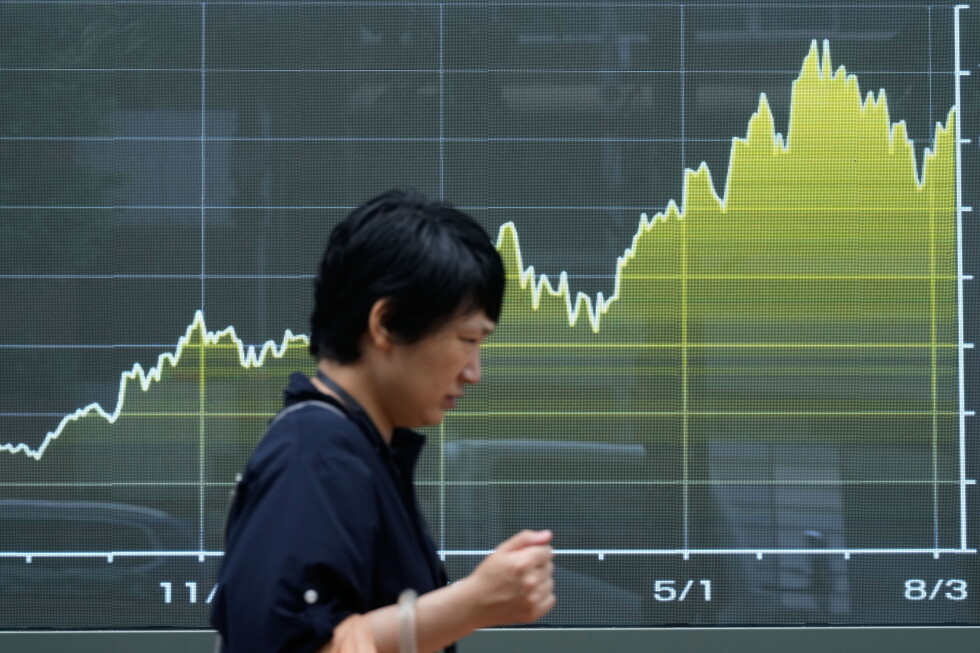
    The ruling has already rippled through Turkish financial markets: the country’s benchmark stock index plummeted 6% in late trading Thursday, though it clawed back some losses on Friday morning. While Özel plans to appeal the decision all the way to Turkey’s Court of Cassation, legal analysts warn the process will likely drag on for months or even years, leaving the opposition in limbo. Many political observers now suggest that if Özel cannot reverse the ruling through the courts, he and his supporters may be forced to form a new breakaway party to contest future elections.

    In a separate, concurrent development that has drawn further criticism of the Erdogan administration, the president on Friday ordered the permanent closure of Istanbul Bilgi University, a respected independent higher education institution that enrolls roughly 22,000 domestic and international students. The 30-year-old university was effectively shut down overnight, according to Yaman Akdeniz, a law professor who has taught at the institution for 15 years. “An institution where I’ve taught for 15 years, one we’ve nurtured alongside thousands of young people, is being completely disregarded,” Akdeniz said. Turkey’s Council of Higher Education has stated it is putting measures in place to minimize disruption for current students and ensure they can continue their studies at other institutions.

  • ‘I could not stay silent’, says activist who shouted at Ben-Gvir

    ‘I could not stay silent’, says activist who shouted at Ben-Gvir

    A viral video of far-right Israeli National Security Minister Itamar Ben-Gvir taunting bound detained activists from the Global Sumud Flotilla (GSF), an international initiative bringing humanitarian aid to blockaded Gaza, has sparked widespread international backlash, including rare public criticism from Israeli Prime Minister Benjamin Netanyahu and formal condemnation from Ireland’s top government officials. The confrontation, which unfolded in an Israeli detention facility, began when Irish activist Catriona Graham, one of hundreds of activists intercepted by Israeli forces en route to Gaza, shouted “free, free, Palestine” as Ben-Gvir passed her. Graham, who also participated in a 2025 aid flotilla that Ben-Gvir similarly confronted, told Irish public broadcaster RTÉ she could not remain silent after witnessing what she described as years of cruel treatment by the minister toward Palestinian prisoners.

    In the widely shared video, Ben-Gvir is seen encouraging Israeli security personnel as they force Graham to the ground following her outburst. After her protest, Graham recalled being dragged into solitary confinement, surrounded by roughly eight Israeli commandos who spoke in Hebrew around her. While she escaped severe injury, she described the experience as marked by constant palpable danger, adding that many other detained activists faced far harsher treatment. Graham emphasized that the interception operation involved a dramatic escalation of force compared to previous aid flotilla missions, with unconfirmed reports of at least 15 sexual assaults and widespread physical violence against detainees.

    The GSF mission launched last Thursday from the Turkish coast, with more than 50 boats carrying 430 participants from over 40 nations, transporting a cargo of food, baby formula, and critical medical supplies to Gaza. The Palestinian enclave has remained under a strict Israeli maritime blockade for years, and despite an October 2024 ceasefire between Israel and Hamas, living conditions for Gaza’s 2.1 million residents—most of whom have been displaced by the war—remain catastrophic. Last week, the United Nations confirmed that most displaced families are still forced to shelter in overcrowded, unsanitary tents or damaged buildings, with limited access to clean water, functional waste management, and basic public health services.

    Israeli naval commandos began intercepting the flotilla on Monday in international waters roughly 250 nautical miles west of Cyprus, far from Gaza’s coast. By Tuesday evening, all GSF vessels had been seized, with only one managing to reach within 80 nautical miles of Gaza. Israeli officials have dismissed the entire mission as a “public relations stunt in service of Hamas”, arguing that Gaza is already “flooded with aid”, claiming more than 1.5 million tonnes of aid and thousands of tonnes of medical supplies have entered the territory over the past seven months.

    Among the detained activists were 15 Irish citizens, including Dr. Margaret Connolly, sister of Irish President Catherine Connolly. By Thursday, Israel’s Ministry of Foreign Affairs announced all foreign activists from the flotilla had been deported, reiterating that the country would not tolerate any violations of its legal naval blockade of Gaza. On Friday, Irish Foreign Minister Helen McEntee confirmed all detained Irish citizens had safely arrived in Istanbul, Turkey, and were recovering, adding that Irish consular officials would continue to provide full support to the group.

    After arriving in Turkey, Dr. Connolly issued a scathing rebuke of Israel, calling the country a “barbaric, cruel regime” that must be disbanded. Another Irish activist, Mikey Cullen, told RTÉ that the violent treatment activists faced during interception—even with global media attention on the mission—made clear how much harsher treatment Palestinian prisoners routinely experience at the hands of Israeli forces.

    The fallout from Ben-Gvir’s video has been swift. Irish Taoiseach (Prime Minister) Micheál Martin released a statement saying he was “appalled at the shocking behaviour” of the far-right minister. In a rare break from intra-government consensus, Israeli Prime Minister Netanyahu also publicly distanced himself from the incident, saying Ben-Gvir’s actions were “not in line with Israel’s values”. The incident has reignited international debate over Israel’s blockade of Gaza and the treatment of political detainees amid the ongoing post-ceasefire tensions in the region.