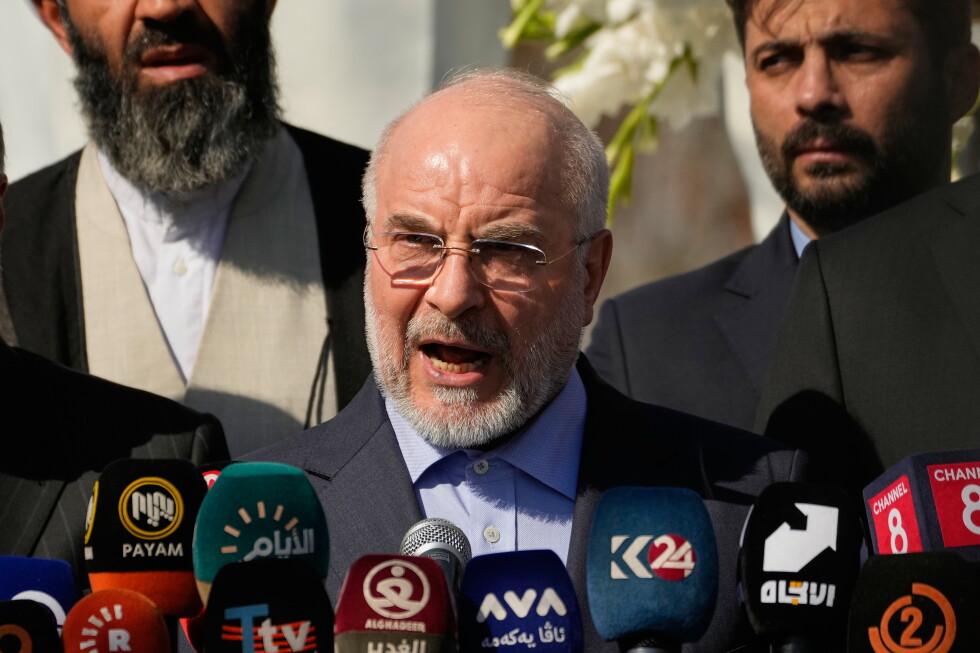
A wave of escalating geopolitical friction rippled across the Middle East on Wednesday, as three interconnected developments deepened uncertainty over regional stability amid already heightened hostilities between Iran and Western-aligned powers. The latest unrest comes weeks after the United States and Israel launched military operations against Iran starting February 28, with no diplomatic breakthrough between Tehran and Washington on the horizon to de-escalate broader tensions. The most acute new clash emerged between Iran and the United Arab Emirates, after Abu Dhabi accused Tehran of launching two ballistic missiles aimed at commercial maritime navigation that ultimately landed in the Persian Gulf on Tuesday. The alleged incident marked the first reported attack targeting UAE territory in several weeks, following a sustained period of frequent missile and drone strikes on Emirati assets by Iranian-aligned forces in the wake of the U.S.-Israel campaign against Iran. Within hours of the accusation, the UAE government announced an immediate suspension of all bilateral trade with Iran, framing the move as a necessary response to regional escalations that threaten both international and regional peace and security. This suspension came less than a week after Abu Dhabi had already accused Iran of launching drone attacks on two state-owned Emirati oil company tankers transiting the critical Strait of Hormuz, one of the world’s most vital oil chokepoints. Iran has forcefully rejected the latest missile accusation, with Foreign Ministry spokesperson Esmail Baghaei condemning the UAE’s claim during his weekly press briefing on Wednesday. Baghaei argued that the Emirati accusation violates core principles of good neighborliness, and undermines ongoing diplomatic efforts to build mutual trust between regional states and prevent further expansion of hostilities across the Middle East. Parallel to the UAE-Iran rift, a diplomatic standoff between France and Iran escalated into reciprocal expulsions of diplomatic personnel this week. On Wednesday, the French Foreign Ministry announced it would expel two Iranian embassy staff based in Paris, a direct response to Iran’s expulsion of two French diplomats from Tehran just two days prior. French Foreign Minister Jean-Noël Barrot accused Iranian authorities of premeditated action, saying Tehran fabricated false claims of foreign interference against the expelled French diplomats to justify their expulsion. Barrot added that Iranian security forces carried out a deliberate assault on the two French diplomatic staff last month, and criticized Tehran for failing to launch a credible investigation into the incident. Iranian state media, meanwhile, reported that the expelled French diplomats had been caught participating in a secret meeting with individuals linked to a major foreign infiltration and interference case in the country. The two Iranian diplomats ordered expelled by Paris are scheduled to leave the French capital in the coming days. Amid these cross-regional tensions, Iran’s top parliamentary speaker and chief nuclear negotiator Mohammad Bagher Qalibaf touched down in Baghdad Wednesday for a scheduled three-day official visit, where he is set to hold talks with senior Iraqi government officials and leaders of Iran-aligned political factions. Iraq has walked a precarious diplomatic tightrope for years, seeking to maintain functional diplomatic and economic ties with both Washington and Tehran, a balancing act that has grown far more complicated amid the latest escalation of open conflict between the U.S. and Iran. Iran-aligned Iraqi militias have claimed and carried out repeated drone attacks targeting U.S. military bases and diplomatic assets across Iraq and neighboring regions, putting enormous political pressure on the Iraqi government to respond. During his first public remarks in Baghdad Wednesday, Qalibaf praised Iran-aligned militias — which he referred to as the “Iraqi resistance” — framing them as a core pillar of Iraq’s national power. “After years of experience in Iraq, the resistance has gone beyond the borders of the two countries and has become an influential force at the regional and global levels,” Qalibaf told reporters. The comments underscore Iran’s long-standing strategy of building influence across the Middle East through allied armed groups and political proxies, including Lebanon’s Hezbollah and Yemen’s Houthi movement, which have played key roles in regional conflicts for decades. The latest round of tensions has fueled widespread international concern that the region could slide back into full-scale open conflict after weeks of relative quiet in attacks on Gulf states. Diplomatic efforts to restart nuclear talks between Iran and the United States remain stalled, with no formal negotiations scheduled in the near term. The Associated Press contributed reporting from correspondents based in Beirut, Tehran, Paris and Baghdad.
标签: Europe
欧洲
-
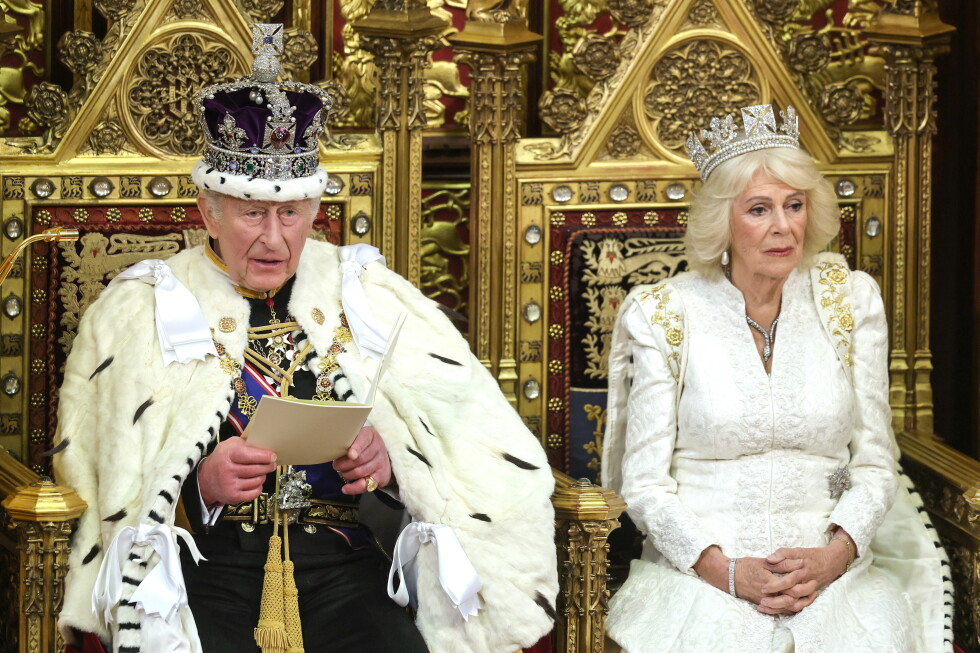
Queen Camilla wished she could share king’s diagnosis during a visit to cancer charity
LONDON – In a candid video marking the 30th anniversary of UK cancer support charity Maggie’s, Queen Camilla has shared the personal struggle of keeping King Charles III’s cancer diagnosis confidential in the days before the news was made public, revealing how the monarch’s openness has already transformed public engagement with cancer testing and support.
King Charles III made a historic break from long-standing British royal tradition on February 5, 2024, when he publicly announced he had begun treatment for an unspecified type of cancer. For generations, the royal household has kept senior members’ private health matters closely guarded from public view, making the king’s choice to share his diagnosis an unprecedented step for the modern monarchy.
Queen Camilla, who has served as president of Maggie’s – a organization that runs 27 specialized cancer support centers across the United Kingdom – since 2008, said she was already aware of her husband’s diagnosis a full week before the public announcement. At that time, she was scheduled to officially open a new Maggie’s center at London’s Royal Free Hospital, and she described the pressure of staying silent during the visit as unexpectedly challenging.
“Nobody could say anything at that time. That was quite difficult,” Camilla shared in her 8-minute conversation with Maggie’s Chief Executive Laura Lee, released to the public on Wednesday. “I almost said something but, you know, I felt that it wasn’t the time to say.”
In the weeks following the king’s announcement, the charity has recorded a surprising uptick in men seeking support: Lee confirmed that male visitor numbers to Maggie’s centers across the country have risen by 12% since the announcement. Medical and public health experts have already credited King Charles’ openness with encouraging thousands of at-risk men to book screening for prostate cancer and other under-tested forms of the disease, a shift that is expected to lead to earlier diagnoses and improved health outcomes for many.
Maggie’s centers, unlike acute medical facilities, focus on providing non-clinical support: the organization offers personalized counseling, evidence-based information, and community space to help people living with cancer manage anxiety, maintain daily routines, and sustain quality of life while undergoing treatment.
Queen Camilla said her husband’s diagnosis has deepened her understanding of the critical work Maggie’s carries out. She also highlighted the king’s steady, pragmatic approach to his treatment, noting that he has continued his royal duties while caring for his health. “Look at my husband, nothing stopped him,” she said. “He just said, ‘This is my way. I’m going to cope with it.’”
Recent official updates on the king’s health confirm that his condition is trending in a positive direction as he continues his ongoing treatment regimen.
-
Ukrainian man arrested over 2022 Nord Stream pipeline explosions
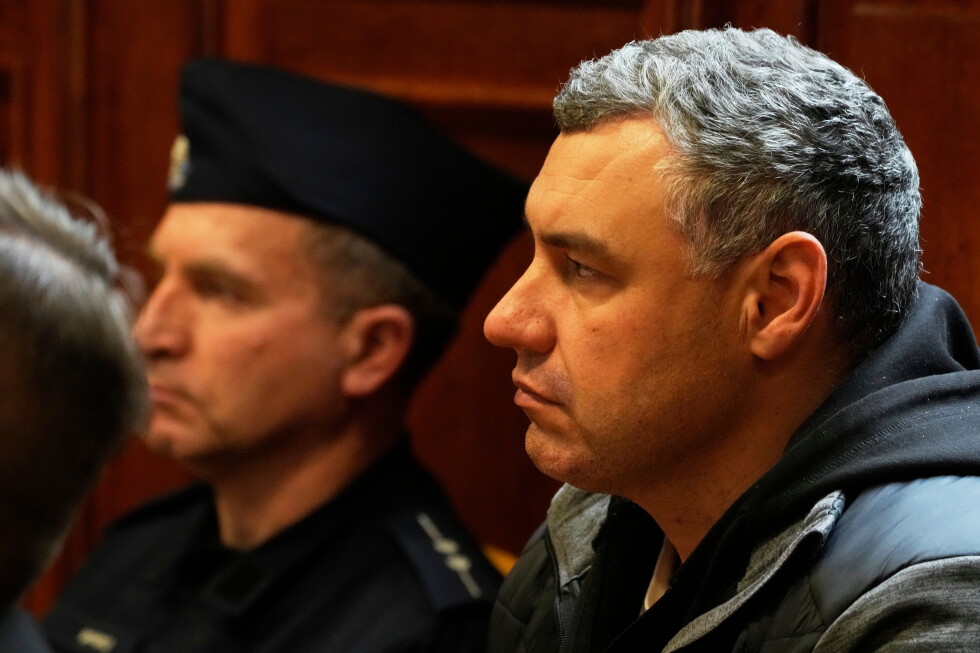
In a significant new development in the long-running investigation into the 2022 Baltic Sea Nord Stream pipeline bombings, German federal authorities have confirmed a Ukrainian man accused of involvement in the attack has been taken into custody in Croatia under a European arrest warrant. The suspect, identified by Polish authorities as Volodymyr Zhuravlov (referred to only as Vladimir Z. in German federal prosecutors’ official statement), is a trained scuba diver alleged to be part of the sabotage group that placed explosive devices on both Nord Stream 1 and Nord Stream 2 pipelines near Denmark’s Bornholm Island ahead of the September 26, 2022 blasts.
The undersea explosions occurred at a moment of already extreme geopolitical tension following Russia’s full-scale invasion of Ukraine, compounding stress across the continent as European nations were already moving to cut their reliance on Russian fossil fuels. Per the German federal prosecutor’s charging document, Zhuravlov faces serious allegations including conspiracy to carry out explosive attacks, anti-constitutional sabotage, and deliberate destruction of critical infrastructure. He was apprehended in the coastal Croatian city of Pula, and will be extradited to Germany to appear before an investigative judge at the Federal Court of Justice once the transfer process is finalized.
This arrest marks a second time Zhuravlov has been detained in connection with the case: he was first taken into custody in Poland last year, but a Polish court ultimately rejected Germany’s extradition request, leading to his release. Poland has long maintained strong opposition to the Nord Stream projects, viewing the pipelines as a tool for Russia to gain political and economic influence over Europe, and Polish Prime Minister Donald Tusk stated at the time that extraditing Zhuravlov would not serve Poland’s national interest.
It remains unclear exactly why Zhuravlov chose to leave Poland after his release, despite the active European warrant remaining in effect. His Polish legal representative, Tymoteusz Paprocki, told the Associated Press that Zhuravlov was aware the Polish court’s ruling only applied within Poland’s borders, adding that even the suspect’s wife expressed shock at his detainment in Croatia.
German officials have welcomed the latest arrest as a key step forward in untangling the full details of the attack. “We’re simply glad that the federal prosecutor’s office is making progress in these investigations, because it is important that the bombing of the pipelines be clarified as well,” German Justice Ministry spokesperson Nicholas Limmer told reporters in Berlin.
This arrest comes one month after German federal prosecutors filed formal charges against a second Ukrainian suspect, a former Ukrainian army officer identified only as Serhii K., in connection with the same bombing. Serhii K. was apprehended in August 2025 during a raid on a family vacation bungalow in an Italian village, where he surrendered peacefully to law enforcement. He was extradited to Germany in November 2025, and faces charges including explosives offenses, property damage, disruption of public services, and accessory to war crimes for targeting civilian critical infrastructure.
Investigative records show the group of suspects allegedly used a chartered yacht that departed from the German port of Rostock to carry out the operation, renting the vessel through intermediaries using forged identification documents. The 2022 blasts heavily damaged Nord Stream 1, which had served as Russia’s primary natural gas export route to Germany before Moscow cut off all supplies in August 2022 just weeks before the attack. The explosions also damaged Nord Stream 2, a second pipeline that never entered commercial operation after Germany suspended its certification process in the lead-up to Russia’s full-scale invasion of Ukraine.
The Nord Stream attacks have remained a flashpoint of global geopolitical dispute since they occurred. Russia has repeatedly accused the United States of orchestrating the blasts, a claim that Washington has flatly denied. For years before the attack, the United States and many of its allies openly criticized the Nord Stream projects, warning they would increase European dependence on Russian energy and expand Moscow’s geopolitical leverage across the continent.
-
Ousted Ukraine defense minister urges wartime elections, warning of a governance crisis
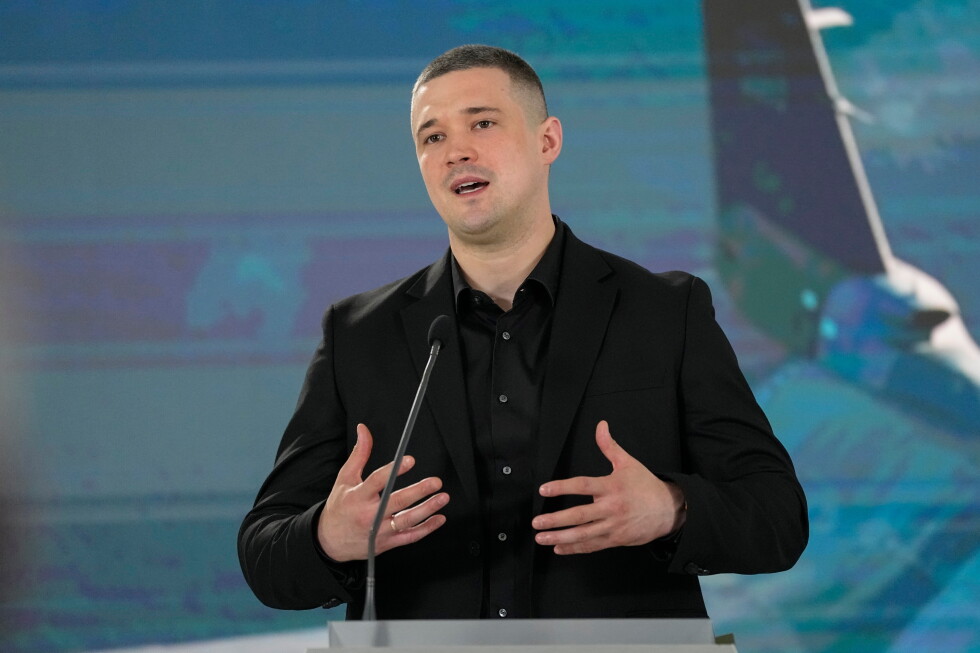
KYIV, Ukraine — In a surprise and potentially destabilizing move that marks one of the most significant domestic tests for Volodymyr Zelenskyy since Russia launched its full-scale invasion nearly three years ago, ousted Ukrainian Defense Minister Mykhailo Fedorov has publicly called for national elections to proceed despite the ongoing active conflict, warning that the country is currently trapped in a deep-rooted governance crisis.
Fedorov, who until his dismissal in July was counted among Zelenskyy’s closest and longest-serving most loyal political allies, laid out his demands in a pre-recorded video address published to YouTube this Tuesday. The former minister stressed that Ukrainian leadership must move quickly to develop a legitimate, secure and logistically feasible framework to restore the country’s full democratic process, even while the nation remains locked in a prolonged full-scale war with Russia.
“We must find a legal, safe, and realistic mechanism that will allow Ukraine to restore a full democratic process even amid a prolonged war,” Fedorov stated in the address.
As of Tuesday evening, Zelenskyy’s office had not issued any immediate public response to Fedorov’s appeal.
Under current Ukrainian legislation, all national elections are banned during the period of martial law, which has been in continuous effect since February 24, 2022 — the exact day Russia launched its large-scale invasion of Ukrainian territory.
Fedorov went further than his call for elections, alleging that Ukraine is now facing a systemic breakdown in its governing structures. He argued that the current ruling system is primarily focused on self-preservation and actively blocks any meaningful reform. He also publicly decried widespread corruption among government officials, stopping short of naming specific individuals or agencies, and claimed that this graft has directly eroded Ukraine’s capacity to defend itself against Russian forces.
The former defense minister claimed that his own removal from office was tied to the sweeping overhaul he spearheaded of the Defense Ministry’s procurement system — a department that manages billions of dollars in military equipment purchases for Ukraine’s armed forces.
“Corruption in wartime is not merely a financial issue. It is a matter of our capability to survive and win,” Fedorov said. “Every single hryvnia intended for defense must work for defense. Not for a private pocket.”
Fedorov’s video address was released just hours after Ukraine’s Parliament confirmed it had received a formal nomination from Zelenskyy to appoint Yevhenii Khmara as the new permanent defense minister, Parliament speaker Ruslan Stefanchuk announced via his official Facebook page on Tuesday.
Since Fedorov’s sudden ouster in July, large-scale public demonstrations in support of the former minister have drawn significant crowds across Kyiv over the past month. While the protest movement has seen a slight decline in turnout from its initial peak, weekly weekend marches still bring thousands of demonstrators onto the capital’s streets, many carrying handcrafted signs calling on Zelenskyy to reverse Fedorov’s dismissal and reinstate him to the defense minister post.
-
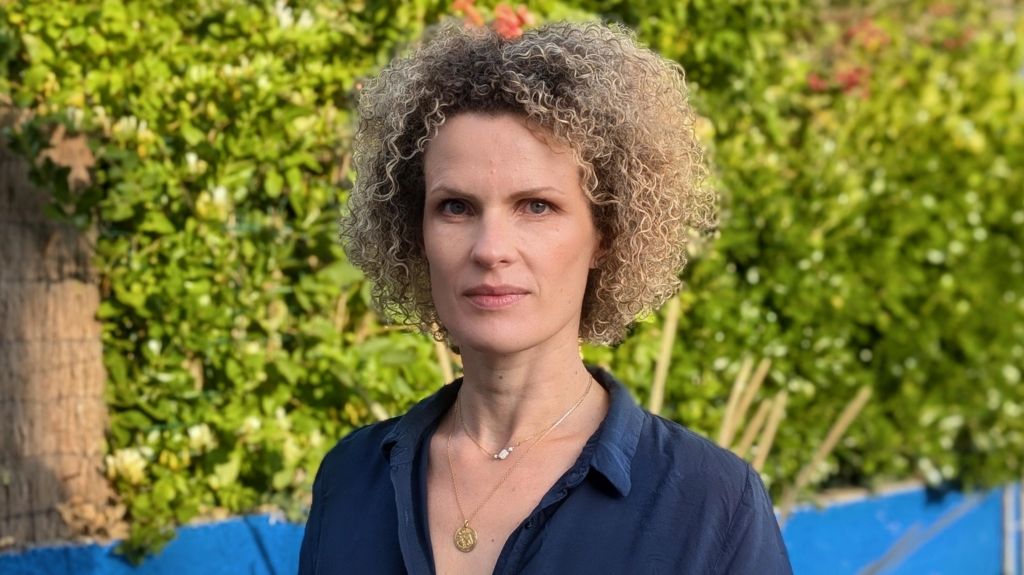
French civil servant drugged us to make us urinate on ourselves, say accusers
For more than a decade, a former senior French civil servant stood accused of orchestrating a pattern of alleged drug-facilitated abuse against job candidates, leaving hundreds of women grappling with lasting psychological and physical harm—and a justice system that has left them waiting years for accountability.
Anaïs de Vos was 27 years old when she sat down for a 2011 job interview at France’s Ministry of Culture in Paris, opposite interviewer Christian Nègre, then a top civil servant in the department. Unaccustomed to drinking coffee, de Vos accepted Nègre’s offer of a cup out of professional courtesy, only to find the drink had an unpleasant off taste that led her to consume just half. Within minutes of starting the meeting, Nègre suggested the pair move their conversation outside for a stroll through Paris’s central streets.
It was not long before de Vos began experiencing sudden, uncontrollable physical symptoms: an overwhelming, urgent need to urinate, followed rapidly by growing weakness that left her unable to feel her legs. When she told Nègre she needed to find a toilet immediately, she recalled his response as eerily giddy, framing her urgent need like that of a misbehaving child. He directed her to a locked storage cupboard under a Seine River bridge and told her she could relieve herself there. Alarmed by the disturbing suggestion, de Vos insisted they continue to a public facility.
The pair headed to the Louvre, where public restrooms required a one-euro fee that neither de Vos—who had left her purse at the ministry—nor Nègre claimed to have cash to cover. By the time de Vos found a cafe that would let her use their bathroom, she had already lost control of her bladder. Shaken, she managed to hide the accident thanks to the dress she wore that day, and completed the three-hour interview dizzy and completely drained. She left without the job, and carried vague suspicions that something was very wrong that day, but buried the thought that a public official at a government ministry could have harmed her on purpose. The incident gutted her self-confidence, she says, pushing her onto a far less ambitious career trajectory in the years that followed.
It was not until 2019, when police reached out to de Vos, that her vague unease became a shocking confirmation: she was one of nearly 200 women Nègre was suspected of drugging during fake job interviews at the ministry. Dozens more victims have come forward since that initial notification, bringing the total number of accusers to nearly 250. All allege Nègre subjected them to chemical submission—a form of abuse where drugs are used to strip victims of control over their bodies—between 2009 and 2018. Investigators believe Nègre used diuretics, common medications used to treat conditions like high blood pressure that trigger excess urine production, to humiliate and control his alleged victims. On Nègre’s computer, police found a detailed spreadsheet titled “Experiments P” that logged every step of his alleged actions: the time each candidate arrived for their interview, when the diuretic was given, how long it took for the urge to urinate to take effect, and even what type of underwear the woman was wearing.
Marie-Hélène Brice, another alleged victim whose name appeared in Nègre’s notes, says her 2016 interview with Nègre in Strasbourg followed an almost identical pattern. Nègre suggested a walk along a local canal to calm her interview nerves, and within minutes Brice began experiencing the same crippling, urgent need to use a toilet. Nègre told her he knew where a public restroom was located, but when they arrived, no facility existed. Left with no other option, Brice was forced to urinate in public, while Nègre stood over her, never taking his eyes off her even as he offered to shield her with his jacket. Like de Vos, Brice carried the shame of the incident for years, only learning she was one of dozens of victims when police contacted her. The abuse left her with lasting urinary issues alongside severe psychological distress, and she says the incident fits her definition of sexual assault without question. “I have been attacked, I have been intoxicated, I have been poisoned, but for me it is a sexual assault, clearly,” Brice told reporters.
The investigation into Nègre first opened in June 2018, when a colleague caught him taking upskirt photos of a woman under a table. He was suspended from his post as regional director of cultural affairs almost immediately, and fired from the Ministry of Culture in 2019. Prosecutors say Nègre admitted to investigators in 2018 that he “imposed humiliating situations on women” during these job interviews. Now in his 60s, Nègre is under formal investigation on charges including drugging, invasion of privacy, and sexual assault, and is awaiting trial. The BBC reached out to Nègre for comment through his legal team, but he declined to respond to the allegations.
The Nègre case has drawn new national attention to the issue of chemical submission in France, a topic that gained widespread public notoriety in 2024 after the conviction of Dominique Pelicot, who drugged his wife Gisele Pelicot for years and invited strangers to rape her while she was unconscious. French MP Sandrine Josso, who became a leading advocate for chemical submission survivors after a French senator was convicted of drugging and assaulting her earlier this year, has pushed for systemic changes to how France handles these cases. Josso championed a new pilot program that allows women who suspect they have been drugged to submit blood, urine, or hair samples for toxicology testing without first filing a formal police complaint, a change designed to remove barriers for survivors seeking confirmation of their abuse.
Yet major gaps remain: most of Nègre’s alleged victims had no idea they had been drugged for years after their encounters, and toxic substances only remain detectable in blood and urine for a short window after administration. While drugs can be detected in hair samples for longer periods, tracing the exact timing of administration becomes far more difficult as time passes. Jean-Claude Alvarez, a toxicology professor who leads the pilot testing program at Paris’s Raymond-Poincaré AP-HP Hospital, called the use of diuretics for this purpose “very unusual,” adding he had never encountered such a case in 26 years of practice. The program has now added diuretics to its standard screening panel in response to the Nègre case.
Fifteen years after de Vos’s interview, and seven years after she first spoke to police, the case has yet to go to trial—a delay that has left dozens of survivors frustrated and re-traumatized. According to the women’s rights group Fondation des Femmes, which supports 30 of Nègre’s alleged victims, Nègre has continued to work in human resources throughout the investigation. De Vos, now 42, says she heard nothing about the case from authorities between 2019 and 2023, despite repeated emails seeking updates. “For four years, I was alone with the knowledge that I was a victim. I didn’t know what to do,” she said. “I am very angry with the justice system.” Brice describes the long wait for trial as “secondary victimisation,” noting that survivors are forced to repeatedly prove the harm they suffered while waiting years for any sense of resolution. Many say they do not feel authorities take their claims seriously.
Kalliopi Mingeirou, a representative from UN Women, told the BBC that drug-facilitated sexual assault remains a greatly underaddressed issue globally, and that systemic delays in abuse cases destroy survivors’ lives. The BBC requested comment from French police, judicial authorities, and the national government on the criticisms raised by survivors, but no response was provided.
For Brice and de Vos, speaking out publicly has become a way to turn pain into action. After years of staying silent out of shame, Brice says she no longer hides her status as a survivor. “It is important for me to speak publicly because it allowed some victims to recognise themselves, to discover they were a victim and to file a complaint in turn,” she said. “Speaking out is necessary in the world in which we live, it is important to talk about sexist and sexual violence.”
-
A warehouse burns near Moscow. In Ukraine, drone crews prepare to strike again
Overnight, a coordinated wave of Ukrainian drone strikes hit one of Russia’s largest retail logistics hubs just outside Moscow, leaving the massive warehouse engulfed in flames hours after the attack, with thick black smoke billowing into the sky over the region.
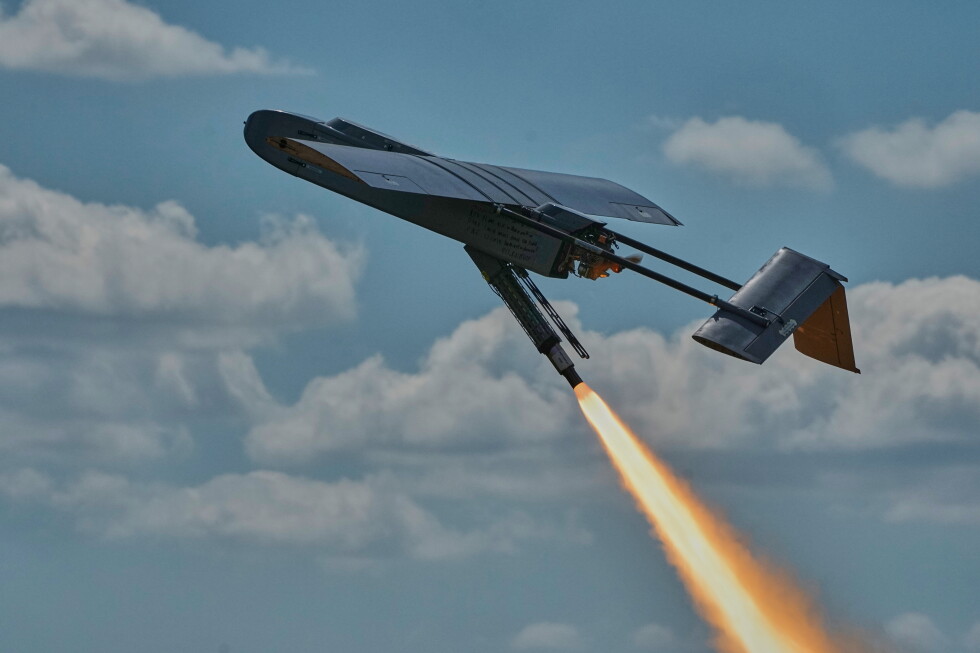
The operation was just one part of a rapidly expanding, strategically focused component of Ukraine’s war effort: a stepped-up long-range drone campaign designed to carry conflict deep into Russian territory, far from the front lines of the full-scale invasion that began nearly four and a half years ago. Rarely observed by international media, a Sunday morning launch by Ukraine’s newly formed 413th “Raid” Unmanned Systems Regiment was witnessed by a team of Associated Press journalists in a sunflower field in southern Ukraine, offering an unprecedented look at this evolving tactic.
Only hours after participating in the overnight strike on the Wildberries warehouse, a major logistics facility for Russia’s top online retail giant located roughly 28 miles south of Moscow – one of Ukraine’s largest single attacks on Russian soil to date – a small contingent of the regiment’s troops assembled in the open field. Working quickly to avoid detection, they prepared 20 small, explosive-laden drone aircraft for launch, targeting new objectives inside Russia before moving out immediately once the drones were airborne. The entire operation left almost no trace of their presence, as the unit relocated to its next planned launch site.
This long-range drone initiative marks Kyiv’s most aggressive shift in strategy in 2024, following a year of increasing strikes that combine long-range missiles and drone swarms to target Russian military production facilities, critical energy infrastructure, and commercial logistics hubs. Wildberries depots in particular have become repeated high-priority targets, with attacks destroying merchandise valued at billions of US dollars.
For Ukrainian military planners, the strategy serves two core goals: first, it brings the tangible consequences of the war directly to the Russian public, rather than limiting destruction to Ukrainian territory. Second, it forces Russia’s military to redistribute and stretch its air defense systems across a much larger geographic area, creating vulnerabilities along the front lines while disrupting civilian and commercial operations across Russia. To date, the campaign has forced widespread airport disruptions, sparked regional fuel shortages, and eroded public morale inside Russia.
“The bigger casualties they have, the sooner they will go for peace,” said Yevhen Karas, commander of the 413th Regiment, in an interview after the Sunday launch. Karas, a 38-year-old former philosophy student who volunteered for service alongside his brother Volodymyr on the first day of Russia’s 2022 full-scale invasion, has personal stakes in the conflict. His brother was killed in the early defense of the Kyiv region, and Karas worked his way through the ranks of Ukraine’s Special Operations Forces before being appointed to lead the new drone regiment in 2024.
What began as a reconnaissance-focused unit has evolved dramatically alongside advancing drone technology, with domestic Ukrainian FP-1 drones now boasting a range of more than 1,000 miles, allowing strikes deep into central Russia. The regiment’s ranks draw from a cross-section of pre-war Ukrainian society: alongside former soldiers are a former opera singer, a professional computer programmer, a rapper, and a professional cellist, all now trained to follow a tight, repetitive operational cycle: prepare, check systems, move into position, launch, await strike results, then repeat for the next mission.
Before Sunday’s launch, Karas marked one of the drone fuselages with a handwritten message in black marker: “Moscow burns under the sky, red flame rises so warm and high, dark smoke moves above the town, fire lights the night all around.” The regiment’s official challenge coin bears this mission’s ethos too: one side displays a three-pronged arrow insignia, while the reverse features an engraving of the Kremlin engulfed in flames, with a drone flying overhead.
Kyiv’s official strategy aims to ramp up public pressure on Russian President Vladimir Putin by making ordinary Russians feel the daily costs of the invasion, pushing Putin to enter good-faith peace negotiations after months of stalled U.S.-brokered talks. To date, Putin has shown no public indication of willingness to end the conflict or withdraw Russian forces from occupied Ukrainian territory. But Karas says the cumulative economic and infrastructure damage from the drone campaign is already shifting perceptions inside Russia.
“In this phase of the war, Moscow should fear the skies,” Karas said. “Muscovites should spend their nights in their wonderful metro, just as residents of Kyiv have spent years going underground to escape Russian missile and drone attacks.”
-

World shares mostly decline, hit by heavy selling of AI-related shares
Global equity markets faced broad downward pressure on Wednesday, driven by a widespread selloff in artificial intelligence-linked stocks across Europe and Asia, as investors grew jittery over stretched valuations in the AI sector and layered macroeconomic risks.
In European trading, losses were mixed but largely negative: Germany’s benchmark DAX index dipped 0.2% to close at 26,085.69, London’s FTSE 100 shed 0.2% to end at 10,707.36, while Paris’s CAC 40 bucked the regional trend with a 0.3% gain to 8,532.16. Futures contracts tracking Wall Street’s S&P 500 and Dow Jones Industrial Average held near flat, pointing to limited opening movement after U.S. markets closed lower a day earlier.
Asian markets bore the brunt of the selling, with South Korea’s Kospi leading regional declines with a sharp 5.8% drop to 6,471.17. The two South Korean corporate giants that have reaped the biggest benefits from the AI boom followed steep losses from their U.S. tech and chipmaking peers: Samsung Electronics fell 7.8%, and leading memory chip manufacturer SK Hynix plummeted nearly 10% to end the session down 9.8%. Japan’s Nikkei 225 also tumbled 3.2% to 65,326.42, pulled lower by dual pressures of AI stock selling and growing market anxiety over rising government bond yields. The 10-year Japanese government bond yield has hovered near a 30-year high above 2.9%, as investors price in expectations that the Bank of Japan will soon lift its benchmark interest rate to tame persistent inflation.
Mainland China’s Shanghai Composite Index fell 2.4% to 3,894.42, though the session brought one standout outlier: domestic humanoid robot manufacturer Unitree notched a historic trading debut on the Shanghai Stock Exchange’s STAR Market, the country’s tech-focused board modeled on the Nasdaq. The firm’s shares initially surged nearly 630% in early trading after raising roughly $900 million through its initial public offering, and closed the session still up a staggering 460%. By contrast, UBTech, another major Chinese humanoid robot maker listed in Hong Kong, dropped 10.7% on the day. Hong Kong’s Hang Seng Index posted a modest 0.1% gain to 25,495.07, while Taiwan’s Taiex fell 1.3% and Australia’s S&P/ASX 200 slipped 0.2% to 9,053.80.
Multiple headwinds have combined to sour near-term market sentiment. First, investors have begun reassessing the sky-high valuations of AI-linked stocks, which have run up sharply over the past year amid the global AI boom. Market participants have grown increasingly concerned that projected demand for memory chips, processors and other core data center components could soften if the AI sector fails to deliver the outsized profits investors have already priced in. On Tuesday, that unease filtered through to Wall Street, pulling major indices further from their recent all-time highs: the S&P 500 lost 0.7% for its third consecutive modest loss, the Dow Jones Industrial Average dipped 0.2%, and the Nasdaq Composite sank 1.3%. Leading the U.S. selloff were the same big AI winners that have driven market gains for months: memory chip maker Micron Technology dropped 7% in the prior session, making it one of the heaviest drags on the S&P 500, while Nvidia fell 2.3% and Broadcom sank 3.2%.
A second key pressure comes from volatile and rising oil prices, which have added to global inflationary worries. Crude markets have swung sharply amid ongoing geopolitical uncertainty over whether the U.S. and Iran will reach an agreement to reopen the Persian Gulf for unobstructed oil tanker traffic. On Wednesday, international benchmark Brent crude added 0.8% to $91.78 per barrel, up sharply from $72.87 per barrel shortly before the latest Middle Eastern conflict began. U.S. benchmark West Texas Intermediate crude gained 1% to $84.86 per barrel.
Rising inflation expectations have in turn pushed government bond yields sharply higher, creating a third major headwind for equities. The 10-year U.S. Treasury yield edged down slightly to 4.70% on Wednesday from 4.72% late Monday, but it remains far above the 3.97% level recorded just before the outbreak of new hostilities in the Middle East. The 30-year U.S. Treasury yield also ticked slightly lower but still hovers near its highest level since 2007. High bond yields make investors less willing to pay premium prices for risk assets like stocks, particularly the richly valued tech and AI shares that have led market gains in recent years. They have also pushed the average long-term U.S. mortgage rate near its highest level in a year, crippling demand in the housing sector, and could slow Big Tech companies’ ability to borrow to fund new data center construction – a major engine of current U.S. economic growth.
In currency markets, the U.S. dollar weakened slightly against the Japanese yen, falling to 159.11 yen from 159.61 yen in prior trading. The euro ticked higher against the dollar, rising to $1.1607 from $1.1577.
Associated Press Business Writer Chan Ho-him in Hong Kong contributed reporting to this article.
-
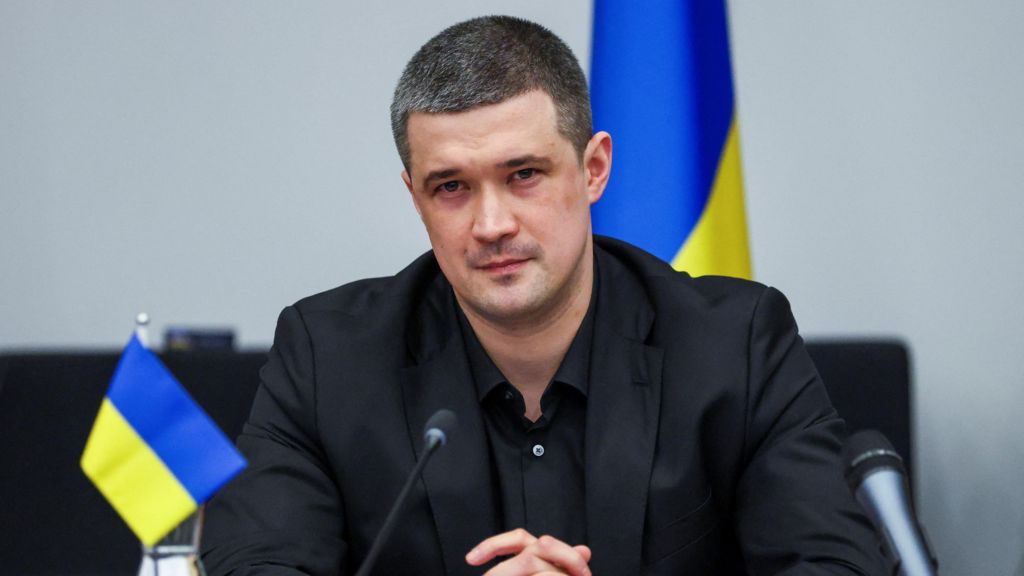
Sacked Ukrainian defence minister calls for presidential election
Nearly two and a half years into Russia’s full-scale invasion of Ukraine, a former top defense official has thrown the country’s domestic political landscape into upheaval, launching what analysts widely describe as the most significant test of President Volodymyr Zelensky’s authority since the war began.
Mykhailo Fedorov, the 35-year-old former defense minister unexpectedly removed from his post in late July just six months after his appointment, publicly called for wartime national elections in a YouTube video posted Tuesday. Arguing that Ukrainian democracy must not become a casualty of Russian aggression, Fedorov framed the push as core to the country’s identity as a free European democracy, stating, “Ukraine is fighting precisely because we want to remain a free European state.” He did not mention Zelensky by name in his address.
Since Russia launched its full-scale invasion in February 2022, Ukraine has operated under continuous martial law, a legal framework that formally suspends all national electoral activity. In his video, Fedorov did not outline his own immediate political ambitions, instead centering his argument on the urgent need to establish what he called a “legal, safe, and realistic mechanism” to reinstate full democratic processes even amid ongoing active conflict. He went further to warn that Ukraine is currently grappling with a “systemic crisis of governance”, that the country’s leadership has become “scared of change”, and that persistent systemic corruption remains a major drain on the nation’s war effort.
Fedorov’s dismissal in July sparked waves of public protests across multiple Ukrainian cities, and Zelensky has not yet issued a formal public response to the former minister’s latest remarks. Widely reported sources indicate Fedorov’s removal stemmed from long-running public and private tensions with then-Army Commander-in-Chief Oleksandr Syrskyi. In a chain of leadership shifts that followed, Syrskyi himself was replaced by Zelensky several weeks later, after mounting public pressure from protests targeting the presidency.
During his short tenure as defense minister, Fedorov earned broad praise for overhauling the ministry’s operations, leading a high-profile anti-corruption purge, and leveraging data analytics to identify gaps and improve frontline military performance. This focus on innovation was not new: long before taking the defense portfolio, Fedorov served as Ukraine’s digital transformation minister, where he launched the volunteer “IT Army of Ukraine” to coordinate large-scale cyber operations against Russian targets in the immediate aftermath of the 2022 invasion. He later spearheaded the wildly successful “Army of Drones” fundraising initiative, which revolutionized Ukrainian military tactics by integrating drone technology into frontline operations, and even introduced a gamified reward system that awarded credits to units for successfully striking Russian targets.
As defense minister, Fedorov doubled down on this high-tech approach, including a high-stakes request to SpaceX founder Elon Musk to restrict Russian access to Starlink satellite connectivity for drone operations. Military analysts credit that move with causing major disruptions to Russian frontline deployments and offensive advances. After his dismissal, Fedorov published a Facebook post summarizing his time in office, reaffirming his commitment to defeating Russia through asymmetric tactics, rapid innovation, and strong organizational reform.
Following Fedorov’s removal, Zelensky appointed Yevgeniy Khmara, a low-profile career intelligence official, as acting defense minister. The president offered Fedorov alternative senior positions in the cabinet, including the role of deputy prime minister for military innovation, but Fedorov has publicly stated he will only accept a return to his former post as defense minister.
-
Why has Russia threatened the UK and what happens next?
In recent weeks, rising geopolitical tensions between Russia and the United Kingdom have put global attention on the escalating confrontation over the ongoing conflict in Ukraine. After UK leadership reaffirmed London’s full commitment to backing Kyiv, questions have emerged about what led Russia to issue direct threats against the British state, and what potential ramifications this standoff could have for European and global security moving forward.
Against the backdrop of the full-scale Russian invasion of Ukraine that began in early 2022, the United Kingdom has consistently stood as one of Kyiv’s most vocal and material backers. From providing advanced military hardware — including long-range strike capabilities, air defense systems, and armored vehicles — to imposing sweeping economic sanctions on Russian elites and key sectors of Moscow’s economy, the UK has positioned itself at the forefront of Western support for Ukraine’s sovereignty. It is this consistent, unapologetic support that has drawn repeated pushback from the Kremlin, which has framed Western involvement in the conflict as a direct provocation against Russian national interests.
Most recently, Downing Street reaffirmed this long-held stance, with the UK Prime Minister stating publicly that London will maintain 100 percent support for Ukraine in its fight against Russian occupation. This clear reiteration of policy has been met with a new round of threats from Moscow, which has sought to warn the UK away from continued backing of Kyiv by raising the prospect of direct retaliation, ranging from increased cyberattacks on British critical infrastructure to heightened military activity near European NATO borders.
Looking ahead, the trajectory of this confrontation depends on multiple interconnected factors. Analysts broadly agree that the UK is unlikely to reverse its course on Ukraine support, given widespread cross-party political consensus in London that backing Kyiv is critical to preventing wider Russian aggression across Europe. At the same time, NATO as a whole has moved to bolster its eastern flank in response to increased Russian rhetoric, reducing the risk of direct military escalation between Russia and the alliance. While the threat of asymmetric action — including disinformation campaigns, cyber interference, and hybrid attacks — remains elevated, most assessments suggest that Russia is unlikely to take steps that would trigger direct Article 5 collective defense action from the full 31-member alliance.
This latest exchange underscores the growing rift between Russia and the West over Ukraine, a divide that shows few signs of narrowing in the near term. For the UK, the commitment to Ukraine remains a core pillar of its foreign policy, even as it faces growing Russian threats that demand increased vigilance from British security and intelligence services.
-

Musiala collapses during match for second time
Bayern Munich midfielder Jamal Musiala has opened up about his ongoing health scare, confirming he is receiving care for a diagnosed neurological dysfunction that triggered two on-pitch collapses within a four-day window during the club’s pre-season friendly fixtures.
The first incident unfolded during Bayern’s 3-1 friendly win over RB Leipzig in Munich on Saturday, with a second episode occurring just six minutes after Musiala entered the game as a substitute in Tuesday’s 4-2 away victory against 1. FC Heidenheim. Following the second collapse, the 23-year-old German international was visibly disoriented while receiving on-site medical attention before being assisted off the pitch by club medics, in a moment that saw opposing and home players alike surround him to support the treatment process.
To allay widespread concern from fans, teammates and football observers across the globe, Musiala shared a transparent public statement on his official Instagram account shortly after the match. The playmaker explained that medics have identified his collapses as temporary, brief absence seizures linked to his neurological condition.
“These can lead to the recent episodes, like the one against Leipzig or now in Heidenheim,” Musiala wrote. “I know they seem scary at first glance – but for me, they’re currently just part of my everyday life. I’m receiving excellent medical treatment and am very optimistic. FC Bayern and my family and friends are always by my side and supporting me on this journey.”
Bayern’s sporting director Max Eberl confirmed ahead of Musiala’s statement that club officials had been aware of the condition long before the recent public episodes, noting that the player planned to address the situation publicly himself. “We knew about it and we are aware of the situation,” Eberl told reporters after Tuesday’s fixture. “Jamal will speak out. He’s in the dressing room, getting changed and taking a shower.”
This is not the first major health setback Musiala has navigated in recent months. The star midfielder missed the first six months of the 2025-26 season after suffering a broken ankle during the 2025 Club World Cup. He successfully worked his way back to full fitness in the second half of the campaign, and went on to start three of Germany’s four matches at the 2026 FIFA World Cup this summer, cementing his status as one of the most promising young talents in global football.