标签: Europe

欧洲

  • Wave of child abuse cases shakes schools in Paris

    Wave of child abuse cases shakes schools in Paris

    A landmark sexual abuse trial is set to open Tuesday in Paris, marking the highest-profile legal proceeding in a year-long crisis that has thrown the French capital’s early childhood education system into chaos and sparked widespread parental fury. The defendant, a part-time after-school aide known locally as an animateur, stands accused of sexual misconduct against five young students at Alphonse Baudin Junior School in Paris’ 11th arrondissement.

    The case is just the first of multiple upcoming legal actions tied to a sprawling investigation into abuse allegations involving non-teaching child care staff across the city. Three additional trials are scheduled to begin over the summer, with a verdict expected in a fourth case heard earlier this month, and investigators have confirmed ongoing inquiries at nearly 100 Parisian crèches, kindergartens and primary schools. The allegations range from inappropriate verbal behavior and physical aggression to severe sexual abuse of young children. As recently as last week, police carried out a coordinated raid on three schools in the 7th arrondissement, detaining 16 people and filing formal sexual misconduct charges against three.

    For parents across Paris, the crisis has shattered trust in the city’s child care system. Many have openly criticized Paris City Hall, which directly employs the roughly 15,000 animateurs working across city schools, for dismissing early complaints and failing to address systemic vulnerabilities. One parent, speaking to the BBC, shared the harrowing experience that led his family to uncover the allegations in the upcoming trial. Back in April 2025, after another parent reported their child had been assaulted, he and his wife questioned their four-year-old daughter. When asked if the defendant had touched her, the girl confirmed he had given her inappropriate cuddles, then demonstrated the contact by stroking her own back in an unusual, disturbing manner — a revelation that confirmed the parents’ worst fears.

    Advocacy groups say the root of the crisis lies in deeply flawed hiring and training practices for animateurs, who are responsible for supervising children during lunch breaks and after-school programs, where they lead recreational, arts and sports activities. Elisabeth Guthmann, co-founder of SOS-Périscolaire, an advocacy group founded in 2021 to push for safer after-school care, explained that poor pay and lax hiring standards have created a high-risk system. Most roles require only a basic child care certification to be hired, and pressure to fill vacancies is often so intense that even this minimal requirement is frequently set aside. Guthmann cited one alarming example at a 16th arrondissement primary school, where four animateurs allegedly organized a child fight club, forcing pupils to brawl while other children stood by cheering.

    The crisis has also exposed deep divisions between parents demanding accountability and the animateurs themselves, many of whom say they now face unfair, widespread suspicion that has turned into professional discrimination. Last week, dozens of aides staged a strike to demand better working conditions and fair treatment amid the wave of allegations. Union representative Carla Bonnet argued that while serious abuse claims must be investigated, not all parental reports are well-founded, and city leaders have abandoned neutrality in favor of rushing to action. Rémi, a working after-school assistant, told reporters that “Working with children today, at the drop of a hat you can be accused of absolutely anything,” adding that city officials have failed to support staff amid the panic.

    Newly elected Paris Mayor Emmanuel Grégoire has moved quickly to address public anger, announcing a sweeping overhaul of the hiring and oversight system backed by a €20 million investment in training and monitoring. Under new rules, any animateur facing a formal abuse complaint will be automatically suspended pending investigation, and nearly 80 aides have already been suspended since the start of 2026. Grégoire Ensel, a representative of national parental advocacy group FCPE, said the crisis was entirely predictable: “When you have a system in which workers aren’t properly paid or trained or monitored, and where there’s no money or proper procedures for raising the alert, it’s not surprising that things get out of control.”

    While the scandal has been concentrated in Paris, child protection activists warn that identical systemic weaknesses exist in school systems across France, raising fears that the scope of abuse could be far broader than currently known. For affected families, the trial opening this week represents a long-awaited step toward accountability, even as many continue to demand deeper change to protect children.

  • Ruud overcomes heat struggles to progress in Paris

    Ruud overcomes heat struggles to progress in Paris

    The 2025 French Open opened under sweltering conditions in Paris, with two-time Roland Garros runner-up Casper Ruud pulling off a dramatic comeback victory over Russian qualifier Roman Safiullin in a five-set first-round marathon that tested both men’s physical and mental limits. Temperatures climbed to 33 degrees Celsius across the tournament’s opening two days, turning the clay courts of Court Simonne-Mathieu into a grueling heat trap that pushed both competitors to the brink of exhaustion.

    Ruud, the 15th seed in the men’s draw, entered the match as the clear favorite and raced out to an early lead, taking the first set 6-2 and edging a tight second-set tiebreak 7-5 to go two sets up. But by the third set, the brutal heat had already begun to take its toll: the Norwegian squandered five consecutive match points, and started suffering painful leg cramps that would only worsen as the match dragged on. He called a medical timeout to address heat-related distress, and relied on ice towels and repeated water douses between changeovers in a desperate attempt to bring his core body temperature down.

    Safiullin, who had been down 2-5 in the third set, capitalized on Ruud’s physical collapse to mount an extraordinary comeback: the Russian qualifier won 11 straight games to steal the third set 7-5 and take the fourth set 6-0, turning a match that looked like an easy Ruud win into a deciding fifth set. Like Ruud, however, Safiullin also struggled with the extreme conditions, requiring on-court medical treatment for injury issues late in the fourth set. Both players left the court for an extended cooling break before the fifth set, a pause that would prove pivotal for Ruud.

    When play resumed, the 27-year-old Norwegian had recovered enough of his strength and focus to dominate the decider, closing out a 6-2, 7-5 (7), 5-7, 0-6, 6-2 win after nearly four hours of competition. The entire clash stretched three hours and 56 minutes on the outer Parisian clay court.

    In post-match comments, Ruud opened up about the debilitating impact of the Paris heatwave, comparing his experience to a past heat-related retirement on the ATP tour. “It felt like a bit of a heatstroke feeling,” he explained. “I experienced something similar some years ago when I played in Washington DC and I had to retire in the third set because of it. That’s the only time I had that same feeling as I had today in the fourth set, where I felt at times really dizzy, really tired and walking around like a zombie almost.”

    Ruud credited the mid-match pause for giving him a chance to recover enough to finish the match. “Luckily, I was 2-1 up still [in sets] and allowed myself to kind of lower the intensity a bit to get my pulse and body temperature down as much as possible in the fourth to see if there was any chance to finish in the fifth and have some extra energy. Luckily, that ended up working.”

    When asked if the win counted as a victory of mental toughness or physical resilience, Ruud said it was both, but emphasized the role of mental grit in getting him across the finish line. “It feels like a mental win,” he said. “At times in the fourth [set] I was thinking ‘I have to book the flight home tomorrow and I’ll be watching from home on the sofa the next two weeks’. Luckily, that’s not the case. Physically, also, I’m proud because I never really gave in. I didn’t give up.”

  • Teenager who died during day out at beach will be ‘sadly missed’

    Teenager who died during day out at beach will be ‘sadly missed’

    A devastating coastal tragedy has rocked a tight-knit Irish community after a 15-year-old girl from Ballymun lost her life during a recreational trip to a popular County Dublin beach on Sunday.

    Abbie Carmody-Pepper had traveled to Burrow Beach alongside a group of friends for a casual day out when she disappeared after entering the water for a swim. Emergency services launched an urgent multi-agency search operation to locate the missing teen, with personnel from An Garda Síochána (the Republic of Ireland’s national police force), the Irish Coast Guard, and the Howth division of the Royal National Lifeboat Institution (RNLI) all joining the effort. Eventually, search teams recovered Abbie’s body from the coastal waters.

    Local Dublin City Councillor Gavin Pepper, who confirmed the teen’s identification to the public, revealed he is a distant relative of Abbie, calling the loss even more personally devastating. “I was shocked and saddened to hear of the passing of Abbie Pepper in a tragic accident in Sutton yesterday,” he said in a public statement. “It was even more heartbreaking to find out we are related.”

    Councillor Pepper shared that Abbie’s parents have extended their gratitude to the broader community for the outpouring of sympathy and support they have received in this devastating period. He also requested that the public respect the family’s need for privacy as they process their grief and mourn the loss of their daughter.

    Representatives from the RNLI, which provided on-site emergency casualty care as part of the search and recovery operation, also released a statement expressing their condolences. “The thoughts of everyone in the organisation is with the young girl’s family and friends,” the spokesperson said.

    Local funeral home Rom Massey & Sons, which is handling Abbie’s arrangements, also paid tribute to the teen, noting she will be deeply mourned by all who knew her. “Abbie will be sadly missed by her heartbroken family… school pals, relatives, neighbours and friends,” the firm said in a statement shared publicly.

    The tragedy has left the local community in mourning, with tributes continuing to pour in for the young teen.

  • Russia threatens more Kyiv strikes and tells foreign nationals to leave

    Russia threatens more Kyiv strikes and tells foreign nationals to leave

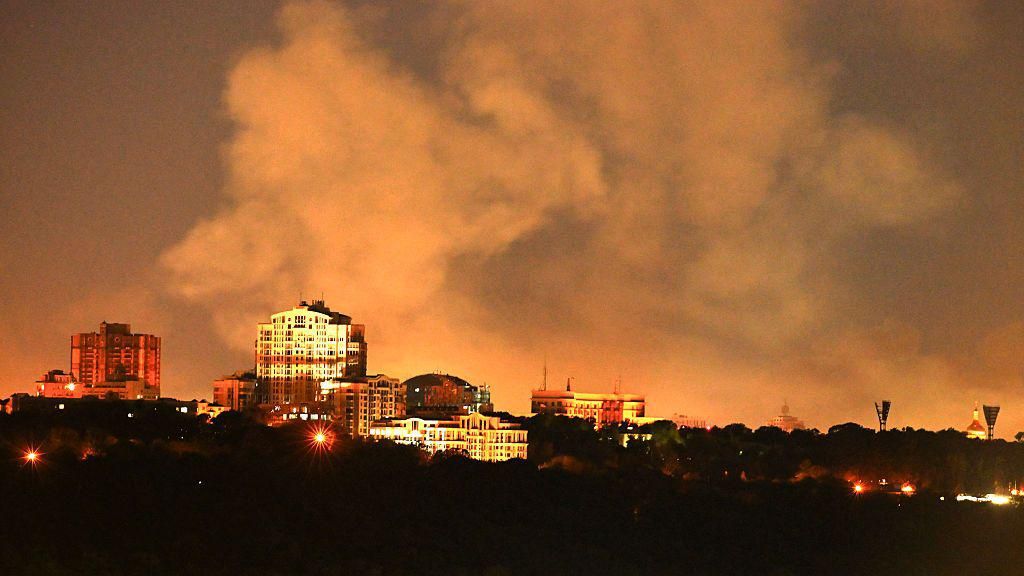
    Just days after one of the largest aerial assaults on Ukraine’s capital since the full-scale invasion began, Russia has issued a explicit threat of a new wave of coordinated, systematic attacks targeting Kyiv. In an official statement released by the Russian foreign ministry, Moscow confirmed that upcoming strikes will focus on what it labels “decision-making centres and command posts” in the capital, alongside facilities Ukraine uses to manufacture unmanned aerial vehicles. The statement also urged all foreign nationals and diplomatic staff to evacuate Kyiv “as soon as possible”, and warned local Ukrainian residents to avoid moving near administrative and military infrastructure across the city.

    The large-scale barrage carried out by Russian forces on Saturday night left four people dead and approximately 100 others injured across Kyiv and surrounding regions, Ukrainian President Volodymyr Zelensky confirmed. Moscow has framed both this weekend’s attack and the coming new strikes as retaliation for what it claims was a deliberate Ukrainian strike on a student dormitory in the Russian-occupied eastern Ukrainian town of Starobilsk last Friday. Russian officials allege that 21 people were killed in that incident. Ukraine’s military has pushed back against this narrative, confirming it targeted an elite Russian military drone unit operating in the area and maintains no civilian facilities were intentionally targeted in the strike.

    This latest round of violence comes after a series of escalating attacks on Kyiv that began earlier this May, when a temporary ceasefire timed to coincide with Moscow’s annual Victory Day military parade expired. Within days of the ceasefire ending, Russian strikes on a Kyiv residential apartment block killed 24 people, including three children. The assault carried out overnight Saturday marked one of the most intense large-scale aerial attacks on the capital since the start of the full-scale invasion.

    Footage shared by Kyiv residents on social media platforms captured sustained explosions lighting up the night sky across the capital, with multiple blasts reported that shook buildings across wide areas of the city. Dozens of ballistic and cruise missiles, alongside hundreds of attack drones, were launched against Kyiv in the assault. Russian forces also fired a nuclear-capable Oreshnik hypersonic missile targeting the area of Bila Tserkva, a city located roughly 90 kilometers south of the Ukrainian capital.

    The attack left a trail of destruction across both cultural and civilian sites in Kyiv. The Chernobyl Museum, located in the city’s historic central district, and the National Art Museum of Ukraine both suffered significant damage. Multiple residential buildings, a public market and a large commercial shopping centre in Kyiv’s Lukanivka neighborhood were completely destroyed.

    Analysts and political observers broadly view Russia’s public call for foreign nationals to evacuate Kyiv as a deliberate tactic of psychological warfare designed to sow panic and instability among the capital’s population. Large-scale strikes on Kyiv have been a consistent feature of Russian military strategy since Moscow launched its full-scale invasion of Ukraine in February 2022.

    After four and a half years of continuous full-scale war, Ukraine has built out a sophisticated, multi-layered air defense network that now intercepts the vast majority of Russian drones and missiles. However, Russia often launches attacks with such large volumes of projectiles that Ukrainian defenses are periodically overwhelmed, allowing a significant number of weapons to reach their targets. Ukraine’s air defense capabilities also remain heavily reliant on military support from Western allies, a vulnerability that Ukrainian leadership has repeatedly highlighted. Back in March, Zelensky warned that Ukraine faced a critical deficit of air defense weapons due to shifting defense resource priorities driven by conflicts involving the U.S. and Israel.

  • Pope Leo says AI must be ‘disarmed’ in first major teaching

    Pope Leo says AI must be ‘disarmed’ in first major teaching

    In a historic, wide-ranging address marking the first major teaching document of his papacy, Pope Leo has delivered a urgent call to rein in unregulated artificial intelligence, warning that unchecked advancement of the technology risks creating what he terms “new digital slaveries” while issuing one of the Vatican’s most comprehensive apologies ever for the Catholic Church’s historical role in the transatlantic slave trade.

    Titled *Magnifica Humanitas* (“Magnificent Humanity”), the encyclical — a formal papal document that, in modern times, functions as a global moral message rather than solely a communication to Catholic bishops — was presented personally by Pope Leo at the Vatican, in an unusual break from tradition. He was joined by leading AI sector figures including Christopher Olah, co-founder of major U.S. AI developer Anthropic.

    In the text, Pope Francis defended his sharp, uncompromising language, noting: “The word is strong, I know, but deliberately chosen because this moment needs words capable of attracting attention.” He frames modern AI risks through a direct parallel to historical chattel slavery, arguing that the world is currently at the same kind of moral crossroads humanity faced centuries ago, when the exploitation of marginalized people was normalized and accepted by global institutions.

    He draws explicit connections between historical exploitation and emerging digital harms, warning that both the supply chains that build AI hardware and the real-world applications of advanced algorithms risk normalizing a new wave of dehumanizing exploitation. He also coined the term “digital colonialism,” linking the extractive abuses of 19th-century colonial rule to modern unregulated tech development that exploits vulnerable communities and nations.

    Alongside his warnings about AI-driven exploitation, Pope Leo issued a formal apology for the Church’s complicity in slavery. “It was impossible not to feel deep sorrow when contemplating the immense suffering and humiliation endured by so many,” he wrote, adding that he “sincerely asked for pardon” in the name of the entire Catholic Church. The apology is one of the most sweeping the Vatican has ever issued on the topic of historical slavery.

    The encyclical addresses multiple specific risks posed by advancing AI, going beyond exploitation to condemn the development of AI-augmented weaponry. “No algorithm can make war morally acceptable,” Pope Leo wrote, arguing that reducing human control over weapons not only fails to erase the “intrinsic inhumanity” of war, but also lowers the threshold for armed conflict by making violence less personal and turning civilian casualties into abstract data points. He explicitly warned against the rise of a global AI arms race.

    Pope Leo also criticized the use of AI in political systems, particularly the spread of AI-generated deepfake images and videos that manipulate public perception and expose audiences to biased, misleading content that erodes trust in democratic processes. Echoing past remarks, he compared the current need for AI guardrails to the protections that had to be put in place to protect human dignity during the Industrial Revolution, noting that both the Church and global society were far too slow to condemn the historical scourge of slavery — a mistake he argues must not be repeated with AI.

    In a special direct appeal to AI developers worldwide, the Pope emphasized that creators of the technology carry unique moral and spiritual responsibility: “Developers bear a particular ethical and spiritual responsibility, for every design choice reflects a vision of humanity.”

    Olah, the Anthropic co-founder, echoed the Pope’s framing during the post-presentation remarks, acknowledging that the questions raised by AI extend far beyond the technical research community. “Every AI lab including his operated ‘inside a set of incentives and constraints that can sometimes conflict with doing the right thing’,” Olah said, adding that “the questions raised by AI are bigger than the AI research community, not just in their implications, but also in their nature.”

    To advance the recommendations laid out in the encyclical, Pope Leo has convened a special commission to continue work on AI governance and ethical standards. Still, observers have raised questions about how much impact the papal message will have amid the breakneck pace of global AI development. Analysts point to the 2015 encyclical *Laudato Si* from the late Pope Francis, which called for urgent action on climate change, only for Pope Francis to publicly express disappointment at global inaction on the issue eight years later. Many wonder that, despite his passionate call for AI regulation today, Pope Leo may be forced to issue a similar frustrated warning in years to come.

  • Parts of Europe swelter in record May heat as deaths at amateur sports events spur warnings

    Parts of Europe swelter in record May heat as deaths at amateur sports events spur warnings

    An unseasonal, record-shattering heat wave has swept across Western Europe this May, triggering urgent public health warnings from national authorities following two confirmed fatalities linked to extreme heat during amateur sports competitions in France.

    The fatal incidents, both occurring on Sunday, have underscored the growing risks of out-of-season extreme heat as climate change amplifies the frequency of abnormal weather events. French Sports Minister Marina Ferrari released an official statement mourning the death of a 53-year-old male runner who collapsed from a cardiac arrest mid-race in Paris’ 20th arrondissement. First responders were unable to resuscitate the athlete, per local French newspaper Le Parisien. While a formal cause of death has not been finalized, Ferrari highlighted a probable connection to the extreme ongoing heat.

    “The events that took place during Sunday’s running races serve as a critical reminder that sporting activity in extreme heat demands the highest level of vigilance,” Ferrari wrote in a post on X, formerly Twitter. “My deepest condolences go out to the family and loved ones of the runner who lost their life in Paris, as well as to all those who required emergency medical care during Sunday’s events.”

    A second heat-related fatality was reported in the southeastern French city of Lyon on Monday, per local outlet Actu Lyon. A female participant in another Sunday sporting event died after suffering severe heat stroke during competition.

    National meteorological service Meteo France confirmed that this May’s heat wave has broken long-standing monthly temperature records, with thermometers climbing above 30 degrees Celsius (86 degrees Fahrenheit) across most of the country, with the unseasonal heat expected to persist through the rest of the week.

    Across the English Channel, the United Kingdom also joined the list of nations facing record-breaking early heat. London’s Heathrow Airport registered a high of 33.5 degrees Celsius (92.3 degrees Fahrenheit) on Monday, beating the country’s previous May temperature record of 32.8 degrees Celsius (91.4 Fahrenheit) — a mark that was first set in 1922 and later matched in 1944. The record high prompted national officials to declare an official heat wave across multiple regions of the UK, as both local residents and holiday travelers crowded into beaches, public parks and shaded spaces to find relief from the sweltering conditions.

    The U.K. Health Security Agency has issued its first amber heat health alert of 2024, warning the public of elevated risks of heat-related deaths, particularly for vulnerable groups including elderly people, during the hottest peak hours of the day.

    Climate scientists have repeatedly warned that extreme, often deadly weather events are growing more frequent as global average temperatures rise from anthropogenic climate change. Unprecedented heat surges that hit outside the typical summer season, and in regions unaccustomed to early extreme heat, are putting increasingly large numbers of people at risk of preventable heat-related illness and death.

  • Cypriot social media star Fidias will keep his European Parliament job after winning Cyprus seat

    Cypriot social media star Fidias will keep his European Parliament job after winning Cyprus seat

    NICOSIA, Cyprus — Six months after launching a new anti-establishment political party built on his massive social media following, 26-year-old Cypriot content creator Fidias Panayiotou has announced he will retain his seat in the European Parliament instead of taking the newly won seat he earned in Cyprus’ national House of Representatives. The announcement came Monday, just one day after his upstart Direct Democracy party defied all political expectations to claim 5.4% of the national vote and four of the 56 seats in the Cypriot parliament.

    Fidias, who is universally known to his online audience by just his first name, confirmed his decision to reporters ahead of the official proclamation ceremony for newly elected lawmakers. “I’ll stay in the European Parliament because it would be good for the Direct Democracy party to have a European Parliament member,” he said. “We could’ve done better but we’re happy with what has happened, this is a small victory.”

    The result marks a stunning rise for a political outsider who parlayed viral internet fame into electoral success in under a year. For months leading up to Sunday’s vote, Fidias kept the public guessing about his future plans, fueling widespread speculation across Cypriot political circles. What makes the outcome even more notable is that Fidias founded Direct Democracy only half a year ago, building the party around a core promise to upend Cyprus’ decades-old, establishment political order. The party’s unique model lets ordinary citizens shape policy directly and register as candidates through an open online platform, a sharp break from traditional top-down party structures.

    In Sunday’s election, Fidias earned more individual votes than any other candidate running for Direct Democracy, but he has already agreed to cede his parliamentary seat to the party’s runner-up in his district, Yiannis Laouris, clearing the way for him to remain in Brussels.

    While the four-seat result is already a historic win for a brand-new political movement, it fell short of Fidias’ own high expectations. That high bar was set by his astonishing performance in the June 2024 European Parliament election, where he captured nearly 20% of the national vote — an outcome he achieved without releasing a formal policy platform, making campaign promises, or taking clear stances on key issues. After that election, Fidias argued that his broad support reflected a deep hunger among voters for authenticity over conventional politics. “It seems now that people are hungry not for political positions, but for true people that are not lying, (but) saying the truth,” he told the Associated Press shortly after the June poll.

    Fidias first built his global audience of millions on YouTube and TikTok through a series of outrageous, viral stunts: videos of him spending large sums of cash while traveling in Vietnam, living for a full week inside an airport without paying, and even surviving a 10-day burial while buried alive. His big mainstream breakthrough came when he spent months campaigning to meet and get a hug from Tesla and X CEO Elon Musk — a stunt that succeeded, and earned him a new fan in the billionaire entrepreneur.

    The influencer-turned-politician has openly acknowledged that his rapid political growth has been fueled by widespread anger among Cypriot voters, who have grown deeply disenchanted with the country’s traditional party system, which is widely perceived as corrupt and built on a decades-old culture of quid pro quo favors for supporters. For Fidias, his candidature and new party have become a vessel for that widespread public frustration.

    As an MEP, Fidias has leaned heavily on social media to connect with his base, regularly posting content explaining the inner workings of the European Parliament, breaking down his reasoning on key votes, and responding to his growing cohort of critics. Many of those detractors dismiss Fidias and his trial-by-error approach to policy as politically inexperienced and unfit for office. He has also sparked significant controversy for his foreign policy stances: he has expressed support for opening negotiations with Russia amid its ongoing full-scale invasion of Ukraine, and has questioned the International Criminal Court’s finding that the mass deportation of Ukrainian children to Russia is unlawful.

    Sunday’s national election also saw another notable shift in Cypriot politics, with the ultranationalist National Popular Front, commonly known as ELAM, making major gains. The party increased its vote share to nearly 11%, up from just under 7% in the previous election, growing its representation from four seats to eight in the 56-member parliament.

  • Injured Yamal and Williams in Spain’s World Cup squad, no Real Madrid players named

    Injured Yamal and Williams in Spain’s World Cup squad, no Real Madrid players named

    MADRID – In a high-stakes announcement that has shaken up European football ahead of the 2026 FIFA World Cup, Spain head coach Luis de la Fuente unveiled his 26-man squad for the upcoming tournament on Monday, making the controversial call to include injured star forwards Lamine Yamal and Nico Williams despite their late-season muscle issues.

    De la Fuente made clear in post-announcement comments that he remains confident both attackers will be fully match-fit by the time Spain kicks off its Group H campaign. The Spanish side will open its World Cup run against Cape Verde on June 15 in Atlanta, Georgia, before facing Saudi Arabia in the same city on June 21, and wrapping up group play against Uruguay on June 26 in Guadalajara, Mexico.

    One of the most notable surprises in the squad selection is a historic first for Spanish football: for the first time in the nation’s World Cup history, no Real Madrid players have earned a call-up. Young defender Dean Huijsen, one of the last hopefuls fighting for a spot, was ultimately cut from the final roster by de la Fuente.

    Several other high-profile absences were confirmed, as expected. Promising Barcelona midfielder Fermín López was ruled out after sustaining a right foot fracture earlier this month, ending his hopes of a first World Cup appearance. In welcome return news, however, Arsenal midfielder Mikel Merino – who has only featured once for the Premier League side since suffering a foot injury in January – has earned his place back in the national squad. Paris Saint-Germain playmaker Fabián Ruiz also secured a spot despite picking up a recent minor injury.

    Spain’s pre-tournament preparations are scheduled to get underway this coming Saturday, with two warm-up friendly matches scheduled before the World Cup kicks off: against Iraq on June 4, followed by a clash with Peru on June 5.

    In recent years, Spain has emerged as one of the most consistent top performers in international men’s football, bouncing back from a disappointing 2022 World Cup round-of-16 exit at the hands of Morocco to claim the 2024 European Championship title in Germany. The side also lifted the 2023 UEFA Nations League trophy, and finished as runners-up behind Portugal in the 2025 edition of that competition. Even with this recent form, however, Spain has not advanced past the round of 16 at the World Cup since claiming its only tournament title in 2010, creating extra pressure for the side to break that drought in 2026.

    The full 2026 Spain World Cup squad is as follows:
    – Goalkeepers: Unai Simón (Athletic Bilbao), David Raya (Arsenal), Joan García (Barcelona)
    – Defenders: Marc Cucurella (Chelsea), Alejandro Grimaldo (Bayer Leverkusen), Marcos Llorente (Atletico Madrid), Pau Cubarsí (Barcelona), Aymeric Laporte (Athletic Bilbao), Pedro Porro (Tottenham), Eric García (Barcelona), Marc Pubill (Atletico Madrid)
    – Midfielders: Rodri (Manchester City), Martín Zubimendi (Arsenal), Pedri (Barcelona), Dani Olmo (Barcelona), Mikel Merino (Arsenal), Fabián Ruiz (Paris Saint-Germain), Gavi (Barcelona)
    – Forwards: Lamine Yamal (Barcelona), Ferran Torres (Barcelona), Yéremi Pino (Crystal Palace), Mikel Oyarzabal (Real Sociedad), Víctor Muñoz (Osasuna), Alex Baena (Atletico Madrid), Borja Iglesias (Celta Vigo), Nico Williams (Athletic Bilbao)

  • Leaders keep a wary eye on Belarus after Russia’s biggest missile attack of the year on Ukraine

    Leaders keep a wary eye on Belarus after Russia’s biggest missile attack of the year on Ukraine

    KYIV, Ukraine – As recovery crews swept shattered glass from Kyiv’s sidewalks and assessed damage to residential blocks, public infrastructure and government compounds Monday, two overlapping diplomatic and military developments shifted global attention to the northern flank of the Russia-Ukraine war: Sviatlana Tsikhanouskaya, Belarus’ exiled opposition leader, made her first ever visit to the Ukrainian capital, while world powers raced to dissuade Belarus’ authoritarian leadership from formally joining Moscow’s full-scale invasion.

    Monday’s visit marked a landmark moment for Tsikhanouskaya, who fled Belarus in 2020 after disputing the contested re-election of longtime strongman Alexander Lukashenko, who has held unchecked power in the country for over 30 years. Her arrival by train came just 24 hours after French President Emmanuel Macron held a landmark phone call with Lukashenko – their first direct conversation since early 2022, just after Russia launched its large-scale invasion of Ukraine.

    According to a senior anonymous French presidential aide, Macron used the call to underscore the severe strategic risks Belarus would face if it allowed itself to be pulled deeper into Russia’s war of aggression against Ukraine. The call came at Paris’ initiative, per a brief official statement from Lukashenko’s press office, which only noted that the two leaders discussed regional security dynamics and Belarus’ bilateral ties with the European Union and France.

    Tsikhanouskaya told the Associated Press that France’s core goal in outreach to Lukashenko is clear: to prevent Belarus from being dragged into open participation in the conflict. “The main goal — to warn Lukashenko that dragging Belarus into the war would be unacceptable,” she said. She added that Lukashenko’s regime has long been aware of the steps required to normalize relations with the EU, but instead has continued to back Russia’s campaign with hybrid attacks, nuclear posturing, and threats to the broader Eastern European region.

    Macron also held a separate call Sunday with Ukrainian President Volodymyr Zelenskyy, who has issued increasingly urgent warnings in recent days that Russia could use Belarusian territory as a launchpad to open a new northern front against Ukraine. Belarus already allowed Russian forces to use its territory to launch the initial incursion into northern Ukraine in 2022, and Lukashenko relies heavily on the Kremlin for economic support including cheap energy supplies, financial loans, and political backing. Just last week, Moscow and Minsk held joint nuclear military drills, amplifying regional anxiety over deeper Belarusian involvement.

    The diplomatic maneuvering comes as Ukraine reels from Sunday’s massive Russian missile barrage – the largest single air attack on the country this year. The strike included the first widely confirmed use of Russia’s new Oreshnik hypersonic ballistic missile, a weapons system President Vladimir Putin has publicly touted for its ability to reach targets at speeds of up to Mach 10, far faster than most conventional air defense systems can intercept, and its capacity to carry multiple independent warheads.

    Zelenskyy confirmed Monday that Ukrainian intelligence received advance warning from U.S. and European partners that Russia planned to deploy the Oreshnik in an upcoming strike. Even with advance notice, the attack left a wide trail of damage and casualties across Kyiv: at least 87 people were wounded, including three children, with 21 people admitted to hospitals for ongoing care. Structures across the capital, including residential buildings, schools, a busy local market, and facilities near government administrative centers, suffered significant damage. By Monday, shattered glass and debris still littered sidewalks across the city as clean-up crews worked to restore normal operations.

    More than two and a half years into Russia’s full-scale invasion, Russian forces are engaged in a grueling, costly attritional campaign along the 1,000-mile front line that stretches primarily across eastern and southern Ukraine. Compounding Ukraine’s defense challenges, stockpiles of U.S.-origin air defense interceptors have been depleted amid rising American military commitments to other conflict zones including the Iran-linked Israel-Hamas war, leaving Ukrainian air defenses stretched thinner and less able to intercept every incoming Russian missile and drone.

    Diplomatic efforts led by the U.S. to de-escalate the conflict and reach a ceasefire have also hit a stalemate, with little meaningful progress toward peace talks in recent months. The international community now maintains a close watch on Belarus, as leaders weigh the risk that the country could open a new front that would force Ukraine to divert critical military resources from its current front lines.

  • Husband of former Scottish leader pleads guilty to embezzlement from party

    Husband of former Scottish leader pleads guilty to embezzlement from party

    EDINBURGH, Scotland — In a landmark development that has rocked Scottish politics more than two years after the start of a sweeping financial probe, the former chief executive of the Scottish National Party (SNP) and estranged husband of ex-Scottish leader Nicola Sturgeon has entered a guilty plea to charges of embezzling over £400,000 ($540,000) from the pro-independence party.

    Sixty-two-year-old Peter Murrell was remanded into custody immediately following his admission of guilt at the High Court in Edinburgh on Monday. Court documents outline that Murrell diverted party funds for personal use between 2012 and 2016, acquiring a recreational motorhome, two private vehicles, and a range of high-end luxury goods with the misappropriated funds.

    Murrell’s legal process stretches back to April 2023, when he was first taken into custody as part of the investigation into the SNP’s opaque financial records. Formal charges against him were not filed until April 2024. The investigation itself was triggered by questions surrounding the expenditure of more than £600,000 ($810,000) that had been earmarked specifically for a grassroots campaign pushing for Scottish independence from the United Kingdom. For nearly two years, the probe hung over Scottish public life, casting uncertainty over both the SNP’s leadership and the legacy of its long-serving leader, Nicola Sturgeon.

    Sturgeon, who led the SNP and Scotland’s semi-autonomous devolved government for eight years before stepping down unexpectedly in 2022, was officially cleared of any wrongdoing in the case last year. The former first minister, who dominated Scottish political discourse for nearly a decade, overhauled the SNP during her tenure, transforming the once-single-issue independence party into a formidable liberal governing force that won repeated electoral victories. She steered the country through the global COVID-19 pandemic, earning widespread public acclaim for her calm, consistent communication style, and led the party through three UK-wide general elections and two devolved Scottish parliamentary contests. Sturgeon’s political exit came amid deep internal divisions within the SNP, however, and she left office without achieving her core policy goal of securing independence for Scotland’s 5.5 million residents.

    Former SNP treasurer Colin Beattie, who was also arrested and questioned as part of the investigation three years ago before being released on bail, has likewise been cleared of all wrongdoing. In the wake of Murrell’s arrest in 2023, Sturgeon and Murrell announced they would end their 15-year marriage, and their divorce was finalized last year.

    The guilty plea closes one chapter of the SNP’s financial scandal, but it is expected to reignite debates over internal party governance and transparency, as the current SNP leadership continues to grapple with fallout from the probe and ongoing divisions over the strategy for advancing Scottish independence.