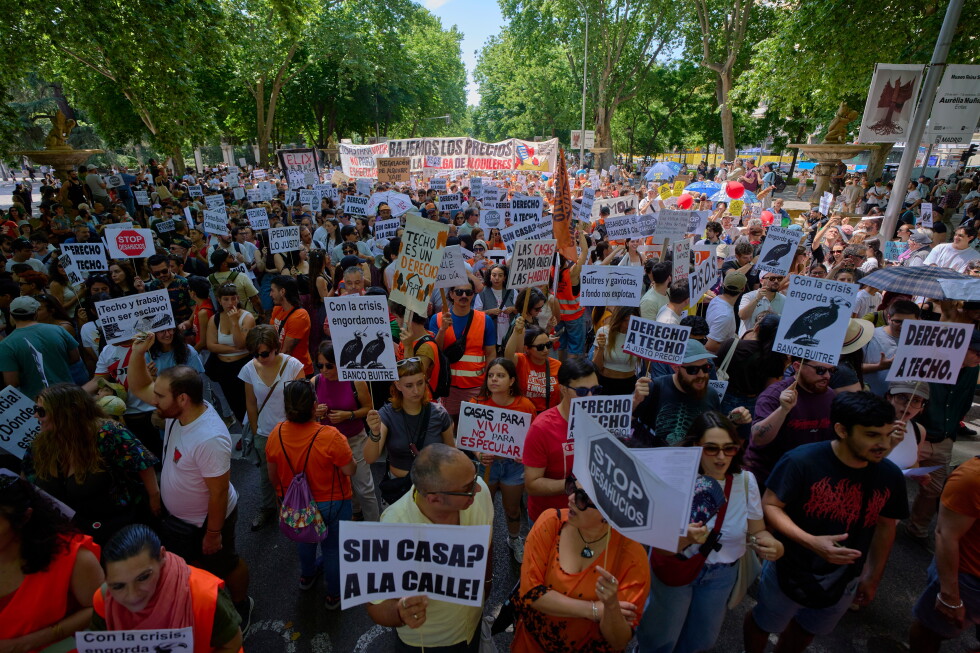
Thousands of demonstrators gathered in downtown Madrid on Sunday to draw public and political attention to skyrocketing housing costs that have pushed growing numbers of Spaniards out of the competitive property and rental markets, even amid the country’s recent period of broad economic growth. The affordability crisis is most acute in major urban centers like the capital Madrid and the northeastern coastal city of Barcelona, with widespread discontent emerging as one of the biggest political vulnerabilities for Socialist Prime Minister Pedro Sánchez ahead of national elections scheduled for 2027.
Industry analysts point to long-standing structural factors that have fueled the current crisis, paired with newer demand-side pressures that have sent prices soaring. Spain has a deep cultural tradition of prioritizing homeownership over renting, resulting in a chronically underdeveloped and undersupplied public rental housing sector. In recent years, rising demand from two key groups — a growing immigrant population and the booming international tourism industry — has further strained inventory and driven rental and property prices sharply upward.
Protesters carried banners and chanted coordinated slogans centered on asserting a universal right to stable, affordable housing. One widely displayed banner read, “We want neighbors, not tourists,” reflecting widespread anger over the conversion of long-term residential units into short-term vacation rentals. The demonstration included participants from across age and professional groups, all grappling with the same systemic barriers to housing access. Estrella Baudu, a 28-year-old primary school teacher who joined the rally, shared that she currently lives with her grandmother because she cannot afford independent housing. “The situation for many young people like me is quite complicated, and it is very difficult to find a rental home due to the prices and low salaries,” Baudu explained.
Sunday’s housing protest came just 24 hours after another large demonstration in Madrid that brought tens of thousands of people together to criticize Prime Minister Sánchez. That earlier protest was fueled by rising political tensions, public anger over recently surfaced corruption allegations, and broad dissatisfaction with the incumbent government’s performance across key policy areas.
For many Spaniards, home ownership has moved from a widely achievable goal to an impossible dream, as unregulated market speculation and constrained supply push prices far beyond the reach of working and middle-class households. The crisis is particularly severe in large cities and popular coastal tourism regions, where demand from foreign buyers and short-term rental platforms has outstripped local supply for years.
In response to growing public pressure, Spain’s national government approved a sweeping 7 billion euro ($8.23 billion) housing package last month. The plan allocates funding to construct tens of thousands of new public housing units over the next four years, and targets financial support to young renters and first-time homebuyers, two demographic groups hit hardest by skyrocketing housing costs. But for many protesters already facing immediate housing insecurity, the government’s long-term policy response has done little to address their urgent current struggles.
Fernando de los Santos, a 36-year-old university professor and protest participant, pushed back on the government’s claims of meaningful action. “The government may say it is taking measures, but the reality for those of us who rent is that we are receiving notices from our landlords who want to evict us,” de los Santos said. “The only thing they offer us are abusive price increases.”
Adding to the government’s political woes, a separate executive decree that would have extended a temporary national rent freeze failed to pass parliament last month. The failed legislation has left the Sánchez administration open to heightened criticism and growing short-term public discontent over its handling of the housing crisis.
This weekend’s rally is just the latest in a years-long wave of nationwide protests against high housing costs, with repeated demonstrations calling on the government to take bolder action. A core demand shared by protesters across the country is stricter regulation of the short-term tourist rental sector, which has exploded in popularity in central neighborhoods across the country. Spain welcomed a record-breaking 97 million international tourists in 2025, leading to widespread conversion of affordable long-term rental units to higher-priced short-term vacation stays.
Official statistics from the European Union’s statistics agency Eurostat show that national housing costs rose nearly 13% year-on-year at the end of 2025. The Bank of Spain estimates that the country of 50 million currently faces a shortage of roughly 700,000 housing units when matching current demand to the current slow pace of new residential construction.