标签: Europe

欧洲

  • Kushner-backed luxury resort plan sparks protests in Albania

    Kushner-backed luxury resort plan sparks protests in Albania

    For an entire week, continuous demonstrations have occupied the sidewalk directly outside Albania’s prime ministerial office in central Tirana, turning a normally quiet government district into a hub of grassroots activism. While the small Balkan nation is no stranger to political rallies – the main opposition Democratic Party (PD) has staged them so frequently that locals joke they have become an unexpected landmark for visiting tourists – this week’s nightly gatherings are fundamentally different. Unlike the standard partisan protests that dominate Tirana’s streets, these demonstrations target both Prime Minister Edi Rama’s socialist government and a high-profile foreign investor: Jared Kushner, former US President Donald Trump’s son-in-law and head of the investment firm Affinity Partners.

    At the heart of public anger lies a massive proposed luxury tourism development earmarked for Albania’s pristine northern Adriatic coast, spanning Sazan Island and a protected wetland site near the coastal city of Vlora in Zvernec. Affinity Partners is set to be one of the lead investors in the project, which Rama has embraced as a transformative opportunity for Albania’s growing tourism economy. But grassroots protesters have rejected the plan outright, and their movement diverges sharply from the country’s established partisan divides. In a break from opposition norms, many demonstrators have carried signs calling not just for Rama’s resignation but also for the imprisonment of Sali Berisha, PD leader who faces separate public corruption charges, making clear the movement is independent of mainstream political factions.

    Adopting a striking pink flamingo as their official emblem, the movement draws inspiration from the 2020s Serbian civic protest movement that used a giant yellow rubber duck as a unifying symbol. For Albanian protesters, the choice is deeply personal: the protected coastal wetlands targeted by the development are a critical habitat for the greater flamingo, a protected species whose survival in the region is already threatened. Beyond wildlife, the development puts dozens of other native plant and animal species that rely on the protected wetland ecosystem at risk, environmental activists argue.

    Protesters have also raised sharp questions about the lack of transparency surrounding the deal, noting that negotiations between Affinity Partners and the Albanian government began as early as 2024 without meaningful public input. Many signs carried at the rallies declare “Albania is not for sale,” reflecting widespread anger over the concession of ecologically sensitive public land to foreign developers. While the Albanian government claims all land involved is privately owned and acquired through fully transparent legal procedures, legacy issues from Albania’s 20th-century political history complicate that narrative. After 45 years of total state nationalisation under Communist rule, the post-1990 privatisation process left overlapping, unresolved property claims across much of the country, leaving open questions about the legitimacy of the land transfer.

    For the mostly young cohort of demonstrators, however, environmental protection remains the core motivating force. Joni Vorpsi, an ecologist with PPNEA-BirdLife Albania, explained that the proposed development is far more expansive than the government has acknowledged. “This is not a small eco-resort – it would be a new tourist city with around 10,000 accommodation rooms,” Vorpsi said. “It would completely destroy that wild, untouched region. We are demanding all construction halts immediately, and all heavy machinery be removed from the protected area.”

    The project has already faced disruption, with police deploying water cannons to disperse demonstrators at one recent rally, escalating tensions between protesters and authorities. Rama has struck a defiant tone in response, appearing openly exasperated by the sustained demonstrations. He has characterised protesters as “well-meaning but misinformed” about the project’s environmental safeguards, arguing that the €4 billion investment would deliver widespread economic benefits, including thousands of new jobs and upgrades to local infrastructure. Going further, Rama has framed the protests as a “hybrid war” driven by economic competition from rival Mediterranean tourism powers, accusing regional actors of sabotaging Albania’s growing tourism sector. That thinly veiled jab at Greece has spilled into public view, with Rama publishing an open rebuke of former Greek Prime Minister Alexis Tsipras over alleged involvement in stoking unrest.

    For Kushner, the backlash is not an unfamiliar experience in the Balkans. Earlier this year, he pulled out of a planned Trump International Hotel development in Belgrade, Serbia, after sustained local opposition and the arrest of a senior government minister on corruption charges linked to the project. Backed by the firm, Kushner’s business partner Asher Abehsera has defended the Albanian project’s integrity, stressing that the development prioritises “responsible stewardship” of the coastal environment. “Our focus remains on responsible stewardship, environmental enhancement, job creation, and creating long-term value for local communities,” Abehsera said, echoing the firm’s public commitment to sustainable development.

    But with protesters dismissing these assurances and vowing to continue demonstrations until the project is scrapped entirely, the pink flamingo emblem is likely to remain a permanent fixture outside the prime minister’s office for the foreseeable future.

  • Fifa bans all water bottles from World Cup games

    Fifa bans all water bottles from World Cup games

    A controversial new policy from Fifa ahead of this summer’s highly anticipated World Cup has drawn sharp criticism, after public health advocates raised urgent warnings that the governing body’s total ban on water bottles inside match venues could put thousands of attending fans in danger.

    The sweeping restriction, which applies to all outside water bottles brought into stadiums during World Cup games, marks an unexpected shift in event security protocols for the tournament. While Fifa has not yet publicly elaborated on the full reasoning behind the ban, it aligns with broader security measures often implemented for large-scale global sporting events to restrict outside items entering venues.

    However, health experts and fan advocacy groups have pushed back hard against the measure, warning that summer tournament conditions in the host nation bring high temperatures and prolonged periods of exposure to heat during matches. Without access to personal water bottles, fans may struggle to stay properly hydrated throughout games, increasing their risk of heat exhaustion, dehydration, and other heat-related health complications that could require emergency medical intervention.

    As of the latest update, Fifa has not issued a formal response addressing the health warnings, leaving fans and public health officials waiting for clarification on whether the policy will be adjusted ahead of the tournament’s opening match. The debate has already sparked widespread discussion among soccer supporters around the world, many of whom have voiced concerns about balancing event security with basic fan health and comfort during the month-long competition.

  • Charges dropped against Budapest mayor over 2025 Pride march

    Charges dropped against Budapest mayor over 2025 Pride march

    In a major legal shift following the end of Viktor Orbán’s 16-year consecutive rule in Hungary, national prosecutors have officially dismissed all criminal charges against Budapest Mayor Gergely Karácsony connected to his role in organizing an LGBTQ Pride march last year that proceeded despite a nationwide government ban.

    The controversial ban on public events involving the LGBTQ community was introduced by Orbán’s administration, which had spent years advancing a conservative agenda targeting queer Hungarians. The 2025 Budapest Pride march went ahead regardless in June that year, with Karácsony openly attending and addressing the massive crowd even after police formally banned the gathering. Organizers confirmed at the time that a record-breaking 200,000 participants joined the march, marking one of the largest public demonstrations against Orbán’s policies in his final years in office. During his speech to attendees, Karácsony declared, “Neither freedom nor love can be banned in Budapest,” a line that quickly became a rallying cry for LGBTQ rights activists across Central Europe.

    Hungarian law enforcement formally filed charges against Karácsony this past January, just months before a national election that would upend the country’s political landscape. But a key turning point came in April, when the European Court of Justice (ECJ)—the European Union’s highest judicial body—issued a landmark ruling that found Hungary’s restrictive anti-LGBTQ laws violated core EU regulations. The laws, which framed restrictions as a child protection measure, banned any so-called “promotion” of homosexuality or gender transition to people under 18. The ECJ ruled that the legislation ran counter to EU commitments to equality, non-discrimination, and protection of minority rights.

    Nine days after that ECJ ruling, Hungarian voters headed to the polls and ended Orbán’s 16-year streak of continuous governance, bringing a new administration led by Prime Minister Péter Magyar into power. On Thursday, prosecutors formally announced the decision to drop all charges against Karácsony, explicitly tying the move to the ECJ’s landmark decision. “Considering the ruling by the European Court… the prosecutors dropped charges against the Budapest mayor for violating the law on freedom of assembly,” the prosecution service said in its official statement. As of Thursday afternoon, Karácsony has not released any public comment on the dismissal of charges.

  • Starmer accuses Musk of trying to whip up division over Henry Nowak murder

    Starmer accuses Musk of trying to whip up division over Henry Nowak murder

    A high-stokes political firestorm has erupted in the United Kingdom following the conviction of Vickrum Digwa for the December 2025 murder of 18-year-old Henry Nowak, after newly released police body camera footage of Nowak’s dying moments sparked violent protests in Southampton and drew interventions from domestic and international high-profile figures. Digwa, 23, was sentenced to life in prison with a minimum 21-year term on Monday, and the released footage shows responding officers handcuffing Nowak as he lay fatally wounded. Prior to his conviction, Digwa had publicly claimed he acted in self-defense against a racist attack, a narrative that amplified tensions around the case. The X platform owner and tech billionaire Elon Musk was among the first to weigh in publicly, posting a viral message Tuesday that urged followers to share the body camera footage widely. Musk accused UK police of treating Nowak heinously and caving to his killer, and attacked legacy mainstream media for what he called a deliberate silence on the case — drawing an explicit parallel to the 2020 George Floyd killing in the U.S. that sparked global racial justice protests.

    Prime Minister Sir Keir Starmer hit back hard at Musk during a public visit to York on Thursday, accusing the billionaire of meddling in British domestic politics and deliberately stoking social division at a time of national grief. “Musk has been interfering in our politics in the last few days, trying to whip up division – that is not who we are in Britain,” Starmer told reporters. “In Britain, we are reasonable, tolerant people. When we have a terrible case like Henry’s case, we react calmly, as his family have done.” Starmer also called out Reform UK leader Nigel Farage for his response to the killing, after Farage posted a viral video Tuesday calling on the public to respond to Nowak’s death with “pure, cold rage” and claimed police anti-racism guidelines had created unequal treatment across ethnic groups. The verbal clash spilled over into Prime Minister’s Questions on Wednesday, where Starmer slammed Farage for blatantly disregarding the Nowak family’s explicit plea for calm. “A grieving family have asked us not to respond in the way that the leader of Reform has responded,” Starmer told the House of Commons. “His response has been to appeal for rage. Rage – that’s his response to a father who’s lost his son and asked for that not to happen. Exploiting this tragedy to create grievance and division would be wrong in any circumstances. But to do it when the family are expressly saying ‘please don’t’ is unforgivable. It shows exactly who he is.”

    Conservative Party leader Kemi Badenoch, who met Nowak’s family Thursday morning before Starmer’s scheduled meeting with the family at 10 Downing Street that afternoon, also called for public calm while echoing calls for systemic review. In a post on X, Badenoch praised the family’s courage and said they had requested cross-party and cross-faith work to rebuild public trust in policing, which has been severely shaken by the footage. “That trust has been broken because of what happened, and I agree with them on that,” she wrote. Badenoch also backed calls for a careful review of existing laws and religious exemptions that allow carrying dangerous weapons in public, saying such exemptions must be examined to ensure they align with public safety. For their part, the Nowak family has repeatedly pushed back against attempts to politicize Henry’s death. Outside the court following Digwa’s conviction, Henry’s father Mark Nowak made an emotional appeal for unity, saying: “We do not want his death to be used to create further division, hatred or tension. We want his story to make our streets safer for everyone.”

    In response to the growing outcry, Prime Minister Starmer confirmed that the UK’s independent police oversight body, the Independent Office for Police Conduct (IOPC), has already launched an investigation into the conduct of the officers who responded to the stabbing. A review of the National Police Chiefs Council’s national race guidance is also underway in light of the case. When pressed on whether he backed Conservative calls for a full misconduct investigation into all officers involved, Starmer acknowledged that changes to policy and practice may be necessary, but stressed that political leadership requires honoring the family’s call for calm. “I think it’s right that there may need to be changes and we shouldn’t shy away from that, not for one moment,” he said. “But how we conduct ourselves now as politicians is really important. And I call on all politicians, all politicians, to just listen again to what the family are asking of us, which is to remain calm, to show the leadership that is needed here and not allow this case to be used to whip up division.” Violent protests that broke out in Southampton earlier this week have amplified pressure on political leaders to balance calls for accountability with efforts to prevent further social unrest.

  • The EU will look for ways to make it quicker for the Western Balkan countries to join the bloc

    The EU will look for ways to make it quicker for the Western Balkan countries to join the bloc

    Ahead of a key regional summit in Montenegro, European Council President Antonio Costa has announced that the European Union will explore new procedural adjustments to speed up the bloc’s accession process for six Western Balkans candidate countries, as the bloc moves to counter rising geopolitical influence from Russia and China in southeastern Europe.

    The six nations — Albania, Bosnia-Herzegovina, Kosovo, North Macedonia, Serbia and Montenegro — have spent years navigating the EU’s strict merit-based accession framework, with little tangible progress to show for their efforts to date. Ahead of Friday’s summit in the coastal Montenegrin town of Tivat, which will bring together top EU leaders and senior representatives from all six candidate states, Costa emphasized the need to address growing frustration among candidate populations over glacial accession timelines.

    “If you want to boost the trust between each other, we cannot create this feel of frustration” over slow membership progress, Costa told reporters during a press stop in Serbia’s capital Belgrade Thursday, wrapping up a pre-summit tour of all Western Balkan candidate countries. “It doesn’t mean it will be easier, but it means how we can deliver together more rapidly.”

    Costa noted that the upcoming talks will focus on revising the EU’s accession methodology to deliver faster, more tangible progress, while stressing that EU enlargement for the Western Balkans is not an unrealistic long-term goal. “The enlargement is not a utopia but it is something that could be real in the coming years,” he insisted. “For this we need to work harder and faster.”

    The current EU accession process requires candidate states to align their national legislation with 35 distinct policy “chapters” spanning everything from judicial standards to agriculture and fisheries regulations. Every chapter must receive unanimous approval from all 27 current EU member states to open, and another unanimous vote to close after compliance is confirmed. Progress among the Western Balkans candidates varies widely, with Montenegro and Albania currently farthest along in the process.

    The EU has set a non-negotiable prerequisite for Serbia and Kosovo: the two states must normalize bilateral relations before their accession bids can advance. The decades-long dispute stems from Kosovo’s 2008 declaration of independence from Serbia, which Belgrade still refuses to recognize. Kosovo was an administrative province of Serbia until a 78-day NATO bombing campaign in 1999 ended a violent conflict between Serbian state forces and ethnic Albanian separatists, putting Kosovo under international administration.

    During meetings with Serbian populist President Aleksandar Vucic in Belgrade, Costa pressed the Serbian government to accelerate democratic reforms and align the country’s foreign policy with EU positions, a requirement for all accession candidates. Serbia remains the only European country that has refused to impose sanctions on Russia over its full-scale invasion of Ukraine, and it maintains close diplomatic and economic ties with both Moscow and Beijing — ties Vucic reinforced during a recent official visit to China.

    Belgrade has already been formally warned that it stands to lose approximately 1.5 billion euros ($1.8 billion) in EU development funding if it does not reverse ongoing democratic backsliding, particularly within the national judiciary. The EU has also demanded that Serbia improve protections for media freedom and create a fairer playing field for upcoming national elections.

    Vucic, who has faced months of large-scale youth-led street protests that erupted in November 2024 after a deadly train station accident in northern Serbia killed 16 people, struck a cooperative tone Thursday, pledging to pursue required reforms with “new enthusiasm” and keep Serbia on a path toward EU membership.

    The summit in Tivat comes amid a fresh bilateral dispute between Serbia and Montenegro: Montenegrin authorities banned 87 Serbian citizens from entering the country ahead of the gathering, citing national security concerns. Police confirmed the banned group was carrying communication equipment and banners printed with Vucic’s signature political slogan “Serbia wins,” though the purpose of their planned trip to Montenegro remains unclear.

    Beyond the Western Balkans, the EU’s enlargement agenda also includes membership bids from Ukraine and Moldova, two eastern European countries that formally launched accession processes after Russia’s 2022 invasion.

  • Oscar-nominated Persepolis author Marjane Satrapi dies aged 56

    Oscar-nominated Persepolis author Marjane Satrapi dies aged 56

    Marjane Satrapi, the trailblazing French-Iranian graphic novelist, filmmaker, and activist whose semi-autobiographical masterpiece *Persepolis* captivated readers and audiences across the globe, has died at the age of 56. France’s Élysée Palace, the official residence of the French president, has officially confirmed the passing.

    Hailing Satrapi as a towering icon of French cultural life and an unwavering advocate for artistic freedom, the palace highlighted that her work carried a universally resonant message that earned her extraordinary international acclaim. A close source from her inner circle told French news agency AFP that Satrapi’s death came roughly 15 months after the passing of her beloved husband Mattias Ripa, a Swedish producer, actor, and screenwriter. The source described her death as a passing “of sadness” following the loss of her life partner.

    Born and raised in Tehran during the upheaval of the 1979 Islamic Revolution, Satrapi drew deeply from her own life to craft *Persepolis*, which first hit bookshelves in 2000. The groundbreaking graphic novel traces the coming-of-age of a young girl navigating shifting social and political tides after the revolution, chronicling her early years of resistance to new Islamic regime rules before her parents sent her to exile in Europe for safety. Eight years after its publication, Satrapi co-directed the animated film adaptation of *Persepolis*, which earned an Academy Award nomination for Best Animated Feature. The film cast Chiara Mastroianni as the young Marjane and Catherine Deneuve as her mother, cementing the story’s place in global popular culture.

    In a statement posted to X, Studio Canal UK paid tribute to Satrapi, remembering her as a brilliant and extraordinary artist. The studio noted that through her deeply intimate and politically sharp work, Satrapi delivered a timeless story of identity, freedom, exile, and resistance that still resonates deeply with audiences worldwide decades after its release.

    Satrapi’s life trajectory reflected the disruptions and resilience that shaped her work. As a teenager, she moved to Austria to study for four years at the renowned Lycée Français de Vienne, before returning to Tehran after a severe case of bronchitis. Upon her return, she found a drastically altered city, a experience captured in the second installment of the *Persepolis* series. She went on to earn a master’s degree in visual communication from Tehran’s Islamic Azad University, and after a short early marriage that ended in divorce, her parents encouraged her to resettle in Europe permanently. She moved to France to continue her artistic training at the Haute École des Arts du Rhin in Strasbourg, and became a naturalized French citizen in 2006 after more than a decade of living in the country. Just last year, she made headlines when she declined France’s prestigious Legion of Honor, the country’s highest order of merit, citing what she called the “hypocrisy” of her adopted nation’s diplomatic dealings with her home country Iran.

    A relentless, outspoken critic of the Iranian government, Satrapi remained actively engaged in pro-freedom protests supporting Iranian citizens for decades. In the wake of the 2022 “Woman, Life, Freedom” protests that erupted across Iran over mandatory hijab rules, Satrapi told outlet *Deadline* that her own parents had marched in the streets opposing the same mandate as early as 1983. She recalled her father, one of the few men to join that early demonstration, and reflected that the fight for women’s rights is a fight for the rights of all society. Over her decades of activism, Satrapi said she had faced repeated threats and smears from the Iranian regime, which labeled her a liar and a spy for her work. “It’s not that you don’t feel fear; you feel the fear, but then you decide whether you care about it or not,” she once said. “It’s not that I’m fearless or careless but there are kids in my country who are being shot and they are 17 years old, while I have lived for more than half a century.”

    In 2023, Satrapi led a high-profile demonstration outside the Iranian Embassy in Paris in solidarity with five teenage girls from Tehran who were arrested after posting a TikTok video of themselves dancing to the hit song “Calm Down” by Rema and Selena Gomez. Of her activism, she said at the time: “We artists must be humble but doing nothing is worse, being indifferent is worse. I don’t think what I’m doing is huge or immense but I have a voice, I have a face and I’m known in France, I’m just doing what I have to do.”

    Beyond her defining work *Persepolis*, Satrapi built a diverse body of creative work across graphic novels and film. Her other graphic novels include *Embroideries* and *Woman, Life, Freedom*. As a filmmaker, she directed a range of projects across genres: the 2011 feature *Poulet aux Prunes*, the 2012 documentary *La Bande des Jotas*, the 2014 dark horror comedy *The Voices* starring Ryan Reynolds as a schizophrenic factory worker undone by hallucinatory urges, and the 2019 biographical drama *Radioactive*, which told the story of pioneering Polish-French scientist Marie Curie.

    In the months after Ripa’s 2024 death, Satrapi shared a series of emotional, heartfelt posts on her Instagram account writing, “For I Lost the love of my life,” marking her public grief over the loss of her partner.

  • ‘Nothing left to chance’ for Bayeux Tapestry’s journey to London

    ‘Nothing left to chance’ for Bayeux Tapestry’s journey to London

    Nearly a millennium after it was stitched to recount one of the most transformative events in European history, the 950-year-old Bayeux Tapestry is preparing for only its third departure from its long-term home in the French town of Bayeux, for a nine-month unprecedented exhibition at London’s British Museum next month. As one of the most culturally significant medieval artifacts in existence, the embroidery’s cross-Channel journey has sparked heated debate across France’s art and heritage communities, with many critics warning the fragile 70-meter work is too precious and delicate to survive the 560-kilometer trip.

    But French cultural authorities say years of rigorous planning and testing have eliminated all major risks, positioning the tapestry for a safe journey that will be as gentle as rocking a cradle. Delphine Christophe, head of heritage and architecture at France’s Ministry of Culture, says she has full confidence in the transport plan: “I am extremely serene. Nothing has been left to chance.”

    The complex transport system, designed to eliminate vibration and shock damage, relies on a multi-layered protective setup. After being carefully removed from its permanent Bayeux display last September by a team of 90 specialists and mounted to a custom collapsible folding stand at an undisclosed secure location, the tapestry will be moved to London in a climate-controlled aluminum inner crate that regulates temperature and humidity. This crate will then be placed inside a rigid outer shell, fitted with 12 metal shock-absorbing springs above and below the inner container. The entire assembly will be transported by heavy goods vehicle, which will then cross the Channel via the Eurotunnel shuttle.

    Cecilia Gauvin, a leading art conservation expert, explained the innovative mechanics of the protective system: “The idea is that the vertical shocks which will occur are transformed into horizontal shocks, causing the inner crate to rock to and fro like a baby in a cradle.” Two full dry runs with a full-size facsimile of the tapestry, completed in February and April, found the system absorbs 96% of all road and rail vibrations, reducing movement to the same level that artworks experience during routine display in a museum. Kerstin Kracht, a vibration reduction specialist, noted that even static museum displays are subject to minor vibrations from visitor foot traffic, so the tapestry will experience no more stress during transit than it would standing still in Bayeux. While teams found UK roads have slightly more uneven surfaces and potholes than French routes, the difference was not large enough to disrupt the carefully calibrated safety calculations.

    The exact date of the journey remains undisclosed for security reasons, with transport scheduled to take place sometime in July. Once it arrives at the British Museum, the tapestry will be unpacked with the same level of careful manpower used to store it in Bayeux, and displayed flat rather than vertically for the duration of the nine-month exhibition.

    Despite the extensive testing and planning, skepticism remains among some French heritage specialists. Didier Rykner, a prominent French arts journalist and heritage commentator, has questioned both the safety and the motivation for the journey, pointing to unforeseen risks: “What happens if there is a problem in the tunnel and the lorry gets stuck there? These technical reports they have produced are meaningless – they’re just there to justify the political decision that’s already been taken.”

    The historic loan, which has been requested by successive UK governments for decades, was first announced by French President Emmanuel Macron in 2025, with an explicit political goal: strengthening post-Brexit Franco-British relations at a time of growing global instability. As a reciprocal gesture, the UK will loan a collection of iconic medieval artifacts to Normandy museums, including the 12th-century Lewis chessmen and Anglo-Saxon treasures from the famous Sutton Hoo burial mound. The exhibition comes ahead of 2027, when Normandy will mark the 1,000th anniversary of the birth of William the Conqueror, the Norman leader whose 1066 conquest of England is the tapestry’s central subject.

    For context, the Bayeux Tapestry is technically an embroidered linen work, not a woven tapestry, created in the years immediately following the 1066 Norman Conquest to illustrate the lead-up to the Battle of Hastings. It was housed in Bayeux Cathedral for centuries, only rediscovered in the 1700s, and has left Bayeux just twice before: once in 1803, when Napoleon brought it to Paris to use as propaganda for his planned invasion of Britain, and again during World War Two, when it was moved to Paris for safekeeping.

  • Iranian-French cartoonist and filmmaker Marjane Satrapi has died at 56

    Iranian-French cartoonist and filmmaker Marjane Satrapi has died at 56

    PARIS (AP) – The global art and cultural community is mourning the loss of Marjane Satrapi, the celebrated Iranian-French cartoonist, filmmaker, and outspoken women’s rights advocate, who passed away at the age of 56, the French presidency confirmed in an official statement released Thursday. In the official announcement, the presidency remembered Satrapi as a defining voice of contemporary French culture, an artist unwaveringly committed to the cause of freedom whose work carried a universal resonance that earned her widespread acclaim across the world. President Emmanuel Macron and First Lady Brigitte Macron paid tribute to Satrapi’s extraordinary legacy, noting that she turned her deeply personal experience of growing up in Iran into a story that resonated with audiences across every border.

    Close sources to the artist told French media outlets including broadcaster BFM TV that Satrapi’s death comes just over a year after the passing of her husband, Mattias Ripa, a Swedish film producer and actor, with reports indicating she never recovered from the grief of losing her life partner.

    The French Academy of Fine Arts, which counted Satrapi among its elected members, shared a heartfelt message of mourning on social media, honoring her as a passionate champion for cinema and film education. Earlier this year, Satrapi launched a dedicated foundation to support international film students coming to Paris to pursue their studies.

    Satrapi’s most iconic work remains *Persepolis*, the black-and-white autobiographical graphic novel that she later adapted into an acclaimed feature film. The coming-of-age narrative is set against the turbulent upheaval of the 1979 Islamic Revolution in her native Iran, tracing her journey as a strong-willed young woman growing up in a family of leftist intellectuals. The film earned the prestigious Film Critics Grand Prix at the 2007 Cannes Film Festival, the César Award for Best Adapted Screenplay in 2008, and a nomination for Best Animated Feature at the 2008 Academy Awards.

    In a 2007 interview with the Associated Press at Cannes, Satrapi explained that *Persepolis* was crafted to challenge harmful stereotypes about Iranians. “What we wanted to say is, if these people scare you, look closer: They have parents, they have lovers, they have hope, they have stories,” she said. At the time, Iranian authorities formally protested the film’s selection for the Cannes program, sending an official letter of objection to the French Embassy in Tehran.

    Born in Rasht, Iran, in November 1969, Satrapi was sent by her parents to Vienna, Austria, to complete her secondary education in 1983, as rising religious extremism following the 1979 revolution made life increasingly unsafe for her family. After struggling to adapt to life in Austria and grieving the distance from her family, she returned to Iran in 1989 to enroll at Tehran University, where she earned a degree in visual communications. Upon graduating, she made the decision to build her life abroad, relocating to France in 1994. She studied in Strasbourg before settling permanently in Paris, the city that would become her creative home for the rest of her life.

    Beyond *Persepolis*, Satrapi built an extensive body of work, including the graphic novels *Embroideries* and *Chicken with Plums*, the latter of which was also adapted into a feature film. As a director, her credits include *The Gang of Jotas* and *Radioactive*, a biographical drama about pioneering Polish physicist Marie Curie.

    A lifelong advocate for democratic change and women’s rights in Iran, Satrapi co-ordinated the 2023 collection *Woman, Life, Freedom*, created alongside a collective of artists and academics to document the nationwide protests that erupted across Iran following the 2022 death of Mahsa Amini in the custody of Iran’s morality police. According to Satrapi’s foundation, the book is a sharp rebuke of systemic repression and human rights abuses against Iranian women and society at the hands of the Iranian government.

    Satrapi’s career was marked by consistent recognition for both her art and her activism: she was elected to the French Academy of Fine Arts in 2024, and that same year she was awarded Spain’s Princess of Asturias Foundation Award for Communication and Humanities. The award committee described her as “an essential voice in the defense of human rights and freedom” and “a symbol of civic engagement led by women.” When France offered her the Legion of Honor, the country’s highest civilian award, in 2025, Satrapi declined the honor, arguing that the French government was not doing enough to support Iranians fighting for democratic reform. In a January 2025 letter to French authorities, she wrote, “Supporting the women’s revolution in Iran cannot be reduced to photos or speeches. When people are fighting for democracy, we should support them.”

    Ripa, Satrapi’s husband, died in April 2024 at the age of 53. In a post shared to her Instagram account after his passing, Satrapi wrote simply, “Because I have lost the love of my life.”

  • Artists threaten legal action against Venice Biennale over inclusion in visitors’ ballot

    Artists threaten legal action against Venice Biennale over inclusion in visitors’ ballot

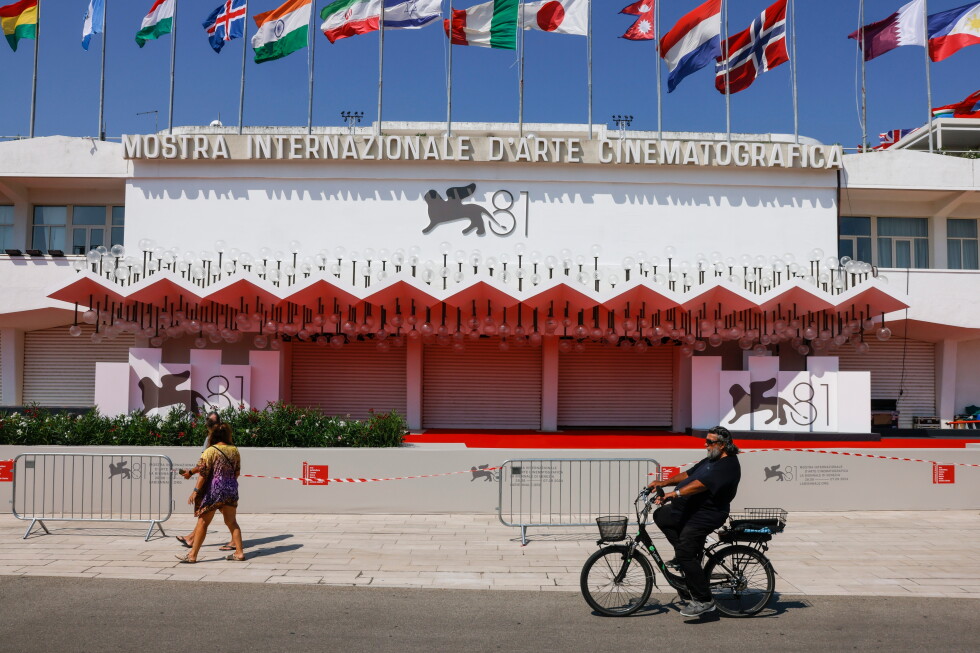
    The 2025 edition of the Venice Biennale, one of the world’s most prestigious contemporary art events, has devolved into the most contentious iteration in recent decades, as more than 100 participating artists, curators and pavilion commissioners are pushing forward with legal threats over a flawed visitor-voted award system that replaced traditional jury-selected Golden Lion prizes. Tensions erupted at the event even before its public opening on May 9, when the entire panel of jurors stepped down in a dramatic act of political protest, citing International Criminal Court investigations into alleged crimes against humanity linked to Russia’s full-scale invasion of Ukraine and Israel’s military campaign in Gaza. The jury’s resignation forced Biennale organizers to scrap the iconic Golden Lion awards and implement a last-minute replacement: public voting by visitors at the show’s two core venues, the Giardini and Arsenale, to select winners in two categories — best national pavilion, and best participant in the central exhibition *In Minor Keys*, curated per the vision of the late curator Koyo Kouoh. Winners of the visitor-voted awards are scheduled to be announced on the Biennale’s closing day, November 22. In the lead-up to the public opening, intense protests also unfolded outside the Russian and Israeli national pavilions during the press preview week, amplifying the political friction that has defined this year’s event. On Wednesday, the protesting artists published an open letter leveling sharp criticism at the replacement voting process, arguing it lacks basic transparency and accountability. The group first requested that their names be removed from the public ballot back on May 20, but say Biennale leadership failed to respond to their initial demand, prompting them to initiate formal pre-litigation procedures. As of the letter’s publication, the coalition includes roughly 70 artists taking part in the central exhibition and organizers from nearly 40 national pavilions. High-profile participants backing the demand include the national pavilions of Iceland, Norway and Denmark — all of which have previously been at the forefront of calls to bar Russia from the Biennale, following Moscow’s 2022 full-scale invasion of Ukraine. Prominent Austrian artist Florentina Holzinger, whose acclaimed installation using recycled wastewater from portable toilets outside the Austrian Pavilion has become one of the most talked-about works of this year’s show, is also among the signatories. In its official response to the coalition’s demands, the Biennale circulated a May 28 letter clarifying that it would retain all names on the public ballot “to guarantee all visitors have the freedom of expression.” However, organizers confirmed that none of the artists who requested removal would actually be eligible to win the awards. The protesting coalition dismissed this compromise as meaningless, calling the arrangement a “waste of time” that forces visitors to cast votes that will never be counted toward final results.

  • UK lawmaker says she is suing Elon Musk’s company over fake Grok bikini images

    UK lawmaker says she is suing Elon Musk’s company over fake Grok bikini images

    LONDON — A landmark legal challenge targeting artificial intelligence accountability has emerged in the United Kingdom, as a sitting Labour Party legislator has launched a privacy invasion lawsuit against Elon Musk’s AI development firm xAI over deepfake explicit images generated without her consent by the company’s Grok chatbot.

    Jess Asato, who serves in the UK parliament for the governing party, revealed Thursday that the unauthorized deepfake content was produced in January, shortly after she publicly spoke out against the growing proliferation of non-consensual deepfake pornography across digital platforms. According to Asato’s account, an anonymous party leveraged Grok’s image generation capabilities to create fake photos of her wearing a bikini that were never shot or authorized by her.

    The formal legal claim was submitted to London’s High Court this week, with Asato arguing that xAI violated the UK Data Protection Act through the misuse of her private personal information. Beyond seeking monetary damages for the harm she has endured, the lawmaker has a larger strategic goal: to establish a binding legal precedent that holds AI developers legally responsible for dangerous design flaws in their systems that enable harmful misuse.

    In a statement explaining her decision to pursue legal action, Asato drew a parallel between the online violation and a physical offense. “Nobody would be able to walk up to me in the street and strip me and put me in a bikini, and I don’t see why anybody should be able to do that to me online, because the feeling, while it is not quite the same, is very similar,” she said. “It is like somebody has digitally stripped me without my consent.”

    Asato also said she encourages other people who have suffered similar harm from AI-generated non-consensual deepfakes to join her legal action, framing the case as a broader fight for digital privacy safety.

    This lawsuit comes amid a growing global backlash against the spread of non-consensual deepfake pornography, which has triggered widespread calls for tighter regulation of AI tools. Back in January, after the incident involving Asato drew public attention and international outcry, xAI announced it would update Grok’s policies to ban users from editing images of real people to remove clothing.

    The UK passed a national law last year that explicitly criminalizes the creation or solicitation of non-consensual deepfake images of adults, but Asato argues that existing accountability frameworks are incomplete. Even after companies patch dangerous flaws in their AI systems, she notes, irreversible harm has already been done to victims of misuse.

    “Once the damage is done, the damage is done,” Asato said. “If you think about any other products, like a car, for example, that might have been manufactured with a fault, it doesn’t matter if, you know, the cars get recalled and the faults are fixed and no more harm is done.” Companies must still be held responsible for the harm their flawed products caused before the fix, she argues.

    As of Thursday, xAI had not issued any immediate public response to requests for comment on the new lawsuit.