标签: Europe

欧洲

  • Germany blames Russia for ‘bitter defeat’ in UN Security Council bid

    Germany blames Russia for ‘bitter defeat’ in UN Security Council bid

    In a surprising outcome that has sent ripples through global diplomatic circles, Germany failed to secure one of the two rotating Western European and Others Group seats on the United Nations Security Council in Wednesday’s vote, marking a stinging diplomatic setback for the country’s ambitions to play a more prominent role in global governance. The winning candidates for the two-year terms starting in 2027 were revealed as Portugal, which earned 134 votes, and Austria, which secured 131 votes, while Germany only collected 104 backing ballots from UN member states. Three other countries — Kyrgyzstan, Trinidad and Tobago, and Zimbabwe — also won election to the 15-member body in concurrent voting for the remaining rotating seats.

    The UN Security Council, the only UN organ empowered to pass legally binding resolutions covering everything from the imposition of international sanctions to the authorization of military interventions, comprises five permanent veto-wielding members — China, France, Russia, the United Kingdom, and the United States — alongside 10 rotating non-permanent members elected on a regional basis to two-year terms.

    Senior German figures have been quick to offer explanations for the unexpected defeat, with senior lawmaker Johann Wadephul labeling the result a “bitter defeat” for the nation. In his post-vote analysis, Wadephul argued that Germany’s unwavering public support for Ukraine in its conflict with Russia directly contributed to the loss, noting that Moscow has actively worked to turn global opinion against Berlin’s Security Council bid. “It is no secret that Russia stirred up sentiment against Germany,” Wadephul stated, adding that Germany’s clear-cut positions on high-stakes global issues are not shared by all 193 UN member states.

    Beyond the fallout from the Ukraine war, Wadephul also cited Germany’s long-standing commitment to supporting Israel amid the ongoing Middle East conflict as another factor that cost the country critical votes. “The fact that Germany must always assume a special responsibility for Israel in the Middle East conflict may also have cost votes,” he explained. He also acknowledged that Germany’s late entry into the race for the rotating seat created additional obstacles for its campaign.

    To date, Russia has not issued any public response to German claims that it lobbied against Berlin’s Security Council candidacy.

    The failed bid comes as a particularly sharp embarrassment for German Chancellor Friedrich Merz, who has centered his political brand on a pledge to restore and elevate Germany’s standing on the global stage following a series of domestic political challenges. Opposition critics have seized on the result to argue that the defeat highlights Merz’s weakened position at home and failed diplomatic strategy abroad, leaving him beleaguered on the domestic front and embarrassed internationally.

    Despite the setback, Merz struck a measured tone in his public remarks after the vote, congratulating Austria and Portugal on their successful campaigns and reaffirming Germany’s long-term commitment to multilateral cooperation. “This result does not alter the tasks we face at the United Nations. Germany remains a reliable pillar of the multilateral system,” Merz said, emphasizing that Berlin would continue to uphold its international responsibilities even without a seat at the Security Council table.

  • Canadian government endorses a plan to move whales from shuttered Marineland park to US and Spain

    Canadian government endorses a plan to move whales from shuttered Marineland park to US and Spain

    NIAGARA FALLS, Ontario — A years-long saga over the fate of dozens of captive marine mammals at a closed Ontario tourist attraction has taken a major step forward, as Canada’s federal government has formally approved a plan to transfer the remaining animals to accredited aquariums across the United States and Spain. The approval removes a critical regulatory barrier to moving 30 beluga whales and four bottlenose dolphins held at Marineland, the iconic Niagara Falls amusement park and zoo that shut its gates to the public permanently in late 2024, and saves the animals from what could have been a mass euthanasia if no permanent new homes could be secured.

    Marineland first hit the market in early 2023, nearly five years after the death of founder John Holer. Holer’s widow Marie, who took over operations after her husband’s passing, put the 1,000-acre property near Horseshoe Falls up for sale before her own death in 2024. Since then, the estate has been working to sell the land, wind down operations and rehome the hundreds of animals still left on site. To date, no buyer for the sprawling property has been announced.

    The park has long faced controversy over its treatment of captive animals, and a major 2024 legal ruling cemented its troubled reputation: a Ontario court found Marineland guilty of violating provincial animal cruelty laws in a case connected to inadequate care for three black bears held at the facility. Provincial data, obtained through freedom of information requests and official disclosures, also shows that 20 cetaceans — 19 belugas and one killer whale — have died at the park since 2019, a statistic that amplified calls from animal welfare advocates for urgent relocation of the remaining creatures.

    Canada’s Department of Fisheries and Oceans has now issued the first round of required relocation permits, including international trade permits under the Convention on International Trade in Endangered Species of Wild Fauna and Flora (CITES). Additional permits will be issued closer to the transfer date, which is currently projected to take place within the next several months. Federal officials are coordinating across multiple agencies, including the Canada Border Services Agency and Health Canada, to ensure the complex cross-border transfer adheres to all animal welfare and safety protocols.

    Fisheries Minister Joanne Thompson framed the approval as a meaningful milestone for the years-long effort to secure the animals’ future. “I think this is a positive step forward,” Thompson said. “There’s still more work to be done, but it’s a step forward.”

    As of Wednesday, the Canadian government has not made a final decision on whether to allocate public funding to cover the high costs of the relocation, a process that park officials acknowledge is extraordinarily logistically complex. Marineland has reaffirmed its commitment to moving the animals safely, calling the project its top organizational priority. “Relocating these animals is an extraordinarily complex undertaking,” the park said in an official statement released Wednesday.

    The 34 marine mammals will be split among five participating institutions across North America and Europe: Chicago’s Shedd Aquarium, the Georgia Aquarium in Atlanta, SeaWorld parks in San Antonio and San Diego, and Oceanogràfic València in Spain. Mystic Aquarium in Connecticut, which accepted five beluga whales from Marineland in a 2021 relocation effort, will also support the transfer operations, the U.S.-based coordinating consortium confirmed.

  • Henry Nowak murder: What we know about how the events unfolded

    Henry Nowak murder: What we know about how the events unfolded

    An 18-year-old first-year university student lost his life in a senseless, violent random encounter in Southampton in December 2025, with newly released CCTV, police bodycam footage, 999 call transcripts and judicial sentencing remarks shedding full light on the tragic sequence of events that led to his death.

    Henry Nowak, just a few months into his university studies, was killed on his journey back to his off-campus student accommodation on December 3. His killer, 23-year-old Vickrum Digwa, was found guilty of murder in late May 2026 and sentenced to life imprisonment with a mandatory minimum term of 21 years behind bars.

    The night’s timeline is clearly laid out through the recovered CCTV footage. At 20:30 GMT, Nowak was recorded entering the lift at his university halls of residence, dressed in a white shirt, tie and quarter-zip fleece and carrying a bottle. He adjusted his hair in the lift mirror before exiting, walking to a local convenience store to purchase a drink, and then continuing on to The Hobbit pub, where door staff checked his identification at the entrance. Internal pub footage captured him moving through the venue, passing a small group in the beer garden before heading back out onto the street. By 23:07, CCTV shows Nowak walking back toward his accommodation, passing a group of pedestrians along a street lit by streetlamps before increasing his pace to jog down the road.

    During Digwa’s sentencing hearing on June 1, Judge William Mousley KC outlined the fateful chance intersection of the two men’s paths. Nowak was traveling north along Belmont Road, which brought him to the junction of St Denys Road – the street where Digwa resided. Digwa was walking south along the same road at exactly the same time, creating an entirely random meeting. Judge Mousley confirmed that Nowak was alone, carried no weapons, and was not intoxicated: post-mortem testing found his blood alcohol level was below the legal limit for driving in the UK.

    As a Sikh, Digwa carried a required religious kirpan knife sheathed at his belt, which Judge Mousley noted is a strict obligation for observant Sikhs. However, Digwa was also carrying a second, larger dagger, a tradition tied to his membership in the Nihang Sikh order – a practice that is not a required religious obligation. Nowak noticed the larger blade and began filming it on his mobile phone, before asking Digwa if he was a “bad man”, according to the judge’s recounting. Digwa responded by confirming he was “a bad man” and seized Nowak’s phone.

    No witnesses other than the two men saw the immediate confrontation that followed, but Judge Mousley laid out the logical and evidence-based conclusion of events: “It would not be unreasonable to conclude that Henry would have wanted his phone back, believing it had been stolen from him or that he had been robbed.” In the ensuing scuffle, Digwa pulled the larger dagger from its sheath and deliberately stabbed the unprotected student in the chest. He went on to stab Nowak three more times – two additional wounds to the upper leg – and the judge noted that the initial stab wound had such a devastating impact that Nowak never had the chance to raise his hands to defend himself from further attack.

    Footage recorded by Digwa himself shows Nowak desperately fleeing the attack, climbing a residential fence, scrambling onto a communal waste bin before falling onto a car parked in front of the neighboring property. Rather than calling for emergency aid, Digwa continued to film the mortally wounded teen as he suffered, ignoring his desperate pleas for help.

    Roughly 25 minutes after Nowak was captured on CCTV heading home, Digwa’s brother, Gurpreet Digwa, placed the 999 emergency call. He falsely told operators that Vickrum had been the victim of a racial assault by Nowak, telling the handler, “He’s physically attacked my brother. We’re Sikhs, we wear turbans and he’s just attacked my brother.” When asked if weapons were involved, Gurpreet claimed none had been used, but conceded that Nowak required medical attention. The 12-minute call ended with the emergency handler confirming that police and an ambulance would be dispatched immediately to the location.

    Seven minutes after the call was placed, at 23:37, the first police officers arrived at the scene. Police bodycam footage shows four people standing on a residential driveway, with Nowak collapsed on the ground. Digwa repeated his false claim to responding officers, telling them Nowak had racially abused him. Just 71 seconds after officers arrived, Nowak was clearly heard on the bodycam footage repeating that he had been stabbed, saying “I can’t breathe” seven times. Despite this, by 23:38, officers had handcuffed Nowak and placed him under arrest, reading him his Miranda rights before calling for an ambulance a minute later and starting cardiopulmonary resuscitation.

    Judge Mousley confirmed that the severity of Nowak’s injuries meant his death was unavoidable, even if emergency medical treatment had been administered immediately. Less than four hours after he was recorded leaving his halls of residence on that Saturday night, Nowak was pronounced dead.

    Five days after the killing, on December 8, Vickrum Digwa was formally charged with murder and possession of a bladed article in a public space. He was convicted of murder by a jury on May 28, 2026, and sentenced three days later to life imprisonment with a minimum of 21 years to serve before eligibility for parole.

    Additional reporting for this story was provided by Marina Costa, covering policing in Hampshire and the Isle of Wight.

  • Three dead in Royal Navy helicopter crash

    Three dead in Royal Navy helicopter crash

    A fatal training accident has claimed the lives of three Royal Navy service members after their Merlin Mk4 helicopter crashed on Sourton Down near Okehampton, Devon, in the early hours of the morning.

    Emergency response teams were first alerted to the incident at approximately 3:45 BST, with a major incident formally declared 15 minutes later. Seven fire engines from six local stations were deployed to the remote crash site, located near Dartmoor’s Okehampton battle camp, a well-used training ground for Commando Helicopter Force crews. By 13:30 BST, the main stretch of the A386 between the A30 and Fowley Cross had been reopened, though the A30 eastbound exit slip road remained closed to allow investigation work to continue.

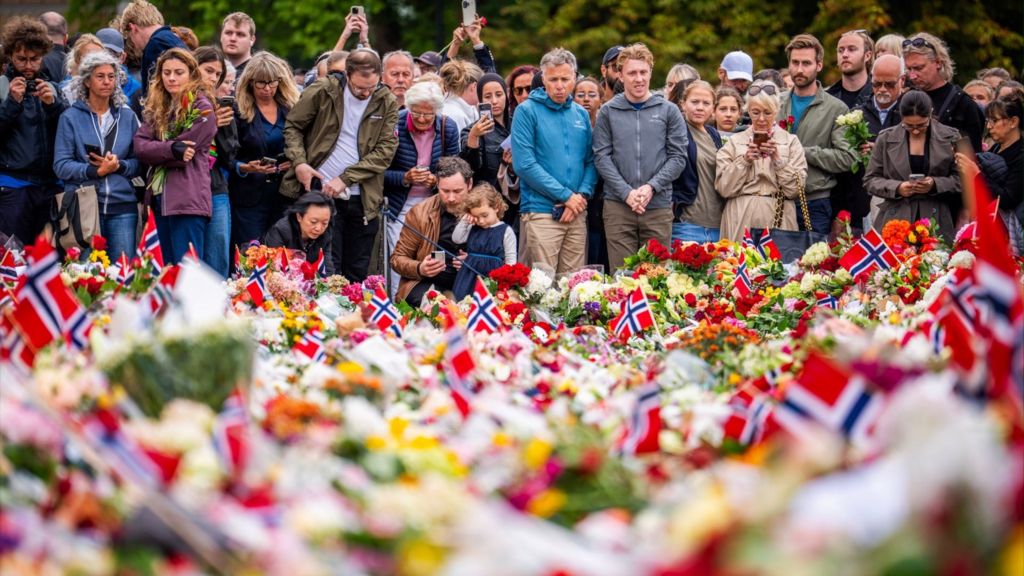
    Local residents, familiar with routine military training traffic in the area, described hearing unusual sounds from the aircraft before the crash. One local resident named Paul, who lives in a nearby hamlet, said he was woken by the extremely low-flying helicopter, which sounded irregular. Another resident, Julie Ricketts, who lives across the valley from the crash site, called the incident devastating, noting “They were only training. It’s just very, very sad for the families.” By the afternoon, local members of the public had begun leaving floral tributes near the site to honor the fallen personnel.

    Senior military and political figures have quickly issued statements of condolences following the tragedy. The Princess of Wales, who holds the honorary position of Commodore-in-Chief of the Fleet Air Arm, said she and Prince William were “holding their families and friends in our hearts” following the loss. The BBC understands the royal couple will contact the bereaved families directly in the coming days, while King Charles III is also aware of the incident and will send private messages of sympathy to the next of kin.

    General Sir Gwyn Jenkins, head of the Royal Navy, described the crash as a devastating shock to the entire naval community. “My deepest condolences go out to the families, friends and loved ones impacted by this tragedy,” he said. Prime Minister Sir Keir Starmer called the fatal crash “utterly tragic” on social media platform X, while Defence Secretary John Healey said he was “devastated by the loss of three service personnel.” Local MP Sarah Dyke, who represents Glastonbury and Somerton, added that her thoughts were with the victims and their grieving families.

    The crashed aircraft was confirmed to be a Merlin Mk4, a variant of the Royal Navy’s Merlin helicopter fleet that entered service in 1999. The Mk4 variant is operated by the Commando Helicopter Force out of RNAS Yeovilton in Somerset, with 25 of the aircraft currently in service supporting Royal Navy operations. The area around north Dartmoor between RNAS Yeovilton and RNAS Culdrose, where the older Mk2 anti-submarine variant is based, is a regular training route for military helicopter crews. This is not the first fatal incident involving the Merlin Mk4: in September 2024, another Mk4 ditched in the English Channel during a training exercise, killing Lt Rhodri Leyshon. A 2004 crash at RNAS Culdrose left five crew members injured, with two trapped in the wreckage.

    An official investigation into the cause of the crash has been launched immediately. The UK Civil Aviation Authority confirmed the Defence Accident Investigation Branch (DAIB) will lead the probe into the circumstances of the incident, while local police continue to support on-site investigation work. The Royal Navy confirmed that the next of kin of all three deceased personnel have been informed, and have requested privacy to grieve before any further details are released to the public.

  • Poland and Lithuania confirm exploring a bigger role in nuclear deterrence

    Poland and Lithuania confirm exploring a bigger role in nuclear deterrence

    In recent developments reshaping transatlantic security architecture, Poland and Lithuania have officially acknowledged they are engaged in early-stage negotiations regarding their potential expanded participation in NATO’s U.S.-led nuclear deterrence framework, a shift that comes as the alliance re-evaluates its defense posture in the wake of Russia’s full-scale invasion of Ukraine.

    The discussions, which remain in their preliminary and classified phases, emerge against a backdrop of shifting U.S. defense priorities: former U.S. President Donald Trump had advanced efforts to reduce Washington’s conventional military footprint in Europe, leaving many eastern NATO allies seeking clearer guarantees of ongoing American security commitment. Expanding the scope of NATO nuclear deterrence has been floated as one pathway to reinforce those guarantees for frontline allies located closest to Russia.

    Poland’s Deputy Defense Minister Paweł Zalewski confirmed the negotiations in comments to Polish Radio Wednesday, noting the talks are aimed at strengthening deterrence capabilities and carving out a more meaningful role for Warsaw in the alliance’s nuclear posture. At the same time, Zalewski emphasized that Poland has no current plans to permanently host U.S. nuclear weapons, describing such a step as “an extremely serious matter” with profound political ramifications.

    Lithuania’s Defense Minister Robertas Kaunas similarly confirmed ongoing talks Tuesday, telling reporters via the BNS press agency that “Lithuania is certainly not standing on the sidelines” of the discussions, while declining to share further details due to classification rules.

    The official confirmations follow a Tuesday Financial Times report citing anonymous sources, which claimed the U.S. has signaled openness to potentially stationing elements of its nuclear arsenal in additional NATO member states beyond the six current host countries that participate in the alliance’s longstanding nuclear sharing program.

    That report also noted Poland and the Baltic states of Estonia, Latvia, and Lithuania — all NATO members sharing borders with or located adjacent to Ukraine and Russia — have expressed interest in potentially hosting bases for U.S. dual-capable aircraft, platforms engineered to carry both conventional and nuclear warheads.

    When contacted for comment, the Pentagon declined to issue an official statement. A senior Defense Department official, speaking on condition of anonymity due to speaking unofficially, noted that the U.S. and NATO “continuously assess the security environment” and regularly update their deterrence frameworks to remain effective against evolving threats.

    The U.S. has maintained a stockpile of nuclear weapons on European soil for decades, as a core component of Washington’s collective security guarantees to NATO allies. In the years following Russia’s 2022 full-scale invasion of Ukraine and the heightened security threat Moscow poses to eastern NATO members, calls to expand U.S.-led nuclear cooperation with European allies have grown louder.

    A NATO official, also speaking on condition of anonymity, clarified to the Associated Press that the alliance’s work to assess and adapt its nuclear deterrence posture has been ongoing for several years, and is not tied to any U.S. decision to adjust its conventional force footprint in Europe.

    Today, NATO’s nuclear sharing program includes U.S. nuclear weapons deployed across six existing host nations: Belgium, Germany, Italy, the Netherlands, Turkey, and the United Kingdom. The alliance structure relies on dual-capable aircraft operated by both the U.S. and allied nations, while the U.S. retains permanent, full control over all deployed nuclear weapons.

    Poland has signaled interest in expanding its role in the U.S. deterrence program since 2022, when Russia launched its full-scale invasion of Ukraine. Former Polish President Andrzej Duda even publicly expressed openness to hosting U.S. nuclear weapons on Polish territory. The current Polish government led by Prime Minister Donald Tusk has taken a more cautious approach, framing its position only around seeking a larger role in deterrence efforts rather than full hosting.

    Artur Kacprzyk, a nuclear deterrence analyst at the Warsaw-based Polish Institute of International Affairs, explained that Washington has repeatedly warned that stationing permanent nuclear weapons in eastern NATO member states would be excessively provocative to the Kremlin. Instead, Kacprzyk said a middle ground option — dubbed “nuclear sharing light” — has emerged as a likely compromise. Under this framework, eastern NATO allies would certify their own aircraft to carry U.S. nuclear weapons when needed, but no nuclear warheads would be permanently deployed on their territory. The certified aircraft would act as a backup reserve, ready for deployment if existing nuclear-capable aircraft in western Europe were disabled before they could be deployed in a crisis.

    Beyond U.S.-led deterrence efforts, Poland and a number of other European allies have moved to expand cooperation on nuclear deterrence with France, the only remaining nuclear-armed member of the European Union following the UK’s 2020 Brexit exit. Earlier this year, Poland confirmed it would join the French-led initiative to coordinate deterrence efforts across European allies.

    Kacprzyk noted that the French initiative is complementary to U.S.-led NATO deterrence, but operates with a separate structure. Alongside Poland, Britain, Germany, the Netherlands, Belgium, Greece, Sweden, Denmark and Norway have all expressed interest in the French framework, which allows for temporary deployments of French nuclear-capable aircraft to allied territory, permits partner nation participation in French deterrence exercises, and opens opportunities for allied non-nuclear forces to support French nuclear activities.

    Polish Defense Minister Władysław Kosiniak-Kamysz confirmed Tuesday that expanded nuclear deterrence cooperation will be a key topic for discussion at the upcoming NATO defense ministers meeting scheduled for June 18 in Brussels, noting both the French initiative and the U.S. led program will be on the agenda.

    While increased nuclear cooperation can help the U.S. offset planned conventional force reductions in Europe, Kacprzyk emphasized that expanded nuclear participation cannot fully replace the forward deployment of conventional troops, particularly for eastern NATO allies that border Russia. He argued that deterrence requires consistent, cohesive signaling to avoid sending mixed messages to potential adversaries: “Communicating ‘I might risk nuclear war to defend an ally but I don’t want to send my soldiers into the fight’ is a conflicting signal. You need coherent signals at all levels of deterrence.”

  • Montenegro blocks entry to 87 Serbs over security concerns ahead of EU summit

    Montenegro blocks entry to 87 Serbs over security concerns ahead of EU summit

    Days ahead of a high-stakes European Union summit gathering Western Balkan leaders on Montenegro’s Adriatic coast, Montenegrin authorities have taken the controversial step of barring entry to 87 Serbian citizens, citing verified intelligence that the group poses a direct threat to national and internal security.

    The group traveled to Montenegro’s coastal town of Tivat on Wednesday via a chartered Air Serbia flight, and was immediately flagged as part of heightened pre-summit security screening organized by Montenegrin law enforcement and intelligence agencies. In an official joint statement issued by the country’s national police force and National Security Agency, officials confirmed the entry ban stemmed from concrete operational and intelligence findings that confirmed the group’s presence would undermine stability ahead of the Friday gathering.

    Photos released by Montenegrin police show the group was carrying communications equipment and banners emblazoned with “Serbia wins” — the signature campaign slogan of populist Serbian President Aleksandar Vucic and his ruling Serbian Progressive Party. Vucic is scheduled to attend the upcoming summit in the resort town, adding a layer of political tension to the incident.

    Regional media reports from both Montenegro and Serbia have identified multiple members of the banned group as known pro-Vucic government activists, several of whom have been linked to violent attacks on student demonstrators during the 12-month wave of street protests opposing the Serbian president’s administration. Montenegrin police added that a number of the barred individuals hold prior criminal records and have a documented history of participating in high-risk public disorder events. Along with the entry ban, authorities seized two buses used to transport the group after it arrived in the country.

    As of Wednesday, there has been no official response from the Serbian government to the move. The incident comes amid already strained bilateral relations between the two countries: Vucic recently declined to attend Montenegro’s 20th-anniversary ceremonies marking the country’s 2006 independence split from Serbia, and has repeatedly thrown his public support behind pro-Serbian political factions in Montenegro that oppose the country’s NATO membership and advocate for closer alignment with Russia.

    The upcoming EU-Western Balkans summit in Tivat centers on advancing EU accession prospects for six Western Balkan candidate states: Albania, Bosnia-Herzegovina, Serbia, Kosovo, North Macedonia and Montenegro. Each nation is at a distinct stage of the integration process, with Brussels prioritizing reforms across the region to counter growing geopolitical influence from Russia and China in the Western Balkans.

  • What to know: Protests grow over Trump family-linked resort in Albania

    What to know: Protests grow over Trump family-linked resort in Albania

    TIRANA, Albania – A $4.6 billion luxury coastal development project tied to Jared Kushner, former U.S. President Donald Trump’s son-in-law, and Ivanka Trump has become the center of mounting public outrage and political tension in Albania, pitting the country’s government against environmental activists and anti-corruption campaigners.

    Albania’s ruling Socialist government, led by long-time Prime Minister Edi Rama, frames the ambitious initiative as a transformative step toward the country’s core goals: breaking into the global high-end tourism market and advancing its bid for European Union membership. Rama has doubled down on his support for the scheme, insisting it will not be halted during his tenure. “Albania should not be a country that fears an extraordinary project like this one, where exceptional partners have come together to invest 4 billion euros ($4.6 billion),” Rama stated, emphasizing the project’s alignment with Albania’s ambition to establish itself as a top global travel destination.

    The development spans two ecologically sensitive sites on Albania’s southern Adriatic coast: a stretch of coastline within the Narta Lagoon Wildlife Reserve, a critical biodiversity hub and migratory bird stopover, and the nearby uninhabited island of Sazan, a former closed communist military outpost. Plans call for the construction of luxury hotels, private villas, residential apartments, and a large marina. According to Ivanka Trump, the pair stumbled upon the location by chance during a leisure trip. “We were on a friend’s boat, and we stopped for a swim. Effectively, that’s how we found it,” she recounted in a recent interview with U.S. podcaster David Senra. “We swam to the island. We went on a hike, barefoot all the way up to the top, and we were just captivated.” Albanian authorities have already granted special investor status to an investment firm connected to Kushner, clearing the way for early construction work. Since late May, heavy machinery including excavators has moved into the protected site, carving access roads, clearing pine forest, grading sand dunes, and erecting boundary fencing. A Kushner-linked investment firm has already received special investor status from Albanian regulators to move the project forward.

    But the venture has sparked fierce opposition from environmental groups, local communities, and government critics, who warn the project will cause irreversible damage to one of Albania’s last untouched coastal ecosystems and raise questions about opaque land dealings. For decades under isolationist communist rule, Albania’s 280 miles of Adriatic and Ionian coastline remained largely undeveloped, leaving large swathes of pristine, ecologically rich shoreline intact. Activists argue that this rare unspoiled habitat is now at risk of being exploited by well-connected foreign investors.

    Public anger boiled over after video footage emerged showing a private security guard dragging a local environmental activist during an on-site protest, galvanizing larger demonstrations across the country. In the capital Tirana, protesters have held repeated rallies carrying cardboard cutouts of pink flamingos — a protected migratory bird species that relies on the Narta Lagoon as a key stop along its annual route. Environmental organizations from both Albania and across Europe have condemned the construction work, with one leading local advocacy group accusing the government of allowing “irreversible destruction” of long-protected natural habitats.

    Compounding the controversy, Albania’s state anti-corruption agency has confirmed it has opened an investigation into irregularities linked to the project, though it has not released public details about the scope of the probe. While the government maintains all land marked for development is now privately owned, competing legal claims have challenged the validity of past privatization deals for the site, a recurring source of legal conflict in the country’s post-communist transition.

    The unfolding standoff in Albania also echoes a recent high-profile collapse of a similar Kushner-linked project in neighboring Serbia, which offers a cautionary precedent for the Albanian venture. Last November, Serbia’s parliament passed special legislation to clear the way for a luxury complex on a historic former military site in downtown Belgrade, also backed by a Kushner-affiliated investment firm. Just one month later, Serbia’s organized crime prosecutor charged four individuals — including a sitting government minister — with abuse of office and document forgery to pave the way for the development. Kushner ultimately withdrew from the multi-million project, which would have seen construction on a designated heritage zone after its protected status was improperly lifted by officials now on trial.

  • European Union launches tech sovereignty initiative to boost chips, cloud and AI at home

    European Union launches tech sovereignty initiative to boost chips, cloud and AI at home

    BRUSSELS – Growing anxiety over excessive European reliance on non-domestic technology providers has spurred European Union leaders to launch an ambitious new initiative designed to build up homegrown alternatives to foreign Big Tech and critical hardware. On Wednesday, the 27-nation bloc announced its comprehensive “tech sovereignty” package, a set of policy measures crafted to nurture local European competitors for the U.S.-dominated AI and cloud computing sectors and reduce heavy dependence on Asian microchip manufacturing.

    The push for greater technological autonomy has gained urgent momentum in recent years, as EU policymakers have raised alarms that foreign control of critical digital and hardware infrastructure could be weaponized against European interests. These concerns were solidified by a high-profile incident several years ago, when the Trump administration imposed sanctions on the International Criminal Court’s top prosecutor, prompting U.S. tech giant Microsoft to terminate the prosecutor’s corporate email account. The episode fueled widespread fears across the bloc that foreign technology services could include hidden “kill switches” that would allow external powers to disrupt critical European operations at will.

    “Europe wants to be in the position to make its own choices, avoiding risky dependencies on single dominant suppliers, one company or one third country,” Henna Virkkunen, European Commission Executive Vice-President responsible for overseeing the bloc’s tech sovereignty agenda, told reporters in Brussels. “Because we live in a world where geopolitics and technology go hand in hand. Those who champion technological innovation will shape the future, and we must ensure that Europe plays a leading role in this.”

    A core pillar of the new package is an expansion of the EU’s landmark 2023 Chips Act, which was originally introduced to boost local semiconductor output. The updated rules will further streamline burdensome regulatory red tape for new semiconductor fabrication plants, while working to build a fully integrated, self-sustaining European chipmaking ecosystem. These measures were prompted in part by a 2023 power struggle at Nexperia, a Chinese-owned chipmaker headquartered in the Netherlands, which laid bare how vulnerable Europe’s fragmented semiconductor supply chain is to global geopolitical shifts, given most of the world’s advanced chip manufacturing is concentrated in East Asia.

    The second major component of the initiative focuses on shoring up Europe’s domestic cloud infrastructure and artificial intelligence development capacity. The bloc has laid out a formal target to triple its total regional data center capacity over the next five to seven years, a move intended to keep pace with the explosive global AI boom that has driven a sharp, sustained surge in demand for high-capacity cloud computing services.

    The policy package was drafted and released by the European Commission, the EU’s executive branch. It now moves to the bloc’s two other governing institutions — the European Parliament and the Council of the European Union — for debate and final approval before any measures can go into effect.

  • Striker Rasmus Hojlund completes permanent move to Napoli from Man United

    Striker Rasmus Hojlund completes permanent move to Napoli from Man United

    In a high-profile move that reshapes both Manchester United’s attacking line and Napoli’s frontline for the upcoming season, Danish striker Rasmus Hojlund has finalized a permanent transfer to Italian Serie A side Napoli, following a standout one-year loan at the Naples-based club last season. The 2023-24 campaign proved transformative for Hojlund, who found consistent first-team football at the Stadio Diego Armando Maradona and delivered eye-catching results: he found the back of the net 16 times across 44 appearances in all competitions, playing a pivotal role in guiding Napoli to a second-place finish in Italy’s top-flight league and automatic qualification for the 2025-26 UEFA Champions League. Hojlund first arrived at Manchester United in 2023, joining from Italian club Atalanta for a transfer fee of $82 million, and was immediately hailed as one of the most exciting young attacking prospects in European football. However, a flurry of forward acquisitions by Manchester United last transfer window pushed the Dane well down the club’s attacking depth chart, with new signings Benjamin Sesko, Bryan Mbeumo and Matheus Cunha all preferred ahead of him for first-team minutes. Unable to compete for a regular starting spot at Old Trafford, Hojlund secured a loan move to Napoli last season, and his consistent goal-scoring form convinced the Serie A side to make the move permanent. According to industry reports, the permanent transfer commands an upfront fee of approximately $58 million, capping off a dramatic year of change for the Danish international. For Napoli, the move locks in a proven goalscorer who has already adapted to Serie A’s physical and tactical demands, while Manchester United clears salary and roster space after the departure of a player who could not break into the first team following their attacking rebuild.

  • Norway teen was in UK to ‘undertake a hit’ – court

    Norway teen was in UK to ‘undertake a hit’ – court

    A high-stakes trial opened this week at London’s historic Old Bailey, where 19-year-old Norwegian national Johannes Natland has pleaded not guilty to a charge of conspiracy to murder, amid serious allegations that he was recruited by an Iranian-linked Swedish organized crime network to carry out a targeted killing in the United Kingdom.

    Prosecutors laid out detailed allegations before a jury outlining how the alleged plot unfolded in March 2025. According to opening arguments from lead prosecutor Alistair Richardson, Natland was recruited by the Foxtrot network, a criminal group that the prosecution claims is controlled and used by the Iranian regime for extra-territorial targeted attacks. The plot was activated after the originally assigned assassin pulled out of the planned operation, prompting senior figures in the network to scramble for a replacement.

    Court documents and messaging logs presented to the jury show that coded conversations on encrypted platforms between two co-conspirators, using the usernames ‘Generalen’ and ‘Agent 47’, reveal an urgent request for a foreign-based assassin to carry out a hit in the UK for a payout of €25,000. By March 15, Generalen had brought Natland into the plot, with the teenager telling his girlfriend he was embarking on a ‘crazy mission’, according to the prosecution.

    Complications arose early when the group discovered Natland’s passport had expired. Within two days, he secured an emergency travel document and booked a flight from Stavanger Airport in Norway to Manchester Airport in northern England. Even after being warned that Generalen, one of his key recruiters, had already been arrested in connection with the conspiracy, Natland chose to proceed with the plan, Richardson told the jury.

    On arrival at Manchester Airport, UK Border Force officials detained Natland after noting he carried only £40 in cash, had no pre-booked accommodation and no return ticket to Norway. When officers offered to contact his mother, the 19-year-old claimed he was a legal adult and declined assistance. Though border officials initially intended to refuse entry, they granted temporary permission to stay in the country for four days while arranging a return flight – a decision the prosecution described as surprising.

    The following day, acting on instructions from Agent 47, Natland took a taxi to the West Yorkshire town of Huddersfield and checked into the Briar Court Hotel for a three-night stay. Via the encrypted messaging app Signal, he was directed to a hidden weapons cache at the base of a tree in a nearby wooded area, where prosecutors say he retrieved two working firearms: a semi-automatic pistol and a revolver, alongside 12 rounds of live ammunition.

    After collecting the weapons, Natland purchased three pairs of rubber gloves from a local supermarket and was directed to a stolen vehicle that the prosecution alleges was intended to be used for the planned killing the following day. When a friend messaged Natland asking if he had completed the assassination, he replied ‘No tomorrow.’ When asked if he had test-fired the weapons, Natland responded, ‘Hell no. They will be tested on the guy,’ according to messaging logs presented to the court.

    In the early hours of the morning before the planned attack, specialist counter-terrorism firearms officers raided Natland’s hotel room, Room 207, and took him into custody. Prosecutors told the jury that as Natland answered the door, he mimicked holding a gun and pretended to fire at the arresting officers. A search of the room turned up the two loaded weapons, 12 live rounds, and £2,000 in cash linked to the planned hit.

    Natland has already entered a guilty plea to charges of illegal possession of the two firearms and the 12 rounds of ammunition, but he maintains his innocence on the core charge of conspiracy to murder. Prosecutors emphasized that the intended target of the planned killing has not been identified, but that the evidence clearly shows Natland had committed to carrying out the attack.

    ‘The defendant’s response to those warnings [of Generalen’s arrest] was not to pull out of what he was doing. Not to stop,’ Richardson told the jury. ‘He had signed up to, and intended to commit murder.’

    The trial, which is being held at the Old Bailey, is expected to continue for approximately three weeks as the prosecution and defense present evidence and witness testimony to the jury.