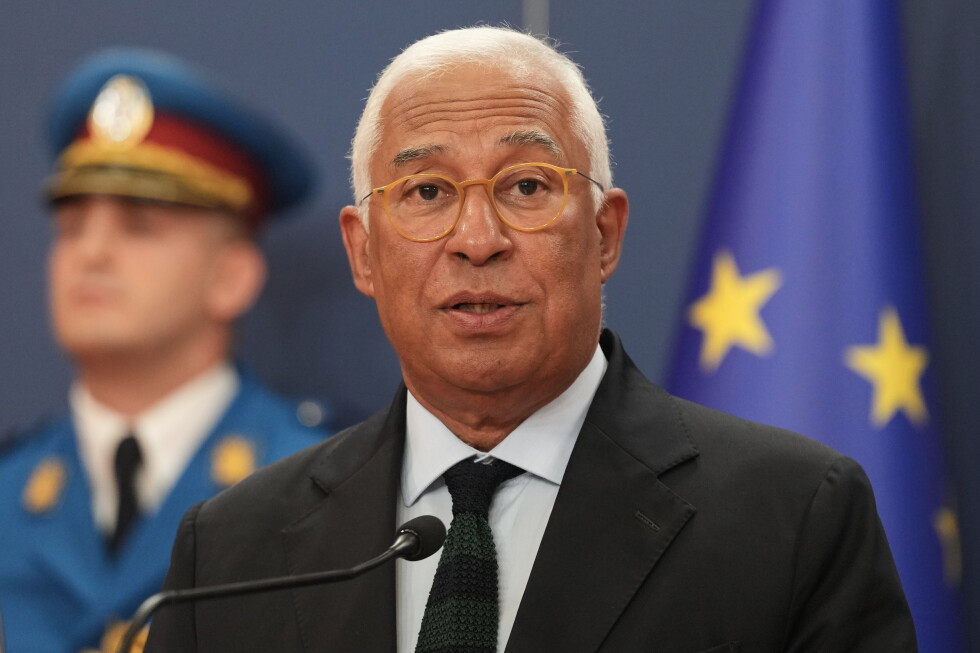
Ahead of a key regional summit in Montenegro, European Council President Antonio Costa has announced that the European Union will explore new procedural adjustments to speed up the bloc’s accession process for six Western Balkans candidate countries, as the bloc moves to counter rising geopolitical influence from Russia and China in southeastern Europe.
The six nations — Albania, Bosnia-Herzegovina, Kosovo, North Macedonia, Serbia and Montenegro — have spent years navigating the EU’s strict merit-based accession framework, with little tangible progress to show for their efforts to date. Ahead of Friday’s summit in the coastal Montenegrin town of Tivat, which will bring together top EU leaders and senior representatives from all six candidate states, Costa emphasized the need to address growing frustration among candidate populations over glacial accession timelines.
“If you want to boost the trust between each other, we cannot create this feel of frustration” over slow membership progress, Costa told reporters during a press stop in Serbia’s capital Belgrade Thursday, wrapping up a pre-summit tour of all Western Balkan candidate countries. “It doesn’t mean it will be easier, but it means how we can deliver together more rapidly.”
Costa noted that the upcoming talks will focus on revising the EU’s accession methodology to deliver faster, more tangible progress, while stressing that EU enlargement for the Western Balkans is not an unrealistic long-term goal. “The enlargement is not a utopia but it is something that could be real in the coming years,” he insisted. “For this we need to work harder and faster.”
The current EU accession process requires candidate states to align their national legislation with 35 distinct policy “chapters” spanning everything from judicial standards to agriculture and fisheries regulations. Every chapter must receive unanimous approval from all 27 current EU member states to open, and another unanimous vote to close after compliance is confirmed. Progress among the Western Balkans candidates varies widely, with Montenegro and Albania currently farthest along in the process.
The EU has set a non-negotiable prerequisite for Serbia and Kosovo: the two states must normalize bilateral relations before their accession bids can advance. The decades-long dispute stems from Kosovo’s 2008 declaration of independence from Serbia, which Belgrade still refuses to recognize. Kosovo was an administrative province of Serbia until a 78-day NATO bombing campaign in 1999 ended a violent conflict between Serbian state forces and ethnic Albanian separatists, putting Kosovo under international administration.
During meetings with Serbian populist President Aleksandar Vucic in Belgrade, Costa pressed the Serbian government to accelerate democratic reforms and align the country’s foreign policy with EU positions, a requirement for all accession candidates. Serbia remains the only European country that has refused to impose sanctions on Russia over its full-scale invasion of Ukraine, and it maintains close diplomatic and economic ties with both Moscow and Beijing — ties Vucic reinforced during a recent official visit to China.
Belgrade has already been formally warned that it stands to lose approximately 1.5 billion euros ($1.8 billion) in EU development funding if it does not reverse ongoing democratic backsliding, particularly within the national judiciary. The EU has also demanded that Serbia improve protections for media freedom and create a fairer playing field for upcoming national elections.
Vucic, who has faced months of large-scale youth-led street protests that erupted in November 2024 after a deadly train station accident in northern Serbia killed 16 people, struck a cooperative tone Thursday, pledging to pursue required reforms with “new enthusiasm” and keep Serbia on a path toward EU membership.
The summit in Tivat comes amid a fresh bilateral dispute between Serbia and Montenegro: Montenegrin authorities banned 87 Serbian citizens from entering the country ahead of the gathering, citing national security concerns. Police confirmed the banned group was carrying communication equipment and banners printed with Vucic’s signature political slogan “Serbia wins,” though the purpose of their planned trip to Montenegro remains unclear.
Beyond the Western Balkans, the EU’s enlargement agenda also includes membership bids from Ukraine and Moldova, two eastern European countries that formally launched accession processes after Russia’s 2022 invasion.