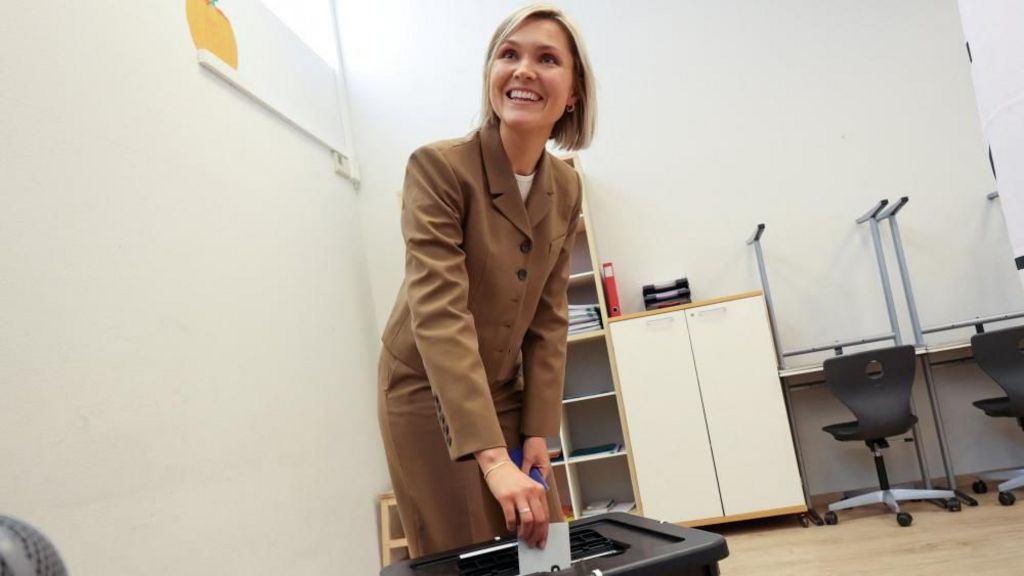
Iceland’s historic public vote on restarting European Union membership negotiations remains too close to call Saturday, with early partial counts showing the two opposing sides separated by a razor-thin margin of just 435 ballots. As counting continues across the small North Atlantic island nation, the tight result has underscored how deeply divided Icelanders remain on the question of deepening their integration with the EU after more than a decade of frozen accession talks.\n\nWith 153,197 of the 270,000 eligible ballots counted so far, public broadcaster RUV reports that 50.1% of voters have rejected the proposal to resume negotiations, while 49.9% have voiced support for moving forward. The outcome will not be confirmed until all remaining ballots are processed, leaving the country waiting for a final result in one of the most closely watched political events in Iceland’s recent history.\n\nThe snap referendum, originally scheduled to take place no later than 2027 under Prime Minister Kristrún Frostadóttir’s centre-left administration, was moved forward amid growing international security tensions across the North Atlantic. These tensions include Russian military’s increased maritime activity near Iceland’s territorial waters and repeated public interest from former U.S. President Donald Trump in acquiring the autonomous Danish territory of Greenland, which sits close to Iceland.\n\nHowever, far from security concerns driving public debate, the core of the campaign has centered on the future of Iceland’s $4 billion fishing and marine industry, which accounts for nearly 40% of the country’s total export revenue. Opponents of restarting talks have repeatedly warned that joining the EU would require Iceland to cede partial control of its lucrative exclusive fishing grounds under the bloc’s Common Fisheries Policy, a policy that many Icelandic fishers and industry leaders argue would threaten the country’s most economically vital sector.\n\nIceland first launched its EU accession process back in 2009, in the immediate aftermath of the 2008 global financial crisis that collapsed Iceland’s entire domestic banking system and plunged the country into a deep recession. At the time, joining the EU was widely seen as a path to economic stability and deeper integration with European markets. By 2013, accession talks were well advanced when a Eurosceptic government won national elections and immediately paused negotiations, with fishing rights emerging as the single biggest sticking point that remains unresolved today.\n\nCurrently, Iceland already participates in two key EU frameworks: it is a full member of the EU single market for goods and services and part of the Schengen Area, which eliminates border checks between participating European countries. If voters approve resuming talks and a final accession deal is reached, Iceland would join the EU customs union and eventually adopt the euro as its national currency.\n\nAfter casting her vote in the capital city of Reykjavik on Saturday, Prime Minister Frostadóttir emphasized that the referendum itself represents a key milestone for Icelandic democracy, regardless of the final result. “This is a great day, we’ve been waiting for this for years to be able to have a vote,” she told reporters, adding that her administration will continue its governing agenda no matter which way the result falls.\n\nVoters were asked a direct question on the ballot: “Should Iceland resume accession negotiations with the European Union?” Importantly, a Yes vote would not finalize Iceland’s EU membership; instead, it would only authorize the government to begin negotiating an accession treaty, which would then need to be put to a second public referendum for final approval. Similarly, a No vote would not permanently close the door to EU membership, leaving the possibility open for future governments to revisit the question.\n\nBeyond the dominant economic and fishing debates, security considerations did play a role in campaign discourse. Iceland is a founding member of the North Atlantic Treaty Organization (NATO) but maintains no standing military of its own, relying entirely on alliance allies for national defense. The country has been a strong backer of Ukraine since Russia launched its full-scale invasion in 2022, and Icelandic officials have grown increasingly concerned over Russian military activity near the island in recent years. Trump’s repeated comments about seeking control of Greenland have also added to regional security anxieties that influenced the decision to hold the referendum earlier than planned.\n\nAs counting continues, the entire country is on edge waiting for a final result that will shape Iceland’s political and economic trajectory for decades to come.
标签: Europe
欧洲
-

They fell in love – then had to check they weren’t brother and sister
For decades, Arthur Kermalvezen, a man conceived via sperm donation, lived with a persistent, unsettling mystery: any man he encountered – from his grade school teacher to strangers on the city bus – could have been his biological father. This uncertainty bred deep anger and unrest, leaving him unable to feel grounded in his own identity. What he never expected was that this lifelong question would become even more urgent when he fell in love with Audrey, another Paris-born donor-conceived woman, whom he met at a 2010 gathering for donor-conceived rights activists.
The pair experienced immediate, undeniable chemistry, describing their first meeting as love at first sight. But their new romance came with a alarming possibility: in the era when they were conceived, Paris had only two operating sperm banks, and most donors contributed sperm multiple times to help more couples conceive. This meant the chance of them sharing the same biological father – and being half-siblings – was far from hypothetical. Before they could build a life together, they needed an answer. Yet France’s strict laws around donor anonymity and genetic testing made that answer almost impossible to obtain legally.
Since 1994, France has barred private citizens from accessing or using at-home DNA testing kits, making personal genetic testing a criminal offense. Only licensed doctors, research scientists, and judges are legally permitted to order and oversee genetic analysis. Anyone caught with a personal testing kit can face fines of more than €3,500, and major direct-to-consumer DNA companies including 23andMe, Ancestry, and MyHeritage do not sell their products in the country. Lawmakers and supporters of the ban argue it protects sensitive genetic data from exploitation by commercial entities and prevents unexpected DNA results from tearing families apart. Critics, however, point out that France is the only European nation that criminalizes personal use of these tests.
Audrey, a bioethics lawyer by training, understood the intricacies of French law better than most: the country enshrined donor anonymity in legislation, guaranteeing that identity would remain hidden even after a donor’s death. But Audrey’s conception in 1979 predated this law, leaving her with a legal gray area that offered no clear path to information. While searching online for other donor-conceived people born before the 1994 law went into effect, Audrey found Arthur, who had published a book chronicling his lifelong search for answers about his biological origins. She was immediately struck by how perfectly he captured the confusing, unspoken feelings she had carried her whole life – even though both had grown up in loving, supportive families, the mystery of their biological origins left a permanent hole in their identities.
After their first in-person meeting, the connection was immediate – but so was the problem. No French regulatory or legal body would help them confirm whether they were related. After months of dead ends, they located a doctor in southern France who agreed to conduct a genetic test for €900 in cash, breaking the law to share the result with them directly: they were not related. Still, the couple was left uneasy. They worried the unregulated test was inaccurate, and Audrey, committed to upholding the law, refused to use a black market at-home kit to confirm the result. Starting in 2010, she launched a series of legal challenges against the French system, asking only for access to non-identifying information about her donor, including how many donations he made, to confirm whether she and Arthur could be related. Every challenge was rejected. After three years of fighting, the couple took a leap of faith and married.
In 2015, France’s highest administrative court rejected Audrey’s final appeal. It was only shortly before the birth of their first child that another doctor agreed to bend the rules: he checked their donors’ birth years in the confidential sperm bank records, and confirmed their donors were two different men. The result was life-changing, but it came only from an illegal act. “It’s completely weird,” Audrey said of the ruling that allows doctors to know more about her own origins than she does. Even after this confirmation, Arthur still carried doubts, so years later, the couple finally agreed to take an at-home DNA test, ordered through a friend in a neighboring country where the kits are legal. The test confirmed what the doctor had told them: they were not related.
That illegal test unlocked far more than just reassurance for the couple. In 2017, Arthur finally connected with his biological sperm donor on Christmas Day, ending decades of uncertainty. For Audrey, the surprise was even greater: one of her DNA matches was Sophie, a fellow donor-conceived activist whom she had represented in court years earlier. The two women, who had fought side-by-side for legal rights, were biological sisters. When the couple took the test alongside eight other fellow activists, the results revealed just how high the risk of accidental genetic relations really is: four of the ten participants shared the same donor, including Audrey, Sophie, and their two brothers.
Years later, a DNA match with an American relative led Audrey to her own donor, a man named Philippe, but he had already passed away. Audrey’s mother wrote a letter to Philippe’s family, thanking them for the “immeasurable gift” he had given, and the family welcomed Audrey into their lives. Philippe’s own sister had never known he was a sperm donor, and the meeting gave Audrey answers she had chased for decades: she got access to her full biological medical history, saw photos and videos of her donor, and finally got to know the story of her origins.
The couple’s years of activism – Audrey’s legal challenges and Arthur’s writing – helped drive a landmark change to French donor conception law: people conceived after April 2025 will now be able to access identifying information about their donors once they reach adulthood. Yet the fight is not over: France still remains one of the only European countries to ban at-home DNA testing, and thousands of donor-conceived people born before 2025 still lack legal access to information about their origins. Audrey says the core of the fight is simple: “Every person has the right to know their origins and the right to know their history.”
This story is based on an episode of *The Gift* on BBC Radio 4.
-
Norway’s new king remembers ‘my dear father’ in first speech
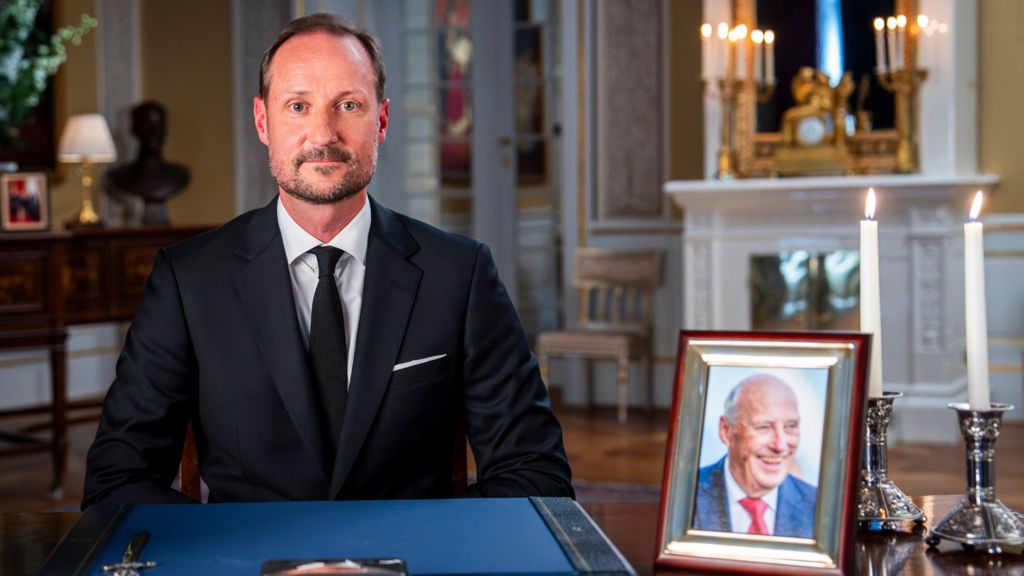
In his first televised address to the Norwegian people since ascending the throne, King Haakon VIII delivered an emotional, tearful tribute to his late father, King Harald V, on the eve of what would have been Harald and Queen Sonja’s 58th wedding anniversary. The 89-year-old former monarch, who earned widespread affection as the “people’s king” and was widely praised for modernizing the Norwegian monarchy during his 35-year reign, passed away Friday morning in a Oslo hospital while receiving treatment for a rare blood disorder.
Seated at a wooden desk inside Oslo’s Royal Palace, flanked by a framed portrait of Harald, two glowing candles, and an arrangement of delicate white roses, Haakon spoke through waves of emotion to open his first national address as Norway’s new head of state. “Thank you for being such a good dad,” the 53-year-old new king said. He remembered Harald as a loving father to himself and his sister Princess Märtha Louise, a playful, warm grandfather to his six grandchildren, and a devoted, caring husband to his widow, Queen Sonja. As he marked the approaching anniversary of his parents’ wedding, Haakon paused to choke back tears.
Haakon recalled that Harald united the royal family with a quiet, natural authority he often did not recognize in himself, and remained unwaveringly committed to his core values throughout his life. “He constantly reminded us in the family that each of us must do things in our own way. Find our own style. Be ourselves,” Haakon shared. He also reflected on the profound comfort drawn from the thousands of ordinary Norwegians who gathered outside the Royal Palace in the days since Harald’s death, laying flowers, lighting candles, and leaving tributes to the late king. “We are in mourning, yet at the same time it brings comfort and strength that so many are grieving together with us,” he said.
Since news of Harald’s passing broke Friday, crowds have continued to lay flowers outside the palace gates, and the Norwegian government has declared a national period of mourning, though a date for the late king’s funeral has not yet been announced. Prime Minister Jonas Gahr Støre was among those who paid tribute, laying a floral arrangement, signing the official condolence book, and meeting with the new king. After the meeting, Støre said the entire nation was “united in grief and gratitude” for Harald’s decades of service.
Haakon is set to formally take office on Tuesday, when he will swear an oath of allegiance before the Norwegian parliament. He will later join his wife, Queen Mette-Marit, for a simplified consecration service — Norway abolished full coronation ceremonies decades ago. But Haakon assumes the throne at a uniquely challenging moment for the Norwegian royal family, which has weathered a string of public controversies and health crises in recent months.
Earlier this year, Mette-Marit faced intense public scrutiny after revelations of a three-year friendship with convicted sex offender Jeffrey Epstein came to light, prompting a public apology from the queen. Just months after the controversy, Mette-Marit underwent a life-saving lung transplant to treat pulmonary fibrosis, a condition she has lived with since 2018. Physicians do not expect to declare her medically stable until 2027, meaning Haakon must balance the demands of his new constitutional role with caring for his wife.
Additional controversy has come from Haakon’s stepson, Marius Borg Høiby, who was raised in the royal family after Haakon married Mette-Marit when Høiby was four years old. Though Høiby holds no official royal title, his June conviction on rape and other criminal charges, which resulted in a four-year prison sentence, has sparked public criticism of the royal family. Høiby is currently appealing the conviction. Haakon’s sister, Princess Märtha Louise, also stepped back from all official royal duties earlier this year after widespread backlash over her 2024 marriage to an American self-described shaman and their controversial joint business activities.
Without explicitly referencing these challenges, Haakon addressed the moment of turmoil in his address, noting: “Our family has experienced the importance of standing together in order to remain steadfast both within ourselves and for one another even during difficult times.” He emphasized that he, Mette-Marit, and Crown Princess Ingrid Alexandra would “always strive to understand the life situations of different people,” and committed to national unity, saying: “No one who lives in this country knows what we will face together, but what we do know is that we will stand by one another through both good days and difficult ones.” He stressed that the royal family remains committed to a Norwegian society “built on law and justice, where everyone is of equal value.”
While the late King Harald retained broad popular support through the end of his reign, public support for the Norwegian monarchy has declined in recent years: a poll conducted earlier this year for leading Norwegian newspaper Aftenposten found that monarchy support dropped from 72% in 2024 to 54% ahead of Haakon’s ascension. Still, royal analysts interviewed by the BBC expressed cautious confidence in the new monarch, noting that Haakon is widely viewed as a respected, hardworking public servant who is well-equipped to navigate the challenges ahead and unify the nation and royal family.
-
A look at the deadliest Russian attacks on Ukraine this year
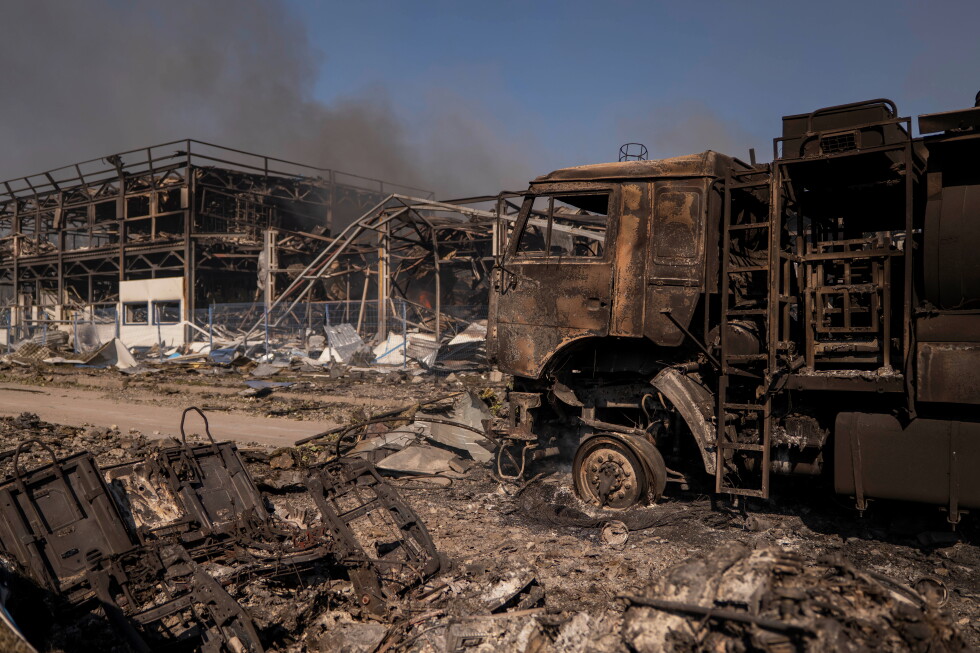
As Russia ramps up the intensity of large-scale offensive operations against Ukraine in a bid to wear down Kyiv’s defensive capabilities, the deadliest attack of the year so far has claimed at least 37 civilian lives in a Ukrainian village west of the capital. The overnight strike on Friday targeted a civilian warehouse in the small settlement of Myla, located in Kyiv’s western suburbs, leaving a devastating trail of death and destruction that has drawn renewed attention to the human cost of Moscow’s full-scale invasion.
Local officials confirmed that 34 of the fatalities from the Myla attack occurred at a residential care facility for elderly and disabled citizens, located adjacent to the targeted warehouse. According to Ukrainian authorities, the warehouse was allegedly being used to illegally store munitions. The initial drone strike triggered a chain of secondary explosions and fast-spreading fires that rapidly spread to neighboring residential structures, including the care home. Ukrainian President Volodymyr Zelenskyy labeled the incident an “absolutely terrible situation”, noting that the scale of loss appeared to stem from “terrible negligence on the part of those who stored explosives right next to ordinary people”.
The Myla attack is not an isolated incident: 2024 has seen a string of lethal Russian strikes on Kyiv and its surrounding regions that have killed dozens of civilians and tested Ukraine’s overstretched air defense networks. Just over a month before the Myla attack, on July 6, a wave of coordinated missile and drone strikes across Kyiv region left 22 people dead. Notably, every ballistic missile launched in that assault successfully hit its intended target, a stark demonstration of the growing gaps in Ukraine’s air defense capabilities that have left Kyiv pleading for additional advanced interceptors, particularly U.S.-manufactured Patriot systems. After that attack, Ukraine’s Emergency Service ordered the evacuation of roughly 600 residents from the Kyiv suburb of Vyshneve over risks posed by unexploded ordnance. In a pattern that mirrored the Myla incident, Zelenskyy later confirmed that munitions had also been illegally stored at the targeted Vyshneve site.
Weeks earlier, on July 2, Russia launched a hours-long combined drone and missile barrage across Kyiv that killed 31 people and wounded more than 100 others. Moscow explicitly framed the attack as retaliation for earlier Ukrainian strikes on Russian oil infrastructure. Air raid sirens sent more than 50,000 Kyiv residents scrambling for shelter in the city’s underground subway stations, as repeated explosions rocked residential neighborhoods across the capital. For a full day, emergency response teams worked through the rubble of collapsed, burned-out apartment blocks to recover victims and search for any survivors.
The first of the year’s deadliest major attacks on Kyiv occurred on May 14, when a Russian cruise missile strike leveled a nine-story apartment building, killing 24 people and wounding dozens more. At the time, Ukraine’s Air Force called the assault the largest single missile barrage launched against the capital since Russia expanded its full-scale invasion in February 2022.
The string of high-casualty strikes comes as Russia continues to increase the frequency of major offensive attacks across Ukraine, with the strategic goal of exhausting Ukraine’s air defense networks and demoralizing civilian populations ahead of a planned push for new territorial gains. International observers note that repeated gaps in Ukrainian air defense have left civilian populations in Kyiv and other major urban centers increasingly vulnerable, even as Western allies continue to debate the pace and volume of additional military aid to Kyiv. Associated Press coverage of the ongoing Russia-Ukraine war is available at https://apnews.com/hub/russia-ukraine.
-
Far-right British provocateur Milo Yiannopoulos has been deported after his immigration arrest in US
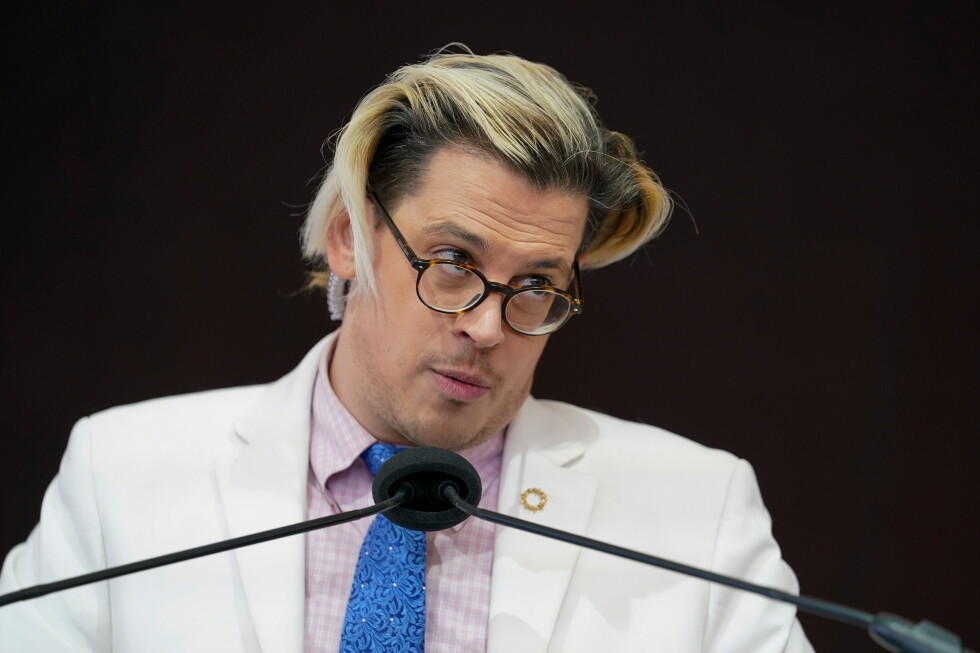
U.S. immigration officials confirmed Saturday that controversial far-right British commentator Milo Yiannopoulos has been taken into custody and deported back to the United Kingdom.
The U.S. Department of Homeland Security (DHS) announced that Yiannopoulos, who originally entered the United States legally in May 2019, was expelled to his home country on Friday following allegations that he had overstayed the terms of his entry visa. According to a DHS spokesperson, an immigration judge issued a final formal removal order on July 22, after Yiannopoulos failed to appear at a scheduled immigration hearing to address his overstay violation.
The commentator was taken into custody by officers from U.S. Immigration and Customs Enforcement (ICE) this past Thursday during processing at Louis Armstrong New Orleans International Airport, located in the state of Louisiana. No immediate public statement has been issued regarding the deportation: requests for comment sent to Yiannopoulos’ representatives have gone unanswered as of Saturday.
Yiannopoulos has built a high public profile as an outspoken advocate for far-right conservative causes, known for repeatedly taking intentionally provocative stances on divisive social and political issues. He has drawn widespread controversy for his public criticisms of feminism, Islam, and immigrant communities, and was an early and prominent supporter of former President Donald Trump’s hardline immigration restriction policies.
-
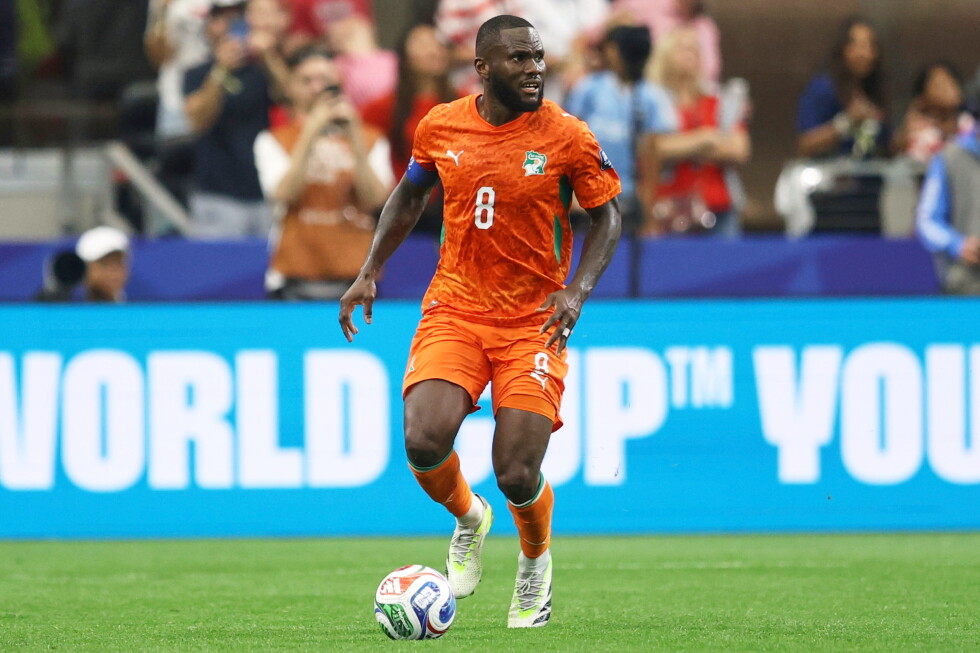
Franck Kessie rejoins Atalanta after Juventus also tried to sign him
In a move that brings his European football journey full circle, 29-year-old Ivorian national team captain Franck Kessie has officially signed with Italian Serie A side Atalanta, returning to the first club that launched his career on the continent, the club announced Saturday.
The Bergamo-based club confirmed Kessie has put pen to paper on a multi-year contract, but chose not to disclose further financial or contract duration details to the public. The transfer ends a lengthy summer chase that saw another top Italian club, Juventus, also in the running for the midfielder’s signature. However, Juventus head coach Luciano Spalletti confirmed last Friday that financial fair play compliance rules blocked the club from completing a deal. “If we don’t sell someone first, it’s really difficult to bring in new players,” Spalletti explained, outlining the club’s budget constraints.
Kessie’s connection to Atalanta dates back to 2015, when he first arrived at the club to join its youth development squad. After a one-season loan spell at lower-division side Cesena, Kessie made a stunning senior debut for Atalanta in Serie A in 2016, netting two goals on his first appearance. Following his breakout season with the Bergamo club, Kessie went on to build his career across top European and global leagues, with stints at Serie A giant AC Milan, Spanish La Liga powerhouse Barcelona, and most recently, Saudi Pro League side Al-Ahli.
Off the club pitch, Kessie has been in strong form for the Ivorian national team this year, leading the side to the knockout round of the 2024 FIFA World Cup – the first time the country has advanced past the group stage in the tournament’s history. Kessie found the back of the net in Ivory Coast’s closely contested group stage match against Germany, despite the team ending on the losing side of the result.
For Atalanta, the signing of Kessie adds a world-class experienced midfielder to a squad that has started the 2024-25 Serie A campaign on a positive note. Led by head coach Maurizio Sarri, Atalanta opened its league schedule with a win over Sassuolo last weekend, and is set to host Bologna for its second match of the season this coming Monday.
-
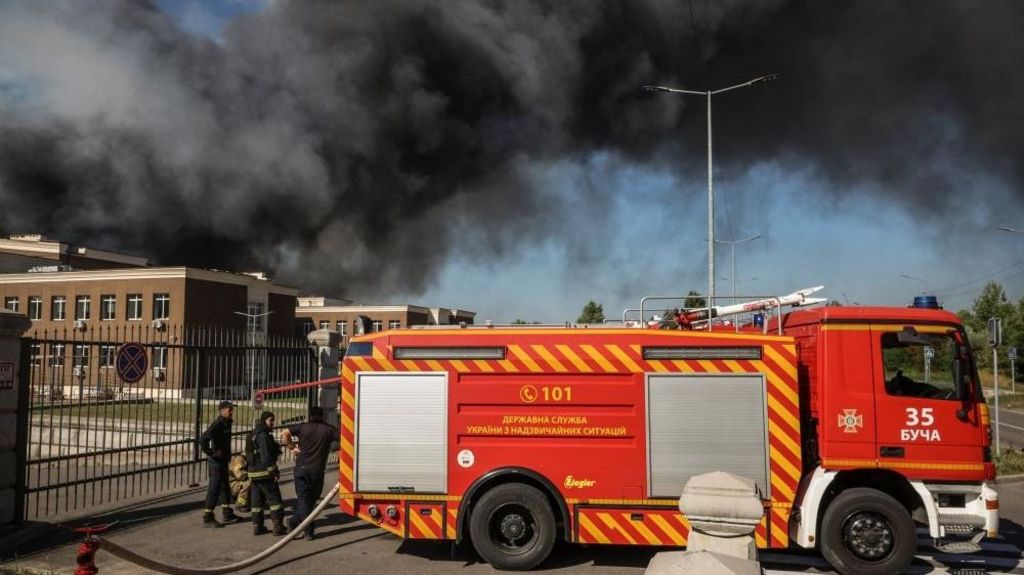
Deadly strike on Kyiv warehouse prompts evacuations
A devastating missile strike on a commercial warehouse in Ukraine’s capital Kyiv has claimed the lives of more than 30 people, triggering urgent large-scale evacuations across the affected area of the city. In his on-the-ground reporting from Kyiv, veteran Ukraine correspondent Dan Johnson has confirmed the grim human toll of the attack, which unfolded amid ongoing Russian military strikes targeting civilian and infrastructure sites across Ukraine.
Local emergency services rushed to the scene immediately after the strike hit, deploying search and rescue teams to comb through the rubble of the damaged warehouse for survivors. Authorities have implemented mandatory evacuation orders for neighborhoods surrounding the attack site amid fears of secondary structural collapses and residual hazard risks from unexploded ordnance. The attack marks one of the deadliest single strikes on Kyiv in recent weeks, escalating tensions across the capital and heightening concerns over rising civilian casualties in the 18-month-long Russian-Ukrainian conflict.
-
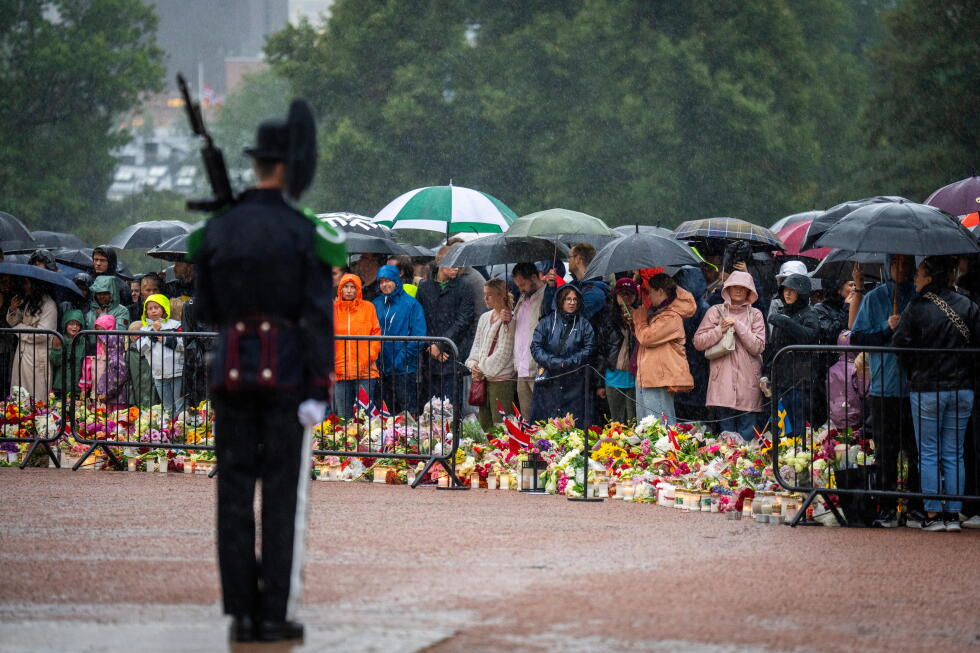
Tens of thousands mourn King Harald V in Oslo as Norway enters a new royal era
OSLO, Norway — One day after Norway’s longest-reigning monarch King Harald V died at the age of 89, tens of thousands of grieving Norwegians gathered outside the Oslo Royal Palace on Saturday to lay flowers, leave condolence messages and pay their final respects to the beloved former head of state. By midday, Slottsplassen, the public square fronting the palace, had transformed into a vast, colorful sea of blooms, with a steady, quiet stream of mourners filing past the tributes to honor the king’s decades of service.
Local public broadcaster NRK reported that palace staff made careful efforts to preserve the outpouring of public affection: a palace gardener removed excess bouquets along the palace’s southern edge to keep pedestrian pathways clear, while workers collected hundreds of condolence cards that had been soaked through by overnight rain, drying them to archive the messages for future generations.
The national moment of mourning extended far beyond the capital. Across Norway, city halls and churches opened their doors specially on Saturday to allow citizens to light memorial candles and sign official condolence books to share their reflections on the late king. Harald V’s coffin was transported from Oslo’s National Hospital — where he passed away on Friday morning — to the royal palace on Friday evening, in a quiet procession that drew small crowds of respectful onlookers.
For many attendees, the visit to the palace was a deeply personal act of gratitude. “It’s special, intimate, and lovely. I’m placing my right hand on my chest in gratitude to him and the royal family,” 46-year-old Roni Ervik told NRK during his visit, adding that he was also paying tribute on behalf of his entire extended family based in western Norway.
With Harald V’s passing, his 53-year-old son, former Crown Prince Haakon, has formally ascended the throne as King Haakon VIII. The new monarch has adopted the royal motto “All for Norway,” a phrase first used by his great-grandfather that echoes a commitment to national service that dates back more than a century. Haakon’s wife Mette-Marit is now Queen of Norway, while his eldest daughter, Ingrid Alexandra, has become Crown Princess and first in line to the Norwegian throne.
Haakon is no stranger to royal duties: as his father’s health gradually declined over the past decade, he repeatedly stepped in as regent to carry out the ceremonial functions of the monarchy on Harald V’s behalf. Later on Saturday, NRK confirmed that a choir would perform for mourners gathered in the palace square, and the new king was scheduled to hold formal introductory audiences with key Norwegian leaders: the speaker of the Storting (Norway’s parliament), the chief justice of the Supreme Court, and the presiding bishop of the Lutheran Church of Norway, with Crown Princess Ingrid Alexandra in attendance. Haakon is expected to deliver his first public address to the Norwegian people either later Saturday or in the coming days.
The new king will face early challenges in unifying public support for the monarchy, after recent controversies emerged over his wife Queen Mette-Marit’s past contacts with deceased convicted sex offender Jeffrey Epstein, and the rape conviction of her son (Haakon’s stepson). No official date for King Harald V’s funeral has been announced, but Norway has entered an official period of national mourning, and many Norwegians have voluntarily postponed joyous events including weddings and child baptisms until the period of mourning concludes.
The Norwegian monarchy traces its unbroken lineage back to King Harald Fairhair in the 9th century, making it one of Europe’s oldest continuous royal institutions. When Norway regained full independence from Sweden in 1905, a national public plebiscite saw 75% of voters endorse the restoration of the monarchy. While the modern Norwegian royal family holds no governing power — all legislative authority rests with the country’s elected parliament — the institution remains widely popular, and the royal family serves as a prominent cultural ambassador for the wealthy Nordic nation on the global stage.
-
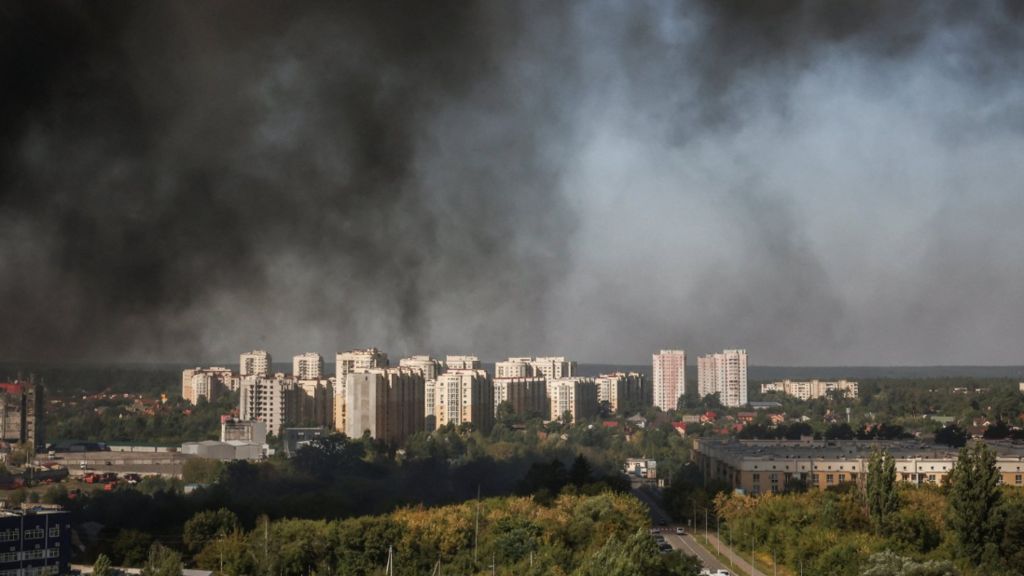
At least 27 dead and hundreds evacuated after strikes near Kyiv
In a devastating wave of overnight Russian drone attacks across Ukraine, at least 28 civilians have been killed and dozens more wounded, triggering new urgent calls from Kyiv for strengthened international support against Moscow’s aggression. The deadliest strike hit the Bucha district of Kyiv region, where regional governor Tymur Tkachenko confirmed 27 fatalities and 42 injured people — including four children. As of Saturday morning, emergency response teams had already evacuated 381 residents from damaged and at-risk neighborhoods, with search and rescue operations still underway to locate survivors trapped in destroyed residential structures.
In a separate strike targeting the Boryspil district of Kyiv region, Tkachenko confirmed the death of a 14-year-old civilian, denouncing the attack as one more addition to the long list of casualties from what he labeled “Russian terror.”
Ukrainian President Volodymyr Zelensky released an official statement extending his deepest condolences to the families of all those killed in the attacks. He noted that more than 300 first responders have been deployed across strike zones to conduct rescue operations and assess structural damage. Beyond the Kyiv region, Zelensky confirmed that additional overnight Russian strikes targeted Odesa, Dnipropetrovsk, Sumy and Zaporizhzhia regions, expanding the scope of the assault across multiple parts of the country.
In his message posted to the Telegram messaging platform, Zelensky emphasized that Ukraine cannot repel these regular large-scale drone attacks alone. He expressed gratitude to global partners that have provided military support packages and imposed harsh economic sanctions on Russia to curb its war capabilities. The Ukrainian military announced that its air defense systems successfully intercepted and shot down 233 Russian unmanned aerial vehicles (UAVs) during the overnight assault, preventing an even higher civilian death toll.
The latest round of attacks comes amid a steady escalation of cross-border strikes between Russia and Ukraine in recent months. Ukraine has increasingly targeted Russian economic infrastructure in its own operations, while Russia has ramped up its drone and missile attacks on Ukrainian civilian and energy sites. In the 24 hours preceding Saturday’s strikes, Moscow reported Ukrainian attacks on its own Belgorod and Rostov regions. Rostov governor Yuri Slusar confirmed that seven people were injured in those strikes, mirroring the pattern of rising civilian casualties on both sides of the ongoing conflict.
-
A Russian attack hits Ukraine’s Kyiv region, killing at least 27
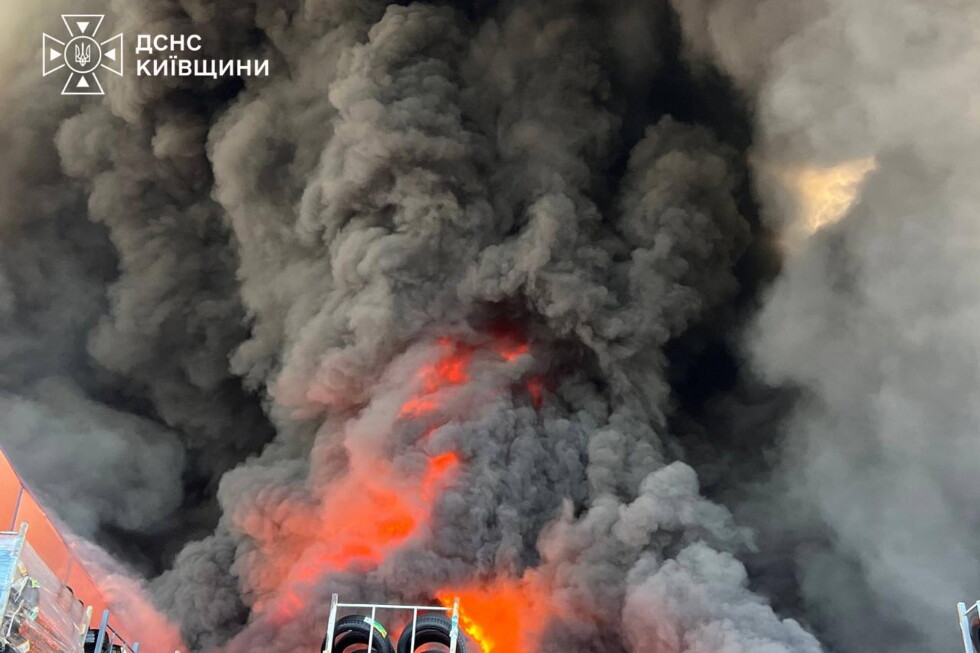
KYIV, UKRAINE – A Russian strike on the Bucha district on the outskirts of Ukraine’s capital Kyiv has left at least 27 civilians dead, Ukrainian officials confirmed Saturday, in an attack that has sparked accusations of official negligence over improper weapons storage near residential areas and triggered renewed escalation of hostilities amid the ongoing full-scale invasion.
Tymur Tkachenko, head of Kyiv’s regional military administration, announced that roughly 50 residential structures suffered damage in the strike, which ignited a large blaze that spread across multiple private homes and a local restaurant. In a public address following the attack, Ukrainian President Volodymyr Zelenskyy confirmed that the strike hit an ammunition warehouse in the village of Myla, resulting in a massive secondary detonation that extended damage to surrounding civilian infrastructure.
Zelenskyy noted that a care facility for elderly residents and people with disabilities, alongside multiple apartment blocks and private homes, were damaged in the blast. He added that criminal investigations into official negligence have already been launched, referencing longstanding regulations that prohibit storing ammunition in close proximity to residential communities. As of Saturday afternoon, more than 370 residents have been evacuated from affected areas, with evacuation operations continuing to move at-risk civilians to safer locations, according to the president.
Ukrainian Prime Minister Serhii Koretskyi echoed Zelenskyy’s criticism of internal missteps, drawing a parallel to an earlier strike on an ammunition depot in the Kyiv suburb of Vyshneve earlier this month. That attack killed 22 people, set off massive secondary blazes, and destroyed dozens of nearby homes. “Unfortunately, the terrible tragedy in Vyshneve did not become a lesson,” Koretskyi said. “In the fifth year of a full-scale invasion, repeating the same mistakes is criminal negligence. All those guilty, without exception, must be severely punished so that such situations do not happen again.”
Russia’s Ministry of Defense issued its own confirmation of the strike, stating that the targeted warehouse in Myla was being used to store components and launch boosters for Ukrainian long-range attack drones. The Russian military added that it also carried out coordinated strikes on the Black Sea ports of Mykolaiv and Izmail, alongside a separate logistics center and ammunition warehouse storing parts for Ukraine’s Flamingo cruise missiles elsewhere in the Kyiv region.
The strike on Myla comes amid three consecutive days of near-constant air raids across Kyiv, which have choked the capital’s local economy and upended daily civilian life more than four and a half years after Russia launched its full-scale invasion of Ukraine.
In additional violence across the country Saturday, separate Russian attacks in Ukraine’s southern Kherson region killed two civilians and wounded 27 others, including one child, regional administration head Oleksandr Prokudin confirmed. Prokudin added that multiple residential homes and apartment buildings suffered damage in the strikes. Earlier this week, Prokudin warned that Russia had sharply intensified its attacks on critical energy and civilian infrastructure across Kherson, roughly 70% of which remains under Russian occupation. He urged tens of thousands of remaining residents to relocate to safer parts of Ukraine, warning that the region could face prolonged power and heating outages through the coming winter months that put civilian lives at severe risk.