
In a tense UEFA Champions League quarterfinal second-leg fixture at Anfield on Tuesday, a 2-0 defeat for Liverpool that secured a 4-0 aggregate win for Paris Saint-Germain was overshadowed by a worrying first-half injury to French striker Hugo Ekitike. The incident occurred in the 27th minute, when Ekitike slipped awkwardly on the Anfield pitch, appearing to sustain damage to his right leg that required immediate medical attention on the field. After quick evaluation by club medical staff, it was determined the forward could not continue the match, and he was stretchered off the pitch to be replaced by veteran Liverpool winger Mohamed Salah. Speaking post-match following Liverpool’s elimination from the competition, Reds head coach Arne Slot offered a grim early assessment of Ekitike’s condition. “It doesn’t look good,” Slot told reporters. “It looks really bad, but it’s difficult for me to say how bad. Tomorrow we will investigate further.” The injury carries major ramifications beyond Liverpool’s domestic and European campaign. Ekitike has emerged as one of the Merseyside club’s most impactful performers this season, netting 19 goals across all club and international competitions. Most recently, he scored the decisive goal for France in a high-profile 2-1 friendly win over Brazil just one month ago. With the men’s FIFA World Cup set to kick off later this year, Ekitike was widely expected to be a key starting attacker for the defending champions, making his fitness a major point of concern for French national team staff. For Liverpool, the potential long-term absence of Ekitike also complicates the club’s ongoing push to secure a top-four finish in the English Premier League, which would grant them qualification to next season’s Champions League. The fixture was not without other injury concerns for both sides. PSG left-back Nuno Mendes was forced to withdraw shortly before halftime with an unspecified health issue, though he was able to walk off the pitch unassisted. Young PSG attacker Desire Doue became the third player to exit early, leaving the match with a leg injury early in the second half.
标签: Europe
欧洲
-
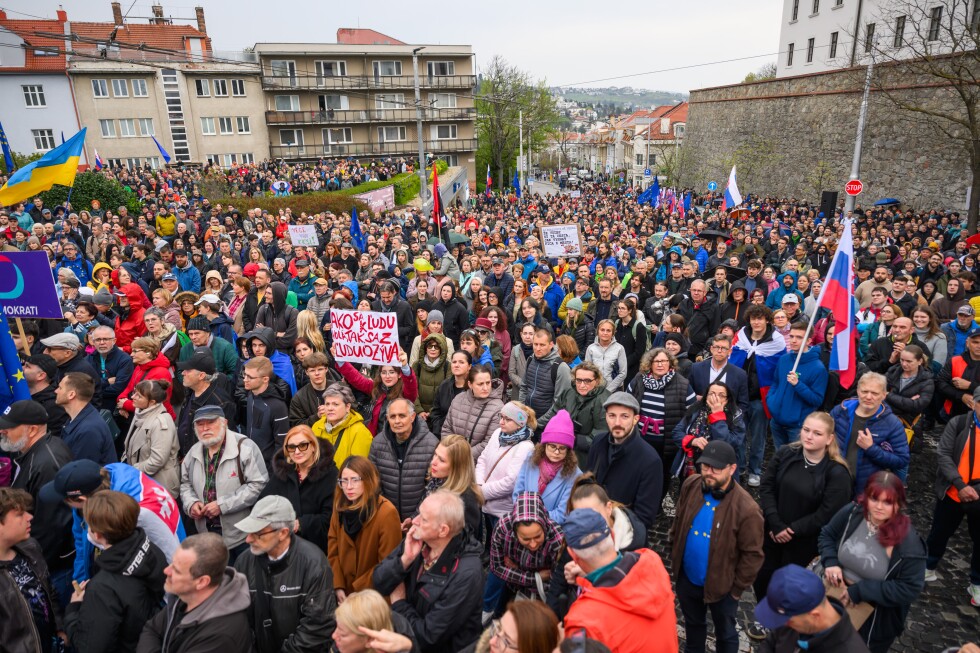
Slovaks rally against populist Prime Minister Fico’s plan to scrap mail voting from abroad
Tens of thousands of demonstrators gathered across Slovakia — and in major European cities outside the country — on Tuesday to push back against a contentious electoral proposal from populist Prime Minister Robert Fico that would eliminate postal voting for Slovak citizens residing abroad. The largest demonstration, held directly outside Slovakia’s parliament building in the capital Bratislava, opened with a warm round of applause for the shocking outcome of neighboring Hungary’s weekend general election, where long-time authoritarian populist Viktor Orbán was ousted from power by a pro-European opposition candidate.
Fico, who returned to the office of prime minister in 2023 following parliamentary elections, has emerged as a deeply polarizing figure both within Slovakia and across the European Union. His consistently pro-Russia policy stances and perceived authoritarian power grabs have already sparked waves of mass public demonstrations since his administration took office. Critics have repeatedly drawn parallels between Fico’s governing style and Orbán’s 12-year illiberal rule in Hungary, noting that Fico has openly drawn inspiration from Orbán’s approach to politics. Tuesday’s protests mark just the latest in a months-long string of public outcry against the Fico administration’s policy agenda.
The protest initiative was organized by a coalition of four opposition political groups: the Progressive Slovakia party, Freedom and Solidarity, the Christian Democrats, and the Democrats. Speaking to the assembled crowd in Bratislava, Progressive Slovakia leader Michal Šimečka framed the fight over overseas voting as an existential battle for Slovak democracy, echoing the stakes Hungarians faced just days earlier.
Šimečka argued that Fico’s proposed legislation would effectively disenfranchise tens of thousands of Slovak citizens who have settled outside the country’s borders. Under the new plan, the only option for overseas voters would be to cast ballots in person at Slovak embassies and consulates — a requirement that creates major logistical barriers for many citizens living far from diplomatic outposts. As he spoke, the crowd chanted repeatedly: “Shame, shame.”
“It is obvious the government is pushing this change because they are afraid,” Šimečka told demonstrators. “They are afraid of the people, they are afraid of free elections, they are afraid of losing power.” The draft legislation is scheduled to go under formal debate during the current sitting of the Slovak parliament, leaving the window open for urgent political pushback from opposition lawmakers.
Data from the 2023 Slovak parliamentary election underscores why Fico’s party has targeted overseas postal voting. In that election, nearly 59,000 Slovaks living abroad cast mail-in ballots. Fico’s Smer (Direction) party captured just 6.1 percent of that overseas vote, while the unified opposition won more than 80 percent of support from citizens voting from outside the country. Fico has defended the policy change by claiming it is necessary to “prevent electoral fraud and manipulations,” a framing opposition leaders dismiss as a baseless pretext to suppress anti-government votes.
Beyond the capital Bratislava, demonstrations were also held in major Slovak cities including Košice and Banská Bystrica. Solidarity rallies were also organized by Slovak expats outside the country, including in the EU capital Brussels and Prague, the capital of neighboring Czech Republic. Slovakia, a Central European nation with a total population of 5.4 million, is not scheduled to hold its next general election until 2027 — but the fight over electoral rules has already reignited a tense political standoff between Fico’s populist government and pro-Western, pro-European opposition forces.
-

Italy to host a Wimbledon tuneup on grass starting in 2028. It could be played on the San Siro field
Italian tennis is experiencing an unprecedented period of expansion and ambition, with a series of high-profile developments signaling the country’s growing influence on the global tennis landscape.
In the latest announcement Tuesday, Angelo Binaghi, president of the Italian Tennis and Padel Federation, confirmed the federation has acquired the hosting rights to a 250-level ATP Tour tournament previously held in Brussels each October. Relocated to Italy, the new event will launch in June 2028, positioning it as a key pre-Wimbledon warm-up tournament on grass courts. Binaghi noted that while a final venue is still to be confirmed, climate conditions point to northern Italy as the most likely location. One standout potential option under consideration is the iconic San Siro soccer stadium in Milan, following the lead of Madrid Open organizers who are set to add practice courts inside Real Madrid’s Santiago Bernabéu Stadium. “For once, we wouldn’t be the first to do it,” Binaghi pointed out.
This new grass-court event is just the latest addition to Italy’s packed portfolio of top-tier tennis competitions. The country already hosts the season-ending ATP Finals in Turin through 2030, and the Davis Cup Finals in Bologna through 2025. From 2022 to 2024, Italy also staged a WTA grass-court tournament in Gaiba, building valuable experience in hosting outdoor grass events ahead of the new ATP addition.
Attention now turns to the upcoming Italian Open, scheduled to begin next month at Rome’s Foro Italico. Organizers are riding a wave of momentum after world No. 1 Jannik Sinner’s straight-sets victory over Carlos Alcaraz in the Monte Carlo Masters final Sunday, a win that reclaimed the top ranking for the Italian star. The tournament is already abuzz with speculation that Sinner could become the first Italian man to lift the Italian Open men’s singles trophy in 50 years, since Adriano Panatta’s iconic win in 1975. Binaghi expressed confidence in the host nation’s prospects at the tournament presentation, noting that Italy has three additional top-25 ranked players: Lorenzo Musetti at No. 9, Flavio Cobolli at No. 16, and Luciano Darderi at No. 21. Last year’s tournament delivered historic home success too: Jasmine Paolini claimed both the women’s singles and doubles titles alongside partner Sara Errani, while Alcaraz defeated Sinner in the men’s final in Sinner’s first competition back after a three-month doping ban.
Major infrastructure upgrades are also underway at the Foro Italico to prepare for the tournament’s growing profile. Construction of a retractable roof for the main Campo Centrale court will kick off immediately after this year’s Italian Open, with completion targeted for the 2028 edition. The renovation will increase seating capacity for the main stadium from 10,500 to 12,400 for tennis, with additional capacity available for other sports such as basketball.
Looking further ahead, Binaghi reiterated the federation’s long-term ambition to elevate the Italian Open to the status of a fifth Grand Slam, joining the existing four major tournaments that have defined top-tier men’s and women’s tennis for a century. First proposed by Binaghi last year, the plan would see the federation acquire the license for the Madrid Open — which currently sits on the calendar immediately before Rome — and merge or restructure the events to create a fifth elite major. “I think about it every day,” Binaghi said. “There’s only a brief window when we can achieve this. … Italy would benefit from it for 100 years. It’s our dream.”
-
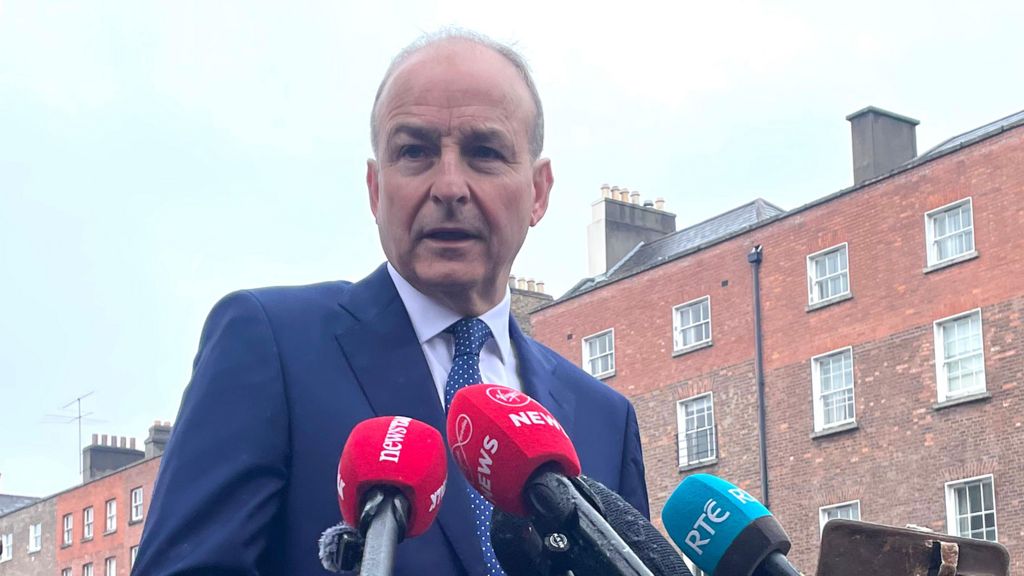
Irish government wins confidence vote over fuel protests
DUBLIN — Ireland’s sitting government has emerged with a narrow win in a critical confidence vote, but the political fallout from last week’s widespread fuel price protests has left the administration significantly weakened, with two ruling coalition lawmakers abandoning the government mid-vote. The crisis unfolded after widespread public demonstrations over soaring fuel costs led to disruptive blockades at national fuel depots, critical motorway routes, and key infrastructure across Ireland, grinding cross-country travel to a halt and sparking intense public anger at the ruling coalition’s response.
The largest opposition party, Sinn Féin, tabled a no-confidence motion on Tuesday targeting the government over its handling of the protests. In a procedural move common in Irish parliamentary politics, the government introduced its own pro-confidence motion to override the opposition’s challenge, setting the stage for hours of fiery debate inside the Dáil, Ireland’s national parliament.
When the final vote was counted, the government secured a 92-78 majority. The victory was overshadowed, however, by a high-profile rebellion from the Healy-Rae brothers, two TDs (Irish members of parliament) who had previously backed the coalition as part of a post-election confidence and supply agreement. The breakaway cost the government one junior cabinet minister: Kerry TD Michael Healy-Rae resigned his post in the Department of Agriculture immediately after voting against the administration.
Speaking to reporters outside the Dáil following his resignation, Healy-Rae condemned Taoiseach Micheál Martin’s debate speech as condescending, arguing the ruling government had fundamentally lost touch with Irish voters. “I could not be true to the people of Kerry and stand behind this government,” he said, raising his fist in solidarity with protesters gathered outside the parliamentary chamber during the vote.
The debate itself was marked by bitter partisan clashes, with government and opposition lawmakers trading sharp criticism over the government’s response to the fuel crisis. Addressing the chamber, Taoiseach Martin defended his administration’s track record, noting that since 2022, targeted government measures have shielded Irish consumers from the worst impacts of global fuel price hikes. He pushed back hard against Sinn Féin’s claim that the Irish state is the “biggest profiteer” from elevated fuel costs, calling the assertion “flat out untrue.”
“Right now, the government is spending far more on support for household fuel costs than it is collecting in additional fuel taxes,” Martin said. He also condemned last week’s blockades as inherently destructive, rejecting protesters’ claims to speak for the Irish public. “Nobody has the right to appoint themselves as the voice of the people,” he stated, adding that he condemned threats against gardaí, lorry drivers, and elected officials, warning that “we should all be concerned with the attempts to import extreme ideologies here.”
Deputy Prime Minister Tánaiste Simon Harris doubled down on the government’s defense, noting that Ireland’s response to global economic shocks has outpaced action from other regional administrations, including the devolved government in Northern Ireland. “We entered 2026 with strong relative economic fundamentals, and while growth will be slower than previously projected, the Irish economy is still on track to expand this year,” Harris said, echoing Martin’s rejection of blockades as an illegitimate protest tactic. “Nobody in this Republic gets the right to restrict the movement of anybody else,” he added, as Sinn Féin lawmakers heckled from the opposition benches.
For the opposition, Sinn Féin leader Mary Lou McDonald used the debate to call for an immediate general election, arguing the current government had lost all mandate to rule. “It is your time to go,” McDonald told the coalition. “This crisis did not start last week. The seeds were sown in your Budget last October.” She criticized the government for allowing the Dáil to adjourn for a 20-day Easter recess as fuel prices climbed, arguing Martin was “completely out of touch” with the struggles of ordinary households. “People everywhere are calling for real action and real leadership, and this government has failed to deliver,” she said.
Sinn Féin’s finance spokesperson Pearse Doherty further expanded on the opposition’s criticism, arguing the government had shown “no real leadership” on the growing cost of fuel. “When struggling people took to the streets to protest last week, this government’s instinct was not to listen — it was to threaten them,” Doherty said. Even with the confidence vote win, the rebellion of two sitting coalition lawmakers and the sustained public anger over fuel costs leave Martin’s administration facing a deeply uncertain political future heading into the next general election cycle.
-
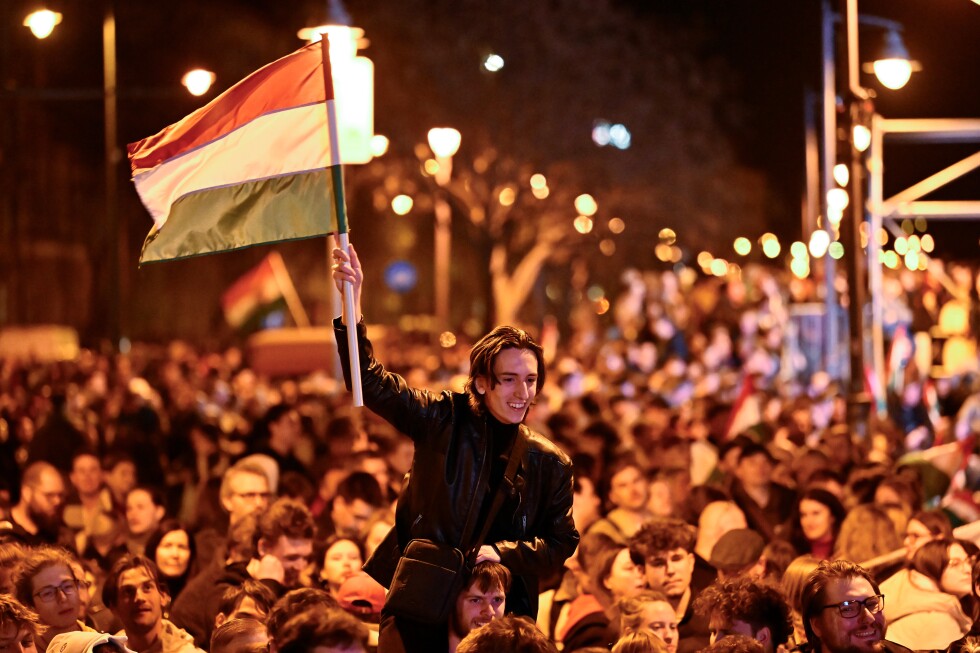
From chants on trams to a parliament rave, young Hungarians provided a soundtrack for Orbán’s defeat
BUDAPEST, Hungary — For an entire generation of young Hungarians, growing up meant never experiencing a national government led by anyone other than Viktor Orbán, who held the office of prime minister for 16 consecutive years. But when Hungarians headed to the polls for a historic national election on Sunday, it was this very generation that stood at the forefront of a dramatic political shift that ended Orbán’s long tenure in office.
In the hours after pro-European opposition candidate Péter Magyar secured his victory, hundreds of thousands of jubilant supporters flooded Budapest’s streets to celebrate the landmark result. The sounds of songs from Hungary’s most popular, openly Orbán-critical musicians drifted through the crowds, as teenagers climbed the city’s iconic Chain Bridge to blast revolutionary anthems that had long encapsulated young Hungarians’ simmering frustration with the ruling regime. On public transit across the capital, young revelers led chants and shared AI-generated fan tracks created in honor of Magyar, while outside the country’s grand neo-Gothic parliament building, a collective calling itself “More Techno to Parliament!” marked Orbán’s defeat with a high-energy rave.
These widespread, youth-led celebrations are far more than just spontaneous outpourings of joy: they highlight the outsized, decisive role young voters played in ending what critics have long described as Orbán’s autocratic rule. Pre-election polling from the independent 21 Research Center underscored this generational shift, revealing that 65% of all Hungarian voters under the age of 30 threw their support behind Magyar’s Tisza Party, compared to just 14% who backed the incumbent Orbán.
The story of 26-year-old Budapest architect Marcell Szabó-Temple mirrors the political journey of many young Hungarians who catalyzed this change. Raised on the capital’s outskirts in a household where adults avoided discussing politics in front of children, Szabó-Temple cast his first vote in the 2018 election — a race that Orbán won by a wide margin — and left the experience feeling disconnected and ambivalent toward the entire political process.
That apathy shifted when he enrolled in university, where he experienced a sudden political awakening. Even as a student at one of Hungary’s top engineering institutions, he was shocked by the deteriorating state of the country’s higher education system. Studying from an outdated curriculum in a crumbling campus building left him questioning the outcomes of 12 years of Orbán-led governance, he said, and convinced him the country needed new leadership.
More disillusionment followed in 2022, when the Orbán administration pushed through a controversial overhaul that placed control of more than 20 Hungarian universities under public foundations led by government-appointed loyalists. As a result of the restructuring, those institutions lost eligibility for the European Union’s Erasmus+ student exchange program. Critics widely condemned the move as a deliberate power grab designed to tighten state control over academia and suppress independent critical thought, and widespread student and faculty protests failed to block the policy change.
Barred from the opportunity to study abroad and demoralized by Orbán’s another lopsided election victory that same year, Szabó-Temple withdrew from political engagement for years. “It felt like the world went silent after that,” he recalled. “I stopped caring about politics again, just like when I was in high school. I didn’t even want to hear the news.”
That all changed when Péter Magyar — a former insider within Orbán’s own Fidesz Party — emerged on the Hungarian political scene in 2024. For Szabó-Temple and countless other young Hungarians, Magyar’s candidacy ignited a sense of hope for meaningful change that had been missing for years.
Magyar centered his campaign on two key priorities: repairing Hungary’s strained relationship with the European Union, and restoring the country’s traditional Western alignment, which had shifted steadily closer to Russia under Orbán’s tenure. Over the course of the campaign, he prioritized connecting with young voters, holding hundreds of rallies across the country where he repeatedly urged young people to take ownership of Hungary’s future.
Alongside Magyar’s political rise, a new wave of young musical artists — most of whom built their fanbases through social media and digital platforms — began producing openly political content that challenged the Orbán regime. As economic stagnation and deepening social divisions eroded young Hungarians’ quality of life and future prospects, this music became a rallying point for discontent. Anti-government chants regularly broke out during festival performances, drawing scoldings from government officials who condemned the displays of disrespect.
This youth-driven cultural movement reached its peak just two days before the election, when more than 100,000 people packed a large central Budapest square for a “system-breaking” concert featuring more than 50 artists, all of whom urged attendees to vote for political change.
In the wake of Orbán’s historic defeat, Szabó-Temple — who is currently completing a work exchange in Portugal — says he plans to move back to his home country. He explained that for years, young Hungarians have grown increasingly convinced that if they could not unseat Orbán’s regime this election cycle, many would have no choice but to leave Hungary for good. “I certainly felt that way,” he said.
Like most of the young voters who delivered Tisza Party its victory, Szabó-Temple holds high expectations for the new administration. “We put our faith in them, and we expect them to deliver on their promises,” he said. “If they do, I’ll put down roots here and build a life and a family in Hungary.”
-

JD Vance defends backing ‘great guy’ Orbán after landslide defeat
Five days after Hungarian opposition leader Péter Magyar’s landslide election victory ousted long-serving Prime Minister Viktor Orbán, U.S. Vice President JD Vance has publicly defended his controversial pre-vote campaign visit to back the incumbent, while signaling willingness to cooperate with the incoming government.
Vance, who traveled to Hungary to campaign for Orbán just five days before polling day, told Fox News that the visit was fully justified. He described Orbán as a “great guy” who delivered a “very good job” for Hungary, and praised him as one of the only European leaders willing to push back against what he called bureaucratic overreach from the European Union based in Brussels. Though Vance said he was disappointed by Orbán’s electoral defeat, he stressed he remained confident that the U.S. would build a productive working relationship with Magyar and his new Tisza Party administration.
Magyar, who led Tisza to an unexpected landslide win that ended Orbán’s 12-year consecutive rule, had previously criticized Vance’s intervention, warning ahead of the vote that no foreign nation had the right to interfere in Hungary’s domestic electoral process. But in a conciliatory shift on Monday, Magyar acknowledged that the U.S. remains a critical and powerful NATO ally, and confirmed he would be open to holding talks with U.S. President Donald Trump or any other American official who reaches out.
In the aftermath of the election, Hungarian politics is moving rapidly toward a transition of power. Orbán will remain in office in a caretaker capacity until Magyar is formally sworn in, and President Tamás Sulyok has called the three party leaders that won parliamentary seats to a meeting scheduled for Wednesday. Under Hungarian constitutional rules, Sulyok is tasked with convening the new parliament and nominating the next prime minister by May 12. However, Magyar has publicly called on Sulyok — whom he has labeled a puppet of the Orbán administration — to carry out these duties as quickly as possible and then step down from office. The incoming prime minister has indicated he expects to take office around May 5, and possibly even earlier. Sulyok’s office has publicly rejected calls for his resignation, but confirmed the meeting Wednesday will focus on setting a timeline for convening the National Assembly and nominating the new head of government.
In one of his first major policy moves since the election, Magyar announced plans to overhaul Hungary’s state-controlled media landscape. Revealing that he was never granted airtime on public television during his time leading the opposition until an invitation extended Monday morning, just days after he swept Orbán’s Fidesz party from power, Magyar turned down the initial invitation. He pledged to suspend all news programming on Hungary’s public radio and television until structural reforms can guarantee unbiased, independent coverage. Magyar outlined his vision for an independent governing board to oversee state media, modeled on the framework used by the BBC and other established independent public broadcasters across Europe.
Based on the latest preliminary election results, Tisza secured a two-thirds legislative supermajority with 135 out of 199 parliamentary seats — a threshold that gives the new government the power to amend the constitution and roll back the wide-ranging policy changes enacted during Orbán’s tenure. Magyar has said he expects Tisza’s final seat count will grow once all ballots are counted, expanding its supermajority even further.
Magyar has laid out an aggressive first 100-day policy agenda rooted in combating the widespread corruption he says flourished under Orbán. He described Hungary as the poorest and most corrupt member state of the European Union, and announced plans to launch two new government bodies: an Anti-Corruption Office and a National Asset Recovery and Protection Office. He also pledged to begin the process of joining the EU’s European Public Prosecutor’s Office, a step Orbán consistently refused to take during his time in office. Under Orbán’s administration, Hungary gained international notoriety for a system of cronyism that directed hundreds of millions in public contracts to politically connected allies, while independent judicial oversight was systematically eroded to undermine the rule of law. Magyar has repeatedly argued that the country was “robbed bare” under Orbán, with billions of euros in public funds disappearing from state contracts, and corruption operating at an industrial scale.
Magyar’s top immediate priority is unlocking tens of billions of euros in frozen EU funding that was suspended over concerns about rule of law breakdown and democratic backsliding during Orbán’s tenure. An estimated €17 billion in cohesion funding is currently suspended, and Hungary is also awaiting approval for an additional €16 billion in defense-related loans. European Commission President Ursula von der Leyen confirmed Tuesday that she had spoken with Magyar following his election victory, saying the bloc stood ready to begin swift work to restore the rule of law and bring Hungary back into alignment with shared European values.
The international community is also pushing for a shift in Hungary’s policy on aid to Ukraine, after Orbán imposed a veto on a €90 billion aid package for Kyiv in the weeks leading up to the election. Magyar has indicated the veto is no longer relevant to the incoming government, noting that Hungary already opted out of the latest Ukraine loan package alongside two other EU member states last December. German Chancellor Friedrich Merz has publicly called for the Ukraine aid to be unblocked “very quickly” following the Hungarian government transition. Merz met with Magyar earlier this year in Munich, and Magyar has confirmed Berlin will be one of his first foreign destinations after taking office.
-
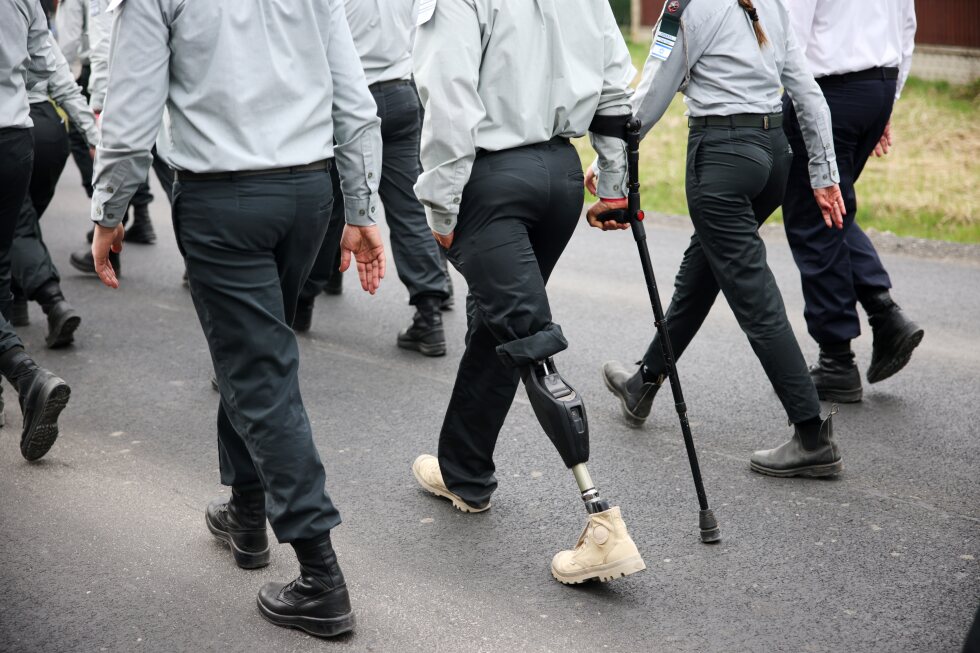
Thousands gather in Poland for the annual March of the Living on Holocaust Remembrance Day
On Tuesday, Holocaust survivors from across the globe converged on the former site of the Auschwitz concentration camp in southern Poland to take part in the March of the Living, an annual pilgrimage to honor the memory of the 6 million Jews systematically murdered by Nazi Germany and its collaborators during the Second World War. This year’s observance fell on Holocaust Remembrance Day on the Jewish calendar, marking the 38th iteration of the event that draws participants from every corner of the world.
Fifty survivors joined this year’s march, with many making the journey to Poland from Israel despite significant travel disruptions. Organizers confirmed that airspace restrictions linked to the ongoing Iran conflict created logistical hurdles that did not stop survivors from attending the commemoration.
The 3-kilometer trek starts at the Auschwitz camp and ends at the adjacent Birkenau site, the largest of the Nazi death camps built during the occupation of Europe. It was at Birkenau where hundreds of thousands of Jews from across the continent were unloaded from deportation trains and immediately executed in purpose-built gas chambers. Today, both sites stand as preserved memorials to the atrocities of the Holocaust.
This year’s gathering comes at a moment of surging anti-Jewish hatred across the globe, a trend organizers and participants have warned echoes the conditions that allowed the Holocaust to unfold. Revital Yakin Krakovsky, deputy chief executive of the International March of the Living, the group that organizes the annual event, stressed that the lessons of the Holocaust have not been fully absorbed by the modern world. “Since Oct. 7, anti-Semitism has surged and is spreading everywhere,” she said. “The scale and normalization of this hatred echoes the dark times we have seen before and, today of all days, we know how it ended.”
Among the special guests at this year’s march were survivors of recent anti-Semitic attacks, including survivors of the December mass shooting at a Hanukkah celebration on Sydney, Australia’s Bondi Beach that left 15 people dead. Hannah Abesidon, whose father Tibor Weitzen — a 78-year-old Holocaust survivor — was killed in that attack, shared her family’s story with march participants. “My father didn’t make it because he was a Jew,” Abesidon said. “It starts with the Jews but it doesn’t end with the Jews,” she added, emphasizing the broader threat that unchecked prejudice poses to all global communities.
For nearly four decades, the March of the Living has brought together thousands of participants each year, including not just Holocaust survivors, but also Jewish youth, community leaders, and elected officials from across the world. The event remains one of the most high-profile global efforts to educate the public about the Holocaust and push back against rising anti-Semitism and historical revisionism.
-
Fuel protests have Ireland’s government facing possible no-confidence vote
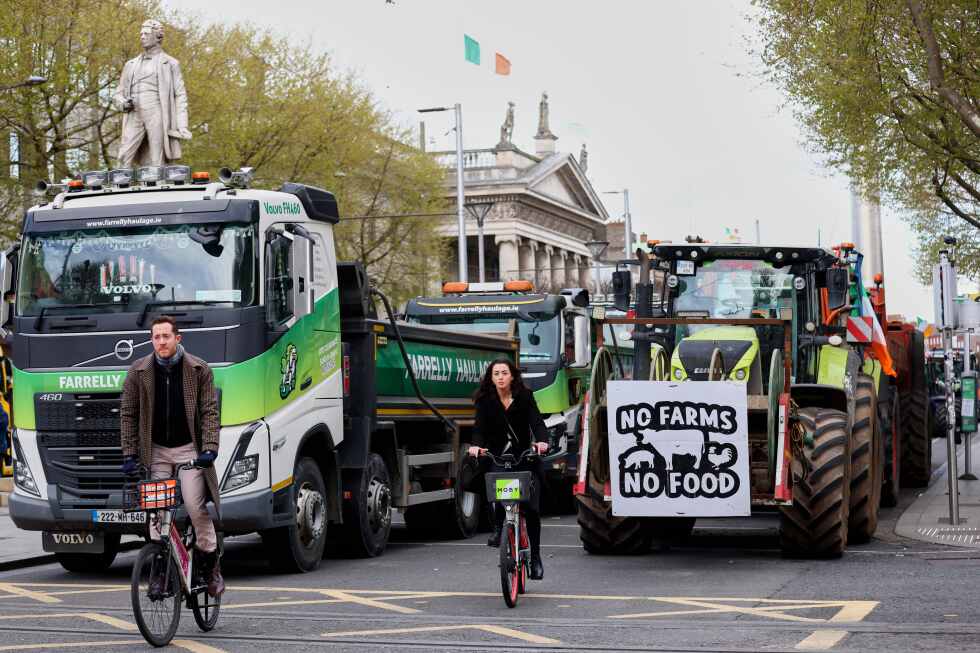
DUBLIN, Ireland – A week of widespread fuel protests that paralyzed critical national infrastructure has pushed Ireland’s ruling coalition government to the brink, with a scheduled no-confidence vote in parliament set to unfold Tuesday. The unrest, rooted in skyrocketing fuel prices triggered by conflict-related disruption to global oil supplies through the Strait of Hormuz, has exposed deep divisions over the government’s crisis response and brought Irish politics to a moment of high stakes.
The wave of demonstrations began on April 7, when slow-moving convoys of frustrated industry operators first clogged major roadways. Organized largely through social media, the movement quickly swelled, drawing truckers, farmers, taxi drivers, and bus operators who blockaded key transport links, oil infrastructure, and central thoroughfares in Dublin, the nation’s capital. Protesters cut off access to Ireland’s only oil refinery in Whitegate, County Cork, and blockaded the country’s major ports, leading to widespread fuel shortages that left more than a third of the nation’s gas pumps dry and created massive gridlock across the country. Demonstrators’ core demands were straightforward: urgent government intervention, either through permanent price caps or immediate tax cuts, to offset soaring fuel costs that they warned threatened to put thousands of small operators out of business.
The supply shock that sparked the protests traces back to escalating conflict between the U.S.-Israel bloc and Iran, which disrupted shipping through the Strait of Hormuz—one of the world’s most critical chokepoints for global crude oil exports. The sudden spike in international oil prices filtered directly to Irish fuel pumps, pushing costs to unaffordable levels for transport and agricultural industries that depend heavily on diesel and gasoline.
After days of allowing demonstrations to proceed largely unimpeded, Irish authorities moved to clear blockades over the weekend. Police used pepper spray to clash with protesters in some locations, while an army vehicle removed a large log barricade at Galway Port. Outlining the government’s decision to clear infrastructure, Prime Minister Micheál Martin emphasized that the country’s ports and refineries are non-negotiable economic lifelines for Ireland, which exports roughly 90% of its domestically produced goods. “If the ports were blockaded for any length of time, people would have lost jobs, production would have ceased, and it would have been very, very serious,” Martin said, while also defending the overall response from police and military forces. He acknowledged that the government could draw lessons from the unrest.
To de-escalate the crisis, Martin recently announced a new €505 million ($595 million) fuel support package designed to ease cost-of-living pressures and address protester demands. The package includes targeted direct payments to truckers and school bus operators, alongside fuel subsidies for the agricultural and fishing sectors. This new relief comes on the heels of a €250 million tax break approved just three weeks earlier, and the Irish parliament is scheduled to vote on the new package the same day as the no-confidence motion.
Despite the government’s last-minute concessions, opposition parties have rejected the response as too little, too late. Sinn Féin, the country’s largest opposition party, formally called for the no-confidence vote scheduled for Tuesday evening. Six other opposition parties—The Social Democrats, Labour, People Before Profit, Aontú, the Green Party, and Independent Ireland—have all committed to supporting the motion. Sinn Féin has also criticized the ruling Fianna Fáil-Fine Gael coalition for failing to recall parliament during a recent holiday break to address the crisis and for offering what it calls ineffective half-measures to protect households and businesses from the fuel price spike.
In a tactical move to pre-empt the opposition’s motion, Martin’s coalition has scheduled an earlier parliamentary vote on its own motion of confidence. If the government secures enough support to pass its confidence motion, the opposition’s no-confidence motion will become moot before it even goes to a vote. If the no-confidence motion were to pass, the current government would be forced to resign, triggering either a parliamentary process to select a new prime minister and form a replacement government or a snap general election for the entire Irish parliament. Many protesters have already claimed a partial victory, noting that their demonstration forced the sitting government to make major policy concessions it would not have otherwise considered.
-
US families contest Italian law restricting citizenship by descent in highest court
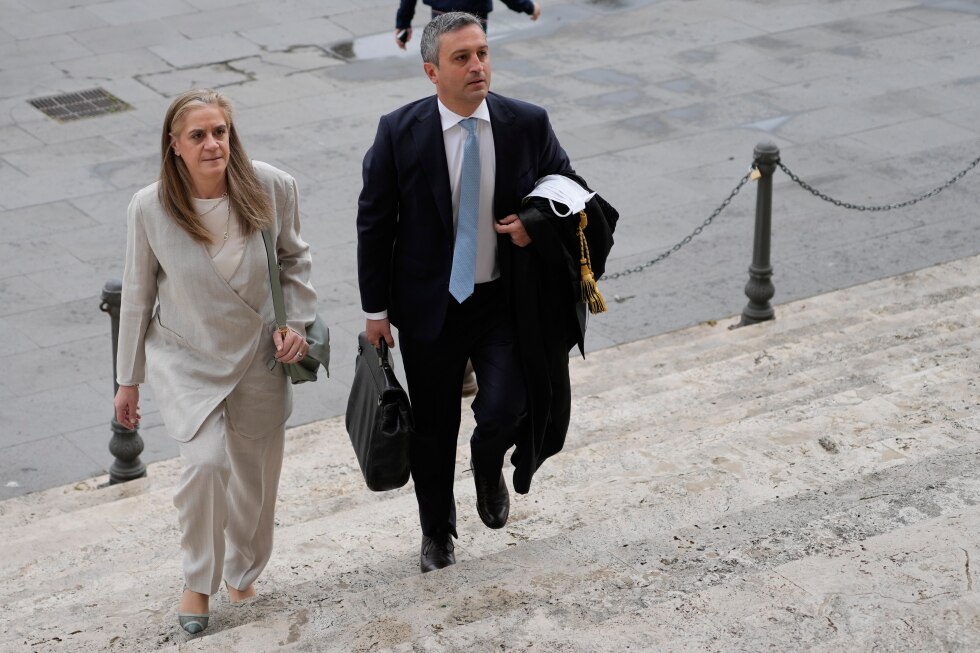
ROME – In a landmark legal fight that could reshape citizenship access for millions of people of Italian descent across North America and Latin America, two American families have brought their challenge to a controversial 2024 law before Italy’s highest judicial body, the Court of Cassation, on Tuesday. The statute, enacted by Prime Minister Giorgia Meloni’s far-right-led administration, restricts citizenship by descent claims to descendants no more than two generations removed from their Italian ancestor, a sweeping rollback of pre-existing rules that allowed any applicant with verifiable Italian lineage dating back to the country’s unification in 1861 to pursue citizenship.
The families’ lead attorney, Marco Mellone, argued to the court that the new restrictions should only apply prospectively – meaning claims filed by applicants whose lineage traces back beyond two generations, who began their applications before the law went into effect, should still be eligible for approval. If the court accepts Mellone’s interpretation, it could clear a path to citizenship for millions of people with Italian roots currently residing in the United States and across Latin America.
A ruling from the court’s expanded panel, whose decision will set a binding precedent for all lower Italian courts, is expected within the coming weeks. Though Italy’s Constitutional Court upheld the law’s basic validity last month, Mellone emphasized that the Court of Cassation retains the authority to clarify the statute’s scope and timeline of application.
“The families at the center of this case are just like millions of other Italian descendants across the world: their ancestor emigrated to the United States in the late 19th century, and they are simply asking to exercise the right to citizenship that their lineage guarantees them,” Mellone told reporters ahead of the hearing.
Foreign Ministry data shows the ruling could ultimately clarify citizenship rights for descendants of roughly 14 million Italians who left their home country for the Americas between 1877 and 1914 alone, a mass emigration wave that reshaped the demographic and cultural landscape of the Western Hemisphere.
While only two families are listed as petitioners in the case, more than a dozen other applicants whose claims have been blocked by the 2024 law gathered outside the Rome courthouse Tuesday to demonstrate solidarity with the challenge. Among them was Karen Bonadio, who brought childhood photos and original birth certificates of her great-grandparents, who emigrated from the southern Italian region of Basilicata to upstate New York. Bonadio says she hopes to eventually relocate to Italy, a dream put on hold by the new law.
“The law’s logic claims great-grandchildren like me had no connection to our ancestors, but this photo from 1963 proves that’s wrong – I was just three and a half years old when this was taken with them,” Bonadio said, displaying the faded image to reporters.
Many pre-law claims already caught up in Italy’s slow bureaucratic system have been derailed by the new restrictions, even for applicants who began the process years ago. Jennifer Daly, a retired history professor from Salina, Kansas, has spent nearly a decade navigating Italy’s citizenship bureaucracy. Her grandfather Giuseppe Dallfollo – whose name was anglicized by U.S. immigration officials after he arrived in 1912 from Trento, then part of the Austro-Hungarian Empire – naturalized as a U.S. citizen after marrying an Italian woman and bringing her to the U.S. Daly says her connection to Italy runs far deeper than a legal status.
“I’ve always had a clear Italian identity, and getting citizenship isn’t just a paperwork step for me – it’s a recognition of who I am and where my family comes from. It means everything,” Daly explained in a phone interview.
Alexis Traino, a 34-year-old who already resides in Florence, also joined the protest outside the court. Traino has Italian great-grandparents on both sides of her family, and was in the final stages of gathering required documents from U.S. and Italian authorities when the new law passed, immediately halting her application.
“Growing up, my parents always taught me I was Italian, and I’ve felt a deep connection to this country my whole life,” Traino said. “I already live here, I want to contribute to Italy, and I just want the right to call myself a citizen.”
-
Spain approves plan to give around 500,000 undocumented migrants legal status
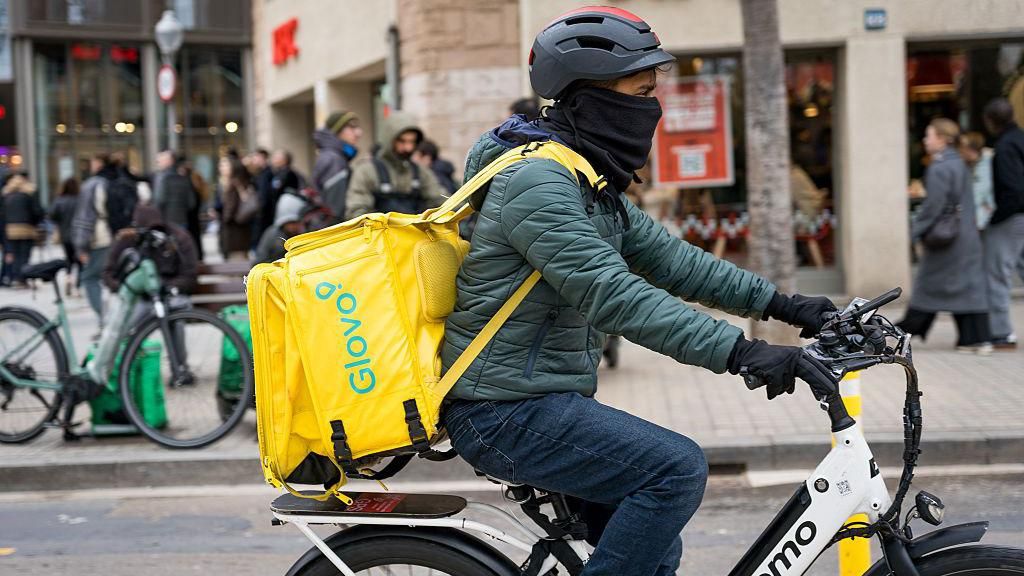
In a highly contentious policy move that sets Spain apart from many of its European neighbors, the Spanish government led by Prime Minister Pedro Sánchez has formally approved a sweeping plan to grant legal status to roughly 500,000 undocumented migrants, opening pathways for their full integration into the country’s formal workforce.
Sánchez, the leader of Spain’s Socialist party, has framed the executive decision as both a moral imperative and a practical economic necessity for the nation. In a public letter shared with Spanish citizens across social media platforms, he emphasized that the sweeping regularization effort is designed to recognize a simple, long-unaddressed reality: hundreds of thousands of unauthorized migrants already contribute to and participate in daily Spanish life. Beyond that, Sánchez argued that these migrants are critical to shoring up Spain’s economy and public services, which face growing strain from the country’s rapidly aging population. He also rooted the policy in Spain’s own historical experience, noting that for generations, millions of Spanish natives left their home country in search of better economic opportunities abroad, making empathy for new arrivals a core part of the national identity. “Migrants help build the rich, open, diverse Spain we are today and the one we aspire to be in the future,” Sánchez said of the plan.
Under the approved scheme, eligible undocumented migrants will be able to apply for a one-year renewable residence permit, with a strict application window running from April 16 through the end of June. To qualify, applicants must provide documented proof that they have resided continuously in Spain for a minimum of five months and hold a clean criminal record with no serious convictions.
The policy has already sparked sharp political division across the country. The conservative opposition People’s Party (PP) has vowed to launch all possible legal and legislative efforts to block the plan, arguing that it wrongly rewards unauthorized migration and will create a pull factor that draws even more undocumented arrivals to Spain. PP leaders have also disputed the government’s official estimates of eligible applicants, claiming the actual number could climb to as high as one million, and have labeled the initiative an “outrage” against Spanish law and order.
Not all major national institutions have aligned against the plan, however. The Catholic Church in Spain has publicly thrown its support behind the government’s legislation, echoing the administration’s framing of the move as a matter of justice. Independent demographic analysis from Spanish think tank Funcas places the total undocumented population in Spain at roughly 840,000, the vast majority of whom come from Latin American countries.
For undocumented migrants already living in Spain, the plan represents a life-changing opportunity. Ricardo, a Bolivian graphic designer who has been locked out of stable formal employment due to his lack of legal status, told reporters he plans to submit his application as soon as the window opens. “This is going to benefit so many people, giving us access to regular work and a much better quality of life,” he said. “It also means more tax revenue for the Spanish state, and a larger pool of legally available workers for domestic employers that are struggling to fill open roles.”
This latest mass regularization is not without precedent in Spanish politics: both Socialist and PP administrations have implemented migrant amnesty programs in past decades, with the most recent large-scale effort taking place in 2005, when a Socialist government granted legal residency to roughly 577,000 undocumented people. What makes the 2026 plan notable, however, is its context: it comes at a time when most other European Union member states are moving to tighten border controls and restrict access to legal status for unauthorized migrants, making Spain’s policy a notable outlier in broader European immigration politics.