标签: Europe

欧洲

  • ‘The finest in the world’: Why the US is buying icebreakers from Finland

    ‘The finest in the world’: Why the US is buying icebreakers from Finland

    In the frosty laboratories of Aker Arctic Technology, scale models of icebreakers glide through a 70-meter simulation tank, carving precise channels through solid ice. This Helsinki-based facility represents the epicenter of a specialized global industry where Finland holds undisputed supremacy. Finnish companies have designed 80% of the world’s operational icebreakers, with 60% constructed in Finnish shipyards.

    This expertise has drawn international attention, particularly from the United States. In a significant policy shift, the Trump administration waived domestic construction requirements for naval vessels to acquire four Finnish-designed icebreakers for the U.S. Coast Guard, with plans for seven additional vessels using Finnish designs and expertise. The move responds to growing Arctic competition, particularly from Russia’s fleet of approximately 40 icebreakers (including nuclear-powered vessels) compared to America’s mere three operational units.

    The strategic importance of icebreaking capability has intensified as climate change opens new Arctic navigation routes. Reduced ice levels are making trans-Arctic shipping between Asia and Europe increasingly viable, while also improving access to oil and gas reserves beneath the Arctic Ocean. Peter Rybski, a retired U.S. Navy officer and Arctic expert based in Helsinki, notes: ‘There’s simply a lot more traffic in that part of the world now.’

    Finland’s dominance stems from both necessity and generations of accumulated knowledge. ‘Finland is the only country where all harbors may freeze during winter,’ explains Maunu Visuri of state-owned Artica, which operates eight icebreakers. With 97% of goods arriving by sea, icebreakers are essential infrastructure. ‘We say that Finland is an island,’ Visuri adds.

    Engineering excellence defines Finnish icebreakers. ‘It’s crucial that vessels have sufficient structural strength and engine power,’ says ice performance engineer Riikka Matala. CEO Mika Hovilainen emphasizes hull design: ‘You must have a hull form that breaks ice by bending it downward—not cutting, not slicing.’

    The geopolitical dimension extends beyond practical navigation. Researcher Lin Mortensgaard of the Danish Institute of International Studies observes: ‘No matter how many aircraft carriers you have, you cannot sail them into the central Arctic Ocean. Icebreakers are the only naval vessel to signal Arctic capabilities.’

    With contracts already awarded to Rauma Marine Constructions and production timelines as short as three years, Finland’s century of icebreaker development has positioned it as an unexpected player in global power dynamics, where technological mastery meets strategic necessity in the rapidly changing Arctic landscape.

  • Five dead after high-speed trains collide in Spain

    Five dead after high-speed trains collide in Spain

    A catastrophic rail collision involving two high-speed trains near the Andalusian town of Adamuz has resulted in significant casualties, with at least five fatalities and dozens injured. The incident occurred on Sunday evening when a Malaga-to-Madrid service derailed and collided with an opposing Madrid-to-Huelva train, according to Spain’s rail infrastructure operator Adif.

    Emergency response teams mobilized rapidly to the scene following the derailment, which took place approximately ten minutes after the Malaga train’s 18:40 local time departure. Andalusia’s emergency services reported at least 25 individuals sustained serious injuries, with numerous others suffering minor harm. The private rail operator Iryo confirmed approximately 300 passengers were aboard the Malaga-Madrid service at the time of the accident.

    Eyewitness Salvador Jimenez, a journalist with RTVE who was traveling in the first carriage, described the experience as resembling an earthquake. ‘They immediately called to see if there were healthcare professionals who could assist,’ Jimenez recounted. ‘They used hammers to break windows and eventually evacuated us.’

    In response to the tragedy, Spanish Prime Minister Pedro Sánchez announced government coordination with emergency services to support affected individuals. Andalusian regional president Juanma Moreno similarly expressed profound concern and solidarity with victims and their families. All rail services between Madrid and Andalusia remain suspended indefinitely as investigation into the cause of the derailment continues.

  • High-speed trains collide after one derails in southern Spain, killing at least 5 and injuring 25

    High-speed trains collide after one derails in southern Spain, killing at least 5 and injuring 25

    A catastrophic rail collision occurred in southern Spain on Sunday evening when a high-speed train derailed and crossed into the path of an oncoming service, resulting in significant casualties. According to official statements from Spanish rail infrastructure operator Adif, the incident involved the Malaga-Madrid express service which jumped tracks and collided with a Madrid-Huelva bound train traveling in the opposite direction.

    Emergency response teams from the Andalucia region, where the accident transpired, confirmed a death toll of five individuals with an additional twenty-five passengers sustaining severe injuries. The collision created a complex rescue operation as emergency personnel worked through the night to extract trapped passengers from the wreckage.

    Spanish transportation authorities have launched an immediate investigation into the precise causes of the derailment and subsequent collision. Preliminary reports suggest the incident represents one of Spain’s most serious rail accidents in recent years, though the country’s high-speed rail network has historically maintained an excellent safety record. The investigation will examine track conditions, signaling systems, and operational procedures during the evening period when the accident occurred.

    The Spanish government has expressed condolences to the victims’ families and pledged full support for the investigation. Rail services on affected routes have been temporarily suspended as authorities work to clear the wreckage and assess infrastructure damage.

  • EU weighs response to Trump’s tariff threat over Greenland

    EU weighs response to Trump’s tariff threat over Greenland

    The transatlantic alliance faces its most severe crisis in decades as former President Donald Trump’s renewed interest in acquiring Greenland has triggered diplomatic tremors across Europe. During his second term, Trump has explicitly affirmed Greenland’s strategic importance to U.S. national security and has conspicuously refused to dismiss the possibility of military acquisition should diplomatic negotiations fail.

    European leaders are confronting an unprecedented dilemma: either capitulate to economic coercion from the White House or risk triggering a full-scale trade war with the United States. The emergency EU summit scheduled in coming days will address what many officials describe as the most dangerous turn in EU-US relations since World War II.

    French President Emmanuel Macron advocates deploying the EU’s newly created ‘trade bazooka’—the Anti-Coercion Instrument (ACI)—designed precisely to counter economic bullying from hostile powers. Ironically, this mechanism was originally conceived with China in mind, not the United States.

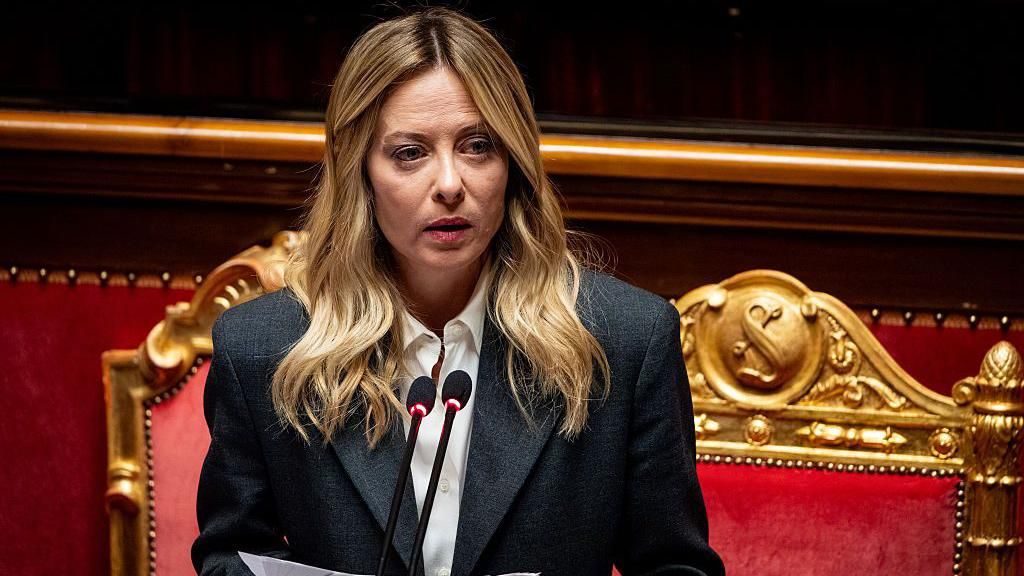
    The situation has exposed significant divisions within European leadership. Italian Prime Minister Giorgia Meloni, who maintains comparatively cordial relations with Trump, has characterized the crisis as a ‘problem of understanding and communication.’ This stance contrasts sharply with Macron’s confrontational approach, highlighting the EU’s internal fragmentation when facing external pressure.

    The recent deployment of European troops to Greenland—intended as a defensive measure—appears to have provoked rather than deterred Trump’s ambitions. This development has created a precarious diplomatic standoff that threatens to dismantle decades of transatlantic cooperation.

    As EU ambassadors convene discreet emergency meetings in Brussels, the international community watches anxiously to see whether Trump will escalate his threats or seek diplomatic resolution. The outcome will likely redefine global power dynamics and determine the future of Arctic security governance.

  • ‘Europe won’t be blackmailed,’ Danish PM says in wake of Trump Greenland threats

    ‘Europe won’t be blackmailed,’ Danish PM says in wake of Trump Greenland threats

    European leaders have mounted a formidable diplomatic front against President Donald Trump’s unprecedented threat to impose punitive tariffs on eight NATO allies unless they acquiesce to his proposed acquisition of Greenland. The confrontation has escalated transatlantic tensions to levels not witnessed in decades.

    Denmark’s Prime Minister Mette Frederiksen declared “Europe won’t be blackmailed” as she coordinated with counterparts from Finland, France, Germany, Netherlands, Norway, Sweden, and the United Kingdom. These nations issued a joint statement condemning Trump’s approach as risking a “dangerous downward spiral” in international relations.

    The crisis emerged after Trump issued a February 1st deadline for compliance with his Greenland ambitions, threatening initial 10% tariffs that could escalate to 25% on goods from the targeted nations. The U.S. president has framed the autonomous Danish territory as critical to American security interests, openly discussing acquisition “the easy way or the hard way.”

    European response has been swift and unified. An emergency meeting convened in Brussels on Sunday, where leaders discussed activating the EU’s “anti-coercion instrument” should Trump follow through on his tariff threats. French President Emmanuel Macron is coordinating the collective European response, emphasizing principles of sovereignty and territorial integrity.

    The geopolitical stakes extend beyond bilateral relations. NATO Secretary General Mark Rutte confirmed discussions with Trump regarding “the security situation in Greenland and the Arctic,” while Canadian Prime Minister Mark Carney announced plans to “significantly increase Arctic security” in response to the escalating situation.

    Public opposition appears overwhelming on both sides of the Atlantic. Recent polling indicates only 17% of Americans support acquiring Greenland, with 47% opposed. In Greenland itself, a January 2025 referendum showed merely 6% support for joining the United States versus 85% opposition. Weekend protests in Nuuk and Danish cities demonstrated growing public outrage.

    The confrontation now moves to the World Economic Forum in Davos, where Trump, Macron, German leaders, and EU officials are scheduled to discuss “how can we cooperate in a more contested world?”—a theme that has taken on immediate practical significance amid the Greenland crisis.

  • A timeline of how the US and Europe have been at odds

    A timeline of how the US and Europe have been at odds

    The current diplomatic friction between the United States and European powers regarding Greenland’s future represents merely the latest chapter in a long history of trans-Atlantic disagreements. Since the conclusion of World War II, these strategic allies have experienced numerous profound crises that have periodically strained their partnership. Here we examine seven significant historical fractures that have tested the Western alliance.

    The 1956 Suez Crisis marked a pivotal moment when the United States employed substantial diplomatic and economic pressure against its closest Cold War allies. As France, the United Kingdom, and Israel invaded Egypt to depose President Gamal Abdel Nasser and reclaim control of the strategic Suez Canal, Washington’s intervention not only halted the military campaign but also dramatically accelerated Europe’s declining global influence in the postwar era.

    During the Vietnam War, European nations demonstrated limited solidarity with American military efforts. While providing diplomatic support (with France as the notable exception), European governments uniformly refused to contribute troops. Widespread street protests across the continent created significant political challenges for European leaders, who struggled to balance their support for Washington against eroding domestic popularity.

    The Euromissile Crisis of the 1980s emerged when Soviet deployment of SS-20 missiles capable of striking Western European targets prompted NATO to install American Pershing nuclear missiles across Europe. This escalation triggered massive anti-nuclear demonstrations throughout European capitals, with protestors frequently directing their anger toward Washington amid fears of a renewed arms race.

    The 2003 invasion of Iraq created perhaps the most visible rift in modern trans-Atlantic relations. France and Germany’s refusal to support the campaign against Saddam Hussein’s government prompted sharp rebukes from Washington officials. Defense Secretary Donald Rumsfeld’s characterization of these nations as ‘Old Europe’ while praising Eastern European countries as ‘New Europe’ highlighted the deepening division.

    The controversial ‘extraordinary rendition’ program during the war on terror saw the United States capturing and transferring terror suspects to third countries for interrogation using techniques often considered torture. While some European governments secretly cooperated with this program, public revelation forced political leaders to publicly denounce these practices.

    The ongoing war in Ukraine has introduced fresh tensions, particularly with President Trump’s return to office in January 2025. His administration dramatically reversed previous American policy by expressing warmth toward Russian President Vladimir Putin, adopting a cool stance toward Ukrainian leadership, and significantly reducing military assistance to Kyiv. European leaders, viewing their security as directly threatened, have urgently pressed for renewed American support.

    Finally, the Trump administration’s national security strategy document released last December explicitly characterized European allies as weak partners, criticizing their migration and free speech policies while questioning their long-term reliability. This assessment, coupled with threats of heavy trade tariffs against EU nations—America’s largest trading partner—has further strained relations, though both sides eventually agreed to a framework establishing 15% tariffs on most goods.

  • Republicans and Democrats are trying to contain Trump’s Greenland aggression. Will it be enough?

    Republicans and Democrats are trying to contain Trump’s Greenland aggression. Will it be enough?

    WASHINGTON — Congressional Republicans are mounting an unprecedented effort to counter President Trump’s persistent threats to acquire Greenland, marking one of the most significant Republican-led challenges to the administration’s foreign policy agenda. The controversy has triggered urgent diplomatic missions, proposed legislation, and heightened concerns about the future of NATO alliances.

    Last week witnessed a flurry of Republican activity aimed at damage control. Senators delivered floor speeches emphasizing NATO’s critical importance, introduced bills to prevent military action against Denmark, and organized a bipartisan delegation to Copenhagen for emergency talks with Danish officials. Despite these efforts, President Trump continues to assert his intention to control the strategic Arctic territory, creating global uncertainty about America’s foreign policy direction.

    Senator Chris Coons (D-Del.), who organized the Copenhagen mission, stated, ‘When the world’s most powerful military nation repeatedly threatens your territory through its president, the situation demands serious attention.’ The delegation included Republican Senators Thom Tillis of North Carolina and Lisa Murkowski of Alaska, who joined Democratic colleagues in seeking to de-escalate tensions while discussing potential Arctic security cooperation.

    The administration’s position hardened further when Trump announced 10% tariffs on eight European nations, retaliating against their opposition to his Greenland plans. He justified the acquisition push by citing national security needs regarding modern weapons systems.

    Key Republicans have drawn clear red lines, with Senator Tillis calling the tariff plans ‘detrimental to American interests and alliances.’ Senate Majority Leader John Thune (R-S.D.) acknowledged no congressional ‘appetite’ for the discussed options, while Senator Mitch McConnell warned that seizing Greenland would ‘shatter allied trust’ and mar presidential legacies.

    Lawmakers are exploring multiple legislative avenues to prevent military action, including measures to block Defense Department funding for attacks on NATO members’ territory without consent. Senator Murkowski additionally suggested congressional action to nullify Trump’s tariffs, though previous similar efforts failed to overcome presidential vetoes.

    The administration has shown minimal interest in seeking congressional approval for military moves, prompting Democrats to consider war powers resolutions that would compel presidential consultation. Senator Tim Kaine (D-Va.) noted these measures have successfully pressured the administration to provide briefings and seek authorization before troop deployments.

    While some Republicans support strengthened U.S. presence in Greenland, most reject coercive approaches. The strongest opposition comes from retiring Republicans, including Representative Don Bacon who suggested such actions could justify impeachment proceedings.

  • In their words: European governments criticize Trump’s tariff threats over Greenland

    In their words: European governments criticize Trump’s tariff threats over Greenland

    COPENHAGEN, Denmark — A severe transatlantic rift has emerged following U.S. President Donald Trump’s announcement of impending 10% tariffs targeting eight European nations in retaliation for their stance on Greenland. The unprecedented economic measure, scheduled to commence next month, specifically targets Denmark, Norway, Sweden, France, Germany, the United Kingdom, the Netherlands, and Finland.

    The tariff threat represents a dramatic escalation in tensions over Arctic sovereignty and security arrangements. President Trump characterized the tariffs as retaliation against what he deemed European interference in American control of Greenland, specifically referencing the deployment of symbolic troop contingents to the region. European leaders uniformly rejected this characterization, maintaining their military movements were coordinated responses to Trump’s own calls for enhanced Arctic security through NATO frameworks.

    Diplomatic reactions from affected nations revealed remarkable unity in condemning the U.S. move. Danish Foreign Minister Lars Løkke Rasmussen emphasized transparent cooperation with American allies on Arctic security while implicitly rejecting the tariff justification. Norwegian Prime Minister Jonas Gahr Støre delivered a sharper rebuke, stating unequivocally that ‘threats have no place among allies’ and reaffirming Norway’s recognition of Danish sovereignty over Greenland.

    Swedish Prime Minister Ulf Kristersson denounced the action as ‘blackmail’ and framed it as a broader European Union concern. French President Emmanuel Macron declared that ‘no intimidation or threats will influence us,’ whether in Ukraine, Greenland, or elsewhere. German officials indicated coordinated European responses would be determined at the appropriate time.

    British Prime Minister Keir Starmer condemned the tariffs as ‘completely wrong’ when applied to allies pursuing collective NATO security. Dutch Foreign Minister David van Weel criticized the inappropriate use of trade measures for non-trade disputes, while Finnish President Alexander Stubb warned the tariffs would ‘undermine the transatlantic relationship and risk a dangerous downward spiral.’

    The collective European response underscores a fundamental disagreement over appropriate conduct among NATO allies and establishes a potentially dangerous precedent for using economic measures to settle geopolitical disagreements within the Western alliance.

  • Europeans reeling as Trump imposes tariffs on 8 countries over Greenland dispute

    Europeans reeling as Trump imposes tariffs on 8 countries over Greenland dispute

    BERLIN (AP) — Transatlantic relations faced severe strain Sunday following President Donald Trump’s unexpected announcement imposing 10% tariffs on eight European nations for resisting U.S. territorial ambitions regarding Greenland. The move has triggered widespread condemnation across European capitals and prompted emergency diplomatic consultations.

    The targeted nations—Denmark, Norway, Sweden, France, Germany, United Kingdom, Netherlands, and Finland—collectively denounced the measures as economically damaging and politically destabilizing. European Council President António Costa and European Commission President Ursula von der Leyen issued a joint statement warning the tariffs “would undermine transatlantic relations and risk a dangerous downward spiral.”

    Trump’s tariff threat, announced Saturday coinciding with mass protests outside the U.S. Consulate in Nuuk, Greenland’s capital, represents an unconventional approach to territorial negotiation. The administration characterizes Greenland as critical to U.S. national security interests, though the semiautonomous territory remains under Danish sovereignty within the NATO alliance framework.

    Legal and logistical complications immediately emerged regarding implementation. The European Union functions as a unified economic zone in trade matters, while targeted nations Norway and Britain operate outside EU trade structures. EU envoys scheduled emergency talks for Sunday evening to coordinate response strategies.

    The announcement generated rare bipartisan criticism within both European and American political spheres. U.S. Senator Mark Kelly (D-Arizona) condemned the move as damaging to international relationships, stating: “The damage this President is doing to our reputation and our relationships is growing, making us less safe.”

    European leaders expressed concern that the confrontation might benefit geopolitical rivals. EU Foreign Policy Chief Kaja Kallas noted that “China and Russia will benefit from the divisions between the U.S. and Europe,” emphasizing that Greenland security concerns should be addressed through NATO mechanisms rather than economic coercion.

    Even Trump’s traditional European allies distanced themselves from the move. French far-right leader Jordan Bardella recommended suspending the EU-U.S. tariff agreement, characterizing the threat as “commercial blackmail.” British political parties across the spectrum, including Trump ally Nigel Farage’s Reform UK, uniformly criticized the measures.

    Danish and Norwegian foreign ministers are scheduled to address the escalating crisis during a Sunday news conference in Oslo, as diplomatic efforts intensify to resolve the unprecedented transatlantic confrontation.

  • Faisal Islam: Trump’s Greenland threats to allies are without parallel

    Faisal Islam: Trump’s Greenland threats to allies are without parallel

    A unprecedented diplomatic crisis has emerged following U.S. President Donald Trump’s coercive threat to Western allies regarding Greenland’s potential annexation. The administration’s ultimatum—either support the proposed territorial acquisition or face intensified trade restrictions—represents an extraordinary escalation in economic diplomacy that experts describe as without historical parallel.

    The threat, delivered through presidential social media channels, has sent shockwaves through diplomatic circles. Officials from affected nations have expressed both bewilderment and deep concern about the implications for NATO and Western alliance structures. The move targets longstanding partners with minimal warning, fundamentally challenging the principles of international cooperation that have underpinned transatlantic relations for decades.

    Economic analysts note that while allies have previously adapted to Trump’s trade policies, this particular threat enters qualitatively different territory. Canadian Prime Minister Mark Carney’s recent strategic pivot illustrates alternative approaches emerging among affected nations. During his China visit this week, Carney actively promoted “a new world order” in trade relationships, achieving a 14% surge in Canada’s non-U.S. trade that compensates for losses in American commerce.

    The timing of Trump’s intervention coincides with his scheduled appearance at the World Economic Forum, where he is expected to meet with leaders of the very nations whose economies he has threatened. Diplomatic experts question the feasibility of such a territorial acquisition, noting that no modern precedent exists for compelling allies to surrender sovereign territory through economic coercion.

    International observers have drawn disturbing comparisons, questioning how the global community would respond if China or Russia issued similar threats to their allies. The fundamental rationale behind the threat—public coercion of strategic partners—has raised profound concerns about the stability of international norms and the functioning of American decision-making processes.

    As protests supporting Greenland’s position emerge in Denmark, the international community largely hopes this unprecedented situation will resolve before causing permanent damage to alliance structures that have maintained global stability for generations.