标签: Europe

欧洲

  • Brutal raid on woman’s birthday party highlights rise of Russian vigilante group

    Brutal raid on woman’s birthday party highlights rise of Russian vigilante group

    It was meant to be a celebration: Katya, a 30-year-old events organizer from the northern Russian city of Arkhangelsk, was moments away from blowing out the candles on her birthday cake at a rented nightclub when the attackers arrived. Dressed in masks, the group stormed the venue, launching a violent physical and verbal assault on Katya and her guests. “They called us faggots and lesbians. I could hear violence from every corner,” Katya recalled in an interview with BBC World Service’s investigative team. Her own mother, she added, was forced to get down on all fours during the attack.

    The raid was not the work of random thugs. It was coordinated by Russkaya Obshina, the largest and most active nationalist vigilante network in Russia, which operates to advance President Vladimir Putin’s political agenda of erasing Western liberal influences and cementing so-called traditional family values across the country. In a striking pattern documented by the investigation, local law enforcement officers joined the vigilantes during the operation.

    The group claimed the raid was carried out to search for evidence of illegal LGBT “propaganda,” a criminalized offense under Russian law. No such evidence was ever found, but Katya was still taken into custody for interrogation. Nine months after the attack, she was convicted of blasphemy, with the prosecution pointing to a single red neon light shaped like a crucifix hanging on the nightclub wall as evidence of her crime. She was sentenced to 200 hours of court-ordered community service.

    During her interrogation, Katya says a law enforcement officer told her she did not align with traditional Russian values and that there was “something wrong with her.” The case was amplified by local media and the group’s social media channels, triggering waves of severe online harassment that have left Katya living in constant fear. “For 10 years, I lived in a certain rhythm. It made me happy, it was my life. What do you feel when a part of you is taken away? You feel loss,” she told the BBC. Despite the risk of further targeting, Katya chose to share her story to expose the group’s tactics.

    Over 12 months of reporting, the BBC World Service spoke to six current and former members of Russkaya Obshina, as well as dozens of people harmed by the group’s actions. The investigation, which also incorporated analysis of more than 21,000 social media posts from the group’s public channels between 2020 and 2025, paints a clear picture of a rapidly expanding movement of ideologically driven nationalist and religious activists who carry out coordinated raids on private businesses, event venues, migrant communities, abortion clinics and other spaces they claim violate their strict traditional worldview. After launching their raids, the group pressures law enforcement to prosecute their targets.

    Migrants are among the group’s most frequent targets: the BBC’s analysis found that one in four of the group’s social media posts focus on migrants, and often include virulent racist language. In videos posted online, group members can be seen confronting migrants at their workplaces and public spaces, publicly accusing them of criminal activity.

    When contacted by the BBC for comment, Russkaya Obshina did not directly respond to the investigation’s specific claims, instead disputing the BBC’s ability to contact current and former members. “Even though Russkaya Obshina is an informal community of people, with no legal entity and no formal membership, the BBC’s great thinkers have somehow ‘found’ former and current members of the Obshina… If you grab anyone off the street and call them a member of the Obshina, you can put any nonsense you like into their mouth,” the group said in a social media post addressing the investigation.

    One former member, a wounded ex-soldier who left the group just two months before the BBC’s interview and asked to be identified only as Dimitry, fits the profile of many members. After returning from the front lines in Ukraine, he said he joined the group to find a new sense of purpose, channeling his military training into what he frames as defending Russian culture from “foreign intrusion.” “People from other cultures come in and Russkaya Obshina responds like an antibody, stopping them harming the organism. You could say Russkaya Obshina is like a kind of doctor,” he explained.

    The group has received explicit backing from influential Russian institutions. Last year, the Russian Orthodox Church, a close political ally of the Putin government, formally advised all of its bishops to build partnerships with Russkaya Obshina, codifying existing informal ties and granting the unregistered vigilante group greater public legitimacy.

    Political analysts broadly agree that the group could not operate at its current scale without implicit approval from the Kremlin. For years, the Russian government has framed the country as a guardian of traditional conservative values in contrast to Western liberalism, a policy that hardened dramatically after Putin launched the full-scale invasion of Ukraine in February 2022. In November 2022, Putin signed a formal decree dedicated to preserving “traditional Russian spiritual and moral values” nationwide. Russkaya Obshina has been a vocal supporter of the war in Ukraine, and in December 2024, the group formed a joint military unit deployed to the front lines alongside the far-right Espanola brigade, which has already been sanctioned by the UK government.

    Contrary to the group’s claims that it operates without formal financial backing, documents reviewed by the BBC’s investigative unit BBC Eye link the network to funding from two high-profile figures with close ties to the Kremlin, routed through multiple charitable foundations. The first major funder identified in the documents is a foundation run by Igor Khudokormov, a Russian sugar magnate whose agriculture conglomerate Prodimex is a leading Russian food producer and a major trading partner with the European Union, according to U.S. trade data. Khudokormov has close personal ties to Deputy Prime Minister Dmitry Patrushev, son of former Federal Security Service director Nikolai Patrushev, a core member of Putin’s inner circle.

    Tom Keatinge, a finance and security expert at the UK-based Royal United Services Institute, said that Khudokormov’s backing of a group engaged in human rights abuses and military activity in Ukraine raises urgent questions for European companies and governments that trade with his firm. “Do you want… a Russian company providing critical materials into the food chain, especially [one run by someone]… funding the sort of activity he’s funding? That’s a question governments and companies have to answer,” Keatinge said. Khudokormov did not respond to the BBC’s request for comment.

    The second funder named in the documents is Sergei Mikheev, a prominent pro-Kremlin media commentator who has reportedly collaborated with the Kremlin and Russian intelligence on election campaigns across former Soviet states. Mikheev denied the claim, telling the BBC, “The charitable foundation I established, the ‘Sergei Mikheev Charity Foundation,’ has never transferred any funds to Russkaya Obshina. Any documents allegedly confirming this are fake.”

    The BBC’s analysis of the group’s social media content found that the first recorded raid was carried out in May 2023. Between that date and the end of 2025, the group documented more than 900 raids across Russia, with local law enforcement joining roughly 300 of those operations. Reporters note the total number is almost certainly an undercount, as the group does not publicize all of its activity on public channels. To map the activity of Russian nationalist groups, the BBC built a custom multi-agent AI system, which cross-analyzed social media content from more than 10 similar nationalist networks, finding that Russkaya Obshina maintains a far larger street-level presence than any comparable group.

    While Russkaya Obshina has attempted to frame itself as part of Russia’s official network of registered civilian patrol groups that assist police with public order, the group remains unregistered, despite police participation in its raids. Sergei Ognerubov, who leads a registered civilian patrol in St. Petersburg that has allowed some Russkaya Obshina members to join his organization, criticized the group for its unregulated, extralegal tactics. “If you want to tackle migration, join us and do it legally. Simply running into some market in masks isn’t fighting migration – that’s more like petty hooliganism,” he said.

    Alexander Verkhovsky, a Moscow-based researcher focused on Russia’s far right, noted that the group’s extralegal intimidation tactics themselves violate Russian law, despite its claims to uphold order. “Russkaya Obshina – which claims to uphold law and order – mainly operates through intimidation which is itself illegal” in this context, he said.

    In response to the BBC’s investigation, the Russian Embassy in London defended the group, saying “The broad public support [Russkaya Obshina] enjoys reflects the… growth of interest in national culture and historical traditions” and “it would appear that… civic engagement in Russia provokes irritation among those who seek to denigrate and discredit our country.”

    For Katya, the consequences of the raid have been irreversible. She has stopped hosting the alternative community events that defined her career and personal life for a decade, and her daily routine remains upended by the harassment and conviction. Today, she lives with constant fear of further targeting, but remains one of the few voices willing to publicly speak out about the vigilante network’s growing power.
  • UK Eurovision act: The BBC gave me a stress test to check I could cope under pressure

    UK Eurovision act: The BBC gave me a stress test to check I could cope under pressure

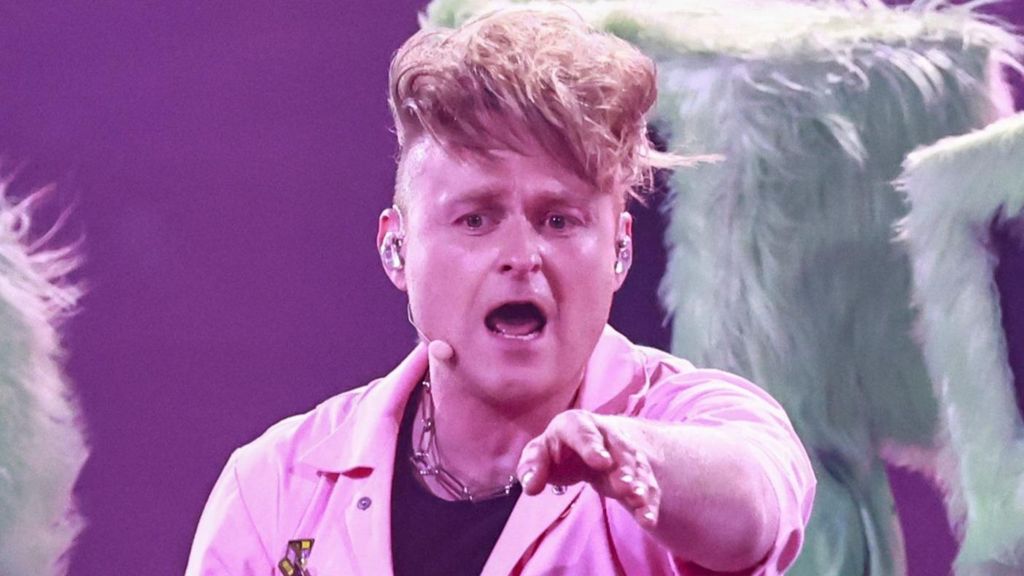
    As the 70th Eurovision Song Contest prepares to crown its 2026 winner in Vienna this Saturday, all eyes are turning to the United Kingdom’s unorthodox representative: inventor and cult musician Sam Battle, better known by his stage name Look Mum No Computer. Where many contestants enter the global competition hungry for a win, Battle brings a laid-back, devil-may-care attitude that defies the typical pressure of Eurovision’s spotlight.

    With bookmakers placing Battle at 150/1 odds of taking home the trophy, the 37-year-old creative says he is fully prepared for any outcome, leaning into the adage that confidence means being comfortable with losing. “It could go well or completely wrong – I’m just here for the ride,” he says. Even in the worst-case scenario of a zero-point finish, he has already leaned into the joke, joking that he’s got a “Look mum, no points” t-shirt ready to go.

    For Battle, Eurovision is far from a make-or-break career milestone. Long before he was tapped to represent the UK, he had built a thriving, eccentric creative career centered on his passion for repurposed audio technology. A cult favorite in experimental electro-pop circles, he is known for building functional synthesisers out of unexpected objects ranging from old bicycles to retro Speak-and-Spell machines. His YouTube channel boasts 700,000 loyal subscribers who tune in to watch his madcap projects: everything from modifying vintage cars to restoring decaying 19th-century church organs, all delivered with the manic, infectious energy that has drawn comparisons to Back to the Future’s eccentric inventor Doc Brown. Off-camera, Battle runs a unique museum in Ramsgate, Kent, dedicated to restoring and exhibiting forgotten vintage audio gear. Just four weeks before the Eurovision grand final, he added a new role to his packed resume: first-time dad to a baby boy named Max.

    What many fans don’t know is that Battle’s Eurovision journey started as a random pub joke with a friend. “We were sitting in a pub saying, wouldn’t it be hilarious if we tried to get into Eurovision?” he recalls. The throwaway joke quickly snowballed: his manager emailed the BBC to ask about the application process, and producers, intrigued by Battle’s one-of-a-kind persona, asked him to submit an original track.

    Battle agreed to join a songwriting writing camp on one non-negotiable condition: he had to be allowed to bring Kosmo, his custom-built synthesiser and drum machine that requires six separate flight cases to transport. It was a casual moment while moving furniture that ultimately gave birth to his entry: a cheeky, 1980s-inspired pop anthem titled *Eins, Zwei, Drei*. As he shifted a sofa to make space for Kosmo, he counted out “Eins, Zwei, Drei” to coordinate the lift – and the team immediately knew they had their song title. Twelve hours later, the track was finished: a playful, high-energy number about quitting a boring office job to take a spontaneous mini-break in Germany. “We all thought it would never get picked,” Battle says. The very next morning, the BBC called to say they loved the track’s zany, unapologetic charm, and after a final audition to confirm he could perform live, Battle was officially named the UK’s 2026 representative.

    During rehearsals in Vienna, Battle’s boundless curiosity for all things mechanical was on full display during a visit to the city’s Museum of Science and Technology, where he wandered through an exhibition of early synthesisers and mechanical instruments like a kid let loose in a candy factory. He impressed museum staff with his deep, encyclopedic knowledge of the obscure gear, pointing out the Mellotron organ that created the iconic texture on The Beatles’ *Strawberry Fields Forever*, and demonstrating the Roland CR-78 drum machine that kicks off Blondie’s *Heart of Glass*. “He’d be a fantastic tour guide – he knows more about these machines than we do,” the museum’s curator said. It took a spontaneous detour to a Eurovision karaoke booth, where Battle ripped through a falsetto version of ABBA’s *Waterloo* and did the full choreography for 2025’s viral hit *Espresso Macchiato*, before the pair could sit down to discuss his upcoming performance.

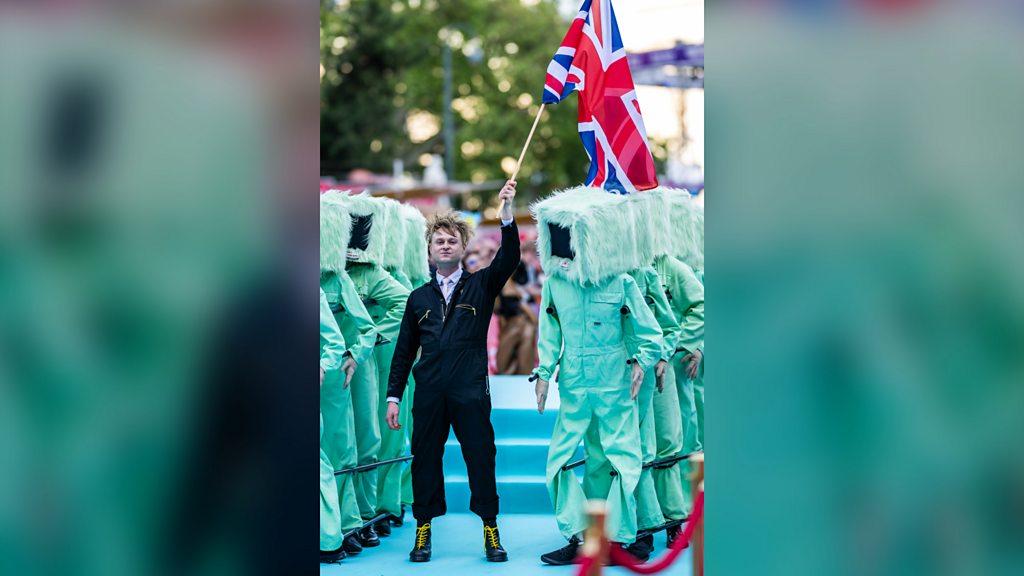
    Battle is the first to admit he’s no polished Eurovision performer: “I’m literally not a dancer. I’ve got two left feet,” he laughs, but says he’s fully embracing the challenge. His performance, choreographed by Fredrik “Benke” Rydman – the creative mind behind 2024 winner Nemo’s winning staging – leans into Battle’s hyperactive, chaotic energy. The set opens with Battle trapped in the monotony of a soul-crushing office job, before he breaks free and transforms the drab set into a flashing, buzzing electronic carnival, with dancers wearing fur-lined television sets as headgear. Battle built most of the stage props himself, including oversized custom synth panels, drilling hundreds of holes in the process. He had to scrap one idea – adding a real car to the set – when he learned the stage’s glass LED floor had a strict 500kg weight limit for all props.

    Battle is well aware of the UK’s poor recent track record at Eurovision: outside of Sam Ryder’s surprise second-place finish in 2022, the UK has not placed in the top 10 for more than 15 years, and earned exactly zero points in both 2024 and 2025. The BBC, he says, prepared him for the potential public scrutiny that comes with the role, even putting him through a stress test to make sure he could handle the pressure.

    Right now, the only thing keeping him up at night is the fear he’ll trip on stage and embarrass himself. Still, when pressed, he admits there’s a small part of him hoping the audience connects with his unconventional act. “What we’re doing is Marmite – you either love it or hate it – but I think there’s a slot open for our sort of thing,” he says.

    But even if the contest doesn’t go his way, Battle has already lined up his next priority: immediately after the grand final wraps up Saturday night, he’s flying straight home to resume his new favorite job: changing nappies for his newborn son Max. For Sam Battle, no matter what the scoreboard says, Eurovision is already a win.

  • Australia soars into Eurovision final as UK song debuts

    Australia soars into Eurovision final as UK song debuts

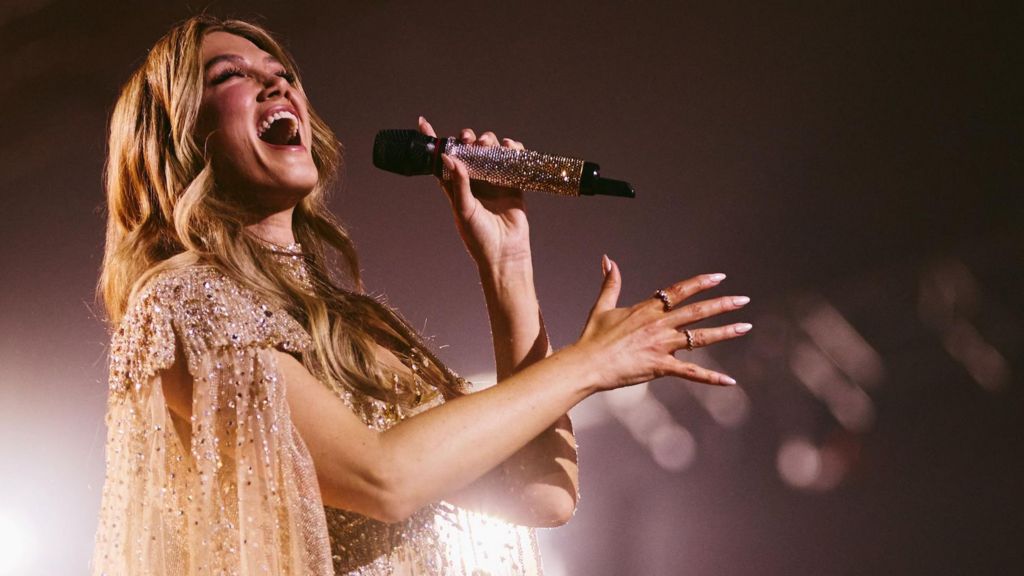
    The 2026 Eurovision Song Contest’s second semi-final wrapped up in Vienna Thursday night, with Australian pop superstar Delta Goodrem delivering a show-stopping performance that secured her spot in the grand final and catapulted her to the top of the competition’s odds rankings. Now the second most likely contender to take home the Eurovision trophy, Goodrem is quickly closing the gap on long-standing favorite Finland, raising the prospect of a historic first win for the non-European nation that has become a beloved staple of the annual contest.

    Australia first joined Eurovision in 2015 as a one-off wildcard invite, but the contest’s massive popularity Down Under—where more than one million viewers tune in annually—turned the guest appearance into a permanent spot. A win on Saturday would mark an unprecedented milestone for the country. Goodrem, one of Australia’s best-selling female artists who earned early fame for her role on the long-running soap opera *Neighbours* familiar to UK audiences, signed her first recording contract at 15 and has already notched four number-one studio albums. Reflecting on her Eurovision journey after the semi-final, she told the BBC, “This experience has been surprisingly beautiful. To see people flying flags for music and standing with us has been an absolutely awesome thing to witness.”

    Goodrem’s semi-final staging leaned into understated sophistication rather than the over-the-top gimmicks many Eurovision acts embrace: she performed her power ballad *Eclipse* against a minimalist backdrop centered on a glowing crescent moon, saved only one subtle surprise for the performance’s closing moment. The show-stopping turn has already shifted contest dynamics, with bookmakers now ranking her just behind Finland in win odds.

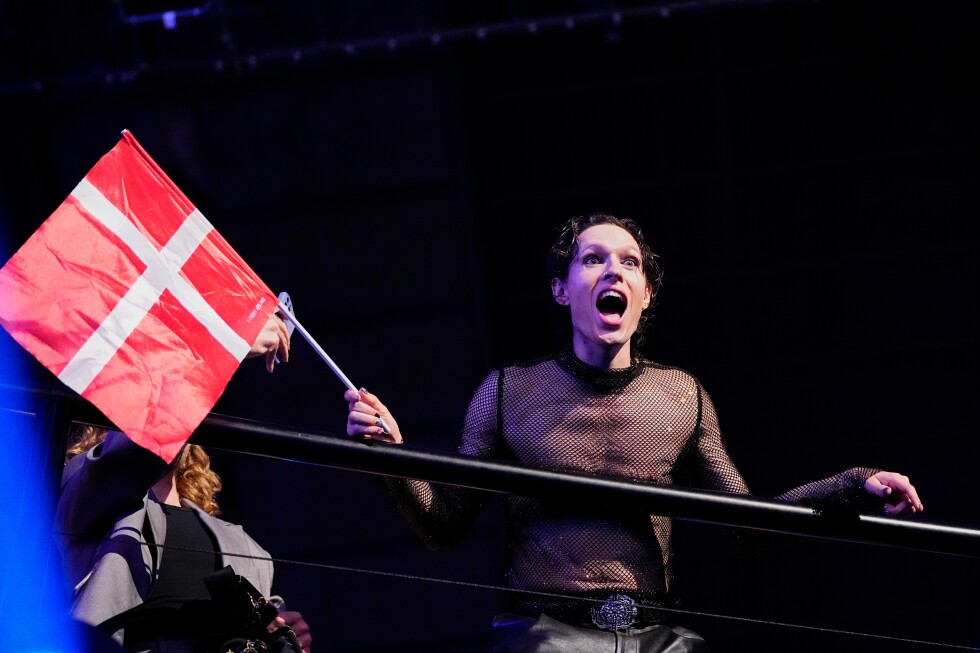
    Goodrem was one of 10 acts to advance from the second semi-final to the 25-act grand final, which will air live Saturday night. The full list of second semi-final qualifiers joining her are Albania’s Alis with *Nân*, Bulgaria’s Dara with *Bangaranga*, Cyprus’s Antigoni with *Jalla*, Czechia’s Daniel Zizka with *Crossroads*, Denmark’s Søren Torpegaard Lund with *Før Vi Går Hjem*, Malta’s Aidan with *Bella*, Romania’s Alexandra Căpitănescu with *Choke Me*, Ukraine’s Leléka with *Ridnym*, and Norway’s Jonas Lovv with *Ya Ya Ya*. Five nations—Azerbaijan, Luxembourg, Armenia, Switzerland, and Latvia—were eliminated from contention in the 2026 contest, and will return to compete in 2027.

    The semi-final was packed with memorable, and in some cases controversial, performances from across the continent. Opening the night, Bulgarian singer Dara delivered a high-energy set brimming with dynamic chair choreography and fierce performance energy for her track *Bangaranga*. Though the title may read like playful nonsensical Eurovision fare, the 27-year-old artist explained the song explores “being bold” and opening up about her personal battle with anxiety. Her energetic staging has already positioned her as a potential top 10 contender for the grand final.

    Romania’s Căpitănescu entered the semi-final already facing controversy over her brooding rock track *Choke Me*. Campaigners had previously criticized the song for allegedly glorifying sexual violence, but Căpitănescu clarified the lyrics actually address the feeling of suffocating under unforgiving societal expectations. She visualized this struggle in her staging, straining against two oversized neon ropes tied to her bodice. In an unexpected coincidence, rope became a recurring theme of the night: Azerbaijan’s Jiva portrayed escaping a toxic relationship by fighting against physical restraints during her performance, while Switzerland’s Veronica Fusaro was entangled in a web of blood-red rope for *Alice*, her track confronting the trauma of stalking and abuse. Despite strong critical reception for both sets, neither accumulated enough votes to advance to the final. Fusaro did earn widespread praise for a blistering guitar solo that capped off her performance.

    The UK’s 2026 entry, Look Mum No Computer, automatically qualified for the grand final as part of the “Big Five” — the UK, France, Germany, and Italy (the Big Four) plus host nation Austria, all of whom receive automatic final spots due to their largest financial contributions to the European Broadcasting Union, which organizes Eurovision. The UK act delivered a dynamic, high-concept set, opening at an office desk before moving into a surreal, colorful landscape of exposed circuit boards and robotic dancers. The performance split opinion on social media: “UK might actually get some points this year,” Threads user Dan wrote, with commentator Karen Robinson agreeing, “He brought so much energy and real personality to the stage.” But other critics were less impressed, with a Reddit user deriding the staging as a man “huffing and puffing around an exam hall,” and Bluesky user C Grinbergs lamenting, “I don’t think it’s our year.”

    More upbeat, lighter moments came from other contestants: Antigoni, a London-based artist representing Cyprus, brought a danceable party anthem *Jalla* (translated “And More”) that blended belly dancing choreography with traditional Cypriot instrumentation, drawing obvious comparisons to global pop star Shakira. Malta’s Aidan brought warm Mediterranean energy to his tender love ballad *Bella*, while France’s Monroe offered a reflective operatic chanson *Regarde!* that encouraged audiences to pause and appreciate the beauty of the world around them. Closing out the semi-final was Norway’s Lovv with *Ya Ya Ya*, a raucous, foot-stomping rock track that echoes the sound of 2021 Eurovision champions Måneskin. The track has already become a streaming hit, racking up more than four million plays across YouTube and Spotify. Lovv made headlines earlier in the week after contest organizers asked him to tone down what they described as overly sexualized choreography during rehearsals. Laughing off the criticism, he said, “I don’t know what they are talking about! I’m the least sexual person in the whole delegation.” For the semi-final, he compromised by swapping his original hip thrust choreography for a playful cheeky wiggle, much to the audience’s amusement.

    The 10 second semi-final qualifiers will join 10 acts that advanced from the first semi-final earlier this week—Belgium, Croatia, Finland, Greece, Lithuania, Moldova, Poland, Serbia, and Sweden—in the grand final. They will be joined by automatic qualifiers the UK, Italy, Germany, France, and host nation Austria, for a total of 25 competing acts. UK audiences can tune into the grand final live starting at 8pm BST on Saturday via BBC One, BBC iPlayer, Radio 2, and BBC Sounds, with full live coverage and analysis available on the BBC News website. Fans can also download a printable Eurovision score card from the website to track their own rankings of the finalists ahead of the winner announcement.

  • The Eurovision final lineup is confirmed after 5 more countries are sent packing

    The Eurovision final lineup is confirmed after 5 more countries are sent packing

    VIENNA — The final lineup for the 2025 Eurovision Song Contest has been locked in, following the conclusion of the second semi-final that saw five competing nations eliminated from the pan-continental pop competition on Thursday night.

    Fifteen competing acts took the stage in the second semi-final, fighting for 10 remaining spots in the 25-act grand final scheduled for Saturday. Advancement to the final was determined by a combined vote of national juries and public viewers from across participating countries.

    Qualifiers advancing to the grand final include Denmark’s Søren Torpegaard Lund with his soulful, moody entry “Før Vi Går Hjem” (Before We Go Home), Australian global star Delta Goodrem with her soaring power ballad “Eclipse”, and Bulgarian pop artist Dara with the upbeat, infectious track “Bangaranga.” Rounding out the second semi-final’s qualifying acts are Daniel Žižka of Czechia, Leléka of Ukraine, Alis of Albania, Aidan of Malta, Antigoni of Cyprus, Alexandra Căpitănescu of Romania, and Jonas Lovv of Norway. Eliminated acts from the semi-final represent Azerbaijan, Luxembourg, Armenia, Switzerland and Latvia.

    The 10 remaining finalists secured their spots in the competition during the first semi-final held on Tuesday. This group includes Finnish performers Pete Parkkonen and Linda Lampenius, Greek rapper Akylas, Serbian goth metal outfit Lavina, Moldovan folk-rap fusion artist Satoshi, and Israeli singer Noam Bettan. Like all past winners and the largest financial backers of the contest, the 2024 champion Austria automatically claims a spot in the final as this year’s host nation, alongside the so-called “Big Five” funders: the United Kingdom, France, Germany and Italy, who also bypass the semi-final round.

    While the competition’s official 2025 motto is “United by Music”, with a stated mission to bring European nations together through art beyond political divides, the event has once again become the center of heated political tensions that have overshadowed much of the lead-up to Saturday’s final. The contest has a long history of navigating geopolitical friction: Russia was fully expelled from the competition in 2022 following its full-scale invasion of Ukraine, a move that mirrored growing global condemnation of the Kremlin’s military campaign.

    The 2024 contest hosted in Malmo, Sweden and the 2023 event in Basel, Switzerland were both disrupted by large pro-Palestinian protests demanding Israel’s expulsion from the contest over its ongoing military campaign against Hamas in Gaza. Organizers confirm a new demonstration against Israel’s participation is planned to take place ahead of Saturday’s grand final in the Vienna arena.

    This year, five nations — Spain, Ireland, the Netherlands, Slovenia and Iceland — have launched a full boycott of the 2025 contest in direct protest of Israel’s inclusion. This boycott has delivered a tangible financial and audience hit to the iconic event. Last year, Eurovision organizers reported a global viewership of 166 million people, and the absence of five major national broadcasters means both reduced revenue from participation fees and lower overall viewership this year. While Bulgaria, Moldova and Romania have returned to the competition after sitting out recent editions for artistic or financial reasons, 2025 still has the smallest number of participating countries since 2003.

    Beyond the protests, Israel has also faced formal accusations of violating contest rules with an organized off-platform marketing campaign designed to coordinate mass votes for its entrant. In response to the allegations, the European Broadcasting Union (EBU), the governing body that oversees Eurovision, updated and tightened contest voting rules ahead of this year’s event. The new rules cut the maximum number of votes per viewer in half to 10, and added enhanced monitoring systems to flag and disqualify “suspicious or coordinated voting activity.”

    When Israeli entrant Noam Bettan performed during Tuesday’s first semi-final, his set was interrupted by scattered protest chants from audience members. In a break from past event protocols, Austrian host broadcaster ORF has confirmed Palestinian flags will be permitted inside the competition arena, and the network will not mute audience booing for broadcast, a policy designed to preserve the live nature of the event even amid tension.

    Despite the ongoing challenges and boycotts, Eurovision leadership remains focused on long-term growth and reconciliation. The contest is already scheduled to launch its first official Asian spin-off, Eurovision Song Contest Asia, which will hold its inaugural edition in Bangkok this coming November. Contest director Martin Green also shared Thursday that he is optimistic about the return of Hungary, which has not participated in Eurovision since 2019, following the replacement of nationalist-populist former Prime Minister Viktor Orbán by new Prime Minister Péter Magyar.

    Green emphasized that the competition remains open to the five boycotting nations, adding that organizers are eager to welcome them back to future editions of the contest. “We’ve made it very clear to them we can’t wait for them to come back,” Green said.

  • Five Italians die during cave dive in Maldives

    Five Italians die during cave dive in Maldives

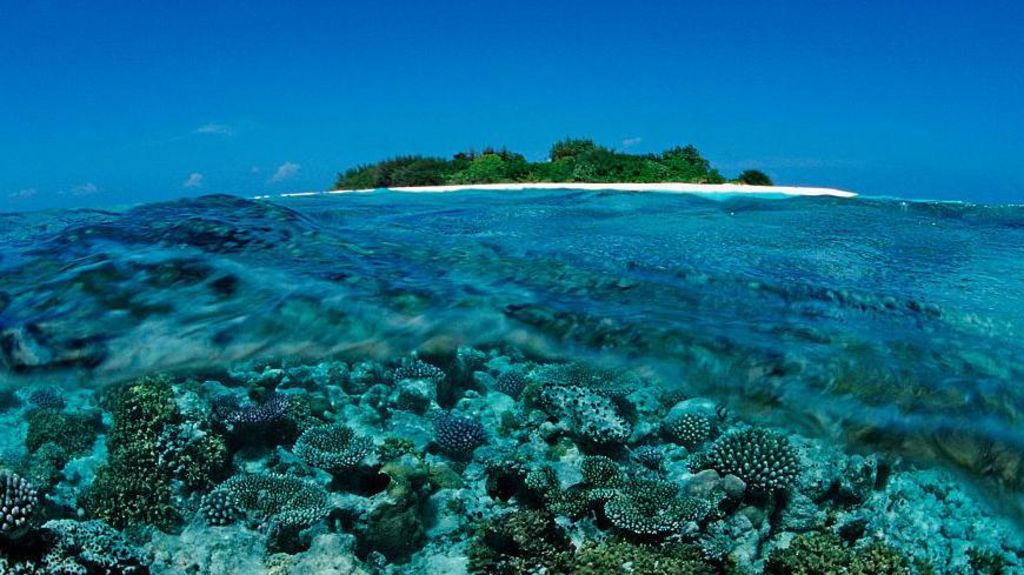
    A catastrophic recreational scuba diving incident in the Maldives has claimed the lives of five Italian nationals, marking the deadliest single diving accident in the history of the popular Indian Ocean tourist destination, Italy’s Ministry of Foreign Affairs confirmed this week.

    Authorities say the group of divers lost their lives while attempting to explore submerged cave systems off Vaavu Atoll, at depths reaching roughly 50 meters (164 feet). The Maldivian military, which is leading the recovery operation, announced that one victim’s body has already been recovered from a cave located around 60 meters underwater, and the remaining four victims are believed to be trapped within the same cave system. Specialized diving teams equipped with advanced deep-water recovery gear have been deployed to the site, but officials have stressed that the search and recovery mission carries extremely high safety risks for rescuers.

    According to local Maldivian media reports, the five Italian divers entered the water early Thursday morning. When the group failed to resurface at the scheduled time, the crew of their dive boat alerted authorities and launched an initial missing person alert. At the time of the incident, the Vaavu Atoll area, located roughly 100 kilometers (62 miles) south of the Maldivian capital Malé, was experiencing rough sea conditions. Local authorities had already issued a yellow weather warning for small passenger vessels and local fishing crews prior to the dive.

    Among the victims are members of Italy’s academic marine science community: the University of Genoa confirmed that the group included one of its veteran marine biology professors, the professor’s daughter, and two early-career researchers from the institution. In an official statement posted to the social platform X, the university offered its “deepest condolences” to the families, friends, and colleagues of the deceased, calling the incident an immeasurable loss for the global marine research community.

    While the Maldives draws millions of diving and snorkeling enthusiasts each year for its crystal-clear waters and vibrant coral reef systems, serious fatal diving accidents remain relatively uncommon, though a small number of fatal incidents have been recorded in recent years. In December 2024, a highly experienced British female diver drowned during a dive off the resort island of Ellaidhoo; her husband died five days later after developing a sudden illness linked to the incident. Earlier in 2024, a Japanese lawmaker died while snorkeling in Lhaviyani Atoll, another popular tourist region in the archipelago.

  • Deschamps unveils France’s star-studded World Cup squad and hands Robin Risser surprise call-up

    Deschamps unveils France’s star-studded World Cup squad and hands Robin Risser surprise call-up

    France national team manager Didier Deschamps has officially named his 26-man squad for the upcoming 2026 FIFA World Cup, headlined by a wealth of elite attacking talent and a surprise maiden call-up for breakout Lens goalkeeper Robin Risser, who has capped a breakthrough domestic season with a spot in the world’s most prestigious international tournament.

    The 26-year-old Risser has been one of the standout revelations of the recent Ligue 1 campaign, cementing his place as one of the top shot-stoppers in France’s top flight. Earlier this week, he was honored with the Ligue 1 Goalkeeper of the Season award for his key role in helping Lens secure the league’s second-best defensive record. He will join the squad as the third-choice goalkeeper behind starter Mike Maignan and backup Brice Samba. Speaking to French broadcaster TF1 following the announcement, Risser expressed overwhelming emotion at his selection. “I’m full of pride, it’s something incredible,” he said. “I can’t find the words. It’s just extraordinary. It was one of my dreams.”

    Heading into the June 11 to July 19 tournament co-hosted by Canada, Mexico and the United States, France enters as one of the pre-tournament favorites, targeting a third men’s World Cup title to add to their 1998 and 2018 honors. Drawn in Group I, Les Bleus will kick off their campaign against Group stage opponents Senegal, Iraq and Norway.

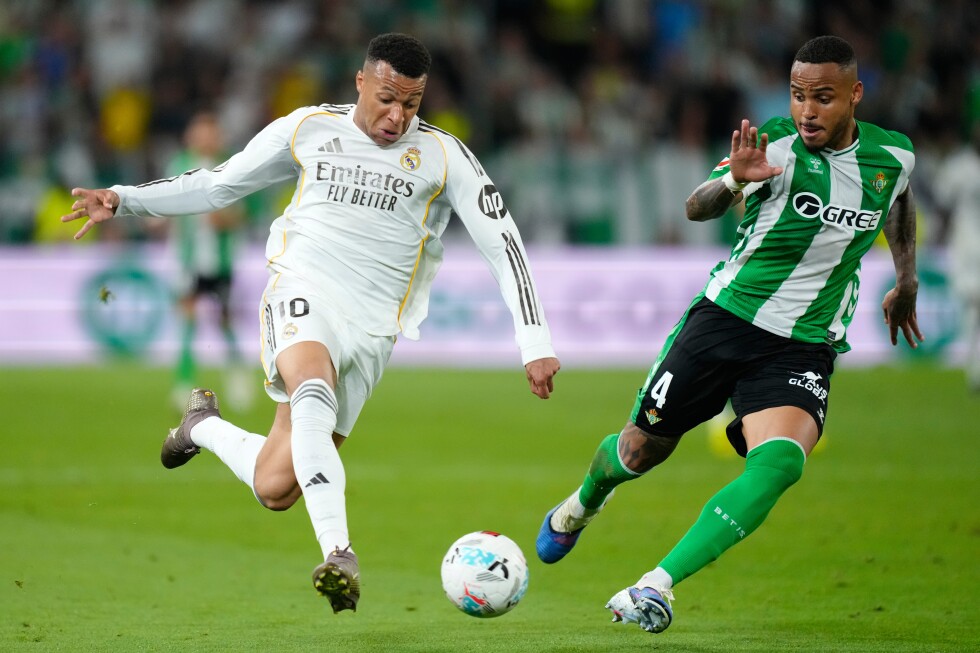
    Deschamps’ squad boasts one of the most dangerous attacking corps in the tournament, led by global superstar Kylian Mbappé and 2024 Ballon d’Or winner Ousmane Dembélé. The talented forward group also includes exciting young prospects Désiré Doué, Michael Olise, Rayan Cherki and Maghnes Akliouche. Notably, Crystal Palace forward Jean-Philippe Mateta earned a spot in the final 26, beating out 2022 World Cup semi-final hero Randal Kolo Muani, who made a last-minute addition to France’s squad in Qatar four years ago and nearly secured legendary status after hitting a late match chance in the final against Argentina, which France lost on penalties.

    Several high-profile players missed out on selection, including Real Madrid midfielder Eduardo Camavinga and Paris Saint-Germain goalkeeper Lucas Chevalier. Chevalier has been unable to secure regular first-team minutes since losing his starting spot to new signing Matvey Safonov at the club, and has not featured in competitive action since late January. Explaining his selection criteria, Deschamps emphasized current form and playing time as the deciding factors. “The main criteria is sporting performance,” Deschamps said. “I understand that Lucas Chevalier may be disappointed, but he hasn’t played for several months anymore. At the time when he could have had some playing time, he didn’t get any.” Lens winger Florian Thauvin, who was nominated for Ligue 1 Player of the Season this year, also missed out on a call-up.

    This World Cup will mark the final tournament for Deschamps, who took charge of Les Bleus in 2012 and led the side to the 2018 World Cup title and a runner-up finish in 2022. He confirmed earlier this year that he would step down from his role following the 2026 tournament. “It’s a special feeling. I did many things today for the last time,” he said. “The most important thing is today and tomorrow. We are focused on the World Cup.”

    Former French World Cup-winning captain Zinedine Zidane is widely expected to take over the national team role following Deschamps’ departure. Zidane has not held a senior coaching position since concluding his second successful spell at the helm of Real Madrid, where he led the Spanish giants to three UEFA Champions League titles and two La Liga crowns.

    Full France 2026 World Cup Squad:
    – Goalkeepers: Mike Maignan, Brice Samba, Robin Risser
    – Defenders: Lucas Digne, Malo Gusto, Lucas Hernandez, Théo Hernandez, Ibrahima Konaté, Jules Koundé, Maxence Lacroix, William Saliba, Dayot Upamecano
    – Midfielders: N’Golo Kanté, Manu Koné, Adrien Rabiot, Aurelien Tchouaméni, Warren Zaire-Emery
    – Forwards: Maghnes Akliouche, Bradley Barcola, Rayan Cherki, Ousmane Dembélé, Désiré Doué, Jean-Philippe Mateta, Kylian Mbappé, Michael Olise, Marcus Thuram

  • Italians praise Catherine as they turn out for final day of trip

    Italians praise Catherine as they turn out for final day of trip

    Princess Catherine, Princess of Wales, marked a landmark moment in her public life with her first overseas trip since completing cancer treatment, a visit to the northern Italian city of Reggio Emilia that laid bare the enormous draw of her star power for the British Royal Family.

    Framed by her team as a “huge moment” and her official comeback to international royal engagements, the trip was originally scheduled as a low-profile fact-finding mission focused on Reggio Emilia’s globally renowned early childhood education approach. Instead, it turned into a massive public celebration of the princess, with crowds of adoring well-wishers turning out at every stop to catch a glimpse of her.

    On Thursday, the second full day of the visit, hundreds of people lined the dusty side streets on Reggio Emilia’s outskirts, gathered behind police barriers long before Catherine’s motorcade arrived. As the black royal BMW pulled up flanked by a police escort, young children in the crowd chanted “Principessa, principessa,” their voices rising over the hum of onlookers. Catherine stepped out with a warm, steady smile, waving to the crowd before working her way along a line of local officials and community leaders to enter an industrial facility hosting a recycled materials education project.

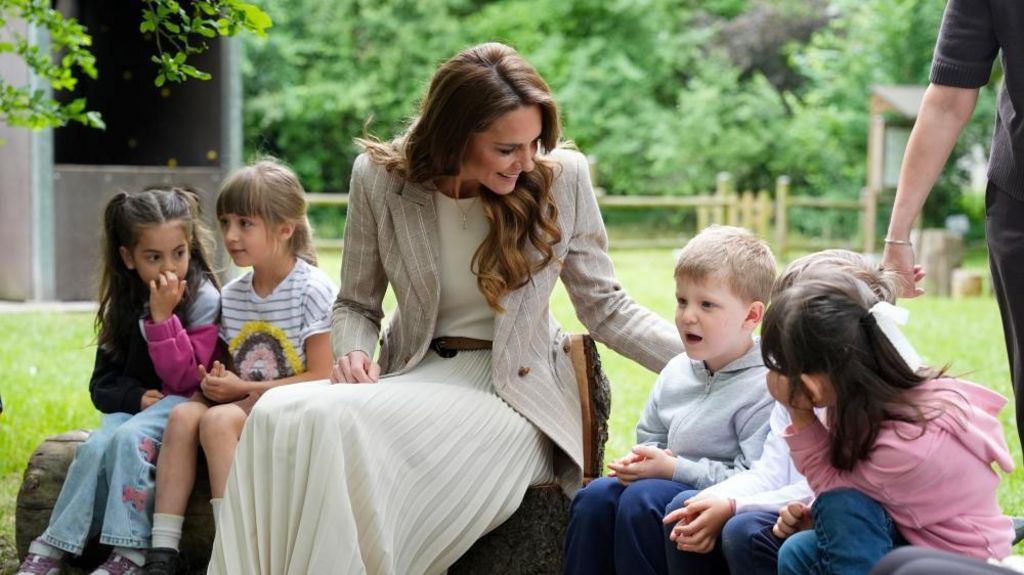
    During her visit, the princess participated in a hands-on pasta-making class, played with young children at a local primary school, and drew on the Italian language skills she developed during her gap year to interact with attendees. The project she was exploring, which repurposes waste materials for creative learning activities, aligns with Catherine’s long-standing public advocacy for early childhood development, a cause she has centered throughout her time as a working royal.

    As crowds grew outside the facility, Italian police Carabinieri and event organizers added extra barriers to manage the flow of attendees. Some well-wishers arrived in formal outfits and decorative hats, others carried handwritten signs and flowers, all waiting for an hour to catch another glimpse of the princess when she emerged. The turnout was even larger on Wednesday, when more than 1,000 people packed the city’s central square for a walkabout, with nearly every attendee eager to shake Catherine’s hand or snap a selfie.

    Interviews with waiting attendees revealed a deep, personal connection many Italians feel to the princess. Maria Theresa, who traveled all the way from Rome to see her, highlighted Catherine’s widely noted sincerity and empathy as the core of her appeal. “Italians like her. We’re people of emotions,” she said, adding that she sees Catherine as “close to the people” and a true humanitarian for her work supporting children and vulnerable communities.

    Georgia, a visitor from nearby Modena who dressed up for the event and wore a royal-themed badge, echoed that affection, noting that Catherine reminds many people of her late mother-in-law, Princess Diana, a figure who remains deeply beloved in Italy. Chiara, also from Modena, expressed relief at seeing Catherine looking well after her cancer treatment, calling her “strong and kind.”

    Many attendees specifically cited the authenticity of Catherine’s public empathy, particularly after her own experience with illness. One anonymous woman noted that unlike the manufactured connection common to many celebrities, Catherine’s care for others feels genuine. A large banner hung in Reggio Emilia’s central square read “Love and Support for Catherine,” a reciprocal gesture for the years of support the princess has extended to people facing illness and hardship.

    Though Catherine gave no public speeches or interviews during the trip, she released a statement reflecting on the warm reception she received. “I have had such a deeply moving and unforgettable time here,” she said. “Thank you to the people of Reggio Emilia for welcoming me into a culture of care with such warmth and generosity.”

    For the British Royal Family, the overwhelming public response to Catherine’s trip underscores just how critical her widespread popular appeal is to the institution’s public standing. A charismatic figure whose face regularly makes front-page news across the globe, she brings a rare, movie-star energy that draws public attention in a way few other working royals can match. The visit is already being framed as a successful comeback, with observers expecting more public and international engagements from the princess in the near future.

  • How has Eurovision voting changed this year?

    How has Eurovision voting changed this year?

    The Eurovision Song Contest, one of the world’s most-watched live music events, is rolling out enhanced voting monitoring for this year’s competition, contest director Martin Österdahl has confirmed. The move comes in direct response to lingering public and stakeholder concerns that emerged following the 2023 contest, when questions were raised about potential unfair influence on the final results linked to Israel’s participation.

    Österdahl emphasized in a recent statement that event organizers have ramped up scrutiny of all voting activity this year, with teams tracking voting patterns “very, very carefully” to safeguard the contest’s long-standing commitment to fair and transparent competition. The changes to voting oversight come amid broader debates around political tensions impacting the pan-European music competition, which has prided itself on uniting countries through musical performance for nearly 70 years.

    Organizers have not announced sweeping changes to the core voting structure— which combines public televoting and jury scores from participating countries— but have added new layers of data analysis to flag any unusual or coordinated voting activity that could skew the final rankings. The goal of the adjusted monitoring process is to maintain public trust in the contest’s outcome, ensuring that results reflect genuine audience and expert appreciation of competing entries rather than external interference.

  • Greece says new biometric checks are active for non-EU travelers, but some could pass without scans

    Greece says new biometric checks are active for non-EU travelers, but some could pass without scans

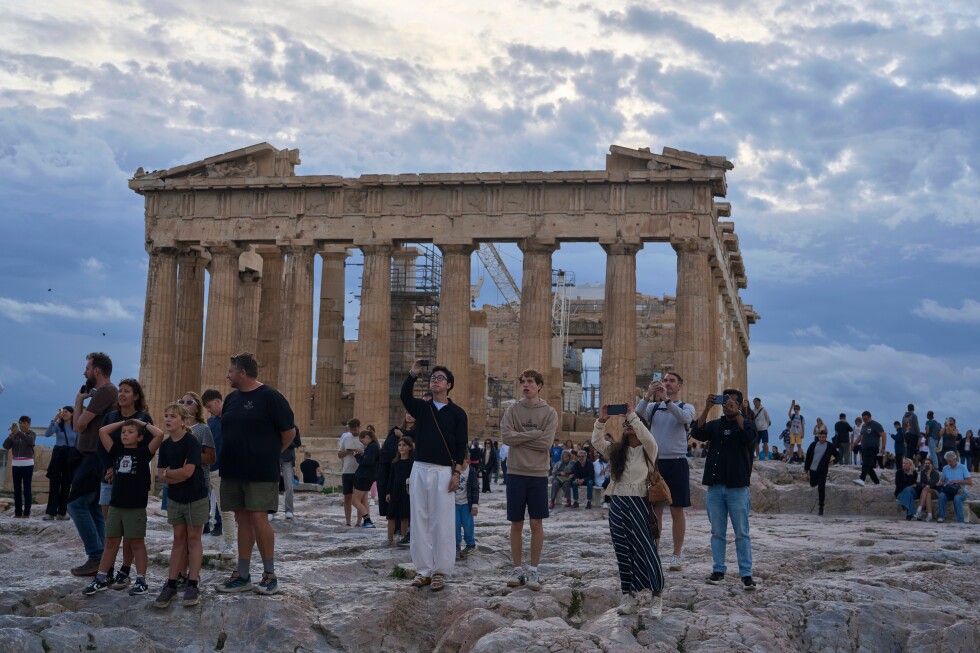
    ATHENS, Greece – Amid swirling confusion over travel rules ahead of the peak summer tourism season, Greek authorities have clarified that the new EU-mandated biometric screening system for non-European Union travelers at the country’s entry points is fully functional, directly contradicting earlier reports of a temporary seasonal exemption for British visitors. The clarification comes as Greece, one of Europe’s top tourism destinations, balances European regulatory obligations with the economic urgency of supporting its critical travel industry.

    Responding to queries from the Associated Press on Thursday, the Greek Foreign Ministry confirmed that no official notification of nationality-based temporary waivers has been issued. “We have not received any further update or clarification as to whether, for example, specific nationalities are temporarily exempt from the relevant procedure,” the ministry stated.

    The biometric screening framework, officially named the EU Entry-Exit System (EES), launched at Greek airports and border crossings on April 10 as part of a bloc-wide rollout that replaces traditional ink passport stamps with digitally stored biometric data, including facial photographs and electronic fingerprint records. The system is designed to streamline border security and track cross-border travel more efficiently across the Schengen area.

    Confusion over exemptions first emerged after a visit by Greek officials to the United Kingdom, during which informal comments suggested British travelers – who make up one of the largest tourist groups visiting Greece annually – would be waived from the requirement for the 2024 summer travel season. Even the UK Foreign Office updated its official travel guidance to reflect this initial claim, noting that “Greek authorities have indicated that they will not collect biometric data (fingerprints and photos) for UK travelers as part of EES. Follow the advice of authorities on the ground.”

    That informal understanding was quickly corrected by senior Greek and EU officials, who made clear that temporary suspensions of the system are only permitted during periods of extreme peak passenger congestion at specific individual entry points, and are never granted on the basis of nationality or country of origin. In short, no national group will be automatically exempt from the screening requirement.

    Even with that clarification, many non-EU travelers may still avoid the biometric check process in practice this summer. European Union rules allow for temporary pauses in biometric collection during the early rollout phase of the system to prevent crippling airport delays that could disrupt travel. Last week, Greek police reaffirmed that the EES is in full operation, but added that authorities would “take all necessary measures to ensure the smooth flow of visitors … making full use of provisions in Union legislation” – a nod to the potential temporary suspensions at busy airports when passenger numbers surge.

    The confusion around the rule has stoked anxiety among private Greek tour operators, who worry that added screening requirements could deter last-minute travel bookings from the UK – a key market for Greek tourism. Operators also note that the requirement creates a clear disparity between non-EU travelers and EU citizens, who face no routine passport checks when moving within the Schengen bloc.

    Tourism is one of the largest drivers of the Greek economy, accounting for a substantial share of national output. In 2023 alone, nearly 38 million international travelers visited the country, pumping 23 billion euros ($25 billion) into Greece’s 204-billion-euro national economy. Germany topped the list of source markets with nearly 6 million visitors, followed closely by the United Kingdom with 4.9 million. The upcoming summer travel season is widely seen as critical to sustaining the country’s post-pandemic economic growth.

  • Polish capital makes history with the first same-sex marriage registration

    Polish capital makes history with the first same-sex marriage registration

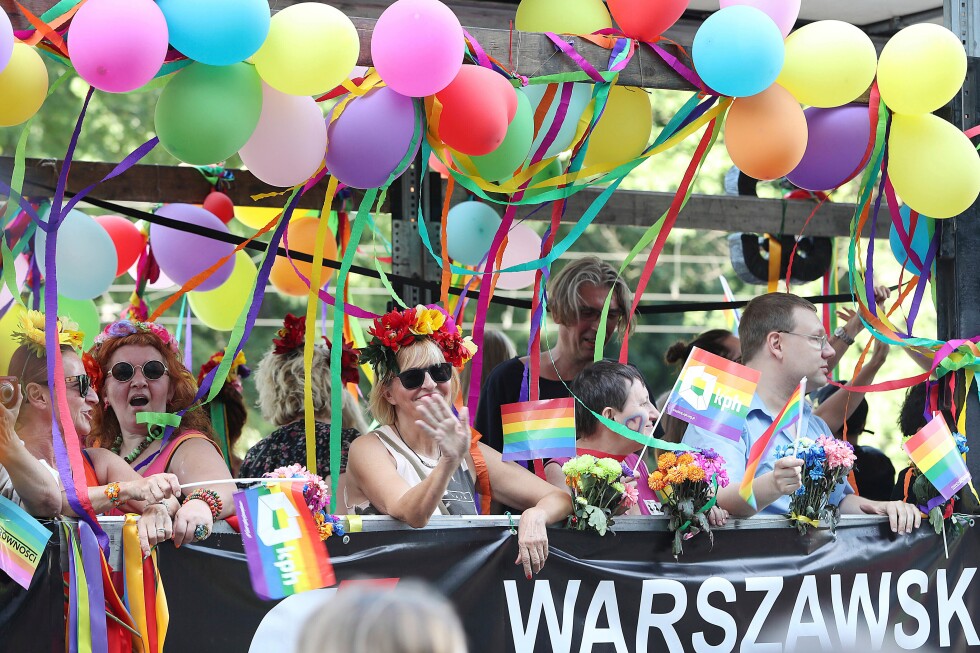
    In a landmark step for LGBTQ+ equality in Central Europe, Poland’s capital Warsaw marked a historic milestone Thursday by issuing its first official transcription of a same-sex marriage, acting in compliance with binding court orders that mandate recognition of same-sex unions legally registered in other European Union member states.

    The process set in motion months ago, when the European Court of Justice, the EU’s highest judicial body, ruled last November that Poland must formally recognize same-sex marriages completed in other EU nations, even though Poland’s domestic legislation does not currently allow for same-sex marriage within its borders. That top EU ruling was subsequently upheld and applied this March by Poland’s Supreme Administrative Court, which ordered local authorities to recognize the 2018 marriage of two Polish men that was legally registered in Germany.

    Warsaw Mayor Rafał Trzaskowski, a prominent center-left political figure, confirmed the breakthrough in a public announcement Thursday. “This morning we issued the first transcription of a marriage certificate for a same-sex couple, in accordance with the court rulings,” Trzaskowski stated. Going beyond the mandatory court order, the mayor also pledged that Warsaw would take a proactive approach to recognizing future same-sex marriages contracted by Polish couples in other EU countries, even in cases where no individual court ruling has been issued for a specific couple.

    The move aligns with commitments from Poland’s new prime minister, Donald Tusk, whose centrist government took office late last year with a pro-EU, pro-equality agenda. Speaking earlier this week, Tusk confirmed that his administration was working to speed up implementation of the court rulings across the country. Addressing directly to same-sex couples in Poland, Tusk offered a public apology for decades of marginalization. “I apologize to all those who, for many years, felt rejected and humiliated,” he said.

    Tusk also called on public officials across the country to uphold equal treatment for LGBTQ+ Poles, regardless of their own personal beliefs. “I appeal to all officials to respect the dignity of each individual and to remember that these people live around us, among us, near us, and that they deserve the same feelings of respect, dignity and love as any other person,” he emphasized.

    The milestone comes after decades of grassroots advocacy by LGBTQ+ activists in Poland, where national law has long banned both same-sex marriage and formal civil partnerships for same-sex couples. Crucially, the recent court rulings do not require Poland to fully legalize same-sex marriage domestically, a distinction that has softened some opposition from conservative groups. Tusk’s government ran on a platform that included legalizing civil unions for same-sex couples, a key campaign promise that has hit a wall in recent months. The proposal faces persistent pushback from hardline conservative factions within Tusk’s own governing coalition, as well as firm opposition from Polish President Karol Nawrocki, a devout Catholic who has repeatedly voiced opposition to LGBTQ+ equal rights measures.

    This development comes amid a broader push for LGBTQ+ protections across the European Union, where the European Commission has recently moved forward with a proposed ban on the controversial practice of gay “conversion therapy”, a discredited practice aimed at changing an individual’s sexual orientation.