VIENNA — The final lineup for the 2025 Eurovision Song Contest has been locked in, following the conclusion of the second semi-final that saw five competing nations eliminated from the pan-continental pop competition on Thursday night.
Fifteen competing acts took the stage in the second semi-final, fighting for 10 remaining spots in the 25-act grand final scheduled for Saturday. Advancement to the final was determined by a combined vote of national juries and public viewers from across participating countries.
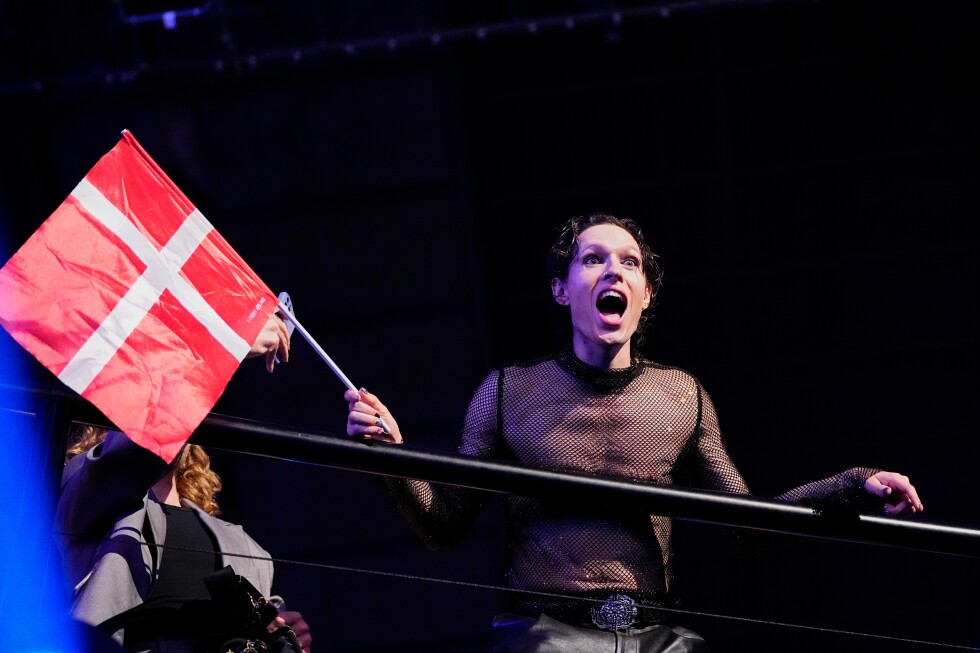
Qualifiers advancing to the grand final include Denmark’s Søren Torpegaard Lund with his soulful, moody entry “Før Vi Går Hjem” (Before We Go Home), Australian global star Delta Goodrem with her soaring power ballad “Eclipse”, and Bulgarian pop artist Dara with the upbeat, infectious track “Bangaranga.” Rounding out the second semi-final’s qualifying acts are Daniel Žižka of Czechia, Leléka of Ukraine, Alis of Albania, Aidan of Malta, Antigoni of Cyprus, Alexandra Căpitănescu of Romania, and Jonas Lovv of Norway. Eliminated acts from the semi-final represent Azerbaijan, Luxembourg, Armenia, Switzerland and Latvia.
The 10 remaining finalists secured their spots in the competition during the first semi-final held on Tuesday. This group includes Finnish performers Pete Parkkonen and Linda Lampenius, Greek rapper Akylas, Serbian goth metal outfit Lavina, Moldovan folk-rap fusion artist Satoshi, and Israeli singer Noam Bettan. Like all past winners and the largest financial backers of the contest, the 2024 champion Austria automatically claims a spot in the final as this year’s host nation, alongside the so-called “Big Five” funders: the United Kingdom, France, Germany and Italy, who also bypass the semi-final round.
While the competition’s official 2025 motto is “United by Music”, with a stated mission to bring European nations together through art beyond political divides, the event has once again become the center of heated political tensions that have overshadowed much of the lead-up to Saturday’s final. The contest has a long history of navigating geopolitical friction: Russia was fully expelled from the competition in 2022 following its full-scale invasion of Ukraine, a move that mirrored growing global condemnation of the Kremlin’s military campaign.
The 2024 contest hosted in Malmo, Sweden and the 2023 event in Basel, Switzerland were both disrupted by large pro-Palestinian protests demanding Israel’s expulsion from the contest over its ongoing military campaign against Hamas in Gaza. Organizers confirm a new demonstration against Israel’s participation is planned to take place ahead of Saturday’s grand final in the Vienna arena.
This year, five nations — Spain, Ireland, the Netherlands, Slovenia and Iceland — have launched a full boycott of the 2025 contest in direct protest of Israel’s inclusion. This boycott has delivered a tangible financial and audience hit to the iconic event. Last year, Eurovision organizers reported a global viewership of 166 million people, and the absence of five major national broadcasters means both reduced revenue from participation fees and lower overall viewership this year. While Bulgaria, Moldova and Romania have returned to the competition after sitting out recent editions for artistic or financial reasons, 2025 still has the smallest number of participating countries since 2003.
Beyond the protests, Israel has also faced formal accusations of violating contest rules with an organized off-platform marketing campaign designed to coordinate mass votes for its entrant. In response to the allegations, the European Broadcasting Union (EBU), the governing body that oversees Eurovision, updated and tightened contest voting rules ahead of this year’s event. The new rules cut the maximum number of votes per viewer in half to 10, and added enhanced monitoring systems to flag and disqualify “suspicious or coordinated voting activity.”
When Israeli entrant Noam Bettan performed during Tuesday’s first semi-final, his set was interrupted by scattered protest chants from audience members. In a break from past event protocols, Austrian host broadcaster ORF has confirmed Palestinian flags will be permitted inside the competition arena, and the network will not mute audience booing for broadcast, a policy designed to preserve the live nature of the event even amid tension.
Despite the ongoing challenges and boycotts, Eurovision leadership remains focused on long-term growth and reconciliation. The contest is already scheduled to launch its first official Asian spin-off, Eurovision Song Contest Asia, which will hold its inaugural edition in Bangkok this coming November. Contest director Martin Green also shared Thursday that he is optimistic about the return of Hungary, which has not participated in Eurovision since 2019, following the replacement of nationalist-populist former Prime Minister Viktor Orbán by new Prime Minister Péter Magyar.
Green emphasized that the competition remains open to the five boycotting nations, adding that organizers are eager to welcome them back to future editions of the contest. “We’ve made it very clear to them we can’t wait for them to come back,” Green said.