标签: Europe

欧洲

  • Rubio expresses desire to maintain trans-Atlantic relations despite increasing rift

    Rubio expresses desire to maintain trans-Atlantic relations despite increasing rift

    MUNICH — U.S. Secretary of State Marco Rubio presented a conciliatory vision for American-European relations during his address at the Munich Security Conference on Saturday, signaling a strategic shift from the previous administration’s confrontational approach while maintaining core policy positions.

    Speaking exactly one year after Vice President JD Vance’s controversial critique of European values at the same forum, Rubio acknowledged the Trump administration’s direct communication style but framed it as necessary for revitalizing trans-Atlantic partnerships. His remarks came in response to German Chancellor Friedrich Merz’s opening call for repairing trans-Atlantic trust, emphasizing that neither the U.S. nor Europe can navigate global challenges alone in today’s transformed world order.

    Rubio offered a critical analysis of post-Cold War foreign policy, arguing that the ‘euphoria’ of Western victory created a ‘dangerous delusion’ that liberal democracy would inevitably prevail globally. He contended that this mindset led to unrealistic expectations about borderless citizenship and overreliance on economic ties replacing national sovereignty.

    ‘We made these mistakes together and now together we owe it to our people to face those facts and to move forward to rebuild,’ Rubio stated, outlining the administration’s commitment to ‘renewal and restoration’ while maintaining what he described as ‘direct and urgent counsel’ to European allies.

    The Secretary of State explicitly rejected narratives about the ‘end of the trans-Atlantic era,’ emphasizing America’s enduring connection to Europe despite geographical separation. ‘For us Americans, our home may be in the Western hemisphere, but we will always be a child of Europe,’ he declared, referencing shared military sacrifices from Kapyong to Kandahar as evidence of historical bonds.

    Rubio concluded by affirming the administration’s desire to ‘chart the path for a new century of prosperity’ in collaboration with ‘cherished allies and oldest friends,’ striking a markedly different tone from previous diplomatic exchanges while maintaining the administration’s core demand for ‘seriousness and reciprocity’ in trans-Atlantic relations.

  • Drone strikes kill 2 in Ukraine and Russia ahead of US-brokered peace talks in Geneva

    Drone strikes kill 2 in Ukraine and Russia ahead of US-brokered peace talks in Geneva

    As preparations intensify for a new round of U.S.-mediated negotiations, the ongoing conflict between Russia and Ukraine has witnessed a tragic escalation in cross-border drone strikes, resulting in civilian casualties on both sides.

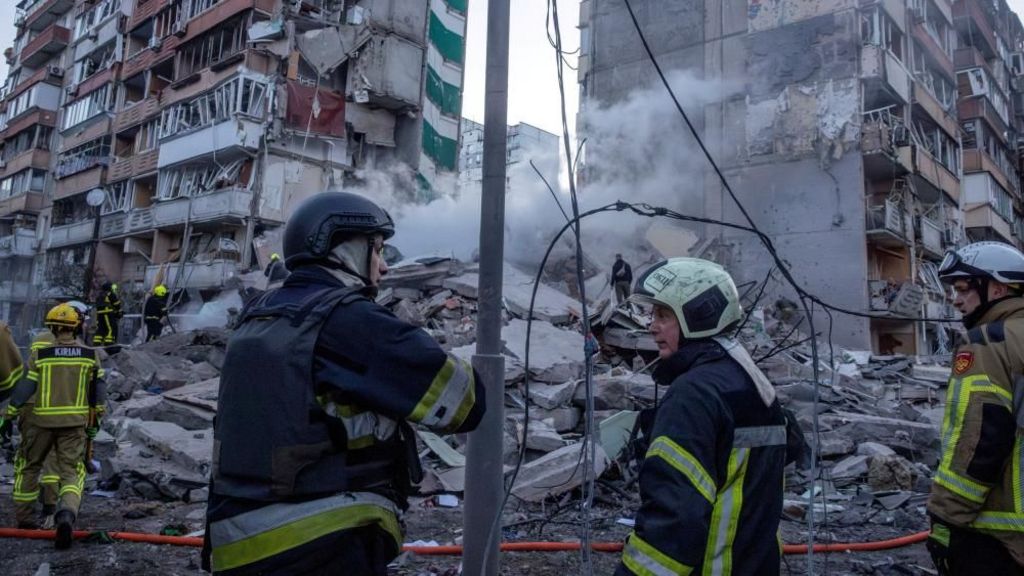
    Ukrainian authorities reported that an elderly woman perished in the Black Sea port city of Odesa following a Russian drone attack that struck a residential building. Emergency services confirmed the fatality, highlighting the continued targeting of civilian infrastructure.

    Simultaneously, Russian officials in the Bryansk border region announced that a civilian was killed when a Ukrainian drone struck a vehicle. This incident occurred merely one day after a Ukrainian missile attack on the Russian city of Belgorod claimed two lives and injured five individuals, according to regional governor Vyacheslav Gladkov.

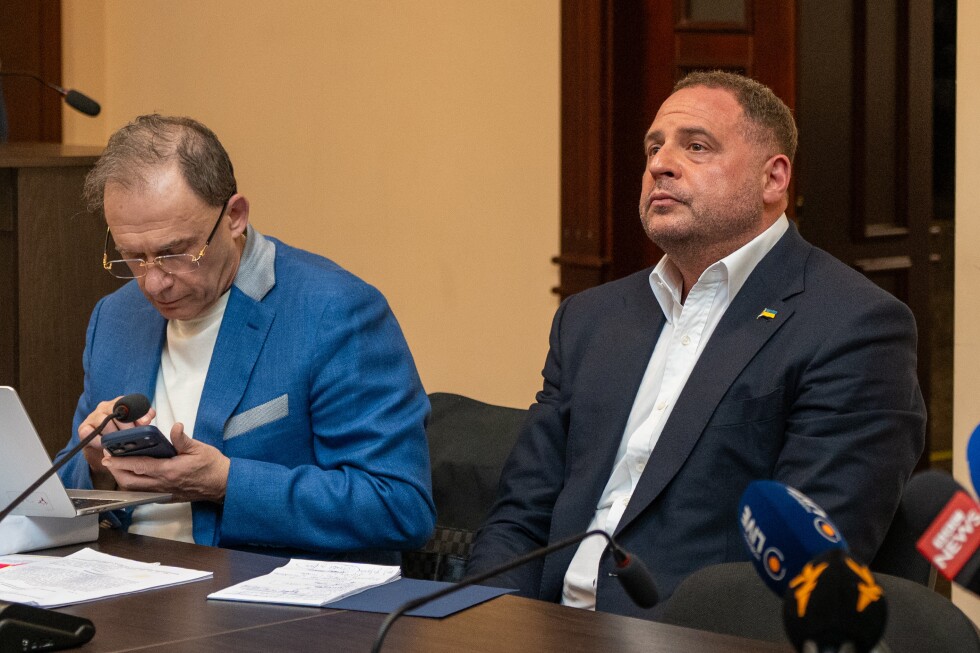
    Against this backdrop of intensified hostilities, diplomatic efforts are set to resume with scheduled talks in Geneva on Tuesday and Wednesday. Both Kremlin spokesperson Dmitry Peskov and Ukrainian President Zelenskyy’s communications adviser Dmytro Lytvyn have confirmed their participation in these U.S.-brokered negotiations.

    The upcoming discussions unfold against a complex military reality characterized by persistent fighting along the 1,250-kilometer front line, continuous Russian bombardment of Ukrainian civilian areas and energy infrastructure, and regular Ukrainian drone operations targeting Russian military assets.

    These negotiations represent the latest in a series of attempted diplomatic breakthroughs, following previous unsuccessful rounds in Abu Dhabi that failed to resolve critical issues including the status of Ukraine’s occupied Donbas region. The talks gain additional significance as they precede the fourth anniversary of Russia’s full-scale invasion and occur against a reported June deadline for reaching a settlement, according to previous statements by Ukrainian leadership.

  • Queen’s letter of support left Pelicot ‘overwhelmed’

    Queen’s letter of support left Pelicot ‘overwhelmed’

    In a powerful display of royal advocacy, Queen Camilla has personally commended French rape survivor Gisèle Pelicot for her extraordinary courage in confronting sexual violence. The 73-year-old grandmother, who endured nearly a decade of systematic abuse by her former husband, received a handwritten letter from the monarch expressing “heartfelt admiration” for her global impact in changing narratives around victim shame.

    The correspondence, revealed exclusively to BBC Newsnight with permission from both women, contains the Queen’s praise for Pelicot’s “grace and dignity” in facing “horrific crimes.” Her Majesty wrote: “I very much wanted to write to express my heartfelt admiration for the courage, grace and dignity with which you have faced the horrific crimes committed against you. You have inspired women across the globe and created a powerful legacy that will change the narrative around shame, forever.”

    Pelicot’s case gained international attention during the 2024 trial in Avignon where she waived her anonymity to make “shame swap sides” from victim to perpetrator. Throughout the 15-week proceedings, supporters gathered daily outside the courthouse holding signs thanking her for her courage. Her former husband was convicted for repeatedly drugging and raping her while inviting online acquaintances to participate in the abuse.

    The survivor described being “overwhelmed” and “very honoured” by the royal gesture, noting she “wasn’t expecting a letter from the Court of England” despite her story’s global reach. “I felt moved and very honoured that she had become aware of what had happened to me,” Pelicot told Victoria Derbyshire.

    Queen Camilla has established herself as a long-standing campaigner against domestic and sexual violence, working extensively with survivor support organizations. Her letter concluded with personal condolences: “Thank you for all that you have done. You are very much in my thoughts and prayers, and I hope that you will now be able to rest and recover from this devastating ordeal.”

    The correspondence coincides with the release of Pelicot’s memoir, “A Hymn To Life,” which documents her journey from victim to global symbol of feminist resistance.

  • Gisèle Pelicot tells BBC: I felt crushed by horror – but I don’t feel anger

    Gisèle Pelicot tells BBC: I felt crushed by horror – but I don’t feel anger

    In an extraordinary display of resilience, 73-year-old Gisèle Pelicot has broken her silence regarding France’s most extensive rape trial, revealing how her former husband systematically drugged and facilitated her assault by dozens of men over years. Speaking exclusively with BBC Newsnight ahead of her memoir publication, A Hymn To Life, Pelicot described the devastating moment she discovered the truth about Dominique Pelicot, the man she had loved for five decades.

    The revelation occurred unexpectedly at a police station in Mazan, southern France, where her husband had been summoned for secretly filming underneath women’s skirts. A police officer showed her photographic evidence of an unconscious woman surrounded by strangers—images she initially failed to recognize as herself. “I didn’t understand who they were. I’d never met them,” Pelicot recalls, describing the moment her reality shattered.

    Medical mysteries that had plagued her for years—unexplained memory loss and persistent gynecological issues—suddenly found their horrifying explanation. Police informed her that her husband had administered powerful sedatives and muscle relaxants before inviting men to assault her, meticulously documenting these crimes in thousands of images and videos.

    The psychological impact extended deeply to her three adult children, who immediately destroyed family possessions in an attempt to erase their father’s existence. Daughter Caroline faced additional trauma when intimate photos of her were discovered on her father’s laptop, though insufficient evidence prevented prosecution for these separate allegations.

    In a transformative decision, Pelicot waived her legal right to anonymity, transforming the 2024 trial into a public proceeding that captivated France. Despite facing 51 defendants and 40 lawyers, she walked daily into the Avignon courthouse with remarkable composure, supported by crowds of women and even receiving personal encouragement from Queen Camilla.

    The judicial outcome brought substantial accountability: her ex-husband received a 20-year sentence while the 50 other defendants received prison terms ranging from 5 to 15 years. Yet Pelicot’s journey continues as she rebuilds her life with new love found on Île de Ré and contemplates confronting her former husband in prison regarding unanswered questions about their daughter and a murder investigation.

    Throughout her ordeal, Pelicot maintains an astonishing absence of hatred, emphasizing instead her choice to “walk toward the good” despite unimaginable betrayal. Her story stands as both a testament to human resilience and a powerful call to victims everywhere to find strength in speaking truth.

  • Valentine’s Day at the Winter Olympics might look a little different, but it’s still special

    Valentine’s Day at the Winter Olympics might look a little different, but it’s still special

    MILAN CORTINA — Beyond the pursuit of medals and athletic glory, a different kind of warmth is defying the winter chill at the Olympic Games. The venues are serving as unexpected backdrops for romance, proposals, and celebrations of love, creating heartfelt narratives alongside the competitive drama.

    The atmosphere turned electric when Dutch speed skater Jutta Leerdam, fresh from setting an Olympic record in the 1000-meter race, shared an emotional moment with her fiancé, Jake Paul, in the stands. The couple, visibly moved to tears, exchanged handmade heart signs across the ice. In a similarly romantic gesture, downhill skiing champion Breezy Johnson was surprised with a marriage proposal from her longtime boyfriend near the finish line, surrounded by cheering members of the U.S. Ski Team.

    For some athletes, Valentine’s Day coincides with the pinnacle of their sporting careers. Belgian skeleton racer Kim Meylemans and her wife, Brazil’s Nicole Rocha Silveira, spent the day preparing for the women’s skeleton finals rather than celebrating with a romantic dinner. The international couple, who represent their respective countries, told The Associated Press they had even forgone gift exchanges due to their intense focus on competition.

    Their love story blossomed during the pandemic, evolving from shared short-term rentals in 2019 to marriage in August 2023. In a remarkable coincidence, they had unknowingly purchased identical engagement rings and planned proposals for the same vacation in Brazil. The Olympic Committees accommodated their relationship by arranging shared housing in the Cortina Olympic village, where their room is divided between Belgian and Brazilian decorations.

    Their relationship carries particular significance in Italy, where same-sex marriage isn’t legally recognized. Rocha Silveira emphasized the importance of visibility, stating the Games provide a platform to “encourage and inspire people that they can be themselves.”

    The Olympic spirit of togetherness extends beyond athletes to volunteers like Lori and Curtis Brown, who are celebrating their 30+ years of marriage while working at the skating arena. Among the 18,000 volunteers in navy blue uniforms ensuring the smooth operation of the Games, the Browns hope to coordinate breaks for a shared Valentine’s dinner, calling it “the most special Valentine’s Day of our lives.”

    Canadian hockey players Laura Stacey and her wife, team captain Marie-Philip Poulin, faced Germany in quarterfinal competition on February 14th. Stacey reflected on their unique circumstance: “We’re pretty lucky. Most people don’t get to do what they love, chasing their dreams together.”

    The Games feature numerous other power couples, including U.S. alpine skiing star Mikaela Shiffrin engaged to Norway’s Aleksander Aamodt Kilde, married lugers from Latvia and the U.S., and American figure skaters Madison Chock and Evan Bates, who recently won silver medals. Curling has emerged as particularly couple-friendly, with several married pairs competing, including Norway’s Magnus Nedregotten and Kristin Skaslien, and Canada’s Jocelyn Peterman and Brett Gallant.

  • France probes baby formula producers over contamination recalls

    France probes baby formula producers over contamination recalls

    French judicial authorities have initiated criminal investigations against five prominent infant formula producers—Nestlé, Lactalis, Danone, Babybio, and La Marque en moins—following widespread product recalls triggered by potential cereulide toxin contamination. The Paris Prosecutor’s Office will examine whether these companies committed criminal offenses by distributing products suspected of containing the dangerous toxin.

    The development comes amid growing international concern after Nestlé and Danone implemented recalls across more than 60 countries, including the United Kingdom. British officials reported at least 36 infants experienced suspected food poisoning symptoms after consuming the affected formula. French authorities have received formal complaints from eight families whose children suffered vomiting episodes after formula consumption.

    Cereulide, a heat-stable toxin that survives cooking and milk preparation processes, can induce severe gastrointestinal distress including nausea, vomiting, and abdominal cramps. The contamination has been traced to arachidonic acid (ARA) oil, an additive designed to mimic breast milk’s growth properties. Investigations point to a third-party ARA supplier, believed to be Wuhan-based Cabio Biotech, as the contamination source.

    The criminal probe will coordinate with ongoing local investigations examining potential connections between contaminated formula and three infant fatalities in France. Both Nestlé and France’s health ministry emphasize that no conclusive evidence currently links the products to these deaths.

    With 28 batches of SMA (Nestlé), Aptamil, and Cow & Gate (Danone) formulas recalled, manufacturers assure that affected products were manufactured previously and likely removed from retail shelves. However, they may still be in household storage, prompting urgent calls for parents to check their supplies.

    In response to the crisis, Nestlé announced plans to operate five European factories continuously to boost production and maintain supply chain integrity. The company reaffirmed its commitment to providing safe, high-quality nutritional products for infants worldwide.

  • Newsom takes his anti-Trump arguments to Europe during Munich Security Conference

    Newsom takes his anti-Trump arguments to Europe during Munich Security Conference

    California Governor Gavin Newsom has embarked on an international diplomatic offensive, leveraging high-profile European platforms to establish himself as the Democratic Party’s foremost antagonist to former President Donald Trump. During his appearance at the Munich Security Conference, the second-term governor delivered scathing critiques of Trump’s environmental policies, characterizing them as “doubling down on stupid” for dismantling carbon pollution regulations.

    Newsom’s European itinerary represents a strategic expansion of his political ambitions beyond California’s borders. Following his recent appearance at the World Economic Forum in Davos, where he urged the international community to resist Trump’s influence, the governor now plans to formalize a partnership with Ukraine. This memorandum of understanding focuses on economic recovery, innovation, and resilience—a move that signals Newsom’s commitment to international cooperation amid global tensions.

    Political analysts interpret these maneuvers as calculated steps toward building foreign policy credentials essential for potential presidential aspirations. Democratic pollster Zac McCrary, who has worked with prominent Democratic campaigns, observes that Newsom is projecting “front-runner vibes” while using foreign policy as a proxy for gravitas and stability—qualities that could position him as the antithesis to Trump in the 2028 election cycle.

    The governor’s climate remarks in Munich served dual purposes: reinforcing his environmental credentials with Democratic base voters while appealing to broader audiences through economic arguments. Newsom emphasized California’s historical leadership in environmental regulation, tracing policies back to Republican presidents Ronald Reagan and Richard Nixon—a strategic framing that transcends partisan divisions.

    Newsom’s international appearances coincide with domestic political maneuvers, including his upcoming return to South Carolina, a key primary state, and his use of gubernatorial power to redraw California’s congressional maps in Democrats’ favor. These coordinated efforts suggest a comprehensive strategy to establish national and international prominence as the Democratic Party seeks its post-Biden leadership.

  • US lawmakers limp to global security summit trailed by political crises at home

    US lawmakers limp to global security summit trailed by political crises at home

    WASHINGTON — The annual Munich Security Conference, traditionally a showcase of American diplomatic leadership, instead revealed a nation grappling with profound internal divisions as U.S. lawmakers arrived with diminished authority and conflicting messages. The event, which has served for six decades as a cornerstone of international security cooperation, was marked by canceled delegations, bipartisan tensions, and competing narratives about America’s global role.

    House Speaker Mike Johnson’s last-minute cancellation of an official congressional delegation forced approximately two dozen representatives to either secure independent travel arrangements or abandon the trip entirely. While bipartisan Senate delegations managed to attend, their departure from Washington coincided with intense political battles over immigration enforcement tactics and a controversial Justice Department probe into six Democratic lawmakers.

    Arizona Senator Mark Kelly, himself subject to the recent investigation, characterized the atmosphere as ‘depressing’ given domestic circumstances. The conference became an arena for contrasting visions of American foreign policy, with some participants attempting to reassure European allies while others championed the Trump administration’s disruptive approach to international relations.

    Republican Senator Lindsey Graham presented an unapologetic defense of President Trump’s policies, advocating for increased pressure on Iran and Russia while suggesting traditional Western alliances required restructuring. Meanwhile, Democratic Senator Chris Coons of Delaware anticipated ‘challenging conversations’ with allies concerned about authoritarian tendencies in U.S. law enforcement practices.

    The conference also featured emerging voices like Democratic Representative Alexandria Ocasio-Cortez, who made her inaugural appearance to discuss populism’s rise and America’s evolving global responsibilities. She emphasized the need for renewed commitment to international values while acknowledging widespread frustration with establishment politics.

    The diminished Republican participation and evident internal disagreements highlighted how domestic political crises are increasingly constraining America’s ability to project unified leadership on the global stage.

  • World’s rules-based order ‘no longer exists’, Germany’s Merz warns

    World’s rules-based order ‘no longer exists’, Germany’s Merz warns

    German Chancellor Friedrich Merz delivered a sobering assessment of global stability during his opening address at the Munich Security Conference, declaring that the rules-based international order has effectively ceased to exist. Speaking before an assembly of approximately 50 world leaders, Merz warned that fundamental freedoms can no longer be taken for granted in an era defined by great power competition, emphasizing that Europeans must prepare to make significant sacrifices to safeguard their security interests.

    The Chancellor openly acknowledged a profound deterioration in transatlantic relations, stating that ‘a deep divide has opened between Europe and the United States.’ This candid assessment comes amid heightened tensions following former President Donald Trump’s repeated threats to annex Greenland from Denmark and implement tariffs on European imports. The controversial statements have been viewed by many European leaders as a watershed moment that has fundamentally eroded trust within the NATO alliance.

    Merz specifically referenced comments made by Vice President JD Vance at last year’s conference, acknowledging the accuracy of his assessment regarding the transatlantic rift while simultaneously rejecting the protectionist and cultural policies of the ‘Make America Great Again’ movement. ‘Freedom of speech ends here with us when that speech goes against human dignity and the constitution,’ Merz stated, drawing a clear ideological distinction between European and American approaches to governance.

    Despite these challenges, the German leader refused to abandon the transatlantic partnership, instead issuing a direct appeal to the United States to ‘repair and revive transatlantic trust.’ In a significant revelation, Merz disclosed that confidential discussions are underway with French President Emmanuel Macron regarding the establishment of a joint European nuclear deterrent, though he provided no specific details about these negotiations.

    French President Macron later addressed the conference, reinforcing his call for Europe to evolve into a genuine geopolitical power. He characterized the conflict in Ukraine as Europe’s ‘existential challenge’ and urged continued resistance against Russian demands while advocating for increased collective pressure on Moscow.

    US Secretary of State Marco Rubio, who is scheduled to deliver his own address on Saturday, previously characterized the current global situation as a ‘new era in geopolitics’ that requires all nations to reexamine their international roles. The conference agenda also includes critical discussions on West-China tensions and potential developments regarding the Iran-US nuclear deal, reflecting the multifaceted challenges facing the international community.

  • Paris police shoot and injure a knife-wielding man who tried to attack officers at Arc de Triomphe

    Paris police shoot and injure a knife-wielding man who tried to attack officers at Arc de Triomphe

    French authorities are investigating a security incident at Paris’s iconic Arc de Triomphe after an armed assailant attempted to attack police officers during a ceremonial event on Friday. According to official statements from Paris police, the individual brandishing a knife targeted an officer who was providing security for the relighting ceremony of the eternal flame—a tribute to unknown soldiers beneath the historic monument.

    The situation escalated rapidly when another officer on site responded to the threat by firing at the attacker, who sustained injuries and was subsequently transported to a nearby hospital. Preliminary reports confirm that no bystanders or additional law enforcement personnel were harmed during the confrontation.

    France’s specialized counterterrorism prosecutor’s office has assumed control of the investigation, dispatching personnel to the scene to gather evidence and determine potential motives. The Arc de Triomphe, situated at the western terminus of the bustling Champs-Élysées avenue, represents one of the French capital’s most visited landmarks and symbolizes national military heritage.

    While details regarding the perpetrator’s identity or possible ideological affiliations remain undisclosed, the incident highlights ongoing security challenges at high-profile public gatherings. The ceremony proceeded with heightened vigilance following the intervention, as officials reaffirmed their commitment to public safety at monuments of national significance.