标签: Europe

欧洲

  • Marseille’s chaotic week continues as it concedes a stoppage-time penalty against Strasbourg

    Marseille’s chaotic week continues as it concedes a stoppage-time penalty against Strasbourg

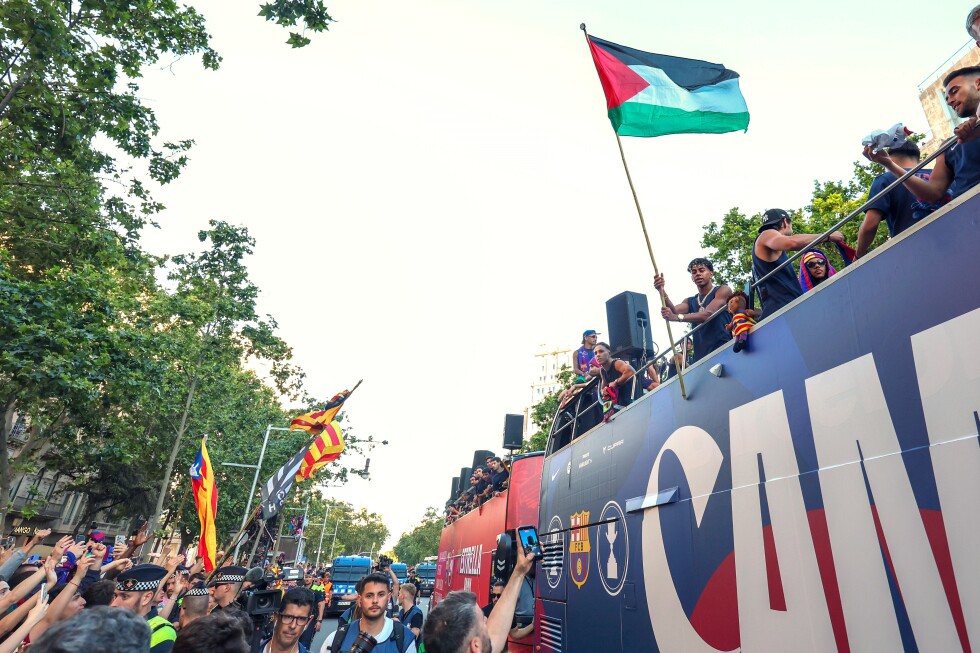
    Olympique de Marseille’s institutional crisis escalated dramatically on Saturday as the club conceded a devastating 97th-minute equalizer against Strasbourg, transforming certain victory into a 2-2 draw that further inflamed tensions at the Stade Vélodrome. The result extends Marseille’s trophy drought since their 2012 League Cup triumph and compounds the turmoil following Roberto De Zerbi’s midweek departure.

    The match began promisingly with Amine Gouiri orchestrating Marseille’s early dominance. The attacking midfielder provided a sublime assist in the 14th minute, expertly controlling with the outside of his foot before delivering a precision pass for Mason Greenwood to score his league-leading 14th goal. Gouiri doubled the advantage shortly after halftime with a technically superb curled finish following Strasbourg goalkeeper Mike Penders’ errant clearance.

    However, Marseille’s defensive frailties resurfaced catastrophically in the final quarter. Sebastian Nanasi ignited Strasbourg’s comeback in the 74th minute before Emerson Palmieri’s clumsy challenge conceded a penalty deep into stoppage time. Striker Joaquin Panichelli converted from the spot to complete Marseille’s collapse.

    The atmosphere reflected the club’s profound discontent. Large sections of the stadium remained empty while protesting banners targeted American owner Frank McCourt and president Pablo Longoria with explicit demands for their departure. Those supporters who attended greeted players with audible boos, creating a palpably hostile environment.

    Gouiri’s post-match comments highlighted the squad’s accountability crisis: ‘We consistently surrender late goals and nullify our efforts. When this pattern repeats continuously, the responsibility lies with us on the pitch rather than tactical decisions.’

    The result leaves Marseille languishing in mid-table as the Ligue 1 title race continues elsewhere. Paris Saint-Germain’s surprising 3-1 defeat at Rennes marked their third loss this campaign—exceeding their total from the previous season—while Lens sought to capitalize against struggling Paris FC to reclaim the league leadership.

  • Ireland grinds out a shaky Six Nations win over Italy in second half fightback

    Ireland grinds out a shaky Six Nations win over Italy in second half fightback

    Dublin witnessed a tense Six Nations encounter on Saturday as Ireland narrowly overcame a determined Italian side 20-13 in a match that revealed significant concerns for the home team’s championship aspirations. Despite entering the game under pressure following their record 36-14 defeat to France—their worst Six Nations loss in 16 years—Andy Farrell’s squad delivered another underwhelming performance that failed to silence mounting doubts about their form.

    The match unfolded as a tale of two contrasting halves, with Italy making history by securing their first-ever halftime lead in Dublin. The visitors demonstrated remarkable progress from their traditional tournament underdog status, building on their opening victory against Scotland with courageous, inventive rugby that frequently exposed Irish vulnerabilities.

    Italy’s performance deserved greater reward, with two potential tries denied—one through a forward pass ruling and another lost to an unfortunate bounce. Their scrum dominance proved particularly alarming for Ireland, with prop Simone Ferrari consistently overpowering opposite number Jeremy Loughman and even managing to lift British and Irish Lions star Tadhg Furlong off his feet.

    Ireland’s response came through replacement playmakers Jamison Gibson-Park and Jack Crowley, whose second-half introduction provided crucial impetus. Winger Robert Baloucoune marked his first test appearance in over three years with a decisive try, while Crowley contributed vital points through conversions and penalties.

    The dramatic conclusion saw Ireland’s James Lowe intercepting Italy’s final attack beyond the 80-minute mark, yet instead of securing an easy penalty to deny Italy a losing bonus point, Ireland controversially pursued a fourth try only to kick the ball dead and end the match.

    The result sets up concerning prospects for Ireland’s upcoming clash against England at Twickenham, while Italy travels to face tournament favorites France with reinforced credibility and confidence.

  • Late goal in a loss to Sweden may get Slovakia into the quarterfinals at the Olympics

    Late goal in a loss to Sweden may get Slovakia into the quarterfinals at the Olympics

    In a stunning turn of events at the Milan Winter Olympics, Slovakia secured advancement to the quarterfinals in men’s hockey despite suffering a 5-3 defeat against Sweden in Saturday’s preliminary round finale. The crucial moment came when Dalibor Dvorsky of the St. Louis Blues scored with just 39 seconds remaining, creating a tiebreaker scenario that ultimately favored Slovakia.

    The complex advancement mathematics hinged on Slovakia’s superior goal differential among three tied teams in Group B, contingent upon Finland’s expected victory over host Italy later that day. This unusual circumstance prompted Slovakia’s Juraj Slafkovsky, the reigning Olympic MVP who shares the tournament scoring lead with Canada’s Connor McDavid at six points each, to describe the outcome as “probably the best loss I ever had.”

    Dvorsky, who netted the critical power-play goal following a penalty against Sweden’s Lucas Raymond, echoed this sentiment, calling it “the best loss of my life.” The forward revealed their late-game strategy was straightforward: “We all know what we need to do on the ice. There was not too much tactics, right? At this point of the game, just try to get pucks to the net.”

    Meanwhile, Sweden faced disappointment despite their on-ice victory, having performed significantly better than in their previous 4-1 loss to archrival Finland. Coach Sam Hallam’s decision to pull goaltender Jacob Markstrom while leading by two goals in the final seconds—aiming for additional tiebreaker advantages—backfired as Sweden failed to score again. Alternate captain Victor Hedman called the outcome a “tough pill to swallow” but vowed the team would “regroup and be ready for our next challenge.”

    In other Olympic hockey action, Latvia delivered an upset victory over Germany with a 4-3 win, thanks to goals from Eduards Tralmaks and Renars Krastenbergs just over three minutes apart. Zemgus Girgensons of the Buffalo Sabres, one of ten NHL players on Latvia’s roster, expressed confidence in his team’s capabilities: “We’re a good team. We believed it. We came in today thinking we’re going to win.” Germany now faces a critical match against the United States on Sunday night.

  • Russia killed opposition leader Alexei Navalny using dart frog toxin, UK says

    Russia killed opposition leader Alexei Navalny using dart frog toxin, UK says

    The United Kingdom has formally accused the Russian government of assassinating opposition leader Alexei Navalny using an exotic poison derived from dart frog toxin. This declaration comes exactly two years after Navalny’s death in a Siberian penal colony and follows a meticulous multinational forensic investigation.

    Foreign Secretary Yvette Cooper, speaking from the Munich Security Conference where she met with Navalny’s widow Yulia Navalnaya, stated that British intelligence analysis of biological samples revealed traces of epibatidine—a lethal toxin with no plausible innocent explanation for its presence. “Only the Russian government had the means, motive and opportunity to deploy this lethal toxin against Alexei Navalny during his imprisonment in Russia,” Cooper asserted, adding that the Kremlin’s use of such chemical agents demonstrated both its despicable capabilities and profound fear of political opposition.

    The UK’s findings have garnered international support, with Sweden, France, the Netherlands, and Germany jointly endorsing the accusation. In response to what it terms a blatant violation of the Chemical Weapons Convention, Britain has formally notified the Organisation for the Prohibition of Chemical Weapons of Russia’s alleged breach.

    Navalny, Russia’s most prominent anti-corruption activist and Vladimir Putin’s foremost critic, died suddenly on February 16, 2024, at age 47 while serving a three-year sentence on widely condemned politically motivated charges. His death occurred shortly after his transfer to a remote Arctic penal colony, with Russian authorities claiming he collapsed after a walk and never regained consciousness.

    This marks the second known poisoning attempt against Navalny, who survived a Novichok nerve agent attack in 2020 that necessitated extensive medical treatment in Germany. His widow Yulia Navalnaya, who had consistently maintained her husband was murdered, expressed gratitude for the international investigation: “I was certain from the first day that my husband had been poisoned, but now there is proof.”

    The Kremlin has remained silent regarding these latest allegations, continuing its pattern of avoiding direct acknowledgment of Navalny’s existence. President Putin only briefly referenced the opposition leader’s death a month after it occurred, calling any human passing “always a sad event” without mentioning Navalny by name.

  • Orbán says the EU and not Russia is Hungary’s real threat ahead of April vote

    Orbán says the EU and not Russia is Hungary’s real threat ahead of April vote

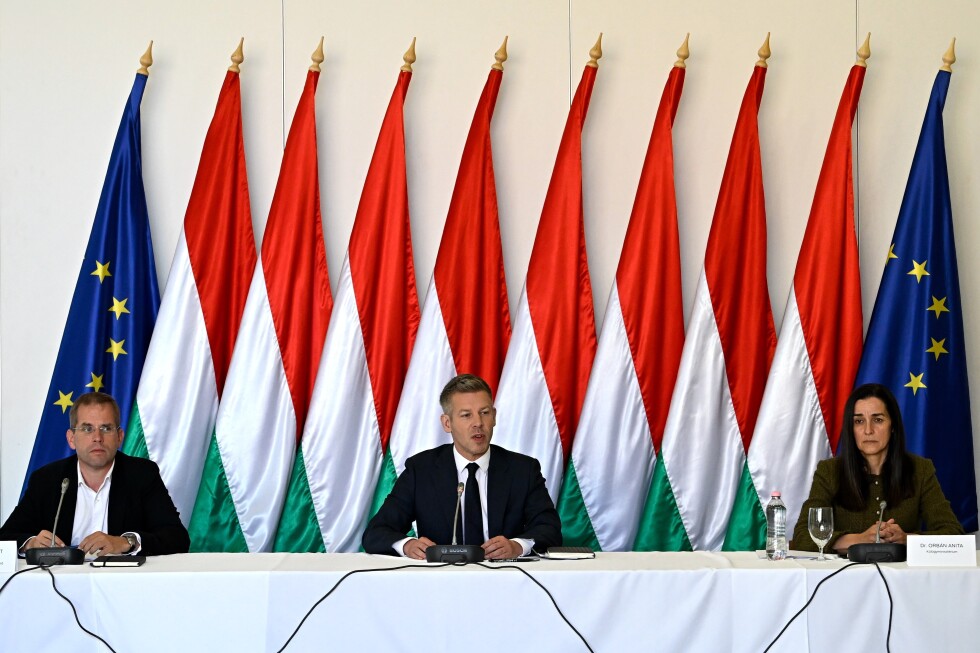
    BUDAPEST, Hungary — In a fiery pre-election address to supporters on Saturday, Hungarian Prime Minister Viktor Orbán dramatically repositioned the European Union as Hungary’s principal antagonist, surpassing even Russia in perceived threat level. With critical national elections looming just eight weeks away, Orbán’s nationalist Fidesz party faces its most formidable electoral challenge since returning to power in 2010.

    Current independent polling indicates Fidesz trailing behind the emerging center-right Tisza party and its leader Péter Magyar, despite Orbán’s campaign narrative warning that an opposition victory would result in the EU forcibly deploying Hungarian citizens to combat zones in neighboring Ukraine—a claim entirely lacking evidentiary support.

    During his Saturday oration, Orbán drew provocative parallels between the contemporary European Union and the historically oppressive Soviet regime that dominated Hungary throughout the Cold War era. He explicitly dismissed widespread concerns among European leadership regarding Russian President Vladimir Putin’s threat to continental security, stating: “We must acclimatize to the reality that freedom-loving citizens should dread Brussels, not Eastern powers.”

    The Prime Minister elaborated: “Fear-mongering about Putin represents primitive and unserious rhetoric. Conversely, Brussels constitutes a tangible reality and source of imminent danger. This uncomfortable truth is one we refuse to tolerate.”

    Orbán has maintained consistent opposition to military and financial assistance for Kyiv since Russia’s full-scale invasion commenced nearly four years ago. His administration has cultivated unusually cordial relations with Moscow while adopting confrontational stances toward Hungary’s EU and NATO allies, frequently characterizing them as instigators of military conflict.

    This geopolitical positioning has generated significant friction with the European Union, resulting in the freezing of billions in EU funds allocated to Budapest. These financial sanctions respond to persistent concerns regarding democratic backsliding, erosion of judicial independence, and systemic corruption under Orbán’s governance.

    In retaliation, Orbán has increasingly functioned as an obstructionist within EU policymaking processes, routinely threatening vetoes on crucial initiatives including financial support packages for Ukraine.

    As electoral pressures intensify, the Prime Minister has amplified rhetoric portraying the Tisza party as an EU-engineered puppet regime designed to overthrow his government and advance foreign agendas—allegations vehemently denied by opposition leaders. Péter Magyar has committed to restoring Hungary’s deteriorating relationships with Western allies, revitalizing economic stagnation, and reinstating democratic norms.

    Orbán additionally accused multinational corporations in banking and energy sectors of capitalizing on the Ukraine conflict while conspiring with political opponents to secure electoral victory. He asserted: “Hungary’s petroleum industry, financial institutions, and Brussels elite are overtly preparing to establish a government. They require Hungarian leadership that will never oppose Brussels’ demands.”

    The Prime Minister promised that a fifth consecutive parliamentary majority would enable intensified efforts to eliminate entities he claims compromise national sovereignty. He notably praised former U.S. President Donald Trump—who has endorsed Orbán’s reelection bid—for creating international conditions conducive to expelling “fabricated NGOs and compromised journalists, judiciary members, and politicians.”

    Orbán concluded: “The American president’s rebellion against global liberal networks has improved our prospects. We too can eliminate foreign influences and their domestic agents that constrain our sovereignty. Brussels’ repressive apparatus remains operational in Hungary—we will commence its purification this April.”

  • How Jeffrey Epstein used the glamour of the Nobel Peace Prize to entice his global network of elites

    How Jeffrey Epstein used the glamour of the Nobel Peace Prize to entice his global network of elites

    Norwegian authorities have formally charged Thorbjørn Jagland, the former chairman of the Nobel Peace Prize committee, with aggravated corruption following revelations contained within the recently released Jeffrey Epstein documents. The 75-year-old politician, who led the Norwegian Nobel Committee from 2009 to 2015, appears hundreds of times throughout the millions of pages of evidence released by the U.S. Justice Department last month.

    Økokrim, Norway’s economic crime unit, confirmed that their investigation was directly prompted by information contained within the Epstein files. Police teams conducted simultaneous searches of Jagland’s Oslo residence along with two additional properties in the coastal town of Risør and western region of Rauland on Thursday. The investigation focuses on whether Jagland received gifts, travel accommodations, or loans in connection with his influential position.

    While the documents contain no evidence of direct Nobel Prize lobbying, they reveal Epstein consistently leveraged his relationship with Jagland to impress elite contacts. The disgraced financier hosted Jagland at his properties in New York and Paris during the 2010s, frequently mentioning these connections in communications with high-profile figures including Richard Branson, Larry Summers, Bill Gates, and former Trump strategist Steve Bannon.

    In one particularly revealing 2018 text exchange with Bannon, Epstein wrote: “Donald’s head would explode if he knew you were now buds with the guy who on Monday will decide the Nobel Peace Prize.” He followed with the cryptic message: “I told him next year it should be you when we settle China.”

    The documents show Epstein extending invitations to various powerful figures to meet Jagland, describing the Nobel chairman as offering a “unique perspective” despite privately characterizing him as “not bright” in a 2012 email to former Treasury Secretary Larry Summers.

    Jagland, through his attorneys at the Elden law firm in Norway, has denied all charges and was questioned by authorities on Thursday. The case has drawn increased scrutiny due to Jagland’s prestigious international positions, including his former role as Norwegian prime minister and head of the Council of Europe.

    The investigation has also ensnared Terje Rød-Larsen, the Norwegian diplomat who helped broker the Oslo Peace Accords, and his wife, who face similar corruption charges related to their Epstein associations. During Jagland’s tenure as Nobel committee chair, the peace prize was awarded to Barack Obama in 2009 and the European Union in 2012.

  • 5 European nations say Russian opposition leader Navalny was poisoned and blame Kremlin

    5 European nations say Russian opposition leader Navalny was poisoned and blame Kremlin

    In a significant diplomatic escalation, five major European nations have formally accused the Russian state of poisoning opposition leader Alexei Navalny with a lethal biological toxin prior to his death in 2024. The coordinated announcement from the foreign ministries of the United Kingdom, France, Germany, Sweden, and the Netherlands revealed that laboratory analysis of biological samples from Navalny conclusively identified epibatidine—an extremely rare neurotoxin derived from South American poison dart frogs.

    The joint statement asserted that only the Russian state possessed the “combined means, motive and disregard for international law” required to execute such an attack. This finding substantiates long-standing allegations from Navalny’s widow, Yulia Navalnaya, who previously disclosed that two independent laboratories had detected poison in her husband’s system shortly before his death in an Arctic penal colony.

    In response to these verified findings, the European coalition is initiating formal proceedings against Russia through the Organization for the Prohibition of Chemical Weapons (OPCW), citing a clear violation of the Chemical Weapons Convention. The international treaty, which Russia has ratified, explicitly prohibits the development, stockpiling, and use of chemical weapons.

    Navalny, who served as Vladimir Putin’s most prominent political opponent, perished in February 2024 while serving a 19-year sentence that global human rights organizations deemed politically motivated. His legacy includes extensive anti-corruption activism and mobilization of mass protests against Kremlin policies. Russian officials have consistently denied involvement in Navalny’s poisoning and subsequent death, dismissing allegations as politically motivated fabrications.

  • Rubio speech signals US-Europe relations are bruised but still friendly

    Rubio speech signals US-Europe relations are bruised but still friendly

    At the prestigious Munich Security Conference, a pivotal gathering of global leaders including French President Emmanuel Macron, German Chancellor Friedrich Merz, and UK Prime Minister Sir Keir Starmer, all eyes were on U.S. Secretary of State Marco Rubio. The international community awaited clarity on whether America would continue its historic partnership with Europe following recent diplomatic strains.

    Addressing a packed auditorium filled with military officials, diplomats, and political leaders, Secretary Rubio initially delivered sharp criticisms that echoed previous administration positions. He targeted European policies on free trade, mass migration, and climate initiatives, which he characterized as ‘a climate cult’ damaging to American economic interests. Rubio further criticized the United Nations for its perceived failures in resolving conflicts in Gaza and Ukraine.

    However, the diplomatic tone shifted dramatically when Rubio articulated the core message attendees had hoped to hear: ‘Our destiny will always be intertwined with yours in Europe.’ He explicitly stated that ending the transatlantic era was ‘neither our goal nor our wish,’ emphasizing America’s enduring connection to European heritage and culture.

    The Secretary praised European cultural contributions from Shakespeare to Mozart and even humorously referenced the Rolling Stones, generating muted laughter from the audience. He spoke of collaborative goals in securing critical mineral supply chains and ‘unshackling creativity’ through partnership.

    Despite this reaffirmation, Rubio included a significant qualification: the U.S. has ‘no interest in being polite and orderly caretakers of the West’s managed decline,’ signaling expectations for European partners to assume greater responsibility in defense and global leadership.

    Reactions from European officials reflected cautious optimism. EU top diplomat Kaja Kallas noted that ‘Europeans sighed with relief’ at the reaffirmed commitment, while acknowledging persistent policy differences. Behind the scenes, some European representatives expressed frustration with the Trump administration’s approach to Russia and the ongoing conflict in Ukraine, which is approaching its fifth year of violence.

  • Europe must be ready to fight, PM tells Munich Security Conference

    Europe must be ready to fight, PM tells Munich Security Conference

    In a landmark address at the Munich Security Conference on Saturday, British Prime Minister Sir Keir Starmer issued a stark warning that Europe must prepare for potential armed conflict to safeguard its citizens, values, and democratic way of life. The Prime Minister’s speech marked a significant shift in UK foreign policy, emphasizing both military deterrence and economic cooperation with European partners.

    Starmer announced the United Kingdom would deploy its carrier strike group to the Arctic and High North regions as part of a coordinated security initiative with US, Canadian, and NATO forces to counter Russian aggression. He emphasized that Russian rearmament would likely accelerate following any future peace settlement in Ukraine, necessitating robust European defense capabilities.

    ‘The currency of our age is hard power,’ Starmer told assembled world leaders. ‘We must build our hard power to deter aggression and be prepared to fight if necessary.’

    The Prime Minister directly addressed concerns raised by US President Donald Trump regarding European commitment to NATO’s Article 5 collective defense principle. ‘Be in no doubt,’ Starmer declared, ‘if called on, the UK would come to your aid today. Our commitment to Article 5 is as profound now as ever.’

    In a notable policy evolution, Starmer called for deeper economic integration with the European Union, acknowledging the current post-Brexit arrangement was ‘not fit for purpose.’ He proposed exploring ‘closer economic alignment’ and moving nearer to the single market in certain sectors, despite previous pledges to the contrary.

    European Commission President Ursula von der Leyen, speaking before Starmer, praised him as an ‘unflinching ally and friend’ and echoed his call for European defense self-reliance. She described how Europe had undergone ‘shock therapy’ from the United States and must assume greater responsibility for its own security.

    Starmer’s appearance followed a tumultuous domestic week that saw his leadership threatened by controversy over his appointment of Peter Mandelson, who had known connections to convicted sex offender Jeffrey Epstein. Despite calls for his resignation from Scottish Labour leader Anas Sarwar and other party members, Starmer survived with cabinet support, claiming he ended the week ‘much stronger’ than he began it.

  • Iran’s crown prince says ahead of protests that inaction against Tehran encourages bullies

    Iran’s crown prince says ahead of protests that inaction against Tehran encourages bullies

    MUNICH, Germany — Iranian exile groups intensified their campaign for regime change during the Munich Security Conference this weekend, leveraging the gathering of world leaders to amplify their demands. Reza Pahlavi, Iran’s exiled crown prince and son of the deposed shah, orchestrated coordinated demonstrations across Munich, Los Angeles, and Toronto in what he termed a “global day of action.”

    The protests coincide with heightened international pressure on Iran’s leadership, particularly following President Donald Trump’s recent suggestions that regime change “would be the best thing that could happen.” Trump’s administration has been pushing for further scaling back of Iran’s nuclear program while threatening military action.

    Friday’s opening of the security conference already featured significant protests against Iran’s government, primarily organized by the People’s Mujahedeen Organization of Iran (MEK). These demonstrations highlighted Iran’s violent suppression of nationwide protests last month, which human rights organizations report resulted in thousands of casualties.

    Pahlavi, who has lived in exile since the 1979 Iranian Revolution, used a Munich press conference to warn that more deaths would occur if “democracies stand by and watch.” He framed the situation as a critical test of international resolve: “We gather at an hour of profound peril to ask: Will the world stand with the people of Iran?”

    The crown prince argued that the Iranian government’s continued survival “sends a clear signal to every bully: kill enough people and you stay in power.” His comments referenced widely divergent death tolls from recent unrest, with human rights organizations reporting approximately 7,005 fatalities while Iranian authorities acknowledge only 3,117 deaths. The significant discrepancy reflects both the government’s historical pattern of underreporting casualties and the challenges of verification amid internet restrictions and communication blackouts.