标签: Europe

欧洲

  • Zelenskyy offers an Easter pause on energy strikes as Russian drone kills 4 in bus strike

    Zelenskyy offers an Easter pause on energy strikes as Russian drone kills 4 in bus strike

    KYIV, Ukraine — As Russia’s full-scale invasion of Ukraine enters its fifth year of brutal conflict, Ukrainian President Volodymyr Zelenskyy has announced a unprecedented reciprocal proposal: a temporary halt to cross-border attacks on energy facilities from both sides, timed to coincide with the upcoming Orthodox Easter holiday this weekend. In a public address delivered late Monday, Zelenskyy confirmed the offer was formally transmitted to Russian authorities through Washington, which has served as a mediator for indirect talks between Moscow and Kyiv.

    “If Russia agrees to end its strikes against our energy infrastructure, Ukraine will stand by the same commitment,” Zelenskyy stated. To date, the Kremlin has not issued any public response to the proposal. This call for a limited holiday truce comes amid a long track record of failed ceasefire attempts between the two warring nations. Last Orthodox Easter, Russian President Vladimir Putin unilaterally announced a 30-hour ceasefire, but the agreement collapsed within hours as both sides traded accusations of immediate violations. A year ago, Moscow also rejected a 30-day unconditional truce put forward by the U.S. and Ukraine, framing the offer as unconstructive and continuing to push for a sweeping negotiated settlement that meets its core demands. Even so, Russia has unilaterally declared multiple short-term ceasefires over the past years of conflict.

    Despite extending the offer, Zelenskyy made clear he holds little optimism that the Kremlin will accept the proposal. He pointed to current global energy market conditions, noting that Russia is reaping greater financial benefits from elevated international oil prices driven by ongoing conflict in Iran, giving it little incentive to pause strikes that undermine Ukraine’s energy stability. Beyond the truce proposal, Zelenskyy also reiterated growing concerns that a prolonged U.S.-Israeli military campaign in Iran will divert international attention and erode critical American support for Ukraine’s war effort. So far, U.S.-mediated indirect talks between the two nations have stalled on all core sticking points, with Washington’s policy bandwidth largely absorbed by the escalating Middle East crisis. Meanwhile, Ukrainian and Russian forces remain entrenched in brutal, ongoing clashes along a roughly 1,000-mile front line stretching across eastern and southern Ukraine.

    For months, both sides have targeted each other’s critical energy infrastructure as a core military strategy. Russia has launched sustained, large-scale attacks on Ukraine’s power grid in a deliberate campaign to break civilian morale ahead of the cold winter and spring months. In response, Ukraine has ramped up its own long-range drone strikes against Russian oil facilities, aiming to cut into the export revenue that funds Moscow’s war machine. A new assessment published late Monday by the Institute for the Study of War (ISW), a Washington-based think tank specializing in conflict analysis, confirms Ukraine’s expanding drone campaign is yielding tangible results. The report notes that Ukraine is successfully exploiting gaps in Russia’s overstretched air defense network, causing significant damage to Russia’s oil export capacity. “Russia’s vast geographic territory creates enormous defensive challenges, particularly when the country still relies heavily on legacy air defense systems to intercept Ukrainian drone salvos,” the ISW assessment added.

    Alongside attacks on energy infrastructure, Russian forces have continued to target civilian and public transportation networks across Ukraine, including the country’s critical rail links that serve both civilian and military supply purposes. On Tuesday morning, a Russian drone struck a civilian bus as it pulled into a stop in the southeastern Ukrainian city of Nikopol during morning rush hour, killing four civilians and wounding 15 more. Ukrainian Interior Minister Ihor Klymenko confirmed the attack in an online post, emphasizing that the strike was a deliberate tactic targeting ordinary civilians. “This brutal attack on regular civilian transportation happened during rush hour, when people were simply heading to their jobs,” Klymenko wrote. “This is no accident — this is Russia’s deliberate strategy: targeted strikes on innocent civilians.”

    Additional Russian attacks across southern and eastern Ukraine pushed Tuesday’s civilian death toll even higher. Ukrainian authorities reported three people killed and three more injured in a strike on a residential building in the southern city of Kherson. Near the eastern city of Synelnykove, an 11-year-old boy was killed in a separate drone strike, bringing the total number of civilian fatalities reported on Tuesday to eight. Following Tuesday’s wave of drone and artillery strikes, Ukrainian military and civil defense officials confirmed widespread power outages across multiple regions in eastern and southern Ukraine, a disruption that echoes the widespread energy cuts that upended civilian life across the country through the winter months.

  • Sarkozy says he owes France ‘the truth’ as he challenges conviction over alleged Libya funding

    Sarkozy says he owes France ‘the truth’ as he challenges conviction over alleged Libya funding

    PARIS — In a high-stakes appeal hearing held in Paris this week, 71-year-old former French head of state Nicolas Sarkozy has forcefully reaffirmed his total innocence in a long-running case centered on allegations of illegal campaign financing from the former Libyan regime under Moammar Gadhafi. Addressing a three-judge panel on Tuesday, Sarkozy stated clearly that no Libyan public or private funds ever contributed to his successful 2007 presidential election run, emphasizing that the French public deserves unvarnished transparency about the allegations against him.

    The case carries significant personal and political weight for Sarkozy: after his initial conviction on criminal conspiracy charges handed down in September last year, the former conservative leader spent 20 days behind bars before courts granted his release on bail while he pursues his appeal. The 12-week appeal trial, which launched last month, will conduct a full reevaluation of all evidence and witness testimony related to Sarkozy and nine co-defendants, three of whom are former French government ministers.

    Prosecutors have laid out a core allegation that Sarkozy’s camp orchestrated a scheme to secure millions in secret campaign donations from Gadhafi’s government in 2007, in exchange for future political and diplomatic favors from the French presidency. Sarkozy has repeatedly rejected all claims of misconduct, arguing that the entire prosecution is rooted in political bias against him.

    During Tuesday’s session, which focused heavily on Sarkozy’s actions both as a 2007 candidate and his time as president from 2007 to 2012, the former leader pushed back on a key claim tied to the 2011 Western military intervention in Libya, launched as Gadhafi’s regime violently cracked down on pro-democracy Arab Spring protests. “I took the initiative, France took the initiative. Why? Because Gadhafi had no hold over me — financially, politically, or personally,” Sarkozy told the court. Gadhafi, who ruled the North African nation for 42 years, was killed by opposition forces months after the intervention, ending his long authoritarian rule.

    The appeal also comes amid fresh tension following statements last week from families of French victims of the 1989 UTA Flight 772 bombing, who voiced deep distress over allegations that the alleged 2007 deal included secret promises to Gadhafi’s regime regarding the bombing’s suspected mastermind. Libya accepted formal responsibility for both the 1988 Lockerbie bombing and the 1989 UTA attack that killed 170 people, 54 of whom were French citizens. Prosecutors allege that as part of the secret deal, Sarkozy promised to lift an international arrest warrant for Abdullah al-Senoussi, Gadhafi’s brother-in-law, intelligence chief, and the alleged mastermind of both bombings.

    Responding to these claims, Sarkozy told the court: “I believe that such unspeakable suffering can only be answered with the truth. The truth is that I did not act in favor of Mr. Senoussi … who is in prison in Libya because he was arrested following the international action led by France. I never promised him anything.”

    The Paris Court of Appeal trial is scheduled to run through June 3, with a final ruling expected at a later, unannounced date. This case is just one of multiple high-profile legal battles Sarkozy has faced since leaving office in 2012. In November of last year, France’s highest court, the Court of Cassation, upheld a separate conviction for illegal financing of Sarkozy’s 2012 re-election campaign, handing down a six-month sentence that will see him serve the term under house arrest with an electronic monitoring ankle tag. That sentence has not yet been implemented.

  • One dead as high-speed train collides with lorry in France

    One dead as high-speed train collides with lorry in France

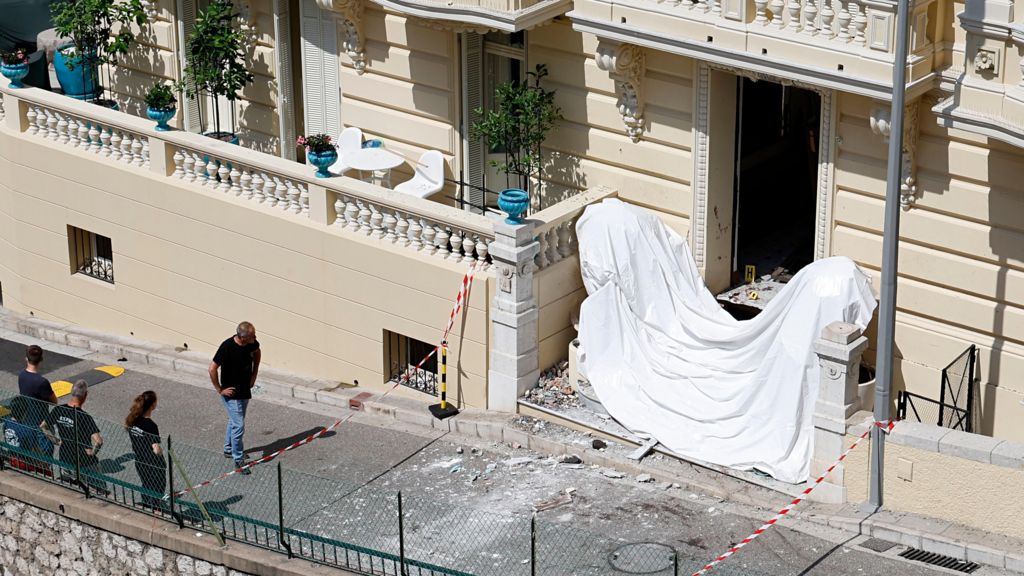
    A deadly early-morning collision between a high-speed TGV passenger train and a heavy truck hauling military equipment has left the train’s operator dead and 13 other people injured in northern France, authorities confirmed this week.

    The crash unfolded just before 7 a.m. local time on Tuesday along the route between the towns of Béthune and Lens, located in the Pas-de-Calais region, according to local officials. The TGV was operating a scheduled passenger service from Dunkirk to the French capital of Paris when it struck the lorry at an unsecured level crossing.

    French regional president Xavier Bertrand was among the first officials to confirm the fatality, identifying the victim as the TGV’s driver and calling the incident a devastating “terrible tragedy.” “My thoughts are with his family, his loved ones and all the staff who are mourning his loss,” Bertrand posted on social media platform X Tuesday morning.

    Of the 13 injured passengers and crew, two people remain in critical condition while 11 others have been treated for minor wounds, French national media outlet Franceinfo reported, citing preliminary emergency response data.

    Hours after the crash, French Transport Minister Philippe Tabarot announced he was traveling to the collision site alongside Jean Castex, chief executive officer of state-owned national rail operator SNCF and former French prime minister. Castex had not issued a public statement on the incident as of Tuesday afternoon, and the BBC confirmed it had reached out to SNCF for additional comment on the investigation.

    Rail worker union SUD-Rail has already called for full public disclosure of all findings from the official probe into the crash, demanding “total transparency” from regulators and SNCF leadership.

    Regional rail operator TER Hauts-de-France has confirmed that all rail traffic between Béthune and Lens was suspended immediately after the collision, with disruptions expected to last through mid-morning Tuesday. Limited service on alternate routes began rolling out gradually as emergency crews cleared the crash site.

    This latest incident comes less than two weeks after another fatal train-truck collision in southeastern France’s Var region, which claimed one life. While level crossing collisions are relatively uncommon across Europe, official data shows such incidents are far more frequent in France than in neighboring the United Kingdom.

    Preliminary 2024 figures recorded 89 level crossing collisions across France this year, resulting in 20 total deaths. By comparison, the UK recorded just six such incidents in the same period. Between 2021 and 2023, France averaged more than 100 recorded level crossing collisions per year, according to national transport safety data.

  • Gunmen attack police near building housing Israeli Consulate in Istanbul

    Gunmen attack police near building housing Israeli Consulate in Istanbul

    On a Tuesday in central Istanbul, a brazen armed assault targeting police outside a high-rise building that hosts the Israeli Consulate left one attacker dead and two others wounded and in custody, senior Turkish government officials have confirmed. The incident, which unfolded in Levent, Istanbul’s bustling core commercial district, sparked an intense shootout between the three assailants and responding law enforcement, leaving two officers with minor injuries.

    Istanbul Governor Davut Gul confirmed to reporters that the attackers were armed with long-barreled weapons, with one attacker fatally shot during the exchange of fire. The two surviving suspects, who were wounded in the clash, have been taken into Turkish custody. According to Turkey’s Interior Ministry, the pair are brothers identified only as Onur C. and Enes C., with Onur holding a prior criminal record related to drug offenses. Both are currently undergoing interrogation by law enforcement authorities.

    Details of the attackers’ movements and backgrounds have begun to emerge in the hours after the assault. Interior Minister Mustafa Cifti revealed in a post on the social platform X that the three suspects traveled to Istanbul from Izmit, a city located roughly 100 kilometers (60 miles) east of the country’s largest metropolis, in a rented vehicle. Cifti also noted that one of the assailants had ties to a group that “exploits religion,” though he stopped short of naming the specific organization. Turkey has faced repeated deadly terrorist attacks from extremist groups in recent years, most notably the Islamic State group, which has carried out multiple high-profile assaults across the country.

    Notably, no Israeli diplomatic personnel were present in the consulate building at the time of the attack. Israel withdrew all of its diplomats from its Turkish missions earlier amid growing security concerns and rapidly deteriorating bilateral relations tied to the ongoing war in Gaza.

    Eyewitness accounts from people working and moving through the normally busy business district paint a chaotic picture of the 10-minute shootout. Omer Dilki, a 34-year-old local resident, told reporters that the repeated gunfire stood out in the normally noisy district. “In general, this is a noisy area, so initially we thought this might be something else. But the gunshots continued,” he said, adding that he saw officers taking cover behind parked vehicles and coordinating with one another during the clash. Ali Rıza Arpacı, who works at a business near the consulate building, described witnessing “serious clashes” unfold directly in front of him, saying “We were almost inside the clashes.”

    Mobile footage from the scene captured one armed assailant, armed with what appeared to be an assault rifle and wearing a brown backpack, hiding behind a public bus while exchanging gunfire with police. The footage also shows one officer fall to the ground after apparently being struck by gunfire, before rolling to cover behind a nearby tree. Turkish officials later clarified that the two injured officers sustained only minor wounds: one was hit in the leg, while the other suffered a wound to the ear.

    In the aftermath of the attack, Turkish law enforcement quickly sealed off the entire building and closed multiple surrounding roads to through traffic. Forensic investigators in white protective hazmat suits have since combed the attack site, collecting shell casings, DNA samples, and other potential evidence to build their case. Turkish Justice Minister Akin Gurlek announced that three top prosecutors, including one deputy chief prosecutor, have been appointed to lead the ongoing criminal investigation into the assault.

    Turkish President Recep Tayyip Erdogan issued a sharp condemnation of what he called a “treacherous” attack, reaffirming the country’s unwavering counter-terrorism stance. “We will resolutely continue our fight against all forms of terrorism, and we will not allow the climate of security in Turkey to be harmed by vile and timed provocations like today’s,” he said.

    International condemnation of the assault followed quickly. U.S. Ambassador to Turkey Tom Barrack condemned the attack, praising Turkish authorities for “their swift and decisive response.” Israel’s Foreign Ministry also issued a statement condemning the assault, and commended Turkish security forces for their rapid action that prevented the attack from causing greater harm.

    This report includes a correction to an earlier version of the story, which incorrectly cited Turkish outlet Haberturk to claim two attackers had been killed. Turkish officials have confirmed only one of the three assailants was killed, with the other two wounded and taken into custody. Suzan Fraser reported from Ankara, with additional contribution from Mehmet Guzel in Istanbul.

  • Slow moving traffic convoys protest against fuel prices in Ireland

    Slow moving traffic convoys protest against fuel prices in Ireland

    Widespread slow-moving protest convoys against skyrocketing fuel prices have descended on major highways across the Republic of Ireland, triggering traffic disruptions that have forced police and travel officials to issue urgent warnings for motorists.

    Irish national police, known as Gardaí, have urged all drivers to build extra time into their travel schedules this week, noting that organized protest convoys are currently operating at multiple locations along key arterial routes leading into Dublin and surrounding major population centers. The protests have spread across several counties, with confirmed activity reported on a high number of primary roadways: M6 Junction 7 near Moate in County Westmeath, M8 Junction 4 outside Urlingford in County Offaly, the N52 running through Tullamore, County Offaly, areas surrounding Portlaoise in County Laois, M6 Junction 18 in Athenry, County Galway, eastbound M3 approaching Junction 8 in Navan, eastbound M4 at Junction 8 in Kilcock, County Kildare, eastbound M7 approaching Junction 13 at Kildare Village, and stretches of the M7 close to Limerick city. Near Limerick alone, an estimated 200 vehicles including trucks and agricultural tractors are blocking both directions of the highway with their slow-moving demonstration.

    Gardaí have deployed officers to manage traffic flow on the Republic of Ireland’s busiest routes, including the M1, N2, N3, N4, N7 and N11. Dublin Airport has also issued a separate advisory for air passengers, warning that journeys to the terminal may face unexpected delays and urging travelers to arrive prepared for potential disruption.

    The grassroots protests come in response to a dramatic surge in Irish fuel prices driven by geopolitical upheaval in the Middle East. Around 20% of global oil supplies — the core raw material for both petrol and diesel production — have been taken off the market following the closure of the Strait of Hormuz, a critical global chokepoint for energy trade. As of this week, average fuel prices across the Republic of Ireland have climbed to €2.14 (£1.86) per litre for diesel and €1.91 (£1.66) per litre for petrol, with some remote or rural regions recording even higher price points.

    In response to growing public anger over the cost of energy, Irish Deputy Prime Minister, titled Tánaiste, Simon Harris has scheduled a dedicated emergency meeting for Wednesday to address the spiraling fuel crisis and discuss potential policy responses.

  • Ye offers to meet UK Jewish community as calls mount for him to be ditched from Wireless Festival

    Ye offers to meet UK Jewish community as calls mount for him to be ditched from Wireless Festival

    LONDON — A growing political and corporate firestorm has erupted over the scheduled headline appearance of rapper Ye, formerly known as Kanye West, at London’s 2025 Wireless Festival, with a top British cabinet member publicly declaring Tuesday that the artist has no place taking the stage at the event.

    The controversy stretches back to 2023, when Ye sparked global outrage with a series of unapologetic antisemitic comments, public praise for Nazi leader Adolf Hitler, the release of a track titled “Heil Hitler”, and the sale of swastika-branded apparel through his personal website. In January 2024, the 48-year-old artist issued a public apology via a full-page Wall Street Journal advertisement, attributing his harmful actions to a four-month manic episode driven by his bipolar disorder, claiming the period of psychotic, paranoid and impulsive behavior upended his public and personal life.

    Ye is currently set to perform across three sold-out nights from July 10 to 12 at Finsbury Park’s open-air Wireless Festival, where he is expected to draw a combined crowd of roughly 150,000 music fans. Since the artist was confirmed as a headliner, event organizers Festival Republic have faced mounting pressure from political leaders and corporate partners to scrap the booking. Three major festival sponsors — Pepsi, Rockstar Energy and Diageo — have already withdrawn their partnerships and financial support in response to the announcement. Prime Minister Keir Starmer has also publicly labeled the decision to book Ye “deeply concerning”.

    In a new statement released this week, Ye extended an olive branch to the British Jewish community, saying he would welcome the chance to meet in person to listen to concerns about his past actions. “I know words aren’t enough — I’ll have to show change through my actions,” the rapper said. “If you’re open, I’m here.”

    Despite widespread backlash, Festival Republic has stood firm in its commitment to keep Ye on the lineup. In a statement released Monday, managing director Melvin Benn called on the public to extend “forgiveness and hope” to the artist, arguing that the festival is only providing a stage for him to perform hit tracks that already receive regular rotation on UK radio and streaming platforms, where they are enjoyed by millions of listeners.

    That defense was quickly rejected by UK Health Secretary Wes Streeting, who called the organizers’ position “absurd” and reiterated that Ye “absolutely not” be allowed to perform at the festival. Streeting also confirmed that Home Secretary Shabana Mahmood is currently reviewing whether to bar Ye from entering the United Kingdom by revoking his entry visa. Benn acknowledged the Home Secretary’s full authority to make that decision, telling BBC on Tuesday: “If she does, she does, and then the issue is over.”

    As of Tuesday afternoon, a representative for Ye had not responded to requests for additional comment on the ongoing controversy.

  • Man dies after two-vehicle crash near Irish border

    Man dies after two-vehicle crash near Irish border

    A fatal traffic collision on a major road near the Northern Ireland border in County Louth, Republic of Ireland has left one person dead and another hospitalized, according to local law enforcement. The crash, involving two passenger vehicles, unfolded shortly after 10:15 p.m. BST on Monday along the N53 highway in the Rassan area, just a short distance from the internal border separating the Republic of Ireland and Northern Ireland.

    The driver of one of the two vehicles involved, a man in his late 60s, could not be revived after the impact and was pronounced dead immediately at the crash site. The occupant of the second car, a woman in her 20s, sustained injuries that are not considered life-threatening, and was transported to a nearby medical facility for urgent assessment and treatment.

    In the wake of the incident, Gardaí – the national police service of the Republic of Ireland – have launched a formal investigation into the circumstances that led to the collision. Authorities are actively urging any members of the public who were traveling along the route at the time of the crash, or who may have captured dashcam footage of the incident or the vehicles involved prior to the collision, to contact investigators to assist with their inquiry.

    To support ongoing forensic investigation and crash reconstruction work at the site, the N53 highway has been fully closed to all through traffic, with official local diversions put in place to redirect motorists around the affected area.

  • JD Vance travels to Hungary days before election, hoping to boost Orbán’s campaign

    JD Vance travels to Hungary days before election, hoping to boost Orbán’s campaign

    On Tuesday, U.S. Vice President JD Vance touched down in Budapest, Hungary, capping a sequence of high-profile displays of backing from the Trump administration for incumbent Prime Minister Viktor Orbán, a long-time conservative ally who is locked in a tight race that threatens to end his 16 consecutive years in power.

    Orbán, who has led Hungary since 2010, is vying for a fifth straight term at the helm of his nationalist-populist Fidesz party. Ahead of the April 12 general election, most independent opinion surveys put Fidesz more than 10 points behind among committed voters, trailing the center-right Tisza party led by challenger Péter Magyar. This race stands as the toughest electoral test Orbán has faced in two decades, with many political analysts forecasting a possible end to his grip on national governance.

    For years, critics have levied accusations against Orbán that he has systematically consolidated control over Hungary’s state institutions, restricted independent press freedom, and allowed systemic political corruption to take root — all claims the prime minister has repeatedly and categorically denied. Despite this controversy, Orbán has emerged as a defining figurehead for the global far-right movement, drawing widespread admiration from conservative populist factions across the Western world.

    President Donald Trump has repeatedly thrown his full support behind Orbán’s re-election bid, and ranks of the MAGA movement have widely lauded the Hungarian leader’s hardline stances on immigration, rollbacks of LGBTQ+ protections, and consolidation of control over domestic media and academic institutions.

    Trailing in polls, Orbán has turned to appearances with high-profile international supporters to shore up his campaign’s momentum, and Vance’s two-day visit marks the most public demonstration of the Trump administration’s all-in commitment to securing an Orbán victory this weekend. During the trip, Vance is scheduled to hold an official bilateral meeting with Orbán before making an unprecedented public appearance at one of the prime minister’s campaign rallies.

    This direct involvement in another nation’s electoral campaign marks a break from longstanding diplomatic norms, where most foreign leaders avoid openly campaigning for domestic political candidates in other countries. The irony of Vance’s visit has not gone unnoticed: Orbán has frequently lashed out at any comment on Hungary’s election from European Union leaders, framing even mild expressions of support for his challengers as an unacceptable violation of Hungarian sovereignty and foreign meddling.

    Vance’s stop in Budapest is far from the first show of U.S. support for Orbán from the second Trump administration. Hungary has long stood at odds with the vast majority of the European Union, refusing to provide military or financial aid to Ukraine following Russia’s full-scale 2022 invasion, and continuing to import large volumes of Russian energy despite EU sanctions and efforts to diversify away from Moscow-supplied fuel. Last November, following a White House meeting between Orbán and Trump, Hungary secured a rare exemption from U.S. sanctions on Russian oil and gas. In February, U.S. Secretary of State Marco Rubio traveled to Budapest, where he openly praised Orbán and highlighted the close ties between the prime minister and Trump, telling Orbán that “President Trump is deeply committed to your success because your success is our success.”

    Last month, Orbán hosted the Hungarian iteration of the Conservative Political Action Conference (CPAC), drawing dozens of far-right allies from across Europe and beyond, alongside a gathering of the Patriots for Europe, the third-largest parliamentary grouping in the European Parliament. Trump delivered a pre-recorded video address to the conference, reiterating his “complete and total endorsement” of Orbán and calling him a “fantastic guy.”

    The Trump administration’s enthusiastic backing of Orbán aligns with its broader strategy of building close ties with far-right populist parties across Europe, a relationship that has been reciprocated by conservative nationalist leaders from Spain, France, Germany and the Netherlands. Still, Trump’s unconventional foreign policy approach has created tensions in many European relationships in recent months, with disputes over Greenland, Venezuela and Iran straining bilateral ties with multiple U.S. allies on the continent. Orbán, however, has remained one of Trump’s most unwavering international supporters, even echoing the U.S. president’s false claims that the 2020 U.S. presidential election was stolen through widespread voter fraud. Shortly before Trump’s second inauguration, Orbán told state-run Hungarian radio that Democrats “took the presidency away from Donald Trump through fraud.”

  • Why Real Madrid tie could make or break Kane’s Ballon d’Or hopes

    Why Real Madrid tie could make or break Kane’s Ballon d’Or hopes

    As European football’s biggest club competition enters its decisive quarter-final stage, one of the sport’s most hotly anticipated individual prizes is already reaching a defining early crossroads. Harry Kane, the prolific England captain who has rewritten the goalscoring record books this season, could become the first British footballer to lift the Ballon d’Or in 25 years – but an unexpected ankle injury has thrown his historic bid into question just days before Bayern Munich’s crucial first-leg tie against Real Madrid at the Santiago Bernabeu.

    No player across the top European leagues can match Kane’s output in the 2025-26 campaign: the striker has notched 53 goals in just 45 appearances across both club and country, a remarkable return that has already cemented his status as one of the game’s all-time greatest goalscorers. Yet Kane himself acknowledges that sheer individual goalscoring form will not be enough to secure football’s most prestigious individual award. The 31-year-old was forced to sit out Bayern’s dramatic 3-2 Bundesliga win over Freiburg at the weekend, leaving the club and its fans waiting anxiously for updates on his fitness ahead of Tuesday’s 20:00 BST kickoff. Having ended his long personal trophy drought by winning the Bundesliga with Bayern last season, Kane knows additional domestic silverware in Germany will not be enough to sway Ballon d’Or voters.

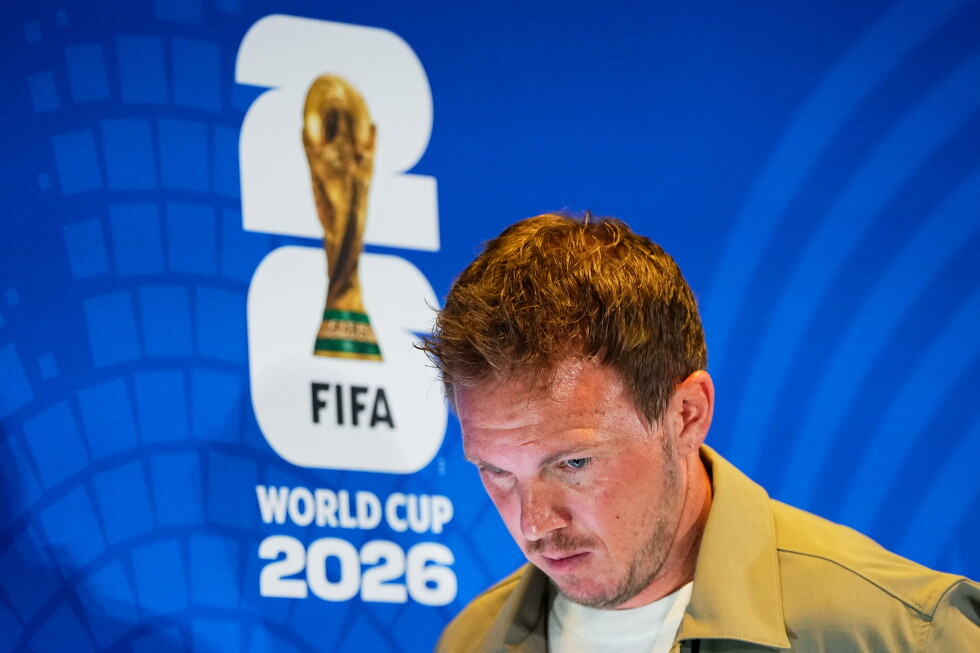
    In modern football, the Ballon d’Or has increasingly become an award that rewards team success as much as individual brilliance. Contrary to the original vision of the prize, which was created to honor standout individual performances, a major team trophy – whether the Champions League, World Cup, or a top continental championship like the European Championship – is now widely viewed as an unwritten prerequisite for lifting the golden ball. Kane will get two shots at securing that required title this year: this month’s Champions League run with Bayern, followed by the 2026 FIFA World Cup in North America this summer, where he will captain the England national side. But the Bayern clash offers arguably his clearest and earliest path to building a winning case.

    Bayern have been in devastating form all season, racking up 37 wins from 43 matches across all competitions, but their European campaign will rise or fall on the form of their talismanic striker. Speaking to media back in November, Kane summed up the modern reality of the Ballon d’Or race: “I could score 100 goals this season, but if I don’t win the Champions League or the World Cup, you’re probably not going to win the Ballon d’Or. It’s the same with any player. You have to be winning those major trophies.”

    Historical data backs up that assessment. Since 2006, nearly 80% of Ballon d’Or winners have claimed the award in a year where they also lifted either the Champions League or a major international tournament. Only two all-time greats – Lionel Messi and Cristiano Ronaldo – have bucked that trend in the past two decades: Messi won in 2010, 2012 and 2019 despite Barcelona exiting the Champions League at the semi-final stage in each of those years, while Ronaldo claimed the 2013 prize when Real Madrid also bowed out at the same stage. In more recent seasons, the trend has grown even stronger: 10 of the last 11 Ballon d’Or winners have won the award after a Champions League or major international title, with every winner over the past five years following this pattern.

    A 2022 rule change has only reinforced this dynamic. Prior to 2021, the award honored performances across a calendar year, straddling two club seasons. Now, it is aligned to a single August-to-August club campaign in Europe, putting even greater focus on end-of-season trophy runs. While the 100 top international journalists who vote for the award are instructed to consider individual talent, class and fair play alongside team achievements, it is the team success factor that consistently proves decisive.

    Tuesday’s Bernabeu clash carries extra weight for Kane because it pitches him directly against his closest rival for the 2025 Ballon d’Or: Real Madrid’s own star striker Kylian Mbappé. Like Kane, Mbappé has never won the award, but he is enjoying a sensational debut second season in Spanish football, notching 38 goals and 43 total goal involvements across all competitions this term – totals that place him second only to Kane among players in Europe’s top five leagues. Also yet to win a Champions League title, Mbappé currently leads this season’s competition scoring charts with 13 goals, just four short of matching the single-season tournament record.

    Beyond his club form, Mbappé, the France captain, has already notched 12 World Cup goals in his career, putting him within striking distance of Miroslav Klose’s all-time record of 16. If he leads Real Madrid to Champions League glory this month or fires France to World Cup glory this summer while breaking that record, his Ballon d’Or credentials will become nearly unbeatable.

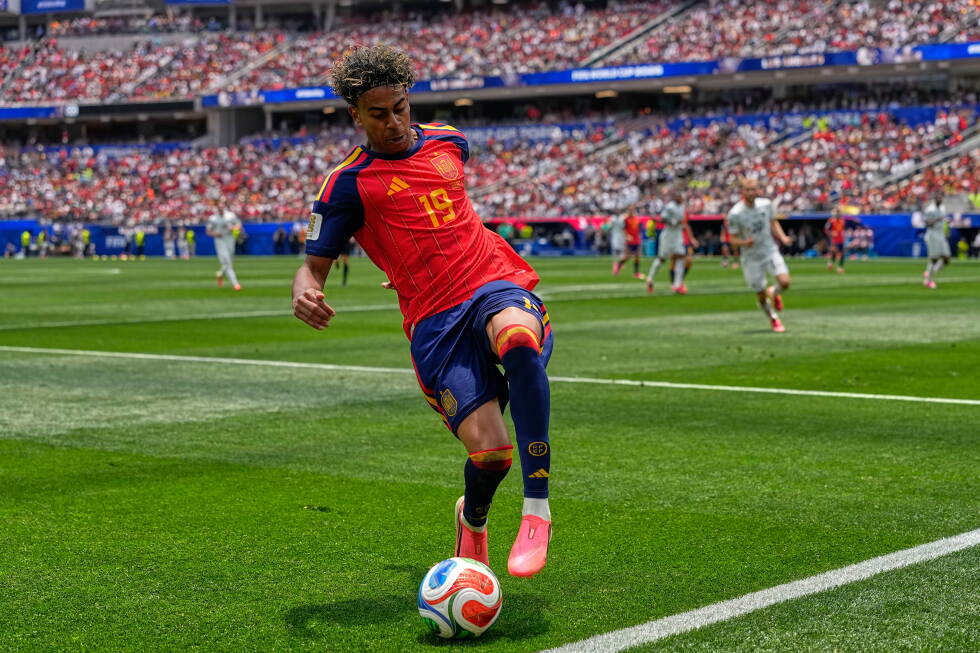
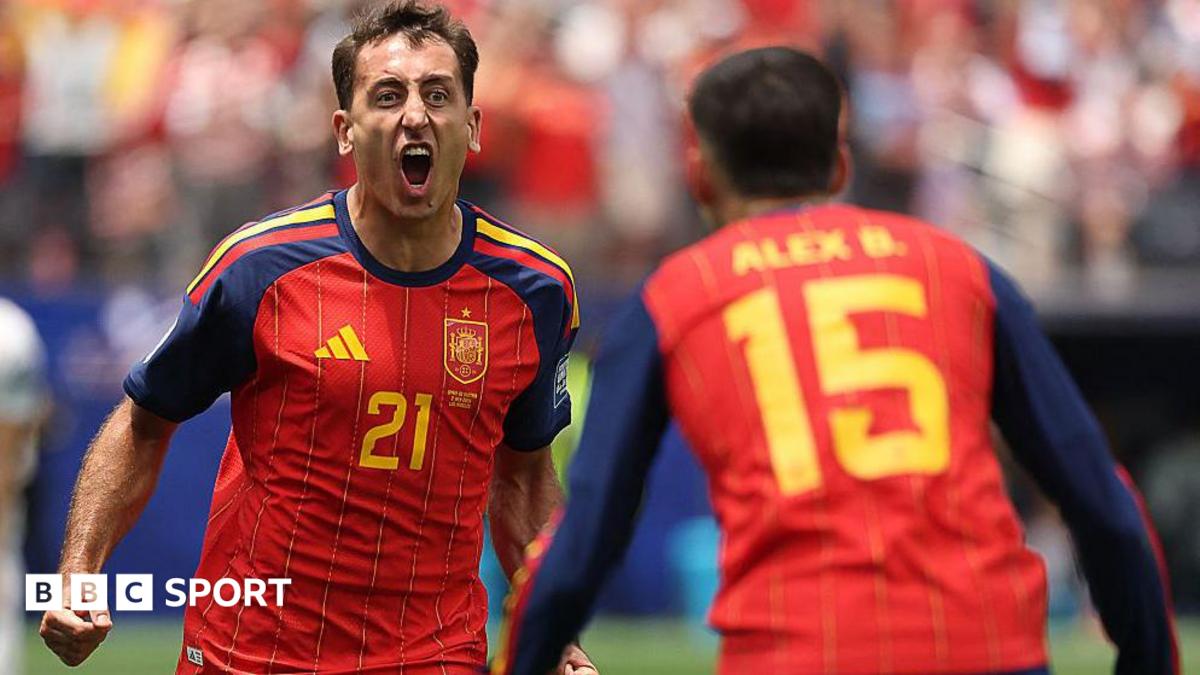
    Mbappé is far from Kane’s only competitor this year. His own Bayern team-mate Michael Olise, a London-born winger who joined the club from Crystal Palace in 2024, has emerged as a key player for France over the past 12 months, notching a leading 24 assists across all competitions this season to cement his own case. Lamine Yamal, the 18-year-old Barcelona sensation who finished second in last year’s Ballon d’Or voting, has continued to go from strength to strength for La Liga leaders Barcelona and World Cup favorites Spain, breaking a raft of age-related records and in line to become the first teenage winner of the award if he continues his form.

    Real Madrid’s Vinícius Júnior and Barcelona’s Raphinha are often overshadowed by their more high-profile team-mates Mbappé and Yamal respectively, but a strong World Cup performance with Brazil could catapult either into late contention. The North American World Cup also offers a final swansong chance for the sport’s two greatest modern icons: eight-time winner Messi and five-time winner Ronaldo. While both now play outside Europe, they have been eligible for the award since 2007, and their candidacies will stand or fall almost entirely on how they perform for their national sides this summer.

    For Kane, the history of British Ballon d’Or winners offers both inspiration and reason for caution. Only seven British players have ever won the award, and the last to do so was Michael Owen for Liverpool back in 2001 – exactly a quarter of a century ago. The first ever Ballon d’Or went to England’s Stanley Matthews in 1956, and the 1960s saw a golden run for British winners, with Manchester United’s iconic “Holy Trinity” of Denis Law, Bobby Charlton and George Best claiming the prize in 1964, 1966 and 1968 respectively. Kevin Keegan, who won back-to-back Ballon d’Or awards with Hamburg in 1978 and 1979 after moving from England to Germany, offers a particularly relevant template for Kane’s current bid.

    Owen’s 2001 win came after he led Liverpool to three domestic cup titles and scored a famous hat-trick for England in a 5-1 World Cup qualifying win over Germany in Munich. Since 2001, the award has been dominated by players from Spanish giants Barcelona and Real Madrid, who have produced 15 of the 23 winners in that period. Only three British players have made the top three in that time: Frank Lampard (second in 2005), Steven Gerrard (third in 2005) and Jude Bellingham (third in 2024). Another point of concern for Kane is that no Ballon d’Or winner has played for a German club since Matthias Sammer won it for Borussia Dortmund in 1996, though Robert Lewandowski was widely considered a deserving winner with Bayern in 2020 when the award was controversially canceled due to the COVID-19 pandemic.

    For fans eager to follow the action, full highlights of every Champions League quarter-final first leg will be available from 22:00 BST on Wednesday via BBC iPlayer and the BBC Sport website and app. A special edition of Champions League Match of the Day will also air on BBC One at 22:40 BST on Wednesday, recapping all the action from the week’s ties.

  • Oil prices rise as US stocks fall ahead of Trump’s deadline for Iran

    Oil prices rise as US stocks fall ahead of Trump’s deadline for Iran

    Financial markets across the globe faced heightened volatility on Tuesday, driven by cascading geopolitical uncertainty as a self-imposed deadline from U.S. President Donald Trump for Iran to reopen the Strait of Hormuz approached. With the clock ticking down to an 8 p.m. Eastern time cutoff, Trump issued a stark warning that a “whole civilization will die tonight, never to be brought back again” if Tehran failed to comply with his demands. In direct response, Iranian officials have called on civilian youth to form human chains around critical infrastructure, including power plants and bridges that the U.S. president has explicitly threatened to destroy.

    By 11:30 a.m. Eastern time, major U.S. stock indices were deep in negative territory. The broad-based S&P 500 slid 0.8%, while the Dow Jones Industrial Average dropped 355 points, also a 0.8% decline. The tech-heavy Nasdaq composite underperformed further, closing the mid-morning window down 1.2%. Trading has been marked by erratic swings since the outbreak of hostilities between the U.S.-led coalition and Iran in late February, and Tuesday was no exception: within the first hour of trading alone, the Dow fluctuated wildly from a 74-point gain to a 425-point loss as investors scrambled to price in shifting geopolitical risks.

    The most dramatic market moves played out in the global energy sector, where crude oil prices spiked sharply following Iran’s decision to block the Strait of Hormuz, a critical chokepoint through which roughly 20% of the world’s daily oil supplies pass to global markets. The ongoing conflict has already disrupted crude production and shipping routes across the Persian Gulf, pushing energy prices far above pre-war levels. On Tuesday, benchmark U.S. crude climbed 3.2% to settle at $116.08 per barrel, while international benchmark Brent crude added 0.9% to reach $110.75 per barrel — up from roughly $70 per barrel before the war began in late February. The national average for a gallon of regular gasoline in the U.S. has now jumped to $4.14, up from under $3 just weeks before the start of hostilities, AAA data shows.

    Market analysts warn that prolonged disruption to Persian Gulf energy supplies could lock in sustained high oil prices, triggering a global wave of persistent inflation that would weigh heavily on household budgets and economic growth. Compounding uncertainty, Iran rejected a latest ceasefire proposal on Monday, reiterating that it would only accept a permanent end to all offensive military operations. This is not the first time Trump has issued a high-stakes deadline for bombing Iranian infrastructure, only to back down and extend the ultimatum multiple times since the war began. This pattern of shifting threats, paired with the president’s 2025 decision to walk back multiple threatened stiff tariffs on global imports after his second inauguration, has left investors guessing whether another delay could be in the cards.

    “Investors are likely to remain on edge and markets unable to establish trends, probably until there is a clear outcome later this evening: a deal, the U.S./Israeli strikes intensify, or Iran’s retaliation becomes escalatory instead of proportional,” said Paul Christopher, head of global investment strategy at Wells Fargo Investment Institute.

    Sectors most sensitive to rising fuel costs bore the brunt of the selling pressure on Wall Street. Norwegian Cruise Line Holding dropped 5% amid expectations of higher operating costs, while United Airlines sank 3.9%. Discount retailers that cater to lower-income households, whose customers are least able to absorb rising gasoline prices, also saw sharp declines: Dollar Tree slid 4.9% and Dollar General fell 2.7%. Cryptocurrency-linked firms also fell alongside sinking bitcoin prices, with Coinbase Global dropping 4% and Strategy declining 4.4%.

    Not all sectors closed in negative territory, however, as a handful of positive corporate and regulatory news limited broader market losses. Health insurance stocks surged after the U.S. Centers for Medicare & Medicaid Services announced an expected net average 2.48% increase in Medicare Advantage payments for 2027, a figure that outpaced most investor expectations. UBS analyst AJ Rice noted that the higher payment forecast was better than many on Wall Street had predicted, pushing UnitedHealth Group up 8.7% and Humana 6.2% higher.

    Universal Music Group (UMG) also provided a boost to global indexes after Bill Ackman’s Pershing Square Capital Management announced a cash-and-stock bid to acquire the major record label, home to superstars including Taylor Swift and Bad Bunny, for an approximate valuation of $64 billion. Pershing Square argues that the buyout would eliminate lingering uncertainty that has suppressed UMG’s share price, and if completed, would relocate the company’s headquarters to Nevada and shift its primary listing from Amsterdam to the New York Stock Exchange. UMG’s Amsterdam-listed shares jumped 12.3% on the news, but still trade below the offer price, signaling that investors remain skeptical the deal will cross the finish line.

    Overseas, most European stock indices finished the day in negative territory, while Asian markets delivered mixed results: South Korea’s Kospi led regional gains with a 0.8% climb. In U.S. bond markets, Treasury yields moved higher ahead of the deadline, with the 10-year Treasury yield rising to 4.36% from 4.34% late Monday, lifted in part by climbing oil prices. The 10-year yield now sits well above its pre-war level of 3.97%, and the rise has pushed up mortgage and lending rates for U.S. households and businesses, creating additional downward pressure on overall economic growth.