标签: Europe

欧洲

  • A Russian attack kills 3 in Odesa while Ukraine targets Russian oil infrastructure, officials say

    A Russian attack kills 3 in Odesa while Ukraine targets Russian oil infrastructure, officials say

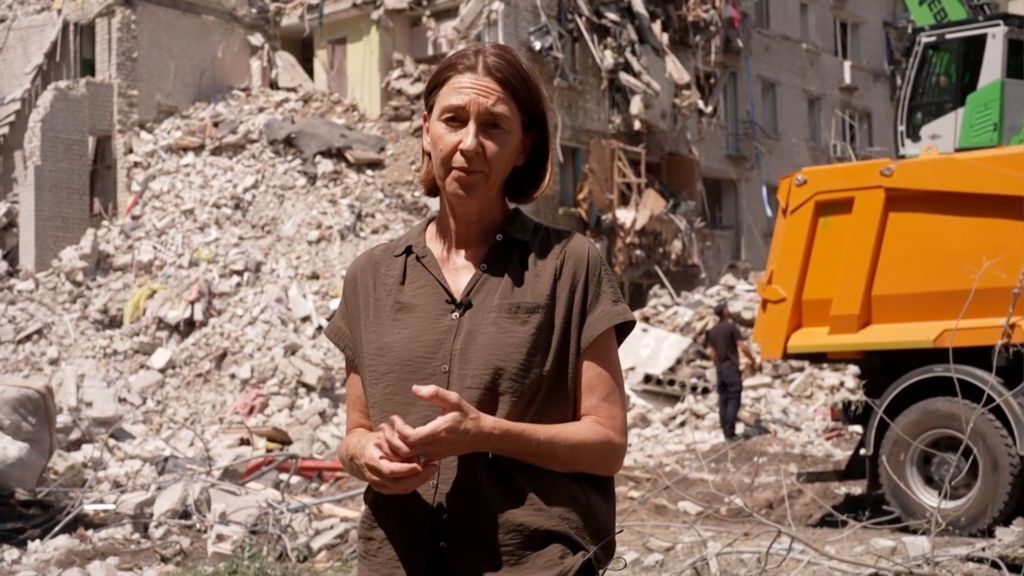
    Fresh large-scale drone exchanges between Russia and Ukraine have escalated civilian casualties and infrastructure damage, marking another dangerous turn in the four-year full-scale invasion that continues to defy international peace efforts. The latest wave of violence unfolded overnight Monday, with Russian strike teams launching a coordinated aerial assault on Odesa, Ukraine’s strategically critical southern Black Sea port city.

    The attack on Odesa left a devastating civilian toll: local officials confirmed the deaths of two adult women and a two-year-old toddler, who were killed when a drone slammed into a residential apartment building, leaving the structure heavily damaged. Working through the night under bright floodlights, emergency rescue teams pulled four surviving people trapped in the rubble of the damaged building. Eleven additional people, including a pregnant woman and two children under one year of age, were admitted to local hospitals for treatment, Ukrainian President Volodymyr Zelenskyy confirmed in an official post on social media platform X.

    This strike is part of a sustained, widespread Russian assault across multiple Ukrainian regions, targeting both civilian residential areas and critical energy infrastructure. Since launching its full-scale invasion in February 2022, Russian forces have consistently targeted civilian population centers across Ukraine, with United Nations data confirming the deaths of more than 15,000 Ukrainian civilians to date. In Monday’s overnight barrages, in addition to Odesa, Russian strikes hit energy assets in four northern and eastern regions: Chernihiv, Sumy, Kharkiv and Dnipro. The damage to transmission and distribution facilities in Chernihiv left more than 300,000 households without power, according to the region’s public utility operator.

    Zelenskyy released updated figures Monday showing the extreme intensity of Russian aerial assaults over the past seven days: Russia has launched more than 2,800 attack drones, nearly 1,350 heavy glide bombs, and over 40 assorted missiles at Ukrainian targets in just one week. In a recent interview with The Associated Press, the Ukrainian leader warned that ongoing conflicts in other global regions, particularly the standoff between Iran and Israel, are depleting global stockpiles of the air defense systems Ukraine relies on to fend off these attacks — most notably the U.S.-manufactured Patriot systems designed to intercept incoming cruise and ballistic missiles. On Monday, Zelenskyy reiterated his call for international partners to ramp up support for Ukraine’s air defense networks, saying, “Russia has no intention of stopping” its offensive as U.S.-led peace negotiations remain completely stalled. “We need to strengthen air defense together so that the interception rate of drones and missiles continues to increase,” he added.

    In response to the ongoing Russian assaults, Ukraine has launched counter-strikes deep inside Russian territory using domestically developed long-range drones, which now have an operational range of up to 1,500 kilometers (930 miles). Kyiv has increasingly targeted Russian oil and energy export infrastructure in these strikes, as Russia works to expand crude oil exports following a temporary sanctions waiver granted during the previous Trump administration to ease global energy supply constraints. Ukrainian officials have repeatedly stated that all expanded energy export revenue generated by Russia flows directly into its military budget to fund new weapons and attacks on Ukraine.

    Monday’s Ukrainian counter-strike targeted Novorossiisk, one of Russia’s largest and most economically critical Black Sea oil export ports located in the Krasnodar Krai region. The Russian Defense Ministry claimed that its air defense systems intercepted and downed a total of 50 Ukrainian drones launched in the overnight attack. Regional governor Veniamin Kondratyev confirmed that the attack still caused damage and civilian casualties: eight people, including two children, were injured, and six apartment buildings plus two private residential homes suffered damage. Unconfirmed independent media reports suggest the primary target of the strike was Novorossiisk’s Sheskharis oil terminal, a major hub for Russian Black Sea oil exports. This attack follows a similar strike last week that hit multiple Russian oil facilities on the Gulf of Finland in northwest Russia.

    The Associated Press continues to provide ongoing full coverage of the Russia-Ukraine war at its dedicated online hub.

  • Hungary’s Orbán has long annoyed the European Union. Now some hope he faces defeat

    Hungary’s Orbán has long annoyed the European Union. Now some hope he faces defeat

    As Hungarians prepare to head to the polls for national elections on April 12, the outcome carries far-reaching consequences that extend well beyond Budapest’s borders, with much of the European Union holding its breath for a shift away from the nationalist agenda of long-serving Prime Minister Viktor Orbán. Widely framed as a test of the bloc’s institutional resilience, the vote comes as Orbán — the EU’s longest-tenured national leader — has consistently trailed his challenger Péter Magyar in pre-election opinion polling, ending what has been a 16-year unbroken grip on power that has repeatedly strained the EU’s post-WWII governance framework.
    Magyar, Orbán’s main opposition candidate, has already told the Associated Press that a victory for his campaign would immediately prioritize repairing the fractured relationship between Hungary and the 27-nation bloc, a stark departure from the current administration’s approach that has gridlocked EU decision-making for years.
    The bloc currently faces a cascade of unprecedented threats: the growing momentum of right-wing populism across member states, ongoing conflicts in Ukraine and the Middle East, covert Russian sabotage operations, expanding Chinese economic influence, and a shifting U.S. administration that has upended decades of established transatlantic cooperation. Against this volatile backdrop, Orbán’s repeated use of national veto power has emerged as one of the most significant barriers to collective EU action.
    Political analysts and lawmakers argue that Orbán has leveraged his veto authority and deep institutional knowledge of the EU’s funding distribution system to entrench his domestic power, extract major concessions from the bloc, and wield outsize influence disproportionate to Hungary’s size. “He entered a club, read the rules, figured out how he can rig the rules, and then started to be a free rider and blackmail all of the other club members,” explained Dániel Hegedűs, deputy director of the Berlin-based Institute for European Politics. “The question is, how long will the club members tolerate it?”
    The current tension between Budapest and Brussels was not inevitable. When Hungary joined the EU in 2004 as part of the bloc’s largest single expansion in history, alongside nine other post-Cold War Central and Eastern European nations, widespread optimism surrounded its integration into the European project. “It didn’t start that way,” noted Jim Townsend, a fellow at the Center for a New American Security.
    But following a series of economic crises, Orbán rose to power by promising broad-based prosperity for all Hungarians, while building strategic alliances with conservative political forces across the bloc. Gábor Scheiring, a former Hungarian lawmaker now teaching at Georgetown University in Qatar, explained that for years Orbán maintained a contradictory position: he regularly vilified EU leadership in Brussels, often drawing unflattering comparisons to the former Soviet Union, while simultaneously collecting billions in EU development funding and resisting widespread international pressure to reverse democratic backsliding within Hungary’s borders.
    From 2014 to 2022, “Hungary was one of the biggest beneficiaries of EU funds,” Scheiring said. “Orbán could navigate the EU system really well: get all the money and get away with his political shenanigans.”
    By 2022, growing frustration over Orbán’s failure to uphold EU standards of judicial independence, press freedom, and anti-corruption safeguards prompted Brussels to freeze nearly €10 billion in allocated funding to Budapest. The rift deepened dramatically after Russia’s full-scale invasion of Ukraine in 2022: Orbán, who has long maintained close personal ties to Russian President Vladimir Putin, has repeatedly used his veto to block EU-wide efforts to provide military and financial support to Kyiv and impose harsh economic sanctions on Moscow.
    The most high-profile standoff came in early 2024, when Orbán backed out of a December 2023 agreement to approve a €90 billion ($104 billion) support package for Ukraine, prompting a rare public rebuke from European Council President Antonio Costa, who told reporters: “Nobody can blackmail the European Union institutions.”
    Beyond the immediate standoff over Ukraine, Orbán’s persistent use of the veto has laid bare a fundamental structural flaw in the EU’s governing framework: the requirement of unanimous member state approval for all major policy decisions. Critics note that this rule has already blocked stronger collective action on other critical global issues, including the ongoing conflict in Gaza.
    German MEP Daniel Freund pointed to an internal European Parliament analysis showing that Orbán has issued more vetoes than any other national leader in the EU’s history. “It’s staggering. No one else even comes close,” Freund said. “This is the biggest design flaw in the EU that he has exposed.”
    The crisis sparked by Orbán’s governance has reignited calls for sweeping reform of the EU’s foundational treaties to build greater protections against authoritarian member states, regardless of whether Orbán wins or loses the April election. Multiple reform pathways have been proposed, but each carries significant limitations.
    The most widely discussed change would reduce the number of policy areas that require unanimous voting, allowing major measures to pass with a qualified majority of the 27 member states representing at least two-thirds of the bloc’s total population. Other proposals include tougher targeted sanctions from the European Commission against member states that violate core EU rules, and even invoking Article 7 of the Treaty on European Union — a rarely used legal mechanism that would revoke Hungary’s voting rights within bloc institutions. Invoking Article 7 requires unanimous approval from all other EU leaders, however, and Slovak Prime Minister Robert Fico has already publicly stated he would veto such a move.
    Brussels also holds an existing bargaining chip in the form of €16 billion ($18.4 billion) in allocated defense capability funding, part of a bloc-wide program to boost national defense infrastructure. Every other member state that has submitted a funding request has received approval, but Hungary’s bid remains stalled in Brussels. If Orbán secures a new term, Hegedűs argues that the EU could use this funding to extract concessions, such as lifting his veto on the Ukrainian support package. But he also warns that the strategy carries risks: “What will the EU offer in two to three or four months when the next strategic decision will come and Orbán will block again?” Hegedűs asked.
    Beyond institutional reform, Orbán’s confrontational approach has prompted a full re-evaluation of the EU’s processes for accepting new member states and monitoring compliance from existing members. Ongoing accession negotiations with Moldova, Montenegro, and Ukraine are already being reshaped by the bloc’s turbulent experience with Hungary.
    In February, European Enlargement Commissioner Marta Kos noted that the 2004-2007 expansion that brought Hungary and 11 other nations into the bloc “led to a new era of stability for our continent and an impressive level of economic convergence.” But without naming Hungary specifically, she acknowledged that the experience has revealed critical gaps in oversight. “A lesson learned from 2004 is that we need to have safeguards that ensure new members stick to the rules,” Kos said. “If countries go backwards on our fundamentals, such as democracy and rule of law, the safeguards must bite. No Trojan horses.”

  • After harsh winter, Ukrainians find joy in releasing bats rescued from war

    After harsh winter, Ukrainians find joy in releasing bats rescued from war

    Under the dimming twilight sky over a Kyiv-edge nature park, a crowd of children pressed in closely around a team of volunteers. One by one, the volunteers gently unfolded cloth pouches, and small winged figures slipped out, darting into the cooling evening air. With each bat that took flight, more than 1,000 onlookers broke into cheers and applause — among them local families, off-duty Ukrainian soldiers, and dedicated bat lovers, a handful of whom showed up in creative goth-style outfits celebrating the species.

    The mass release on Saturday was one of dozens of similar events held across Ukraine to mark the arrival of spring. Hundreds of bats set free that evening had been pulled from war-ravaged regions in eastern Ukraine, where ongoing conflict has shattered the natural and man-made habitats the tiny mammals depend on for survival. Organized by the Ukrainian Bat Rehabilitation Center, the event is part of the charity’s years-long work to protect the nation’s bat populations, all 28 native species of which are classified as protected endangered animals in Ukraine.

    “For our organization, this work is non-negotiable. These animals are on the national red list of endangered species, and preserving their populations is a critical responsibility,” explained Anastasiia Vovk, one of the center’s volunteers.

    For the attendees who gathered on Saturday, the event offered far more than a wildlife conservation update. After a brutal winter defined by subzero temperatures, repeated Russian drone and missile strikes, and widespread, crippling power outages that upended daily life across Kyiv, the release was a rare, welcome chance to gather as a community and enjoy a casual family outing.

    Children, many decked out in custom bat-themed T-shirts and hats, watched intently as volunteers used tweezers to feed the rescued bats mealworms ahead of their release, and some young attendees even got the chance to slip on protective gloves and hold the small mammals themselves before they flew off.

    Oleksii Beliaiev, a 54-year-old Kyiv resident who attended the event with his family, summed up the mood of the crowd. “Life goes on despite the war,” he said. “The war is the main thing right now for all of us, but there has to be space for other things that matter too.” Beliaiev, who runs a small local printing business, also splits his time volunteering for Ukrainian army support projects.

    The conflict has not only displaced millions of Ukrainians — it has also forced thousands of wild animals from their natural habitats, conservationists explain. Shelling that destroys buildings and natural landforms has wiped out critical bat roosts, and repeated shockwaves from explosions disorient and stress the small mammals, often with fatal consequences.

    Alona Shulenko, who led Saturday’s release event, explained that winter disturbance poses an especially deadly risk. “In winter, bats hibernate to conserve energy through the cold months. If they are woken early by explosions or habitat destruction, they burn through their stored energy far too quickly and almost always die,” Shulenko said. “They also reproduce very slowly, with only one or two offspring per year, so populations recover extremely slowly after losses.”

    As their natural hibernation sites continue to be destroyed by the war, more and more bats have moved into Ukrainian cities, taking shelter in wall cracks, building crevices and residential balconies. But ongoing construction, repair work and further destruction of damaged urban structures has led to whole colonies being killed, Shulenko added.

    All native bat species in Ukraine are insectivores that play a critical role in managing local pest populations, and the nation sits along a key migration route for bat populations moving between eastern and western Europe. Since its founding, the Ukrainian Bat Rehabilitation Center has rescued more than 30,000 bats across the country, including 4,000 just last winter alone.

    Even amid the chaos of full-scale war, the center’s team has continued their critical work. “We are all living in wartime, and everyone has their own struggle to get through each day,” Shulenko said. “But we are doing what we know best, what we are called to do. If we stop our work, thousands of bats will die, and that is a loss we cannot afford.”

  • Spain’s huge pork industry seeks salvation from swine fever threat

    Spain’s huge pork industry seeks salvation from swine fever threat

    For third-generation pig farmer Jordi Saltiveri, the November 2023 announcement of the first African Swine Fever (ASF) detection in Spain hit with a mix of grief, frustration, and helplessness. Though his 8,000-head farm, nestled in the isolated countryside of Catalonia’s Lleida province hundreds of kilometers from the outbreak’s origin, has never recorded a case, the economic damage has already upended decades of stable production.

    “Every slaughter pig we sell now brings 30 to 40 euros less per head than it did before the outbreak was announced,” Saltiveri, who also serves as president of Catalonia’s federation of agricultural cooperatives, explained. The fallout is universal across Spain’s $27 billion pork sector, the largest in Europe, that has grown exponentially since the country eradicated its last ASF outbreak 30 years ago.

    The first case of the highly contagious, pig-lethal virus — which poses no risk to human health — was traced to a wild boar carcass found in Collserola Park, a protected natural reserve on the outskirts of Barcelona. A preliminary investigation quickly ruled out a leak from a nearby animal research facility as the source, but experts have pinned the risk of wider spread on the region’s booming wild boar population, which has grown unchecked due to relaxed wildlife management policies.

    Catalonia’s regional agriculture minister Òscar Ordeig noted that overpopulation of wild species, from rabbits to deer to boar, has created cascading public safety and health risks, with boars contributing to a sharp rise in traffic collisions and disease transmission. Current estimates put Catalonia’s wild boar population between 120,000 and 180,000 animals, many of which roam into Barcelona’s suburban outskirts. To curb spread, the regional government has set a target to cut the wild boar population in half, with 24,000 animals culled in the first three months of 2024 alone.

    Culling operations are concentrated in a 6-kilometer high-risk radius around the initial detection site, with a broader 20-kilometer low-risk zone also monitored. Teams use a combination of net traps, enclosed box traps, and silenced firearms, supported by drone and camera surveillance to track boar movement. All culled carcasses are tested for ASF; by the end of March 2024, 232 positive cases had been confirmed. Movement restrictions backed by reinforced fencing and strict biosecurity protocols — including disinfection of all vehicles and personnel that enter high-risk zones — are also in place to slow transmission.

    “We are deploying every available resource to protect our pork industry, our rural economy, and our farming families,” Ordeig said, emphasizing that Spain has long maintained some of the strictest biosecurity standards in Europe. “There is far too much at stake here to cut corners.”

    But the economic damage arrived almost instantly. As soon as ASF was confirmed, multiple major export markets including Brazil, Japan, Mexico, South Africa, and the United States immediately moved to close their borders to all Spanish pork imports. Other trading partners, including EU member states, China, and the United Kingdom, implemented targeted restrictions banning only pork from Catalonia and the affected northeastern region.

    The collapse in international demand has sent domestic pork prices plummeting, cutting directly into farmer profits. Data from Catalonia shows that pork exports from the region dropped 17% year-over-year in January 2024. Farmers’ advocacy group Unión de Uniones estimates that the entire Spanish pork sector has already lost more than 600 million euros since the outbreak began. Under international animal health rules, Spain cannot regain full free export status until 12 full months have passed since the last confirmed infection is eliminated.

    The stakes of a prolonged outbreak are high: in recent years, Germany’s ongoing ASF crisis has cut national pork production by roughly 25% and forced thousands of small farms to close. Spanish officials point to Belgium as a successful model, where the country fully eradicated ASF just 14 months after its first detection. Saltiveri, who maintains strict biosecurity protocols on his farm that predate the current outbreak, says he is confident his operation and other Spanish commercial farms will remain free of the virus.

    Still, many industry voices have criticized the government’s containment response as too slow. After positive cases were detected outside the initial high-risk zone in February 2024, Mercolleida, Catalonia’s leading benchmark agricultural market for all of Spain, issued a public rebuke of the culling effort in the Barcelona area, warning that delayed action was already hurting producers across the country. “Farmers from every corner of Spain are already paying the price for this outbreak,” the board said in a statement. “We cannot allow Spain to become the next Germany.”

    Domestically, however, consumer confidence has remained steady, even just a few kilometers from the outbreak’s origin at Barcelona’s central Sants Market. Multiple shoppers purchasing pork told reporters they trusted the government’s safety controls, noting that ASF cannot infect humans — a stark contrast to the 1990s BSE (mad cow disease) crisis, which posed direct risks to human health and upended beef consumption across Europe.

    “I feel more confident buying pork now than I did before the outbreak, because every cut is subject to extra checks,” said shopper Nati Martínez. Longtime pork butcher José Rodríguez added that retail prices have held steady since the outbreak began, and any softness in sales is tied to broader cost-of-living pressures, not consumer concern over ASF. For Spanish consumers, Rodríguez noted, pork remains a staple of the national diet: “We eat every part of the pig, from nose to tail. That isn’t changing anytime soon.”

  • Who is Viktor Orban, Hungarian PM fighting to stay in power after 16 years?

    Who is Viktor Orban, Hungarian PM fighting to stay in power after 16 years?

    As the longest-serving incumbent head of government in the European Union, 62-year-old Viktor Orbán is bracing for the greatest political challenge of his decades-long career, with Hungary’s general election set to take place on April 12. After holding power for 16 consecutive years, most pre-election opinion polls point to a potential defeat at the hands of Péter Magyar, a former insider from Orbán’s own ruling Fidesz party, marking a potential turning point for both Hungary and its relationship with the EU.

    Orbán’s political journey stretches back to the final days of Soviet-backed communist rule in Central Europe. Born in 1963 in the small village of Felcsút an hour west of Budapest, he grew up in a working-class household with no running water, the eldest of three sons. As a young law student in Budapest in the late 1980s, he first rose to national prominence as a pro-democracy activist, founding the Fidesz party (the Alliance of Young Democrats) and delivering an explosive 1989 speech to a quarter of a million Hungarians gathered at Budapest’s Heroes’ Square, calling for an end to communist dictatorship and the establishment of a free, independent democratic Hungary. In that moment, he was hailed as one of the brightest young hopes for post-authoritarian democracy in the region.

    What followed has been a dramatic ideological and political transformation that has reshaped Hungary and put it at odds with much of the European Union. After early stints as a liberal pro-democracy leader and a short period of study at the University of Oxford funded by Hungarian-born philanthropist George Soros, Orbán gradually shifted his ideology to the nationalist hard right through the 1990s. He won his first term as prime minister in 1998, led Hungary into NATO, and after two election defeats in 2002 and 2006, he swept back into power amid the 2010 global economic crisis. He has won four consecutive elections since, securing a two-thirds parliamentary supermajority each time, allowing him to rewrite Hungary’s constitution and pass more than 40 sweeping “cardinal laws” that restructured state institutions, election rules, the media landscape and the national economy.

    Since 2010, Orbán has rebranded his governing model with terms including “illiberal democracy” and “Christian liberty”, while allies in the U.S. MAGA movement frame it as “national conservatism”. The European Parliament has formally condemned the system as a “hybrid regime of electoral autocracy”, and political analysts widely note it as the only case of a former consolidated liberal democracy within the EU backsliding into non-democratic rule. Transparency International has repeatedly ranked Hungary as the most corrupt country in the EU, with critics alleging that billions in state contracts and infrastructure projects have been awarded to Orbán’s close family and inner circle, while independent media has been almost entirely pushed out of the market, replaced by Fidesz-aligned outlets. Billions of euros in EU development funding have been frozen over persistent rule of law concerns.

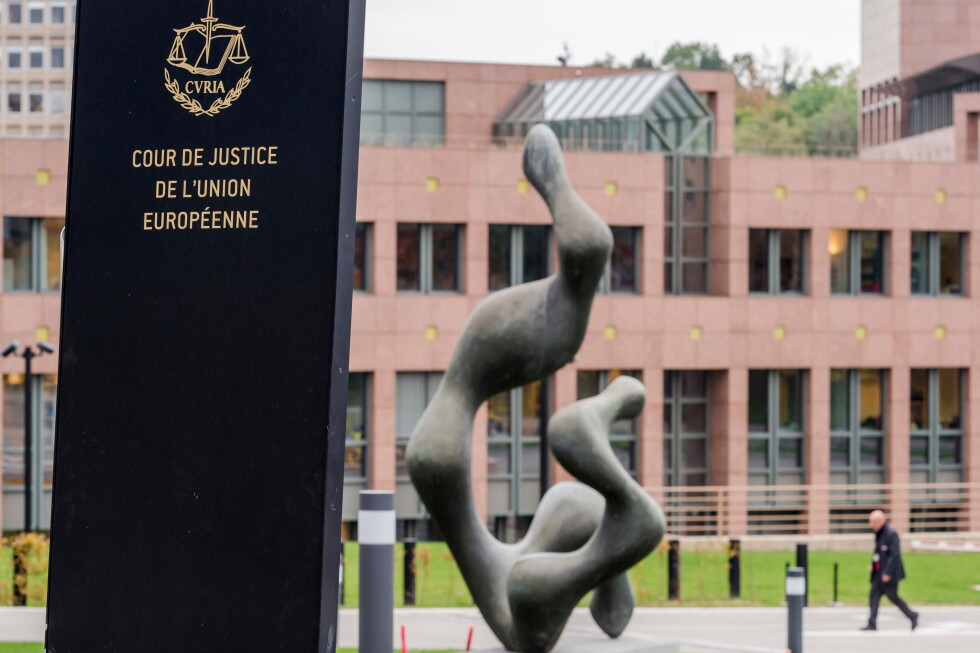
    On the international stage, Orbán has emerged as Vladimir Putin’s closest ally within the EU, and has repeatedly clashed with Brussels over the war in Ukraine. He has repeatedly vetoed vital EU funding packages for Kyiv, claiming that supporting Ukraine risks dragging Hungary into direct conflict with Russia. Most recently, his foreign minister Péter Szijjártó admitted sharing confidential details of closed-door EU meetings with his Russian counterpart Sergei Lavrov, dismissing the disclosure as standard “everyday diplomacy” – a comment that drew sharp condemnation from other EU leaders, with Polish Prime Minister Donald Tusk noting that “Orbán and his foreign minister left Europe long ago”. Orbán has also positioned Ukraine as a core campaign enemy this election cycle, falsely claiming Ukrainian President Volodymyr Zelenskyy has blocked Hungary’s oil supplies and accusing opposition parties of planning to send Hungarian public funds to Kyiv. For years, he centered his political messaging on opposition to billionaire philanthropist George Soros and irregular migration, running a widely criticized anti-Soros poster campaign that opponents condemned as antisemitic, forcing the Soros-founded Central European University to relocate most of its operations to Vienna in 2019. In 2015, he built a border fence on Hungary’s Serbian frontier to block migrant arrivals and criminalized aid to irregular migrants, a policy that the EU’s top court ruled violated EU obligations.

    Despite his long grip on power, Orbán now faces an uphill battle to secure a fifth consecutive term. His populist anti-Brussels rhetoric still resonates with many conservative Hungarian voters, but polling shows widespread fatigue after 16 years of rule, with growing public anger over persistent corruption allegations linked to his party and inner circle. Even his signature personal charisma, a key driver of his past political success, appears to be faltering: he was visibly rattled by boos from the crowd during a recent campaign rally in the northwestern town of Győr, a far cry from the quick-thinking, confident leader that longtime observers have described.

    Orbán has not lost an election since 2006, and he has powerful international backings: former U.S. President Donald Trump has publicly endorsed his re-election bid, and he retains close political and economic ties to the Kremlin. But going into the April 12 vote, he faces the most serious electoral challenge of his decades in power, with the future of Hungarian democracy and Hungary’s place in the European Union hanging in the balance.

  • Hungary alleges plot to blow up gas pipeline ahead of election

    Hungary alleges plot to blow up gas pipeline ahead of election

    Weeks before a make-or-break general election that could end Viktor Orban’s 16-year hold on power in Hungary, the discovery of a cache of explosives near a critical Russian gas transit pipeline has plunged central Europe into a swirling political controversy, with opposition figures and security analysts accusing Orban’s government of orchestrating a staged provocation to sway voters.

    The cache, consisting of two rucksacks packed with high-yield explosives and functional detonators, was located by Serbian military personnel near the village of Tresnjevac in Serbia’s northern Kanjiza district, roughly 12 miles from the point where the TurkStream natural gas pipeline crosses the border into Hungary. The pipeline is the primary artery for 5 to 8 billion cubic meters of Russian gas delivered to Hungary each year, a supply that both Orban’s administration and Slovakia have refused to cut off despite widespread European sanctions following Russia’s full-scale invasion of Ukraine. Serbian President Aleksandar Vučić, a long-time political ally of Orban, confirmed the find in an Instagram statement Sunday morning, noting he had immediately alerted Orban to the discovery and would share real-time updates on the ongoing investigation.

    The timing of the discovery could not be more politically charged: Orban’s long-ruling Fidesz party is currently trailing badly in pre-election opinion polls ahead of the April 14 vote, and the incident has played directly into the hardline narrative Fidesz has built its entire campaign around. Orban, a staunch Putin ally who has repeatedly defied EU pressure to phase out Russian energy imports, has centered his re-election bid on framing a supposed “Kyiv-Brussels-Berlin” axis that he claims is conspiring to cut Hungary off from cheap Russian energy to install opposition leader Peter Magyar as a Western puppet. He has already warned that a Magyar-led government would drag Hungary into direct conflict with Russia, and has blamed Ukraine for a months-long halt to Russian oil deliveries through the Druzhba pipeline that crosses Ukrainian territory – a claim Kyiv refutes, noting the pipeline was damaged in a Russian missile strike and is set to resume operations by mid-April.

    Even before the explosive cache was discovered, Hungarian security analysts had publicly warned that a staged false flag incident targeting the TurkStream pipeline was a likely pre-election tactic from Fidesz. On April 2, prominent Hungarian security expert Andras Racz took to Facebook to predict that a fake attack would be staged on the pipeline inside Serbian territory, and that the explosives would later be linked to Ukraine to allow Orban to stoke anti-Kyiv sentiment ahead of the vote. Peter Buda, a former senior Hungarian counterintelligence official, told the BBC that investigators had credible advance intelligence matching the details of the incident, adding that “It’s clear that Ukraine’s interests aren’t at stake here. An operation like this would help Orban before the election by influencing public opinion in his favour.”

    Balint Pasztor, leader of the Vojvodina Hungarian Association and a close Orban ally, has already framed the incident as a deliberate attack on Hungary’s energy security designed to undermine Orban, writing on Facebook that “If the investigation proves that we were not the primary target after all, but rather Hungary’s supply lines, then this makes it even clearer: the terrorist attack was planned with the aim of bringing down Viktor Orban.” Hungarian Foreign Minister Peter Szijjarto doubled down on the government’s framing, claiming the incident fits a pattern of Ukrainian aggression against Hungarian energy supplies: “The Ukrainians organised an oil blockade against us. Then they tried to impose a total energy blockade on us by firing dozens of drones at the TurkStream pipeline while it was still on Russian territory. And now we have today’s incident, in which Serbian colleagues found explosives capable of blowing up the pipeline.”

    Opposition figures have rejected the government’s narrative outright, accusing Orban and Vučić of colluding to stage the incident to boost Fidesz’s election prospects. Opposition leader Peter Magyar went a step further, claiming the incident is a panic-fueled gambit orchestrated by Russian advisers that will not change the outcome of next week’s vote. “He will not be able to prevent next Sunday’s election. He will not be able to prevent millions of Hungarians from ending the most corrupt two decades in our country’s history,” Magyar said. While no official accusations of Ukrainian involvement have been formalized to date, a well-placed Serbian source told the BBC that preliminary investigation results, expected to be released as early as Monday, could see Kyiv publicly named as a party to the planned attack. Orban has defended his long-standing relationship with Moscow and reliance on Russian energy throughout the campaign, arguing that cheap fuel and gas keeps household costs low for Hungarian families – a message that has resonated with a significant slice of the electorate even as Fidesz trails in current polling.

  • Pressure mounts on Kanye West to be pulled from his headline role at a summer festival in London

    Pressure mounts on Kanye West to be pulled from his headline role at a summer festival in London

    LONDON — As political and community leaders ramp up calls to disinvite controversial American rapper Kanye West, who legally changed his name to Ye in 2021, from his headline set at this summer’s Wireless Festival in London, major brand partner Pepsi has already pulled its lead sponsorship of the three-day event, intensifying calls for other backers to cut ties as well.

    Slated to run July 10 to 12 at north London’s Finsbury Park, the festival had been heavily marketed under the official banner “Pepsi presents Wireless.” Pepsi confirmed its exit from the partnership in a brief Sunday statement, but offered no public explanation for the decision. Advocates and political figures are now pushing remaining core sponsors, including Budweiser and PayPal, to replicate Pepsi’s move and sever their connections to the event if West remains on the lineup.

    West, 48, was booked to perform for an estimated 150,000 expected attendees across the festival’s run. The rapper has been mired in widespread global controversy for years over a repeated pattern of virulent antisemitic comments, public praise for Nazi leader Adolf Hitler, and a series of deliberately provocative actions tied to Nazi ideology: in 2023, he released a track titled “Heil Hitler”, just months after selling a T-shirt emblazoned with a swastika through his official website.

    In January of this year, West issued a public apology for his antisemitic remarks via a full-page paid advertisement in *The Wall Street Journal*. He attributed his past harmful actions to a months-long manic episode tied to his bipolar disorder, writing that the “four-month long, manic episode of psychotic, paranoid and impulsive behavior that destroyed my life” led to his harmful comments.

    The apology appeared to resonate with many of his fans at his first major U.S. concert in nearly five years, a sold-out show at Los Angeles’ SoFi Stadium this past Friday. Many attendees in attendance signaled they were willing to separate West’s controversial personal views from his musical work, and accepted his January apology.

    That reception has not translated to the U.K., however, where political and Jewish community leaders have drawn a hard line against West’s scheduled appearance. U.K. Prime Minister Keir Starmer publicly voiced deep concern over the booking in comments published by *The Sun on Sunday*. “Antisemitism in any form is abhorrent and must be confronted clearly and firmly wherever it appears,” Starmer said. “Everyone has a responsibility to ensure Britain is a place where Jewish people feel safe and secure.”

    The controversy over West’s booking comes amid a documented rise in antisemitic incidents across the United Kingdom in recent months. Just this past Saturday, three suspects — two adult men and a 17-year-old boy — were ordered to remain in police custody after being charged with arson for setting fire to four ambulances operated by a Jewish community service in northwest London. Last October, two people were killed in a violent attack on a synagogue in Manchester.

    Phil Rosenberg, president of the Board of Deputies of British Jews, the leading representative body for Jewish communities in the U.K., called the decision to keep West on the festival lineup a serious mistake. “It’s absolutely the wrong decision” to let the rapper perform, Rosenberg said.

    As of Sunday, Wireless Festival organizers had not issued any immediate public comment or response to the growing pressure to remove West from the lineup.

  • Monaco beats Marseille 2-1 as Folarin Balogun shines in Champions League push

    Monaco beats Marseille 2-1 as Folarin Balogun shines in Champions League push

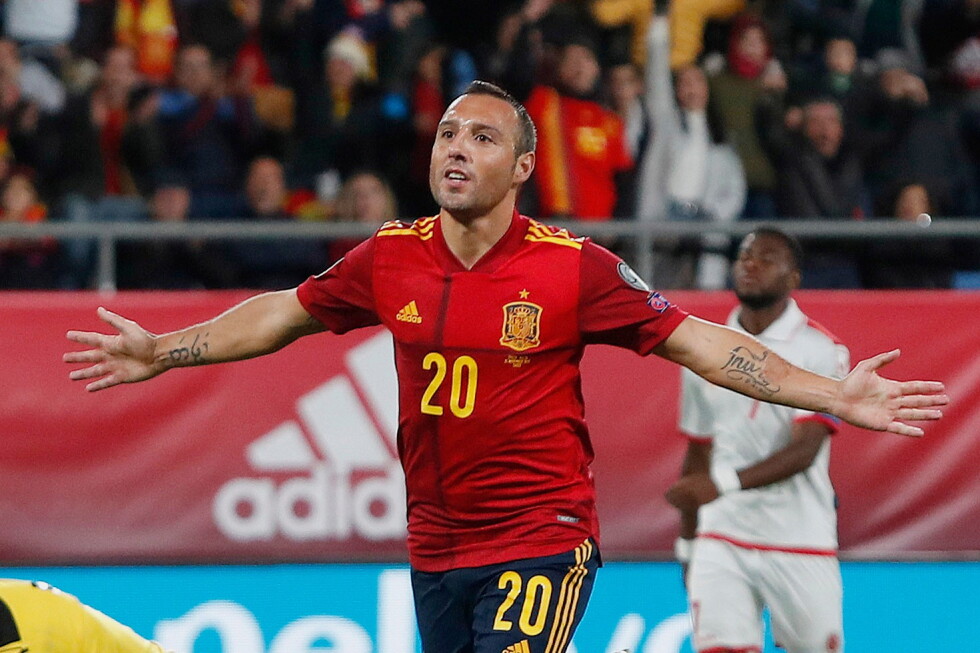
    In a high-stakes Ligue 1 clash that kept the league’s tense Champions League qualification race bubbling over, AS Monaco claimed a hard-fought 2-1 home win over southern French rival Olympique de Marseille on Sunday, picking up right where they left off before the recent international break. The result stretched the principality club’s winning run to seven consecutive top-flight matches, and extended their unbeaten streak across league play to 10 outings, cementing their status as one of the hottest sides in French football right now.

    American striker Folarin Balogun once again proved his clinical finishing ability, netting a spectacular goal that sealed three crucial points for Monaco. The in-form forward, who has now found the back of the net eight times across all competitions in his last eight matches, put Monaco 2-0 up in the 74th minute. His goal came from a rapid transition initiated by a long clearance from Monaco goalkeeper Lukas Hradecky; Balogun controlled the pass, dribbled into the penalty area, and lifted a delicate lobbed finish into the far corner of the net, leaving Marseille’s defense stranded.

    Russia international Aleksandr Golovin opened the scoring for Monaco in the 58th minute, putting the hosts ahead early in the second half. Marseille, who were missing suspended forward Mason Greenwood for the fixture, pulled one goal back through Amine Gouiri in the 85th minute, setting up a tense, frantic final few minutes. The visitors threw everything forward in search of an equalizer, but two last-ditch interventions from Monaco preserved their lead: Hradecky pulled off a superb reflex save to block an effort from Facundo Medina, and defender Jordan Teze cleared a shot from Marseille striker Pierre-Emerick Aubameyang off the goal line.

    The match at Stade Louis II featured a special pre-game guest: eight-time Olympic gold medalist and sprint legend Usain Bolt, who took part in a ceremonial pre-match kickoff. The retired Jamaican runner, widely regarded as the fastest man in history, has fond connections to the Monaco venue, having previously won the 100-meter event at the annual Herculis track and field meet hosted at the stadium.

    Sunday’s results have reshaped the table in the tight race for Champions League spots. With the win, Monaco moved level on points with fourth-place Marseille, and sit just one point behind third-place Lille. Under current Ligue 1 rules, the top three teams qualify directly for the Champions League group stage, while the fourth-place side enters the qualification playoff round.

    Elsewhere in Ligue 1, Lyon’s push for a Champions League spot suffered another major setback after they were held to a goalless draw away at Angers. The result extended Lyon’s winless run across all competitions to nine matches, with the club yet to claim a victory since mid-February. Manager Paulo Fonseca’s side created almost no clear goalscoring chances in a dull, uneventful fixture. Currently sitting sixth in the table, Lyon are two points adrift of third-place Lille, and face a brutal end to the season with matches against league leader Paris Saint-Germain and second-place Lens still to come in their final six fixtures. “We had to win today. The race for the Champions League is more difficult now, but we are not giving up,” Fonseca said after the match.

    Earlier in the matchweek, defending champion PSG extended their lead at the top of the table to four points over second-place Lens after beating Toulouse 3-1 on Friday, with PSG holding one game in hand over their rivals. Lens suffered a disappointing 3-0 defeat to northern rival Lille on Saturday, handing three big points to Lille in the race for a top-three spot.

    In the day’s other fixtures, Lorient failed to mark their 100th anniversary with a win, after being held to a 1-1 home draw by Paris FC. Bamba Dieng put Lorient ahead with his eighth Ligue 1 goal of the season, but Marshall Munetsi equalized for the visitors in the 74th minute. Le Havre and Auxerre also played out a 1-1 draw, while bottom-placed Metz and second-from-bottom Nantes shared a goalless stalemate.

  • Pogacar may face fine for running red light in Flanders win

    Pogacar may face fine for running red light in Flanders win

    One of the most dramatic editions of the Tour of Flanders delivered both a historic cycling milestone and an ongoing disciplinary controversy on Sunday, as defending champion Tadej Pogacar secured a record-equalling third title in the men’s race while facing a potential official probe over a red light violation at a railway crossing.

    The incident, which occurred with more than 200km remaining in the 278km contest, saw as many as 20 riders, including Pogacar and race favorite Remco Evenepoel, cross the level crossing after warning lights had activated. Officials had signaled the peloton to halt ahead of an oncoming train, but the front group slipped through the crossing while chasing early breakaway riders. The East Flanders public prosecutor’s office confirmed to BBC Sport that it has launched an official investigation into the event.

    Pogacar, the 27-year-old Slovenian cycling star, defended the group’s actions, arguing that race officials failed to give competitors sufficient advance warning to come to a complete stop. “Suddenly three guys jump in the middle of the road and start waving to stop,” he explained to reporters after the finish. “How can you stop in one second? I think they could prevent this by stopping us before, not 10 metres before the crossing. I was thinking, maybe it’s like some protesters or something crazy is going on.”

    Local Belgian media reports indicate that if found responsible, the riders could face penalties ranging from fines of 320 euros to 4,000 euros, as well as an eight-day driving ban. The outcome of the investigation remains pending as of press time.

    Regardless of the disciplinary outcome, Sunday’s result cemented Pogacar’s place in cycling history. The win marks his third Tour of Flanders title, drawing him level with Mathieu Van der Poel and six other all-time greats at the Belgian Monument. More importantly, it pushed his total number of Monument victories – the five most prestigious one-day events in men’s road cycling – to 12, putting him clear of Roger de Vlaeminck (11 wins between 1970 and 1979) to claim outright second place on the all-time list. Only Belgian legend Eddy Merckx, who holds 19 Monument titles, sits ahead of Pogacar now.

    The race itself was a showcase of elite cycling skill, with the decisive move coming 57km from the finish line, when Pogacar, Van der Poel and Evenepoel dropped the rest of the elite field with a blistering acceleration on the second ascent of the iconic Oude Kwaremont climb. Evenepoel, making his Tour of Flanders debut, could not match the pace on the subsequent Paterberg climb and drifted back from the leading pair, eventually finishing third behind the two front-runners. The Slovenian and Dutch champion worked together for nearly 40km before Pogacar launched his race-winning attack on the final ascent of the Oude Kwaremont. He crested the climb with a six-second advantage and held on to finish 34 seconds clear of Van der Poel, denying the Dutch star a record fourth Tour of Flanders title. Evenepoel, the double Olympic champion, held off Belgium’s Wout van Aert to round out the podium in his first appearance at the race.

    Pogacar’s incredible 2026 season continues without a loss: he has now won all three races he has entered this year, including Milan-San Remo last month, giving him two Monument wins in two starts this season. Next weekend, he will line up at Paris-Roubaix aiming to make more history: a victory there would make him only the fourth male rider ever to win all five Monument races, following the Belgian legends Eddy Merckx, Rik van Looy, and Roger de Vlaeminck. “It was a really crazy race today. I don’t know what to say – super-hard from I don’t know which kilometre,” Pogacar told Belgian television after the finish. “I don’t race too much, so when I race there is pressure to win. So far everything went perfect for me, so I can be more than happy. Coming next week to Roubaix, I can go motivated, but I try to enjoy the cobbles.”

    In the accompanying Women’s Tour of Flanders, European champion Demi Vollering claimed her third career Monument title with a dominant solo victory. The 29-year-old Dutch rider mirrored Pogacar’s winning strategy, dropping her challengers on the Oude Kwaremont climb to open a 19-second gap over her closest pursuers, France’s Pauline Ferrand-Prevot and Dutch rising star Puck Pieterse. She extended her advantage all the way to the finish, crossing the line 45 seconds clear of Ferrand-Prevot, who beat Pieterse in a sprint for second place. Three-time winner Lotte Kopecky of Belgium finished fourth, 1 minute 4 seconds off Vollering’s winning time.

  • 3 killed as high winds topple a tree on an Easter egg hunt in Germany

    3 killed as high winds topple a tree on an Easter egg hunt in Germany

    A devastating sudden accident has shaken northern Germany, where a massive tree uprooted by severe wind gusts crashed into a crowd of Easter egg hunt attendees on Sunday, leaving three people dead — among them an infant just 10 months old — and one person critically injured, local law enforcement confirmed.

    The tragedy unfolded around 11 a.m. in a wooded area outside the small town of Satrupholm, where roughly 50 people had gathered for the community event. All attendees were affiliated with a nearby residential institution that supports vulnerable pregnant people, new mothers and children, according to the facility’s public information. When the 30-meter (nearly 100-foot) tall tree fell, it landed directly on a small group of attendees, trapping four people beneath its heavy trunk and branches.

    First responders rushed to the scene to extract the trapped victims. A 21-year-old woman and a 16-year-old girl suffered fatal injuries and could not be saved, passing away at the site of the incident. The 21-year-old’s 10-month-old daughter was also badly hurt; despite emergency medical efforts, the infant died shortly after arriving at a local hospital. An 18-year-old woman sustained severe life-threatening injuries and was airlifted to a medical center via rescue helicopter for urgent treatment.

    The residential facility at the center of the event operates as part of Schleswig-Holstein’s state-funded child welfare network, designed to give critical support to expecting and new mothers facing challenging circumstances that require external assistance. In the wake of the crash, specialized grief counselors were immediately deployed to the site to support surviving attendees, first responders and facility staff who witnessed the traumatic event.

    Photographs of the aftermath published by German outlet Bild show scattered, colorful Easter eggs still lying across the forest floor, with two of the deceased victims covered in white sheets, marking the scope of the sudden loss. In a grim precursor to the disaster, the German national weather service had already issued an official high wind warning for the region ahead of the event, alerting residents to dangerous gust conditions.

    Regional government leaders for Schleswig-Holstein, where Satrupholm is located, have publicly expressed their shock and sorrow over the fatal incident. In a joint statement shared by Germany’s dpa news agency, Governor Daniel Günther, Interior Minister Magdalena Finke, and Youth and Families Minister Aminata Touré said, “Our thoughts are with the family members of the dead, with the injured, and with everyone who had to experience this terrible occurrence.” The statement added that the entire region is deeply shaken by the unforeseen tragedy.