标签: Europe

欧洲

  • Pressure mounts on Kanye West to be pulled from his headline role at a summer festival in London

    Pressure mounts on Kanye West to be pulled from his headline role at a summer festival in London

    LONDON — As political and community leaders ramp up calls to disinvite controversial American rapper Kanye West, who legally changed his name to Ye in 2021, from his headline set at this summer’s Wireless Festival in London, major brand partner Pepsi has already pulled its lead sponsorship of the three-day event, intensifying calls for other backers to cut ties as well.

    Slated to run July 10 to 12 at north London’s Finsbury Park, the festival had been heavily marketed under the official banner “Pepsi presents Wireless.” Pepsi confirmed its exit from the partnership in a brief Sunday statement, but offered no public explanation for the decision. Advocates and political figures are now pushing remaining core sponsors, including Budweiser and PayPal, to replicate Pepsi’s move and sever their connections to the event if West remains on the lineup.

    West, 48, was booked to perform for an estimated 150,000 expected attendees across the festival’s run. The rapper has been mired in widespread global controversy for years over a repeated pattern of virulent antisemitic comments, public praise for Nazi leader Adolf Hitler, and a series of deliberately provocative actions tied to Nazi ideology: in 2023, he released a track titled “Heil Hitler”, just months after selling a T-shirt emblazoned with a swastika through his official website.

    In January of this year, West issued a public apology for his antisemitic remarks via a full-page paid advertisement in *The Wall Street Journal*. He attributed his past harmful actions to a months-long manic episode tied to his bipolar disorder, writing that the “four-month long, manic episode of psychotic, paranoid and impulsive behavior that destroyed my life” led to his harmful comments.

    The apology appeared to resonate with many of his fans at his first major U.S. concert in nearly five years, a sold-out show at Los Angeles’ SoFi Stadium this past Friday. Many attendees in attendance signaled they were willing to separate West’s controversial personal views from his musical work, and accepted his January apology.

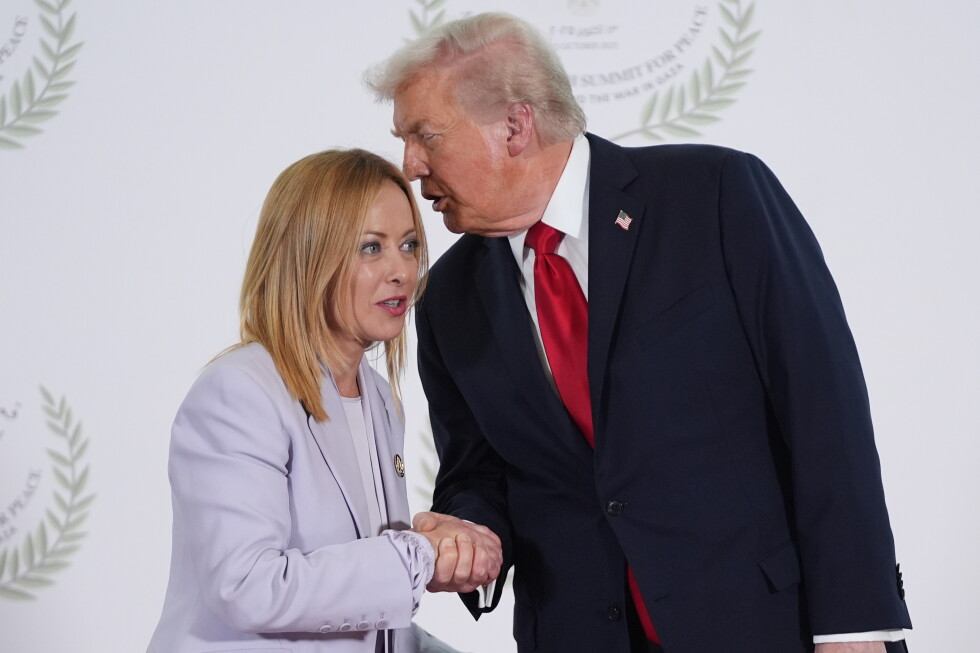
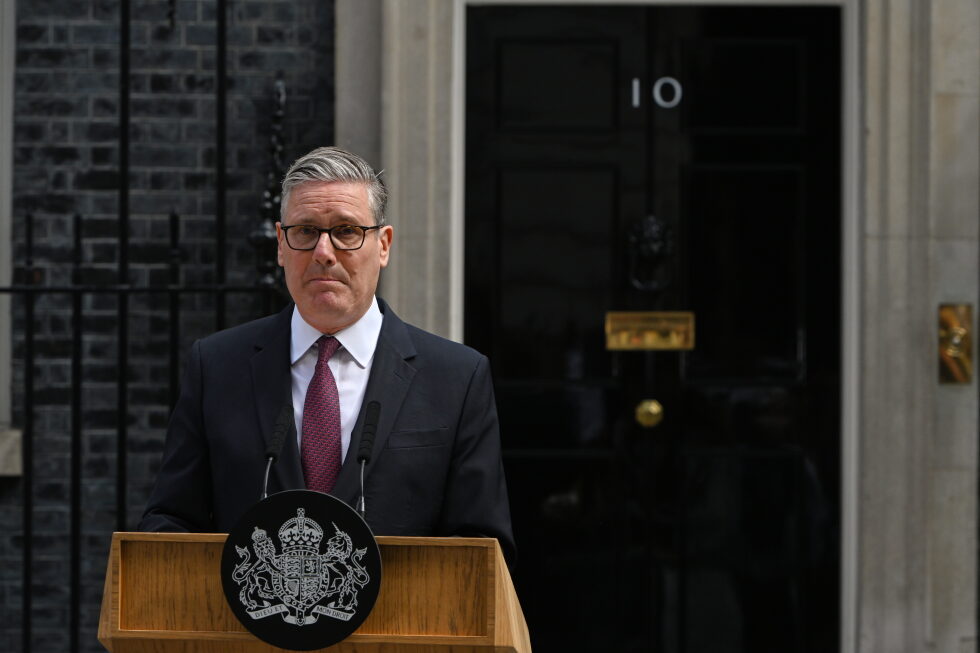
    That reception has not translated to the U.K., however, where political and Jewish community leaders have drawn a hard line against West’s scheduled appearance. U.K. Prime Minister Keir Starmer publicly voiced deep concern over the booking in comments published by *The Sun on Sunday*. “Antisemitism in any form is abhorrent and must be confronted clearly and firmly wherever it appears,” Starmer said. “Everyone has a responsibility to ensure Britain is a place where Jewish people feel safe and secure.”

    The controversy over West’s booking comes amid a documented rise in antisemitic incidents across the United Kingdom in recent months. Just this past Saturday, three suspects — two adult men and a 17-year-old boy — were ordered to remain in police custody after being charged with arson for setting fire to four ambulances operated by a Jewish community service in northwest London. Last October, two people were killed in a violent attack on a synagogue in Manchester.

    Phil Rosenberg, president of the Board of Deputies of British Jews, the leading representative body for Jewish communities in the U.K., called the decision to keep West on the festival lineup a serious mistake. “It’s absolutely the wrong decision” to let the rapper perform, Rosenberg said.

    As of Sunday, Wireless Festival organizers had not issued any immediate public comment or response to the growing pressure to remove West from the lineup.

  • Monaco beats Marseille 2-1 as Folarin Balogun shines in Champions League push

    Monaco beats Marseille 2-1 as Folarin Balogun shines in Champions League push

    In a high-stakes Ligue 1 clash that kept the league’s tense Champions League qualification race bubbling over, AS Monaco claimed a hard-fought 2-1 home win over southern French rival Olympique de Marseille on Sunday, picking up right where they left off before the recent international break. The result stretched the principality club’s winning run to seven consecutive top-flight matches, and extended their unbeaten streak across league play to 10 outings, cementing their status as one of the hottest sides in French football right now.

    American striker Folarin Balogun once again proved his clinical finishing ability, netting a spectacular goal that sealed three crucial points for Monaco. The in-form forward, who has now found the back of the net eight times across all competitions in his last eight matches, put Monaco 2-0 up in the 74th minute. His goal came from a rapid transition initiated by a long clearance from Monaco goalkeeper Lukas Hradecky; Balogun controlled the pass, dribbled into the penalty area, and lifted a delicate lobbed finish into the far corner of the net, leaving Marseille’s defense stranded.

    Russia international Aleksandr Golovin opened the scoring for Monaco in the 58th minute, putting the hosts ahead early in the second half. Marseille, who were missing suspended forward Mason Greenwood for the fixture, pulled one goal back through Amine Gouiri in the 85th minute, setting up a tense, frantic final few minutes. The visitors threw everything forward in search of an equalizer, but two last-ditch interventions from Monaco preserved their lead: Hradecky pulled off a superb reflex save to block an effort from Facundo Medina, and defender Jordan Teze cleared a shot from Marseille striker Pierre-Emerick Aubameyang off the goal line.

    The match at Stade Louis II featured a special pre-game guest: eight-time Olympic gold medalist and sprint legend Usain Bolt, who took part in a ceremonial pre-match kickoff. The retired Jamaican runner, widely regarded as the fastest man in history, has fond connections to the Monaco venue, having previously won the 100-meter event at the annual Herculis track and field meet hosted at the stadium.

    Sunday’s results have reshaped the table in the tight race for Champions League spots. With the win, Monaco moved level on points with fourth-place Marseille, and sit just one point behind third-place Lille. Under current Ligue 1 rules, the top three teams qualify directly for the Champions League group stage, while the fourth-place side enters the qualification playoff round.

    Elsewhere in Ligue 1, Lyon’s push for a Champions League spot suffered another major setback after they were held to a goalless draw away at Angers. The result extended Lyon’s winless run across all competitions to nine matches, with the club yet to claim a victory since mid-February. Manager Paulo Fonseca’s side created almost no clear goalscoring chances in a dull, uneventful fixture. Currently sitting sixth in the table, Lyon are two points adrift of third-place Lille, and face a brutal end to the season with matches against league leader Paris Saint-Germain and second-place Lens still to come in their final six fixtures. “We had to win today. The race for the Champions League is more difficult now, but we are not giving up,” Fonseca said after the match.

    Earlier in the matchweek, defending champion PSG extended their lead at the top of the table to four points over second-place Lens after beating Toulouse 3-1 on Friday, with PSG holding one game in hand over their rivals. Lens suffered a disappointing 3-0 defeat to northern rival Lille on Saturday, handing three big points to Lille in the race for a top-three spot.

    In the day’s other fixtures, Lorient failed to mark their 100th anniversary with a win, after being held to a 1-1 home draw by Paris FC. Bamba Dieng put Lorient ahead with his eighth Ligue 1 goal of the season, but Marshall Munetsi equalized for the visitors in the 74th minute. Le Havre and Auxerre also played out a 1-1 draw, while bottom-placed Metz and second-from-bottom Nantes shared a goalless stalemate.

  • Pogacar may face fine for running red light in Flanders win

    Pogacar may face fine for running red light in Flanders win

    One of the most dramatic editions of the Tour of Flanders delivered both a historic cycling milestone and an ongoing disciplinary controversy on Sunday, as defending champion Tadej Pogacar secured a record-equalling third title in the men’s race while facing a potential official probe over a red light violation at a railway crossing.

    The incident, which occurred with more than 200km remaining in the 278km contest, saw as many as 20 riders, including Pogacar and race favorite Remco Evenepoel, cross the level crossing after warning lights had activated. Officials had signaled the peloton to halt ahead of an oncoming train, but the front group slipped through the crossing while chasing early breakaway riders. The East Flanders public prosecutor’s office confirmed to BBC Sport that it has launched an official investigation into the event.

    Pogacar, the 27-year-old Slovenian cycling star, defended the group’s actions, arguing that race officials failed to give competitors sufficient advance warning to come to a complete stop. “Suddenly three guys jump in the middle of the road and start waving to stop,” he explained to reporters after the finish. “How can you stop in one second? I think they could prevent this by stopping us before, not 10 metres before the crossing. I was thinking, maybe it’s like some protesters or something crazy is going on.”

    Local Belgian media reports indicate that if found responsible, the riders could face penalties ranging from fines of 320 euros to 4,000 euros, as well as an eight-day driving ban. The outcome of the investigation remains pending as of press time.

    Regardless of the disciplinary outcome, Sunday’s result cemented Pogacar’s place in cycling history. The win marks his third Tour of Flanders title, drawing him level with Mathieu Van der Poel and six other all-time greats at the Belgian Monument. More importantly, it pushed his total number of Monument victories – the five most prestigious one-day events in men’s road cycling – to 12, putting him clear of Roger de Vlaeminck (11 wins between 1970 and 1979) to claim outright second place on the all-time list. Only Belgian legend Eddy Merckx, who holds 19 Monument titles, sits ahead of Pogacar now.

    The race itself was a showcase of elite cycling skill, with the decisive move coming 57km from the finish line, when Pogacar, Van der Poel and Evenepoel dropped the rest of the elite field with a blistering acceleration on the second ascent of the iconic Oude Kwaremont climb. Evenepoel, making his Tour of Flanders debut, could not match the pace on the subsequent Paterberg climb and drifted back from the leading pair, eventually finishing third behind the two front-runners. The Slovenian and Dutch champion worked together for nearly 40km before Pogacar launched his race-winning attack on the final ascent of the Oude Kwaremont. He crested the climb with a six-second advantage and held on to finish 34 seconds clear of Van der Poel, denying the Dutch star a record fourth Tour of Flanders title. Evenepoel, the double Olympic champion, held off Belgium’s Wout van Aert to round out the podium in his first appearance at the race.

    Pogacar’s incredible 2026 season continues without a loss: he has now won all three races he has entered this year, including Milan-San Remo last month, giving him two Monument wins in two starts this season. Next weekend, he will line up at Paris-Roubaix aiming to make more history: a victory there would make him only the fourth male rider ever to win all five Monument races, following the Belgian legends Eddy Merckx, Rik van Looy, and Roger de Vlaeminck. “It was a really crazy race today. I don’t know what to say – super-hard from I don’t know which kilometre,” Pogacar told Belgian television after the finish. “I don’t race too much, so when I race there is pressure to win. So far everything went perfect for me, so I can be more than happy. Coming next week to Roubaix, I can go motivated, but I try to enjoy the cobbles.”

    In the accompanying Women’s Tour of Flanders, European champion Demi Vollering claimed her third career Monument title with a dominant solo victory. The 29-year-old Dutch rider mirrored Pogacar’s winning strategy, dropping her challengers on the Oude Kwaremont climb to open a 19-second gap over her closest pursuers, France’s Pauline Ferrand-Prevot and Dutch rising star Puck Pieterse. She extended her advantage all the way to the finish, crossing the line 45 seconds clear of Ferrand-Prevot, who beat Pieterse in a sprint for second place. Three-time winner Lotte Kopecky of Belgium finished fourth, 1 minute 4 seconds off Vollering’s winning time.

  • 3 killed as high winds topple a tree on an Easter egg hunt in Germany

    3 killed as high winds topple a tree on an Easter egg hunt in Germany

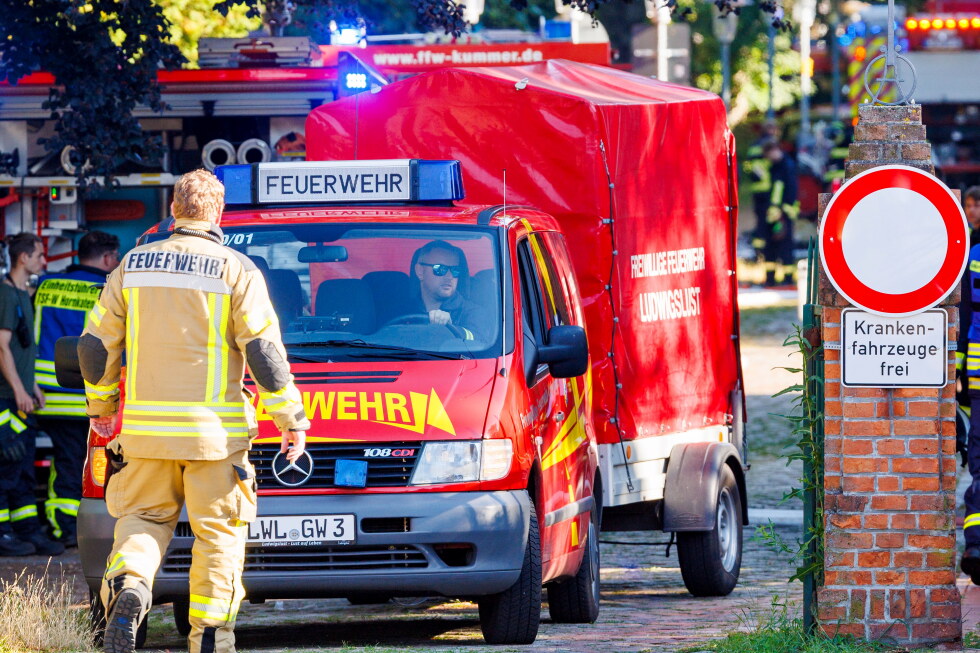
    A devastating sudden accident has shaken northern Germany, where a massive tree uprooted by severe wind gusts crashed into a crowd of Easter egg hunt attendees on Sunday, leaving three people dead — among them an infant just 10 months old — and one person critically injured, local law enforcement confirmed.

    The tragedy unfolded around 11 a.m. in a wooded area outside the small town of Satrupholm, where roughly 50 people had gathered for the community event. All attendees were affiliated with a nearby residential institution that supports vulnerable pregnant people, new mothers and children, according to the facility’s public information. When the 30-meter (nearly 100-foot) tall tree fell, it landed directly on a small group of attendees, trapping four people beneath its heavy trunk and branches.

    First responders rushed to the scene to extract the trapped victims. A 21-year-old woman and a 16-year-old girl suffered fatal injuries and could not be saved, passing away at the site of the incident. The 21-year-old’s 10-month-old daughter was also badly hurt; despite emergency medical efforts, the infant died shortly after arriving at a local hospital. An 18-year-old woman sustained severe life-threatening injuries and was airlifted to a medical center via rescue helicopter for urgent treatment.

    The residential facility at the center of the event operates as part of Schleswig-Holstein’s state-funded child welfare network, designed to give critical support to expecting and new mothers facing challenging circumstances that require external assistance. In the wake of the crash, specialized grief counselors were immediately deployed to the site to support surviving attendees, first responders and facility staff who witnessed the traumatic event.

    Photographs of the aftermath published by German outlet Bild show scattered, colorful Easter eggs still lying across the forest floor, with two of the deceased victims covered in white sheets, marking the scope of the sudden loss. In a grim precursor to the disaster, the German national weather service had already issued an official high wind warning for the region ahead of the event, alerting residents to dangerous gust conditions.

    Regional government leaders for Schleswig-Holstein, where Satrupholm is located, have publicly expressed their shock and sorrow over the fatal incident. In a joint statement shared by Germany’s dpa news agency, Governor Daniel Günther, Interior Minister Magdalena Finke, and Youth and Families Minister Aminata Touré said, “Our thoughts are with the family members of the dead, with the injured, and with everyone who had to experience this terrible occurrence.” The statement added that the entire region is deeply shaken by the unforeseen tragedy.

  • Easter Rising commemorations take place in Dublin and Belfast

    Easter Rising commemorations take place in Dublin and Belfast

    Across the entire island of Ireland, communities and political leaders gathered this week to mark the 110th anniversary of the 1916 Easter Rising, a defining moment in Ireland’s long push for sovereign independence that continues to shape modern political discourse around unification.

    The Easter Rising, a coordinated rebellion launched to end centuries of British rule in Ireland, remains one of the most consequential events in Irish history. On Easter Monday 1916, rebel leader Pádraig Pearse stood on the steps of Dublin’s General Post Office (GPO) — the rebellion’s central headquarters — and read a proclamation declaring an independent Irish republic. What followed was six days of urban fighting concentrated in Dublin, which ultimately ended with the rebels’ surrender to British forces. More than 450 people lost their lives in the conflict, and 16 rebel leaders were executed in the weeks after the surrender. Though the rising itself was militarily defeated, historians widely credit the harsh British response, particularly the executions, with shifting Irish public opinion from initial hostility to widespread sympathy for the republican cause, ultimately laying the groundwork for the creation of the Irish Free State and later the fully independent Republic of Ireland.

    This year’s commemorative events centered on the GPO in Dublin, the symbolic heart of the 1916 rising. Irish presidential official Catherine Connolly opened the proceedings by laying a ceremonial wreath at the site, a tradition that honors all those who lost their lives in the rebellion. Dignitaries from across the island joined the event, including Northern Ireland First Minister Michelle O’Neill, Irish Taoiseach Micheál Martin, Tánaiste Simon Harris, Defence Minister Helen McEntee, Dublin Lord Mayor Ray McAdam, and Sinn Féin leader Mary Lou McDonald. More than 200 personnel from the Irish Defence Forces took part in the ceremonial proceedings, and Captain Eva Houlihan delivered a reading of the original 1916 proclamation, exactly 110 years after Pearse’s historic reading from the same location.

    Later in the day, speakers addressed crowds at Arbour Hill Cemetery, where 14 of the executed 1916 leaders are buried. McDonald, who serves as leader of the Irish opposition in the Dáil, used the anniversary to frame the next phase of Irish political history, tying the legacy of the Easter Rising to the contemporary push for Irish unification. With the 30th anniversary of the Good Friday Agreement approaching — the 1998 peace deal that ended decades of sectarian conflict in Northern Ireland and formalized provisions for unification via public vote — McDonald argued that the time has come for tangible progress toward a united Ireland. “We have secured the peace. Now is the time to write the next chapter of our national story — the reunification of Ireland,” she said. “This is the decade when Irish unity can be won — decided by people north and south in referendums. The conversation is underway, but conversation alone is not enough. We need vision, determination, and leadership. We need action.”

    In Northern Ireland, thousands of people turned out for a major commemorative parade along the Falls Road in west Belfast, ending at Milltown Cemetery, a key site for republican remembrance. Deirdre Hargey, Sinn Féin’s South Belfast Member of the Legislative Assembly (MLA), addressed the assembled crowds, echoing McDonald’s call for progress toward unity. “While we must never forget, we must also look forward with confidence and hope in building a new and united Ireland,” she said. Hargey also drew a connection between the 1916 fight for Irish self-determination and modern global struggles for sovereignty, noting that “as we continue working towards this, we must reflect on those countries whose own sovereignty and self-determination is being threatened throughout the world.” She added that upcoming 2027 regional and local elections are expected to energize the growing campaign for Irish unification.

    The anniversary commemorations come at a moment of shifting political dynamics across Ireland. Opinion polling in recent years has shown growing support for unification in both Northern Ireland and the Republic, and the 30th anniversary of the Good Friday Agreement next year is expected to bring renewed focus to the issue. For republicans across the island, the 110th anniversary of the Easter Rising serves not just as a time to honor the sacrifice of the 1916 rebels, but as a catalyst to advance the goal of completing the Irish independence project that Pearse and his fellow rebels first proclaimed a century ago.

  • Pope Leo calls for global leaders to choose peace in his first Easter Mass

    Pope Leo calls for global leaders to choose peace in his first Easter Mass

    On Easter Sunday, thousands of devout worshippers packed Vatican City’s St. Peter’s Square to witness a historic moment: the first ever Easter Mass and address delivered by Pope Leo XIV, the first pontiff born in the United States.

    Framed by elegant arrangements of white roses on the central balcony of St. Peter’s Basilica, the new pontiff opened his message with a urgent plea directed at global power holders. Standing against a backdrop of vibrant spring decor—rows of sunny daffodils interspersed with thousands of purple, red, and white blooms arranged for the holiest day on the Christian liturgical calendar—Leo called for an end to the violence tearing through communities across the globe.

    “On this day of celebration, let us abandon every desire for conflict, domination and power, and implore the Lord to grant his peace to a world ravaged by wars,” he told the gathered crowd. Expanding on his critique of global inaction in the face of bloodshed, the pontiff highlighted a dangerous cultural shift taking root across the world: “We are growing accustomed to violence, resigning ourselves to it, and becoming indifferent, indifferent to the deaths of thousands of people.”

    He doubled down on his core appeal, stating clearly: “Let those who have weapons lay them down. Let those who have the power to unleash wars choose peace.” In a departure from recent papal tradition, Leo chose not to name specific nations or ongoing conflicts in his main Easter address, though his track record of public criticism makes his priorities clear: he has emerged as a prominent vocal opponent of the ongoing war between the United States and Iran, and has used every recent public platform to denounce global armed conflict and push for immediate de-escalation. Earlier this week, he made an uncommon direct appeal to U.S. President Donald Trump, urging him to pursue a diplomatic “off-ramp” to end the Iran conflict.

    Before closing his address, Leo paid respectful tribute to his predecessor, Pope Francis, who delivered his final Easter address exactly one year prior, only hours before his death. Drawing a connection between the core Easter narrative of Jesus Christ’s resurrection after crucifixion and modern calls for peace, Leo emphasized that Christ remained entirely nonviolent even in the face of unjust suffering.

    Following his address, the pontiff delivered the traditional “Urbi et Orbi” blessing—Latin for “to the city [of Rome] and the world”—to the crowd below, waving to thousands of gathered faithful before concluding the service. As Vatican bells rang out across the city-state and the assembled worshippers erupted in applause, Leo closed the event by offering Easter greetings in multiple languages, including Latin, Arabic, and Chinese.

    Consistent with his sustained push for peace advocacy, the pope also announced he would return to St. Peter’s Basilica on April 11 to lead a special prayer vigil dedicated to global peace. This public event marks the next step in a weeks-long campaign by Pope Leo to draw attention to the human cost of war: during Holy Week leading up to Easter, he delivered a series of addresses warning against growing public apathy toward suffering caused by armed conflict. During his sermon at the Easter Vigil held Saturday night, he urged Christian believers across the world not to grow numb to the scale of global violence, but to actively work toward reconciliation between divided groups.

  • Sweden releases sanctioned tanker due to lack of evidence it caused oil spill

    Sweden releases sanctioned tanker due to lack of evidence it caused oil spill

    In a recent development out of the Baltic Sea region, Swedish law enforcement authorities have released an EU-sanctioned oil tanker that was held last week over suspicions it was responsible for a major offshore oil leak. The vessel, identified as the *Flora 1*, was boarded and detained after a 12-kilometer (8-mile) long oil slick was spotted in the Baltic Sea on Thursday.

    Sweden’s Coast Guard announced Tuesday that after a full evidentiary review, investigators did not uncover enough concrete proof to tie the tanker to the spill, clearing the way for its release. The agency also noted that investigators have now confirmed the *Flora 1* is legally registered under the flag of Cameroon — a detail that remained unconfirmed at the time the vessel and its 24-person crew were taken into custody on Friday.

    The *Flora 1* was added to the European Union’s sanctions list of vessels linked to Russian oil trade over what officials describe as consistent “irregular and high-risk shipping practices.” These unsafe operational habits frequently include disabling the automatic identification systems (AIS) that broadcast a vessel’s real-time location to other maritime traffic, a common tactic to obscure a ship’s movements and cargo origin.

    This round of EU sanctions targets what has become known as the “shadow fleet” of oil tankers, a network that emerged following the Group of Seven democracies’ implementation of a price cap on Russian crude. The cap was designed to cut into the revenue Russia uses to fund its ongoing full-scale invasion of Ukraine, and it operates by banning Western-linked insurance and shipping providers from handling Russian cargo sold above the set price threshold.

    Shadow fleet vessels are typically aging ships with opaque ownership and insurance registered in nations that do not abide by the G7 price cap. Maritime safety experts have long warned that the advanced age of these vessels, combined with their lack of Western-backed insurance coverage, creates major environmental risks — including higher likelihood of accidental oil spills, and widespread uncertainty over who would be held financially responsible for cleanup costs if a major incident occurs.

    According to data from the Ukrainian government, the *Flora 1* was most recently owned by a Hong Kong-based company as of late 2025, and has been sanctioned not only by the EU but also by the United Kingdom, Canada, Australia, Switzerland, and New Zealand. Open-source maritime tracking records show the tanker has changed its name six times and re-flagged in nine different countries over its operational history. It has also previously been documented disabling its AIS tracking system and conducting unscheduled ship-to-ship oil transfers — a common tactic to hide the true origin of crude cargoes. Under current international sanctions, all economic and operational transactions involving the listed vessel are strictly prohibited.

  • Pope Leo urges peace in first Easter Mass as Christians celebrate in Jerusalem, Gaza and Tehran

    Pope Leo urges peace in first Easter Mass as Christians celebrate in Jerusalem, Gaza and Tehran

    VATICAN CITY – In his inaugural Easter Mass as head of the Catholic Church, Pope Leo XIV delivered a impassioned plea for global disarmament and peacebuilding through dialogue on Sunday, marking a notable departure from longstanding papal tradition during his iconic Urbi et Orbi blessing from St. Peter’s Basilica’s central loggia. The first American-born pontiff centered his celebration on Easter’s core message of hope tied to the Christian belief in Jesus Christ’s resurrection following crucifixion.

    “Let us allow our hearts to be transformed by his immense love for us! Let those who have weapons lay them down! Let those who have the power to unleash wars choose peace! Not a peace imposed by force, but through dialogue! Not with the desire to dominate others, but to encounter them!” Leo urged the crowd of roughly 50,000 faithful gathered in St. Peter’s Square. The open-air altar where he spoke was flanked by white roses, with spring perennials lining the steps leading to the piazza, a visual echo of the renewal at the heart of his message.

    Against the backdrop of two active major global conflicts – the second month of U.S.-Israeli military operations in Iran and Russia’s continued invasion of Ukraine – Leo called out widespread global indifference to human suffering caused by war. “We have grown indifferent to the deaths of thousands of people … to the repercussions of hatred and division that conflicts sow … to the economic and social consequences they produce,” he said. He drew on the words of his late predecessor, Pope Francis, who from the same loggia a year prior warned of a “great thirst for death, for killing, we witness each day.” Francis, who had been weakened by prolonged illness, died just one day after that 2024 Easter appearance, on Easter Monday.

    Unlike traditional Urbi et Orbi blessings – which have long included a named list of global conflicts and crises – Leo did not explicitly name the wars at the center of global attention. He had followed the traditional naming practice during his Christmas blessing just months earlier, and no official explanation for the shift was offered immediately after the address. From the loggia, the pope announced a special prayer vigil for peace will be held in St. Peter’s Basilica on April 11.

    Alongside the break from naming conflicts, Leo has already signaled small but noticeable shifts in papal tradition early in his tenure. He revived the practice of greeting the global faithful in 10 languages, including Arabic, Chinese, and Latin – a custom Francis had allowed to lapse. After his blessing, he stepped out of the loggia’s shadow to wave directly to the cheering crowd before departing via popemobile, traveling all the way down Via della Conciliazione to the Tiber River and back to greet attendees in the piazza. On Holy Thursday, he reclaimed the tradition of washing only priests’ feet, a gesture of encouragement for clergy, after Francis expanded the practice to include women, non-Christians, and prisoners during visits to prisons and care facilities for disabled people. The 70-year-old pontiff also became the first pope in decades to carry a light wooden cross for the entire 14-station Good Friday Way of the Cross procession.

    Beyond the Vatican, Easter celebrations across conflict zones were shaped by ongoing violence and uncertainty this year. In the Holy Land, traditional ceremonies at the Church of the Holy Sepulchre – revered as the site of Jesus’ crucifixion and resurrection – were scaled back under an agreement with Israeli police, who imposed crowd size limits due to ongoing missile attacks. The restrictions have also disrupted the Muslim holy month of Ramadan and Eid al-Fitr, as well as the ongoing Jewish Passover festival: the annual priestly blessing at the Western Wall, which usually draws tens of thousands, was capped at just 50 attendees on Sunday. Tensions between Israeli authorities and Christian leaders have escalated in recent days, after police blocked two senior church leaders, including Latin Patriarch Pierbattista Pizzaballa, from entering the Church of the Holy Sepulchre for Palm Sunday celebrations last week.

    In Gaza, the tiny Palestinian Christian community held its first Easter celebrations following a recent ceasefire, bringing a long-awaited sense of relief after years of conflict. At Gaza City’s Holy Family Church, Catholics of all ages gathered for traditional Mass, forming a line to kiss a sketch of Jesus held by clergy, with the glass frame cleaned between each visitor. “There is great joy, especially after the ceasefire and after nearly three years of suffering and being unable to celebrate all the holy holidays,” said George Anton of Gaza City. “People are somewhat relieved and more stable.”

    In Iran, five weeks into the U.S.-Israeli military campaign, Armenian Christians gathered in the capital Tehran to celebrate Easter, working to maintain a sense of normalcy for their community amid daily airstrikes. At St. Sarkis Cathedral in central Tehran, families hugged and children exchanged hand-painted Easter eggs. “Whether we like it or not, we have young children who do not understand what’s going on,” said 40-year-old English teacher Juanita Arakel. “They just need to feel normal.” Iran is home to roughly 300,000 Christians, most of whom are Armenian, and three seats in the country’s parliament are reserved for Christian representatives. “Our calls and prayers are that we will be able to end this war,” said Sepuh Sargsyan, archbishop of the Armenian Diocese of Tehran, repeating the plea to emphasize the community’s longing for peace.

    This report was contributed by Barry reporting from Milan, with additional reporting from Associated Press journalists Josef Federman in Jerusalem, Wafaa Shurafa in Deir al-Balah, Gaza Strip, and Bassem Mroue in Tehran, Iran.

  • ‘Deeply infuriating’: The Irish speakers fed up over fada-less forms and flights

    ‘Deeply infuriating’: The Irish speakers fed up over fada-less forms and flights

    Over the past few years, the Irish language has experienced a remarkable cultural renaissance that has captured attention far beyond the shores of Ireland. From the chart-topping bilingual work of hip-hop group Kneecap and country artist CMat’s dual-language hit *Euro-Country* to Oscar-winner Jessie Buckley’s Irish-language acceptance speech, cúpla focal – the common phrase meaning “a few words” – is now popping up on city streets, university classrooms and social media feeds as far from Dublin as New York and Sydney. Even in Northern Ireland, where Irish only gained official language status a few years ago, official data shows student enrollment in Irish-medium education has jumped nearly 400% over the last 25 years, with learners of all ages and backgrounds flocking to classes.

    But for a language that has held the status of Ireland’s first official language for nearly 90 years, a surprising and persistent gap remains: many major public and private entities across the Republic of Ireland still lack the ability to process fadas – the critical rising diacritics that mark long vowels in Irish orthography. This small accent is far more than a decorative mark: it alters both word pronunciation and, crucially, core meaning. A common example highlights the stakes: omitting the fada from cáca (the Irish word for cake) turns it into caca – an altogether different, and unappetizing, term.

    This oversight has frustrated countless Irish speakers, even high-profile public figures. Labour Party MEP Aodhán Ó Ríordáin says he rarely encounters misspellings of his name, which includes two fadas, when working across the European Parliament in Brussels or Strasbourg, or when traveling in the United Kingdom. But back in Dublin, he received an official nameplate that stripped the fadas from his name, rendering it as “Aodhan O’Riordain.”

    “It’s deeply infuriating that the only country where I struggle to get my full name, with correct fadas, recognized is my own,” Ó Ríordáin told reporters. “Corporate entities and state agencies should be far more receptive to allowing people to use the proper form of their name.” He argues the fada accessibility issue points to a long-standing, complicated relationship the island of Ireland has had with its native tongue.

    That perspective is shared by historian and Irish language academic Caoimhín de Barra, who traces the current apathy toward fadas back to the founding of the Irish state in 1922. When Ireland gained independence, the language was framed as a core pillar of the new nation’s distinct cultural identity, but de Barra says the young government failed to follow through on meaningful revival efforts. After mandating Irish in primary and secondary schools, the state stepped back and assumed community groups would carry the momentum of revival, while ordinary Irish citizens expected the government to lead the work – leaving the effort stalled entirely.

    Centuries of language shift had already pushed Irish to minority status by the 19th century, a process driven by the Anglo-Norman invasion, colonial plantations, economic upheaval and the mass devastation of the Great Famine. Today, as Ireland remains firmly integrated into the global English-speaking world, de Barra says that long-standing government indifference toward the language has translated into broad reluctance to accommodate linguistic markers like fadas, with many systems treating the accent as an unnecessary foreign character.

    That indifference has become most visible in recent months at two of Ireland’s most high-profile flagship organizations: national airline Aer Lingus and Bank of Ireland. Both institutions currently operate IT systems that reject fadas in customer names, triggering a system prompt that only allows standard letters, spaces, apostrophes and hyphens. When Aer Lingus’s policy was revealed last month, language campaigners slammed the rule as “ludicrous” and “insulting” to Irish speakers. A BBC investigation found that competing international carriers including British Airways and KLM already allow fadas in customer booking names, putting Ireland’s national carrier out of step with global industry standards. In response to criticism, Aer Lingus issued a public apology to affected customers, noting that its core booking technology was first developed in the 1960s, but that the airline is “considering implementing reasonable steps to address this issue as part of future systems development.”

    As interest in the Irish language continues to grow, more people are choosing to restore their family names to their original Irish spelling – meaning the number of people affected by the fada barrier will only rise in coming years, according to Sinn Féin’s Irish language spokesperson Aengus Ó Snodaigh. “Your name is core to your personal identity, and the Irish state has a responsibility to recognize that, especially when accommodating fadas is entirely technologically feasible in the modern era,” he said.

    A recent change to Irish law already requires all public bodies to record full names and addresses, including fadas, correctly. But Ó Snodaigh has proposed a new bill before Dáil Éireann that would expand this requirement to cover private sector companies, and create a formal complaint process through the national ombudsman for people who are denied proper fada recognition by public or private entities. The bill would set an implementation deadline of January 1, 2030, giving organizations time to update their outdated IT systems to accommodate the characters.

    Even as advocates push for systemic change, Irish language educators say shifting cultural attitudes are already driving progress. Alexandra Galbraith, an Irish language teacher in Northern Ireland, says growing up she was constantly asked what career use she could get out of a “dying language” – but today, learning Irish has become a popular, even trendy, pursuit. She notes that while fadas are a core, non-negotiable part of Irish grammar and syntax, the language remains accessible to new learners, and the growing mainstream interest in Irish is a promising sign for the language’s long-term future. “It’s a joy and a privilege to be able to teach it to those who maybe have never had the opportunity to learn before,” Galbraith said, adding that the current cultural moment for Irish is just the beginning of a broader revival.

  • A long Mideast war could take away from support for Ukraine, Zelenskyy tells the AP

    A long Mideast war could take away from support for Ukraine, Zelenskyy tells the AP

    In an exclusive interview with The Associated Press held in Istanbul on the evening of April 4, 2026, Ukrainian President Volodymyr Zelenskyy laid out a stark warning: a drawn-out U.S.-led war against Iran risks diverting critical Western military backing from Kyiv, just as Ukraine prepares to fend off a new large-scale Russian spring offensive. More than four years into Russia’s full-scale invasion, Ukraine’s most pressing gap in air defense capabilities remains a chronic shortage of U.S.-manufactured Patriot air defense systems, the only tool Kyiv currently has to reliably intercept Russian ballistic missiles targeting civilian and infrastructure sites.

    Zelenskyy emphasized that Russia has maintained relentless, devastating airstrikes on Ukrainian rear-area urban centers, killing thousands of civilians and systematically targeting national energy infrastructure. These attacks are designed to disrupt domestic production of Ukrainian-built drones and missiles, while also leaving civilian populations without heating or clean water during the cold winter months. Despite Ukraine’s ongoing diplomatic outreach to Washington for continued security support, Zelenskyy acknowledged that Kyiv is no longer the top foreign policy priority for the United States amid a growing conflict in the Middle East. “That’s why I am afraid a long [Iran] war will give us less support,” he told AP.

    The last round of U.S.-brokered peace negotiations between Russian and Ukrainian envoys concluded in February with no substantive progress, a standoff Zelenskyy blames on Russia’s deliberate strategy of dragging out talks while continuing offensive operations. Ukraine has remained engaged with U.S. mediators and continues to push for binding, long-term security guarantees from Western allies, but even these diplomatic efforts are being sidelined by the shifting global focus to the Iran conflict, he said.

    Patriot systems were never delivered to Ukraine in quantities sufficient to cover the country’s entire territory, Zelenskyy noted. With the Iran conflict now entering its sixth week, he projected that the already small military aid packages destined for Kyiv will shrink even further if the war drags on. “The package — which is not very big for us — I think will be smaller and smaller day by day,” he said. “That’s why, of course, we are afraid.”

    Zelenskyy had previously pinned hopes on European partners to fill gaps in Patriot supplies, even amid tight global stockpiles and limited U.S. production capacity. But the Iran war has roiled global defense supply chains, diverted already scarce missile stockpiles to Middle East allies, and left major Ukrainian population centers far more exposed to Russian ballistic missile attacks. Beyond eroding military support, the conflict has handed Russia unexpected economic benefits: the closure of the Strait of Hormuz has driven a sharp spike in global oil prices, while the U.S. has issued temporary sanctions waivers for Russian crude to avoid global energy shortages. These developments have boosted Kremlin oil revenues, strengthening Moscow’s ability to sustain its invasion of Ukraine.

    “Russia gets additional money because of this, so yes, they have benefits,” Zelenskyy said. As one of the world’s top oil exporters, Russia has seen growing demand for its crude from Asian nations amid the unfolding global energy crisis, giving Moscow a substantial financial windfall that it can redirect to its war effort. In response to this windfall, Ukraine has ramped up long-range drone strikes on Russian oil infrastructure, attacks that have disrupted Russian energy operations and rattled Kremlin officials. Over the weekend, Russian authorities reported one drone strike that sparked a fire at a key oil refinery in the Nizhny Novgorod region, and a second attack that damaged an oil pipeline at the major Baltic export terminal of Primorsk, with no reported casualties.

    To keep Ukraine at the center of global security discussions and shore up much-needed air defense supplies, Zelenskyy has launched a new diplomatic outreach campaign, positioning Ukraine as a critical security partner for Western and Middle Eastern nations grappling with Iranian threats. Drawing on years of frontline experience countering Iranian-made Shahed drones (modified by Russia into the Geran-2 loitering munition with enhanced capabilities to evade air defenses), Ukraine has developed low-cost, highly effective interceptor drones that have proven far more accessible than traditional high-end air defense systems. Zelenskyy announced that Ukraine is ready to share this proven technology and battlefield expertise with Gulf Arab states targeted by Iran, in exchange for much-needed anti-ballistic missile systems to reinforce Kyiv’s air defenses.

    The Ukrainian president also offered Ukraine’s experience securing the Black Sea grain initiative to help reopen the Strait of Hormuz, a critical global trade chokepoint whose closure has disrupted energy markets worldwide. In late March, Zelenskyy completed a tour of Gulf Arab states focused on promoting this counter-drone expertise, which resulted in new bilateral defense cooperation agreements. Even as the Iran war siphons attention and resources away from Kyiv, Zelenskyy is working to build new security partnerships to fill gaps left by shifting Western priorities.

    Zelenskyy traveled to Istanbul to hold talks with Turkish President Recep Tayyip Erdogan, meeting just one day after Erdogan held a call with Russian President Vladimir Putin. The pair discussed the status of peace negotiations, the possibility of a new leaders’ peace summit in Istanbul, and upcoming new bilateral defense agreements between Ankara and Kyiv. Following the Istanbul talks, Zelenskyy and Turkish Foreign Minister Hakan Fidan made an official visit to Damascus on Sunday, where Zelenskyy met with Syrian President Ahmed al-Sharaa. In a post on X, Zelenskyy noted that the two leaders discussed the interconnected conflicts in the Middle East and Ukraine, and agreed there is strong mutual interest in exchanging military and security expertise.

    Back on the 1,250-kilometer front line stretching across eastern and southern Ukraine, Ukrainian forces are bracing for a new, large-scale Russian spring offensive. As weather warms each year, Russia typically ramps up its grinding war of attrition, though it has failed to capture major Ukrainian cities and has only made incremental territorial gains in rural areas over the past year. Russia currently occupies roughly 18 percent of Ukraine’s internationally recognized territory, including the Crimean Peninsula seized in 2014. Ukraine’s armed forces Commander-in-Chief General Oleksandr Syrskyi confirmed that Russian troops have launched simultaneous attempts to break through Ukrainian defensive lines at multiple key strategic points in recent days. For Zelenskyy, any compromise that would require Ukraine to cede sovereign territory remains completely off the table, a non-negotiable position he says he will maintain regardless of shifting global priorities.

    Over the weekend, Russia continued its airstrike campaign across Ukraine: overnight drone attacks killed at least one civilian and seriously wounded another in the southern city of Nikopol, while a separate strike on the Black Sea port of Odesa left three civilians wounded.