标签: Europe

欧洲

  • One gunman killed and two injured in shooting at Israeli consulate in Istanbul

    One gunman killed and two injured in shooting at Israeli consulate in Istanbul

    In a brazen daylight attack that has sent shockwaves across Turkey, a shootout near the Israeli consulate in Istanbul’s central Besiktas business district left one suspected gunman dead and two others wounded, with two police officers also sustaining non-life-threatening injuries in the confrontation. Turkish President Recep Tayyip Erdogan has condemned the incident as an unforgivable act of terrorism, vowing to prevent such attacks from eroding public confidence in the country.
    Turkish Interior Minister Mustafa Ciftci confirmed early details of the attack, noting that the two responding police officers only suffered minor injuries: one was grazed in the ear and the other shot in the leg, with neither facing critical health risks. Investigative updates show the three attackers traveled to Istanbul from the northern Turkish city of Izmit using a rented vehicle, and two of the three suspects are biological brothers.
    The killed gunman has been identified by the interior ministry as Yunus E.S., who authorities say has confirmed links to a terrorist group that exploits religious ideology. Turkish officials widely understand this reference to point to the Islamic State (IS) group, though no militant organization has yet released a statement claiming responsibility for the attempted assault.
    Early initial reports from law enforcement incorrectly stated two attackers had been killed, but Istanbul Governor Davut Gul later issued an official clarification confirming only one attacker died in the shootout. The two wounded suspects, identified as Onur Ç and Enes Ç, remain in custody as interrogations continue. Governor Gul added that the attackers carried out the assault using a combination of rifles and handguns.
    In a key contextual detail, the attack unfolded at a consulate that has sat empty for two and a half years. No Israeli diplomatic personnel have been stationed in Turkey since relations between Ankara and Tel Aviv deteriorated sharply over the ongoing Gaza war, and Gul confirmed no Israeli staff were present on site during the incident.
    Social media footage captured the chaotic scene of the attack, showing the moment one armed suspect was shot down by responding police officers. One witness quoted by Reuters described sustained, loud gunfire that continued for 15 to 20 minutes across the busy central district. In the hours after the shootout, heavy police reinforcements flooded the area, with multiple police vans deployed and the entire block cordoned off while forensic teams processed the crime scene.
    Authorities have confirmed that extensive digital communications between the three suspects were uncovered during initial evidence collection, and Turkey’s justice ministry has launched a full formal investigation to unpack the full plot and any potential wider networks connected to the attack. Addressing the nation, Erdogan struck a firm tone, insisting that “We will not allow the climate of trust in Turkey to be damaged by such vile and timed provocations as today’s.”

  • French train driver killed, 16 injured in a railway crossing crash

    French train driver killed, 16 injured in a railway crossing crash

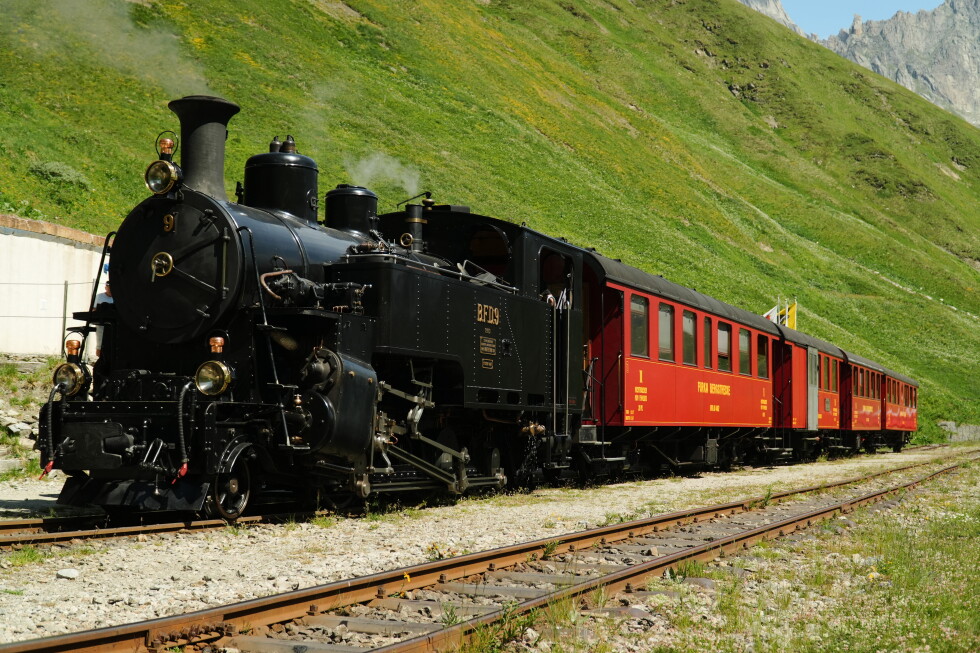
    A devastating collision between a French high-speed train and a military equipment truck at a northern France level crossing has left the train engineer dead and 16 passengers and crew injured, local authorities confirmed Tuesday. The crash took place in the town of Bully-les-Mines, along the busy passenger rail corridor connecting the coastal city of Dunkirk to the French capital Paris.

    Emergency response teams were dispatched immediately to the accident site after the collision was reported. Regional administration officials confirmed that among the 16 injured, two people are in critical condition. All more than 200 passengers on board the train were safely evacuated from the scene with no additional fatalities reported.

    An on-site photographer from the Associated Press documented extensive damage to both vehicles: the front facade of the high-speed locomotive was heavily crumpled in the impact, while the truck also suffered catastrophic destruction. The rail line was fully closed to all traffic while emergency response and investigation teams worked through the site, leaving the stranded train resting on the tracks.

    Prosecutor Etienne Thieffry announced that authorities have taken the truck driver into custody and launched an aggravated manslaughter investigation into the incident. As of Tuesday, Thieffry noted that it remains too early to draw definitive conclusions on the root cause of the crash.

    Jean Castex, CEO of France’s state-owned national railway operator SNCF, told reporters that preliminary checks confirmed the level crossing’s barrier system was operating normally at the time of the collision, ruling out an immediate mechanical failure of the crossing infrastructure as the cause of the accident.

  • US Para Nordic ski team has new home with US SKI & Snowboard fresh off winning 10 golds in Italy

    US Para Nordic ski team has new home with US SKI & Snowboard fresh off winning 10 golds in Italy

    Fresh off a historic medal haul at the 2026 Milan Cortina Winter Paralympics, the U.S. Para Nordic Ski Team — which encompasses cross-country skiing and biathlon — is entering a new era of institutional support, after U.S. Ski & Snowboard and the U.S. Olympic & Paralympic Committee (USOPC) announced Tuesday that the squad will now be managed under the national governing body’s umbrella. The integration marks the latest step in a broader push to expand Para sport programming within U.S. Ski & Snowboard, following the return of Paralympic Alpine skiing and snowboard squads to the organization’s oversight in 2023. Prior to this latest move, the U.S. Para Nordic Team had operated under direct USOPC management since 2014. The timing of the shift could not be more favorable, coming just weeks after the team turned in a dominant performance in Italy, walking away with 10 gold medals from the Games. Standout para athletes Oksana Masters and Jake Adicoff led the charge, each securing four gold medals individually, including a shared victory in the mixed relay event. For Masters, the win cemented her status as one of the most decorated Paralympians in U.S. history, bringing her total medal count across Summer and Winter Games to an extraordinary 24. Under the new structure, Para Nordic athletes will gain access to a full suite of support resources previously unavailable to the squad under USOPC management. These benefits include entry to U.S. Ski & Snowboard’s state-of-the-art Center of Excellence in Park City, Utah, as well as dedicated full-time coaching, travel funding, advanced sports science support, registered dietitian services, marketing guidance, and career development resources for athletes. Masters, who has led the team’s success for more than a decade, expressed enthusiasm for the new partnership, framing the shift as a critical new chapter for the program. “It’s exciting to think about the future and the added visibility and resources that can come with it,” Masters said in an official statement announcing the move. “We’re proud of everything we accomplished to date, and we’re motivated to carry that legacy forward as we begin a new chapter with U.S. Ski & Snowboard.” Sophie Goldschmidt, president and CEO of U.S. Ski & Snowboard, echoed that optimism, noting that the organization is eager to leverage its existing infrastructure to help the Para Nordic team build on its already impressive track record of global success. “We look forward to working together to support their goals and continue building upon their success on the world stage,” Goldschmidt said. The integration comes as U.S. Paralympic winter sports continue to gain institutional investment and mainstream attention, following record-breaking medal performances at the 2026 Milan Cortina Games that have highlighted the talent and dedication of the nation’s para athlete community.

  • Iran has allowed two French former detainees to leave the country, Macron says

    Iran has allowed two French former detainees to leave the country, Macron says

    PARIS – In a long-awaited breakthrough that eases months of diplomatic tension between France and Iran, French President Emmanuel Macron confirmed Tuesday that two French citizens, Cécile Kohler and Jacques Paris, have finally been permitted to depart Iran and are now en route to France. The pair had been confined to French diplomatic facilities in Tehran since their release from Iranian prison last November, after being held for more than three years on disputed spying charges that France has repeatedly dismissed as baseless.

    Macron announced the development in an official post on X, writing, “Cécile Kohler and Jacques Paris are free and on route toward French territory, after three and a half years of detention in Iran.” This green light for their departure, a diplomatic outcome France has pursued for months, comes amid escalating regional tensions following the recent outbreak of cross-border conflict between Israel and Iran. The agreement signals a notable instance of diplomatic outreach between Tehran and Paris, even as the region grapples with broader conflict. Macron has maintained that France remains uninvolved in the regional hostilities, noting the country was not consulted in advance on U.S.-Israel strikes and has no desire to be drawn into the war.

    The full prisoner swap agreement, confirmed by both Iranian state media and French officials, sees Iran release Kohler and Paris in exchange for France allowing Iranian national Mahdieh Esfandiari to leave the country. Esfandiari was convicted by a French court in February 2024 on charges of inciting terrorism over comments she made regarding the October 7, 2023 Hamas-led attacks on Israel. Tehran has pushed for her release since last year, and negotiations on the swap have been underway for months.

    Macron extended official gratitude to Oman for its key role as a mediator in brokering the deal, calling the outcome a major relief for the pair and their families. “It’s a relief for us all and obviously for their families,” Macron wrote.

    Kohler and Paris, both tourists, were first arrested during a trip to Iran in May 2022. After their imprisonment, Iran rejected international calls for their release, while France repeatedly condemned their detention as arbitrary and unjustified, publicly accusing Iran of pursuing a “hostage policy” of detaining foreign citizens to use as diplomatic bargaining chips – an allegation Tehran has consistently denied.

    Following their release from prison in November 2024, Iranian authorities refused to grant them exit visas, leaving them sheltering in the French Embassy in Tehran for months. French Foreign Minister Jean-Noël Barrot confirmed in an X post Tuesday that he had spoken directly to the pair, who shared their overwhelming emotion and joy at the prospect of reuniting with their loved ones back in France. “They are definitively FREE,” Barrot wrote. He also thanked France’s ambassador and on-the-ground diplomatic staff in Tehran for supporting and protecting the pair “under very difficult conditions.”

    Diplomatic contacts between the two countries accelerated after the latest regional conflict broke out in early March. Macron became the first Western leader to hold talks with newly elected Iranian President Masoud Pezeshkian on March 8, and the two leaders have spoken two additional times by phone since, with Macron repeatedly pushing for the immediate return of the two French citizens. Negotiations on the final swap framework advanced steadily through September, when Iranian Foreign Minister confirmed the two sides were close to a final deal. That same month, France officially halted proceedings against Iran at the International Court of Justice, where it had brought a case alleging Tehran violated international consular protections for the two detainees. Court records confirm France requested the full discontinuance of the proceedings as part of the swap agreement.

  • Zelenskyy offers an Easter pause on energy strikes as Russian drone kills 4 in bus strike

    Zelenskyy offers an Easter pause on energy strikes as Russian drone kills 4 in bus strike

    KYIV, Ukraine — As Russia’s full-scale invasion of Ukraine enters its fifth year of brutal conflict, Ukrainian President Volodymyr Zelenskyy has announced a unprecedented reciprocal proposal: a temporary halt to cross-border attacks on energy facilities from both sides, timed to coincide with the upcoming Orthodox Easter holiday this weekend. In a public address delivered late Monday, Zelenskyy confirmed the offer was formally transmitted to Russian authorities through Washington, which has served as a mediator for indirect talks between Moscow and Kyiv.

    “If Russia agrees to end its strikes against our energy infrastructure, Ukraine will stand by the same commitment,” Zelenskyy stated. To date, the Kremlin has not issued any public response to the proposal. This call for a limited holiday truce comes amid a long track record of failed ceasefire attempts between the two warring nations. Last Orthodox Easter, Russian President Vladimir Putin unilaterally announced a 30-hour ceasefire, but the agreement collapsed within hours as both sides traded accusations of immediate violations. A year ago, Moscow also rejected a 30-day unconditional truce put forward by the U.S. and Ukraine, framing the offer as unconstructive and continuing to push for a sweeping negotiated settlement that meets its core demands. Even so, Russia has unilaterally declared multiple short-term ceasefires over the past years of conflict.

    Despite extending the offer, Zelenskyy made clear he holds little optimism that the Kremlin will accept the proposal. He pointed to current global energy market conditions, noting that Russia is reaping greater financial benefits from elevated international oil prices driven by ongoing conflict in Iran, giving it little incentive to pause strikes that undermine Ukraine’s energy stability. Beyond the truce proposal, Zelenskyy also reiterated growing concerns that a prolonged U.S.-Israeli military campaign in Iran will divert international attention and erode critical American support for Ukraine’s war effort. So far, U.S.-mediated indirect talks between the two nations have stalled on all core sticking points, with Washington’s policy bandwidth largely absorbed by the escalating Middle East crisis. Meanwhile, Ukrainian and Russian forces remain entrenched in brutal, ongoing clashes along a roughly 1,000-mile front line stretching across eastern and southern Ukraine.

    For months, both sides have targeted each other’s critical energy infrastructure as a core military strategy. Russia has launched sustained, large-scale attacks on Ukraine’s power grid in a deliberate campaign to break civilian morale ahead of the cold winter and spring months. In response, Ukraine has ramped up its own long-range drone strikes against Russian oil facilities, aiming to cut into the export revenue that funds Moscow’s war machine. A new assessment published late Monday by the Institute for the Study of War (ISW), a Washington-based think tank specializing in conflict analysis, confirms Ukraine’s expanding drone campaign is yielding tangible results. The report notes that Ukraine is successfully exploiting gaps in Russia’s overstretched air defense network, causing significant damage to Russia’s oil export capacity. “Russia’s vast geographic territory creates enormous defensive challenges, particularly when the country still relies heavily on legacy air defense systems to intercept Ukrainian drone salvos,” the ISW assessment added.

    Alongside attacks on energy infrastructure, Russian forces have continued to target civilian and public transportation networks across Ukraine, including the country’s critical rail links that serve both civilian and military supply purposes. On Tuesday morning, a Russian drone struck a civilian bus as it pulled into a stop in the southeastern Ukrainian city of Nikopol during morning rush hour, killing four civilians and wounding 15 more. Ukrainian Interior Minister Ihor Klymenko confirmed the attack in an online post, emphasizing that the strike was a deliberate tactic targeting ordinary civilians. “This brutal attack on regular civilian transportation happened during rush hour, when people were simply heading to their jobs,” Klymenko wrote. “This is no accident — this is Russia’s deliberate strategy: targeted strikes on innocent civilians.”

    Additional Russian attacks across southern and eastern Ukraine pushed Tuesday’s civilian death toll even higher. Ukrainian authorities reported three people killed and three more injured in a strike on a residential building in the southern city of Kherson. Near the eastern city of Synelnykove, an 11-year-old boy was killed in a separate drone strike, bringing the total number of civilian fatalities reported on Tuesday to eight. Following Tuesday’s wave of drone and artillery strikes, Ukrainian military and civil defense officials confirmed widespread power outages across multiple regions in eastern and southern Ukraine, a disruption that echoes the widespread energy cuts that upended civilian life across the country through the winter months.

  • Sarkozy says he owes France ‘the truth’ as he challenges conviction over alleged Libya funding

    Sarkozy says he owes France ‘the truth’ as he challenges conviction over alleged Libya funding

    PARIS — In a high-stakes appeal hearing held in Paris this week, 71-year-old former French head of state Nicolas Sarkozy has forcefully reaffirmed his total innocence in a long-running case centered on allegations of illegal campaign financing from the former Libyan regime under Moammar Gadhafi. Addressing a three-judge panel on Tuesday, Sarkozy stated clearly that no Libyan public or private funds ever contributed to his successful 2007 presidential election run, emphasizing that the French public deserves unvarnished transparency about the allegations against him.

    The case carries significant personal and political weight for Sarkozy: after his initial conviction on criminal conspiracy charges handed down in September last year, the former conservative leader spent 20 days behind bars before courts granted his release on bail while he pursues his appeal. The 12-week appeal trial, which launched last month, will conduct a full reevaluation of all evidence and witness testimony related to Sarkozy and nine co-defendants, three of whom are former French government ministers.

    Prosecutors have laid out a core allegation that Sarkozy’s camp orchestrated a scheme to secure millions in secret campaign donations from Gadhafi’s government in 2007, in exchange for future political and diplomatic favors from the French presidency. Sarkozy has repeatedly rejected all claims of misconduct, arguing that the entire prosecution is rooted in political bias against him.

    During Tuesday’s session, which focused heavily on Sarkozy’s actions both as a 2007 candidate and his time as president from 2007 to 2012, the former leader pushed back on a key claim tied to the 2011 Western military intervention in Libya, launched as Gadhafi’s regime violently cracked down on pro-democracy Arab Spring protests. “I took the initiative, France took the initiative. Why? Because Gadhafi had no hold over me — financially, politically, or personally,” Sarkozy told the court. Gadhafi, who ruled the North African nation for 42 years, was killed by opposition forces months after the intervention, ending his long authoritarian rule.

    The appeal also comes amid fresh tension following statements last week from families of French victims of the 1989 UTA Flight 772 bombing, who voiced deep distress over allegations that the alleged 2007 deal included secret promises to Gadhafi’s regime regarding the bombing’s suspected mastermind. Libya accepted formal responsibility for both the 1988 Lockerbie bombing and the 1989 UTA attack that killed 170 people, 54 of whom were French citizens. Prosecutors allege that as part of the secret deal, Sarkozy promised to lift an international arrest warrant for Abdullah al-Senoussi, Gadhafi’s brother-in-law, intelligence chief, and the alleged mastermind of both bombings.

    Responding to these claims, Sarkozy told the court: “I believe that such unspeakable suffering can only be answered with the truth. The truth is that I did not act in favor of Mr. Senoussi … who is in prison in Libya because he was arrested following the international action led by France. I never promised him anything.”

    The Paris Court of Appeal trial is scheduled to run through June 3, with a final ruling expected at a later, unannounced date. This case is just one of multiple high-profile legal battles Sarkozy has faced since leaving office in 2012. In November of last year, France’s highest court, the Court of Cassation, upheld a separate conviction for illegal financing of Sarkozy’s 2012 re-election campaign, handing down a six-month sentence that will see him serve the term under house arrest with an electronic monitoring ankle tag. That sentence has not yet been implemented.

  • One dead as high-speed train collides with lorry in France

    One dead as high-speed train collides with lorry in France

    A deadly early-morning collision between a high-speed TGV passenger train and a heavy truck hauling military equipment has left the train’s operator dead and 13 other people injured in northern France, authorities confirmed this week.

    The crash unfolded just before 7 a.m. local time on Tuesday along the route between the towns of Béthune and Lens, located in the Pas-de-Calais region, according to local officials. The TGV was operating a scheduled passenger service from Dunkirk to the French capital of Paris when it struck the lorry at an unsecured level crossing.

    French regional president Xavier Bertrand was among the first officials to confirm the fatality, identifying the victim as the TGV’s driver and calling the incident a devastating “terrible tragedy.” “My thoughts are with his family, his loved ones and all the staff who are mourning his loss,” Bertrand posted on social media platform X Tuesday morning.

    Of the 13 injured passengers and crew, two people remain in critical condition while 11 others have been treated for minor wounds, French national media outlet Franceinfo reported, citing preliminary emergency response data.

    Hours after the crash, French Transport Minister Philippe Tabarot announced he was traveling to the collision site alongside Jean Castex, chief executive officer of state-owned national rail operator SNCF and former French prime minister. Castex had not issued a public statement on the incident as of Tuesday afternoon, and the BBC confirmed it had reached out to SNCF for additional comment on the investigation.

    Rail worker union SUD-Rail has already called for full public disclosure of all findings from the official probe into the crash, demanding “total transparency” from regulators and SNCF leadership.

    Regional rail operator TER Hauts-de-France has confirmed that all rail traffic between Béthune and Lens was suspended immediately after the collision, with disruptions expected to last through mid-morning Tuesday. Limited service on alternate routes began rolling out gradually as emergency crews cleared the crash site.

    This latest incident comes less than two weeks after another fatal train-truck collision in southeastern France’s Var region, which claimed one life. While level crossing collisions are relatively uncommon across Europe, official data shows such incidents are far more frequent in France than in neighboring the United Kingdom.

    Preliminary 2024 figures recorded 89 level crossing collisions across France this year, resulting in 20 total deaths. By comparison, the UK recorded just six such incidents in the same period. Between 2021 and 2023, France averaged more than 100 recorded level crossing collisions per year, according to national transport safety data.

  • Gunmen attack police near building housing Israeli Consulate in Istanbul

    Gunmen attack police near building housing Israeli Consulate in Istanbul

    On a Tuesday in central Istanbul, a brazen armed assault targeting police outside a high-rise building that hosts the Israeli Consulate left one attacker dead and two others wounded and in custody, senior Turkish government officials have confirmed. The incident, which unfolded in Levent, Istanbul’s bustling core commercial district, sparked an intense shootout between the three assailants and responding law enforcement, leaving two officers with minor injuries.

    Istanbul Governor Davut Gul confirmed to reporters that the attackers were armed with long-barreled weapons, with one attacker fatally shot during the exchange of fire. The two surviving suspects, who were wounded in the clash, have been taken into Turkish custody. According to Turkey’s Interior Ministry, the pair are brothers identified only as Onur C. and Enes C., with Onur holding a prior criminal record related to drug offenses. Both are currently undergoing interrogation by law enforcement authorities.

    Details of the attackers’ movements and backgrounds have begun to emerge in the hours after the assault. Interior Minister Mustafa Cifti revealed in a post on the social platform X that the three suspects traveled to Istanbul from Izmit, a city located roughly 100 kilometers (60 miles) east of the country’s largest metropolis, in a rented vehicle. Cifti also noted that one of the assailants had ties to a group that “exploits religion,” though he stopped short of naming the specific organization. Turkey has faced repeated deadly terrorist attacks from extremist groups in recent years, most notably the Islamic State group, which has carried out multiple high-profile assaults across the country.

    Notably, no Israeli diplomatic personnel were present in the consulate building at the time of the attack. Israel withdrew all of its diplomats from its Turkish missions earlier amid growing security concerns and rapidly deteriorating bilateral relations tied to the ongoing war in Gaza.

    Eyewitness accounts from people working and moving through the normally busy business district paint a chaotic picture of the 10-minute shootout. Omer Dilki, a 34-year-old local resident, told reporters that the repeated gunfire stood out in the normally noisy district. “In general, this is a noisy area, so initially we thought this might be something else. But the gunshots continued,” he said, adding that he saw officers taking cover behind parked vehicles and coordinating with one another during the clash. Ali Rıza Arpacı, who works at a business near the consulate building, described witnessing “serious clashes” unfold directly in front of him, saying “We were almost inside the clashes.”

    Mobile footage from the scene captured one armed assailant, armed with what appeared to be an assault rifle and wearing a brown backpack, hiding behind a public bus while exchanging gunfire with police. The footage also shows one officer fall to the ground after apparently being struck by gunfire, before rolling to cover behind a nearby tree. Turkish officials later clarified that the two injured officers sustained only minor wounds: one was hit in the leg, while the other suffered a wound to the ear.

    In the aftermath of the attack, Turkish law enforcement quickly sealed off the entire building and closed multiple surrounding roads to through traffic. Forensic investigators in white protective hazmat suits have since combed the attack site, collecting shell casings, DNA samples, and other potential evidence to build their case. Turkish Justice Minister Akin Gurlek announced that three top prosecutors, including one deputy chief prosecutor, have been appointed to lead the ongoing criminal investigation into the assault.

    Turkish President Recep Tayyip Erdogan issued a sharp condemnation of what he called a “treacherous” attack, reaffirming the country’s unwavering counter-terrorism stance. “We will resolutely continue our fight against all forms of terrorism, and we will not allow the climate of security in Turkey to be harmed by vile and timed provocations like today’s,” he said.

    International condemnation of the assault followed quickly. U.S. Ambassador to Turkey Tom Barrack condemned the attack, praising Turkish authorities for “their swift and decisive response.” Israel’s Foreign Ministry also issued a statement condemning the assault, and commended Turkish security forces for their rapid action that prevented the attack from causing greater harm.

    This report includes a correction to an earlier version of the story, which incorrectly cited Turkish outlet Haberturk to claim two attackers had been killed. Turkish officials have confirmed only one of the three assailants was killed, with the other two wounded and taken into custody. Suzan Fraser reported from Ankara, with additional contribution from Mehmet Guzel in Istanbul.

  • Slow moving traffic convoys protest against fuel prices in Ireland

    Slow moving traffic convoys protest against fuel prices in Ireland

    Widespread slow-moving protest convoys against skyrocketing fuel prices have descended on major highways across the Republic of Ireland, triggering traffic disruptions that have forced police and travel officials to issue urgent warnings for motorists.

    Irish national police, known as Gardaí, have urged all drivers to build extra time into their travel schedules this week, noting that organized protest convoys are currently operating at multiple locations along key arterial routes leading into Dublin and surrounding major population centers. The protests have spread across several counties, with confirmed activity reported on a high number of primary roadways: M6 Junction 7 near Moate in County Westmeath, M8 Junction 4 outside Urlingford in County Offaly, the N52 running through Tullamore, County Offaly, areas surrounding Portlaoise in County Laois, M6 Junction 18 in Athenry, County Galway, eastbound M3 approaching Junction 8 in Navan, eastbound M4 at Junction 8 in Kilcock, County Kildare, eastbound M7 approaching Junction 13 at Kildare Village, and stretches of the M7 close to Limerick city. Near Limerick alone, an estimated 200 vehicles including trucks and agricultural tractors are blocking both directions of the highway with their slow-moving demonstration.

    Gardaí have deployed officers to manage traffic flow on the Republic of Ireland’s busiest routes, including the M1, N2, N3, N4, N7 and N11. Dublin Airport has also issued a separate advisory for air passengers, warning that journeys to the terminal may face unexpected delays and urging travelers to arrive prepared for potential disruption.

    The grassroots protests come in response to a dramatic surge in Irish fuel prices driven by geopolitical upheaval in the Middle East. Around 20% of global oil supplies — the core raw material for both petrol and diesel production — have been taken off the market following the closure of the Strait of Hormuz, a critical global chokepoint for energy trade. As of this week, average fuel prices across the Republic of Ireland have climbed to €2.14 (£1.86) per litre for diesel and €1.91 (£1.66) per litre for petrol, with some remote or rural regions recording even higher price points.

    In response to growing public anger over the cost of energy, Irish Deputy Prime Minister, titled Tánaiste, Simon Harris has scheduled a dedicated emergency meeting for Wednesday to address the spiraling fuel crisis and discuss potential policy responses.

  • Ye offers to meet UK Jewish community as calls mount for him to be ditched from Wireless Festival

    Ye offers to meet UK Jewish community as calls mount for him to be ditched from Wireless Festival

    LONDON — A growing political and corporate firestorm has erupted over the scheduled headline appearance of rapper Ye, formerly known as Kanye West, at London’s 2025 Wireless Festival, with a top British cabinet member publicly declaring Tuesday that the artist has no place taking the stage at the event.

    The controversy stretches back to 2023, when Ye sparked global outrage with a series of unapologetic antisemitic comments, public praise for Nazi leader Adolf Hitler, the release of a track titled “Heil Hitler”, and the sale of swastika-branded apparel through his personal website. In January 2024, the 48-year-old artist issued a public apology via a full-page Wall Street Journal advertisement, attributing his harmful actions to a four-month manic episode driven by his bipolar disorder, claiming the period of psychotic, paranoid and impulsive behavior upended his public and personal life.

    Ye is currently set to perform across three sold-out nights from July 10 to 12 at Finsbury Park’s open-air Wireless Festival, where he is expected to draw a combined crowd of roughly 150,000 music fans. Since the artist was confirmed as a headliner, event organizers Festival Republic have faced mounting pressure from political leaders and corporate partners to scrap the booking. Three major festival sponsors — Pepsi, Rockstar Energy and Diageo — have already withdrawn their partnerships and financial support in response to the announcement. Prime Minister Keir Starmer has also publicly labeled the decision to book Ye “deeply concerning”.

    In a new statement released this week, Ye extended an olive branch to the British Jewish community, saying he would welcome the chance to meet in person to listen to concerns about his past actions. “I know words aren’t enough — I’ll have to show change through my actions,” the rapper said. “If you’re open, I’m here.”

    Despite widespread backlash, Festival Republic has stood firm in its commitment to keep Ye on the lineup. In a statement released Monday, managing director Melvin Benn called on the public to extend “forgiveness and hope” to the artist, arguing that the festival is only providing a stage for him to perform hit tracks that already receive regular rotation on UK radio and streaming platforms, where they are enjoyed by millions of listeners.

    That defense was quickly rejected by UK Health Secretary Wes Streeting, who called the organizers’ position “absurd” and reiterated that Ye “absolutely not” be allowed to perform at the festival. Streeting also confirmed that Home Secretary Shabana Mahmood is currently reviewing whether to bar Ye from entering the United Kingdom by revoking his entry visa. Benn acknowledged the Home Secretary’s full authority to make that decision, telling BBC on Tuesday: “If she does, she does, and then the issue is over.”

    As of Tuesday afternoon, a representative for Ye had not responded to requests for additional comment on the ongoing controversy.