标签: Europe

欧洲

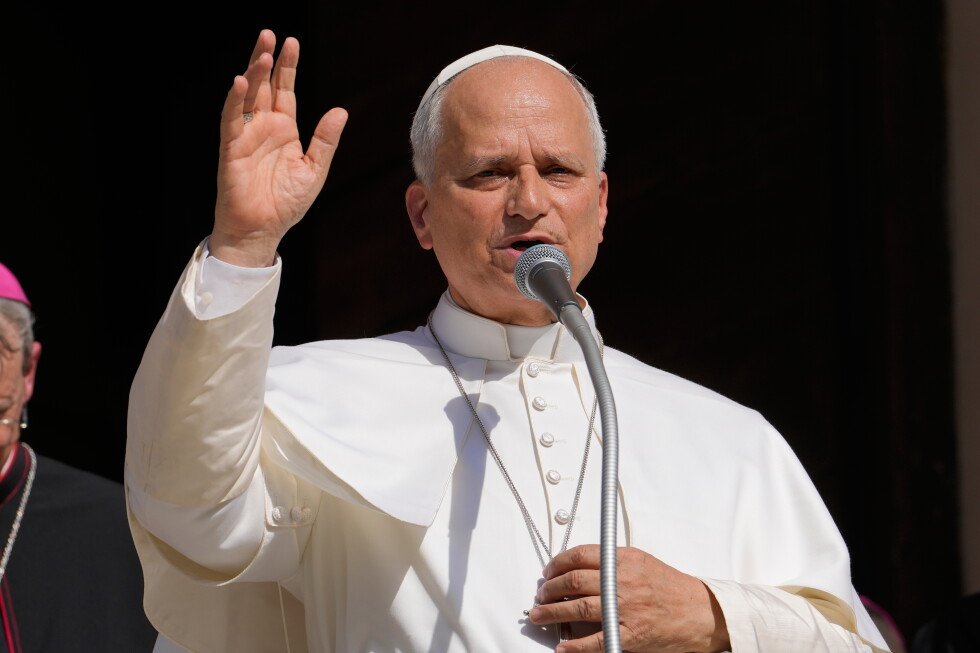
  • Watch: Pope Leo XIV spins basketball on his finger, with help from Harlem Globetrotters

    Watch: Pope Leo XIV spins basketball on his finger, with help from Harlem Globetrotters

    A lighthearted and memorable moment unfolded at the Vatican this week, when the world-famous American exhibition basketball team the Harlem Globetrotters welcomed a surprising new student: Pope Leo XIV. Known globally for their jaw-dropping trick shots, comedic basketball performances, and decades of entertaining audiences across every continent, the squad traveled to the Holy See for a special audience that quickly went viral for its unexpected playful twist.

    During the meeting, team members guided the pontiff through one of the Globetrotters’ most recognizable signature skills: spinning a basketball smoothly on the tip of a finger. Video footage of the interaction captured the warm, good-natured energy of the encounter, showing players leaning in to offer steady guidance as Pope Leo XIV successfully balanced the spinning ball.

    The meeting marks a rare intersection of global religious leadership and pop culture entertainment, highlighting the approachable demeanor of the new pontiff and the Harlem Globetrotters’ long history of connecting with diverse audiences across all walks of life. Fans around the world have already shared the clip widely across social media, praising the light moment that bridges different worlds in a simple, joyful display.

  • Activists ring alarm bells about halt in Poland’s air pollution progress

    Activists ring alarm bells about halt in Poland’s air pollution progress

    Nestled in Central Europe, Poland has long struggled with one of the continent’s worst air pollution crises, driven overwhelmingly by a reliance on coal-fired domestic heating. The threat this poses to both public health and national energy independence has grown starker in recent years, as ongoing geopolitical instability including the Iran war has sent global fuel markets into chaos. Now, environmental advocates are sounding the alarm that Poland’s signature program to tackle this dual crisis is grinding to a halt, putting years of hard-won progress at risk.

    Before the Polish government launched its ambitious nationwide Clean Air program in 2018, persistent violations of strict European Union air quality standards were common across large swathes of the country. Launched to address the root of the problem – coal-powered home heating, which accounts for the majority of Poland’s harmful smog emissions – the initiative provides direct grants to households and small businesses to swap out old coal boilers for cleaner systems running on natural gas, electricity, or wood pellets, as well as fund upgrades to thermal insulation that cut overall domestic energy demand. The ultimate goal of the program is to replace all 3.5 million existing coal-fired heating units in the country.

    Since the program’s 2018 launch, approximately one million out of Poland’s nearly 38 million residents have taken advantage of the grants to upgrade their heating systems, leaving 2.5 million outdated units still in need of modernization. Early results have already demonstrated the policy’s tangible impact: Andrzej Guła, a representative of leading environmental non-governmental organization Polish Smog Alert, notes that the southern city of Krakow, once infamous for chronic severe smog, has seen the number of high-pollution days drop annually from 150 to just 30. While 30 days of dangerous smog remains far too many for public health, the sharp decline proves the program delivers meaningful change when supported.

    That progress, however, has come to an abrupt standstill. In 2024, the initiative hit its peak, with more than 250,000 applications for financing submitted across the country. By the end of that year, the Polish government moved to reform the program to crack down on alleged misuse of public funds, implementing a temporary pause on all new application approvals. That pause, environmental activists argue, triggered a sharp collapse in public trust that has persisted long after the reforms were implemented. Data published by Polish Smog Alert during a Warsaw press conference on March 31 showed that total application numbers in 2025 were just one-fifth of the 2024 peak, and the downward spiral has continued into 2026. The organization warns that progress on cutting air pollution and reducing domestic energy use has now plateaued entirely, with no signs of a rebound.

    Krzysztof Bolesta, Secretary of State at Poland’s Ministry of Climate and Environment, defended the government’s reforms, framing the changes as a necessary step to ensure public funding only goes to eligible, high-impact projects and prevent waste of taxpayer resources. He acknowledged the unique challenge Poland faces in the EU, noting no other member state has such a high share of coal in residential heating. While Bolesta reaffirmed the government’s commitment to improving national air quality, he admitted that the work will remain extraordinarily difficult, and Poland will likely continue to lag behind other EU nations on pollution reduction for the foreseeable future.

    Environmental leaders say the current global energy instability caused by the Iran war should act as a critical wake-up call for the Polish government to revitalize the stalled program. Piotr Siergiej, another activist with Polish Smog Alert, explained that cutting domestic energy demand through the Clean Air initiative directly strengthens Poland’s energy security by reducing the country’s reliance on volatile imported fossil fuels and biomass, even for lower-carbon alternatives like wood pellets. “This program can become an epochal chance to energetically transform our buildings and homes, to make us more independent from those energy crises which we are facing now and whose future we can’t predict,” Siergiej said.

  • French former detainees Cécile Kohler and Jacques Paris return home after more than 3 years in Iran

    French former detainees Cécile Kohler and Jacques Paris return home after more than 3 years in Iran

    PARIS – After more than three years of unlawful detention in Iran and weeks of stalled diplomatic negotiations, two French citizens have finally touched down on home soil, capping an extraordinary ordeal that unfolded against the backdrop of soaring regional conflict between Iran and the United States. Cécile Kohler, 41, and 72-year-old Jacques Paris crossed out of Iran by road on Tuesday, mere hours before a fragile tentative ceasefire was announced to end deadly cross-border clashes that have roiled the Middle East since Feb. 28. French President Emmanuel Macron welcomed the pair personally at the Elysee Palace Wednesday morning, framing their long-awaited release as a landmark diplomatic win for France. The two were initially granted prison release in November 2022 on spurious unsubstantiated charges, but were barred from exiting the country by Iranian authorities, forcing them to take shelter in the French diplomatic compound in Tehran for months before exit approval was granted Tuesday. In comments to reporters shortly after their arrival, Kohler described the moment as a narrow, hard-won escape. “We realize just how much we narrowly escaped, so to speak, because it could have been much worse,” she said, adding that the multi-stage journey left the pair exhausted after two straight days of travel without sleep. According to French officials, the pair traveled an approximately nine-hour overland route from Tehran to neighboring Azerbaijan in the care of French ambassador to Iran Pierre Cochard, before boarding a charter flight bound for Paris that landed Wednesday. A spokesperson for the Élysée confirmed that the release came after years of quiet diplomatic groundwork, but noted that urgent regional pressure sparked by the Iran-U.S. war forced negotiators to accelerate talks in recent weeks. Macron, who has worked to keep France distanced from direct involvement in the escalating Middle East conflict, has taken a lead diplomatic role in engaging with new Iranian leadership amid the recent crisis. He became the first Western head of state to hold direct talks with Iranian President Masoud Pezeshkian on March 8, just days after the latest outbreak of open hostilities, with two follow-up phone conversations held on March 15 and March 24. French officials have publicly credited Oman with playing a critical mediating role in breaking the months-long deadlock, helping shuttle sensitive communications between Paris and Tehran in the final stages of negotiations. “Omani authorities made it possible, in the final stretch, to convey a certain number of messages within the Iranian system,” French Foreign Minister Jean-Noël Barrot told France 2 television Wednesday. “On Sunday evening, Easter Sunday, I received a call from my counterpart, Iran’s foreign minister, confirming that the decision had been made on their side.” Barrot declined to share further details of the closed-door negotiations, noting that all terms would remain confidential per the agreements reached between the two sides. But Iran’s state-run news agency IRNA released a statement Tuesday claiming the release was part of a formal prisoner swap agreement, in which France agreed to release Iranian national Mahdieh Esfandiari in exchange for Kohler and Paris. The Élysée has forcefully denied any such swap agreement was reached. Esfandiari was convicted in a French court last February on charges of inciting terrorism over public comments she made regarding the October 7, 2023 Hamas attacks on Israel. She received a one-year prison sentence plus an additional three-year suspended term, and was permanently barred from entering French territory. She has since appealed the conviction, and had been held under house arrest while her appeal proceeded. Her attorney Nabil Boudi confirmed to the Associated Press that the house arrest order was lifted Tuesday afternoon, shortly after news of Kohler and Paris’ departure from Iran broke. Speaking publicly Wednesday, the two former detainees opened up about the brutal conditions they endured during their more than three years in Iran’s notorious Evin Prison, a facility long known for holding political prisoners and dissidents. Kohler called the facility “hell,” describing unrelenting daily horror for the pair throughout their detention. Paris added that the couple lived under constant psychological pressure during their detainment. “We had no right to read, no right to write. Whenever we left our cell, we were blindfolded,” he told reporters. “One of the goals was likely to break us. We are not broken. We will bear witness, we will speak out, and we will enjoy life again.” The pair were arrested while on a personal vacation in Iran in May 2022, a day before what would become more than three years of captivity cut short their trip.

  • Germany suspends military approval for long stays abroad for men under 45

    Germany suspends military approval for long stays abroad for men under 45

    Against the backdrop of shifting European security dynamics following Russia’s full-scale invasion of Ukraine, Germany has moved to roll back a little-noticed provision of its newly reinstated military service framework that sparked widespread public pushback in recent days.

    The Military Service Modernization Act, which entered into force on January 1 this year, was designed to strengthen German and European defense capabilities in response to heightened regional security threats stemming from the ongoing war in Ukraine. In principle, the legislation brings back compulsory conscription after years of an all-volunteer force, though active conscription will only be triggered if voluntary recruitment falls short of the German armed forces’ targets.

    Under the law’s original fine print, a previously little-publicized requirement mandated that all German males aged 17 and older secure prior official approval before taking any trip or extended stay abroad lasting longer than three months. This provision flew under the public radar until a major German newspaper broke the story last week, igniting a fierce public debate over civil liberties and the scope of the new conscription framework. As of this week, the rule has never actually been enforced against any German citizen, defense officials confirmed.

    On Monday, German Defense Minister Boris Pistorius, a member of the Social Democratic Party, announced a broad exemption to the controversial requirement in comments to the German Press Agency (DPA). Pistorius emphasized that regardless of age — whether 17, 45, or any age between those thresholds — all military-age men retain full freedom of movement, and no advance approval is currently required for international travel of any length. Extended stays abroad also will not need to be reported to defense authorities, he added.

    “During this peacetime period, there will be no permission procedures. We are suspending the permission requirement as long as military service is voluntary,” Pistorius stated. He added that the German government will develop tailored emergency protocols to activate the rule only in the event of a national security crisis, framing the original inclusion of the provision as a legitimate precautionary measure to prepare for unforeseen security contingencies.

    The new law has already rolled out preliminary steps toward its goal of expanding Germany’s military capacity: since January, all 18-year-old Germans have received a mandatory questionnaire for men (voluntary for women) asking about their willingness to serve in the armed forces. Starting in July 2027, all 18-year-old men will also be required to complete a mandatory medical fitness examination to assess their eligibility for potential military service, should conscription be activated in the future.

    This military expansion aligns with the top security priority laid out by German Chancellor Friedrich Merz, who has publicly stated his goal to build the most powerful conventional military force across Europe, in a bid to bolster collective European defense amid ongoing regional tensions.

  • Turkey detains 9 over attack outside the Israeli Consulate in Istanbul

    Turkey detains 9 over attack outside the Israeli Consulate in Istanbul

    A violent shootout outside the building hosting Israel’s closed consulate in Istanbul has left one attacker dead and sparked a cross-provincial counter-terrorism operation that resulted in the detention of nine suspects, Turkey’s state-run Anadolu Agency confirmed Wednesday.

    The incident unfolded Tuesday in Istanbul’s central business and financial district, when three assailants opened fire on Turkish police officers deployed near the consulate building. A rapid exchange of gunfire left one attacker killed on site, while the other two — identified as brothers Onur C. and Enes C. — were wounded and taken into custody immediately. Two responding police officers also suffered minor injuries in the clash, Turkish officials confirmed.

    In the wake of the attack, Turkish security forces launched sweeping arrest operations across three regions: Istanbul itself, as well as the provinces of Konya and Kocaeli, where the nine suspects were ultimately apprehended. All nine detainees are now being questioned alongside the two wounded captured attackers, according to Anadolu Agency, which did not release additional details on the suspects’ backgrounds or alleged ties to the attack.

    Turkey’s Interior Minister Mustafa Ciftci confirmed that the attackers traveled to Istanbul from Izmit, a city in Kocaeli province, in a rented vehicle. He also noted that one of the captured attackers — Onur C. — has a prior criminal record connected to drug offenses. Speaking on the ideological links of the cell, Ciftci stated that one of the assailants has connections to a group that “exploits religion,” though he stopped short of publicly naming the organization. The region has a history of large-scale deadly attacks carried out by the Islamic State group, which has targeted Turkish soil multiple times in recent decades.

    Context for the empty consulate building dates back to the outbreak of the Israel-Hamas war in Gaza. Shortly after hostilities began earlier this year, Israel withdrew all its diplomatic personnel from Turkey and shuttered the Istanbul consulate, citing growing security risks and rapidly deteriorating bilateral relations between Jerusalem and Ankara. At the time of Tuesday’s attack, no Israeli diplomatic staff were present in the building.

    Shortly after the clash, Israel’s Foreign Ministry issued an official statement condemning the attack, and expressed gratitude to Turkish law enforcement for their rapid response that prevented a higher death toll.

  • Greece to ban social media for under-15s from next year

    Greece to ban social media for under-15s from next year

    In a bold step to address growing concerns over adolescent mental health, Greece has announced sweeping new regulations that will bar all users under the age of 15 from accessing social media platforms, joining a expanding wave of national governments across the globe moving to restrict minors’ exposure to potentially harmful online environments.

    Prime Minister Kyriakos Mitsotakis framed the policy as a targeted response to three interconnected crises: soaring rates of anxiety, chronic sleep disruption among young Greeks, and the intentional “addictive design” embedded into many major social media platforms. The restriction is scheduled to go into effect starting in January 2025, with full details of the enforcement and regulatory framework set to be released later the same day the announcement was made.

    Mitsotakis shared the initiative in a public video message posted to TikTok, where he outlined the personal feedback that drove the policy change. “Many young people tell me they feel exhausted from comparisons, from comments, from the pressure to always be online,” he said, adding that he had heard consistent reports from parents about children struggling with poor sleep, constant anxiety, and compulsive phone use.

    The prime minister stressed that the ban is not an attempt to cut young people off from digital technology entirely, noting that digital tools can be powerful sources of inspiration, knowledge, and creative growth. “But the addictive design of certain applications, and a business model based on capturing your attention – on how long you stay in front of a screen – takes away your innocence and your freedom,” he argued. “That has to stop somewhere.”

    Beyond Greece’s national borders, Mitsotakis is pushing for coordinated action across the European Union. In a formal letter to European Commission President Ursula von der Leyen, he called for a unified EU regulatory framework to “complement and reinforce the necessary national initiatives for the protection of minors.” His proposed regional rules include mandatory age verification for all users across every platform, a continent-wide ban on social media access for under-15s, and a requirement that platforms re-verify all users’ ages every six months to prevent workarounds.

    Greece is far from alone in pursuing strict limits on minor social media use. Australia made global history last December when it became the first country to mandate that major platforms including TikTok, YouTube and Snapchat remove all accounts belonging to users under 16, with steep financial penalties for non-compliance. Several other EU nations, including France, Austria and Spain, have already advanced similar regulatory proposals. The United Kingdom has opened a public consultation on a proposed ban for under-16s, while Ireland and Denmark are currently evaluating comparable measures.

    Industry stakeholders have pushed back heavily against broad, age-based restrictions. Social media companies argue that blanket bans are impractical to enforce, ineffective at achieving their stated goals, and risk leaving vulnerable, socially isolated teenagers cut off from critical online support networks. Reddit has already launched a legal challenge to Australia’s new under-16 ban, contesting the law in court.

    The global conversation around minor social media use has sharpened dramatically in recent months, fueled by mounting research linking heavy early social media exposure to negative mental health outcomes, and a high-profile legal ruling in the United States. In a landmark March trial, a jury found Meta and YouTube liable for contributing to a young woman’s childhood social media addiction. Jurors determined that Meta, the parent company of Instagram, Facebook and WhatsApp, and Google, which owns YouTube, intentionally designed platforms to be addictive, causing measurable harm to the plaintiff’s mental health. Both companies have rejected the verdict and announced plans to appeal, with Meta arguing that teen mental health is a complex issue with no single cause that can be pinned on one platform.

    As more nations move to implement national restrictions, the push for a coordinated EU framework signals a growing shift toward tighter global regulation of big tech’s impact on children and adolescents.

  • Trump complains NATO ‘wasn’t there when we needed them’ after talks with alliance leader Rutte

    Trump complains NATO ‘wasn’t there when we needed them’ after talks with alliance leader Rutte

    WASHINGTON — Tensions between former and current U.S. President Donald Trump and the trans-Atlantic military alliance NATO boiled over into public view Wednesday, following a closed-door meeting between Trump and NATO Secretary-General Mark Rutte that had been widely expected to defuse Trump’s fury over the alliance’s response to the recent Iran conflict.

    In the lead-up to the private talks, Trump opened the door to a potential U.S. withdrawal from the 75-year-old alliance, after NATO member states rejected his call to join U.S. military actions when Iran blocked the Strait of Hormuz — a critical global shipping chokepoint that carries roughly one-fifth of the world’s daily oil supplies. The blockage triggered a sharp spike in global energy prices, amplifying Trump’s frustration with alliance partners.

    Shortly after the meeting concluded, Trump took to social media to voice his lingering anger in an unfiltered all-caps statement. “NATO WASN’T THERE WHEN WE NEEDED THEM, AND THEY WON’T BE THERE IF WE NEED THEM AGAIN,” the post read. The White House declined to offer additional context or clarification on Trump’s remarks immediately after the meeting.

    The talks came just one day after the U.S. and Iran reached a tentative two-week ceasefire agreement that includes the full reopening of the Strait of Hormuz. The ceasefire was finalized only after Trump issued a stark threat to target Iran’s critical infrastructure, warning that “a whole civilization will die tonight” if Tehran did not back down.

    Earlier Wednesday, White House Press Secretary Karoline Leavitt confirmed that Trump had raised the possibility of a U.S. exit from NATO ahead of the meeting, telling reporters “I think it’s something the president will be discussing in a couple of hours with Secretary-General Rutte.”

    Trump’s long-standing criticism of NATO dates back to his first presidential term, and U.S. law passed by Congress in 2023 explicitly blocks any sitting U.S. president from withdrawing from the alliance without congressional approval. Despite the legal restriction, Trump has repeatedly claimed he holds unilateral authority to pull the U.S. out of the 32-member bloc, which was founded in 1949 to deter Soviet expansionism during the Cold War. NATO’s core founding commitment is its mutual defense clause, which states that an armed attack against one member is considered an attack against all — a provision that has only been invoked once, in 2001, to support the U.S. following the September 11 terrorist attacks.

    Beyond the Iran conflict, Trump also renewed his grievances over NATO’s stance on Greenland, the semi-autonomous Danish territory that Trump attempted to secure U.S. control over earlier this year, before backing down following negotiations with Rutte. In a separate social media post Wednesday, Trump railed, “REMEMBER GREENLAND, THAT BIG, POORLY RUN, PIECE OF ICE!!!”

    It remains unclear whether the Trump administration will move to challenge the 2023 law blocking unilateral presidential withdrawal from NATO. Notably, that legislation was championed by current Secretary of State Marco Rubio, who was serving as a U.S. Senator from Florida when the bill passed. Rubio met separately with Rutte Wednesday morning at the U.S. State Department ahead of the White House meeting. In a post-meeting statement, the State Department said the pair discussed the Iran conflict, ongoing U.S. diplomatic efforts to end the Russia-Ukraine war, and “increasing coordination and burden shifting with NATO allies.”

    Top Republican leaders have already broken with Trump over his NATO stance. On Tuesday night, Senate Minority Leader Mitch McConnell of Kentucky, who serves on the Senate Armed Services Committee, issued a statement reaffirming his support for the alliance. “Following the September 11th attacks, NATO allies sent their young servicemembers to fight and die alongside America’s own in Afghanistan and Iraq,” McConnell wrote. The senior Republican urged Trump to remain “clear and consistent” on U.S. alliance commitments, arguing it is not in the United States’ national interest to “spend more time nursing grudges with allies who share our interests than deterring adversaries who threaten us.”

    NATO has already faced significant instability since Trump returned to the presidency, over his cuts to U.S. military support for Ukraine and repeated threats to seize Greenland from Denmark, a long-standing NATO ally. Trump’s criticism of the alliance intensified sharply after the outbreak of the U.S.-Iran war in late February, with the president arguing that securing the Strait of Hormuz should fall to the European and regional nations that depend on its oil shipments, not the United States. “Go to the strait and just take it,” Trump told supporters last week.

    Additional friction emerged when two NATO members, Spain and France, moved to ban or restrict U.S. access to their national airspace and joint military facilities for operations related to the Iran war. While those nations have joined a broader international coalition to help secure the strait once the conflict ends, their refusal to back immediate U.S. action further stoked Trump’s anger. British Prime Minister Keir Starmer, another frequent target of Trump’s criticism, was scheduled to travel to the Gulf region Wednesday to support the newly brokered ceasefire, as the U.K. leads efforts to draft a post-conflict security framework for the strait.

    This is not the first time Trump has threatened to walk away from NATO. The president has repeatedly vowed to abandon alliance partners that fail to meet the bloc’s target of spending 2% of their gross domestic product on defense. In his recently published memoir, former NATO Secretary-General Jens Stoltenberg revealed he personally feared Trump would withdraw the U.S. from the alliance as early as 2018, during Trump’s first term in office.

    Contributions to this reporting were provided by Associated Press journalists Aamer Madhani and Matthew Lee in Washington, and Lorne Cook in Brussels.

  • ‘Ketamine Queen’ to be sentenced for selling Matthew Perry the drugs that killed him

    ‘Ketamine Queen’ to be sentenced for selling Matthew Perry the drugs that killed him

    LOS ANGELES — More than two years after beloved “Friends” actor Matthew Perry died from an accidental ketamine overdose at his Los Angeles home, the woman who admitted to supplying him with the lethal dose is set to face sentencing Wednesday in federal court.

    Jasveen Sangha, 42, marks the third defendant to be sentenced among five people who have all pleaded guilty to charges connected to Perry’s October 2023 death. The 54-year-old actor, who found global fame and cultural icon status playing sarcastic, endearing Chandler Bing on NBC’s hit sitcom “Friends” across its 10-season run from the 1990s to early 2000s, had long struggled publicly with substance addiction. Unlike the other four co-defendants, Sangha’s plea deal requires her to acknowledge her direct role in causing Perry’s death, a distinction that legal experts say makes her likely to receive the harshest sentence of the group by a wide margin.

    Federal prosecutors have formally requested that U.S. District Judge Sherilyn Peace Garnett hand Sangha a 15-year prison term. In court filings, prosecutors have portrayed Sangha as a so-called “Ketamine Queen” who ran a sophisticated, large-scale drug trafficking operation that catered exclusively to wealthy, high-end clients. The proceeds from her illegal business, prosecutors argue, allowed her to fund a luxury, jet-setting lifestyle that far outpaced what she could earn through legal work.

    Sangha’s defense team has pushed back aggressively against the prosecution’s request, arguing that the time she has already served in jail since her August 2024 indictment is sufficient punishment for her crimes. They have challenged the prosecution’s calculation of federal sentencing guidelines, claiming the arithmetic is factually incorrect, and have highlighted mitigating factors including Sangha’s lack of any prior criminal record, her exemplary conduct while incarcerated, and expert assessments that she is extremely unlikely to reoffend or return to drug dealing if released.

    Members of Perry’s family are expected to deliver victim impact statements to the court ahead of the sentencing. For context, Perry was found unresponsive and dead in the hot tub at his Los Angeles residence in 2023. An official autopsy from the Los Angeles County Medical Examiner ruled that the primary cause of death was acute ketamine toxicity; the drug, originally developed as a surgical anesthetic, had been prescribed legally to Perry off-label by his regular physician as a treatment for depression, but Perry sought larger doses than his doctor was willing to provide.

    That search for additional ketamine first led Perry to Dr. Salvador Plasencia, who pleaded guilty to illegally supplying the actor with the drug and was sentenced to 2.5 years in prison earlier, after prosecutors requested a three-year term. When Perry continued to seek more, he ultimately connected with Sangha, who prosecutors say sold him 25 vials of ketamine — including the batch that contained the fatal dose — for $6,000 in cash just four days before his death.

    Two other co-defendants have already been sentenced: a second physician who admitted to supplying Plasencia with the ketamine he sold to Perry received an eight-month home detention sentence. The remaining two defendants — Perry’s personal assistant and a close friend, who both admitted to acting as middlemen to connect Perry with the drug suppliers — are still awaiting their sentencing hearings. Judge Garnett has previously stated that she intends to structure all five sentences to create a cohesive, proportionate outcome for the entire conspiracy.

    Sangha’s legal team has laid out a detailed personal backdrop to argue for leniency. A dual U.S.-United Kingdom citizen, she moved to the U.S. from England at age 3 and settled in Southern California with her family as a pre-teen. She holds a bachelor’s degree from the University of California, Irvine, and a master’s degree in business from Hult International Business School in the U.K. Her attorneys note that while she has had difficult personal losses — including the recent deaths of her grandfather and stepfather, two key male influences in her life after she lost contact with her biological father — she remains close to her mother and grandmother, who would provide a stable support system if she is released. While incarcerated, she has maintained complete sobriety, organized and led regular Narcotics Anonymous meetings for other inmates, and has been classified as a model inmate, her team says. All of this, they argue, proves she is an otherwise upstanding, educated citizen who made a one-time, devastating mistake, not a career drug trafficker.

    Prosecutors reject that framing, arguing that Sangha’s stable background and education confirm she did not turn to drug dealing out of economic desperation. Instead, they say, she made a conscious, voluntary choice to traffic illegal drugs solely to fund the elite, high-end lifestyle she desired. They also note that even after she pleaded guilty to the charges connected to Perry’s death, Sangha continued to engage in illegal drug dealing, a pattern they say demonstrates a complete lack of remorse for her actions. Sangha also admitted to selling ketamine to a second man, 33-year-old Cody McLaury, who died of an overdose in 2019, a fact prosecutors have emphasized as a demonstration of her ongoing, dangerous criminal activity.

  • Cross-border travel hit by second day of fuel protests

    Cross-border travel hit by second day of fuel protests

    For the second straight day, widespread fuel price protests driven by skyrocketing energy costs linked to Middle East conflict have thrown travel and transportation across the Republic of Ireland into chaos. The slow-moving vehicle convoys, which launched early Tuesday morning, have spread beyond Dublin’s core urban area to major arterial routes leading into the capital and key transport corridors near other large population centers across the country.

    Organized in response to dramatic fuel price surges triggered by the ongoing conflict between the US, Israel and Iran, the demonstrations have brought some of Dublin’s busiest central locations to a complete standstill. Ireland’s national police force, Gardaí, confirmed that both O’Connell Street and O’Connell Bridge — two critical thoroughfares in the heart of the capital — are completely blocked by protest activity. The disruption has extended to major intercity routes across multiple counties, with slowdowns and blockages reported on the N21 from Adare to Limerick city, Limerick’s Ballysimon Road, the Macroom bypass in County Cork (in both directions), Galway Docks in Galway city, the northbound M8 between junctions 6 and 9 in County Tipperary, and the M8 at Junction 18 in Glanmire, County Cork.

    The root cause of the price spike traces back to escalating tensions in the Middle East, which have disrupted global energy markets. The closure of the Strait of Hormuz, a critical chokepoint that carries roughly 20% of the world’s total oil trade, has cut off global supplies of the crude oil used to produce both petrol and diesel, sending costs soaring across Ireland. Current average prices now sit at approximately €2.14 (£1.86) per litre for diesel and €1.91 (£1.66) per litre for petrol, with some regional locations recording even higher rates.

    The travel disruption has hit cross-border services particularly hard, with public transport operator Translink confirming ongoing delays and service alterations for its cross-border routes. Until further notice, all of Translink’s X1, X2, X3 and X4 services will terminate at Dublin Airport rather than completing their full routes into the city center. Dublin Airport has also issued an advisory for all passengers departing or arriving at the facility, urging people to add significant extra travel time to their itineraries to account for unexpected delays along access routes.

    In response to the growing crisis, Irish Tánaiste (Deputy Prime Minister) Simon Harris has scheduled a dedicated emergency meeting focused on energy issues to take place later on Wednesday, as government officials work to address public anger over rising costs and resolve the transport disruption across the country.

  • Airport parrot ‘back home with pal’ after search

    Airport parrot ‘back home with pal’ after search

    Dublin Airport has wrapped up a heartwarming, unlikely tale of an unexpected visitor, after a lost Alexandrine parakeet was successfully returned to her owner following days of care from airport staff and a widespread public search.

    The young female parakeet was first spotted perched on a rubbish bin near Terminal 1 by airport police on Easter Sunday. After taking the wayward bird into custody, the airport police team — including members of the K9 unit — stepped up to care for her while looking for clues about her owner. The team built a temporary cozy enclosure for her, and kept her well-fed with fresh fruit and water, while adding toys to keep her entertained during her unexpected stay. Staff even gave her a temporary nickname: Troy, a playful nod to Republic of Ireland star striker Troy Parrott, an inside joke the airport has leaned into after considering renaming the airport after the player following his iconic hat-trick against Hungary.

    Over the following days, airport staff shared details of the lost parrot on social media to help connect her to her owner, who had apparently lost track of her before she turned up at the busy aviation hub. The clues they shared quickly helped narrow the search: the nearly two-year-old bird, it turned out, responds to the name Lola, and carried a visible identification tag with a registration number. Her favorite snacks are watermelon and strawberries, and she is not shy about demanding attention when she feels ignored. Lola even took the airport’s nickname in stride, with staff joking that she was happy to keep “Troy” as her official middle name.

    By Tuesday, the airport confirmed the happy outcome: Lola had been matched to her owner Gheorghe, and was on her way home. In a playful social media post, the airport announced the parrot was “back home with her pal,” adding that staff joked Lola seemed thrilled her unpaid “shift” at the airport was finally over. During her stay, Lola even formed close bonds with the airport’s social media team, who documented her stay for followers online.

    This is far from the first time an unplanned avian visitor has turned up at Dublin Airport. In 2019, an African grey parrot named Hugo was found taxiing on the main runway by a firefighter conducting a routine safety check, and was later reunited with her owner. As recently as August 2025, another talkative parrot who had not booked a ticket turned up at the airport as a surprise visitor, adding to the hub’s growing collection of unexpected feathered guest stories.