标签: Europe

欧洲

  • Jonas Vingegaard out of Tour de France after crash on Stage 15

    Jonas Vingegaard out of Tour de France after crash on Stage 15

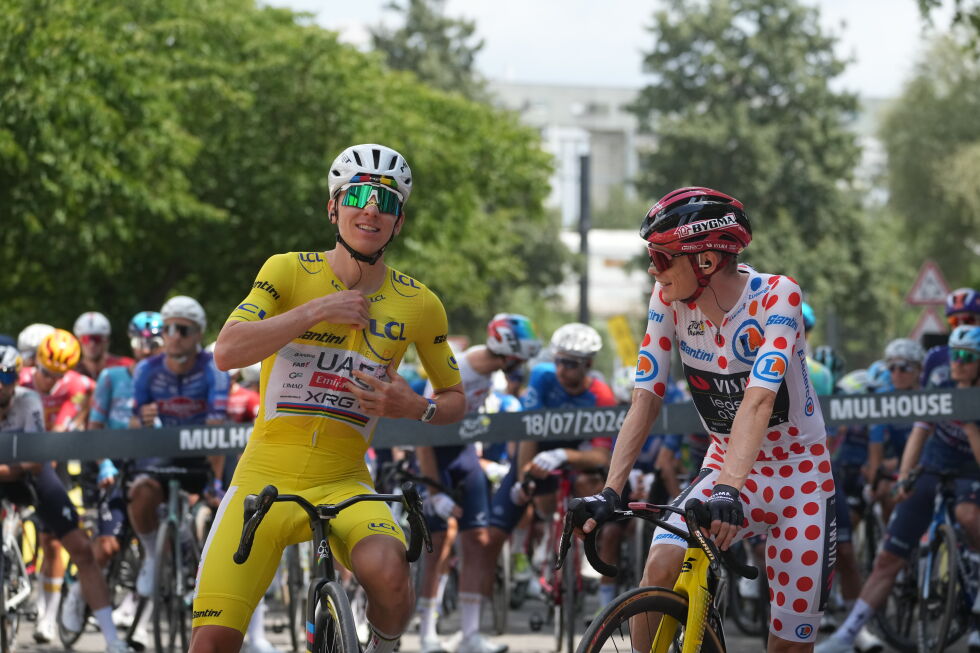
    The 2024 Tour de France has suffered a stunning upset ahead of its closing stretch, as two-time defending champion Jonas Vingegaard was forced to abandon the race following a high-profile crash with just 20 kilometers remaining in Sunday’s grueling 15th stage, held at France’s Plateau de Solaizon.

    Vingegaard, riding for the Visma–Lease a Bike squad, entered the mountainous 15th stage sitting just behind UAE Team Emirates leader Tadej Pogacar in the general classification, setting up a tense showdown on the stage’s challenging finishing climb. The incident occurred when Vingegaard and a small group of other riders fell close to a roadside curb in the final kilometers of the route.

    After the crash, the 29-year-old Danish rider was able to move under his own power but visibly limped to waiting medical staff, leaving the course with his right arm stabilized in a sling before being taken away in an ambulance.

    A generational talent in professional road cycling, Vingegaard cemented his legacy as one of the sport’s great all-rounders by claiming back-to-back Tour de France titles in 2022 and 2023. He is also one of only eight male riders in the history of professional cycling to have secured overall victory at all three of the sport’s Grand Tour events: the Tour de France, Giro d’Italia, and Vuelta a España.

    His early exit reshapes the dynamic of the 2024 Tour, clearing a major path for Pogacar to secure a fourth overall title, and leaves millions of cycling fans shocked by the abrupt end to Vingegaard’s bid for a third consecutive yellow jersey.

  • The World Cup winner will earn $51 million under expanded purse

    The World Cup winner will earn $51 million under expanded purse

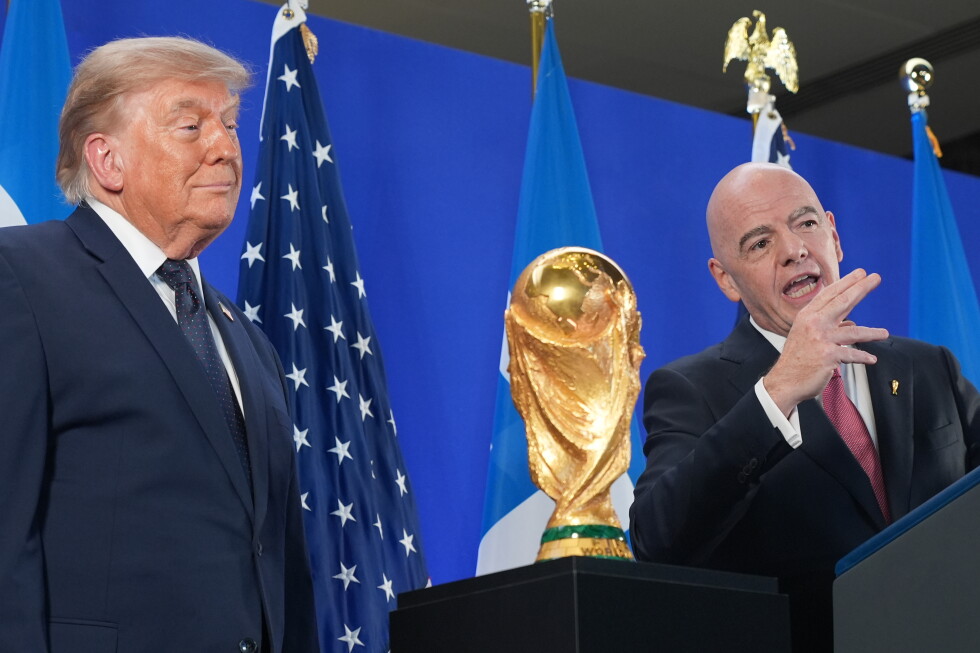
    When the final whistle blows on the 2026 FIFA World Cup final this Sunday, the new champion will not only lift soccer’s most coveted golden trophy and claim eternal glory in their nation’s sports history — they will also take home the largest winner’s payout in the tournament’s history, alongside a first-ever set of championship rings for the squad.

    For the 2026 edition, expanded from 32 to 48 competing nations and co-hosted across the United States, Canada and Mexico, FIFA has set an all-time total prize pool of $871 million, marking a $100 million increase from the initial payout plan announced last year. The top-up came in April after European national federations lobbied for additional funding, arguing that the three-host format created extraordinary travel and accommodation costs that would leave most teams out of pocket without deeper tournament runs.

    This year’s champion will walk away with $51 million in prize money, a substantial jump from the $42 million awarded to 2022 Qatar World Cup winner Argentina. The runner-up will take home $34 million, while third-place England will earn $30 million and fourth-place France will collect $28 million. Payouts scale down based on tournament progression: quarterfinalists (5th to 8th place) earn $20 million each, Round of 16 exits (9th to 16th) get $16 million, Round of 32 eliminations (17th to 32nd) receive $12 million, and even teams eliminated in the group stage (33rd to 48th) leave with $10 million in prize money.

    Every participating federation also receives an additional $2.5 million upfront to cover pre-tournament training and preparation costs, bringing the minimum total payout for any qualifying nation to $12.5 million. This structured upfront payment was adopted to resolve longstanding pre-tournament tensions, where players frequently went public with claims that their national federations had failed to pay promised bonuses ahead of the competition.

    The push for increased prize money gained traction after top European federations pointed out the stark gap between World Cup payouts and rewards for elite club competition. French Football Federation president Philippe Diallo had repeatedly raised the issue with FIFA President Gianni Infantino for months, noting that the 2025 Club World Cup winner — a tournament also hosted in the United States — took home $115 million, more than double the 2026 World Cup champion’s payout. To put the disparity in even sharper perspective: the entire $51 million winner’s check is less than the $ reportedly transfer fee English Premier League side Brighton paid last week to sign 19-year-old Croatian defender Luka Vušković, who spent nearly the entire 2026 World Cup on Croatia’s bench.

    Beyond prize money, FIFA is required under tournament regulations to cover core logistical costs for all participating delegations. The governing body pays for business-class return flights for each federation, as well as board and lodging for a 50-person delegation starting five nights before the team’s first match and extending one night after elimination. FIFA also covers domestic travel within host countries for the 50-person group, plus provides a dedicated fleet of vehicles that includes an equipment truck. National federations are responsible for covering delegation insurance, extra accommodation for additional staff, and any incidental hotel costs.

    Off the field, the iconic gold World Cup trophy remains the ultimate honor for the champion. The original trophy is kept permanently by FIFA, so the winning federation receives a gold-plated full-size replica to keep permanently, alongside the new championship rings being awarded for the first time this edition.

    Importantly, all prize money is paid directly to national federations, not individual players, and each federation sets its own policy for distributing the funds. A notable example is the United States Soccer Federation, which approved a landmark equal pay agreement in 2022, making it the first soccer governing body in the world to guarantee equal compensation and equal prize sharing for its men’s and women’s national teams. Under the terms of that deal, USSF retains 20% of any prize money earned by the men’s team, and the remaining 80% is split evenly between the men’s and women’s national programs.

  • What to know about the Tate brothers, social media influencers facing rape and trafficking charges

    What to know about the Tate brothers, social media influencers facing rape and trafficking charges

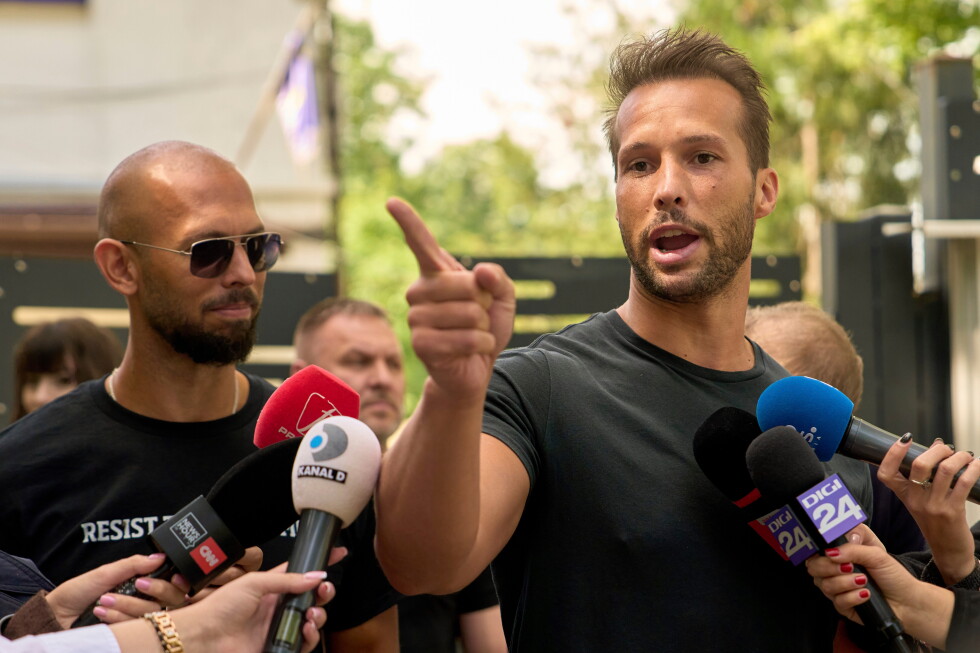
    MIAMI — A years-long international legal case involving high-profile influencer brothers Andrew and Tristan Tate took a sharp new turn Saturday, when U.S. law enforcement took the pair into custody at the request of British authorities who have leveled additional serious charges including rape, sex trafficking, and child indecent image offenses. The development adds another chapter to a sprawling saga that has stretched across three countries and drawn global attention to the pair’s polarizing online presence and repeated denials of wrongdoing.

    Britain’s Crown Prosecution Service (CPS) confirmed that the new charges stem from allegations made by four additional victims, with evidence compiled by investigators from Bedfordshire Police, based in southeastern England. The updated charges bring the total number of alleged victims in the UK case to seven. The offenses are alleged to have occurred between 2010 and 2015, expanding on a previous set of charges filed over claims from three earlier victims dating back to 2012–2015.

    Breakdown of the new charges shows Andrew Tate, 39, faces seven additional counts of rape, three counts of arranging or facilitating trafficking for sexual exploitation, three counts of assault, and 19 offenses related to indecent images of children and extreme pornography. His younger brother Tristan, 38, faces one count of sexual assault, two counts of rape, and three counts of arranging or facilitating sex trafficking. Both brothers are dual U.S.-British citizens, and the CPS has formally requested their extradition from the U.S. to face trial in the UK. The pair remain in U.S. custody as extradition proceedings get underway.

    The Tate brothers first rose to prominence as former professional kickboxers who built a massive global social media following centered on a controversial brand of content that promotes extreme wealth, male dominance, and open misogyny. Andrew Tate, the more prominent of the two, has amassed more than 10 million followers on X, formerly Twitter, but has been permanently banned from major platforms including YouTube, TikTok, and Instagram for repeated violations of hate speech policies. He also operates a paid online academy that markets itself to young men as a guide to building wealth and attracting romantic partners. Both brothers have been open about their vocal support of former U.S. President Donald Trump.

    This is not the first time the pair have faced legal repercussions. In late 2022, they were arrested in Romania, where they had resided since 2016, alongside two local Romanian women. All four were accused of running a criminal network that lured women into coercive sexual exploitation. The brothers have consistently denied all allegations in the Romanian case, and procedural legal delays have kept the case from going to trial, though it remains open. A separate Romanian legal case against the brothers is also still active. Andrew Tate has repeatedly claimed that Romanian prosecutors hold no evidence against the pair and that a political conspiracy is in place to silence him.

    Earlier this year in the UK, a High Court judge rejected a legal attempt by the Tate brothers to force authorities to release the names of their accusers, clearing a key procedural hurdle for the prosecution. Earlier this year in February 2025, after Romanian authorities lifted court-imposed travel restrictions that had kept the pair in the country for more than two years, the brothers were permitted to leave Romania. They flew to Florida on a private jet to enter the United States.

    Their travel to the U.S. sparked minor political controversy after Romania’s foreign minister noted that a former U.S. official from the Trump administration had previously expressed interest in the brothers’ Romanian legal case. When asked whether his administration had pressured Romanian officials to release the Tate brothers, Trump stated he knew nothing about the case. The arrest in Miami marks the latest development in a legal saga that continues to unfold across transnational jurisdictions.

  • World Cup integrity questioned by European rights body urging FIFA to help protect 2030 tournament

    World Cup integrity questioned by European rights body urging FIFA to help protect 2030 tournament

    GENEVA – On the eve of the 2026 men’s World Cup final between Spain and Argentina, the head of Europe’s leading human rights organization has delivered a scathing rebuke of FIFA’s management of the global tournament, calling out systemic threats to competition integrity and pushing for immediate structural reform ahead of the 2030 edition.

    Alain Berset, a former two-term president of Switzerland (FIFA’s host nation) and current Secretary General of the 46-nation Council of Europe, published an open letter Sunday to FIFA, the governing body of global soccer, just hours before the 2026 title match kicked off in East Rutherford, New Jersey. In the letter, Berset warned that the sport’s biggest tournament is already facing a new existential crisis driven by unchecked political influence and outsized commercial interests tied to gambling.

    “The next crisis has already begun. It has two names: money and power,” Berset wrote, pointing to two high-profile incidents from the 2026 tournament that he says expose deep flaws in FIFA’s governance.

    The first controversy centers on U.S. men’s national team forward Folarin Balogun, who was cleared to play in a critical knockout stage match against Belgium just days after receiving a mandatory one-game suspension. Berset confirmed the unusual last-minute reversal of the ban came directly after then-U.S. President Donald Trump personally contacted FIFA President Gianni Infantino to pressure for the decision. Belgium went on to win the quarterfinal-qualifying match 4-1, eliminating the U.S. from the tournament. Berset emphasized that when tournament rules are bent to accommodate political pressure, every match outcome becomes vulnerable to legitimate doubt.

    “Political influence has also moved onto the field,” Berset wrote. “The sanction suspended mid-tournament came after a head of state called the president of FIFA.”

    UEFA, European soccer’s governing body, has already publicly condemned FIFA’s disciplinary ruling on Balogun, saying the decision “crossed a red line” for the rule of law and transparency in global soccer. As of the publication of Berset’s letter, FIFA has still not released any official documentation explaining the reasoning behind the reversal of the ban, which was decided by a FIFA disciplinary judge from the United Arab Emirates.

    A second major integrity risk Berset outlined stems from FIFA’s controversial $150 million sponsorship deal with ADI Predictstreet, an Abu Dhabi-backed prediction betting firm that was formally registered just one week before the partnership was announced in April 2026. The deal is part of a broader series of commercial partnerships FIFA has struck with gambling industry entities for the 2026 World Cup, the first edition of the tournament expanded to 48 teams and 104 total matches.

    Critics have long argued that micro-prediction betting markets create openings for insider trading and match manipulation, because they allow bettors to wager on small, in-game moments that individual players can influence without altering the final score. Berset echoed these concerns, writing that this type of commercial partnership “is an open door to fraud, and this World Cup has opened the door wider.”

    Beyond the two high-profile controversies, Berset also raised a series of additional concerns about the 2026 tournament, including eroded authority for on-field referees, unaddressed racist abuse of players (some of which came from elected public officials), and the proliferation of micro-betting on nearly every in-game event from passes to corner kicks.

    The public rebuke from the Council of Europe carries particular weight, as the intergovernmental body – whose core mission is advancing democracy, human rights and the rule of law across the globe – has maintained a formal working partnership with FIFA since 2018. When the memorandum of understanding was signed eight years ago, Infantino emphasized that the alignment was natural, as both organizations shared core values of transparency, accountability, competition integrity, and respect for human and children’s rights. Berset and Infantino most recently met on the sidelines of the 2024 United Nations General Assembly in New York to discuss cooperation.

    Looking ahead to the 2030 men’s World Cup, which will be hosted primarily by Spain and Portugal with additional matches co-hosted by Morocco and three opening games split between Argentina, Paraguay and Uruguay to mark the centenary of the first World Cup held in 1930, Berset laid out a clear call to action for FIFA.

    “So here is my proposal to FIFA,” Berset wrote. “A working dialogue that starts tonight, to build the integrity framework of the 2030 World Cup before it is played.”

  • France commemorates the Vel d’Hiv roundup after a Paris plaque honoring rescuers is vandalized

    France commemorates the Vel d’Hiv roundup after a Paris plaque honoring rescuers is vandalized

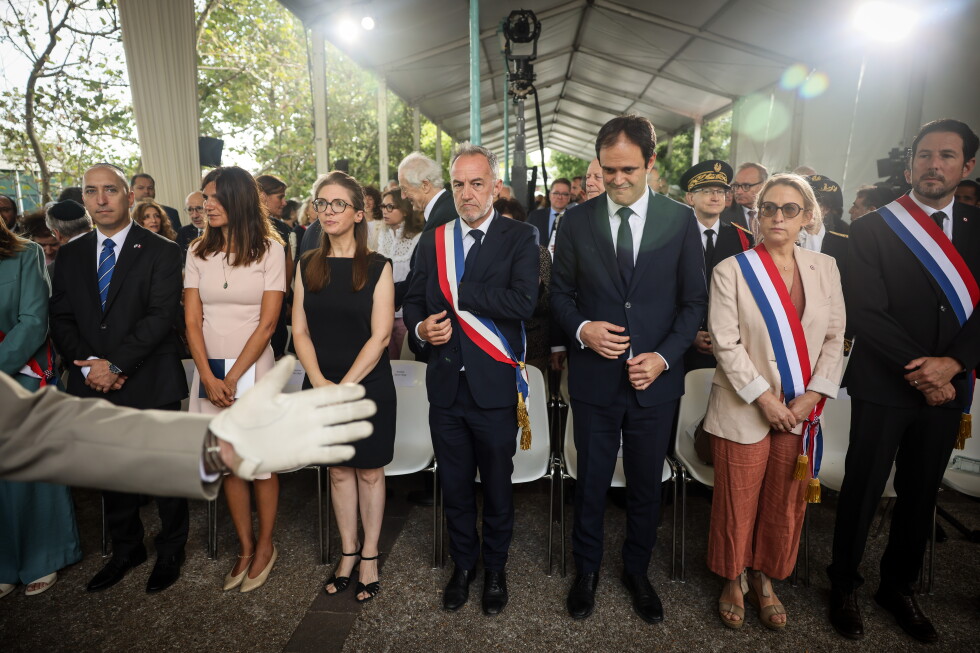
    On a solemn Sunday in Paris, France gathered to honor the memory of more than 13,000 Jewish victims of the 1942 Vel d’Hiv roundup, one of the darkest chapters of collaboration between the wartime Vichy regime and Nazi Germany. The annual commemoration this year carries heightened urgency, as the nation confronts a sharp increase in antisemitic violence and harassment across the country following the outbreak of the Israel-Gaza conflict in October 2023.

    The mass arrest operation, named for the Paris Winter Velodrome where thousands of detainees were crowded in inhumane conditions before deportation, unfolded over four days starting July 16, 1942. French authorities mobilized more than 4,500 police officers and requisitioned dozens of civilian buses to carry out the raid, acting on Nazi orders. Over 13,000 Jews were arrested, one-third of them children. Families were torn apart as officers seized children from their parents’ arms, and nearly all detainees were ultimately sent to Nazi death camps, where very few survived.

    During World War II, after Nazi Germany invaded and occupied France in 1940, the collaborationist Vichy government administered French territory and actively aided the Nazi regime’s genocidal campaign against European Jewry. It would take five decades for the French state to formally take responsibility for its role in the Holocaust: in 1992, then-President Jacques Chirac issued a historic public apology for the French authorities’ central participation in the Vel d’Hiv roundup and other atrocities.

    Today, France is home to the largest Jewish community in Europe. In the months after the October 7, 2023, Hamas attacks on Israel and the subsequent Israeli military campaign in Gaza, official data has recorded a major surge in antisemitic incidents, ranging from verbal threats and graffiti vandalism to physical assaults on Jewish people and sites. The troubling wave of hate cast a shadow over this year’s commemoration, after authorities confirmed a memorial plaque honoring a French family recognized as Righteous Among the Nations by the State of Israel was vandalized in Paris in the days leading up to the ceremony. The family had saved a 13-year-old Jewish child from capture during the 1942 roundup.
    French Deputy Defense Minister Alice Rufo condemned the act of vandalism in stark terms, saying “To attack the Righteous is to desecrate the entire universe.” She reaffirmed the state’s commitment to restoring the plaque and preserving the legacy of those who resisted antisemitism and genocide, stressing that “In the face of antisemitism, in all its forms, the Republic will not yield an inch.”

    Each year’s commemoration serves as both a tribute to the victims of the roundup and a reminder of the ongoing need to confront antisemitic hate in modern French society, keeping the memory of the Vel d’Hiv victims alive for future generations.

  • The World Cup final is here, with Argentina taking on Spain in soccer’s showdown

    The World Cup final is here, with Argentina taking on Spain in soccer’s showdown

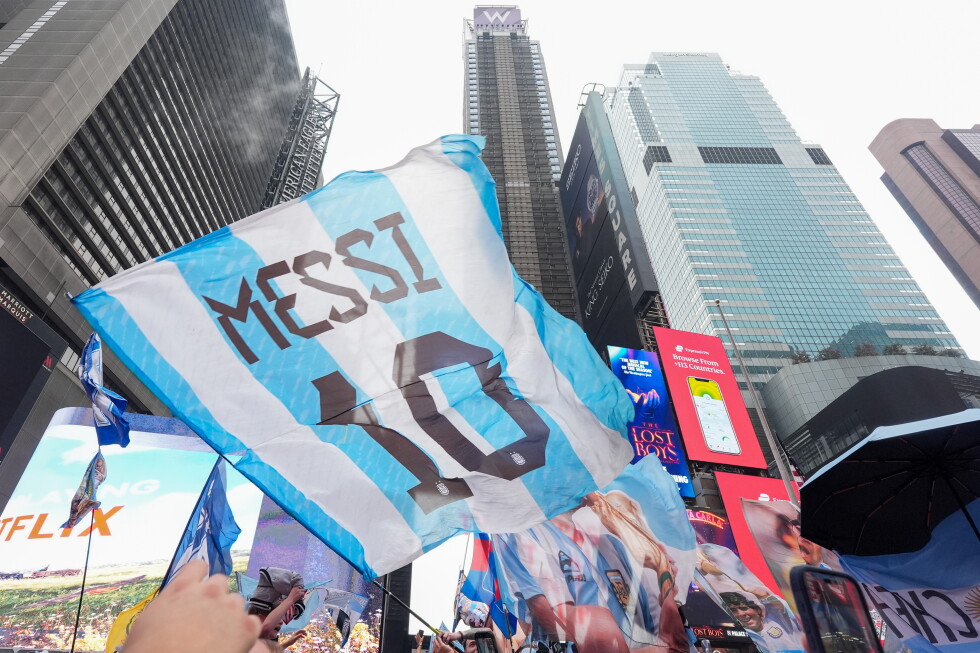
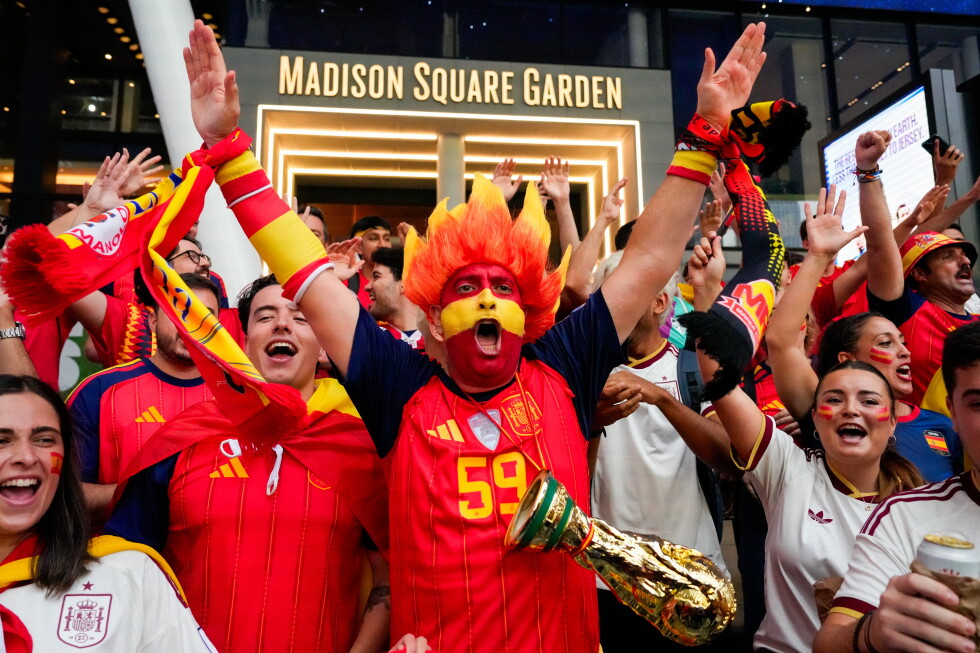
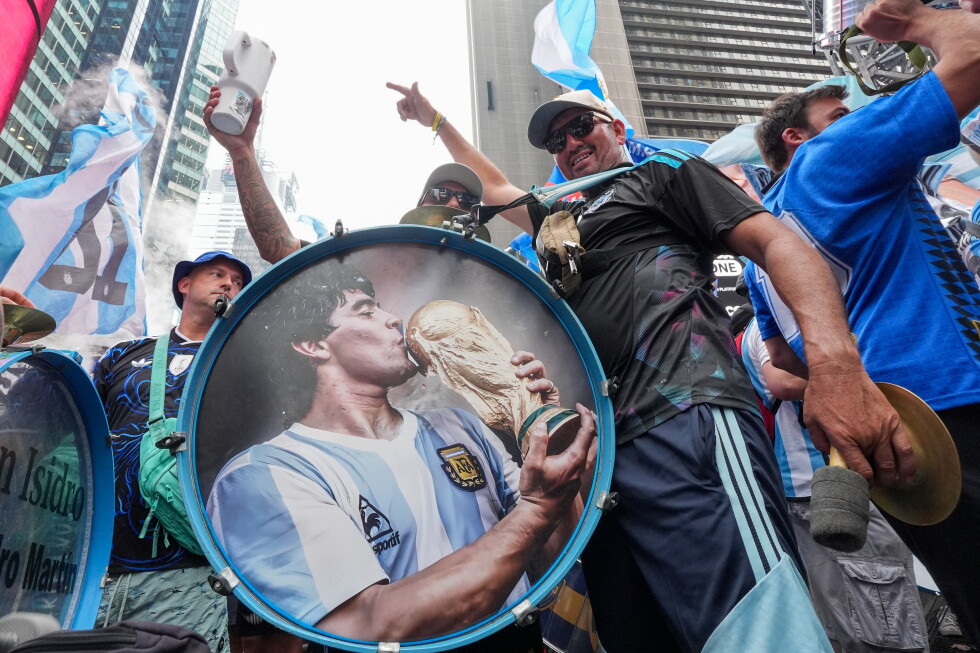
    After more than three weeks of world-class soccer action across the United States, Canada, and Mexico, the 2026 FIFA World Cup — the expanded 48-team edition that already holds the title of the largest World Cup in tournament history — is set for its climax on Sunday. Kickoff is scheduled for 3 p.m. EDT at East Rutherford’s MetLife Stadium, where two global powerhouses will clash for soccer’s most coveted prize: four-time finalists Argentina, seeking their fourth World Cup crown, face off against Spain, who are gunning for their second men’s title. A win for Spain would make history, as it would become the first nation ever to hold both the men’s and women’s World Cup trophies simultaneously, following Spain’s women’s team victory at the 2023 FIFA Women’s World Cup.

    This expanded 48-team tournament has already broken multiple records before the final whistle even blows. With 103 matches completed heading into Sunday’s final, the 2026 edition has already seen more total goals scored than any previous World Cup, with 307 goals on the board entering the championship clash. If Argentina and Spain net at least two combined goals in the final, this tournament will claim another milestone: the highest average goals per game since the 1956 World Cup, which posted an average of 3.6 goals per match. Even if the two sides combine for fewer than two goals, 2026 will still hold the second-highest average goals per game in World Cup history, outperforming every tournament since the 1970 World Cup, which averaged 2.97 goals per game.

    Beyond the on-pitch action, this final will deliver a unprecedented global entertainment spectacle, a first for FIFA’s men’s World Cup. Grammy-nominated multiplatinum artist Post Malone will headline the official closing ceremony, scheduled to begin 90 minutes before kickoff. For the first time in men’s World Cup history, the match will feature a star-studded halftime show headlined by a roster of global superstars: Justin Bieber, Madonna, Shakira, and KRT, joined afropop icon Burna Boy, award-winning Venezuelan conductor Gustavo Dudamel, the acclaimed PS 22 Chorus with a special guest appearance from Coldplay, and even beloved characters from Sesame Street and The Muppets.

    High-profile attendance is also expected for the historic match, with former U.S. President Donald Trump confirmed to be in attendance and scheduled to take part in the post-match trophy presentation. Ahead of kickoff, both sides have confirmed their kit choices: Argentina will take the pitch in its iconic light blue and white vertically striped home jerseys, while Spain will wear its primary kit of predominantly red with navy blue sleeves. Officiating the historic final is a crew from Slovenia, led by head referee Slavko Vinčić, with assistant referees Tomaž Klančnik and Andraž Kovačič.

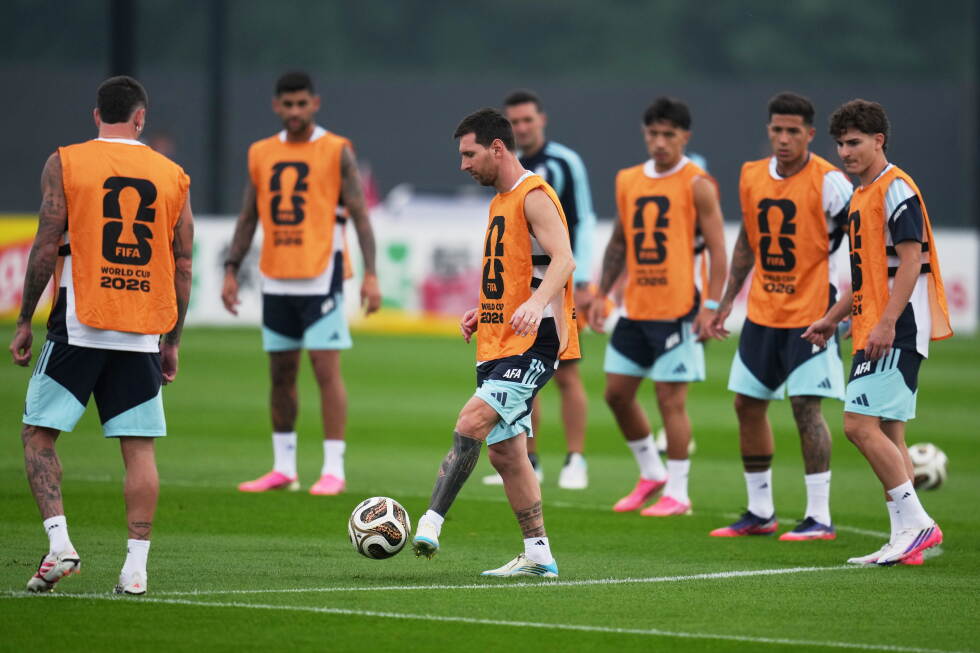
    For Argentina, the match also represents a chance for captain Lionel Messi to add another chapter to his already legendary career. Messi enters the final within striking distance of tournament leader Kylian Mbappé for the Golden Boot, and is also in contention for a record third Golden Ball award, cementing his legacy as one of the greatest players to ever step onto a soccer pitch.

  • If history is any indication, expect some goals in the World Cup final between Argentina and Spain

    If history is any indication, expect some goals in the World Cup final between Argentina and Spain

    As the world’s biggest stage in men’s soccer prepares for its headline showdown between Argentina and Spain, decades of World Cup history offer compelling context and fascinating storylines to watch when the two sides step onto the pitch Sunday.

    First, fans can reasonably expect a high-scoring, action-packed clash, if past finals are any indicator. An analysis of 22 prior men’s title matches — including the 1950 decisive fixture between Uruguay and Brazil that settled the tournament despite not bearing the official “final” label — shows that winning sides have notched an average of 2.6 goals per final, while losing teams add an average of 1.1 goals to the scoreboard.

    Recent finals have leaned heavily into this offensive tradition: the 2018 and 2022 title matches combined for a staggering 12 total goals. In 2018, France outpaced Croatia 4-2 to claim the crown, and four years later, Argentina and France fought to a 3-3 draw before Argentina secured the win on penalties. Overall, 17 of the last World Cup titles went to teams that scored at least two goals in the final, though eight teams have hit that two-goal mark and still walked away empty-handed. Low-scoring title games are far rarer: only three finals have ended 1-0 (West Germany over Argentina in 1990, Spain over Netherlands in 2010, and Germany over Argentina in 2014), and just one final ended 0-0 in regulation, when Brazil bested Italy on penalties in the 1994 tournament — the only previous World Cup final held on U.S. soil before this edition.

    Beyond historical scoring trends, multiple coaching and player milestones hang in the balance this Sunday. For Argentina, if the side lifts the trophy, head coach Lionel Scaloni — who already led the Albiceleste to the 2022 World Cup title — will cement his place in history as just the second manager ever to win two World Cup championships. The only other coach to achieve this feat is Vittorio Pozzo, who led Italy to back-to-back titles in 1934 and 1938, a record that has stood unmatched for nearly 90 years. Three other managers (Brazil’s Mário Zagallo, West Germany’s Franz Beckenbauer and France’s Didier Deschamps) have won World Cups as both a player and a coach, but none have claimed two triumphs on the touchline.

    Argentina’s global icon Lionel Messi is also set to make history just by stepping onto the field. At 39 years old, Messi will become the oldest outfield player ever to appear in a men’s World Cup final. The previous record for the oldest outfield finalist belonged to Sweden’s Gunnar Gren, who was 37 when he faced Brazil in the 1958 final. The only player older than Messi to ever start in a World Cup final is Italian goalkeeper Dino Zoff, who was 40 when he backstopped Italy to the 1982 title. Additionally, Messi is on the cusp of joining Brazil’s Cafu as only the second man to play in three men’s World Cup finals; unlike Cafu, who was a reserve for one of his three final appearances, Messi will be the first player ever to start in three men’s World Cup title matches.

    For Spain, the final brings its own set of potential history-making moments, centered on a unique blend of youthful talent and veteran leadership. La Roja is expected to field two 19-year-old teenagers, Lamine Yamal and Pau Cubarsí, in its starting lineup. No men’s World Cup champion has ever put more than one teenager in the starting lineup for the final, putting this young duo in uncharted territory. Teenagers actually hold an unbeaten record in World Cup finals, per FIFA data: only three teens have ever played in a men’s final, and all three left with winner’s medals: 17-year-old Pelé for Brazil in 1958, 18-year-old Giuseppe Bergomi for Italy in 1982, and 19-year-old Kylian Mbappé for France in 2018.

    If Spain claims the win, their 65-year-old head coach Luis de la Fuente will break another age record, becoming the oldest manager ever to win a World Cup. The current record is held by Vicente del Bosque, who was 59 when he led Spain to the 2010 World Cup title.

    Entering the final, both sides carry impressive ongoing streaks that add to the narrative. Spain enters the match unbeaten in 37 consecutive matches (28 wins, 9 draws), a run that ties Italy’s 2018-2021 stretch for the longest unbeaten streak by any European men’s national team in history. Argentina also boasts a notable tournament streak: the Albiceleste have won seven consecutive World Cup matches, tying Italy for the second-longest consecutive win streak in men’s World Cup history. Only Brazil, which won 11 straight World Cup matches across the 2002 and 2006 tournaments, holds a longer streak.

    Sunday’s showdown will only be the second time Argentina and Spain have faced off in a World Cup. The pair’s only prior tournament meeting came in the 1966 group stage, where Argentina claimed a 2-1 win. Across all competitive matches and friendlies, the two sides are remarkably evenly matched: they have played 14 times total, with six wins apiece and two draws, setting the stage for what is expected to be a tightly contested, historic final.

  • Russia launches major ballistic missile attack on Kyiv

    Russia launches major ballistic missile attack on Kyiv

    Overnight drone and missile strikes exchanged between Russia and Ukraine have sent tensions soaring to new heights in the nearly four-year full-scale invasion, with the Ukrainian capital Kyiv absorbing one of the largest ballistic missile assaults of the war to date. Ukrainian officials confirmed that the Russian bombardment left at least one civilian dead and at least 14 others wounded, after a wave of projectiles targeted multiple districts across Kyiv and its surrounding suburbs.

    Ukrainian President Volodymyr Zelenskyy labeled the attack as one of the most extensive ballistic missile campaigns against Kyiv since Russia launched its full-scale invasion in February 2022. In an official update shared via Telegram, Zelenskyy added context to the mounting pressure facing Ukraine, noting that over the preceding seven days, Russian forces had launched roughly 1,450 attack drones, more than 1,640 precision-guided bombs, and 99 missiles of different variants against Ukrainian targets across the country.

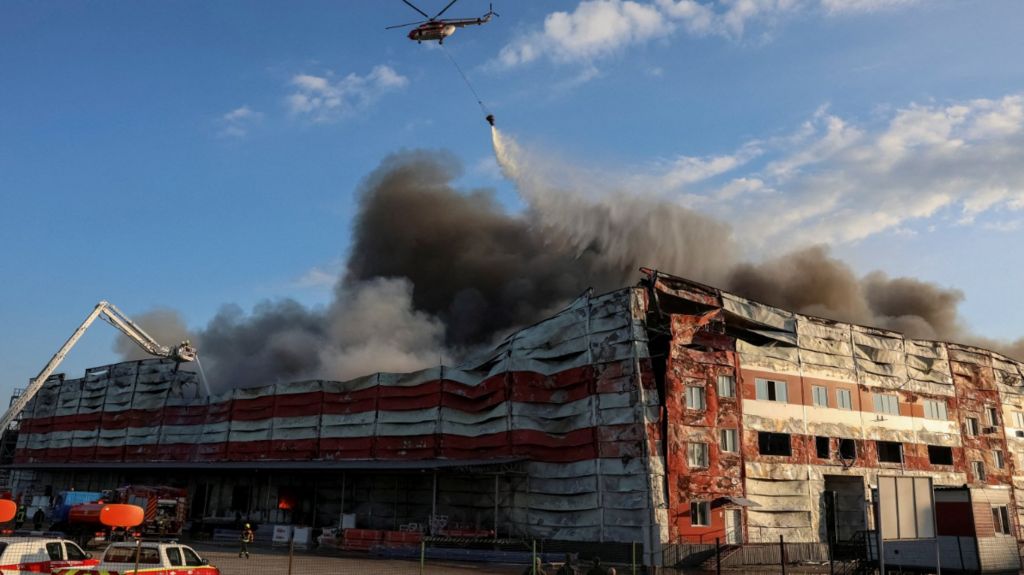
    According to the Ukrainian Air Force, the overnight assault on Kyiv deployed a diverse arsenal of Russian weaponry, including Iskander short-range ballistic missiles, hypersonic Zircon anti-ship cruise missiles, and a total of 125 attack drones. Ukrainian air defense crews managed to intercept 18 of the 41 incoming ballistic missiles, as well as 108 of the drones launched in the wave. Kyiv Mayor Vitaliy Klitschko confirmed that both civilian residential buildings and commercial non-residential structures suffered damage in the strikes, with a local supermarket and a student dormitory among the impacted sites. Emergency response teams remained on scene through Sunday morning, working to extinguish large fires that broke out at two commercial warehouses damaged in the attack.

    The Russian strikes on Kyiv came in direct retaliation for a coordinated Ukrainian drone assault on facilities owned by Wildberries, Russia’s largest e-commerce retailer, widely compared to Amazon in the United States. The drone attacks destroyed two Wildberries warehouses, left eight people dead, and triggered massive uncontrolled fires at the sites. Seven of the fatalities and 25 injuries were reported at a warehouse in Tambov, a city located roughly 475 kilometers southeast of Moscow. One additional fatality and 37 injuries were recorded at a second warehouse in Elektrostal, a city just outside the Russian capital.

    In a statement released Saturday, Zelenskyy defended Ukraine’s cross-border targeting operations, framing them as a direct response to repeated Russian strikes on Ukrainian civilian infrastructure and population centers. The governor of Russia’s Stavropol Krai, a southwestern region of the country, also confirmed that a separate Ukrainian drone attack sparked a large fire at a local industrial park over the weekend, marking another in a growing string of strikes on Russian territory.

    In recent weeks, Ukraine has significantly ramped up its long-range drone campaign against Russian critical energy infrastructure, a strategy that has reportedly caused widespread fuel shortages across parts of Russia. Earlier this month, Ukrainian officials claimed that their strikes had disabled approximately 43 percent of Russia’s total oil refining capacity, a figure that the BBC has not been able to independently verify. Ukrainian officials have repeatedly stated that Russian oil and gas facilities are legitimate military targets, arguing that Moscow depends heavily on revenue from fossil fuel exports to fund its ongoing invasion of Ukraine. Founded in 2004, Wildberries has grown into Russia’s largest e-commerce platform; earlier this year, Forbes Russia valued the combined RWB group, which merges Wildberries and Russian advertising firm Russ, at roughly $12.6 billion.

  • The biggest takeaways from the 2026 World Cup

    The biggest takeaways from the 2026 World Cup

    ATLANTA – As Spain and defending World Cup champion Argentina prepare to step onto the pitch in New Jersey for the tournament’s 2026 final, the curtain is set to fall on the biggest edition of global soccer’s flagship event in history. Over nearly six weeks of competition co-hosted by the United States, Mexico and Canada, a record-breaking 104 matches have been played, capping off an expanded tournament that delivered electrifying on-pitch action alongside a wave of lingering controversies. From underdog breakthroughs to political tensions and widespread criticism of new rules and technology, the first 48-team World Cup has been one of the most unpredictable and debated tournaments in modern memory. Below are the defining takeaways from the 2026 event.

    ### More Teams, More Underdog Drama
    When FIFA approved the expansion from 32 to 48 teams, critics immediately warned the new format would produce lopsided group-stage matches and dilute the competitive stakes of the opening round. But several unheralded underdog nations proved the skeptics wrong, writing their own chapters in World Cup history and winning legions of new global fans.

    Cape Verde, making its historic tournament debut, defied all expectations to hold powerhouse Spain to a draw in its opening match, advance to the round of 32, and push defending champion Argentina to the brink before falling 3-2 in extra time in an instant classic. The nation’s 40-year-old goalkeeper Vozinha emerged as an unexpected breakout star, amassing millions of new followers across social media platforms for his series of game-saving performances. Fellow debutants Congo also advanced past the group stage and pushed European powerhouse England to a tight match before elimination, while Curaçao remained in contention for a knockout spot heading into its final group fixture.

    FIFA’s gamble to open the World Cup to more nations was partially vindicated: smaller sides proved they can compete with the sport’s traditional powerhouses on the biggest stage. Even so, it was the sport’s elite former champions — Argentina, Spain, France and England — that claimed the four semifinal spots, reinforcing the hierarchy of global soccer.

    ### The World’s Top Stars Deliver on the Big Stage
    The race for the tournament’s Golden Boot became a showcase for the planet’s best players, with Lionel Messi, Kylian Mbappé, Erling Haaland, Harry Kane and Jude Bellingham all producing consistent, high-scoring performances throughout the knockout stages.

    Heading into Sunday’s final, Mbappé holds the tournament lead with 10 goals, and has already broken the all-time career World Cup scoring record with 22 total goals across his tournament appearances. Messi trails Mbappé by two goals at this tournament, sitting on 21 total career World Cup goals with a chance to equal or surpass the record in the final, and is still in contention for a third career Ballon d’Or if Argentina claims the trophy. While Cristiano Ronaldo could not lead Portugal to a deep run in what he has confirmed is his final World Cup, Spanish teenage sensation Lamine Yamal — who emerged as a star at the 2024 Euros — worked his way back into form after overcoming a pre-tournament injury to play a key role in Spain’s run to the final.

    ### New Technology Sparks Backlash Over Controversial Calls
    The tournament’s embrace of cutting-edge officiating technology put VAR (Video Assistant Review) at the center of multiple contentious decisions that saw goals disallowed for Germany, Croatia and Egypt, sparking fury from coaches and fans alike.
    After Argentina pulled off a dramatic comeback from a 2-0 deficit to beat Egypt 3-2 in the round of 16, Egypt head coach Hossam Hassan launched a scathing attack on officials after a potential opening goal for his side was overturned by VAR review. “We have suffered injustice,” Hassan said after the elimination.

    The tournament’s sensor-equipped official match ball also changed the outcome of a knockout fixture: Croatia had a dramatic late equalizer ruled out against Portugal in the round of 32, when the ball’s sensors detected the slightest touch offside by Igor Matanović before Josko Gvardiol scored. “All these decisions take the joy out of football,” said Croatia head coach Zlatko Dalić, who announced his resignation shortly after the elimination.

    ### Exorbitant Ticket Prices Didn’t Deter Record Fan Turnout
    Leading up to the tournament, critics warned that FIFA’s adoption of dynamic pricing would put match tickets out of reach for average soccer fans, with some describing the policy as a “monumental betrayal” of supporters. Official general sale prices for group-stage matches ranged from $140 to $2,735, with final tickets reaching as high as $8,680 — far above the price point for the 2022 Qatar World Cup. After sustained backlash, FIFA added a batch of $60 tickets for every match allocated to each of the 48 participating national federations, but the controversy extended to FIFA’s official resale platform, which allowed sellers to list tickets for well above face value. One final ticket was listed for nearly $2.3 million on the platform; while FIFA did not regulate resale prices, it took a cut of every secondary sale.

    For all the criticism around pricing, fans still turned out in record numbers across the three host nations, even for matches featuring no elite global teams. After an opening weekend with scattered empty seats for the South Korea-Czech Republic match in Guadalajara, nearly every subsequent match reported sold-out stadiums. Many international visitors also praised the warm hospitality they received during their time in the United States.

    ### Hydration Breeds Draw Major Fan and Critic Pushback
    One of the tournament’s most unpopular innovations was the mandatory hydration break added to the middle of each half of play, introduced to help players cope with summer heat across North American venues. The rule drew loud jeers from fans inside stadiums, and drew criticism from former players as well. “We’re in America, right? So, it is like it is a timeout,” former Ireland international Roy Keane said on The Overlap podcast, echoing widespread complaints that the breaks disrupted the flow of matches.

    FIFA mandated the breaks regardless of match-day temperature, venue or location, and the rule quickly became a tactical loophole: coaches used the pauses to deliver tactical instructions to their players, while broadcasters used the extra time for additional commercial breaks. It remains unclear whether FIFA will retain the rule for future World Cups, and organizers for the 2028 European Championship — co-hosted by the British Isles — have already signaled they will not adopt the policy.

    ### Political Tensions Overshadow Iran’s Participation
    As is often the case at major international tournaments, politics and soccer intersected at the 2026 World Cup, with the highest tensions surrounding Iran’s participation. Amid ongoing conflict in the Middle East, there were widespread doubts that Iran would even send its team to the tournament. The side ultimately competed, but was forced to relocate its pre-tournament base camp from Arizona to Mexico amid security and political concerns.

    Iran’s participation was marked by ongoing barriers: U.S. officials refused to issue visas to multiple members of the Iranian delegation, and the team complained of strict travel restrictions that forced players and staff to leave the United States immediately after every match. When Iran was eliminated in the group stage, U.S. Homeland Security Secretary Markwayne Mullin made his position clear: “I’m just glad they’re done and they’re not coming back,” he said.

    The 2026 tournament also put the relationship between former U.S. President Donald Trump and FIFA president Gianni Infantino under the microscope, after a one-game suspension for U.S. striker Folarin Balogun was overturned ahead of the team’s round of 16 match against Belgium. Trump confirmed he had called Infantino to request a review of the red card decision before Balogun was cleared to play. While FIFA insists its independent disciplinary bodies made the final call, the incident sparked widespread questions about political interference in soccer governance. The controversy ultimately did not benefit the United States, which lost the match 4-1 to Belgium.

  • What to know about the challenges Andy Burnham will face as UK prime minister

    What to know about the challenges Andy Burnham will face as UK prime minister

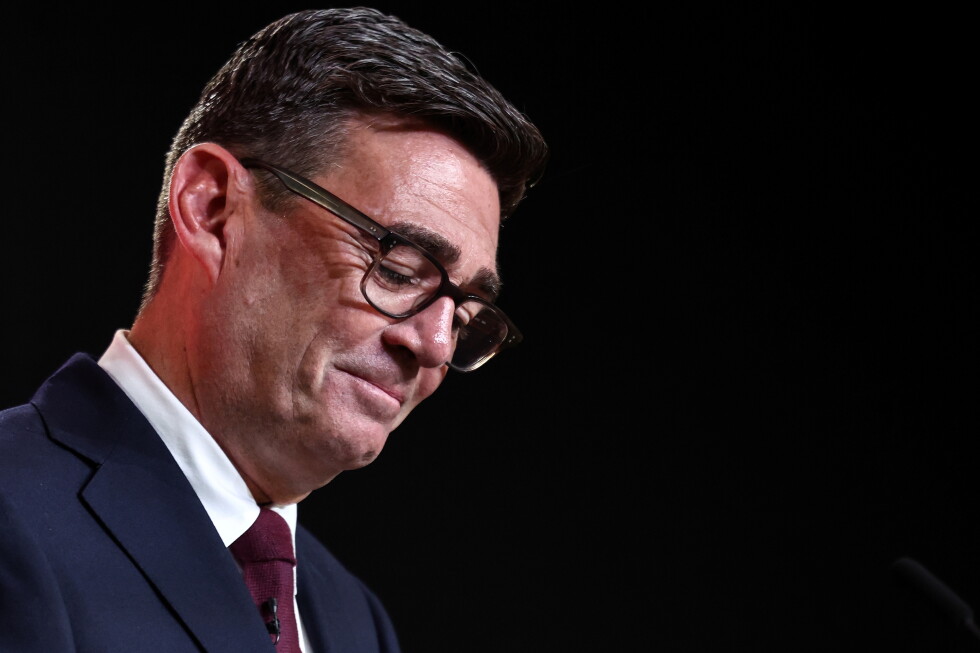
    LONDON – When Andy Burnham crosses the threshold of 10 Downing Street on Monday, he will carry high public expectations into office, while also inheriting a daunting pile of domestic and international crises that mirror the unenviable challenges that forced his predecessor out of Downing Street.

    After nearly a decade serving as Mayor of Greater Manchester in northwest England, and a surprise win in a recent parliamentary by-election that cleared his path back to national politics, Burnham was confirmed as the new leader of the Labour Party last week, and is set to be sworn in as the United Kingdom’s new prime minister. For the regional leader who has spent his career governing a population of just 3 million, steering a national government serving 67 million people across four nations will be a step up of unprecedented scale, bringing with it complex issues he has never before had to address at a national level.

    Below is a breakdown of the most pressing issues facing Burnham’s new administration, and early indications of how he may approach them:

    ### Reviving the Sluggish Economy and Decentralizing Power
    Burnham has so far kept his policy details vague, but has pledged to release a full roadmap this week outlining how he will fund his domestic agenda, which centers on jumpstarting stalled UK economic growth, upgrading public services, and raising household living standards.

    “This change today is the most significant turning point for our politics in 40 years,” Burnham remarked Friday as he officially took the Labour Party reins. “It will lead us to a country where life becomes more affordable, and every person and every region can lift themselves up from where they stand now.”

    The economy Burnham inherits was showing tentative signs of improvement until the outbreak of the Iran war upended global forecasts. Economists now widely predict sharp growth slowdown across 2026 alongside renewed upward pressure on inflation, leaving little room for major new spending commitments.

    A core ideological priority for Burnham is closing the opportunity gap between London and the wider UK, primarily through widespread government decentralization: channeling more funding directly to local authorities, and renationalizing a number of public services that were privatized during the 1980s. His model of business-friendly progressive governance, dubbed “Manchesterism,” seeks to combine private and public investment to upgrade transport, housing and national infrastructure. This ambitious structural reshaping of the UK state could take years to fully implement, however.

    Joshi Herrmann, founder of the independent Manchester-based news outlet The Mill, who has covered Burnham’s career for more than a decade, noted that Burnham may be able to ease financial pressure for struggling households. But, he added: “If the core question facing the country is who can deliver sustained economic growth and reshape the UK economy for the post-Brexit, post-financial crash era, I’d be very surprised if Andy Burnham is that answer.”

    Constrained by tight public finances, Burnham has very little room to increase overall public spending. He is taking over from Keir Starmer, who won power on a manifesto that ruled out increases to the UK’s major tax rates, locking Burnham into that fiscal framework unless he chooses to break those campaign pledges. Burnham has declined to rule out introducing a new wealth tax, telling former footballer and broadcaster Gary Lineker on the Goalhanger podcast last week that the government “might be having to ask for a little more” from the country’s wealthiest citizens.

    ### Navigating Foreign Policy and US Relations With Donald Trump
    One of Burnham’s biggest gaps in experience is on the global stage, but he has already made clear he will maintain the UK’s longstanding commitments to NATO and the country’s independent nuclear deterrent. He has also reaffirmed that Britain will remain a staunch backer of Ukraine in its war against Russian invasion and a reliable ally to the United States.

    The future of US-UK relations will largely hinge on how Burnham handles unpredictable US President Donald Trump, who initially praised Starmer before turning on him over Starmer’s refusal to back the US war with Iran. Burnham has publicly criticized Trump in the past, but says he will treat the US president with respect, just as he treats other political leaders, while being willing to stand his ground on points of disagreement.

    “I like to think I’ve got some personality myself and I’ll just, you know, I’ll deal with him very upfront in the same way,” he told Lineker. “Where you disagree, do it, but do it in a way that is kind of meeting him where he’s at.”

    Trump has repeatedly pressured NATO member states to dramatically increase their military spending, putting Burnham under pressure to go further than the defense spending targets set by Starmer’s government. Starmer’s existing 15 billion pound ($20 billion) defense spending boost is far smaller than what UK military leaders have demanded, and critics have pointed out the plan lacks full funding within the current national budget.

    ### Navigating Sensitive Political Terrain Over the Israel-Hamas War
    Burnham has openly criticized Starmer’s approach to the Israel-Hamas war and the humanitarian catastrophe unfolding in Gaza. He condemned the October 7, 2023, Hamas attacks on southern Israel that killed roughly 1,200 people and took 251 hostages, but has argued the previous UK government waited far too long to call for a permanent ceasefire.

    According to the Gaza Health Ministry, which is run by the Hamas-led administration but staffed by medical professionals that maintain detailed records generally deemed reliable by UN agencies and independent experts, more than 73,000 Palestinians have been killed in Gaza since the start of Israeli operations. Burnham has said his government will consider adding new sanctions against Israeli individuals involved in violence in Gaza and the expansion of illegal settlements in the occupied West Bank.

    The conflict is deeply sensitive for the Labour Party: the party was plagued by accusations of systemic antisemitism before Starmer took leadership, and it also relies heavily on electoral support from the UK’s large Muslim population. Burnham’s stance on the war has already drawn backlash from UK Jewish groups, while pro-Palestinian activists have criticized him for refusing to classify Israel’s bombardment of Gaza as genocide.

    ### Tackling the Politically Thorny Issue of Migration
    Notably, Burnham made no mention of migration in his acceptance speech as Labour leader on Friday, despite the issue ranking as a top priority for a large share of UK voters. Like many wealthy European and Western nations, the UK has seen a sharp rise in arrivals of migrants fleeing war, famine, climate-driven disasters, political persecution and poverty in their home countries.

    Public anger over rising numbers of dangerous small boat crossings of the English Channel has fueled the rise of the anti-immigration Reform UK party, which notched a series of key local and regional election wins that ultimately led to Labour’s decision to oust Starmer and install Burnham as party leader.

    Burnham has said he will largely stick to the outgoing Labour government’s existing framework on migration, which has already overseen a drop in net migration from a peak of more than 900,000 in 2023 to 171,000 in 2025. Data shows small boat crossings this year are already down 40% compared to the same period in 2025. Burnham has committed to continuing the downward trend in net migration, and previously voted in favor of a bill designed to further cut Channel crossings and redirect migrants to safer, legal migration pathways.

    Associated Press writers Pan Pylas and Jill Lawless contributed reporting to this article.