标签: Asia

亚洲

  • Death toll rises to 14 in Pakistan suicide attack. Pakistan Taliban splinter group claims blast

    Death toll rises to 14 in Pakistan suicide attack. Pakistan Taliban splinter group claims blast

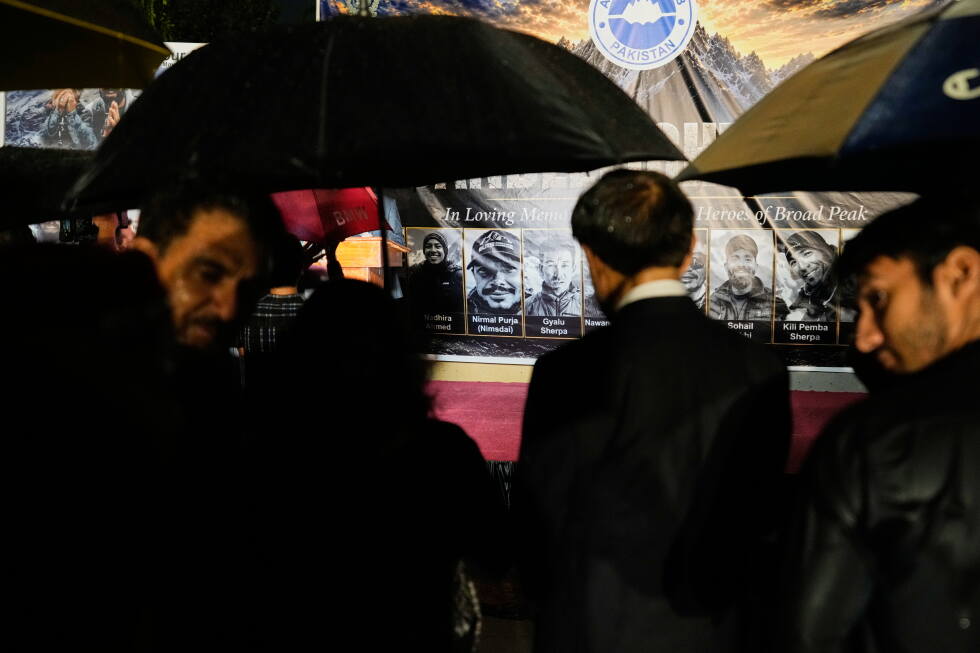
    In the early hours of Sunday, Pakistani authorities confirmed a grim update to a devastating weekend attack: the death toll from a suicide bombing targeting a security outpost in the country’s northwest has climbed to 14 police officers, with a breakaway Taliban-aligned militant faction claiming credit for the violence. The assault unfolded late Saturday near the town of Bannu, a district in Khyber Pakhtunkhwa province that sits along Pakistan’s porous border with Afghanistan, according to senior police commander Sajjad Khan.

    Khan detailed that the attack combined multiple layers of assault: a suicide bomber driving a vehicle packed with explosives detonated the device close to the security post, before several armed gunmen moved on the position. The blast and subsequent incursion sparked a fierce, close-quarters gunfight between the attackers and responding officers. Some law enforcement personnel were killed during the exchange of fire, while others lost their lives when the security post’s structure collapsed under the force of the explosion.

    Rescue teams launched a protracted search operation spanning multiple hours, deploying heavy construction equipment to clear rubble and recover the remains of fallen officers. Khan confirmed that three additional officers were injured in the attack, and that Pakistani security forces have already initiated a manhunt to locate and apprehend any surviving perpetrators linked to the assault.

    Shortly after the attack, a newly established militant organization calling itself Ittehad-ul-Mujahideen Pakistan issued a statement to journalists claiming responsibility for the bombing. While the group frames itself as an independent coalition formed by breakaway factions of Tehrik-e-Taliban Pakistan (TTP) – Pakistan’s primary domestic Taliban insurgent group – Pakistani government officials have long alleged that Ittehad-ul-Mujahideen operates as a front organization for the TTP to obscure its direct involvement in attacks.

    The bombing comes amid a marked resurgence of militant violence across Pakistan over the past several years, with the vast majority of major attacks attributed to the TTP. The TTP is a distinct insurgent group aligned with the Afghan Taliban, which regained national control of Afghanistan following the U.S. military withdrawal in 2021. The Pakistani government has repeatedly leveled accusations that the Afghan Taliban administration provides safe haven and logistical support to TTP fighters operating from Afghan territory, claims that Kabul has consistently denied.

    Cross-border tensions between the two neighboring countries have simmered at dangerous levels for months, with open armed clashes between Pakistani and Afghan forces claiming hundreds of lives on both sides since late February. In an attempt to de-escalate the standoff, senior diplomatic and security officials from both nations held peace talks mediated by China in early April. While the talks succeeded in reducing the intensity of cross-border violence, sporadic small-scale clashes have continued along the shared border in the weeks since the diplomatic meeting.

  • Iran war disruptions spark higher costs and lost income in Bangladesh

    Iran war disruptions spark higher costs and lost income in Bangladesh

    For 53-year-old Tariqul Islam, the economic damage of escalating Middle East conflict arrived not on distant battlefields, but at the fuel pumps of Dhaka, Bangladesh’s crowded capital. A year and a half ago, Islam lost all his savings when his small clothing business collapsed, forcing him to turn to motorbike ride-sharing to support his four children, two of whom are pursuing higher education. Until just weeks ago, he spent the majority of his working days queued for fuel, caught in supply chain disruptions that have rippled thousands of miles from the war in Iran to the streets of South Asia.

    Islam’s struggle is far from an isolated hardship. Bangladesh, a nation of 170 million people that relies almost entirely on imported fuel to power its economy, is facing a broad-based energy crunch that has upended daily life, slowed industrial production, and cast a shadow over long-term growth prospects. While temporary government measures have slightly eased supply in recent days, shortening queues at fuel stations, lingering uncertainty continues to weigh on households and businesses across every sector.

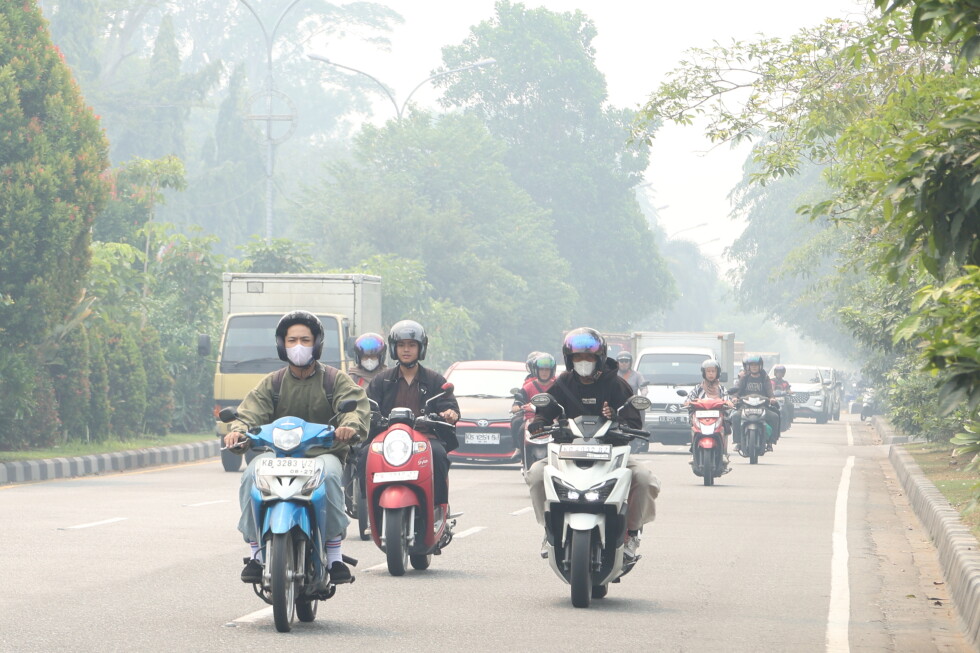
    Bangladesh is far from alone in facing this crisis. Across the entire Asian continent, nations dependent on imported oil and gas are grappling with war-driven energy price spikes that have strained national budgets and household finances alike. Much of global energy trade passes through the Strait of Hormuz, a narrow waterway that accounts for roughly one-fifth of the world’s total oil and natural gas shipments, making the entire region acutely vulnerable to disruptions sparked by conflict in Iran. For importing nations, the result has been soaring inflation, eroded purchasing power for working families, and spiking operating costs that have disrupted supply chains across every industry from manufacturing to transportation.

    In late April, the Asian Development Bank responded to the turmoil by downgrading its growth forecast for developing Asia and the Pacific, projecting regional expansion of just 4.7% in 2026, while inflation is expected to climb to 5.2% amid rising oil prices and tightening global financial conditions.

    For ordinary Bangladeshis like Islam, the situation has become untenable. “My family was managing fairly well through ride-sharing,” he explained. “But after the fuel shortage began, I would buy enough fuel one day to run the bike for two days. As a result, I had to sit idle for one day, which reduced my income.” If the conflict drags on and conditions do not improve, Islam says he has no choice but to abandon life in the capital and relocate his family back to his rural home village, where he hopes to find an alternative source of income. “It is not possible to survive in Dhaka by doing ride-sharing under these conditions,” he said.

    The crisis is also putting unprecedented strain on Bangladesh’s public finances. If global energy prices remain at their current elevated levels, the government will be forced to spend an additional $1.07 billion on liquefied natural gas (LNG) subsidies in the second quarter of 2026 alone. To offset the gap, authorities have already implemented a series of austerity measures, including shutting state-owned fertilizer factories to redirect limited gas supplies to power plants, imposing mandatory restrictions on evening operating hours for shopping malls, and rolling out fuel rationing systems. Bangladesh has also reached out to neighboring India for additional fuel supplies, a request India has met positively thanks to its own diversified fuel import network that includes shipments from Russia.

    The World Bank projects Bangladesh’s economic growth will slow to just 3.9% in the fiscal year ending June 2026, with a prolonged conflict in the Middle East expected to further fuel inflation, widen the country’s current account deficit, and increase pressure on public finances through higher energy subsidy obligations. Jean Pesme, the World Bank’s division director for Bangladesh and Bhutan, noted that the economy was already grappling with pre-existing vulnerabilities on the growth and employment fronts before the energy crisis hit. “The rising costs now are obviously making the fiscal situation more difficult,” Pesme explained, adding that authorities must proceed with caution when considering fuel price hikes, as higher costs would disproportionately harm small-scale farmers and the agricultural sector that supports much of Bangladesh’s rural population.

    The most severe damage is hitting Bangladesh’s economic backbone: the $39 billion garment export industry, which employs roughly 4 million workers, the vast majority of whom are women from low-income rural backgrounds. As the world’s second-largest garment exporter behind China, any major disruption to the sector has cascading consequences for the entire national economy.

    Industry leaders report that the energy crisis has driven a sharp jump in operating costs while export demand has weakened. Anwar-Ul Alam Chowdhury, president of the Bangladesh Chamber of Industries, says shipments to key markets in Europe and the United States have already fallen between 5% and 13% in recent months. Since the outbreak of the latest conflict in Iran, overall factory output has dropped by 30% to 40%, while overall business costs have surged 35% to 40%. Chowdhury warns that persistent instability could erode international buyer confidence, allowing competitor nations including India, Vietnam and Cambodia to capture critical market share from Bangladesh.

    For individual manufacturers, the crisis plays out on factory floors every day. Alvi Islam, director of Arrival Fashion Limited, a garment exporter that ships $40 million in products annually, says the company now must run diesel generators for at least four hours per working day to offset frequent power cuts. Energy-driven cost increases are also hitting input materials: petroleum-based products including sewing thread, plastic poly bags for packaging, and shipping cartons have all grown far more expensive. “For that reason, the cost of doing business for exporting garments has increased quite significantly in past one month,” he said.

    For the millions of low-wage workers who depend on the garment industry for their livelihoods, the uncertainty has sparked deep fear for the future. Mosammet Runa, a 35-year-old garment worker who earns roughly $200 per month alongside her husband to support their family of six, says a prolonged conflict could put millions out of work. “Millions of people like us depend on this industry. It is how we survive,” she said. “We are innocent people. The world should not make us victims.” Many across the country share her hope: that the conflict in Iran will end quickly, allowing supply chains to stabilize and life to return to normal.

  • Buddhist monk arrested over alleged rape of teen in Sri Lanka

    Buddhist monk arrested over alleged rape of teen in Sri Lanka

    In a highly unusual and shocking development that has sent ripples through Sri Lankan society, one of the island nation’s most senior and revered Buddhist monks has been taken into police custody and placed in remand prison, facing serious allegations of rape and sexual assault against a 15-year-old minor.

    The accused, Venerable Pallegama Hemarathana Thero, occupies one of the most prestigious roles in Sri Lanka’s Buddhist community: he serves as the chief prelate and custodian of eight of the country’s most sacred Buddhist religious sites. For months, his name had been linked to the alleged abuse, but law enforcement faced widespread criticism for failing to take action against the high-profile figure.

    The arrest finally moved forward after formal intervention from Sri Lanka’s national child protection authority, which had repeatedly called out police for their inaction in the case. At the time of his arrest on Saturday, Pallegama Hemarathana Thero was receiving medical care at a private hospital in Colombo, the nation’s capital. Following his detention, a local magistrate ruled that the suspect would be transferred to the Colombo prison hospital for ongoing care, rather than remaining in the private facility. The magistrate also issued a formal directive to Sri Lanka’s immigration authorities, placing a travel ban on the monk to prevent any attempt to flee the country ahead of his court proceedings.

    In addition to the monk’s arrest, the mother of the alleged minor victim has also been taken into custody and remanded. She faces charges of aiding and abetting the alleged sexual abuse, a detail that has added further complexity to the already high-profile case.

    Pallegama Hemarathana Thero has not yet issued any public statement addressing the charges brought against him, and he is scheduled to make his first appearance in court on May 12. The case marks a watershed moment for Sri Lanka, where Buddhist clergy hold enormous social influence and political power, and members of the clergy are widely venerated across the population. Arrests of Buddhist monks are rare in the country, and the detention of a figure as senior and well-known as Pallegaga Hemarathana Thero is unprecedented in recent history, bringing intense public scrutiny to how allegations of abuse against powerful religious figures are handled in the nation.

  • Indian model’s understated Met Gala debut revives debate on cultural representation

    Indian model’s understated Met Gala debut revives debate on cultural representation

    Two years ago, a chance encounter in a New York City subway station launched an unlikely new star onto the global fashion stage. Today, 26-year-old Indian model Bhavitha Mandava’s 2026 Met Gala debut has divided audiences and critics alike, igniting conversations about fashion excess, cultural representation, and the rising appeal of quiet authenticity in an industry defined by over-the-top spectacle.

    At fashion’s most high-profile annual event, where guests typically arrive in elaborate, statement-making couture that demands attention before the wearer even speaks, Mandava’s Chanel look read as deliberately restrained at first glance. From across the red carpet, she appeared in a sheer zip-up jacket paired with what looked like casual low-rise denim. Next to the structured gowns, dramatic silhouettes, and bold declarations that define the Met Gala’s red carpet, her outfit felt intentionally understated. But that simplicity was anything but accidental: fashion outlets soon revealed the “denim” was actually handcrafted silk muslin, printed and tailored to mimic textured cotton, turning casual everyday attire into a deliberate, high-fashion artistic choice.

    This deliberate contrast between appearance and craft has split public and media reaction. Some fashion observers have praised Mandava’s look as a thoughtful, quiet rebuke of the Met Gala’s typical over-the-top excess, a subtle subversion of the event’s obsession with grandeur. Others argue the understated ensemble failed to live up to the scale and prestige of the occasion, questioning whether it missed a once-in-a-generation moment for global visibility. Indian media has mirrored this divide, with some outlets hailing the outfit’s intentional minimalism and others arguing it undersold the importance of her debut as one of India’s rising fashion stars. On social media, the debate has expanded beyond fashion, touching on how Indian identity is framed, received, and often simplified on global cultural stages.

    Mandava’s rapid ascent from anonymous graduate student to global fashion fixture is as unusual as her signature aesthetic. Raised in Hyderabad, a city in southern India, she was pursuing a graduate architecture degree at New York University in 2024 when the 28Models scout approached her on her way to share a plate of biryani with a friend. The completely unplanned encounter quickly upended her life: within months, she was walking runways for luxury powerhouses Bottega Veneta, Dior, and Courrèges, before building a close ongoing partnership with Chanel. Even as her career exploded, Mandava never adopted the flashy persona common to rising modeling stars. In a February interview with *British Vogue*, she joked that her agent still teases her for early castings where she showed up in thrifted jeans and free NYU student t-shirts, wearing whatever was clean that day.

    Late last year, Mandava made history as the first Indian model to open Chanel’s prestigious Métiers d’Art show in New York, held on a meticulously reconstructed subway platform that intentionally echoed the setting of her discovery. Her opening look? A simple white t-shirt, half-zipped knit sweater, and loose denim — a template of deliberate understatement that she carried directly to the Met Gala red carpet.

    What makes Mandava’s story resonate far beyond fashion circles is its relatable core. Even after her rapid rise, she has carried the quiet authenticity of her former life as a grad student with her. She often speaks of her studies, her family, and the slow rhythm of ordinary life in interviews, rather than leaning into the manufactured myth of overnight stardom. When she opened the Chanel show, she shared a viral clip of her parents watching the live stream from their home in India: her mother repeating her name in stunned disbelief, her father sitting quietly beside her, beaming with quiet pride. The unguarded, intimate moment won millions of hearts online. On social media, she describes herself as a “Brooklyn lab rat”, balancing transatlantic life between architecture research, couture history study, and global runway commitments. It is a low-key persona that fits perfectly with fashion’s current embrace of “quiet luxury” and effortless, unforced style — but it clashed sharply with the heightened expectations of the Met Gala.

    In the wake of the social media firestorm over her Met Gala look, Mandava has declined to engage directly with critics, only sharing photos of the evening to her Instagram without additional comment. She later told *British Vogue* that the outfit was a personal tribute: a way to carry forward the memory of the subway encounter that launched her career, elevating the casual clothes she wore that day into couture while keeping it unmistakably hers.

    The fashion industry is notoriously fickle, and the current obsession with understatement may soon fade. It would also be unfair to expect Mandava, a young talent still early in her career, to remain frozen in this specific persona forever. But for now, her quiet, unforced presence offers a refreshing breath of air in an industry dominated by performance and overproduction — proof that authentic, understated style can still command the world’s attention.

  • Israeli settlers force Palestinian family to exhume father’s body in West Bank

    Israeli settlers force Palestinian family to exhume father’s body in West Bank

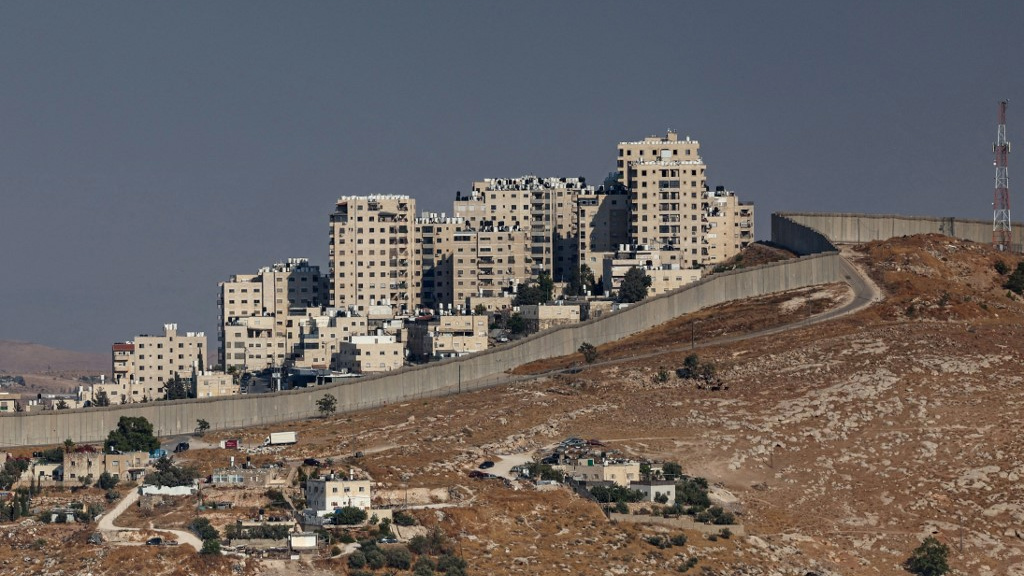
    In a shocking incident that has drawn widespread international rebuke, a Palestinian family was compelled by Israeli settlers to disinter the body of their late father from a West Bank cemetery on Friday, deepening ongoing concerns over escalating settler violence in the occupied territory. The confrontation unfolded near the recently reestablished Israeli settlement of Sa-Nur, located close to the city of Jenin. Settlers claimed the burial site, situated roughly 300 meters from the settlement outpost, violated their unstated proximity rules – a demand that ignored the fact the family of the deceased, Hussein Asasa, had secured all required Israeli government permits for the burial.

    According to reporting from Israeli outlet Haaretz, settlers immediately began digging at the cemetery shortly after the funeral ceremony concluded, triggering tense physical confrontations between the settlers and local Palestinian residents who gathered to protect the grave. The Israeli military confirmed it dispatched forces to the scene, where personnel seized the digging tools the settlers had brought to excavate the site. Despite this intervention, the Asasa family ultimately said they had no choice but to remove the body themselves and reburry it at a separate cemetery, all under armed Israeli military escort. During the traumatic process, settlers pelted the grieving family with stones as they carried out the exhumation.

    The United Nations’ top human rights official in Palestine condemned the act in stark terms. Ajith Sunghay, head of the UN human rights office in the Palestinian territories, called the incident appalling, noting it was a clear example of the systematic dehumanization of Palestinians unfolding across the Occupied Palestinian Territory (OPT). “It spares no one, dead or alive,” Sunghay said of the ongoing pattern of abuse.

    Settler violence against Palestinian communities in the occupied West Bank is not a new development, but experts and local authorities have documented a dramatic surge in attacks since the outbreak of the Israel-Gaza war in October 2023. Today, settlers carry out near-daily assaults on Palestinian villages and population centers, ranging from property vandalism and arson to forced displacement and violent physical attacks, many of which involve the use of firearms.

    Just last month, a deadly settler attack on a school northeast of Ramallah left two Palestinians dead, including a 15-year-old teenage student. Data collected by the Palestinian Authority’s Colonization and Wall Resistance Commission underscores the scale of the escalating violence: since October 2023, at least 50 Palestinians have been killed by Israeli settlers, with 15 of those fatalities recorded in the current year alone. The incident has renewed international calls for accountability for settler violence and protections for Palestinian civilians living under occupation.

  • Iran wants team members who served in the Revolutionary Guard to get visas for the World Cup

    Iran wants team members who served in the Revolutionary Guard to get visas for the World Cup

    DUBAI, United Arab Emirates — In a firm announcement made Saturday, the Football Federation Islamic Republic of Iran has confirmed that the country’s national men’s soccer team will “definitely” take part in the 2026 FIFA World Cup co-hosted by the United States, Canada and Mexico, while calling on the three host nations to address Tehran’s key concerns over cross-border travel and fair treatment of the delegation.

    Per reporting from Iranian state media, federation president Mehdi Taj outlined a core demand: all members of the Iranian squad and technical staff, particularly those who completed mandatory military service with the Islamic Revolutionary Guard Corps (IRGC), must be granted entry visas without obstruction or delay.

    Iran’s participation comes against a backdrop of extreme geopolitical tension. The Islamic Republic currently holds a fragile ceasefire with the U.S. following a February 28 series of attacks on Iran by the U.S. and Israel that escalated into open conflict. Additionally, Iranian citizens have long faced broad travel restrictions imposed by the Trump administration that remain in place.

    In the official statement carried by Iran’s state-run IRNA news agency, delivered Friday, Taj confirmed that Tehran had submitted formal conditions for its participation, including binding guarantees for visa access, on-ground security, and respectful treatment of all Iranian players and officials. He emphasized that Iran would compete “without retreating from our beliefs, culture and convictions.”

    Taj’s comments follow a high-profile incident last month, when Canadian border authorities denied him entry ahead of a scheduled FIFA Congress, citing his reported past links to the IRGC. Both the U.S. and Canada have formally designated the IRGC as a terrorist organization, a labeling that Iran rejects fiercely.

    This is not the first time visa concerns for IRGC conscripted personnel have emerged. The issue could directly impact one of Iran’s star players: team captain and star striker Mehdi Taremi, who completed his mandatory military service with the Guard. In Iran, mandatory conscription assigns recruits to the IRGC, national army, or police force largely at random, meaning many young Iranians have no choice in their service assignment.

    Taj has repeatedly pushed FIFA to deliver formal assurances that Iranian national symbols — including the country’s flag and national anthem — will be treated with full respect across all World Cup venues and events.

    Iran has been drawn into Group G for the 2026 tournament, where it will face off against Belgium, New Zealand and Egypt. The team will kick off its World Cup campaign against New Zealand in Inglewood, California, a city adjacent to Los Angeles in the U.S.

    This cycle marks Iran’s fourth consecutive World Cup qualification, and its seventh appearance at the tournament overall. To date, the Iranian national team has never advanced past the group stage of the World Cup. Currently ranked 21st in the official FIFA global rankings, Iran lost only a single qualifying match throughout the Asian qualification process, making it one of the most in-form teams heading into the 2026 competition.

  • Suicide bomber, gunmen kill 3 police officers in attack on security post in northwest Pakistan

    Suicide bomber, gunmen kill 3 police officers in attack on security post in northwest Pakistan

    On a late Saturday evening in northwest Pakistan, a coordinated militant assault combining a suicide car bombing and armed gunfire left at least three police officers dead, local law enforcement confirmed. The violence unfolded in Bannu district, located in Khyber Pakhtunkhwa province along Pakistan’s volatile border with Afghanistan.

    According to senior local police official Zahid Khan, the attackers first detonated a vehicle packed with high explosives close to a security outpost. The powerful blast triggered multiple secondary explosions, reducing the security post and several adjacent civilian homes to rubble. Immediately after the detonation, several gunmen opened fire on security personnel, sparking a prolonged, intense firefight that was still ongoing as initial reports were compiled.

    Khan noted that an unconfirmed number of additional officers have been injured, with some believed trapped beneath the collapsed debris of the buildings. Rescue and security teams have since secured the perimeter of the attack site, working to clear rubble and neutralize remaining threats, though full casualty counts have not yet been finalized.

    As of Sunday morning, no militant organization had issued a public statement claiming credit for the attack. Security analysts however quickly pointed to long-running militant networks operating in the region as the prime suspects. Suspicion is widely expected to fall on Tehrik-e-Taliban Pakistan (TTP), commonly known as the Pakistani Taliban, and its affiliated militant factions. The TTP, which is operationally separate from but closely aligned with the Afghan Taliban that retook control of Afghanistan in 2021, has carried out dozens of similar attacks on Pakistani security targets in recent years.

    Pakistan has faced a marked upward spike in militant violence across its northwestern border regions since 2021, marking one of the most serious security challenges for the country’s government in the last decade.

  • Indonesian police arrest 321 foreigners in an operation to crack down on banned online gambling

    Indonesian police arrest 321 foreigners in an operation to crack down on banned online gambling

    JAKARTA, Indonesia – In one of the most sweeping anti-illegal betting operations in the nation’s recent history, Indonesian national police announced Saturday that more than 300 foreign nationals have been taken into custody following a raid on a transnational online gambling hub based in central Jakarta.

    The 321 detainees, the vast majority of whom are Vietnamese citizens, were apprehended in a commercial building located near Jakarta’s Chinatown district, according to law enforcement officials. Investigators confirmed that the site functioned as the operational center for at least 75 separate online gambling platforms, all designed to target bettors based outside of Indonesia. Evidence collected from the raid, including digital server records and marketing materials, confirms the cross-border scope of the network.

    Wira Satya Triputra, director of general crimes for the Indonesian National Police, outlined the breakdown of detainees at a Saturday press briefing: 228 are from Vietnam, 57 are from China, and the remaining detainees hold citizenship from Laos, Myanmar, Thailand, Malaysia, and Cambodia. Triputra added that law enforcement is still actively tracing the network’s core leadership and shadowy financial backers who have overseen the operation.

    “We apprehended all suspects while they were actively engaged in gambling-related work,” Triputra told reporters. He explained that the criminal enterprise was structured like a formal corporate operation, with hired workers assigned specialized roles ranging from customer support and telemarketing to processing illegal financial transactions. Law enforcement investigations estimate the illegal operation had been running for roughly two months before the raid.

    Authorities note that transnational gambling syndicates regularly shift their base of operations across Southeast Asia to avoid detection, and often rely on low-cost foreign labor to run customer-facing digital services. Triputra confirmed that nearly all of the detained suspects entered Indonesia on short-term tourist visas, and had overstayed their immigration permits while working at the gambling hub. “In addition to charges of illegal gambling and money laundering, we have also uncovered widespread immigration violations across the group,” he said.

    Along with the arrests, police seized a large cache of evidence and contraband: cash held in multiple global currencies, hundreds of work computers and mobile phones, personal passports, and specialized networking equipment used to run the offshore betting platforms.

    As of Saturday evening, 275 of the detained people have been formally designated as criminal suspects, while the remaining 46 are still undergoing questioning to determine their level of involvement. If convicted on all charges, suspects face up to nine years in prison under Indonesian criminal and immigration law, plus a maximum fine of 2 billion Indonesian rupiah, equal to roughly $116,000 U.S. dollars.

    The Jakarta raid is part of a growing pattern of transnational cybercrime crackdowns across Indonesia. In the weeks leading up to this operation, similar large-scale busts have been carried out in Surabaya, Bali, and Batam, highlighting a growing shift of illegal gambling and scam networks into the country following crackdowns elsewhere in Southeast Asia.

    Untung Widyatmoko, secretary of Indonesia’s Interpol bureau, explained that after neighboring Cambodia and Myanmar implemented strict new enforcement measures against offshore gambling and scam operations, criminal groups have begun relocating their infrastructure to other Southeast Asian nations, including Indonesia. “We anticipated this shift after enforcement actions in Cambodia, and we have been preparing to respond,” Widyatmoko said.

    Recent weeks have already seen a string of high-profile busts of transnational cybercrime rings across Indonesia: On Wednesday, immigration and security officials arrested 210 foreign nationals from Vietnam, China, and Myanmar in a Batam Island apartment complex on suspicion of running illegal cross-border investment fraud. On Friday, authorities in Surabaya, Indonesia’s second-largest city, announced the arrest of 44 Japanese and Chinese citizens accused of running a transnational phone and online scam where they impersonated police officers to defraud victims overseas. That case stems from the arrest of 13 Japanese men in Bogor, West Java, back in March.

    Just last month, 16 suspects from a Chinese, Malaysian, and Taiwanese scam network were arrested in Sukabumi Regency, West Java, while 26 alleged online scammers from the Philippines and Kenya were deported from Indonesia after being taken into custody in Bali.

    Online gambling is strictly illegal across Indonesia, the world’s largest Muslim-majority nation, and authorities have ramped up enforcement efforts in recent years amid growing concerns about links between unregulated online betting, organized transnational crime, and cross-border cyber fraud. Indonesian police say the ongoing investigation into the Jakarta gambling network is expected to lead to additional arrests as they untangle the network’s connections to larger international criminal groups.

  • England captain Ben Stokes takes 2 wickets and completes 20 overs for Durham on injury comeback

    England captain Ben Stokes takes 2 wickets and completes 20 overs for Durham on injury comeback

    In a promising development for English cricket ahead of a packed summer Test schedule, star all-rounder and national captain Ben Stokes made a successful return to competitive play on Saturday, turning out for county side Durham in a second-tier County Championship clash against Worcestershire in Worcester, England.

    The 34-year-old last featured in professional cricket back in early January, during the fifth and final Ashes Test against Australia. In February, a devastating training accident left Stokes with a broken cheekbone: he was struck in the face by a cricket ball while coaching players at Durham’s academy, forcing him to undergo emergency surgery. Speaking to the England and Wales Cricket Board in an internal interview last month, Stokes admitted he considered himself lucky to have survived the incident with no more severe damage.

    On Saturday, Stokes defied recovery expectations to bowl a full 20 overs for his side, finishing with impressive, economical figures of 2 wickets for 54 runs. He opened the bowling for Durham, displaying both his signature raw pace and characteristic seam movement that has made him one of the world’s most feared fast bowlers. This strong performance has put Stokes firmly in contention to open the English attack in the first Test against New Zealand, scheduled to kick off at Lord’s on June 2. While Stokes has opened the bowling twice previously for England, he has not done so since a 2022 clash against Pakistan.

    Stokes’ successful comeback comes at a critical moment for English cricket. The national team is still reeling from a 4-1 series defeat to Australia in the recent Ashes, a result that left the side facing heavy public criticism. Beyond the on-field loss, the tour was marred by reports of player indiscipline, with the leadership of head coach Brendon McCullum and managing director Rob Key coming under intense scrutiny from fans and pundits alike. England now faces a high-stakes summer of cricket, with a three-Test series against New Zealand followed by another three-match series against Pakistan, starting at Headingley in Leeds on August 19, as the side works to rebuild its form and win back public support.

  • Japanese council votes to remove unconscious mayor

    Japanese council votes to remove unconscious mayor

    In an extraordinary and rare administrative move that underscores the balance between governance continuity and personal misfortune, the town assembly of Hachirogata, a small rural community in Japan’s northeastern Akita Prefecture, has unanimously approved a no-confidence motion to remove 72-year-old Mayor Kikuo Hatakeyama from office. Hatakeyama, who has led the town of roughly 5,000 residents since 2008, has remained unconscious for months after suffering a life-altering brain hemorrhage when he fell seriously ill back in February.

    Local legal frameworks created an unexpected impasse after the mayor’s family requested an official assessment of his ability to carry out his duties. According to local Japanese outlet the Japan Times, Hatakeyama’s own wife approached the assembly last month, stating that a resignation from the post would be the best outcome for both her husband and the town. However, Hachirogata’s local administrative rules stipulate that a mayor must submit formal notification of their resignation directly to the assembly chair — a step Hatakeyama cannot take in his current unresponsive state, and a request submitted on his behalf by family members was ruled invalid by the town government in April.

    Faced with a growing administrative vacuum that threatened the delivery of local public services in a community whose economy relies heavily on agriculture and commercial fishing centered on its surrounding rice fields, the assembly moved forward with the no-confidence motion as the fastest legally viable path to resolve the leadership gap. The motion itself explicitly framed the removal as a decision rooted in administrative necessity, rather than any rebuke of the long-serving mayor, noting that the vote represented a deeply difficult choice for all assembly members.

    Japan’s National Association of Town and Village Assemblies has confirmed that such a no-confidence motion against an incapacitated mayor due to serious illness is almost unprecedented in the country’s local governance history. Per the terms of the motion, Hatakeyama will formally lose his position on May 19. A special election to select his permanent successor is scheduled to be held within 50 days of the vacancy taking effect, allowing the town to quickly restore full functional leadership for its residents.