标签: Asia

亚洲

  • How social media turned Indian film star Vijay into a political force

    How social media turned Indian film star Vijay into a political force

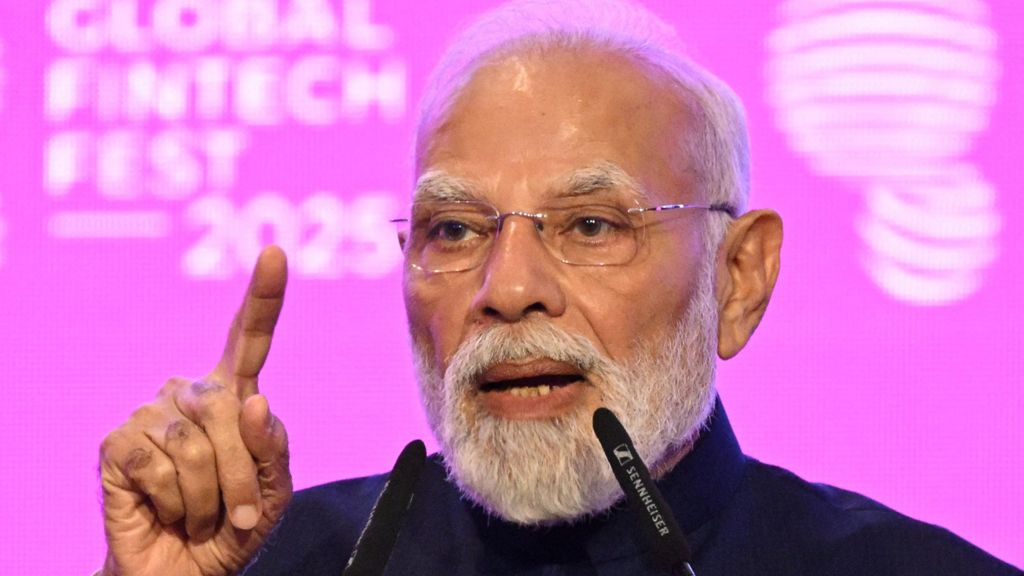
    In one of the most shocking political upsets in modern Indian electoral history, Tamil actor-turned-politician Chandrasekhar Joseph Vijay — universally known by his fan nickname Thalapathy (Commander) Vijay — has led his newly formed political party Tamilaga Vettri Kazhagam (TVK) to become the single-largest faction in Tamil Nadu’s 234-seat state assembly, defying every pre-election prediction and upending the southern state’s decades-old political order.

    The stunning outcome was foreshadowed by one underdog race that encapsulated TVK’s entire electoral surprise. When 42-year-old meat shop owner Madhar Badhurudeen, a first-time TVK candidate, filed to run in the Madurai Central constituency — a Hindu-majority seat anchored by the iconic Meenakshi Amman temple — no political observer gave him a shot at victory. A Muslim candidate from a non-political, working-class background, Badhurudeen ran a low-key grassroots campaign with no high-profile celebrity rallies, no visits from party leader Vijay himself, and none of the glitzy, high-decibel campaign events that defined his rivals’ bids.

    His opponents were political heavyweights: the Dravida Munnetra Kazhagam (DMK) fielded sitting state minister and senior party leader Palanivel Thiaga Rajan, while the All India Anna Dravida Munnetra Kazhagam (AIADMK) — the two entrenched regional parties that have dominated Tamil Nadu politics for decades — tapped well-known actor-filmmaker Sundar C. Both opponents held massive, star-studded processions and drew thousands to public rallies, leaving Badhurudeen’s quiet door-to-door outreach invisible to most traditional political analysts. Yet when results were announced last week, Badhurudeen defeated both rivals by a comfortable margin of more than 19,000 votes.

    “My only strength was our leader Vijay and the party’s electoral symbol, the whistle,” Badhurudeen told reporters after his win. “I campaigned on our leader’s pledge of a corruption-free government, and that was enough.”

    Badhurudeen’s upset was far from an isolated anomaly. Across the state, 108 TVK candidates — the vast majority of them political newcomers — won their seats, leaving the party just 10 seats short of a full majority. After days of post-election negotiations to secure a governing mandate, Vijay was sworn in as Tamil Nadu’s chief minister on Sunday, closing out a political journey that began just two years ago when he launched TVK after decades as one of Tamil cinema’s biggest box office draws.

    The question on every political observer’s mind after the upset is simple: how did a first-time political party, led by a celebrity who campaigned in person for less than three weeks total, pull off such a decisive victory against two well-established political machines?

    Vijay’s campaign faced major disruptions long before election day: he paused all campaigning for more than two months after a fatal crowd crush at one of his September 2024 rallies killed dozens of attendees, and dozens more scheduled public events were canceled over what the party cited as logistical constraints and time shortages. The answer, experts say, lies not in traditional ground campaigning, but in a revolutionary digital strategy that rewrote the rules of Indian electoral politics.

    “This was almost certainly the first election in India won almost entirely through social media,” explained Anup Chandrasekharan, a Bangalore-based independent media strategist. “Vijay’s supporters didn’t just use digital platforms — they ushered in a full digital revolution in Indian campaigning.”

    Unlike traditional Indian election campaigns, which rely on massive ground rallies, door-to-door canvassing, printed banners and endless offline outreach, TVK turned a pre-existing network of 85,000 Vijay fan clubs — built over the actor’s 30-year film career — into a coordinated, 24/7 online campaign army. When Vijay launched his party in 2024, this massive grassroots fan network seamlessly transitioned into an organized political operation focused on digital outreach.

    Vijay himself broke with traditional political norms: he gave no national media interviews, held no press conferences, and delivered far shorter public speeches than rival party leaders. Instead, he communicated directly with supporters through social platforms, and every public appearance was quickly repackaged into bite-sized, shareable content by the party’s well-funded IT wing and thousands of volunteer supporters. Clips of his speeches, edited selfie videos, and campaign messaging were cut into Instagram Reels and YouTube Shorts, then shared across hundreds of thousands of WhatsApp groups and social feeds, reaching millions of voters without a single expensive ground rally.

    One edited selfie video of Vijay from a Madurai party conference amassed nearly 90 million views in just 24 hours, a level of organic reach no traditional campaign ad could match. For years, Vijay built his film brand portraying a crusader against corruption, injustice and inequality, championing the rights of underprivileged and marginalized communities — a narrative that translated seamlessly to his political campaign, resonating with voters hungry for change after decades of rule by the two established Dravidian parties.

    The strategy proved particularly effective with young Gen Z voters and women, who turned out in large numbers to back TVK and its anti-corruption platform. Unlike many new political entrants in India, TVK’s victory came without widespread allegations of voter intimidation or financial graft, a rare feat in a political landscape long dominated by money, caste and religious identity politics.

    Still, experts caution that the digital-first model that delivered electoral success will not be enough to govern effectively. “This model worked because Vijay is a new entrant with no political baggage,” Chandrasekharan noted. “Now that he is in power, he has to deliver results, and he needs to strengthen his on-the-ground party structure — you can’t govern solely from the digital world.”

    Critics have also raised questions about Vijay’s lack of formal administrative and political experience as he takes on the role of chief minister. But TVK leaders reject those concerns, pointing to the 1967 election that first brought the DMK to power in Tamil Nadu, when the party was also a new, untested political force.

    “What kind of experience did DMK have when they took power in 1967?” Badhurudeen said. “Our goal is to deliver a clean, transparent administration, and our leader is exactly the person to do that.”

    There is no question that Vijay has made history: he took on two of India’s most entrenched regional political machines and single-handedly upended the state’s political order, thanks to a revolutionary digital campaign strategy that will likely reshape how Indian elections are fought in years to come. But as post-inauguration celebrations wind down, the reality of governing is setting in. For Thalapathy Vijay and his army of digital campaigners, the real test of their political project is only just beginning.

  • Iraqi parliament ‘to summon defence minister’ over alleged secret Israeli base

    Iraqi parliament ‘to summon defence minister’ over alleged secret Israeli base

    Allegations that Israel established a covert military base inside Iraqi territory during its recent conflict with Iran have triggered a political firestorm in Baghdad, prompting Iraq’s parliament to launch a formal investigation and summon the country’s defence and interior ministers for questioning.

    According to reporting from The New Arab, the parliamentary probe will not be limited to cabinet-level security leaders. Senior national security figures will also be called to testify as lawmakers work to unpack the veracity of multiple independent claims about the hidden outpost, which was reportedly built in Iraq’s western desert.

    The first public claim of the base emerged over the weekend from The Wall Street Journal, which reported that Israeli special forces constructed the covert installation in the weeks preceding the outbreak of the Iran-Israel conflict in February. The site, the outlet stated, was purpose-built to support Israeli air operations targeting Iran. When Iraqi military units stumbled on the location nearly two months after construction, the outlet added, Israeli forces launched an attack on the approaching Iraqi contingent.

    Israeli outlet Maariv followed with additional reporting the next day, confirming that the forward outpost was designed to serve a critical contingency role: hosting Israeli commando and search-and-rescue teams on standby to extract downed Israeli aircrew from Iranian territory if needed.

    Independent open-source intelligence group Faytuks Network has corroborated these claims with satellite imagery captured in March, which shows a temporary makeshift airstrip carved into a dried lakebed in Iraq’s western Najaf desert. The imagery clearly shows fixed-wing aircraft and prefabricated temporary structures at the site, according to the group’s analysis, which was publicly posted to social media on May 10, 2026.

    This evidence aligns with on-the-ground reports from early March, when Iraqi state media confirmed that one Iraqi soldier was killed in armed clashes with an unidentified foreign force in the desert region between the holy cities of Najaf and Karbala. Iraqi forces had been dispatched to the area that day to investigate unconfirmed reports of a military airdrop carried out by multiple unidentified helicopters.

    In comments to The New Arab, a senior parliamentary official confirmed that Iraqi national security authorities initially assumed the unknown force operating in the desert was part of the U.S.-led international counter-ISIS coalition, and did not immediately move to expel or confront the group. Multiple anonymous security sources have told Arab media outlets that the site is no longer occupied by Israeli personnel as of the latest reports.

    The revelations have sparked widespread public and political anger across Iraq, with growing cross-party demands for the Iraqi government to deliver a full public explanation and hold accountable any actors responsible for violating Iraqi sovereignty. Prominent Iraqi MP Raed al-Maliki has publicly leveled blame at the United States, accusing Washington of enabling the Israeli operation by granting Israel free access to Iraqi airspace during the conflict and ordering Iraqi air defense radar systems to be shut down.

    “The United States handed Iraqi airspace to the entity during the war and ordered radar systems to be shut down. Now it has become clear that Iraqi territory was also used to establish a secret intelligence centre or base for the Zionist entity,” al-Maliki said in a public statement.

    As of press time, the federal Iraqi government has not issued any official public comment on the allegations or the impending parliamentary investigation.

  • Shane van Gisbergen remains NASCAR’s road-course ace with Watkins Glen win from the pole

    Shane van Gisbergen remains NASCAR’s road-course ace with Watkins Glen win from the pole

    WATKINS GLEN, N.Y. – On a sun-baked Sunday at the iconic Watkins Glen International road course, New Zealand native Shane van Gisbergen put on a driving masterclass that further cemented his reputation as NASCAR’s undisputed king of street and road courses, claiming his second consecutive Cup Series victory at the 2.45-mile track in dominant fashion.

    Starting from pole position in the No. 97 Chevrolet for Trackhouse Racing, van Gisbergen controlled the majority of the 100-lap event, leading 74 laps en route to his seventh career Cup Series win. Remarkably, all seven of his top-series victories have come on road or street layouts, extending his all-time NASCAR record for the most wins by a driver born outside the United States.

    The most stunning chapter of the race unfolded with just 24 laps remaining, when van Gisbergen pitted from the lead under green-flag conditions for a fresh set of four tires, a strategic call orchestrated by crew chief Stephen Doran. When he exited pit road, the Trackhouse driver sat 24th in the running order and nearly 30 seconds behind new race leader Ty Gibbs. What followed was a relentless charge through the field: van Gisberg carved his way past 23 competitors in just 17 laps, retaking the top spot before pulling away to a 7.288-second victory over runner-up Michael McDowell. Gibbs crossed the line third, with Chase Briscoe fourth and reigning points leader Tyler Reddick rounding out the top five.

    Van Gisbergen admitted the outcome looked far more assured than it felt from behind the wheel, noting that his team had struggled for pace in practice before a shock qualifying performance locked him onto pole. “We weren’t very good in practice, and then qualifying was amazing, and then today, what a race car,” van Gisbergen said post-race. “Stephen made great calls. I wasn’t sure how it was going to work, and then to run them down like that, it’s very, very special to do two in a row.”

    Despite the pressure that comes with being labeled the favorite for every road course event, van Gisbergen said he never takes his dominant streak for granted. Dating back to the Mexico City race last June, he has now won six of the last seven road and street course events on the Cup schedule. “It’s not easy,” he emphasized. “Everyone’s really good. McDowell was good. Connor (Zilisch) was good. Tyler Reddick. There were some really good guys and a lot of pressure. So just stoked to execute every facet of our game. And speechless. This is so cool.”

    McDowell, who started second and also fought through the field after dropping to 27th on his final pit stop, said he quickly realized van Gisbergen was pacing him during the race. “It felt like he was just pacing himself off me, and he’d take back off,” McDowell said. “We still got a little work to do, but it’s a good building block.”

    Doran, van Gisbergen’s crew chief, explained the bold late pit strategy that set up the win: unlike most competitors who pitted earlier to save fuel, the team opted for a late stop to give van Gisbergen the aggressive car he prefers. “He’s made it pretty clear, especially at these tracks, he likes to be on offense, so we put him there and just let him go do his thing,” Doran said.

    The win completed a dream weekend for Trackhouse Racing, whose rookie driver Connor Zilisch claimed victory in the O’Reilly Auto Parts Series race on Saturday. Zilisch was on track for a strong top-five finish in Sunday’s Cup race before a late tire issue dropped him to 20th. “Just frustrating because we had a really good day going,” Zilisch said. “At worst, we were going to get ourselves our first top five and walk out of here with something. But congrats to Shane, Trackhouse and everybody who makes this happen.” The organization’s overall performance was a marked turnaround: entering the weekend, Trackhouse had only secured four top-10 finishes across its three cars in the first 11 races of the season, but qualified all three entries in the top five on Sunday.

    Beyond the on-track action, eight-time NASCAR Most Popular Driver Chase Elliott made a rare public push Saturday for his uncle, engine builder Ernie Elliott, to be inducted into the NASCAR Hall of Fame. The vote for the 2027 Hall of Fame class is scheduled for May 19, and this year marks Ernie Elliott’s first appearance on the ballot. Ernie built engines for Chase’s father, Hall of Fame driver Bill Elliott, throughout the 1980s and continued to contribute to Chase’s early racing career. “I don’t talk about this stuff a lot, but you don’t have to dig very far into the Elliott racing story to recognize how much of a family effort it was,” Chase Elliott said. “I don’t think the story has the same ending… without Uncle Ernie and what he meant to all of us. He’s meant a lot to my career. There are a lot of very, very deserving names on the list, but he is one of the very deserving that doesn’t get talked about enough for the credit that he deserves.”

    This 2025 May running at Watkins Glen is also expected to be a one-off experiment. NASCAR has already confirmed the series will return to its traditional September date at the road course starting in 2027. The 2024 Cup race at Watkins Glen was held in September, and the previous 42 races at the track all took place in July or August. While next year’s schedule will not be released for several more months, new NASCAR CEO Steve O’Donnell reaffirmed during pre-race coverage on Fox that Homestead-Miami Speedway, which takes over as the season finale from Phoenix Raceway this year, will likely remain the final event on the Cup calendar in 2027.

    Up next on the NASCAR schedule is the All-Star Race, which makes its debut at Dover Motor Speedway on May 17. Christopher Bell enters as the defending champion of the exhibition event, which was held at North Wilkesboro Speedway for the past three seasons.

  • Israeli soldiers say orders were to kill any man encountered in Gaza

    Israeli soldiers say orders were to kill any man encountered in Gaza

    An explosive investigative report aired on Israel’s Channel 13 has pulled back the curtain on sweeping, deadly rules of engagement Israeli forces received for their 2023 ground operation in Gaza, with serving and former soldiers confirming that troops were ordered to kill any male encountered on sight, regardless of age, and told to treat all civilians as potential threats.

    The testimony was collected directly by Iris Haim, whose son Yotam—one of three Israeli captives wrongfully killed by Israeli forces in Gaza City’s Shujaiya neighborhood in December 2023—was among the victims of the mistaken attack. In an account that has upended official military narratives, an anonymous soldier who admitted to opening fire on the three captives described the explicit standing orders he and his unit received. “A man, no matter what age, don’t play games with it; kill immediately,” the soldier said, adding that commanders even instructed troops to use lethal judgment against women and children if they perceived any threat, with similar protocols applied to working animals like donkeys in the area.

    The December 2023 killing of the three captives sparked immediate international and domestic outcry, because the hostages were unarmed, shirtless, waving a white flag, and posed no visible threat to Israeli troops when they were shot. The newly released testimonies lay bare a stark gap between on-the-ground orders and the Israeli military’s official post-incident investigation. Per the soldiers’ accounts, no ceasefire order was issued in the moments before the shooting—directly contradicting the military’s official claim that all troops received a command to halt fire.

    Recounting the fatal encounter, the soldier who participated in the shooting told Haim he operated under the mindset drilled into him by training: “I fire 500 bullets a minute. I blow things up. I don’t care. I’m here to kill terrorists.” When he spotted the three men approaching, he opened fire, believing them to be enemy fighters. After he hit two, his weapon jammed, and another soldier stepped in to kill the surviving captive, who was later identified as Yotam Haim. The investigation further confirmed that a brigade commander had instructed Yotam to approach the Israeli outpost, only for troops to open fire the moment he emerged.

    In a damning exchange with Iris Haim, the brigade commander overseeing the operation explicitly confirmed the lethal policy. When asked if even unarmed people were targeted, the commander replied: “Of course, we need to kill him – yes, even if he is completely unarmed.” He added that troops were ordered to kill any approaching threat rather than attempt to take them into custody, a framing that Iris Haim said amounted to an order to “kill every person walking on two legs.”

    A second soldier echoed those claims, telling investigators that all Gazans were framed as potential risks from the start of the operation. “Even an old man can blow himself up with an explosive device. The protocol was to shoot them,” he said, confirming that there were multiple documented cases of civilians waving white flags being shot on sight. The soldier added that the senior commander in charge of the captive shooting had publicly stated that distinguishing between Hamas fighters and civilian non-combatants in Gaza was impossible—yet that same commander was later promoted by Israeli Army Chief of Staff Eyal Zamir, with military officials praising him as “an outstanding officer.”

    Raviv Drucker, the investigative journalist who led the Channel 13 report, accused the Israeli military of carrying out a deliberate cover-up in its official investigation into the captive deaths. He said families of the deceased captives had pushed for a full, transparent inquiry “to receive a real investigation, and not what was presented to them, which in their eyes, and in mine as well, was a cover-up and a whitewash.”

    The investigation also uncovered new details of missed warnings that could have prevented the killings. Five days before the shooting, Israeli forces fired a missile at a northern Gaza building where the three captives were hiding, after an exchange of fire with Hamas fighters nearby. The captives survived the strike and moved through residential areas of Shujaiya, hanging handwritten signs requesting help from Israeli forces. But according to the report, military intelligence ignored on-the-ground reports of the captives’ presence, failing to pass the information to frontline troops.

    The killings of the three captives fit into a broader pattern of Israeli military actions harming Israeli hostages held in Gaza, the report notes. Of the 251 people taken captive during the October 7, 2023, Hamas attack on southern Israel, 85 died in captivity or were killed before they could be rescued, under circumstances that remain heavily contested. While the Israeli government has repeatedly denied or declined to comment on accusations that its operations have killed captive Israelis, multiple independent reports confirm that Israeli military actions have directly and indirectly caused the deaths of many hostages. Israeli newspaper Maariv even reported in October 2025 that, per anonymous Israeli official sources, dozens of captives were killed by Israeli attacks, particularly in the chaotic early stages of the war.

    From the first day of the conflict, the Israeli military activated the controversial Hannibal Directive, a longstanding military protocol that orders troops to fire on captives and abductors alike to prevent captives from being taken away, even if that puts the lives of the captives at extreme risk.

    As of 2025, Israeli military operations in Gaza have killed more than 72,700 Palestinians, according to local health officials, with 850 additional deaths recorded after a ceasefire was declared in October 2025. Thousands more Palestinians remain unaccounted for, and are presumed buried under the rubble of destroyed residential and infrastructure across the enclave.

  • Pakistan car bomb attack kills 15 police officers

    Pakistan car bomb attack kills 15 police officers

    A devastating coordinated attack targeting a police checkpoint in Pakistan’s northwestern Khyber Pakhtunkhwa province has left 15 law enforcement officers dead, regional authorities confirmed Sunday. The assault, carried out late Saturday in Bannu district, unfolded in multiple phases that caught responding officers off guard.

    According to local police accounts, a suicide bomber first drove an explosives-laden vehicle directly into the perimeter of the guard post, triggering a massive detonation that leveled the checkpoint structure. Photos released from the attack site show extensive destruction: the checkpoint is reduced to crumbled concrete, with twisted metal fragments and charred debris scattered across the surrounding ground.

    After the initial blast, the remaining assailants moved into an adjacent building and opened gunfire on surviving officers. When additional security units rushed to the area to reinforce the outpost, they too came under sustained enemy fire. Rescue teams later pulled three wounded officers alive from the rubble; all three were immediately transported to a nearby medical facility and are currently reported to be in stable condition. Authorities have launched a full search and clearance operation to secure the area and track down any remaining attackers.

    The assault has been claimed by Ittehad-ul-Mujahideen, a fast-growing Islamist militant coalition that official records confirm has ties to the Pakistani Taliban. The alliance formed only last year in April 2025, when three separate violent factions — the Hafiz Gul Bahadur Group (HBG), Lashkar-e-Islam, and Harkat Inqilab-e-Islami Pakistan (HIIP) — merged to expand their operational reach, according to data from the Pakistan Institute for Conflict and Security Studies. The institute notes that HBG has a long track record of carrying out lethal attacks in Bannu district, while U.S.-based Combating Terrorism Center at West Point has previously documented Lashkar-e-Islam’s formal alliance with the Pakistani Taliban.

    Local senior police official Sajjad Khan praised his personnel’s conduct during the unprecedented attack. “Our force has shown courage and bravery in this difficult situation,” Khan said in an official statement, adding, “This cowardly act of extremists is intolerable and the blood of those killed will be accounted for.”

    Pakistani President Asif Ali Zardari offered formal condolences to the families of the fallen officers, reaffirming the nation’s unwavering support for its security forces. “The nation stands shoulder-to-shoulder with its security forces,” Zardari’s statement read. “The nefarious intentions of terrorists will be defeated.”

    This latest attack comes as Pakistan continues to grapple with persistent insurgent violence across multiple regions. Earlier this year in February, a suicide bombing targeting a mosque in the capital city of Islamabad killed dozens of people and wounded more than 160, an act that the Islamic State group claimed responsibility for. That attack followed just days after a wave of coordinated gun and bomb assaults in southwestern Pakistan’s Balochistan province, where a violent separatist insurgency has persisted for decades.

    Longstanding geopolitical tensions around militant activity have strained relations between Pakistan and neighboring Afghanistan. The Pakistani government has repeatedly accused Afghan authorities of harboring militant groups that use Afghan territory to plan and launch attacks inside Pakistan, a claim the ruling Afghan Taliban has consistently denied.

  • Bodies retrieved from Indonesian volcano after eruption kills 3 hikers

    Bodies retrieved from Indonesian volcano after eruption kills 3 hikers

    On Indonesia’s remote Halmahera Island, search and rescue teams have recovered the bodies of all three hikers who were killed by an unexpected volcanic eruption at Mount Dukono, ending a days-long high-risk recovery operation that unfolded amid continuing volcanic activity. According to Indonesian disaster management officials, the remains of two Singaporean hikers, aged 27 and 30, were located on Sunday, just two days after the group was trapped by the volcano’s sudden outburst. Their bodies were found only meters away from where an Indonesian female hiker, the first victim recovered, was pulled from volcanic debris on Saturday. All three members of the ill-fated group were within 50 meters of the volcano’s main crater rim when the eruption struck.

    Abdul Muhari, spokesperson for Indonesia’s National Disaster Management Agency, explained that thick, compact layers of volcanic ash and debris had buried the two Singaporean hikers, creating major obstacles for rescuers that slowed recovery efforts dramatically. “The bodies were buried under deep, densely packed volcanic material that is difficult to dig through,” Muhari said in a press statement. “Rescue teams must proceed cautiously to ensure safety.”

    The three deaths came after the group of 20 hikers deliberately ignored official safety restrictions to climb the 1,355-meter active volcano, located in Indonesia’s North Maluku province. Mount Dukono erupted in the early hours of Friday, blasting a dense column of ash 10 kilometers into the sky and leaving the unauthorized group stranded. Seventeen members of the party were evacuated safely within hours of the eruption, including seven other Singaporean nationals. Ten of the evacuated hikers sustained minor burn injuries, while two were cleared to assist rescuers, providing critical information that guided the search for the missing.

    The recovery mission was carried out by nearly 100 personnel, who faced two major ongoing threats: the island’s extremely rugged, remote terrain and repeated volcanic activity that continued to disrupt operations days after the initial eruption. Iwan Ramdani, head of the local search and rescue department, confirmed that volcanology experts monitored conditions around the clock throughout Sunday’s recovery work, as the volcano continued to spew ash, superheated rock fragments and glowing molten material. “The search operation was repeatedly disrupted by Mount Dukono’s continued volcanic activity,” Ramdani noted. “Teams must be extremely careful during the evacuation process.”

    After all three remains were recovered, they were first moved to a local emergency response outpost before being transferred to Tobelo Regional Hospital for official identification and processing by authorities. With all victims accounted for, the National Disaster Management Agency announced the official closure of the search and rescue operation.

    In the wake of the fatal incident, authorities have issued a renewed warning to local communities, tourists and tour operators to comply with all volcanic safety regulations and steer clear of officially restricted hazard zones. Indonesia’s volcanology agency has long maintained a total ban on all human activity within a 4-kilometer radius of Mount Dukono’s crater, a restriction put in place to protect visitors from the volcano’s frequent active periods.

    Mount Dukono is one of more than 120 active volcanoes across Indonesia, a Southeast Asian nation that sits along the Pacific “Ring of Fire” — a geologically active zone of fault lines and volcanic formations that circles the entire Pacific Basin, leaving the country extremely prone to earthquakes and volcanic eruptions.

  • Iran war could make Trump’s trip to China a bit chillier than his first-term visit

    Iran war could make Trump’s trip to China a bit chillier than his first-term visit

    As U.S. President Donald Trump prepares to depart for his highly anticipated visit to Beijing this week, long-simmering trade tensions, deep economic ties between China and Iran, and shifting bilateral dynamics threaten to dampen the warm goodwill Trump has long projected for his Chinese counterpart Xi Jinping. Weeks ahead of his departure, Trump already took to social media to predict Xi would greet him with a warm embrace, a reflection of the consistent public praise he has lavished on the Chinese leader throughout his political career, framing Xi as a formidable competitor worthy of his respect.

    Unlike Trump’s historic 2017 first-term visit to Beijing — which Beijing designated a “state visit-plus” marked by unprecedented ceremonial fanfare — this year’s trip is expected to be far lower in scale and shorter in duration. Trump, who has openly expressed discomfort with long-haul flights and extended stays away from Washington and his personal properties, will only spend roughly three partial days on the ground in China, with ceremonial arrangements that experts say will not match the grandeur of his first trip.

    The 2017 visit set a unique bar for high-level diplomatic spectacle between the two leaders. China rolled out an extraordinary red-carpet welcome: military bands played state honors, uniformed children waved national flags and chanted welcomes, Xi personally hosted Trump and first lady Melania Trump for a private tour and dinner inside the Forbidden City, an honor never before extended to a foreign leader since the founding of the People’s Republic of China. The next day, a formal welcome ceremony and full military parade was held at the Great Hall of the People, capped by a state banquet featuring footage of Xi’s earlier visit to the U.S. and a clip of Trump’s granddaughter Arabella singing a song in Mandarin. Such extraordinary treatment is rarely extended to visiting world leaders: when British Prime Minister Keir Starmer toured the Forbidden City earlier this year, Xi did not attend, the site remained open to the general public, and Starmer shared the space with ordinary tourists.

    Jonathan Czin, a former China director at the Biden administration’s National Security Council and current Brookings Institution fellow, noted that tensions between the two powers already ruled out a repeat of the 2017 “state visit-plus” format long before the recent escalation of conflict over Iran. “Even before this whole conflagration with Iran, they weren’t going to go state visit-plus like last time, just because things are tense,” Czin explained.

    Ali Wyne, senior U.S.-China research and advocacy adviser at the Washington-based Crisis Group, acknowledges that Chinese organizers will still work to craft a memorable experience for Trump, who has long been drawn to displays of grandeur. “The Chinese delegation will likely do its utmost to ensure that Trump leaves Beijing believing that he has just concluded the most extraordinary state visit of his two presidencies,” Wyne said. But he added that the purpose of this pageantry has shifted significantly from 2017: today, “Xi has a much better understanding of Trump, and the administration’s own national security strategy and national defense strategy recognize China as a near-peer.”

    Expectations for major breakthroughs from this summit are far lower than they were for Trump’s first visit, Czin argued. Chinese negotiators are likely to hold off on offering major concessions on trade or other core issues, he explained, as they time their strategy around upcoming U.S. midterm elections. Beijing is working from the theory that the closer the U.S. approaches Election Day, the more leverage it will hold in negotiations, he noted.

    The Republican Party is currently fighting to retain control of Congress, with recent polling showing most Americans hold negative views of Trump’s economic policies and believe the U.S. overstepped in its recent actions against Iran. Even so, the White House has pushed back against low expectations, arguing that Trump’s past hardline stance on tariffs (though many of those tariffs were ultimately struck down by the U.S. Supreme Court) leaves the U.S. in a strong negotiating position. “President Trump cares about results, not symbols,” White House spokesperson Anna Kelly said. “But even still, the president has a great relationship with President Xi, and the upcoming summit in Beijing will be both symbolically and substantively significant.”

    The coming year could bring four scheduled meetings between the two leaders: after Trump’s Beijing visit, he plans to host Xi at the White House, he is expected to attend the November Asia-Pacific Economic Cooperation summit in Shenzhen, China, and Xi is scheduled to attend the December Group of 20 summit hosted at Trump’s Doral, Florida resort. Czin cautioned that not all of these meetings may ultimately take place, noting that Xi, like Trump, is not fond of extensive foreign travel, and Xi prioritizes institutional authority over the personal, relationship-driven diplomacy that Trump prefers. Czin also pointed to January’s major Chinese military reshuffle, which saw the replacement of multiple officials with long-standing personal ties to Xi’s family, as evidence of this approach.

    Even so, Wyne noted that Xi recognizes the unique opportunity presented by Trump’s leadership. Xi “appreciates that he is unlikely to deal with another U.S. president who admires him as greatly and embraces as narrow a view of strategic competition,” Wyne said. That dynamic means Xi may “attempt to pocket as many economic and security concessions from Trump as possible.”

    Trump has repeatedly emphasized his positive personal rapport with Xi for years. In a 2024 interview with The Wall Street Journal’s editorial board, Trump said, “Xi was actually a really good … I don’t want to say ‘friend.’ I don’t want to act foolish. ‘He was my friend.’ But I got along with him great.” Trump has even suggested that military confrontation over Taiwan can be avoided solely because of his personal relationship with Xi, despite recent signals that his administration is considering new arms sales to the self-governing island.

    The Beijing visit, originally scheduled for March, was postponed earlier this year amid the early escalation of conflict with Iran. The conflict has put Beijing in a delicate position: as the largest purchaser of Iranian oil, China holds deep economic ties to Tehran, and the ongoing conflict has already added headwinds to China’s already slowing projected economic growth. China helped broker a fragile ceasefire in the Strait of Hormuz after Iran blocked the waterway and disrupted global energy markets, though efforts to reopen the strait did not go as far as Trump pushed for. If Beijing can help lock in a lasting ceasefire, that move could strengthen its hand in upcoming trade negotiations with the U.S.

    Trade issues remain the core sticking point for bilateral talks. The $250 billion in non-binding trade deals Trump announced during his 2017 visit never fully materialized, and a $200 billion round of trade agreements reached in 2020 also largely failed to be implemented before the end of Trump’s first term. Last year, Trump’s announcement of steep new global tariffs prompted retaliation from Beijing, which halted purchases of U.S. soybeans and tightened export controls on rare earth minerals critical to U.S. manufacturing. Tensions have eased somewhat since a trade truce was reached last fall, which kept new tariffs on hold for both sides. The Trump administration has made cutting the U.S. trade deficit with China a top policy priority, while asserting it aims to expand overall bilateral trade at the same time.

    “I expect great stability in the relationship,” Treasury Secretary Scott Bessent said. “But that doesn’t mean our trade deficit can’t continue dropping.” Kelly reiterated that the president comes to the summit prepared to win tangible gains for American voters. “Trump doesn’t travel anywhere without bringing deliverables home to our country,” she said. “Americans can expect the president to deliver more good deals for the United States while in China.”

  • Philippines to summon former national police chief in probe into Duterte-era killings

    Philippines to summon former national police chief in probe into Duterte-era killings

    MANILA, Philippines — A fresh domestic investigation into widespread extrajudicial killings linked to former Philippine President Rodrigo Duterte’s brutal anti-drug campaign is moving forward, with top former law enforcement official Ronald dela Rosa set to be the first person summoned for questioning, the country’s interior secretary announced Sunday.

    Interior Secretary Juanito Victor Remulla Jr. confirmed that dela Rosa — currently a sitting Philippine senator who previously served as Duterte’s chief of the Philippine National Police — will receive his summons on Monday. The probe comes after months of speculation that dela Rosa could face imminent arrest related to an International Criminal Court (ICC) case connected to the same killings. Dela Rosa has not attended any Senate sessions since November 2025, after reports of a potential impending arrest first emerged.

    Thousands of mostly low-income, alleged drug suspects were killed across the country during the crackdown, which began when Duterte served as mayor of Davao City and expanded nationwide after he won the presidency in 2016. The wave of extrajudicial killings during police anti-drug operations drew widespread condemnation from global human rights organizations and Western governments led by the United States over allegations of systematic human rights abuses. In March 2025, the 81-year-old Duterte was arrested and transferred to the Netherlands, where he is currently on trial at the ICC on charges of crimes against humanity.

    dela Rosa has deep personal ties to Duterte’s anti-drug initiative: he previously served as police chief of Davao City during Duterte’s tenure as mayor, before Duterte appointed him to lead the national police force when he took the presidency. Both Duterte, dela Rosa and other former senior police officials have long denied any wrongdoing, claiming all people killed in the raids were shot after attacking or threatening responding law enforcement officers. Despite these denials, Duterte openly and repeatedly publicly threatened death to drug suspects throughout his time in office. A 2024 Philippine congressional inquiry already recommended filing formal criminal charges against Duterte and multiple high-ranking police officials tied to the crackdown.

    In comments to reporters, Remulla clarified that dela Rosa has never been subject to a formal personal investigation as part of domestic efforts to address the killings. “All officers involved must be held accountable,” Remulla said. “Just to be clear, he was the tip of the spear in the extrajudicial killings drive, so we will start with him and investigate down further.” Remulla framed the new probe as a critical step toward national accountability for what he called “those dark years where extrajudicial killings became a state policy.”

    To prevent dela Rosa from fleeing the country before questioning, Remulla confirmed that all Philippine airports, seaports and official exit points have been placed on high alert, and all domestic and international airlines operating in the country have been notified of the alert. He did not provide additional details on the scope of the border notification. Remulla also emphasized that the new domestic investigation is fully separate from and unrelated to the ongoing ICC probe into Duterte and the killings. Duterte ordered the Philippines to withdraw from the ICC in 2019, a move human rights activists widely viewed as an attempt to avoid accountability for the alleged crimes. The abuses under investigation by the ICC all occurred before the Philippine withdrawal took effect, so the court retains jurisdiction over the case.

  • Death toll rises to 14 in Pakistan suicide attack. Pakistan Taliban splinter group claims blast

    Death toll rises to 14 in Pakistan suicide attack. Pakistan Taliban splinter group claims blast

    In the early hours of Sunday, Pakistani authorities confirmed a grim update to a devastating weekend attack: the death toll from a suicide bombing targeting a security outpost in the country’s northwest has climbed to 14 police officers, with a breakaway Taliban-aligned militant faction claiming credit for the violence. The assault unfolded late Saturday near the town of Bannu, a district in Khyber Pakhtunkhwa province that sits along Pakistan’s porous border with Afghanistan, according to senior police commander Sajjad Khan.

    Khan detailed that the attack combined multiple layers of assault: a suicide bomber driving a vehicle packed with explosives detonated the device close to the security post, before several armed gunmen moved on the position. The blast and subsequent incursion sparked a fierce, close-quarters gunfight between the attackers and responding officers. Some law enforcement personnel were killed during the exchange of fire, while others lost their lives when the security post’s structure collapsed under the force of the explosion.

    Rescue teams launched a protracted search operation spanning multiple hours, deploying heavy construction equipment to clear rubble and recover the remains of fallen officers. Khan confirmed that three additional officers were injured in the attack, and that Pakistani security forces have already initiated a manhunt to locate and apprehend any surviving perpetrators linked to the assault.

    Shortly after the attack, a newly established militant organization calling itself Ittehad-ul-Mujahideen Pakistan issued a statement to journalists claiming responsibility for the bombing. While the group frames itself as an independent coalition formed by breakaway factions of Tehrik-e-Taliban Pakistan (TTP) – Pakistan’s primary domestic Taliban insurgent group – Pakistani government officials have long alleged that Ittehad-ul-Mujahideen operates as a front organization for the TTP to obscure its direct involvement in attacks.

    The bombing comes amid a marked resurgence of militant violence across Pakistan over the past several years, with the vast majority of major attacks attributed to the TTP. The TTP is a distinct insurgent group aligned with the Afghan Taliban, which regained national control of Afghanistan following the U.S. military withdrawal in 2021. The Pakistani government has repeatedly leveled accusations that the Afghan Taliban administration provides safe haven and logistical support to TTP fighters operating from Afghan territory, claims that Kabul has consistently denied.

    Cross-border tensions between the two neighboring countries have simmered at dangerous levels for months, with open armed clashes between Pakistani and Afghan forces claiming hundreds of lives on both sides since late February. In an attempt to de-escalate the standoff, senior diplomatic and security officials from both nations held peace talks mediated by China in early April. While the talks succeeded in reducing the intensity of cross-border violence, sporadic small-scale clashes have continued along the shared border in the weeks since the diplomatic meeting.

  • Iran war disruptions spark higher costs and lost income in Bangladesh

    Iran war disruptions spark higher costs and lost income in Bangladesh

    For 53-year-old Tariqul Islam, the economic damage of escalating Middle East conflict arrived not on distant battlefields, but at the fuel pumps of Dhaka, Bangladesh’s crowded capital. A year and a half ago, Islam lost all his savings when his small clothing business collapsed, forcing him to turn to motorbike ride-sharing to support his four children, two of whom are pursuing higher education. Until just weeks ago, he spent the majority of his working days queued for fuel, caught in supply chain disruptions that have rippled thousands of miles from the war in Iran to the streets of South Asia.

    Islam’s struggle is far from an isolated hardship. Bangladesh, a nation of 170 million people that relies almost entirely on imported fuel to power its economy, is facing a broad-based energy crunch that has upended daily life, slowed industrial production, and cast a shadow over long-term growth prospects. While temporary government measures have slightly eased supply in recent days, shortening queues at fuel stations, lingering uncertainty continues to weigh on households and businesses across every sector.

    Bangladesh is far from alone in facing this crisis. Across the entire Asian continent, nations dependent on imported oil and gas are grappling with war-driven energy price spikes that have strained national budgets and household finances alike. Much of global energy trade passes through the Strait of Hormuz, a narrow waterway that accounts for roughly one-fifth of the world’s total oil and natural gas shipments, making the entire region acutely vulnerable to disruptions sparked by conflict in Iran. For importing nations, the result has been soaring inflation, eroded purchasing power for working families, and spiking operating costs that have disrupted supply chains across every industry from manufacturing to transportation.

    In late April, the Asian Development Bank responded to the turmoil by downgrading its growth forecast for developing Asia and the Pacific, projecting regional expansion of just 4.7% in 2026, while inflation is expected to climb to 5.2% amid rising oil prices and tightening global financial conditions.

    For ordinary Bangladeshis like Islam, the situation has become untenable. “My family was managing fairly well through ride-sharing,” he explained. “But after the fuel shortage began, I would buy enough fuel one day to run the bike for two days. As a result, I had to sit idle for one day, which reduced my income.” If the conflict drags on and conditions do not improve, Islam says he has no choice but to abandon life in the capital and relocate his family back to his rural home village, where he hopes to find an alternative source of income. “It is not possible to survive in Dhaka by doing ride-sharing under these conditions,” he said.

    The crisis is also putting unprecedented strain on Bangladesh’s public finances. If global energy prices remain at their current elevated levels, the government will be forced to spend an additional $1.07 billion on liquefied natural gas (LNG) subsidies in the second quarter of 2026 alone. To offset the gap, authorities have already implemented a series of austerity measures, including shutting state-owned fertilizer factories to redirect limited gas supplies to power plants, imposing mandatory restrictions on evening operating hours for shopping malls, and rolling out fuel rationing systems. Bangladesh has also reached out to neighboring India for additional fuel supplies, a request India has met positively thanks to its own diversified fuel import network that includes shipments from Russia.

    The World Bank projects Bangladesh’s economic growth will slow to just 3.9% in the fiscal year ending June 2026, with a prolonged conflict in the Middle East expected to further fuel inflation, widen the country’s current account deficit, and increase pressure on public finances through higher energy subsidy obligations. Jean Pesme, the World Bank’s division director for Bangladesh and Bhutan, noted that the economy was already grappling with pre-existing vulnerabilities on the growth and employment fronts before the energy crisis hit. “The rising costs now are obviously making the fiscal situation more difficult,” Pesme explained, adding that authorities must proceed with caution when considering fuel price hikes, as higher costs would disproportionately harm small-scale farmers and the agricultural sector that supports much of Bangladesh’s rural population.

    The most severe damage is hitting Bangladesh’s economic backbone: the $39 billion garment export industry, which employs roughly 4 million workers, the vast majority of whom are women from low-income rural backgrounds. As the world’s second-largest garment exporter behind China, any major disruption to the sector has cascading consequences for the entire national economy.

    Industry leaders report that the energy crisis has driven a sharp jump in operating costs while export demand has weakened. Anwar-Ul Alam Chowdhury, president of the Bangladesh Chamber of Industries, says shipments to key markets in Europe and the United States have already fallen between 5% and 13% in recent months. Since the outbreak of the latest conflict in Iran, overall factory output has dropped by 30% to 40%, while overall business costs have surged 35% to 40%. Chowdhury warns that persistent instability could erode international buyer confidence, allowing competitor nations including India, Vietnam and Cambodia to capture critical market share from Bangladesh.

    For individual manufacturers, the crisis plays out on factory floors every day. Alvi Islam, director of Arrival Fashion Limited, a garment exporter that ships $40 million in products annually, says the company now must run diesel generators for at least four hours per working day to offset frequent power cuts. Energy-driven cost increases are also hitting input materials: petroleum-based products including sewing thread, plastic poly bags for packaging, and shipping cartons have all grown far more expensive. “For that reason, the cost of doing business for exporting garments has increased quite significantly in past one month,” he said.

    For the millions of low-wage workers who depend on the garment industry for their livelihoods, the uncertainty has sparked deep fear for the future. Mosammet Runa, a 35-year-old garment worker who earns roughly $200 per month alongside her husband to support their family of six, says a prolonged conflict could put millions out of work. “Millions of people like us depend on this industry. It is how we survive,” she said. “We are innocent people. The world should not make us victims.” Many across the country share her hope: that the conflict in Iran will end quickly, allowing supply chains to stabilize and life to return to normal.