标签: Asia

亚洲

  • Filmmakers slam BBC after Gaza documentary wins award despite being dropped

    Filmmakers slam BBC after Gaza documentary wins award despite being dropped

    On Sunday evening at the British Academy Television Awards, a hard-hitting documentary about Israeli attacks on Gaza’s healthcare system delivered a double blow: it took home one of the night’s most prestigious honors, and used its moment in the spotlight to publicly condemn the BBC for shelving the project. The film, *Gaza: Doctors Under Attack*, was originally commissioned and funded by the UK’s public broadcaster before being pulled from broadcast schedules just months before its planned release in June 2023. It went on to air on rival network Channel 4, which stepped in to back the project after the BBC’s decision to drop it, and ultimately won the BAFTA for Best Current Affairs Programme.

    Accepting the award on the team’s behalf, journalist and documentary presenter Ramita Navai did not hold back in calling out the BBC’s choice to censor the work. “The BBC paid for this documentary but refused to show it,” Navai told the ceremony audience. “But we refused to be silenced and censored. We thank Channel 4 for stepping up and showing this film.”

    The content of the award-winning film has made its censorship controversy understandable to many observers, as it pulls back the curtain on one of the most sensitive and widely debated aspects of Israel’s ongoing military campaign in Gaza: the systematic targeting of the enclave’s crippled healthcare system. The documentary opens with graphic footage recovered from the mobile phone of a Palestinian medic killed by Israeli gunfire, immediately centering the narrative on the toll of attacks on medical workers and infrastructure. In the film, Navai argues that “Israel has been killing the very people trying to keep [Gaza’s] healthcare system alive.”

    Throughout the documentary, the production team highlights repeated official claims from the Israeli military about its operations in Gaza, systematically noting that the military has failed to provide tangible evidence to back up many of its key assertions. This narrative framing directly challenges longstanding justifications for Israeli attacks on Gaza hospitals, strikes that have been repeatedly condemned by international human rights organizations as clear violations of international humanitarian law.

    When the BBC first pulled the documentary weeks ahead of its planned broadcast, the public broadcaster cited concerns over the work’s compliance with its internal impartiality rules. Deborah Turness, who served as head of BBC News and Current Affairs at the time of the decision, pointed to alleged problematic social media activity from one of the journalists involved in the project, and criticized language Navai used in a radio interview as inconsistent with the BBC’s impartiality standards.

    The BAFTA victory amplified the criticism of the BBC’s decision, with the documentary’s executive producer Ben de Pear doubling down on the rebuke during his acceptance remarks. De Pear directly referenced the BBC’s role as the official broadcaster of the BAFTA ceremony, asking in a pointed jab: “Given you dropped the film, will you drop us from the BAFTA screening?”

    The confrontation has brought renewed attention to growing accusations that the BBC has systematically censored and sidelined Palestinian perspectives throughout the current war in Gaza, while giving disproportionate platform to Israeli official narratives. In a previous defense of its decision to drop *Gaza: Doctors Under Attack*, the BBC argued that it had worked closely with the documentary team to develop the project, but ultimately concluded that airing the film’s documentation of alleged Israeli crimes would risk creating a public perception of partiality. The broadcaster also acknowledged disappointment over the outcome, saying “We want to thank the doctors and contributors and we are sorry we could not tell their stories. The BBC will continue to cover events in Gaza impartially.”

    The BAFTA win for the censored documentary has ignited fresh debate across the UK about media balance, press freedom, and the ethics of covering the ongoing humanitarian catastrophe in Gaza, with advocates for Palestinian rights pointing to the award as validation of the film’s urgent, unflinching reporting.

  • Modi urges Indians to WFH and limit foreign travel as Iran war continues

    Modi urges Indians to WFH and limit foreign travel as Iran war continues

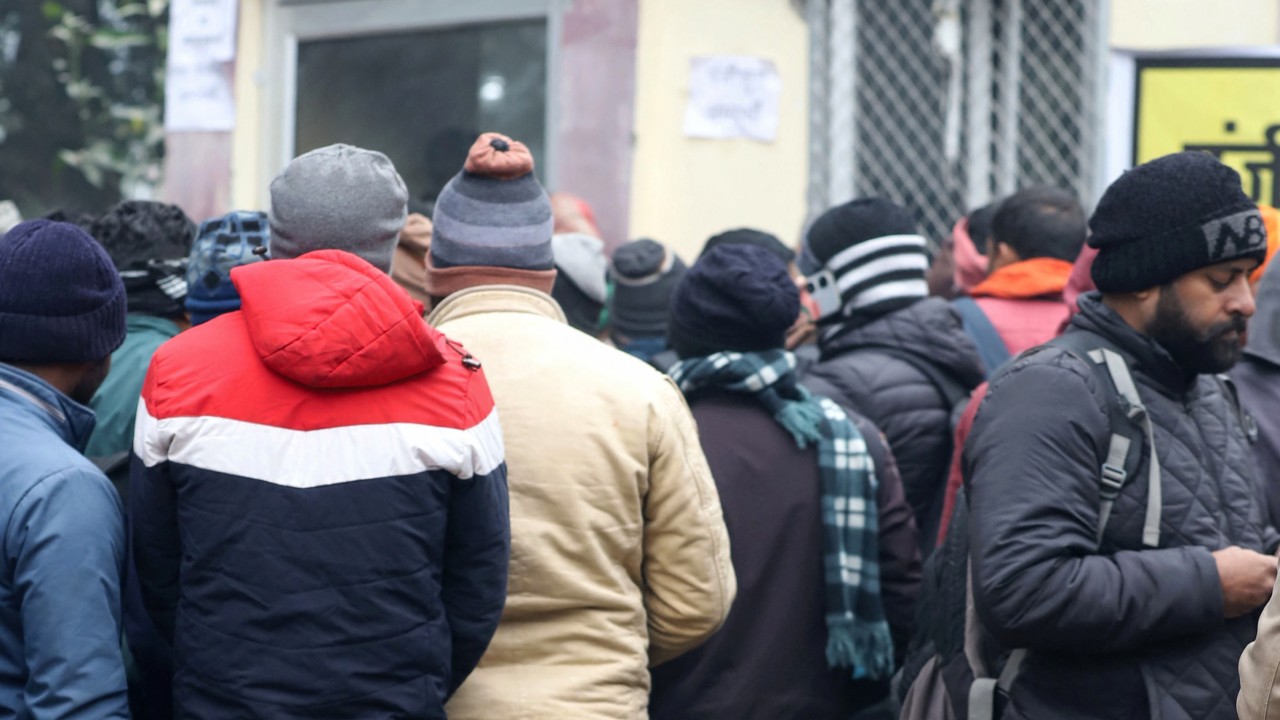
    Against the backdrop of a prolonged Middle East conflict that has upended global energy markets, Indian Prime Minister Narendra Modi has launched a public appeal for nationwide austerity measures to cushion the economic blow of skyrocketing global energy prices. Addressing a gathering in the southern Indian city of Hyderabad on Sunday, Modi outlined a series of voluntary cuts to energy and import-reliant consumption, framing the choices as an act of modern-day patriotism amid an unprecedented national economic challenge.

  • Trump and Xi are set to meet. Where do US-China tariffs stand?

    Trump and Xi are set to meet. Where do US-China tariffs stand?

    The decades-long dance of economic competition and cooperation between the world’s two largest economies is set to enter a critical new phase this week, as Beijing officially confirms U.S. President Donald Trump will travel to China for a high-stakes meeting with President Xi Jinping from May 13 to 15. This summit marks the first visit by a sitting U.S. president to China in nearly 10 years, arriving at a make-or-break moment for bilateral relations that ripple across global supply chains, financial markets, and international security. Trump will be accompanied by C-suite executives from top American corporations including Boeing, Citigroup, and Qualcomm, with many industry analysts expecting major new bilateral business deals to be announced during the trip. Beyond commercial agreements, the meeting stands as the most significant test yet of the fragile trade truce struck between Washington and Beijing last October.

    The roots of the current trade standoff stretch back to Trump’s first 2016 presidential campaign, when he won office on a pledge to rewrite unfair trade terms for the United States and bring hundreds of thousands of manufacturing jobs back to American soil. In 2018, just a year into his first term, he followed through on that promise by imposing sweeping tariffs on $250 billion worth of Chinese imports, a move that most global trade analysts mark as the official start of the modern U.S.-China trade war. That same year, Trump extended tariffs to other major U.S. trading partners, including Mexico, Canada, and the European Union, arguing that all had exploited unfair trade practices to gain an edge over American workers.

    Ning Leng, a policy researcher at Georgetown University, notes that the 2018 tariffs came as a major shock to Chinese policymakers, who had not anticipated Trump would follow through on his campaign threats. At the time, China’s economy was far more dependent on export sales to the U.S. market, which served as a critical lifeline for millions of Chinese manufacturing jobs. The tariffs added additional strain to long-running structural challenges already weighing on China’s economy, including sluggish domestic consumer spending, elevated youth unemployment, and a years-long property sector crisis. Ning explained, “It’s harder for one country to withstand a trade war with another that it has a trade surplus with,” highlighting the particular vulnerability China faced in the early stages of the conflict.

    When Joe Biden took office in 2021, he opted to maintain the pressure on Beijing, choosing not to roll back any of Trump’s existing China tariffs. The Biden administration shared the bipartisan Washington consensus that maintaining trade pressure was necessary to curb China’s technological and economic expansion, Ning said. Beyond keeping existing tariffs in place, Biden introduced sweeping new restrictions on Chinese firms: tech giant Huawei was effectively barred from the U.S. market over national security concerns, TikTok was forced to separate its U.S. operations from its Chinese parent company ByteDance, and heavy new tariffs effectively blocked Chinese electric vehicle imports from accessing the U.S. market.

    Tang Heiwai, an economist at the University of Hong Kong, argues that contrary to popular perception, the Biden administration was actually more protectionist on China than Trump’s first term. “We often think that Trump is tough on China, but there is an argument to say that Biden was even more protectionist than Trump was,” Tang noted.

    After winning re-election and returning to the White House in 2025, Trump doubled down on his hardline tariff policy against China. He first imposed a 20% tariff on Chinese goods, accusing Beijing of failing to crack down on the flow of fentanyl precursor chemicals into the United States. On what the Trump administration dubbed “Liberation Day,” he raised tariffs on Chinese imports to 34%, pushing total U.S. duties on Chinese goods to among the highest levels applied to any U.S. trading partner.

    The sweeping new tariffs triggered immediate tit-for-tat retaliation from Beijing, which imposed new duties on U.S. agricultural goods, directly targeting the American farm sector that forms one of Trump’s core political voter bases. But Trump’s tariff push hit an unexpected hurdle: China’s near-global monopoly on rare earth mineral supplies, which are critical inputs for everything from consumer smartphones to military fighter jets. With hundreds of major American industries dependent on Chinese rare earth exports, the Trump administration was forced to open negotiations for a truce.

    The breakthrough came during a face-to-face meeting between Trump and Xi at Gimhae Air Base in South Korea last October. In the deal struck at that meeting, Beijing agreed to suspend temporary rare earth export controls implemented in retaliation for the new U.S. tariffs, a win that the White House framed as a major diplomatic victory for Trump. The agreement also saw China commit to immediately resume large-scale purchases of U.S. agricultural products, a key priority for the Trump administration. In exchange, Washington rolled back a portion of the tariffs imposed on China over the fentanyl dispute, paused planned reciprocal tariff increases, and relaxed restrictions on sales of advanced semiconductors to China (though restrictions on the most cutting-edge chip technology remain in place).

    While that meeting produced an indefinite truce, negotiators on both sides failed to reach a permanent, comprehensive resolution to the core trade disputes that sparked the war. Tang notes that China’s economic model, which relies on heavy investment in manufacturing production, leaves Chinese firms heavily dependent on export sales due to persistently weak domestic consumer spending. “There’s no single country as big as [the U.S.] as a consumer market,” Tang explained, meaning China cannot afford to walk away from access to the American market entirely.

    That said, Beijing enters this week’s summit from a far stronger negotiating position than it held just a few years ago. As trade ties with the U.S. weakened over the past decade, China has aggressively expanded trade relationships with new partners across Africa, Latin America, and Southeast Asia, pushing its total annual export volumes to record highs. Beijing has also poured billions of dollars into domestic research and development in advanced robotics and domestic semiconductor manufacturing, aiming to cut its long-term reliance on Western technology from firms like Nvidia.

    For the Trump administration, key priorities for the summit are expected to include pushing Beijing to increase purchases of U.S. goods from strategically important sectors, including soybeans and commercial aircraft parts. But Trump enters the meeting facing major domestic political and legal headwinds for his trade agenda: just weeks before the summit, the U.S. Supreme Court struck down Trump’s “Liberation Day” tariffs as unconstitutional. Trump has since imposed a temporary 10% across-the-board tariff on all global imports using an alternate trade law, and launched a new investigation into alleged unfair trade practices by China and other major trading partners. Just last week, a U.S. trade court ruled that this new temporary global tariff was also unjustified, opening the door to additional legal challenges that could undermine Trump’s trade policy agenda.

    Beyond trade, the ongoing war in Iran is expected to be a major topic of discussion during the Beijing summit. So far, China has weathered the economic fallout of the conflict far better than many of its regional neighbors, thanks to its own domestic oil production and its long-term reliance on Russian crude imports, which insulate it from global energy price volatility. Even though China is Iran’s largest single purchaser of crude oil, those factors have softened the blow of the war on China’s economy. However, as the conflict drags on, it has begun to put increasing pressure on Chinese growth, prompting senior Beijing officials to pledge new measures to protect the country’s energy security and global supply chain links, according to global security analysts.

    Both Washington and Beijing share a core incentive to bring the Iran war to a swift end, but the two countries hold starkly differing policy positions on Iran’s future and regional security more broadly. The entire world will be watching closely this week to see if the two global powers can bridge their divides and move past years of escalating trade and geopolitical tension.

  • Asian shares are mixed and oil jumps 4% after Trump rejects Iran’s response to ceasefire proposal

    Asian shares are mixed and oil jumps 4% after Trump rejects Iran’s response to ceasefire proposal

    Global financial markets kicked off the new trading week with divergent performance across Asian equities on Monday, as a sudden breakdown in preliminary Iran peace talks sent crude oil prices soaring and erased some of the bullish momentum carried over from record-breaking closes on Wall Street.

    Last Friday, U.S. equity markets notched a series of fresh all-time highs, driven by a stronger-than-forecast U.S. jobs report that eased investor fears about the economic fallout from the ongoing Iran conflict. The benchmark S&P 500 climbed 0.8% to 7,398.93, the tech-heavy Nasdaq composite gained 1.7% to hit a record 26,247.08, and the Dow Jones Industrial Average edged up less than 0.1% to close at 49,609.16. But that bullish momentum failed to translate to unified gains across Asian markets when trading opened Monday.

    Japan’s benchmark Nikkei 225 index slipped 0.4% to end the session at 62,486.84, after briefly crossing the 63,300 threshold to hit an intraday record earlier in the day. The steepest drag on the index came from SoftBank Group, Japan’s one of the largest listed tech-focused investment holding, which dropped more than 5% by closing bell. In contrast, South Korea’s Kospi jumped 4.1% to 7,804.71, also notching an intraday all-time high, as chipmaking giants Samsung Electronics and SK Hynix led broad gains across the country’s technology sector.

    Over the past month, both Japanese and South Korean markets have rallied significantly, driven by booming investor interest in artificial intelligence and technology-related assets, with the Nikkei 225 up more than 10% and the Kospi surging over 30% even amid the ongoing Iran conflict. Among other major Asian benchmarks, Hong Kong’s Hang Seng Index edged down 0.3% to 26,319.93, while mainland China’s Shanghai Composite Index gained 0.9% to 4,219.13, supported by newly released positive economic data: official figures showed China’s factory gate prices rose 2.8% year-on-year in April, the highest annual growth rate since 2022, and weekend export data came in well above analyst expectations. Australia’s S&P/ASX 200 lost 0.6%, Taiwan’s Taiex added 0.9%, and India’s Sensex fell 1.3% to close out Monday’s session.

    The sharpest market movement of the day came in global energy markets, after U.S. President Donald Trump took to social media Sunday to reject Iran’s formal response to the latest U.S. proposal for ending the conflict, calling the terms “TOTALLY UNACCEPTABLE!”. International benchmark Brent crude jumped 4.2% to trade at $105.57 per barrel on Monday, while U.S. benchmark West Texas Intermediate crude rose 4.7% to settle at $99.89 a barrel. Before the Iran war began in late February, Brent traded at roughly $70 per barrel, marking a more than 50% increase amid ongoing geopolitical disruption.

    Analysts point to continued disruption to global energy supply chains as a key factor keeping oil prices elevated. The Strait of Hormuz, a critical global chokepoint that carries roughly a fifth of the world’s daily oil and gas trade, remains largely closed, and the U.S. continues to enforce a sea blockade of major Iranian ports. Most analysts expect oil prices to remain elevated for an extended period as long as the conflict remains unresolved.

    Upcoming diplomatic talks could still shift the trajectory of both energy and equity markets, however. President Trump is scheduled to meet with Chinese President Xi Jinping later this week, and the Iran conflict is expected to top the agenda. The U.S. has been pushing Beijing, which maintains close economic ties with Tehran, to leverage its influence to help reopen the Strait of Hormuz and move Iran toward a negotiated peace deal.

    In a client note published Monday, ING commodities analysts Warren Patterson and Ewa Manthey noted that “there remains a glimmer of hope” that the upcoming talks could yield progress on de-escalation. “The hope is that China can use its influence over Iran to push it closer towards a peace deal,” they wrote. “Clearly, this is easier said than done.” The pair added that the global oil market remains “heavily headline-driven” as traders react to every new development in diplomatic efforts.

    In currency markets, the U.S. dollar gained slightly against the Japanese yen, climbing to 157.14 yen from 156.61 yen in previous trading. The euro slipped modestly to $1.175, down from $1.1780, as investors shifted toward safe-haven assets amid rising geopolitical uncertainty. U.S. stock futures edged lower in early pre-market trading Monday, pointing to a potential mild pullback from last week’s record closes when U.S. markets open for the week.

  • Asia braces for a second wave of energy shocks from the Iran war

    Asia braces for a second wave of energy shocks from the Iran war

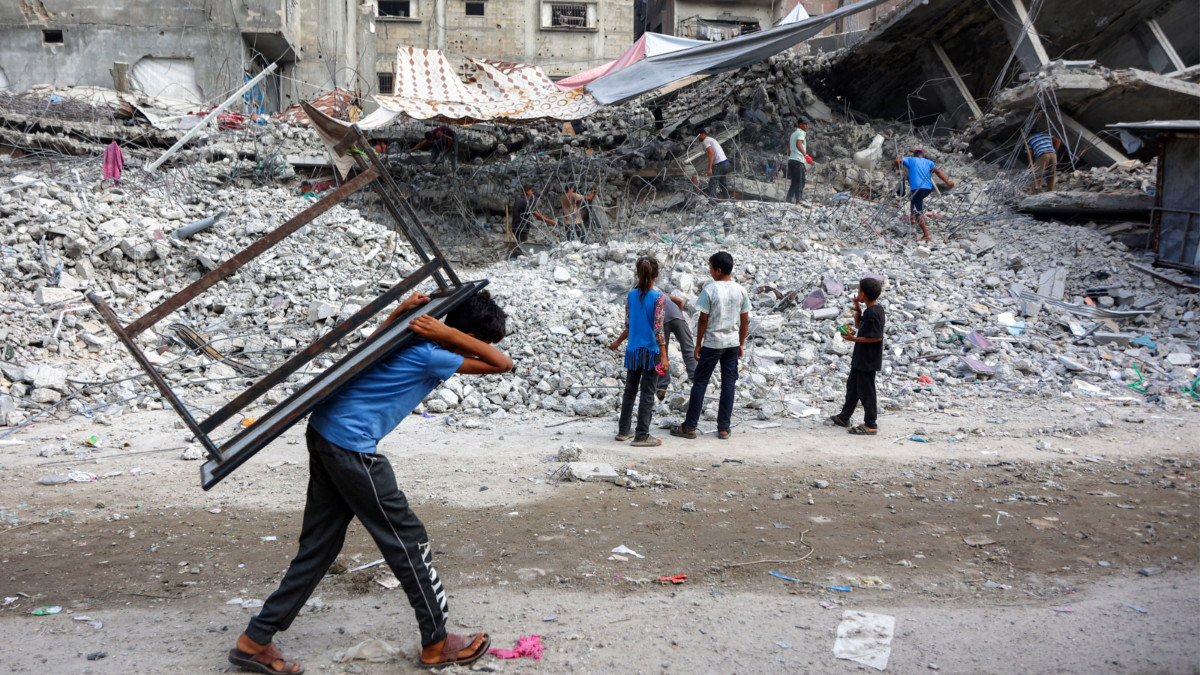
    Weeks after the outbreak of the Iran war, the emergency short-term energy mitigation measures that Asian governments rolled out to counter sudden supply shocks are already running out of steam, and a far more damaging second wave of economic fallout is now spreading across the region, according to analysts and official data.

    When the conflict first disrupted shipping through the Strait of Hormuz, the world’s most critical energy chokepoint that carries roughly a third of global seaborne oil to Asian markets, regional capitals moved quickly to contain the damage. Emergency policies included mandatory energy conservation, reallocating limited natural gas supplies away from industrial uses to prioritize household needs, and drawing down strategic petroleum reserves to temporarily bridge supply gaps. But all these interventions were designed under the core assumption that the conflict would be short-lived, allowing energy shipments through the strait to quickly resume. That optimistic scenario has yet to materialize.

    With no diplomatic or military resolution in sight, the fuel crisis is now rippling through every corner of regional economies. Airfares, maritime shipping costs and household utility bills are climbing sharply, eroding consumer purchasing power and putting already fragile post-pandemic growth at risk. The United Nations Development Programme estimates that as many as 8.8 million people across the Asia-Pacific could be pushed into extreme poverty by the conflict, which could cause a total of $299 billion in cumulative economic losses across the region.

    “The countries with the weakest capacity to respond, and the low-income consumers who can least absorb extra costs, are the first to bear the brunt of this crisis,” explained Samantha Gross, a energy security expert at the Washington-based Brookings Institution.

    Most Asian nations drafted their 202X national budgets based on a forecast that Brent crude would average roughly $70 per barrel, with widespread fuel subsidies put in place to keep consumer prices stable. The conflict has sent benchmark crude soaring to peaks near $120 per barrel, creating an intractable fiscal dilemma for governments across the region.

    As Ahmad Rafdi Endut, an independent energy analyst based in Kuala Lumpur, puts it: Governments are forced to choose between two unappealing options. Either maintain expensive subsidies that will rapidly drain public finances, or roll back those support measures and pass steep price increases on to households, which carries major risk of public unrest.

    Case studies across the region illustrate how deep the crisis has become. In India, the world’s top rice exporter, early policy decisions to redirect fuel supplies to prioritize cooking gas access for 330 million low-income households have left fertilizer manufacturers with insufficient feedstock. Combined with already sky-high fertilizer prices and forecasts for weak monsoon rains amid an El Niño event, the disruption poses a major threat to the nation’s agricultural sector and food security. To date, New Delhi has relied on broad energy subsidies to shield its 1.4 billion people from price hikes, but Prime Minister Narendra Modi recently called on citizens to cut back on international travel, work from home where possible, shift to public transport, and reduce fertilizer use to conserve energy and preserve foreign currency reserves.

    The Philippines introduced a four-day workweek to cut national fuel consumption and rolled out targeted subsidies for low-income households, but credit rating agency Fitch Ratings notes that most consumers still face far higher energy costs, which has already slowed business activity in major urban centers like Manila. Thailand was forced to scrap its diesel price cap less than a month after the conflict began when its subsidy budget ran out, and is now cutting spending on other public programs to offset higher oil costs while trying to keep its deficit under control. Vietnam extended a suspension of fuel taxes to cap domestic prices, but jet fuel shortages have forced airlines to cut the number of flights, hitting a tourism sector that makes up nearly 8% of the nation’s gross domestic product. “Business is not good right now. There are already fewer tourists,” said Nguyen Manh Thang, a tour guide based in Hanoi.

    For lower-income, cash-strapped economies like Pakistan and Bangladesh, the crisis is even more severe. Both nations have been forced to purchase spot market oil and gas at current inflated, volatile prices instead of locking in lower rates through long-term supply contracts, sending import costs soaring and putting massive additional pressure on their already depleted foreign exchange reserves.

    Endut warns that once existing subsidy budgets are exhausted and inflation begins to accelerate, many regional economies could face what he calls a “fiscal time bomb” that threatens both fiscal stability and social order.

    Experts emphasize that even when the conflict eventually ends, Asian economies will not see immediate relief. Samantha Gross of Brookings notes that global oil and gas trade will not bounce back overnight. Restarting idled production capacity, repairing any damaged energy infrastructure, and organizing new shipments from the Middle East to Asian end markets will take weeks, if not months, to complete.

    While Europe will face a similar wave of disruption, analysts say it will arrive roughly four weeks behind the impact hitting Asia. U.S. consumers are also feeling the strain of spiking gasoline prices, but Henning Gloystein, a senior analyst at the Eurasia Group consultancy, says Southeast Asia is currently the “biggest pain point” of the global energy crisis. “This fuel shortage situation is going to get worse before it gets better,” he warned.

    The spillover extends far beyond Asia: higher energy and import costs are straining government budgets, widening fiscal deficits and driving up inflation across Africa, while growth projections have already been downgraded for Latin America and the Caribbean due to the ongoing disruptions. Ted Krantz, CEO of global supply chain risk management firm Interos.ai, warns that the complex overlapping disruptions to global supply chains will continue to create broader economic headwinds for months to come.

    The crisis has also laid bare the fragility of Asia’s fast-growing middle class, according to Maria Monica Wihardja, a fellow at the ISEAS-Yusof Ishak Institute based in Singapore. Millions of people who recently moved out of poverty now face the risk of sliding back into lower income brackets, and the energy shock will reshape Southeast Asian economies for years to come, altering labor market dynamics and long-term energy planning.

    In response to the crisis, regional governments have already begun debating and implementing long-term structural adjustments, including diversifying fossil fuel supply sources, scaling up nuclear energy development, and accelerating the deployment of renewable energy sources like solar power.

    Albert Park, chief economist at the Asian Development Bank, notes that the conflict has pushed geopolitical risk to the center of Southeast Asia’s economic outlook, and is already directly slowing regional growth. “The longer it lasts, the larger those negative effects would be,” he said.

  • Turkish Airlines jet catches fire while landing at Nepal’s main airport; all passengers safe

    Turkish Airlines jet catches fire while landing at Nepal’s main airport; all passengers safe

    On a Monday morning in Kathmandu, Nepal, an unexpected emergency disrupted operations at the country’s busiest air hub: a Turkish Airlines passenger jet erupted in flames while touching down at Tribhuvan International Airport. Though the incident caused significant disruption to regional air travel, no casualties or injuries have been confirmed by local aviation authorities.

    According to airport officials, the Istanbul-originating flight landed with visible fire and thick smoke billowing from the aircraft’s right landing gear. Emergency response teams were activated immediately after the incident, and first responders successfully brought the blaze under control in a timely manner. All 277 passengers on board the Airbus A330 were safely evacuated from the aircraft without harm.

    The single active runway at Tribhuvan — Nepal’s only international gateway — was closed shortly after the emergency to allow for official investigations and clearance work. With the runway out of service, multiple incoming commercial flights bound for Kathmandu were forced to hold over alternative airspace or divert to alternate airports, leaving hundreds of passengers affected by delays across the region.

    This incident adds to Nepal’s long-running history of aviation challenges, rooted in its unique geographic and meteorological conditions. The country’s mountainous landscape creates unpredictable flying conditions, and civil aviation records show Nepal experiences a higher-than-average rate of aircraft accidents and incidents compared to global averages.

    Notably, this is not the first time a Turkish Airlines aircraft has faced an emergency during landing at Kathmandu airport. Back in 2015, another jet from the carrier skidded off a rain-slicked runway amid heavy dense fog, forcing a multi-day shutdown of the airport. Miraculously, that incident also resulted in zero reported injuries. After the aircraft was recovered from the runway, it was towed out of the airport and eventually converted into a public aviation museum.

  • Star Aussie bowling trio to sit out of Pakistan and Bangladesh limited overs tour

    Star Aussie bowling trio to sit out of Pakistan and Bangladesh limited overs tour

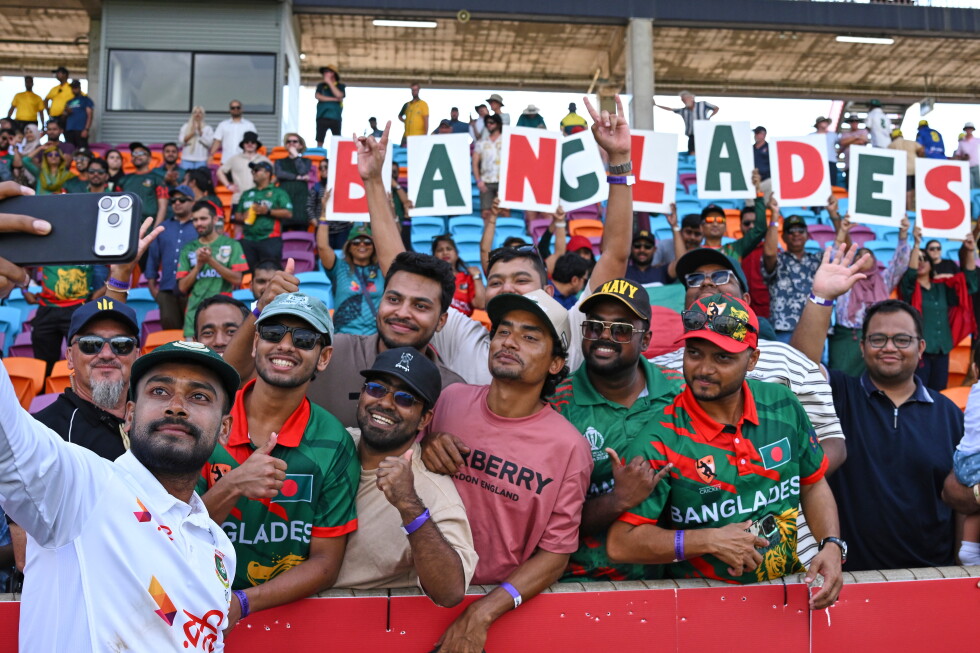
    SYDNEY – Cricket Australia has announced a reshuffled limited-overs squad for its back-to-back tours of Pakistan and Bangladesh later this month, making the call to rest three of its star fast bowlers: Pat Cummins, Mitchell Starc, and Josh Hazlewood. The high-profile trio will sit out the entire three-match ODI series against Pakistan, which kicks off in Rawalpindi on May 30, opening the door for a wave of emerging young talent to earn their first senior international call-ups. Uncapped all-rounder Liam Scott and Ollie Peake, former captain of Australia’s Under-19 World Cup side, are the two first-time senior selections for the Pakistan tour, while promising young batter Joel Davies has earned a spot in Australia’s T20 squad for the Bangladesh series set for June.

    Several players with ongoing Indian Premier League commitments – Travis Head, Cooper Connolly, Ben Dwarshuis, and Xavier Bartlett – will link up with the national squad after finishing their franchise commitments in the T20 league. Notably, veteran star all-rounder Glenn Maxwell has been left out of the squads for both tours entirely. All-rounder Mitchell Marsh will lead the Australian side across both tours, as the program forms a key early part of the team’s preparation for the 2025 ICC Men’s Cricket World Cup, scheduled to be co-hosted by South Africa, Namibia, and Zimbabwe in October next year.

    In comments announcing the squad, national selection chairman George Bailey emphasized that these back-to-back subcontinental tours represent a critical development opportunity for Australia’s next generation of cricket talent. “It’s always exciting to see new players get an opportunity to play international cricket and be a part of the national team,” Bailey said. “The blend of experienced players coupled with new or returning players will provide a nice mix for these subcontinent tours. Continuing to provide opportunities for players to develop across a broad range of conditions and experiences is important and will continue to be a focus over the next 18 months to two years.”

    The decision to rest Cummins, Starc and Hazlewood is a strategic one: the three frontline bowlers will use the break to build up fitness and prepare for Australia’s upcoming World Test Championship campaign, which resumes in August with a two-match home test series against Bangladesh.

    Following the Pakistan ODI series, which will continue with matches in Lahore on June 2 and 4, Australia will travel to Bangladesh for three ODIs in Dhaka on June 9, 11 and 14, followed by three T20 Internationals in Chattogram on June 17, 19 and 21.

  • Thailand: Who is Thaksin Shinawatra?

    Thailand: Who is Thaksin Shinawatra?

    For nearly 30 years, no single figure has shaped Thai politics more profoundly than Thaksin Shinawatra – a former police officer turned business magnate turned prime minister, whose legacy remains one of the most divisive and influential forces in modern Southeast Asian politics, even decades after he first left office.

    Thaksin’s path to power began in 1949, when he was born in the northern Thai city of Chiang Mai. He launched his professional career as a police officer, earning a government scholarship in 1973 to pursue a master’s degree in criminal justice in the United States. Upon returning to Thailand, he pivoted to the private sector, building a billion-dollar telecommunications empire by the end of the 1980s. In 1998, he launched his own political vehicle, the Thai Rak Thai (Thais Love Thais) Party, a movement that rapidly upended Thailand’s decades-old political order.

    In the 2001 general election, Thaksin stormed to electoral victory in a landslide, defeating the long-dominant traditional establishment of the Democrat Party. His populist platform resonated deeply across class lines: low-income and rural voters flocked to his promises of low-cost universal healthcare and widespread debt relief, paired with his unapologetic criticism of the entrenched Bangkok elite and nationalist policy agenda. Meanwhile, big business embraced his CEO-style governance and pro-growth “Thaksinomics” policies, which pulled Thailand out of the economic stagnation left by the 1997 Asian Financial Crisis and sparked a new national economic boom. Thaksin also earned widespread praise for his swift, coordinated response to the 2004 Indian Ocean tsunami, which devastated large swathes of southwestern Thailand.

    But his tenure was not without sharp controversy. He faced widespread public and international criticism for the 2003 war on drugs, which left more than 2,500 people dead in extrajudicial killings, as well as a scandal over his government’s decision to cover up an outbreak of avian flu. Thailand’s anti-corruption commission found he had failed to disclose his full personal wealth (though he was ultimately acquitted on that charge), and he faced heavy backlash over his government’s handling of rising separatist violence in the country’s Muslim-majority southern region. Backed by his loyal base of rural supporters, who adopted the color red and became known as the “red shirts” movement, Thaksin weathered every political storm: he made history as Thailand’s first elected prime minister to complete a full four-year term, and won a landslide re-election in 2005.

    Even as he built unparalleled popular support, Thaksin emerged as a deeply polarizing figure, drawing fierce opposition from Thailand’s conservative establishment: the Bangkok elite, the royal military, and pro-monarchy activists, who adopted the color yellow and became known as the “yellow shirts” movement. It was a business deal that ultimately triggered his ouster: in early 2006, Thaksin’s family sold its stake in Shin Corp, the country’s largest telecommunications group, netting $1.9 billion. The deal sparked mass public anger, with critics arguing the family had illegally avoided tax obligations and transferred control of a critical national asset to foreign investors based in Singapore.

    Amid months of massive street protests, Thaksin called a snap general election in April 2006 to force a popular verdict on his leadership. Main opposition parties boycotted the vote, and a large share of ballots were cast as informal “no votes.” Thaksin initially announced he would step down, only to return to office just a month later. By September 2006, with months of political gridlock and unrest paralyzing the country, the Royal Thai Army seized power in a military coup while Thaksin was traveling abroad.

    What followed has been 18 years of political upheaval, with Thaksin pulling the strings of Thai politics from exile and through a dynastic line of proxy leaders. After briefly returning to Thailand following a 2007 election won by his allies, courts empowered by the new military-backed constitution opened a wave of corruption cases against Thaksin and his family. Convicted of corruption, Thaksin fled Thailand once again, beginning 15 years of self-imposed exile centered primarily in Dubai. Even from abroad, he retained control of his political movement: Thai Rak Thai was dissolved in 2007, its successor the People’s Power Party was dissolved in 2008, but the third iteration – Pheu Thai Party – survived. In 2011, Thaksin’s sister Yingluck Shinawatra led Pheu Thai to a landslide victory, becoming Thailand’s first female prime minister, before she too was ousted by a court disqualification and a second military coup. In the 2019 election, Pheu Thai won more seats than any rival party, but was blocked from forming government by conservative parties allied with the military.

    It was not until the 2023 election that the Shinawatra political dynasty saw a shift in fortunes. In a major upset, the progressive Move Forward Party won the most seats in the lower house of parliament, forcing Thailand’s long-standing anti-Thaksin conservatives to strike a grand bargain with Pheu Thai to exclude Move Forward from power. As part of the deal, Thaksin returned to Thailand in 2023 after 15 years in exile, and was greeted by hundreds of cheering supporters upon landing in Bangkok.

    He was immediately taken to the Supreme Court to begin serving an eight-year prison sentence for his decades-old corruption convictions, which Thaksin has always maintained were politically motivated. Within 24 hours, however, he was transferred to a luxury private ward at Police General Hospital after reporting heart complications. Following a formal plea for royal clemency, the King of Thailand commuted his sentence to just one year. Thaksin remained in the hospital for six months before receiving parole and returning to his private Bangkok residence.

    That peace did not last. In September 2025, the Supreme Court ruled that Thaksin’s extended hospital stay had been unlawful, finding the former prime minister “knew or could perceive that he was not in a critical or emergency condition.” He was immediately taken to prison to serve out the remainder of his one-year sentence. In a separate high-profile case that same month, a court acquitted Thaksin of charges of lese-majeste – insulting the monarchy – which carry decades-long prison sentences in Thailand.

    The same month that Thaksin was sent back to prison, his daughter Paetongtarn Shinawatra, who had become prime minister in 2024 after the coalition’s original leader was removed by the constitutional court, was also disqualified and removed from office over a leaked controversial phone call with Cambodian Prime Minister Hun Sen. A breakaway faction from the Pheu Thai-led coalition subsequently installed a new prime minister from outside the Shinawatra circle.

    Despite the string of major political and legal setbacks, both Thaksin and his family have vowed to continue their political fight. In a public statement released to social media shortly after the Supreme Court ordered his return to prison, the 76-year-old former prime minister wrote: “even though I lose my physical freedom, I will still have freedom of thought for the benefit of my country and its people. I will maintain my physical and mental strength to spend the rest of my life serving the monarchy, Thailand and the Thai people.”

    For three decades, Thaksin Shinawatra has dominated Thai politics, surviving coups, convictions, and exiles – and even behind bars, he remains one of the most powerful forces shaping the country’s future.

  • Thailand’s Thaksin released from prison after serving 8 months for abuse of power

    Thailand’s Thaksin released from prison after serving 8 months for abuse of power

    BANGKOK — Decades of polarizing Thai political drama took a new turn on Monday, as former Prime Minister Thaksin Shinawatra walked free from Bangkok’s Klong Prem Central Prison, eight months into a one-year corruption-related sentence. Hundreds of cheering supporters and political allies gathered outside the prison walls to welcome the 76-year-old populist billionaire, who has reshaped Thailand’s political landscape over the past 25 years.

    Thaksin’s family, including his daughter Paetongtarn Shinawatra — the former prime minister and one of Thaksin’s three children — arrived hours early to wait for his release. When Thaksin emerged from the prison gate dressed in a white polo shirt and blue trousers, he was immediately embraced by his relatives. Smiling broadly, he walked through the crowd of supporters, who chanted “we love Thaksin” and presented him with red roses, a long-standing symbol of his political movement. He left the prison compound without addressing waiting reporters.

    Roughly an hour after his release, Thaksin arrived at his private residence in western Bangkok. In live footage streamed by local outlet Thairath News, he rolled down his car window to greet a small group of well-wishers gathered outside his gate. When pressed by reporters shouting questions about his time in custody, he joked, “I was in hibernation, I can’t remember anything now.”

    Thaksin’s political career traces a dramatic arc that fundamentally split Thai society. A successful telecommunications tycoon, he launched his own political party in 1998, won election in 2001, and made history as the first elected prime minister to complete a full four-year term. His signature policies — including a universal national healthcare program and infrastructure investments connecting remote rural regions — earned him fierce loyalty among working-class and poor communities across northern and northeastern Thailand. But his outsized popularity and blunt governing style created deep, enduring rifts with Thailand’s established power blocs: urban elites, royalist factions, and the military. These tensions boiled over in 2006, when a military coup ousted Thaksin while he was traveling abroad. He spent 15 years in self-imposed exile, arguing that the judicial cases filed against him were political persecution carried out by his opponents.

    The 2006 coup set off nearly 20 years of intermittent political upheaval and deadly clashes between pro- and anti-Thaksin factions, even as successive iterations of his political machine repeatedly won general elections. Thaksin only returned to Thailand in 2023, as his latest political party, Pheu Thai, negotiated to form a new ruling government. He was immediately taken into custody to face the long-standing abuse of power convictions that had been handed down in absentia, which included charges of using his office to benefit his personal business empire and improperly approving a state lottery project that caused public financial losses.

    Originally sentenced to eight years in prison, Thaksin saw his term commuted to one year by King Maha Vajiralongkorn. For months, he was allowed to serve his sentence in a private suite at Bangkok’s Police Hospital on medical grounds, sparking widespread public anger over claims of unfair preferential treatment. In September 2025, the Supreme Court ordered him to transfer to the general prison population to serve out the remainder of his term.

    Last month, a Justice Ministry review panel approved Thaksin’s parole application alongside more than 900 other eligible inmates, justifying the decision by citing his good behavior behind bars, his advanced age, and the low risk he would reoffend. Following his release, Thaksin will serve a four-month probation period, during which he is required to live at his registered Bangkok address, wear an electronic monitoring ankle bracelet, and check in regularly with probation authorities.

    Thaksin’s release comes at a turbulent moment for his political bloc. Paetongtarn, his daughter, became Thailand’s youngest prime minister in 2024, but was removed from office by the Constitutional Court in August 2025 after an leaked recording of a controversial phone call with former Cambodian Prime Minister Hun Sen was made public. In the most recent 2025 general election, Pheu Thai placed third overall, weakening the party’s position in coalition negotiations.

  • Thailand’s divisive ex-PM is out of jail, but is the Thaksin era over?

    Thailand’s divisive ex-PM is out of jail, but is the Thaksin era over?

    At 76 years old, after two decades of self-imposed exile and eight months behind bars, former Thai prime minister Thaksin Shinawatra has walked out of a Bangkok prison, tagged with an electronic ankle monitoring bracelet to serve the remainder of his one-year sentence for corruption and abuse of power convictions tied to his 2001-2006 tenure in office. His release dominated national headlines this week, and despite repeated assurances from Thaksin’s long-dominant Pheu Thai Party that the former leader will step away from frontline politics, widespread media and public speculation continues to swirl over what influence he may still wield over Thailand’s fractious political sphere.

    Thaksin’s outsized impact on Thai politics over the past quarter-century is impossible to overstate. A charismatic, self-made billionaire who won a landslide election in 2001, he rapidly reshaped the country’s policy landscape, building a deeply loyal base of working-class and rural supporters while drawing fierce opposition from Thailand’s established conservative and royalist institutions. Even after a 2006 military coup ousted him from power, political parties aligned with Thaksin continued to win every subsequent national election – a streak that triggered repeated interventions from the courts, mass violent street protests, and a second military coup in 2014.

    For years after 2014, Thaksin operated his political movement from exile abroad, until a high-profile 2023 “grand bargain” with his long-time conservative opponents allowed him to return to Thailand to resume informal leadership of his party after it returned to government. Despite public claims that he intended to retire to spend time with family, political observers have long noted Thaksin has repeatedly shown an unwillingness to cede control of the movement he built.

    This release, however, comes at a moment of profound change for Thai politics that could mark the definitive end of Thaksin’s decades-long dominance. Just months after his 2023 homecoming, Thailand’s Supreme Court ruled that Thaksin’s six-month stay in a police hospital shortly after his return was a deliberate ploy to avoid serving his prison sentence, and ordered him jailed last September. The ruling came only two weeks after Thailand’s Constitutional Court dismissed Thaksin’s daughter Paetongtarn Shinawatra from the prime ministership, over a leaked private phone call with Cambodian Prime Minister Hun Sen regarding bilateral border dispute negotiations.

    During Thaksin’s time in prison, Pheu Thai suffered its worst ever electoral performance in the country’s February general election. The party fell to third place, outperformed by both the reformist People’s Party and the conservative Bhumjaithai Party, which capitalized on a surge in nationalist sentiment following a border conflict with Cambodia. Reduced to a junior coalition partner in the new administration, Pheu Thai now holds far less political sway than it did for most of the past two decades.

    Political analyst Ken Lohatepanont notes that Thaksin is re-entering public life in a Thailand unrecognizable from the political order he once dominated. “Thaksin emerges from prison to a new political environment,” he explained. “Pheu Thai has been sidelined as just a mid-sized party. You can never count Thaksin out, but the challenge that he and his Party face is of a different magnitude to those he has faced in the past. Pheu Thai will have to decide whether a public comeback for Thaksin will boost the party, or whether the party might be better served by placing the spotlight on their newer generation leaders.”

    Debate remains ongoing over why the 2023 grand bargain between Thaksin and Thailand’s royalist conservative establishment collapsed so rapidly. Some observers question whether conservative factions always intended to use judicial rulings to dismantle the Pheu Thai government, pointing to the earlier court dismissal of Pheu Thai’s first prime ministerial pick on a minor technicality. Others argue that the collapse was triggered by Thaksin’s own refusal to stay on the political sidelines, and his insistence on advancing his own policy and business agenda that clashed with conservative interests.

    Regardless of the cause, decades of conflict have left irreconcilable mistrust between Thaksin and Thailand’s conservative power brokers. Even if Thaksin still seeks a return to prominent public office, institutional barriers will almost certainly block any such path. For 25 years, Thai politics was defined by the battle over Thaksin’s legacy and influence. Political analysts broadly agree that the Thaksin era is now all but certainly over.