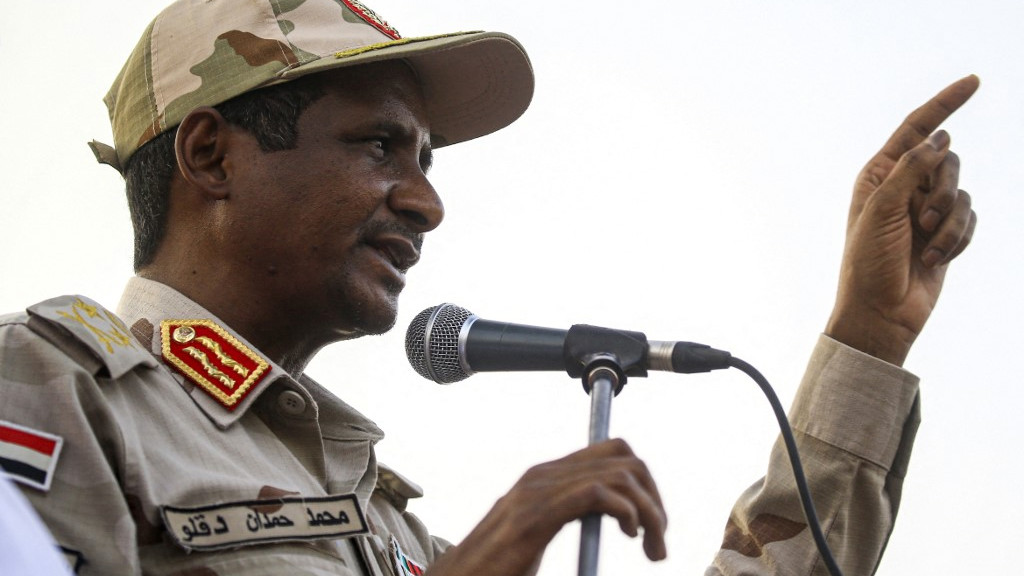
In a landmark ruling marking the first judicial conviction of senior Rapid Support Forces (RSF) leadership since Sudan’s brutal civil war erupted in April 2023, an anti-terrorism court based in Port Sudan handed down death sentences in absentia on Sunday to RSF commander Mohamed Hamdan Dagalo—widely known as Hemedti—and 15 other co-defendants. The convictions center on allegations of war crimes, crimes against humanity, genocide, and the targeted assassination of West Darfur Governor Khamis Abdullah Abakar in the West Darfur capital of el-Geneina.
The case was rooted in the 2023 assassination of Governor Abakar, which occurred just 24 hours after the governor publicly condemned RSF shelling of the el-Jamarik neighborhood in el-Geneina. Circulated video evidence showing RSF fighters mutilating Abakar’s body has been publicly available, though the paramilitary group has consistently denied involvement and pinned blame on the opposing Sudanese Armed Forces (SAF).
Human Rights Watch’s 2024 investigation into violence in el-Geneina concluded that the attacks against the Masalit people and other non-Arab communities in the region amounted to ethnic cleansing, with strong evidence pointing to acts of genocide. Data from Middle East Eye’s June 2023 reporting estimates that roughly 1,500 people were killed in el-Geneina in the first two months of the war alone, forcing tens of thousands of Masalit civilians to flee on foot across the border to refugee camps in eastern Chad.
Among the convicted defendants are two of Hemedti’s brothers: RSF deputy leader Abdel Rahim Hamdan Dagalo and Algoney Hamdan Daglo Musa, commonly referred to as al-Qoni. Additional high-profile convictions include West Darfur RSF commander Abdel Rahman Juma Barkallah and the region’s former deputy governor al-Tijani al-Tahir Karshoum.
Presiding over the trial, special judge Mohamed al-Amin ruled that Hemedti bore direct legal responsibility for orchestrating the genocide of the Masalit community and organizing the siege of el-Geneina. The judgment detailed systemic patterns of property destruction and looting, as well as deliberate targeted attacks on civilian populations, residential zones, schools, and religious sites. Abdel Rahim Dagalo was found guilty of co-organizing the el-Geneina siege, mass civilian displacement, and the Masalit genocide; al-Qoni was convicted of facilitating the siege; and Barkallah was held responsible for leading frontline RSF fighters in coordinated assaults on Masalit-majority neighborhoods.
Alongside the death sentences, the court ordered the full confiscation of all RSF assets and directed Sudanese authorities to request Interpol red notices to secure the arrest and extradition of all convicted individuals. In his closing statement, Judge Amin delivered a blistering rebuke of the RSF’s actions, noting that the group deployed heavy weaponry in residential areas, carried out widespread looting, arson, and sexual violence, and acted on explicit ethnic hatred with the goal of eradicating the Masalit community.
“These convicted individuals were state leaders who abused their authority and turned state weapons—meant to protect citizens—into tools of crime,” Judge Amin said. “Their actions left thousands dead or displaced, destroyed an entire city, and erased its civilization and history.”
The Port Sudan ruling comes just days after International Criminal Court (ICC) Deputy Prosecutor Nazhat Khan announced a “breakthrough” in the court’s investigations into alleged crimes against humanity and war crimes in West Darfur, following an investigative trip to eastern Chad. However, a recent Middle East Eye investigation uncovered that the ICC prosecutor’s office has privately decided not to move forward with an arrest warrant application for an RSF member, despite three years of investigations and public promises that applications would be filed imminently. The decision has sparked growing scrutiny over the timeline and commitment of international judicial action against RSF leadership.
While international progress on accountability remains slow, the first extraterritorial prosecution attempt against RSF members has already been launched in neighboring Kenya. On June 9, 12 Sudanese victims represented by Legal Action Worldwide and the African Centre for Justice and Peace Studies filed a formal complaint alleging war crimes and crimes against humanity with Kenya’s Director of Public Prosecutions, relying on the principle of universal jurisdiction.
The complaint calls for an investigation into allegations of torture and sexual violence committed by 10 RSF members, several of whom are believed to currently reside in Kenya. The filing directly undermines the Kenyan government’s long-standing public partnership with the RSF: Kenyan President William Samoei Ruto has hosted Hemedti at the country’s State House, allowed the RSF to hold meetings for a parallel Sudanese administration in Nairobi, and granted Kenyan passports to RSF leaders to facilitate cross-border travel. Critics further accuse the Ruto administration of supplying crates of ammunition to the paramilitary group and enabling the smuggling and export of Sudanese gold and gum arabic through Kenyan ports.
“This moment is not just a test of Kenya’s commitment to upholding international justice,” said Dr. Owiso Owiso, lead Kenyan counsel for the 12 victims. “It also proves that even when domestic accountability systems and the broader international community have failed the people of Sudan, avenues to seek justice are not completely closed.”