Five months after the collapse of Bashar al-Assad’s decades-long authoritarian regime, Syria remains trapped in a cycle of sectarian fragmentation and political instability, with a provocative new proposal from a senior Druze spiritual leader throwing the country’s already fragile territorial status into question.
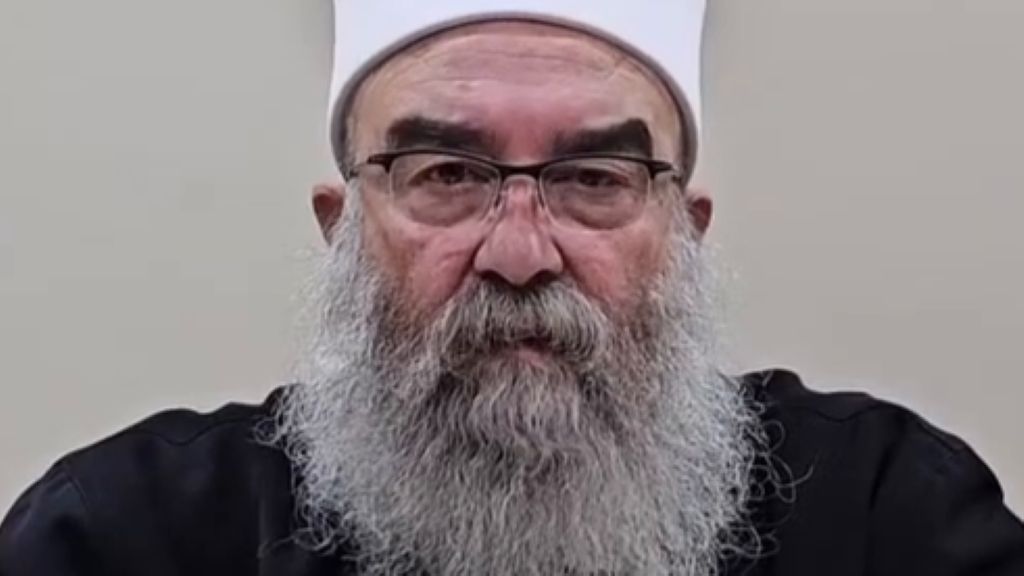
Speaking at a memorial marking one year since brutal sectarian violence erupted in the southern Syrian province of Sweida, Hikmat al-Hijri, the most prominent pro-Israel figure among Syria’s Druze community, has publicly floated the idea that Sweida could maintain its local autonomy under Israeli protection — or even formal integration as part of the Israeli state.
“Our core goal is to protect Sweida’s autonomy so our people can live in freedom and build a model of governance that works for this region,” al-Hijri told attendees at the event. “We will never forget those who have stood with us in our darkest hours. Given our geographic proximity, we give special recognition to the State of Israel. We extend respect to all who respect us, and we build on their support to secure lasting safety for our community.”
Syria’s fractured post-Assad landscape has been defined by recurring intercommunal violence since Assad was ousted by opposition forces in December 2024. While new interim President Ahmed al-Sharaa has formally pledged to protect all minority communities across the country, deep-seated mistrust persists. Al-Sharaa previously led the al-Nusra Front, an al-Qaeda-affiliated group that carried out large-scale sectarian massacres targeting Druze communities during Syria’s 13-year civil war, leaving many minorities fearing targeted reprisals from the new government’s security forces.
Sectarian bloodshed has already shaken multiple regions since the regime change. Last year, armed clashes between suspected Assad loyalists and government forces in Latakia, the coastal heartland of Assad’s Alawite sect, escalated into mass violence that left at least 1,500 Alawites dead. A Reuters investigation later traced most of the civilian casualties to operations ordered by senior security officials based in Damascus.
In Sweida, the violence that broke out one year ago began as clashes between local Druze factions and Bedouin militias, and ultimately escalated into one of the deadliest episodes of intercommunal violence in post-civil war Syria. The UK-based Syrian Observatory for Human Rights records that more than 2,000 people were killed in the fighting, including 789 Druze civilians. As the violence unfolded, Israel launched multiple air strikes across Sweida and even on the outskirts of Damascus, framing the intervention as a protective measure for the Druze minority.
Opinions on Israel remain deeply divided within Syria’s Druze community, and al-Hijri’s comments mark the most public and extreme stance yet from his pro-Israel faction, which controls armed militias in parts of Sweida and has repeatedly welcomed Israeli military intervention in the province.
The political chaos in Syria has been compounded by the controversial launch of the country’s new transitional parliament, which held its inaugural session on Sunday. In his opening address, al-Sharaa hailed the new body as the start of a “new chapter” for Syria, urging lawmakers to “serve as models of responsibility and competence, to build a culture of dialogue, uphold the rule of law, and respect for state institutions.”
But the structure of the new parliament has drawn widespread criticism from pro-democracy activists who had hoped for inclusive reform after Assad’s ouster. Al-Sharaa directly appointed one-third of the body’s seats, while the remaining two-thirds were selected by local committees stacked with government appointees. Critically, the selection process completely excluded representatives from Sweida, as well as from the Kurdish-majority northeast, where 32 parliamentary seats remain vacant.
Interim government officials defend the process, arguing that competitive popular elections are logistically impossible in the aftermath of a 13-year conflict that left hundreds of thousands of Syrians dead and millions more displaced inside the country and across the border. But critics say the undemocratic selection process has cemented the same pattern of authoritarian, top-down rule that defined Assad’s regime, leaving marginalized regions and communities even more alienated from the central government in Damascus.