标签: Asia

亚洲

  • Trump ‘very disappointed’ in Kurds who just ‘take, take, take’

    Trump ‘very disappointed’ in Kurds who just ‘take, take, take’

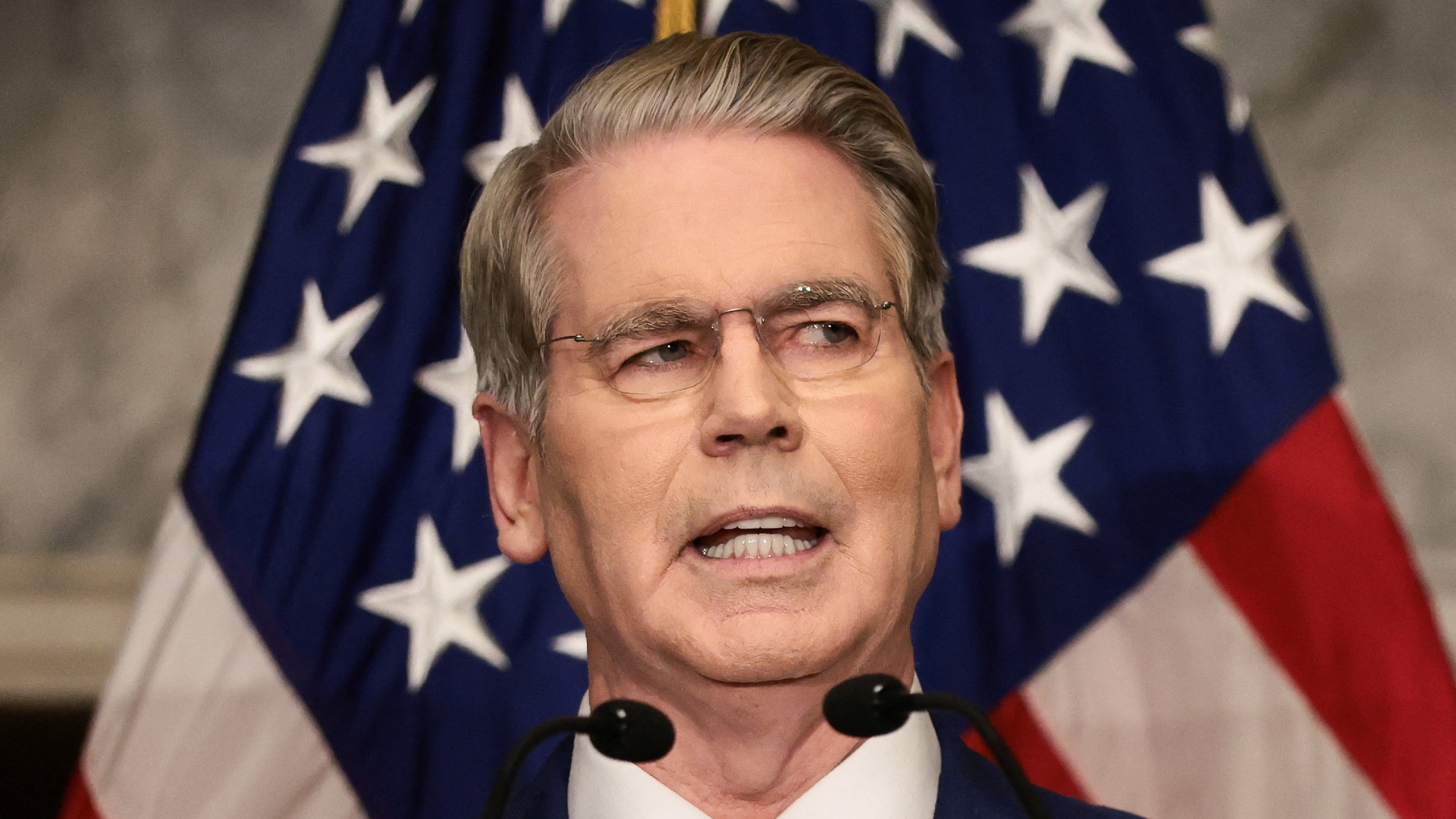
    Weeks after the United States and Israel launched their large-scale military assault on Iran starting in late February, former U.S. President Donald Trump has publicly slammed Iranian Kurdish groups, saying he is “very disappointed” in their failure to provide military backing to Iranian opposition forces. His remarks at the White House Monday came amid persistent unconfirmed media reports that the Central Intelligence Agency had supplied weaponry to Kurdish opposition factions to deploy against the Iranian government, claims that Kurdish leaders have repeatedly and flatly denied.

    In his comments, Trump painted a critical picture of the Kurdish groups, saying, “The Kurds take, take, take. They have a great reputation in Congress. Congress says they fight hard. They fight hard when they get paid.” These latest critical remarks mark a sharp shift from Trump’s own conflicting public statements on the issue just weeks earlier, highlighting the chaotic alignment of U.S. policy around the Iran conflict.

    Shortly after the U.S.-Israeli offensive began in early March, Trump confirmed to Reuters that he would openly support a Kurdish offensive against the Iranian government, a comment that aligned with widespread media reports of CIA arms shipments to Kurdish factions. However, just days later, Trump backtracked entirely, telling reporters he had explicitly instructed Kurdish groups not to join the conflict. “They’re willing to go in, but I’ve told them I don’t want them to go in,” he stated at the time.

    These contradictory statements from the U.S. head of state have left Iranian Kurdish party leaders caught off guard. The factions collectively maintain roughly 6,000 armed fighters based primarily in northern Iraq, and none of the groups have entered the ongoing U.S.-Israeli war against Iran to date.

    Mustafa Mawloudi, deputy secretary-general of the Kurdistan Democratic Party of Iran (PDKI) — one of the largest Iranian Kurdish opposition groups — told independent outlet Middle East Eye that his organization has neither received U.S. weapons nor shipped arms to activists inside Iranian Kurdistan, referred to locally as Rojhalat. “A proof of this is that we cannot send arms through Iraq to our people,” Mawloudi explained, noting that cross-border arms shipments would create serious legal complications for the group, which is based in Iraq’s northern Kurdish autonomous region.

    Tensions have spiked dramatically in the border region since the U.S.-Israeli offensive began. Data compiled by independent Kurdish news outlet Rojhelat Info shows that Iran and its allied militias have launched nearly 700 missile and drone strikes targeting Iraqi Kurdistan since February 28. At least 15 people have been killed in these attacks, according to the data. Roughly 170 of those strikes have specifically targeted bases of Iranian Kurdish opposition groups, killing six opposition fighters to date.

    The back-and-forth rhetoric from Trump comes on the heels of major unrest inside Iran just months earlier: in late December, widespread nationwide anti-government protests spread across the country, lasting roughly two weeks before Iranian security forces violently suppressed the demonstrations amid a total national internet blackout.

  • EU agrees to sanctions on Israeli settlers after Hungary’s new government lifts veto

    EU agrees to sanctions on Israeli settlers after Hungary’s new government lifts veto

    After months of diplomatic deadlock, the European Union has finally moved forward with targeted sanctions against violent Israeli settlers in the occupied West Bank, a breakthrough made possible when Hungary’s new government reversed a veto held by the country’s former pro-Israel right-wing administration.

    For months, the EU’s plan to penalize settlers amid a sharp spike in anti-Palestinian attacks had been held up by Viktor Orban, the former Hungarian prime minister and a longstanding close ally of Israel, who blocked the proposal after settler violence surged across the occupied territory starting in October 2023. Orban’s tenure ended when he lost re-election in April, and his successor Peter Magyar moved quickly to end the stalemate, clearing the path for a formal vote.

    The sanctions package received final approval during a meeting of EU foreign ministers from all 27 member states on Monday. Under the terms of the new measures, three individual Israeli settlers and four settler organizations will be targeted, though the identities of those affected have not yet been released to the public. The sanctions also extend to leading figures from Hamas, the Palestinian militant group that controls the Gaza Strip.

    EU High Representative for Foreign Affairs Kaja Kallas emphasized that the long-delayed action marked a shift from stalled negotiations to tangible policy. “It was high time we move from deadlock to delivery… extremisms and violence carry consequences,” Kallas stated. She also acknowledged that broader, more sweeping measures — including a French-Swedish proposal for a full trade embargo on goods from illegal Israeli settlements — failed to gather enough backing from EU member states to move forward.

    French Foreign Minister Jean-Noel Barrot welcomed the decision, praising the bloc’s action in a social media statement. “The EU is sanctioning the main Israeli organisations guilty of supporting the extremist and violent colonisation of the West Bank,” Barrot wrote, adding, “These most serious and intolerable acts must cease without delay.”

    Israeli officials were swift to condemn the sanctions, issuing harsh pushback within hours of the announcement. Israeli Foreign Minister Gideon Saar called the measures “unacceptable” and “without any legal or factual basis.” Far-right Israeli Security Minister Itamar Ben Gvir went further, labeling the EU’s decision antisemitic.

    “To expect the antisemitic union to make a moral decision is like expecting the sun to rise in the west. While our enemies perpetrate attacks and murder Jews, the European Union is trying to tie the hands of those who defend themselves,” Ben Gvir wrote in a social media post. He added that “the settlement enterprise will not be deterred. We will continue to build, to plant, to defend, and to settle throughout the entire land of Israel.”

    The EU’s move comes as Israeli settlement expansion in the occupied West Bank has accelerated dramatically in the months following Israel’s military campaign in Gaza. The hardline government led by Prime Minister Benjamin Netanyahu has introduced a raft of policies to expand settlements, approving new construction at a record-breaking pace. In April, Israeli media reports revealed that the Israeli cabinet secretly authorized an unprecedented number of new settlements amid rising regional tensions with Iran, approving 34 new outposts in a single decision — that number is more than half of the total settlements approved in 2025, the previous record-setting year for expansion.

    Under international law, all Israeli settlements built in the West Bank, territory captured by Israel in the 1967 Six-Day War, are widely recognized as illegal. The United Nations, the International Court of Justice, and most of the global community have repeatedly reaffirmed this position, though Israel rejects the classification and has continued to expand its presence in the territory.

  • Musk, Cook and other prominent US executives invited to join Trump on trip to China

    Musk, Cook and other prominent US executives invited to join Trump on trip to China

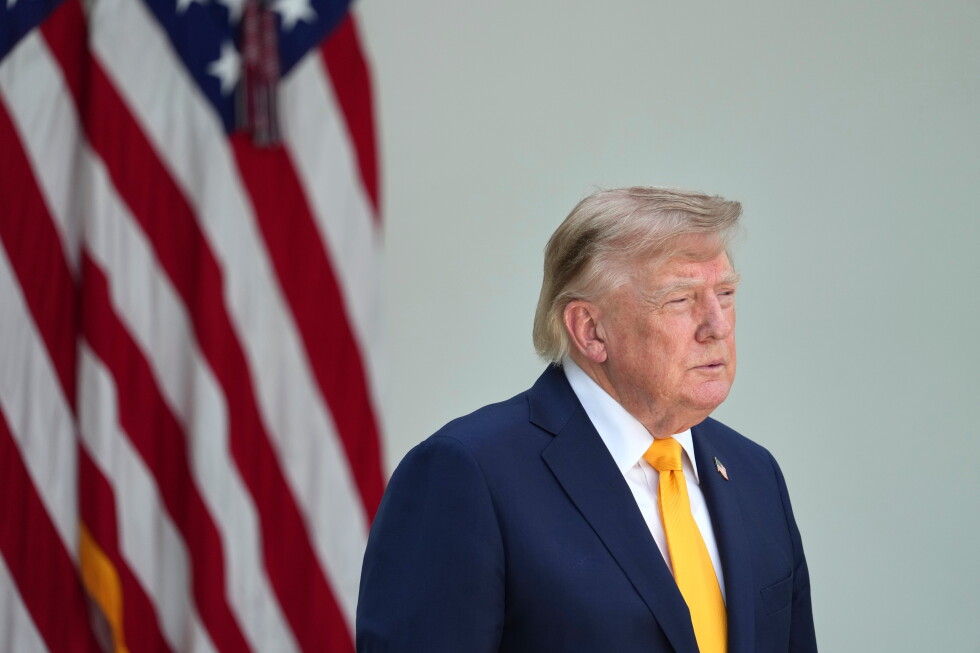
    A senior anonymous White House official has confirmed that a roster of high-profile U.S. leaders spanning big tech, aerospace, finance and agriculture will accompany former President Donald Trump on his official trip to Beijing this week, where Trump is set to hold pivotal bilateral talks with Chinese President Xi Jinping. The U.S. delegation departs Tuesday, with trade disputes and artificial intelligence governance emerging as two core agenda items, alongside discussions focused on the ongoing Iran crisis.

    Among the most closely watched attendees is Elon Musk, the eccentric billionaire CEO of electric vehicle giant Tesla and aerospace firm SpaceX, who once chaired Trump’s short-lived Department of Government Efficiency. The agency, which drew widespread controversy from its launch, wound down operations last November, following Musk’s exit from the role in spring 2025. Musk’s presence on the trip comes after a very public falling out with Trump last summer: the social media mogul, who also owns platform X, made unsubstantiated claims that the U.S. government hid information linking Trump to disgraced convicted sex offender Jeffrey Epstein, triggering a fiery public war of words. Musk later walked back portions of his remarks, acknowledging he regretted several of his public posts about the president on X.

    Today, Musk has shifted his focus back to managing his global business portfolio, which includes substantial manufacturing and sales operations in China that he has visited multiple times. He is currently navigating a slew of legal challenges outside the U.S. as well: French prosecutors are pursuing criminal charges against Musk and X over allegations that the platform failed to moderate child sexual abuse material, hosted harmful deepfakes and disinformation, and allowed the platform’s AI chatbot Grok to amplify content that denies crimes against humanity. He is also engaged in a high-profile civil trial against OpenAI CEO Sam Altman, centered on competing visions for the future of artificial intelligence development.

    Another key figure in the delegation is Apple CEO Tim Cook, whose 15-year tenure leading the world’s most valuable company is set to conclude on September 1, when he will hand the CEO role to John Ternus, Apple’s current head of hardware engineering, and transition to the position of executive chairman. During Cook’s leadership, Apple grew exponentially: the company’s market capitalization swelled by more than $3.6 trillion, driven by booming global demand for iPhones and Apple’s expanding ecosystem of consumer technology.

    Throughout his time at Apple’s helm, Cook has repeatedly had to navigate the shifting tides of U.S.-China trade relations, particularly during Trump’s previous and current presidential terms when the White House launched sweeping tariff measures targeting Chinese goods. In Trump’s first term, Cook successfully negotiated exemptions for iPhones and other core Apple products from the initial round of tariffs. In the current second term, Trump has pushed for Apple to move all of its iPhone manufacturing out of China and back to the U.S., and imposed new tariffs on the devices. Cook has managed to mitigate the financial impact of these measures by shifting production of U.S.-bound iPhones to India, and securing additional exemptions after committing Apple to a $600 billion U.S. investment over the course of Trump’s second term.

    Aerospace industry leader Kelly Ortberg, CEO of Boeing, is also part of the delegation. Ortberg took the top job at Boeing in 2024, stepping in to lead the American manufacturing giant as it grappled with overlapping legal, regulatory, production crises that triggered severe financial losses. Last year, Ortberg publicly downplayed the impact of the escalating U.S.-China trade war on Boeing’s recovery, arguing that tit-for-tat tariffs would not derail the company’s efforts to return to stable growth or meet delivery targets for Chinese airlines, which had paused acceptance of new Boeing jets amid rising trade tensions.

    The trade conflict escalated sharply in April 2025, when Beijing raised import tariffs on U.S. goods to 125% in retaliation for the Trump administration’s hike of tariffs on Chinese-made products to 145%. For Boeing, the U.S.’s largest exporter, the new tariffs would more than double the cost of its commercial passenger jets, which already sell for tens of millions of dollars apiece. However, the impact has been softened in recent years by Boeing’s gradual reduction of direct finished aircraft exports to China, making the market less central to its bottom line than it once was. Ahead of the Beijing trip, Boeing confirms it has been holding ongoing negotiations with Chinese officials over a potential large-scale new aircraft order.

    The delegation also includes a dozen other top C-suite leaders from across major U.S. industries: BlackRock Chairman and CEO Larry Fink, Blackstone co-founder, Chairman and CEO Stephen Schwarzman, Cargill Chairman and CEO Brian Sikes, Citi Chairman and CEO Jane Fraser, Coherent CEO Jim Anderson, GE Aerospace Chairman and CEO H. Lawrence Culp, Goldman Sachs Chairman and CEO David Solomon, Illumina CEO Jacob Thaysen, Mastercard CEO Michael Miebach, Meta President and Vice Chairman Dina Powell McCormick, Micron Chairman, President and CEO Sanjay Mehrotra, Qualcomm President and CEO Cristiano Amon, and Visa CEO Ryan McInerney.

    Reporting from Washington D.C. contributed by Aamer Madhani.

  • Jilin’s ecological restoration spurs massive migratory bird wave

    Jilin’s ecological restoration spurs massive migratory bird wave

    Nestled in Northeast China, Jilin province has emerged as a glowing testament to what targeted environmental recovery can achieve, as years of systematic ecological restoration and species protection efforts have triggered a dramatic rise in the number of migratory birds that use the region as a resting stop during their annual journeys.

    As a critical hub along the globally important East Asia-Australasia Flyway, Jilin’s network of protected wetlands has become an irreplaceable refuge for long-distance migratory birds. Fresh government statistics released in early May confirm that this year’s migratory season has brought a remarkable wave of avian visitors: more than 1 million individual birds across 385 different species have already been recorded stopping over in the province’s wetland systems to rest and refuel.

    Among the most striking recent observations is a large flock of vulnerable white-headed cranes foraging peacefully in the Boluo Lake Wetlands located in Nong’an County, a sight captured in official photographs shared by local authorities. This scene of abundant wildlife stands in stark contrast to conditions decades ago, when habitat degradation and human activity threatened the integrity of Jilin’s wetland ecosystems. Through targeted restoration projects that have restored wetland hydrology, reduced pollution, and limited disruptive human activity in key bird habitats, the province has rebuilt the critical stopover sites that migratory birds depend on to complete their long journeys between breeding and wintering grounds.

    Conservation officials note that the surge in migratory bird numbers and diversity is not just a win for biodiversity — it also serves as a powerful, tangible example of successful harmonious coexistence between human development and wildlife protection. Jilin’s ongoing work to protect its wetland networks continues to support global migratory bird conservation efforts, while providing a model for other regions working to reverse ecological damage and restore native habitats.

  • Israel passes law to publicly try and execute Palestinians linked to 7 October attacks

    Israel passes law to publicly try and execute Palestinians linked to 7 October attacks

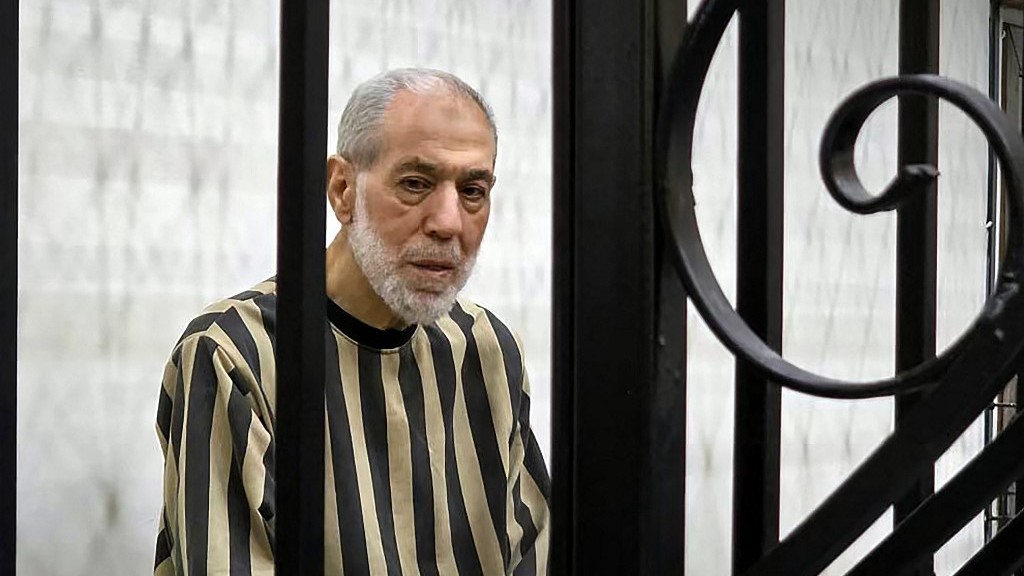
    On Monday, Israel’s legislative body the Knesset passed a sweeping new bill by a landslide 93-0 vote that creates a framework of public special trials and allows the imposition of the death penalty for Palestinian detainees linked to the deadly October 7, 2023 attacks that sparked the ongoing Gaza war. The rare unanimous cross-political support for the controversial measure highlights the unified hardening of Israeli political sentiment in the months following the assault.

    Israeli Justice Minister Yariv Levin framed the parliamentary vote as a historic turning point for the current governing body, arguing that the legislation would deliver long-awaited accountability for individuals accused of perpetrating or aiding the attacks. Under the new law, a special judicial body operating in the structure of a military court will oversee an estimated 200 to 300 open cases involving detainees accused of involvement in the October 7 events.

    All indictments will be filed at a Jerusalem-based military court, with charges ranging from terrorism and murder to genocide, incitement to armed conflict and charges of undermining Israeli state sovereignty. A key provision of the bill permanently bars any detainee accused or convicted of connection to the attacks from being included in future prisoner exchange agreements, ensuring that convicted individuals will face either permanent life incarceration or execution.

    Per the legislation’s structure, the Israeli Army Chief of Staff will hold the authority to appoint military prosecutors to the special court. Judicial panels will be made up of three judges, with a requirement that at least one panel member has previously served as the head of a military court. The bill also explicitly overrides standard Israeli criminal procedure and evidence rules, granting courts permission to bypass core due process steps including formal evidence collection requirements, witness testimony cross-examination and formal plea bargain arrangements when issuing convictions and sentences.

    A separate amendment to the legislation creates a specific protocol for carrying out death sentences against Palestinians convicted under the new law, distinguishing it from a broader death penalty law for Palestinian prisoners approved by the Knesset in a 62-48 vote back in late March. That earlier bill also faced widespread international calls for withdrawal before its passage.

    The latest legislation has triggered fierce pushback from human rights organizations, Palestinian advocacy groups and legal analysts across the globe. Critics warn that the bill comes amid a documented surge in mass arrests of Palestinians on broadly defined terrorism charges, as well as growing reports of torture, abuse and fatalities in Israeli custody since the launch of Israel’s military campaign in Gaza.

    Palestinian prisoners’ rights organizations have labeled the new law an “unprecedented act of savagery”, arguing that it formalizes systemic extrajudicial killing of detainees amid a rapidly escalating crisis of abuse inside Israeli detention facilities. Multiple prominent Israeli human rights groups, including Adalah, the Public Committee Against Torture in Israel (PCATI), HaMoked and Physicians for Human Rights-Israel, have also joined in condemning the legislation. These groups warn that the bill enshrines a discriminatory legal framework that systematically denies Palestinians equal protection under Israeli law, strips them of fundamental fair trial rights, and removes existing legal safeguards against torture and cruel, inhuman treatment.

  • Ship operator and employee are charged in crash that caused the deadly collapse of Baltimore bridge

    Ship operator and employee are charged in crash that caused the deadly collapse of Baltimore bridge

    BALTIMORE — Nearly eight months after the catastrophic collapse of Baltimore’s iconic Francis Scott Key Bridge claimed six lives, U.S. federal prosecutors have unveiled criminal charges against two ship management firms and a senior maritime employee, alleging the preventable disaster stemmed from reckless decision-making and systemic failures on the part of the accused.

    Announced Tuesday, the indictment names two entities: Singapore-based Synergy Marine Pte Ltd. and Chennai, India-headquartered Synergy Maritime Pte Ltd. Also charged is 47-year-old Indian national Radhakrishnan Karthik Nair, who served as the technical superintendent overseeing the container ship Dali, the vessel that struck the bridge in March 2024.

    On the early morning of March 26, the Dali was outbound from the Port of Baltimore en route to Colombo, Sri Lanka, when a sequence of power failures left the massive cargo ship adrift. Investigations from the National Transportation Safety Board (NTSB) later confirmed two overlapping electrical blackouts — one triggered by a faulty loose wire onboard the vessel, and a second caused by unaddressed fuel pump malfunctions — completely disabled the Dali’s steering and propulsion systems. At roughly 1:30 a.m., the uncontrolled vessel crashed into a key support pylon of the 1.6-mile steel bridge, causing the entire span to collapse within minutes.

    At the time of the crash, six construction workers were on the bridge completing routine pothole patching work; all six were killed in the disaster. Beyond the tragic loss of life, the collapse triggered widespread economic disruption across Maryland and the broader mid-Atlantic region. The Port of Baltimore, one of the busiest East Coast cargo hubs, was shut down for weeks, disrupting supply chains and costing thousands of maritime and logistics workers their livelihoods. Road traffic that previously used the bridge was rerouted through already congested local communities, placing unplanned strain on regional infrastructure. Maryland officials estimate total replacement costs for the bridge will fall between $4.3 billion and $5.2 billion, with the new span not projected to reopen to traffic until late 2030.

    Built over five years and opened in 1977, the Francis Scott Key Bridge was long a critical piece of regional transportation infrastructure, allowing through traffic to bypass downtown Baltimore and cutting commute times for hundreds of thousands of drivers annually. It also held status as a beloved local landmark for the Baltimore region.

    “The collapse of the Francis Scott Key Bridge was a preventable tragedy of enormous consequence,” Acting U.S. Attorney General Todd Blanche stated in announcing the charges. The accused face four counts total: conspiracy, willful failure to immediately alert the U.S. Coast Guard of a known hazardous condition on the vessel, obstruction of a federal agency investigation, and making false statements to investigating authorities. The FBI’s probe into the crash centered specifically on whether vessel management and the crew were aware of critical systemic flaws before the Dali departed Baltimore’s port.

    The announcement of criminal charges follows a settlement in principle reached in April between the State of Maryland, Synergy Marine, and Grace Ocean Private Limited — the Singapore-based owner of the Dali. The state’s civil lawsuit alleged the crash was the result of negligence, mismanagement, and reckless operation of a vessel that was not seaworthy and should never have been cleared to depart port. Parties to the civil claim include the families of the six killed workers, cargo owners whose freight was lost or damaged in the disaster, and local governments seeking compensation for widespread economic losses. Full details of the April settlement have not been made public, and portions of the civil litigation remain ongoing. The settlement also does not resolve any claims the state has filed against Hyundai, the shipbuilder that constructed the Dali.

    The state’s civil claim seeks compensation for bridge destruction, environmental harm to the Patapsco River and surrounding ecosystem, lost tax and operational revenues, and widespread economic harm inflicted on Maryland and its residents.

  • Trump-Xi meet as petroyuan rises on Iran war’s tide

    Trump-Xi meet as petroyuan rises on Iran war’s tide

    The 2026 military campaign waged by the United States and Israel against Iran has done far more than distract global attention: it has acted as a devastating catalyst that has upended decades of established regional order in the Middle East, accelerating the geopolitical realignment that Washington sought to block.

    In the destructive aftermath of the conflict, the Middle East’s long-standing security framework lies in ruins. Key markers of this collapse include the extended paralysis of the Strait of Hormuz, a critical global energy chokepoint, skyrocketing global oil prices that topped $110 per barrel, and deep retaliatory Iranian strikes that penetrated deep into Gulf Arab territories. These events have completely unraveled the decades-old agreement that shaped the region’s geopolitics.

    For generations, the core bargain of the Gulf rested on a simple premise: the United States would guarantee regional security for Gulf Arab states in exchange for their commitment to pricing oil in U.S. dollars, sustaining the petrodollar system that anchored American global financial dominance. The 2026 war has exposed this arrangement as an empty illusion. When direct attacks hit American assets across the region, Washington’s vaunted security umbrella failed to shield its closest allies from catastrophic economic shocks that threatened their very survival.

    This collapse has transformed what was once a distant long-term prospect into an urgent immediate priority: China’s emergence as the primary economic and political partner for nearly all Gulf Cooperation Council states, with only the United Arab Emirates remaining a partial exception. Alongside this geopolitical shift, the petroyuan has quickly evolved into a credible replacement for the petrodollar, with Iran and Russia playing distinct but pivotal roles in building this new regional order.

    The conflict has completely rewritten how Gulf states assess regional threats, destroying the long-standing strategic logic of hedging between the United States and China. For decades, Gulf leaders operated under a shared assumption: while they expanded economic ties with East Asia, their ultimate security would always be backed by the U.S. Fifth Fleet. The 2026 war has completely destroyed that confidence.

    The closure of the Strait of Hormuz, which carries roughly one-fifth of all global oil trade, combined with Iranian strikes on key ports, energy export terminals, and high-profile commercial targets across the UAE – including the iconic Burj Al Arab hotel – made clear that the U.S. was either unwilling or unable to stop retaliatory attacks on the Gulf’s most economically vital assets. At the peak of hostilities, 13 American military bases across the region were rendered vulnerable or nearly uninhabitable, turning the long-touted U.S. security guarantee into a strategic liability rather than an asset.

    This has left a critical power vacuum that Gulf states are rushing to fill. Rather than seeking a new single-power security umbrella, they are turning to a diversified network of partnerships focused on de-escalating tensions and securing long-term stability. China, which avoided direct military entanglement in the conflict while maintaining open diplomatic channels with both Tehran and Gulf Arab capitals, has emerged as an indispensable neutral broker for the region.

    Beijing’s consistent diplomatic posture – calling for negotiated ceasefires, refusing to back unilateral Western resolutions at the UN Security Council, and instead co-sponsoring compromise frameworks with Moscow – has positioned it as the only major global power trusted by both sides of the conflict to steer the post-war transition. For Gulf states looking to rebuild, Beijing has become the go-to partner for the diplomatic, economic, and financial support they need.

    Amid this shattered landscape, the long-discussed transition from the petrodollar to the petroyuan is no longer a gradual theoretical shift – it is an immediate necessity driven by the chaos of conflict. The war has become the very catalyst that Deutsche Bank analysts warned of years ago, splitting the global oil pricing system along new geopolitical lines.

    During the height of hostilities, Iran already implemented a new policy: it conditioned safe passage for oil tankers through the Strait of Hormuz on payments being made in Chinese yuan, effectively using the strait’s strategic importance to break the dollar’s decades-long monopoly on global energy trading. This tactical shift has lasting structural implications for how the world buys and sells oil. Today, Saudi Arabia exports four times as much oil to China as it does to the United States, making the logic of settling these massive trade volumes in dollars increasingly unsustainable.

    The physical damage inflicted on key Gulf energy infrastructure – including Qatar’s Ras Laffan LNG facility and Saudi Arabia’s Ras Tanura refinery, two of the most critical energy export sites in the world – has required an unprecedented influx of reconstruction capital. China stands ready to provide this funding through Belt and Road Initiative financing, all denominated in yuan. Furthermore, the war has accelerated the rollout of alternative financial infrastructure, such as mBridge, a blockchain-based cross-border payment platform linking the Chinese and UAE central banks that enables direct yuan-dirham settlements that bypass the dollar entirely.

    After decades of seeing the United States weaponize the dollar and the SWIFT global messaging system to impose financial penalties on adversaries, Gulf states are now actively building a multipolar financial system as a critical insurance policy against future American coercion. While the petrodollar has not completely disappeared, its decades of global dominance have suffered a fatal blow. Already accounting for a substantial share of trade in sanctioned oil, the petroyuan is on track to become the primary currency for Asia’s entire energy trade corridor.

    In this reshaped regional order, Iran and Russia fill contrasting but essential roles. For Iran, which remains devastated by the war and the loss of its Supreme Leader, national survival depends on deepening its strategic partnership with Beijing. Tehran frames the post-war Gulf “Neighborhood Policy” through a Chinese-led framework: it views the detente with rival Gulf Arab states not as a genuine long-term friendship, but as a managed truce necessary to block the establishment of a unified Arab-Israeli air defense network backed by the United States.

    While Iran launched fierce attacks on UAE and Qatari targets during the conflict, it showed deliberate restraint toward Saudi Arabia and Oman, recognizing that Beijing prioritizes broad regional stability to advance its economic goals. Iran’s recent proposal for joint maritime patrols in the Strait of Hormuz – which would include tolls collected in yuan – represents a Chinese-mediated compromise that would reopen the critical waterway without returning full control to the U.S. Navy.

    Russia, by contrast, acts as a co-architect of the anti-unipolar resistance axis and a strategic military spoiler. Unlike China, which maintained neutrality during the conflict, Russia shared intelligence and advanced military technology with Iran to bleed American resources, framing Tehran as a key “partner in defiance” in its broader campaign against Western global dominance. That said, Russia lacks the financial capital to fund the massive reconstruction projects the Gulf needs to recover.

    Instead, Moscow plays a disruptive balancing role: it joins China in using its UN Security Council veto to block resolutions unfavorable to Iran, while selling advanced military hardware to Gulf states as an alternative to American weapons systems. Going forward, the Gulf will look to China for economic security and reconstruction, but may turn to Russia for counter-hegemonic political leverage and arms diversification.

    In sum, the aftermath of the 2026 US-Israel war on Iran has accelerated the collapse of the decades-old U.S.-led regional order, clearing the way for a China-centric economic system to take root across the Gulf. China has risen to become the region’s primary partner not through military conquest, but by stepping into the vacuum left by American failure: it provides the diplomatic exit ramps, reconstruction capital, and non-dollar financial infrastructure that Gulf states desperately need to recover and stabilize their economies.

    At the same time, the petroyuan is rising not as a speculative geopolitical tool, but as a practical requirement for energy trade in the post-war region. Iran emerges as a battered but defiant junior partner to Beijing, critical to managing security and access through the Strait of Hormuz, while Russia acts as a disruptive guarantor of the new multipolar order. The war did not create this geopolitical realignment, but it burned away the last remaining credibility of the old U.S.-led system, forcing Gulf states to bet their long-term economic future on China as the only major power capable of managing the region’s new, more volatile order.

    This analysis comes from Bob Savic, an expert on sanctions, supply chains, and geopolitical risk, who is co-author of the new book *Multipolarity and the Changing Global Order* published by Springer.

  • Protests in India after medical entrance test scrapped over leak claims

    Protests in India after medical entrance test scrapped over leak claims

    India’s highly competitive National Eligibility cum Entrance Test (Undergraduate), the mandatory gateway for admission to every medical college across the country, has been officially canceled following widespread allegations of a major pre-exam paper leak, triggering mass protests in the national capital New Delhi and leaving 2.28 million aspiring medical students reeling from the fallout.

    Held across more than 5,000 test centers nationwide on May 5, the exam faced immediate backlash within days of being administered, after rumors and evidence of a leaked question paper began circulating on social media. Student anger and political pressure mounted steadily through the following week, until the National Testing Agency (NTA), the federal body tasked with organizing the high-stakes exam, announced on Tuesday that the entire 2025 exam process would be scrapped. In a statement, the NTA said the decision was made because the compromised exam “could not be allowed to stand,” adding that the cancellation was necessary to uphold the integrity of India’s national examination system and protect the interests of test-takers.

    To date, no new date for a retest has been confirmed, leaving students and their parents in limbo over potential delays to the 2025-2026 medical college admission cycle. Investigative reports from Indian media outlets indicate the leak is believed to have originated in the western state of Rajasthan, several days before the exam was held. A senior Rajasthan police official told Asian News International (ANI) that probes are centered on a “guess paper” — a predicted question set commonly circulated by coaching institutes — that was shared privately before the exam. Of the roughly 410 questions included in the leaked guess paper, approximately 120 matched exactly to questions that appeared in the chemistry section of the actual NEET-UG exam, which is split into four different versions, each with 180 compulsory questions across physics, chemistry, and biology.

    The case has since been transferred to the Central Bureau of Investigation (CBI), India’s federal investigative agency, for a full national probe. For the millions of young aspirants who dedicated months, and in many cases multiple years, to rigorous preparation for the test, the cancellation has been a devastating blow. Many students attend costly private coaching classes outside of standard school education, adding 4 extra hours of study on weekdays and up to 9 hours of study on weekends, often forcing them to skip major family and social events to keep up with preparation.

    A 17-year-old Delhi-based test-taker, who requested anonymity, shared that her entire life for the past two years has revolved around NEET preparation. She even attended a mandatory mock exam the same week her grandfather passed away, turning down the chance to be with her family during the funeral. “I don’t know what to do now. We study so hard and spend days and nights working towards our goal and then the exam is cancelled,” she said, echoing the sentiment of thousands of fellow aspirants. Most students are calling for the retest to be held within 30 days to minimize disruption to their academic timelines.

    The scandal has also thrown a harsh spotlight on long-running systemic failures in India’s competitive examination system, which has faced repeated allegations of paper leaks and administrative irregularities over the past decade. Opposition political figures have been quick to condemn the ruling Bharatiya Janata Party (BJP) for failing to prevent the leak, accusing the government of enabling corrupt networks. Congress party leader Rahul Gandhi called the scandal “a crime against the future of the youth,” saying “the hard work, sacrifices and dreams of the students have been crushed by this corrupt BJP regime.” Former Delhi Chief Minister Arvind Kejriwal, leader of the Aam Aadmi Party, alleged the leak was enabled by “complete collusion” between paper leak gangs and ruling party politicians, claiming that these criminal networks “operating under political patronage are shattering these youths’ trust and morale.”

    Leading the ongoing protests in Delhi is the National Students’ Union of India (NSUI), the student wing of the opposition Congress party. Viral videos circulating on social media and broadcast on national television show student protesters climbing police barricades as officers attempt to disperse the crowd. Speaking to reporters at the protest site, NSUI president Vinod Jakhar said “the future of those who prepared for the NEET examination with utmost diligence and integrity has been sold off.” He and dozens of other protesters have also demanded the resignation of India’s Education Minister Dharmendra Pradhan, who has yet to issue a public response to the demands or allegations. BJP MP Jagdambika Pal responded to the criticism by stating that the “government holds those responsible accountable and ensures strict action against them so that such incidents do not recur.” The Federation of All India Medical Association, the national body representing practicing doctors across India, has also joined calls for immediate accountability for those behind the leak.

    This is not the first time NEET-UG has been mired in controversy: in 2024, the exam faced similar allegations of paper leaks, fraud, and irregularities in the awarding of grace marks, which triggered nationwide protests after thousands of candidates received unusually high, unearned scores.

  • Philippine senator vows to fight International Criminal Court order to arrest him over killings

    Philippine senator vows to fight International Criminal Court order to arrest him over killings

    In a dramatic development that reignites global scrutiny of the Philippines’ deadly 2010s anti-drug campaign, former Philippine national police chief and sitting Senator Ronald dela Rosa has publicly pledged to resist any effort to transfer him to the International Criminal Court (ICC) to face charges of crimes against humanity. Dela Rosa, who oversaw the initial phase of then-President Rodrigo Duterte’s brutal war on drugs that killed thousands of mostly low-level suspects, maintains he never sanctioned extrajudicial killings during his tenure.

    The ICC based in The Hague unsealed an existing arrest warrant for dela Rosa on Monday, nearly eight months after it was first issued in November 2024. The charge documents accuse the senator of crimes against humanity through murder, alleging he is linked to the unlawful killings of no fewer than 32 people between July 2016 and April 2018, the period when he led the Philippine National Police (PNP).

    Dela Rosa emerged from months of public absence on Monday, after which the Philippine Senate placed him under protective custody. Speaking to reporters on the Senate floor Tuesday, he insisted he would only answer to domestic legal authorities, rejecting the global tribunal’s jurisdiction over his case. “If I have something to answer for, I will face those in our local courts and not before foreigners,” dela Rosa told reporters, adding he would leverage every available legal avenue to block extradition. He also made a direct appeal to current Philippine President Ferdinand Marcos Jr., pleading: “Don’t bring me to The Hague.”

    Dela Rosa’s ties to the controversial anti-drug campaign run deep. A long-time loyal ally of Duterte, he was appointed PNP chief immediately after Duterte won the 2016 presidential election, tasking him with rolling out the harsh anti-illegal drug initiative that would define Duterte’s six-year term. Prior to his national appointment, dela Rosa served as police chief in Davao City, the southern stronghold where Duterte built his political reputation on an aggressively hardline approach to crime decades before winning the presidency.

    When questioned about the massive death toll that resulted from the crackdown, dela Rosa defended his leadership, framing the anti-drug campaign as a public safety initiative, not a deliberate campaign of killing. “My role was to lead the war on drugs, and that war on drugs was not meant to annihilate people,” he said. He added that any fatalities that occurred during police operations were justified acts of self-defense when officers’ lives were put at risk.

    Dela Rosa is the second high-profile figure from Duterte’s administration to face ICC detention. Duterte himself was arrested by the ICC in March 2023 and is currently detained in The Netherlands, awaiting trial on charges of crimes against humanity linked to the thousands of killings during his drug war. In 2019, three years before Duterte left office, he withdrew the Philippines from the ICC entirely, a move that human rights advocates have long argued was a deliberate attempt to avoid accountability for the campaign’s deaths. The ICC has repeatedly reaffirmed that it retains legal jurisdiction over crimes committed while the Philippines was still a state member of the court.

    Philippine government officials have signaled they are prepared to comply with the ICC’s arrest warrant, a stance aligned with the country’s existing domestic legislation that addresses crimes against humanity including genocide. Communications Undersecretary Claire Castro told reporters that the state has a clear legal obligation to ensure any individual facing credible charges is held accountable. She also clarified that dela Rosa cannot claim parliamentary immunity from arrest, noting that the crimes he is accused of are extremely serious and carry long prison sentences, which disqualify him from such protection.

    In a related security development, nearly 350 additional law enforcement officers have been deployed outside the Senate compound, a move that drew concern from dela Rosa and his political allies. Officials moved quickly to downplay speculation that the deployment was preparation for an immediate arrest, stating the officers were assigned to the area solely to maintain public order.

  • Amazon looks to redefine a need for speed with 30-minute deliveries

    Amazon looks to redefine a need for speed with 30-minute deliveries

    Two decades after Amazon upended e-commerce by redefining fast shipping with Prime’s two-day delivery, the global retail giant is once again raising the bar for consumer expectations—launching a premium 30-minute or faster delivery service tailored to shoppers’ most urgent needs. Named Amazon Now, the ultrafast offering first rolled out in India in June of last year, and has already expanded to major urban centers across Brazil, Mexico, Japan, the United Arab Emirates, the United Kingdom and the United States, with aggressive expansion plans underway.

    To support the new service, Amazon is rapidly rolling out a network of compact, neighborhood-focused micro-fulfillment hubs roughly the size of a CVS pharmacy, ranging from 5,000 to 10,000 square feet. Unlike Amazon’s sprawling, robot-aided main fulfillment centers that store millions of products, these small hubs are staffed by just a handful of workers and stock only around 3,500 of the most commonly requested urgent items, including over-the-counter medications, fresh produce, beer, diapers, pet food, cellphone accessories, and basic household goods. Amazon leverages artificial intelligence to tailor each hub’s inventory to local consumer shopping patterns, with top-selling U.S. items so far including soap, toothpaste, citrus fruit, toilet plungers and wireless earbuds.

    Pricing for the service starts at $3.99 for existing Prime members, who already pay a $139 annual subscription fee, and jumps to $13.99 for non-Prime customers. A $1.99 small-order fee is added to purchases under $15, a surcharge designed to offset logistics costs for low-basket transactions.

    In the U.S., Amazon first tested the service in its home base of Seattle and Philadelphia, before rolling it out to Atlanta and the Dallas-Fort Worth metroplex. By the end of the current year, the company plans to launch Amazon Now in dozens more major U.S. cities, including Houston, Denver, Minneapolis, New York City, Phoenix, Oklahoma City, and Orlando.

    Amazon’s transportation head Beryl Tomay explained the logic behind the push in an interview with the Associated Press, noting that faster delivery consistently drives higher spending and keeps the e-commerce giant top-of-mind for consumers. “We know that customers love speed and always have,” Tomay said. “What we see customers doing, when we offer faster speeds, are they purchase more from Amazon. And Amazon becomes more top of mind for that or other types of items as well.”

    Yet the push into 30-minute delivery comes alongside growing consumer pushback against hyper-fast shipping, with increasing public concern over both the environmental impact of rushed, fragmented deliveries and the intense workplace pressure placed on order fulfillment and delivery workers.

    For Amazon, the new service marks the next incremental step in a decades-long strategy of cutting delivery times to dominate the global e-commerce market. After normalizing two-day delivery in 2005, the company gradually moved to one-day and same-day delivery for Prime members, and launched one-hour and three-hour expedited delivery for hundreds of thousands of products earlier this spring. The 30-minute microhub model is the latest evolution of that vision.

    The expansion puts Amazon in direct competition with two sets of established players: on-demand delivery platforms including Instacart, Uber Eats, DoorDash and Grubhub, and rival big-box retail giant Walmart. Independent retail analyst Bruce Winder notes that Amazon’s unmatched global supply chain expertise gives it a unique advantage over smaller on-demand platforms, which lack the e-commerce titan’s massive operational scale.

    Smaller competitors, however, reject the idea that Amazon poses an existential threat, pointing to their far broader product selection built on partnerships with local merchants and restaurants. “DoorDash has a mission to empower grocers and retailers and augment their existing footprint, not to replace them,” DoorDash spokesperson Ali Musa said in an emailed statement. “We win only when they win, which is how we can offer over half a million grocery and retail items in under an hour across the country.”

    Against Walmart, Amazon is fighting head-to-head for the title of the most reliable ultra-fast retail delivery provider. Walmart already offers its Walmart Express Delivery service, which guarantees delivery of more than 100,000 products within one hour for a $10 extra fee; Walmart CEO John Furner told analysts in February that most customers actually receive their orders in under 30 minutes already.

    Industry analysts point to a long history of failed 30-minute delivery ventures that Amazon would do well to heed. The most famous cautionary example is Domino’s Pizza, which launched a “30 minutes or it’s free” delivery guarantee in 1984. While the promotion helped the chain grab market share, it led to reckless speeding by delivery drivers, a string of fatal traffic crashes, and costly public lawsuits that forced the company to scrap the guarantee in 1993 after damaging its public reputation. During the COVID-19 pandemic, a wave of startups promising 10- to 15-minute grocery delivery from urban microhubs also collapsed, done in by sky-high operating costs, low customer loyalty, and a drying up of venture capital funding before the pandemic ended.

    Brad Jashinsky, a retail analyst at IT research firm Gartner, said Domino’s legacy should serve as a warning to Amazon. “You get in trouble when you start overpromising something like that,” he said.

    For its part, Amazon says it has learned from past missteps: the company will not offer a hard 30-minute delivery guarantee, instead providing customers with real-time order updates, and says it will not pressure in-hub workers or gig delivery drivers to rush orders. Tomay emphasized, “There’s no rushing either in our building workers or the gig workers.”

    Even with those safeguards, analysts question whether the 30-minute model can reach cost-effectiveness. Forrester Research analyst Sucharita Kodali notes that the service only works financially if multiple customers in the same or adjacent apartment complexes place orders around the same time to cut down on delivery routes. What’s more, a growing segment of consumers, particularly Gen Z shoppers, are prioritizing sustainability over speed, and actively choose slower delivery options to reduce carbon emissions and packaging waste. For years, Amazon itself has offered incentives for customers to opt for slower, consolidated shipping, which cuts down on excess packaging and fuel use; supply chain experts note that Gen Z shoppers, unlike millennials who grew up expecting instant delivery, are far more willing to wait for non-urgent purchases.

    Still, Amazon reports promising early results from the service: in India, Prime members tripled their use of 30-minute delivery after trying the service, and the offering is attracting growing numbers of repeat American customers. Tomay acknowledges the service is still in its early stages, saying, “It’s in early days and time will tell. I think that it will be interesting to see how it evolves.”